Results by title
622 books match the query 'Language Study' and 22 start with d
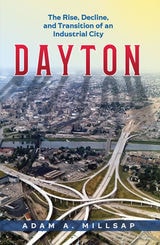
Dayton
The Rise, Decline, and Transition of an Industrial CityAdam A. Millsap
The Ohio State University Press, 2019
Thoroughly researched and engagingly written, Millsap’s book explores the economic background of the region made famous by J. D. Vance’s Hillbilly Elegy. From early twentieth-century optimism, through the Great Depression and post-WWII manufacturing decline, to Dayton now, with its labor-force problems and opioid crisis, Millsap tracks the underlying forces driving the city’s trajectory. Race relations, interstates, suburbanization, climate, crime, geography, and government policies all come into play as Millsap develops a picture of the city, past and present. By examining the past, Millsap proposes a plan for the future, claiming that there is hope for Dayton to thrive again. And if Dayton can rise from its industrial ashes, then perhaps the Rust Belt can shed its stigma and once again become the backbone of American innovation.
Deaf Interpreters at Work
International InsightsRobert Adam
Gallaudet University Press, 2014
Along with volume coeditors Robert Adam, Christopher Stone, and Steven D. Collins, contributors include Markus Aro, Karen Bontempo, Juan Carlos Druetta, Senan Dunne, Eileen Forestal, Della Goswell, Juli af Klintberg, Patricia Levitzke-Gray, Jemina Napier, Brenda Nicodemus, Debra Russell, Stephanie Sforza, Marty Taylor, and Linda Warby. The scope of their research spans the world, including many unique facets of interpreting by deaf people in Argentina, Australia, Canada, England, Finland, Ireland, Sweden, and the United States, establishing this work as the standard in this burgeoning discipline.
Decentering Advocacy in English Language Teaching
Global Perspectives and Local PracticesKate Mastruserio Reynolds, Grazzia Maria Mendoza Chirinos, Debra Suarez, Okon Effiong, and Georgios Kormpas
University of Michigan Press, 2024
In each chapter, an ELT advocate describes the need for their project, the steps they took, the challenges they faced in their particular context, the parameters they needed to work within, and how they worked within these constraints to achieve their goals. These stories offer insight into classroom and school focused efforts as well as social projects, and touch upon contexts in which educators may feel that they cannot engage in overt advocacy movements. With chapters focused on Africa, East Asia, the Middle East, and Latin America, the volume contributors identify patterns based on what has worked well transculturally and in sociopolitically constrained contexts to develop effective principles and practices. By bringing many different advocacy efforts and the latest advocacy research together, Decentering Advocacy in English Language Teaching identifies recognizable standards that can take the onus off of individual advocates to reinvent the wheel.
Designing Multilingual Experiences in Technical Communication
Laura Gonzales
Utah State University Press, 2022
Through grounded case studies of multilingual technical communication projects in the US, Mexico, and Nepal, Laura Gonzales illustrates the multiple tensions at play in transnational research and demonstrates how technical communicators can leverage contemporary translation practices and methodologies to engage in research with multilingual communities that is justice-driven, participatory, and reciprocal.
Designing Multilingual Experiences in Technical Communication is of value to researchers and students across fields who are interested in designing projects alongside multilingual communities from historically marginalized backgrounds.
Developing Information Literacy Skills
A Guide to Finding, Evaluating, and Citing SourcesJanine Carlock
University of Michigan Press, 2020
This text has been structured around the six critical elements of the ACRL Framework for Information Literacy in Higher Education, contextualizing these elements by fitting them into the research and writing process. The book focuses on providing students with the critical-thinking and problem-solving skills needed to: (1) identify the conversation that exists around a topic, (2) clarify their own perspective on that topic, and (3) efficiently and effectively read and evaluate what others have said that can inform their perspective and research. The critical-thinking and problem-solving skills practiced here are good preparation for what students will encounter in their academic and professional lives.
As an experienced writing instructor, the author has evaluated the final written products of hundreds of students who were trained through one-shot workshops and first-year introductory courses. She has applied that knowledge to create the tasks in this book so that students have the skills to successfully find, evaluate, and use sources and then produce a paper that incorporates valid research responsibly and effectively.
Developmental Programming for Infants and Young Children
Volume 1. Assessment and ApplicationD. Sue Schafer and Martha S. Moersch, Editors
University of Michigan Press, 1981
Developmental Programming for Infants and Young Children: Volume 1 provides detailed instructions for the use of Volume 2: Early Intervention Developmental Profile, including administration and evaluation techniques, scoring and interpretation of results, validity and reliability of findings, and complete item descriptions. To be used with children functioning in the 0-to-36-month developmental age range. Volume 1 includes the scoring sheet (Volume 2).
Developmental Programming for Infants and Young Children has proven to be an invaluable tool for teachers, therapists, and other professionals who assess and facilitate the development of children functioning primarily in the 0-to-60 month range. The authors address six areas of development: perceptual/fine motor, cognition, language, social/emotional, self-care, and gross motor. Volumes 1, 2, and 3 are designed for use with children functioning in the 0-to-36-month developmental age range, while Volumes 4 and 5 extend assessment and programming guidelines to 5-year (preschool) levels.
Carefully designed and tested by the University of Michigan's Institute for the Study of Mental Retardation and Related Disabilities, all volumes bridge the gap between assessment and program implementation.
Developmental Programming for Infants and Young Children
Volume 3. Stimulation ActivitiesD. Sue Schafer and Martha S. Moersch, Editors
University of Michigan Press, 1981
Developmental Programming for Infants and Young Children: Volume 3 provides a reservoir of ideas for carrying out planned program objectives. Each developmental area contains sequenced develop mental behaviors that would be expected in a normal child, with adaptations for specific handicapping conditions noted. This volume describes ways to handle, stimulate, and interact with a young child functioning in the developmental age range 0-to-36 months. It can be used by parents for at-home activities.
This volume is available as a set in combination with Volumes 1 and 2.
Developmental Programming for Infants and Young Children has proven to be an invaluable tool for teachers, therapists, and other professionals who assess and facilitate the development of children functioning primarily in the 0-to-60 month range. The authors address six areas of development: perceptual/fine motor, cognition, language, social/emotional, self-care, and gross motor. Volumes 1, 2, and 3 are designed for use with children functioning in the 0-to-36-month developmental age range, while Volumes 4 and 5 extend assessment and programming guidelines to 5-year (preschool) levels.
Carefully designed and tested by the University of Michigan's Institute for the Study of Mental Retardation and Related Disabilities, all volumes bridge the gap between assessment and program implementation.
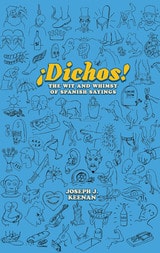
Dichos! The Wit and Whimsy of Spanish Sayings
By Joseph J. Keenan
University of Texas Press, 2019
One of the most challenging—and entertaining—aspects of learning another language is the idiom. Those quirky phrases, steeped in metaphor and colorful cultural references, enliven conversation and make your cross-cultural communication familiar, fun, and meaningful. ¡Dichos! (Sayings) brings us a vibrant compendium of both age-old and brand-new expressions from across Latin America, compiled by the language enthusiast whose Breaking Out of Beginner’s Spanish transformed thousands of readers’ interactions with the Spanish language.
¡Dichos! is divided into thematic sections covering topics ranging from games and relaxation to politics, macho men, and Mondays. Spanish speakers can also use the book to identify the spot-on/best slangy English equivalent for a Spanish-language idiom. Packed with gems like La barba me huele a tigre, y yo mismo me tengo miedo (My beard smells of tiger, and I’m even afraid of myself) and Para todo mal, mezcal; para todo bien, también (For everything bad, mezcal; for everything good, likewise), this book is the ultimate tool for taking your language skills to the next level as you navigate nuance with humor and linguistic agility.
Dichos! The Wit and Whimsy of Spanish Sayings
By Joseph J. Keenan
University of Texas Press, 2019
One of the most challenging—and entertaining—aspects of learning another language is the idiom. Those quirky phrases, steeped in metaphor and colorful cultural references, enliven conversation and make your cross-cultural communication familiar, fun, and meaningful. ¡Dichos! (Sayings) brings us a vibrant compendium of both age-old and brand-new expressions from across Latin America, compiled by the language enthusiast whose Breaking Out of Beginner’s Spanish transformed thousands of readers’ interactions with the Spanish language.
¡Dichos! is divided into thematic sections covering topics ranging from games and relaxation to politics, macho men, and Mondays. Spanish speakers can also use the book to identify the spot-on/best slangy English equivalent for a Spanish-language idiom. Packed with gems like La barba me huele a tigre, y yo mismo me tengo miedo (My beard smells of tiger, and I’m even afraid of myself) and Para todo mal, mezcal; para todo bien, también (For everything bad, mezcal; for everything good, likewise), this book is the ultimate tool for taking your language skills to the next level as you navigate nuance with humor and linguistic agility.
Dictionary Of The Maya Language
As Spoken in Hocaba YucatanVictoria Bricker
University of Utah Press, 1998
The Maya language of Yucatan is known as Yucate by linguists, but its speakers refer to it as May. Dialiectical differences are minimal across the peninsula, and the more than 750,000 speakers of Maya can be understood wherever they go. Moreover, it is not only a living language but is of great use to epigraphers working on ancient Maya glyphs.
This dictionary is the culmination of fourteen years’ labor centering on the town and dialect of Hocaba. Whereas other dictionaries of may use Latin paradigms, this is the first to provide a comprehensive, systematic listing of the stems that can be derived from each root and that give Maya its distinctive character. The entries cover the full range of Maya speech, from simple expressions and idioms to compound stems. Maya sample sentences provide a window into the richness of everyday communication, with its mixture of wit, epithets, insults, riddles, aphorisms, and exchanges of information, including a wonderful assortment of metaphorical expressions like "peccary’s eyelashes" for a type of bean, "the end of the road" for marriage, and a verb meaning "to draw breath with puckered mouth after eating chili." Among the cultural domains encompassed by the dictionary are agriculture, architecture, astronomy, culinary practices and recipes, education, folklore, games, humor, medical prescriptions, ritual, toys, and weaving, many of which have roots in the Precolumbian past. In addition to the dictionary entries, this work also contains a short grammar, a botanical index, and bibliography.
Dictionary of the Alabama Language
By Cora Sylestine, Heather K. Hardy and Timothy Montler
University of Texas Press, 1993
The Alabama language, a member of the Muskogean language family, is spoken today by the several hundred inhabitants of the Alabama-Coushatta Indian Reservation in Polk County, Texas. This dictionary of Alabama was begun over fifty years ago by tribe member Cora Sylestine. She was aided after 1980 by linguists Heather K. Hardy and Timothy Montler, who completed work on the dictionary after her death.
This state-of-the-art analytical dictionary contains over 8,000 entries of roots, stems, and compounds in the Alabama-English section. Each entry contains precise definitions, full grammatical analyses, agreement and other part-of-speech classifications, variant pronunciations, example sentences, and extensive cross-references to stem entries. The Alabama-English section is followed by a thorough English-Alabama finder list that functions as a full index to the definitions in the Alabama-English section.
Disciplinary Discourses, Michigan Classics Ed.
Social Interactions in Academic WritingKen Hyland
University of Michigan Press, 2004
As issues of linguistic and rhetorical expression of disciplinary conventions are becoming more central to teachers, students, and researchers, the careful analysis and straightforward style of Disciplinary Discourses make it a remarkable asset.
The Michigan Classics Edition features a new preface by the author and a new foreword by John M. Swales.
Discourse Intonation
A Discourse-Pragmatic Approach to Teaching the Pronunciation of EnglishLucy Pickering
University of Michigan Press, 2018
This textbook relies heavily on the Brazil model; chapters are organized around different parts of that model and how they can be most effectively taught. Readers will learn the conventions underlying, for example, how we group words in prosodic units, how we understand turn-taking cues in conversation, and how we assess whether someone is feeling angry or sad.
This text features Check Your Learning sections, discussion questions, and hands-on activities at the end of every chapter. Chapters 3-9 also include a section on pedagogical implications. Some of the example sentences that illustrate intonation have accompanying short audio (MP3) files, which can be found online at www.press.umich.edu/elt/compsite/DI.
Discourse Markers in Early Koine Greek
Cognitive-Functional Analysis and LXX Translation TechniqueChristopher J. Fresch
SBL Press, 2023
Using a cognitive-functional linguistic framework and cross-linguistic research on discourse markers, Christopher J. Fresch investigates the use of five discourse markers in the documentary papyri of the third to first centuries BCE and the Greek translations of the Hebrew Bible. Through this analysis, Fresch proposes linguistically grounded descriptions for how each discourse marker uniquely functions to guide readers in how they process and comprehend the text. Based on these descriptions, he examines the instances of these discourse markers in the Greek translation of the Minor Prophets and how the translator used them to render the Hebrew text. Fresch presents a picture of a translator who selected discourse markers based on their own understanding of the structure, flow, and meaning of the underlying Hebrew text. Their use attests to a translator who was contextually aware and who desired to produce a translation in idiomatic Koine.
Discover Romanian
An Introduction to the Language and CultureRodica Bo?oman
The Ohio State University Press, 1995
This comprehensive introduction to Romanian for English-speaking students emphasizes communication with a complete treatment of grammar, an extensive vocabulary, and a focus on the four major language skills—listening, speaking, reading, and writing. Cultural information, an integral part of the textbook, is presented both formally, in sections on culture and civilization, and informally, as the setting for dialogues and exercises. Tables of verb conjugations and a glossary round out the book's primary materials.
Straightforward and accessible, Discover Romanian is an essential textbook for all those teaching and learning the language and provides important information for those seeking to understand Romanian culture.
Discovering Albanian I Audio Supplement
To Accompany Discovering Albanian I TextbookLinda Mëniku and Héctor Campos
University of Wisconsin Press, 2011
This audio supplement is designed to accompany Discovering Albanian 1 Textbook. Featuring the voices of native speakers, the audio files include all of the dialogs, readings, and vocabulary in the textbook.
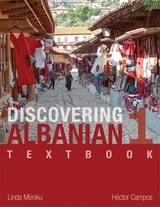
Discovering Albanian I Textbook
Linda Mëniku and Héctor Campos
University of Wisconsin Press, 2011
Approximately five million people worldwide speak Albanian. The opening of Albania in the 1990s to broader trading and diplomatic relations with other nations has created a need for better knowledge of the language and culture of this country. This book teaches the student to communicate in everyday situations in the language, with each chapter introducing a new situational context. Students learn to discuss work, vacations, health, and entertainment. Students also learn to practice basic skills such as shopping, ordering tickets, and renting an apartment. Upon completing this textbook, students will be at the A2/B1 level of proficiency on the scale provided by the Common European Framework of Reference for Languages (CEFR).
The textbook includes:
• eighteen lessons based on real-life situations, including three review lessons
• dialogues to help introduce vocabulary and grammatical structures
• comprehension questions and exercises
• related readings at the end of each chapter
• full translations for all examples discussed in grammar sections
• a series of appendixes with numerous charts summarizing main classes of nouns, adjectives, and verbs
• an appendix with the solutions to most of the exercises in the book
• a glossary with all the words in the dialogs and readings.
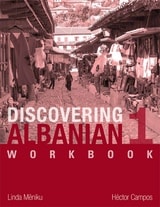
Discovering Albanian I Workbook
Linda Mëniku and Héctor Campos
University of Wisconsin Press, 2011
A companion workbook offers a rich variety of graded practice exercises in grammar and vocabulary. A key to all the exercises is included at the end of the workbook.
Doomi Golo—The Hidden Notebooks
Boubacar Boris Diop
Michigan State University Press, 2016
Drama in the Language Classroom
What Every ESL Teacher Needs to KnowCarmela Romano Gillette and Deric McNish
University of Michigan Press, 2019
During the Dissertation
A Textual Mentor for Doctoral Students in the Process of WritingChristine Pearson Casanave
University of Michigan Press, 2020
This volume is a sequel to Casanave’s popular Before the Dissertation. Like that volume, this book is designed as a companion for doctoral dissertation writers of qualitative or mixed methods work in fields related to language education. It could also benefit those writing master’s theses and those writing in other social science fields. It is meant to be consulted once the writing has begun—once students have settled on a topic, designed the project, or collected the data—because this is the time when they are analyzing, drafting, revising, polishing, and probably fretting, deleting, reconstructing, and even losing sleep. Also, like its predecessor, it is not designed to teach anyone how to write a dissertation as there are plenty of those available elsewhere.
For most doctoral students, writing will happen at different stages of the project. Strategies for timing of these kinds of writing differ across students, and also across supervisors and advisers. If dissertation writers do not know by the time they start writing which strategies and issues pertain to them, this book can help them craft some approaches to suit their own personalities, preferred practices, and individual goals and visions, as well as help them figure out how dissertation writing might fit into the real-life intrusions of work and family.
Issues covered in the book are: starting to write, envisioning the project as a whole, relationships with supervisors, perfectionism and other maladies, health, low- and high-IQ days, loneliness and isolation, distractions and interruptions, revising, and knowing when to stop.
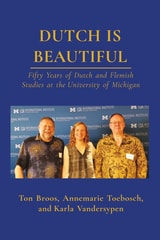
Dutch is Beautiful
Fifty Years of Dutch and Flemish Studies at the University of MichiganTon Broos, Annemarie Toebosch, and Karla Vandersypen
Michigan Publishing Services, 2019
Dutch is Beautiful tells the story of the fifty years of Dutch and Flemish Studies at the University of Michigan in Ann Arbor, Michigan, USA. It is an account of the efforts to promote Dutch and Flemish culture and language, as well as a description of how the teaching of Dutch language, literature, history and culture can be a tool to look at a world of diverse identities. It also offers a comprehensive overview of the beginnings of a successful program that included Dutch writers-in-residence, visiting Netherlands professors, cultural and educational events, arts, music, films, conferences and publications. Several alumni of the program look back at their college years with appreciation. Articles and essays on history, Anne Frank, and conversations on colonialism discuss critical and educational views on Dutch and Flemish Studies in past, present and future, when diversity, equity and inclusion are important goals and objectives, and public scholarship and academic activism will be a larger part of the curriculum. This book will inform, entertain, stimulate and impress everyone who is interested in the culture of the Low Countries. The title says it all!