Results by title
998 books match the query 'Life' and 41 start with d
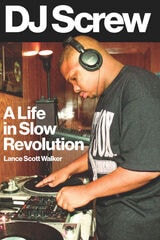
DJ Screw
A Life in Slow RevolutionLance Scott Walker
University of Texas Press, 2022
DJ Screw, a.k.a. Robert Earl Davis Jr., changed rap and hip-hop forever. In the 1990s, in a spare room of his Houston home, he developed a revolutionary mixing technique known as chopped and screwed. Spinning two copies of a record, Screw would “chop” in new rhythms, bring in local rappers to freestyle over the tracks, and slow the recording down on tape. Soon Houstonians were lining up to buy his cassettes—he could sell thousands in a single day. Fans drove around town blasting his music, a sound that came to define the city’s burgeoning and innovative rap culture. June 27 has become an unofficial city holiday, inspired by a legendary mix Screw made on that date.
Lance Scott Walker has interviewed nearly everyone who knew Screw, from childhood friends to collaborators to aficionados who evangelized Screw’s tapes—millions of which made their way around the globe—as well as the New York rap moguls who honored him. Walker brings these voices together with captivating details of Screw’s craft and his world. More than the story of one man, DJ Screw is a history of the Houston scene as it came of age, full of vibrant moments and characters. But none can top Screw himself, a pioneer whose mystique has only grown in the two decades since his death.
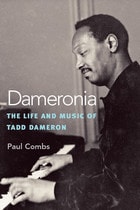
Dameronia
The Life and Music of Tadd DameronPaul Combs
University of Michigan Press, 2013
Dameronia is the first authoritative biography of Tadd Dameron, an important and widely influential figure in jazz history as one of the most significant composers and arrangers of jazz, swing, bebop, and big band. He arranged for names like Count Basie, Artie Shaw, Jimmie Lunceford, and Dizzy Gillespie and played with Bull Moose Jackson and Benny Golson. This book sets out to clarify Dameron's place in the development of jazz in the post–World War II era. It also attempts to shed light on the tragedy of his retreat from the center of jazz activity in the 1950s. By tracing Dameron's career, one finds that until 1958, when he was incarcerated for drug related offenses, he was at the forefront of developments in jazz, sometimes anticipating trends that would not develop fully for several years. Dameron was also an important influence on several high-profile musicians, including Miles Davis, Benny Golson, and Frank Foster. Dameron was a very private man, and while in some aspects of his life he will probably remain an enigma, this book manages to give an intimate portrait of his life at a couple of key stages: the height of his career in 1949 and the brief but productive period between his release from prison and his death.
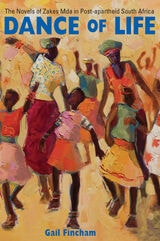
Dance of Life
The Novels of Zakes Mda in Post-apartheid South AfricaGail Fincham
Ohio University Press, 2012
In recent years, the work of Zakes Mda—novelist, painter, composer, theater director and filmmaker—has attracted worldwide critical attention. Gail Fincham’s book examines the five novels Mda has written since South Africa’s transition to democracy: Ways of Dying (1995), The Heart of Redness (2000), The Madonna of Excelsior (2002), The Whale Caller (2005), and Cion (2007). Dance of Life explores how refigured identity is rooted in Mda’s strongly painterly imagination that creates changed spaces in memory and culture. Through a combination of magic realism, African orature, and intertextuality with the Western canon, Mda rejects dualistic thinking of the past and the present, the human and the nonhuman, the living and the dead, the rural and the urban. He imbues his fictional characters with the power to orchestrate a reconfigured subjectivity that is simultaneously political, social, and aesthetic.
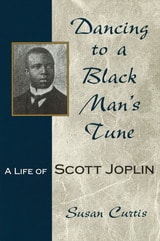
Dancing to a Black Man's Tune
A Life of Scott JoplinSusan Curtis
University of Missouri Press, 1994
By using Scott Joplin's life as a window onto American social and cultural development at the turn of the century, this biography dramatizes the role of one brilliant African American musician in defining the culture of a still-young nation.

Daring
The Life and Art of Elisabeth Vigée Le BrunJordana Pomeroy
J. Paul Getty Trust, The, 2025
Supremely talented and strategically charming, Elisabeth Vigée Le Brun (1755–1842) overcame tragedy and broke gender barriers to reach the height of success as a portrait painter, first in Paris, and then across Europe. After losing her father at age twelve and facing financial insecurity, she fought to gain access to artistic training and opportunity. She was pressured to marry at age twenty, to an art dealer who both helped and harmed her career. Vigée Le Brun deployed her intelligence and beauty to attract powerful clients, who relied on her to style the personal identities they projected to the world.
Vigée Le Brun’s salons were the talk of Paris, and she became court painter to Marie Antoinette. Then came the French Revolution, when marginalized groups demanded change to centuries-old systems of oppression. Vigée Le Brun was forced to reexamine her alliances and run for her life, taking her young daughter but leaving her husband behind. Making her way through the countrysides and capitals of Europe and Russia—including a stay at the imperial court of Catherine the Great—the artist conquered fear and adversity to refashion her life and art.
Ages thirteen and up.
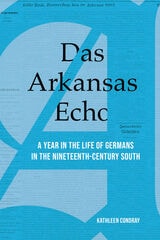
Das Arkansas Echo
A Year in the Life of Germans in the Nineteenth-Century SouthKathleen Condray
University of Arkansas Press, 2020
“Das Arkansas Echo”: A Year in the Life of Germans in the Nineteenth-Century South examines topics the newspaper covered during its inaugural year. Kathleen Condray illuminates the newspaper’s crusade against Prohibition, its advocacy for the protection of German schools and the German language, and its promotion of immigration. We also learn about aspects of daily living, including food preparation and preservation, religion, recreation, the role of women in the family and society, health and wellness, and practical housekeeping. And we see how the paper assisted German speakers in navigating civic life outside their immigrant community, including the racial tensions of the post-Reconstruction South.
“Das Arkansas Echo”: A Year in the Life of Germans in the Nineteenth-Century South offers a fresh perspective on the German speakers who settled in a modernizing Arkansas. Mining a valuable newspaper archive, Condray sheds light on how these immigrants navigated their new identity as southern Americans.
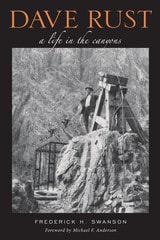
Dave Rust
A Life in the CanyonsFrederick H Swanson
University of Utah Press, 2008
In the fall of 1897, Dave Rust, a young placer miner from Caineville, Utah, looked up from his sluice box on the Colorado River and gazed at the brilliant sandstone cliffs of Glen Canyon. He wasn’t finding much gold, but he knew that this landscape abounded in scenic beauty and that people would pay good money to see it. A quarter century later, he would fulfill his dream of taking adventurous travelers through this stunning canyon in his little canvas-covered canoes. By that time he had amassed a comprehensive knowledge of the geologic wonders of the Colorado Plateau province of Utah and Arizona, and each summer he led month-long pack trips through a mind-boggling variety of cliffs, mesas, mountaintop overlooks, and hidden desert canyons.
David D. Rust (1874–1963) grew up in south-central Utah, and as a young man he worked a variety of jobs. But the canyon country always called to him, and for more than three decades he was the premier backcountry outfitter and guide in southern Utah. He felt that travel was more than a pastime—it was a chance to enrich one’s mind, and he showed the way to achieve a deep understanding of the Colorado Plateau’s fabulous landforms.
Winner of the Evans Biography Award, the Utah State History Association's Best Utah History Book Award, the Mormon History Association Turner-Bergera Best Biography Award, the Utah State Division of History Francis Armstrong Madsen Best Utah History Book Award, and the Utah Book Award in Nonfiction.
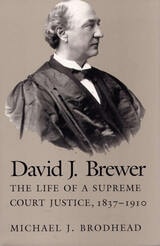
David J Brewer
The Life of a Supreme Court Justice, 1837-1910Michael J. Brodhead
Southern Illinois University Press, 1994
This is the first biography of David J. Brewer, an Associate Justice of the United States Supreme Court from 1889 to 1910.
Prior to rising to the nation’s highest tribunal, Brewer served as a county probate judge, a state district judge, a Kansas State Supreme Court justice, and a federal circuit court judge. He was known not only for his long tenure on the Supreme Court but also for his numerous off-the-bench statements as an orator and writer.
Many of Brewer’s judicial opinions and nonjudicial utterances created controversy, particularly when he confronted the reform issues of his day. The court, then presided over by Chief Justice Melville W. Fuller, has been seen as reactionary, determined to infuse the law with social Darwinism and laissez-faire ideology. Yet, contrary to this assessment of the Fuller Court as a whole, Brewer accepted most of his generation’s reform goals. He championed many forms of social legislation, the regulation of business, the rights of women and minorities, the support of charities, educational reform, and world peace.
Michael J. Brodhead contends that until recently historians have carelessly and inaccurately created a false image of Brewer, partly by citing a small sample of his opinions and public statements as representative of his alleged conservatism. They have also assumed that the disputable decisions of Brewer and his contemporaries were based on ideological predilections and that precedent and recognized legal principles played no role.
During his term, Brewer was the author of such notable court opinions as In re Debs, Muller v. Oregon, and Kansas v. Colorado. He supported property rights, admired honest entrepreneurial activity, and opposed the concentration of power in any form. Brewer favored the individual in all instances, whether that individual was the initiator of a great economic enterprise or a farmer struggling to extend agriculture into the western plains.
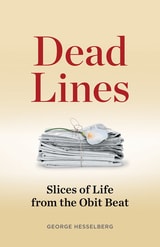
Dead Lines
Slices of Life from the Obit BeatGeorge Hesselberg
Wisconsin Historical Society Press, 2021
In more than forty years at the Wisconsin State Journal, Hesselberg frequently found himself writing about fatal accidents, crime investigations, and the deaths of the wealthy, famous, or notorious. But he was most drawn to the curious, the unknown, and the unsung—the deaths that normally wouldn’t make much of a splash, if any mention at all, in the news columns of a daily paper.
Digging deeper, he uncovered the extraordinary among the ordinary, memorializing the lives of a sword designer, a radio villain, a pioneering female detective, a homeless woman who spoke fluent French, a beloved classroom tarantula, and many more. Their stories are alternately amusing, sad, surprising, and profound. Together they speak to a shared human experience and inspire us to see the people around us with new eyes, valuing the lives while they are still being lived.
Deadly Biocultures
The Ethics of Life-makingNadine Ehlers
University of Minnesota Press, 2019
A trenchant analysis of the dark side of regulatory life-making today
In their seemingly relentless pursuit of life, do contemporary U.S. “biocultures”—where biomedicine extends beyond the formal institutions of the clinic, hospital, and lab to everyday cultural practices—also engage in a deadly endeavor? Challenging us to question their implications, Deadly Biocultures shows that efforts to “make live” are accompanied by the twin operation of “let die”: they validate and enhance lives seen as economically viable, self-sustaining, productive, and oriented toward the future and optimism while reinforcing inequitable distributions of life based on race, class, gender, and dis/ability. Affirming life can obscure death, create deadly conditions, and even kill.
Deadly Biocultures examines the affirmation to hope, target, thrive, secure, and green in the respective biocultures of cancer, race-based health, fatness, aging, and the afterlife. Its chapters focus on specific practices, technologies, or techniques that ostensibly affirm life and suggest life’s inextricable links to capital but that also engender a politics of death and erasure. The authors ultimately ask: what alternative social forms and individual practices might be mapped onto or intersect with biomedicine for more equitable biofutures?
Deaf-Blind Reality
Living the LifeScott M. Stoffel
Gallaudet University Press, 2012
Most stories about disabled people are written for the sake of being inspirational. These stories tend to focus on some achievement, such as sports or academics, but rarely do they give a true and complete view of the challenges individuals must deal with on a daily basis. For example: How does a deaf-blind person interact with hearing-sighted people at a family reunion? How does she shop for groceries? What goes through his mind when he enters a classroom full of non-handicapped peers? These aren’t questions you are likely to find answers to while reading that incredible tale of success. They are, however, issues that a deaf-blind person wishes others understood.
Deaf-Blind Reality: Living the Life explores what life is really like for persons with a combination of vision and hearing loss, and in a few cases, other disabilities as well. Editor Scott M. Stoffel presents extensive interviews with 12 deaf-blind individuals, including himself, who live around the world, from Missouri to New Zealand, Louisiana to South Africa, and Ohio to England. These contributors each describe their families’ reactions and the support they received; their experiences in school and entering adulthood; and how they coped with degeneration, ineffective treatments, and rehabilitation. Each discusses their personal education related to careers, relationships, and communication, including those with cochlear implants. Deaf-Blind Reality offers genuine understanding of the unspectacular but altogether daunting challenges of daily life for deaf-blind people.

Death and Life in the Big Red One
A Soldier’s World War II Journey from North Africa to GermanyJoseph P. Olexa
University of North Texas Press, 2023
Death and Life in the Tenth Century
Eleanor Shipley Duckett
University of Michigan Press, 1989
Death by Philosophy
The Biographical Tradition in the Life and Death of the Archaic Philosophers Empedocles, Heraclitus, and DemocritusAva Chitwood
University of Michigan Press, 2004
How does one die by philosophy? In Diogenes Laertius, philosophers jump into volcanoes, bury themselves in dung, get eaten by dogs, hang themselves, drown, and vanish into thin air -- sometimes all in a single lifetime. But what happens when we look beyond the fantastic and absurd to examine the particular ways that the philosophers' lives and deaths are recounted?
Ava Chitwood's reexamination of Diogenes Laertius's philosophical biographies opens a new window on the intellectual culture and context in which the work of philosophers like Empedocles, Heraclitus, and Democritus was read, received, and transmitted. Chitwood's analysis also suggests a methodology for understanding the interplay between biography and philosophy and for evaluating biographical sources.
While Chitwood's approach combines the disciplines of classical philology and philosophy, Death by Philosophy is not intended solely for the specialist. This investigation offers the modern reader a fascinating, fresh, and entertaining view of the ancient literary and philosophical world.
Ava Chitwood is Assistant Professor of Classics, at the University of South Florida.
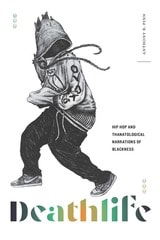
Deathlife
Hip Hop and Thanatological Narrations of BlacknessAnthony B. Pinn
Duke University Press, 2024

Deckhand
Life on Freighters of the Great LakesNelson "Mickey" Haydamacker with Alan D. Millar
University of Michigan Press, 2009
Long before popular television shows such as Dirty Jobs and The Deadliest Catch, everyday men and women---the unsung heroes of the job world---toiled in important but mostly anonymous jobs. One of those jobs was deckhand on the ore boats.
With numerous photographs and engaging stories, Deckhand offers an insider's view of both the mundane and the intriguing duties performed by deckhands on these gritty cargo vessels. Boisterous port saloons, monster ice jams, near drownings, and the daily drudgery of soogeying---cleaning dirt and grime off the ships---are just a few of the experiences Mickey Haydamacker had as a young deckhand working on freighters of the Great Lakes in the early 1960s. Haydamacker sailed five Interlake Steamship Company boats, from the modern Elton Hoyt 2nd to the ancient coal-powered Colonel James Pickands with its backbreaking tarp-covered hatches.
Deckhand will appeal to shipping buffs and to anyone interested in Great Lakes shipping and maritime history as it chronicles the adventures of living on the lakes from the seldom-seen view of a deckhand.
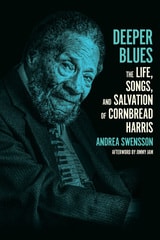
Deeper Blues
The Life, Songs, and Salvation of Cornbread HarrisAndrea Swensson
University of Minnesota Press, 2024
The emotional, epic story of James “Cornbread” Harris—a self-proclaimed “blessed dude” and one of Minneapolis’s most influential musicians
From the heart of the Minnesota blues comes the story of James “Cornbread” Harris Jr., the songwriter, pianist, and consummate bluesman whose seventy years making music helped to shape the Minneapolis Sound. “I am a blessed dude,” Cornbread tells Andrea Swensson, taking us along on his musical journey from a first “gig” entertaining his fellow soldiers during World War II to his subsequent years playing music for audiences across Minnesota. Following Cornbread’s extraordinary life story, Deeper Blues is a unique history of Minnesota music that evolves into a heartfelt tale of reconciliation and forgiveness, all to the tune of the legendary musician’s signature sound.
Cornbread’s career started in the 1950s, when he played with the Augie Garcia Quintet and cowrote their hit “Hi Ho Silver.” A tireless entertainer, he has been performing live ever since, influencing an entire generation of musicians credited with putting Minneapolis on the map in the 1980s—including his long-estranged son, Grammy-winning Rock and Roll Hall of Famer James “Jimmy Jam” Harris III. Going beyond the music, Deeper Blues turns toward family, atonement, and peace when Cornbread reunites with Jimmy Jam after a five-decade separation and they perform together on stage.
Through conversations with Cornbread, Jimmy Jam, and many others, Swensson reveals a story of perseverance and unfailing grace, a firsthand account of making music in the face of racism and segregation, and a hard-won acceptance of the personal sacrifices that are often required when dedicating one’s life to making music. As the man himself says, “All of my hardships ended up to be blessings.”
A rich mix of present-day anecdotes and historical vignettes, animated by voices from Cornbread’s life and the Twin Cities music scene, underscored by the bluesman’s original lyrics of heartache and hope, and featuring never-before-seen photographs of Cornbread and Jimmy Jam, Deeper Blues tells a singular story—one imprinted on the history, heart, and soul of the Minneapolis Sound.

Defender of the Faithful
The Life and Thought of Rabbi Levi Yitshak of BerdychivArthur Green
Brandeis University Press, 2022
Defender of the Faithful explores the life and thought of Levi Yitshak of Berdychiv (1740–1809), one of the most fascinating and colorful Hasidic leaders of his time. This is an intellectual and religious biography, a reading of the development of his thought and career. Featuring examples of Levi Yitshak’s extraordinary texts alongside insightful analysis by scholar and theologian Arthur Green, Defender of the Faithful is a compelling study of both Levi Yitshak’s theology and broader philosophy.
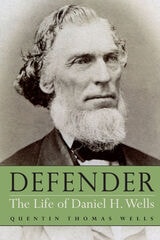
Defender
The Life of Daniel H. WellsQuentin Thomas Wells
Utah State University Press, 2022
Defender is the first and only scholarly biography of Daniel H. Wells, one of the important yet historically neglected leaders among the nineteenth-century Mormons—leaders like Heber C. Kimball, George Q. Cannon, and Jedediah M. Grant. An adult convert to the Mormon faith during the Mormons’ Nauvoo period, Wells developed relationships with men at the highest levels of the church hierarchy, emigrated to Utah with the Mormon pioneers, and served in a series of influential posts in both church and state.
Wells was known especially as a military leader in both Nauvoo and Utah—he led the territorial militia in four Indian conflicts and a confrontation with the US Army (the Utah War). But he was also the territorial attorney general and obtained title to all the land in Salt Lake City from the federal government during his tenure as the mayor of Salt Lake City. He was Second Counselor to Brigham Young in the LDS Church's First Presidency and twice served as president of the Mormon European mission. Among these and other accomplishments, he ran businesses in lumbering, coal mining, manufacturing, and gas production; developed roads, ferries, railroads, and public buildings; and presided over a family of seven wives and thirty-seven children.
Wells witnessed and influenced a wide range of consequential events that shaped the culture, politics, and society of Utah in the latter half of the nineteenth century. Using research from relevant collections, sources in public records, references to Wells in the Joseph Smith papers, other contemporaneous journals and letters, and the writings of Brigham Young, Quentin Thomas Wells has created a serious and significant contribution to Mormon history scholarship.

Defending Nazis in Postwar Czechoslovakia
Life of K. Resler, Defense Councel Ex Officio of K. H. FrankJakub Drápal
Karolinum Press, 2018
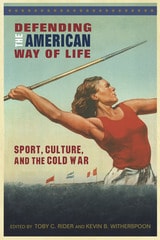
Defending the American Way of Life
Sport, Culture, and the Cold WarToby C. Rider
University of Arkansas Press, 2018
The Cold War was fought in every corner of society, including in the sport and entertainment industries. Recognizing the importance of culture in the battle for hearts and minds, the United States, like the Soviet Union, attempted to win the favor of citizens in nonaligned states through the soft power of sport. Athletes became de facto ambassadors of US interests, their wins and losses serving as emblems of broader efforts to shield American culture—both at home and abroad—against communism.
In Defending the American Way of Life, leading sport historians present new perspectives on high-profile issues in this era of sport history alongside research drawn from previously untapped archival sources to highlight the ways that sports influenced and were influenced by Cold War politics. Surveying the significance of sports in Cold War America through lenses of race, gender, diplomacy, cultural infiltration, anti-communist hysteria, doping, state intervention, and more, this collection illustrates how this conflict remains relevant to US sporting institutions, organizations, and ideologies today.

Delaware Diary
Episodes in the Life of a RiverFrank Dale
Rutgers University Press, 1996
Frank Dale, who has lived near the Delaware all of his life, has burrowed into old newspaper files and archives and traced down eyewitnesses o the life of the Delaware. Rivers were the highways of choice in early America, and the Delaware presented much greater challenges than the nearby Hudson. Filled with rapid, falls, and inconvenient rocks, the river refused to accommodate itself easily to the needs of commerce. The rivermen who ventured down the Delaware on massive timber rafts or Durham boats filled with iron ore earned a deserved reputation for pure ornery courage. Later entrepreneurs tried steamboats, canals, and bridges to attempt to harness and exploit this most unexploitable river, with decidedly mixed results. In recent times, the Tocks Island Dam was defeated by a community that had come to admire the river's stubborn resistance to being conquered and harnesses to human ends. Canoeists and waterside strollers can now appreciate its unspoiled beauties.
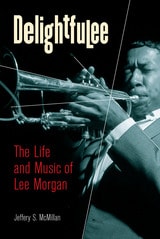
Delightfulee
The Life and Music of Lee MorganJeffery S. McMillan
University of Michigan Press, 2008
One of the most individual stylists of his time, trumpeter Lee Morgan began his professional career in Philadelphia at age fifteen. At eighteen, after a short stint with Art Blakey's Jazz Messengers, Morgan joined Dizzy Gillespie's orchestra, where he stayed until the group disbanded in 1958. A return to Blakey brought Morgan new opportunities, including his first successful attempts at composition. But however much his time with Blakey helped to advance his playing and writing, his boss's and his bandmates' destructive drug habits exerted just as strong an influence. Within three years, Morgan would be back home in Philadelphia, strung out on heroin and penniless.
Morgan's return to music in the early to mid-sixties witnessed a tremendous evolution in his playing. Formerly a virtuoso in the model of his idol, Clifford Brown, Morgan brought to his critically acclaimed Blue Note records of the era an emotionally charged, muscular tone, full of poise and control. But it was with the record Sidewinder, recorded in 1963, that Morgan found his greatest fame and commercial success, due to the infectious groove of the title tune. By the time of his death, at thirty-three---murdered in a New York City club by his girlfriend during a gig---Morgan had begun a new phase of his career, experimenting with freer-forms of musical expression.
Jeff McMillan's Delightfulee is the first biography to seriously examine Morgan's vast contributions to jazz, both as a performer and as a composer. Thanks to exclusive access to Lee Morgan's now-deceased brother, McMillan is also able to provide unparalleled insight into Morgan's personal and family life
Jeff McMillan received his master's degree from the Jazz History and Research program at Rutgers-Newark in 2000 and currently works as an archivist for the Metropolitan Opera in New York City.
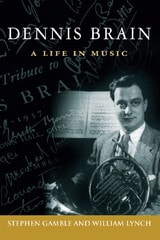
Dennis Brain
A Life in MusicStephen Gamble
University of North Texas Press, 2011
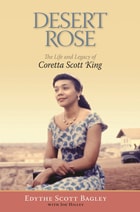
Desert Rose
The Life and Legacy of Coretta Scott KingEdythe Scott Bagley with Joe Hilley
University of Alabama Press, 2012
An intimate biography illuminating the life, leadership, and legacy of Coretta Scott King within the American Civil Rights Movement.
Coretta Scott King—noted author, human rights activist, and wife and partner of famed Civil Rights Movement leader Martin Luther King Jr.—grew up in the rural Alabama Black Belt with her older sister, Edythe Scott Bagley. Bagley chronicles the sisters’ early education together at the Crossroads School and later at the progressive Lincoln School in Marion. She describes Coretta’s burgeoning talent for singing and her devotion to musical studies, and the sisters’ experiences matriculating at Antioch College, an all-white college far from the rural South. Bagley provides vivid insights into Coretta’s early passion for racial and economic justice, which lead to her involvement in the Peace Movement and the National Association for the Advancement of Colored People.
As Coretta’s older sister, Edythe shared in almost all of Coretta’s many trials and tribulations. Desert Rose charts Coretta’s hesitance about her romance with Martin Luther King and the prospect of having to sacrifice her dream of a career in music to become a minister’s wife. Ultimately, Coretta chose to utilize her artistic gifts and singing voice for the Movement through the development and performance of Freedom Concerts. This book also charts Coretta’s own commitment and dedication, in the years that followed King’s death, to the causes of international civil rights, the antiapartheid movement, and the establishment of the King Center in Atlanta and the national King Holiday. Coretta’s devotion to activism, motherhood, and the movement led by her husband, and her courageous assumption of the legacy left in the wake of King’s untimely assassination, are wonderfully detailed in this intimate biography.
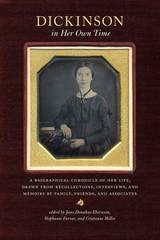
Dickinson in Her Own Time
A Biographical Chronicle of Her Life, Drawn from Recollections, Interviews, and Memoirs by Family, Friends, and AssociatesJane Donahue Eberwein, Stephanie Farrar, and Cristanne Miller
University of Iowa Press, 2015
In addition, promotional items, reviews, and correspondence relating to early publications are included, as well as some later documents that reveal the changing assessments of Dickinson’s poetry in response to evolving critical standards. These documents provide evidence that counters many popular conceptions of her life and reception, such as the belief that the writer best known for poems focused on loss, death, and immortality was herself a morose soul. In fact, those who knew her found her humorous, playful, and interested in other people.
Dickinson maintained literary and personal correspondence with major representatives of the national literary scene, developing a reputation as a remarkable writer even as she maintained extreme levels of privacy. Evidence compiled here also demonstrates that she herself made considerable provision for the survival of her poems and laid the groundwork for their eventual publication. Dickinson in Her Own Time reveals the poet as her contemporaries knew her, before her legend took hold.

Discovering Laws Of Life
TfpJohn Marks Templeton
Templeton Press, 1994

Discovering the Laws of Life
Sir John Templeton
Templeton Press, 2009
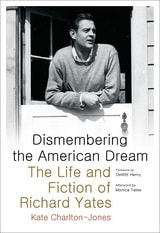
Dismembering the American Dream
The Life and Fiction of Richard YatesKate Charlton-Jones
University of Alabama Press, 2014
Since his death in Alabama in 1992, the work of American writer Richard Yates has enjoyed a renaissance, culminating in director Sam Mendes’s adaption of the novel Revolutionary Road (starring Leonardo DiCaprio and Kate Winslet). Dismembering the American Dream is the first book-length critical study of Yates’s fiction.
Kate Charlton-Jones argues that to read Yates’s tales of disordered lives is to uncover not misery, though the lives he describes are sad ones, but a profound, enriching, and humorous understanding of human weakness and vulnerability. Yates’s narratives absorb his readers so entirely, mirroring their own emotional highs and lows with such skill, that reading becomes recognition. Yates demonstrates his ability to tease powerful human drama out of the most ordinary, quotidian moments. At the same time, Yates’s fiction displays an object lesson in the art of fine prose writing, so it is no surprise that many early fans of Yates were also established writers.
Charlton-Jones explores how Yates extends the realist form and investigates three main recurring themes of his fiction: observations about performative behavior, which are at the heart of all his fictions; his conception of the writer’s role in society; and how he envisages the development of social and sexual relationships. Furthermore, Charlton-Jones illustrates how Yates incorporates some of the concerns and methods of postmodernist writers but how, nevertheless, he resists their ontological challenges.
Drawing on the author’s personal papers and with a foreword by DeWitt Henry and an afterword by Richard Yates’s daughter Monica, Dismembering the American Dream provides an extended critical examination of the often neglected but important work of this gifted and accomplished author.
Displaced
Life in the Katrina DiasporaEdited by Lynn Weber and Lori Peek
University of Texas Press, 2012
Hurricane Katrina forced the largest and most abrupt displacement in U.S. history. About 1.5 million people evacuated from the Gulf Coast preceding Katrina’s landfall. New Orleans, a city of 500,000, was nearly emptied of life after the hurricane and flooding. Katrina survivors eventually scattered across all fifty states, and tens of thousands still remain displaced. Some are desperate to return to the Gulf Coast but cannot find the means. Others have chosen to make their homes elsewhere. Still others found a way to return home but were unable to stay due to the limited availability of social services, educational opportunities, health care options, and affordable housing.
The contributors to Displaced have been following the lives of Katrina evacuees since 2005. In this illuminating book, they offer the first comprehensive analysis of the experiences of the displaced. Drawing on research in thirteen communities in seven states across the country, the contributors describe the struggles that evacuees have faced in securing life-sustaining resources and rebuilding their lives. They also recount the impact that the displaced have had on communities that initially welcomed them and then later experienced “Katrina fatigue” as the ongoing needs of evacuees strained local resources. Displaced reveals that Katrina took a particularly heavy toll on households headed by low-income African American women who lost the support provided by local networks of family and friends. It also shows the resilience and resourcefulness of Katrina evacuees who have built new networks and partnered with community organizations and religious institutions to create new lives in the diaspora.
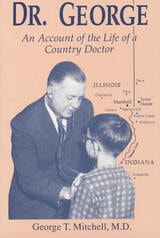
Doctor George
An Account of the Life of a Country DoctorGeorge T. Mitchell, M.D. Foreword by Glen W. Davidson
Southern Illinois University Press, 1993
Dr. George T. Mitchell of Marshall, Illinois, shares with humor and compassion stories and reflections about his medical practice of fifty years.
Having grown up in Marshall, Dr. Mitchell writes of his early experiences in midwestern America: basketball rivalries, school-boy pranks, and the traditions passed down through a family of doctors. Dr. Mitchell tells of his brief detour to obtain a degree in mechanical engineering, his decision to pursue a career in medicine, and his medical school experiences at the George Washington School of Medicine before the days of antibiotics and sophisticated medical technology. He vividly describes his subsequent service in World War II as a young surgeon at a military hospital helping injured soldiers resume normal lives while enduring the frustrations and occasional horrors of military life.
After the war, Dr. Mitchell joined his father’s practice in Marshall, where, he observes, he was among sixteen physicians in a rural county with a population of less than twenty thousand people. Within twenty-five years, the number of doctors had dropped to only four. In this memoir Dr. Mitchell conveys his unwillingness to just sit by and watch the health needs of his community increase while medical and other services decline. He, instead, became a community activist, representing rural concerns to the state medical society, organizing the first emergency medical technician teams in the county, masterminding the planning of a regional medical center, campaigning successfully for improved highway safety, and spurring the extension of reliable telephone service throughout his area.
As Dr. Mitchell recounts the house calls, farm accidents, emergency surgeries, and family counseling that comprised the life of this country doctor, he offers the keen insights of a clinician trained to look beyond what others only see.
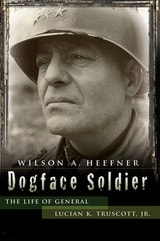
Dogface Soldier
The Life of General Lucian K. Truscott, Jr.Wilson A. Heefner
University of Missouri Press, 2026
Yet no definitive history of his life has been compiled. Wilson Heefner corrects that with the first authoritative biography of this distinguished American military leader. Heefner has undertaken impressive research in primary sources—as well as interviews with family members and former associates—to shed new light on this overlooked hero. He presents Truscott as a soldier who was shaped by his upbringing, civilian and military education, family life, friendships, and evolving experiences as a commander both in and out of combat.
Heefner’s brisk narrative explores Truscott’s career through his three decades in the Army and defines his roles in key operations. It also examines Truscott’s postwar role as military governor of Bavaria, particularly in improving living conditions for Jewish displaced persons, removing Nazis from civil government, and assisting in the trials of German war criminals. And it offers the first comprehensive examination of his subsequent career in the Central Intelligence Agency, where he served as senior CIA representative in West Germany during the early days of the Cold War, and later as CIA Director Allen Dulles’s deputy director for coordination in Washington.
Dogface Soldier is a portrait of a man who earned a reputation for being honest, forthright, fearless, and aggressive, both as a military officer and in his personal life—a man who, at the dedication ceremony for the Anzio-Nettuno American cemetery in 1945, turned away from the crowd and to the thousands of crosses stretching before him to address those buried there. Heefner has written a definitive biography of a great soldier and patriot.
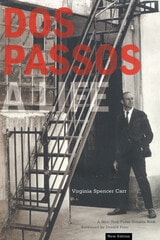
Dos Passos
A LifeVirginia Spencer Carr
Northwestern University Press, 2004
An intimate biography of a great American writer.
He rose from a childhood as the illegitimate son of a financial titan to become the man Sartre called "the greatest writer of our time." A progressive writer who turned his passions into the groundbreaking U.S.A. trilogy, John Dos Passos later embraced conservative causes. At the height of his career he was considered a peer of Hemingway and Fitzgerald, yet he died in obscurity in 1970.
Award-winning biographer Virginia Spencer Carr examines the contradictions of Dos Passos's life with an in-depth study of the man. Using the writer's letters and journals, and with assistance from the Dos Passos family, Carr reconstructs an epic life, one of literary acclaim and bitter obscurity, restless wandering and happy marriage, friendship with Edmund Wilson and feuds with Hemingway. First published to acclaim in 1984, Dos Passos remains the definitive personal portrait of the author.
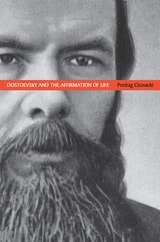
Dostoevsky and the Affirmation of Life
Predrag Cicovacki
St. Augustine's Press, 2008
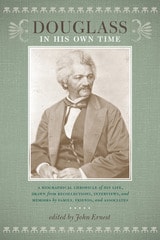
Douglass in His Own Time
A Biographical Chronicle of His Life, Drawn from Recollections, Interviews, and Memoirs by Family, Friends, and AssociatesJohn Ernest
University of Iowa Press, 2014
As valuable as these writings are in illuminating the man, the story Douglass told in 1845 has become rather too easy to tell, obscuring as much as it reveals. Less a living presence than an inspiring tale, Frederick Douglass remains relatively unknown even to many of those who celebrate his achievements. Douglass in His Own Time offers an introduction to Douglass the man by those who knew him. The book includes a broad range of writings, some intended for public viewing and some private correspondence, all of which contend with the force of Douglass’s tremendous power over the written and spoken word, his amazing presence before crowds, his ability to improvise, to entertain, to instruct, to inspire—indeed, to change lives through his eloquent appeals to righteous self-awareness and social justice. In approaching Douglass through the biographical sketches, memoirs, letters, editorials, and other articles about him, readers will encounter the complexity of a life lived on a very public stage, the story of an extraordinary black man in an insistently white world.

Drawing Processes of Life
Molecules, Cells, OrganismsEdited by Gemma Anderson-Tempini and John Dupré
Intellect Books, 2023
An artist sketching cell division faces a problem: what is the best way to visually represent a dynamic process? This anthology, edited by an artist and a philosopher of science, explores drawing as a way of inquiring into living processes at the molecular, cellular, and organismal scale. In doing so, drawing emerges as a tool for relaying and uncovering knowledge—a pathway for research, not an end result.
Incorporating drawing studies and contributions from scholars in the humanities and life sciences, Drawing Processes of Life addresses epigenetics, epistemology, and metamorphosis in insects, proteins, and other ever-shifting biological systems. A foreword by Scott F. Gilbert, a renowned evolutionary biologist and historian of science, affirms the promise of interdisciplinary collaboration between artists and scientists.

Dream Song
The Life of John BerrymanMariani Paul
University of Massachusetts Press, 1996
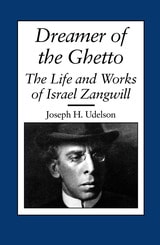
Dreamer of the Ghetto
The Life and Works of Israel ZangwillJoseph H. Udelson
University of Alabama Press, 1990
"An impressive achievement. . . . Udelson provides a trenchant analysis of Zangwill's works set within a historical context, i.e., Jewish emancipation and the dilemma of how one might remain fully Jewish while becoming fully modern, that helps to illuminate Zangwill's life as well as his writings."
—Jewish Book News
"By carefully following the threads of Zangwill's own divided self through the labyrinths of his life and writings, Udelson convinces us not only of the author's startling political prescience, but that he embodies attitudes now shared by almost all secular Jews as a result of events Zangwill did not witness—Nazism and the founding of Israel."
—Shofar
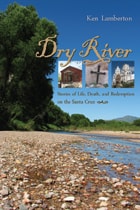
Dry River
Stories of Life, Death, and Redemption on the Santa CruzKen Lamberton
University of Arizona Press, 2011
Here, Ken Lamberton finds his way through a lifetime of exploring southern Arizona’s Santa Cruz River. This river—dry, still, and silent one moment, a thundering torrent of mud the next—serves as a reflection of the desert around it: a hint of water on parched sand, a path to redemption across a thirsty landscape.
With his latest book, Lamberton takes us on a trek across the land of three nations—the United States, Mexico, and the Tohono O’odham Nation—as he hikes the river’s path from its source and introduces us to people who draw identity from the river—dedicated professionals, hardworking locals, and the author’s own family. These people each have their own stories of the river and its effect on their lives, and their narratives add immeasurable richness and depth to Lamberton’s own astute observations and picturesque descriptions.
Unlike books that detail only the Santa Cruz’s decline, Dry River offers a more balanced, at times even optimistic, view of the river that ignites hope for reclamation and offers a call to action rather than indulging in despair and resignation. At once a fascinating cultural history lesson and an important reminder that learning from the past can help us fix what we have damaged, Dry River is both a story about the amazing complexity of this troubled desert waterway and a celebration of one man’s lifelong journey with the people and places touched by it.
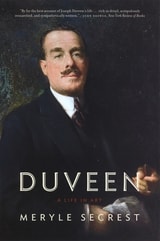
Duveen
A Life in ArtMeryle Secrest
University of Chicago Press, 2005
The first major biography of Duveen in more than fifty years and the first to make use of his enormous archive—only recently opened to the public—Meryle Secrest's Duveen traces the rapid ascent of the tirelessly enterprising dealer, from his humble beginnings running his father's business to knighthood and eventually apeerage. The eldest of eight sons of Jewish-Dutch immigrants, Duveen inherited an uncanny ability to spot a hidden treasure from his father, proprietor of a prosperous antiques business. After his father's death, Duveen moved the company into the riskier but lucrative market of paintings and quickly became one of the world's leading art dealers. The key to Duveen's success was his simple observation that while Europe had the art, America had the money; Duveen made his fortune by buying art from declining European aristocrats and selling them to the "squillionaires" in the United States.
"By far the best account of Joseph Duveen's life in a biography that is rich in detail, scrupulously researched, and sympathetically written. [Secrest's] inquiries into early-twentieth-century collecting whet our appetite for a more general history of the art market in the first half of the twentieth century."—John Brewer, New York Review of Books
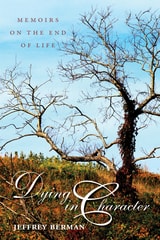
Dying in Character
Memoirs on the End of LifeJeffrey Berman
University of Massachusetts Press, 2012
Examining the works cited above, as well as memoirs by Mitch Albom, Roland Barthes, Jean-Dominique Bauby, Art Buchwald, Randy Pausch, David Rieff, Philip Roth, and Morrie Schwartz, Jeffrey Berman's analysis of this growing genre yields some surprising insights. While the authors have much to say about the loneliness and pain of dying, many also convey joy, fulfillment, and gratitude. Harold Brodkey is willing to die as long as his writings survive. Art Buchwald and Randy Pausch both use the word fun to describe their dying experiences. Dying was not fun for Morrie Schwartz and Tony Judt, but they reveal courage, satisfaction, and fearlessness during the final stage of their lives, when they are nearly paralyzed by their illnesses.
It is hard to imagine that these writers could feel so upbeat in their situations, but their memoirs are authentically affirmative. They see death coming, yet they remain stalwart and focused on their writing. Berman concludes that the contemporary end-of-life memoir can thus be understood as a new form of death ritual, "a secular example of the long tradition of ars moriendi, the art of dying."