Results by title
1445 books match the query 'Life Sciences' and 47 start with d
Dancing at the Dead Sea
Tracking the World's Environmental HotspotsAlanna Mitchell
University of Chicago Press, 2005
Combining scientific curiosity with travel and adventure, Dancing at the Dead Sea takes the reader on an intimate tour through the world's environmental hotspots. Readers join Mitchell as she tracks the spectacular biodiversity of regions as extraordinary as the island of Madagascar, the rain forests of Suriname, the parched oases of Jordan, the Arctic desert of Banks Island, the volcanic crests of Iceland, and, ultimately, the Galapagos archipelago, where Darwin conducted his famous research. Along the way, Mitchell introduces us to the numerous scientists and conservationists who are working to protect these endangered places. She also chronicles the courageous efforts of everyday men and women in these regions as they try to convince governments to turn the world's hotspots into environmentally protected areas.
Ultimately, Mitchell's travels around the world compel her to ponder our shelf life as a species in the grand evolutionary scheme of the planet. She wonders what Darwin would make of the profound ecological destruction she witnesses. Is the human race suicidal? What can help our species avert extinction? Posing tough and cutting questions such as these, Dancing at the Dead Sea is a must-read for aficionados of good science writing and travel literature alike.
Dangerous Work
Diary of an Arctic AdventureArthur Conan Doyle
University of Chicago Press, 2012
In 1880 a young medical student named Arthur Conan Doyle embarked upon the “first real outstanding adventure” of his life, taking a berth as ship’s surgeon on an Arctic whaler, the Hope. The voyage took him to unknown regions, showered him with dramatic and unexpected experiences, and plunged him into dangerous work on the ice floes of the Arctic seas. He tested himself, overcame the hardships, and, as he wrote later, “came of age at 80 degrees north latitude.”
A special limited, numbered edition of the clothbound book is also available. In addition, a text-only e-book edition is published as Dangerous Work: Diary of an Arctic Adventure, Text-only Edition.

Dangerous Work
Diary of an Arctic Adventure, Text-only EditionArthur Conan Doyle
University of Chicago Press, 2012
This e-book features the complete text found in the print edition of Dangerous Work, without the illustrations or the facsimile reproductions of Conan Doyle's notebook pages.
Darwin Deleted
Imagining a World without DarwinPeter J. Bowler
University of Chicago Press, 2013
In Darwin Deleted, Bowler argues that no one else, not even Wallace, was in a position to duplicate Darwin’s complete theory of evolution by natural selection. Evolutionary biology would almost certainly have emerged, but through alternative theories, which were frequently promoted by scientists, religious thinkers, and moralists who feared the implications of natural selection. Because non-Darwinian elements of evolutionism flourished for a time in the real world, it is possible to plausibly imagine how they might have developed, particularly if the theory of natural selection had not emerged until decades after the acceptance of the basic idea of evolution. Bowler’s unique approach enables him to clearly explain the non-Darwinian tradition—and in doing so, he reveals how the reception of Darwinism was historically contingent. By taking Darwin out of the equation, Bowler is able to fully elucidate the ideas of other scientists, such as Richard Owen and Thomas Huxley, whose work has often been misunderstood because of their distinctive responses to Darwin.
Darwin and the Emergence of Evolutionary Theories of Mind and Behavior
Robert J. Richards
University of Chicago Press, 1987
"Richards's book is now the obvious introduction to the history of ideas about mind and behavior in the nineteenth century."—Mark Ridley, Times Literary Supplement
"Not since the publication of Michael Ghiselin's The Triumph of the Darwinian Method has there been such an ambitious, challenging, and methodologically self-conscious interpretation of the rise and development and evolutionary theories and Darwin's role therein."—John C. Greene, Science
"His book . . . triumphantly achieves the goal of all great scholarship: it not only informs us, but shows us why becoming thus informed is essential to understanding our own issues and projects."—Daniel C. Dennett, Philosophy of Science
Darwin and the General Reader
The Reception of Darwin's Theory of Evolution in the British Periodical Press, 1859-1872Alvar Ellegård
University of Chicago Press, 1990
Darwin and the Making of Sexual Selection
Evelleen Richards
University of Chicago Press, 2017
Only now, with Darwin and the Making of Sexual Selection, do we have a comprehensive and meticulously researched account of Darwin’s path to its formulation—one that shows the man, rather than the myth, and examines both the social and intellectual roots of Darwin’s theory. Drawing on the minutiae of his unpublished notes, annotations in his personal library, and his extensive correspondence, Evelleen Richards offers a richly detailed, multilayered history. Her fine-grained analysis comprehends the extraordinarily wide range of Darwin’s sources and disentangles the complexity of theory, practice, and analogy that went into the making of sexual selection. Richards deftly explores the narrative strands of this history and vividly brings to life the chief characters involved. A true milestone in the history of science, Darwin and the Making of Sexual Selection illuminates the social and cultural contingencies of the shaping of an important—if controversial—biological concept that is back in play in current evolutionary theory.
Darwin and the Novelists
Patterns of Science in Victorian FictionGeorge Levine
University of Chicago Press, 1991
Darwin's Cathedral
Evolution, Religion, and the Nature of SocietyDavid Sloan Wilson
University of Chicago Press, 2003
The key, argues Wilson, is to think of society as an organism, an old idea that has received new life based on recent developments in evolutionary biology. If society is an organism, can we then think of morality and religion as biologically and culturally evolved adaptations that enable human groups to function as single units rather than mere collections of individuals? Wilson brings a variety of evidence to bear on this question, from both the biological and social sciences. From Calvinism in sixteenth-century Geneva to Balinese water temples, from hunter-gatherer societies to urban America, Wilson demonstrates how religions have enabled people to achieve by collective action what they never could do alone. He also includes a chapter considering forgiveness from an evolutionary perspective and concludes by discussing how all social organizations, including science, could benefit by incorporating elements of religion.
Religious believers often compare their communities to single organisms and even to insect colonies. Astoundingly, Wilson shows that they might be literally correct. Intended for any educated reader, Darwin's Cathedral will change forever the way we view the relations among evolution, religion, and human society.
Darwin's Evolving Identity
Adventure, Ambition, and the Sin of SpeculationAlistair Sponsel
University of Chicago Press, 2018
Drawing on his own ambitious research in Darwin’s manuscripts and at the Beagle’s remotest ports of call, Sponsel takes us from the ocean to the Origin and beyond. He provides a vivid new picture of Darwin’s career as a voyaging naturalist and metropolitan author, and in doing so makes a bold argument about how we should understand the history of scientific theories.
Darwin's Finches
Readings in the Evolution of a Scientific ParadigmEdited, with Commentary, by Kathleen Donohue
University of Chicago Press, 2011
Two species come to mind when one thinks of the Galapagos Islands—the giant tortoises and Darwin’s fabled finches. While not as immediately captivating as the tortoises, these little brown songbirds and their beaks have become one of the most familiar and charismatic research systems in biology, providing generations of natural historians and scientists a lens through which to view the evolutionary process and its role in morphological differentiation.
In Darwin’s Finches, Kathleen Donohue excerpts and collects the most illuminating and scientifically significant writings on the finches of the Galapagos to teach the fundamental principles of evolutionary theory and to provide a historical record of scientific debate. Beginning with fragments of Darwin’s Galapagos field notes and subsequent correspondence, and moving through the writings of such famed field biologists as David Lack and Peter and Rosemary Grant, the collection demonstrates how scientific processes have changed over time, how different branches of biology relate to one another, and how they all relate to evolution. As Donohue notes, practicing science today is like entering a conversation that has been in progress for a long, long time. Her book provides the history of that conversation and an invitation to join in. Students of both evolutionary biology and history of science will appreciate this compilation of historical and contemporary readings and will especially value Donohue’s enlightening commentary.
Darwin's Footprint
Cultural Perspectives on Evolution in Greece (1880–1930s)Maria Zarimis
Central European University Press, 2015
Darwin’s Footprint examines the impact of Darwinism in Greece, investigating how it has shaped Greece in terms of its cultural and intellectual history, and in particular its literature.
The book demonstrates that in the late 19th to early 20th centuries Darwinism and associated science strongly influenced celebrated Greek literary writers and other influential intellectuals, which fueled debate in various areas such as ‘man’s place in nature’, eugenics, the nature-nurture controversy, religion, as well as class, race and gender.
In addition, the study reveals that many of these individuals were also considering alternative approaches to these issues based on Darwinian and associated biological post-Darwinian ideas. Their concerns included the Greek “race” or nation, its culture, language and identity; also politics and gender equality.
Zarimis’s monograph devotes considerable space to Xenopoulos (1867-1951), notable novelist, journalist and playwright.
Darwin's Most Wonderful Plants
A Tour of His Botanical LegacyKen Thompson
University of Chicago Press, 2019
Darwin was a brilliant and revolutionary botanist whose observations and theories were far ahead of his time. With Darwin’s Most Wonderful Plants, biologist and gardening expert Ken Thompson restores this important aspect of Darwin’s biography while also delighting in the botanical world that captivated the famous scientist. Thompson traces how well Darwin’s discoveries have held up, revealing that many are remarkably long-lasting. Some findings are only now being confirmed and extended by high-tech modern research, while some have been corrected through recent analysis.
We learn from Thompson how Darwin used plants to shape his most famous theory and then later how he used that theory to further push the boundaries of botanical knowledge. We also get to look over Darwin’s shoulder as he labors, learning more about his approach to research and his astonishing capacity for hard work. Darwin’s genius was to see the wonder and the significance in the ordinary and mundane, in the things that most people wouldn’t look at twice.
Both Thompson and Darwin share a love for our most wonderful plants and the remarkable secrets they can unlock. This book will instill that same joy in casual gardeners and botany aficionados alike.
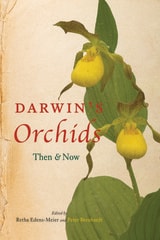
Darwin's Orchids
Then and NowEdited by Retha Edens-Meier and Peter Bernhardt
University of Chicago Press, 2014
Mirroring the structure of Fertilisation of Orchids, Darwin’s Orchids investigates flowers from Darwin’s home in England, through the southern hemisphere, and on to North America and China as it seeks to address a set of questions first put forward by Darwin himself: What pollinates this particular type of orchid? How does its pollination mechanism work? Will an orchid self-pollinate or is an insect or other animal vector required? And how has this orchid’s lineage changed over time? Diverse in their colors, forms, aromas, and pollination schemes, orchids have long been considered ideal models for the study of plant evolution and conservation. Looking to the past, present, and future of botany, Darwin’s Orchids will be a vital addition to this tradition.
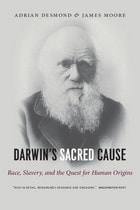
Darwin's Sacred Cause
Race, Slavery and the Quest for Human OriginsAdrian Desmond and James Moore
University of Chicago Press, 2011
There has always been a mystery surrounding Darwin: How did this quiet, respectable gentleman come to beget one of the most radical ideas in the history of human thought? It is difficult to overstate what Darwin was risking in publishing his theory of evolution. So it must have been something very powerful—a moral fire, as Desmond and Moore put it—that helped propel him. That moral fire, they argue, was a passionate hatred of slavery.
In opposition to the apologists for slavery who argued that blacks and whites had originated as separate species, Darwin believed the races belonged to the same human family. Slavery was a “sin,” and abolishing it became his “sacred cause.” By extending the abolitionists’ idea of human brotherhood to all life, Darwin developed our modern view of evolution.
Drawing on a wealth of fresh manuscripts, family letters, diaries, and even ships’ logs, Desmond and Moore argue that only by acknowledging Darwin’s abolitionist heritage can we fully understand the development of his groundbreaking ideas.
Darwinian Politics
The Evolutionary Origin of FreedomRubin, Paul H.
Rutgers University Press, 2002
Darwinian Politics is the first book to examine political behavior from a modern evolutionary perspective. Here, Paul H. Rubin discusses group or social behavior, including ethnic and racial conflict; altruism and cooperation; envy; political power; and the role of religion in politics ¾ issues that have formed the hallmark of human social behavior.
Adopting a Darwinian perspective, Rubin demonstrates why certain political-moral philosophies succeed or fail in modern Western culture. He begins by showing relationships between biology and natural selection and the history of political philosophy and explains why desirable policies must treat each person as an individual. He considers the notion of group identity and conflict, observing a human propensity to form in-groups, a behavior that does not necessitate but often leads to deviancies such as racism. In discussing altruism, Rubin shows that people are willing to aid the poor if they are convinced that the recipients are not shirkers or free loaders. This explains why recent welfare reforms are widely viewed as successful. Envy, a trait that is often counterproductive in today’s world, is also addressed. In comparing major moral philosophical systems, Rubin contends that utilitarianism is broadly consistent with our evolved preferences. He illustrates evolutionary premises for religious belief and for desires to regulate the behavior of others, and how in today’s world such regulation may not serve any useful purpose.
Ultimately, Rubin argues that humans naturally seek political freedom, and modern Western society provides more freedom than any previous one. In light of his analysis, the author extrapolates that, while there are still areas for improvements, humans have done a remarkably good job of satisfying their evolved political preferences.
Darwinian Reductionism
Or, How to Stop Worrying and Love Molecular BiologyAlexander Rosenberg
University of Chicago Press, 2006
With clarity and wit, Darwinian Reductionism navigates this difficult and seemingly intractable dualism with convincing analysis and timely evidence. In the spirit of the few distinguished biologists who accept reductionism—E. O. Wilson, Francis Crick, Jacques Monod, James Watson, and Richard Dawkins—Rosenberg provides a philosophically sophisticated defense of reductionism and applies it to molecular developmental biology and the theory of natural selection, ultimately proving that the physicalist must also be a reductionist.
Data-Centric Biology
A Philosophical StudySabina Leonelli
University of Chicago Press, 2016
Leonelli is the first scholar to use a study of contemporary data-intensive science to provide a philosophical analysis of the epistemology of data. In analyzing the rise, internal dynamics, and potential impact of data-centric biology, she draws on scholarship across diverse fields of science and the humanities—as well as her own original empirical material—to pinpoint the conditions under which digitally available data can further our understanding of life. Bridging the divide between historians, sociologists, and philosophers of science, Data-Centric Biology offers a nuanced account of an issue that is of fundamental importance to our understanding of contemporary scientific practices.

Dealing with Risk
Why the Public and the Experts Disagree on Environmental IssuesHoward Margolis
University of Chicago Press, 1997
In Dealing with Risk, Howard Margolis moves beyond the usual "rival rationalities" explanation proffered by risk analysts for the rift between expert and lay opinion. He reveals the conflicts of intuition that undergird those concerns, and proposes a new approach to the psychology of persuasion and belief. Examining the role of intuition, mental habits, and cognitive frameworks in the construction of public opinion, this compelling account bridges the public policy impasse that has plagued controversial environmental issues.
Debating Darwin
Robert J. Richards and Michael Ruse
University of Chicago Press, 2016
Examining key disagreements about Darwin that continue to confound even committed Darwinists, Richards and Ruse offer divergent views on the origins and nature of Darwin and his ideas. Ruse argues that Darwin was quintessentially British and that the roots of his thought can be traced back to the eighteenth century, particularly to the Industrial Revolution and thinkers such as Adam Smith and Thomas Robert Malthus. Ruse argues that when these influences are appreciated, we can see how Darwin’s work in biology is an extension of their theories. In contrast, Richards presents Darwin as a more cosmopolitan, self-educated man, influenced as much by French and particularly German thinkers. Above all, argues Richards, it was Alexander von Humboldt who both inspired Darwin and gave him the conceptual tools that he needed to find and formulate his evolutionary hypotheses. Together, the authors show how the reverberations of the contrasting views on Darwin’s influences can be felt in theories about the nature of natural selection, the role of metaphor in science, and the place of God in Darwin’s thought.
Revealing how much there still is to investigate and interrogate about Darwin’s ideas, Debating Darwin contributes to our understanding of evolution itself. The book concludes with a jointly authored chapter that brings this debate into the present, focusing on human evolution, consciousness, religion, and morality. This will be powerful, essential reading for anyone seeking a comprehensive understanding of modern-day evolutionary science and philosophy.
Deceptive Beauties
The World of Wild OrchidsChristian Ziegler
University of Chicago Press, 2011
Deep Thinkers
Inside the Minds of Whales, Dolphins, and PorpoisesEdited by Janet Mann
University of Chicago Press, 2017
Diving into our current understanding of and dynamic research on dolphin and whale cognition, communication, and culture, Deep Thinkers reveals how incredibly sophisticated these mammals are—and how much we can learn about other animal minds by studying cetacean behavior. Through a combination of fascinating text and more than 150 beautiful and informative illustrations, chapters compare the intelligence markers of cetaceans with those of birds, bats, and primates, asking how we might properly define intelligence in nonhumans. As all-encompassing and profound as the seas in which these deep cetacean cultures have evolved, Deep Thinkers is an awesome and inspiring journey into the fathoms—a reminder of what we gain through their close study, and of what we lose when the great minds of the sea disappear.
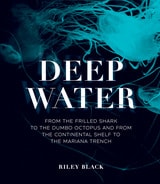
Deep Water
From the Frilled Shark to the Dumbo Octopus and from the Continental Shelf to the Mariana TrenchRiley Black
University of Chicago Press, 2023
What lies beneath the surface of the ocean has mystified humankind for millennia. Today, we have explored more of the surface of the Moon than we have the deep sea. What thrives in these mysterious depths, how did these life-forms evolve from ancient life, and how has this environment changed over time as our planet has developed?
Introducing us to the ancient, complex, and fascinating life-forms that have evolved into the marine life we recognize today—from stromatolites, structures created by some of the earliest life billions of years ago and still found today, to yeti crabs, bioluminescent firefly squid, and giant jellyfish—Deep Water is an eye-opening journey into the world far beneath the waves. Our guide, brilliant science communicator and self-described “fossil fanatic” Riley Black, has studied marine biology and paleontology, and she brings her vast knowledge and inimitable voice to our voyage. Through text and image, Black leads us further and further into the depths to reveal how this unique and largely unexplored habitat came into being, what lives there and why, how it has evolved, and what the future will bring in this dark and mysterious environment.
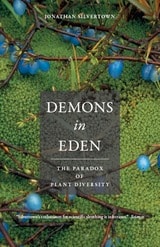
Demons in Eden
The Paradox of Plant DiversityJonathan Silvertown
University of Chicago Press, 2005
Demons in Eden considers these questions using the latest scientific discoveries from the plant world. Readers join Silvertown as he explores the astonishing diversity of plant life in regions as spectacular as the verdant climes of Japan, the lush grounds of the Royal Botanical Gardens at Kew, the shallow wetlands and teeming freshwaters of Florida, the tropical rainforests of southeast Mexico, and the Canary Islands archipelago, whose evolutionary novelties—and exotic plant life—have earned it the sobriquet "the Galapagos of botany." Along the way, Silvertown looks closely at the evolution of plant diversity in these locales and explains why such variety persists in light of ecological patterns and evolutionary processes. In novel and useful ways, he also investigates the current state of plant diversity on the planet to show the ever-challenging threats posed by invasive species and humans.
Bringing the secret life of plants into more colorful and vivid focus than ever before, Demons in Eden is an empathic and impassioned exploration of modern plant ecology that unlocks evolutionary mysteries of the natural world.
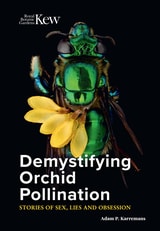
Demystifying Orchid Pollination
Stories of Sex, Lies and ObsessionAdam P. Karremans
Royal Botanic Gardens, Kew, 2023
Demystifying Orchid Pollination explores the fascinating history of orchids and the means by which they reproduce. Adam P. Karremans reveals orchids’ hidden secrets, highlights the key role of pollinators in securing the survival of these delicate plants, and provides past and present scientific knowledge that challenges common beliefs about orchid reproduction. Demystifying Orchid Pollination celebrates biodiversity while stressing the importance of further ecological study and advocating for increased conservation efforts and thorough research and development.
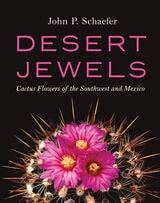
Desert Jewels
Cactus Flowers of the Southwest and MexicoJohn P. Schaefer
University of Arizona Press, 2023
Stunning up-close images by a renowned desert photographer
Cactus flowers are jewels of the desert—they add brilliant pops of color to our arid surroundings. In this book, renowned Tucson photographer John P. Schaefer brings the exquisite and unexpected beauty of the cactus flower to the page. Hundreds of close-up photographs of cactus flowers native to the U.S. Southwest and Mexico offer a visual feast of color and texture, nuance and light.
These stunning photographs allow us to appreciate the spectacular range of color and form cactus flowers have to offer. For the cactus enthusiast, the book offers a comprehensive collection of high-quality flower photographs unlike any other. The photographs cover more than 250 cactus species organized by genus. The book starts with an introduction by the photographer that is both autobiographical and informative. It offers a glimpse into his process for capturing these elusive desert gems, resulting in photographs so beautiful they were featured as a book of stamps issued by the U.S. Postal Service.
This collection of cactus flowers in bloom is a one-of-a-kind work by a master photographer.
Design with Nature on Cape Cod and the Islands
Jack Ahern
University of Massachusetts Press, 2022
Design with Nature on Cape Cod and the Islands seeks to reverse this damaging trend by offering landscape professionals, local officials, and homeowners a sustainable approach to landscape design based on the ecoregion’s native plants and plant communities. Presenting detailed discussions of Cape Cod’s natural history, Jack Ahern focuses on the principal plant communities that define its landscape character and that are well adapted to local soils and growing conditions, including climate change. The book also includes strategies for ecological planting design and a portfolio of photographs of active ecologically designed landscapes.
Desolate Landscapes
Ice-Age Settlement in Eastern EuropeJohn F. Hoffecker
Rutgers University Press, 2002
Ice-Age Eastern Europe was an inhospitable place, isolated from the moderating influence of oceans. Unlike Western Europe, which was settled over half a million years ago, Eastern Europe remained largely unoccupied until the appearance of the cold-adapted Neanderthals. When modern humans arrived from southern latitudes, they were anatomically less suited to colder climates, but successfully colonized Eastern Europe with the aid of innovative technologies that their Neanderthal predecessors lacked.
John F. Hoffecker provides an overview of Pleistocene or Ice-Age settlement in Eastern Europe with a heavy focus on the adaptations of Neanderthals and modern humans to this harsh environmental setting. Hoffecker argues that the Eastern European record reveals a stark contrast between Neanderthals and modern humans with respect to technology and social organization, both of which are tied to the development of language and the use of symbols. Desolate Landscapes will bring readers up to date with the rich archaeological record in this significant region and its contribution to our understanding of one of our most important events in human evolution - the rise of modern humans and the extinction of the Neanderthals.
The book is divided into seven chapters. The first discusses general anthropological principles and theories pertaining to human adaptation and development in cold environments. The second outlines the environmental conditions of the specific area under study in the book.
The next two chapters focus on Neanderthal finds in the area. The following two chapters discuss the replacement of the local Neanderthal population by the Cro-magnons, and the development of their way of life in the cold Loess Steppe environment. The final chapter summarizes the discussion and is followed by an extremely valuable and extensive bibliography, more than half of which consists of non-English (primarily Russian) sources.
Dialogues on the Human Ape
Laurent Dubreuil
University of Minnesota Press, 2018
A primatologist and a humanist together explore the meaning of being a “human animal”
Humanness is typically defined by our capacity for language and abstract thinking. Yet decades of research led by the primatologist Sue Savage-Rumbaugh has shown that chimpanzees and bonobos can acquire human language through signing and technology.
Drawing on this research, Dialogues of the Human Ape brings Savage-Rumbaugh into conversation with the philosopher Laurent Dubreuil to explore the theoretical and practical dimensions of what being a “human animal” means. In their use of dialogue as the primary mode of philosophical and scientific inquiry, the authors transcend the rigidity of scientific and humanist discourses, offering a powerful model for the dissemination of speculative hypotheses and open-ended debates grounded in scientific research.
Arguing that being human is an epigenetically driven process rather than a fixed characteristic rooted in genetics or culture, this book suggests that while humanness may not be possible in every species, it can emerge in certain supposedly nonhuman species. Moving beyond irrational critiques of ape consciousness that are motivated by arrogant, anthropocentric views, Dialogues on the Human Ape instead takes seriously the continuities between the ape mind and the human mind, addressing why language matters to consciousness, free will, and the formation of the “human animal” self.
Diamonds in the Marsh
A Natural History of the Diamondback TerrapinBarbara Brennessel
Brandeis University Press, 2021
She’s the mascot for the University of Maryland’s sports teams and her ancestors were nearly driven to extinction by Victorians who indulged in turtle soup. But as she buries herself in the mud every night to sleep, the diamondback terrapin knows none of this. The size of a dinner plate and named for the beautiful concentric rings on her shell, she can live at least forty years and is the only turtle in North America who can live in brackish and salty waters. Several diamondback populations have been the subjects of ecological studies in recent years, but most of that information was buried in scientific literature and various state and federal reports—until this book.
Synthesizing all known research on this remarkable animal, Diamonds in the Marsh is the first full-scale natural history of the diamondback terrapin. Focusing on the northern diamondback, Barbara Brennessel examines its evolution, physiology, adaptations, behavior, growth patterns, life span, genetic diversity, land use, reproduction, and early years. She also discusses its relationship to humans, first as an important food source from colonial times through the nineteenth century, and more recently as a cultural icon, frequently depicted in Native American art and design. She concludes with a look at contemporary hazards to the terrapin and urges continued study of this marvelous creature. Updated with a new introduction by Brennessel, and with a foreword by Bob Prescott, former executive director of Massachusett’s Audubon Wellfleet Bay Sanctuary, Diamonds of the Marsh is perfect for those interested in the conservation of a species.
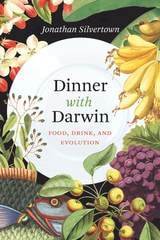
Dinner with Darwin
Food, Drink, and EvolutionJonathan Silvertown
University of Chicago Press, 2017
A delectable concoction of coevolution and cookery, gut microbiomes and microherbs, and both the chicken and its egg, Dinner with Darwin reveals that our shopping lists, recipe cards, and restaurant menus don’t just contain the ingredients for culinary delight. They also tell a fascinating story about natural selection and its influence on our plates—and palates. Digging deeper, Silvertown’s repast includes entrées into GMOs and hybrids, and looks at the science of our sensory interactions with foods and cooking—the sights, aromas, and tastes we experience in our kitchens and dining rooms. As is the wont of any true chef, Silvertown packs his menu with eclectic components, dishing on everything from Charles Darwin’s intestinal maladies to taste bud anatomy and turducken.
Our evolutionary relationship with food and drink stretches from the days of cooking cave dwellers to contemporary crêperies and beyond, and Dinner with Darwin serves up scintillating insight into the entire, awesome span. This feast of soup, science, and human society is one to savor. With a wit as dry as a fine pinot noir and a cache of evolutionary knowledge as vast as the most discerning connoisseur’s wine cellar, Silvertown whets our appetites—and leaves us hungry for more.
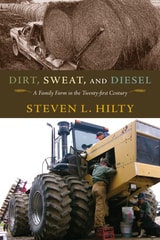
Dirt, Sweat, and Diesel
A Family Farm in the Twenty-first CenturySteven L. Hilty
University of Missouri Press, 2016
With very few people engaged in agriculture today, it is no surprise that most Americans have little understanding of the challenges that modern farmers face. This book provides readers a glimpse into life on a modern Missouri farm where a variety of grains, grass seed, corn, and cattle are produced. All of the conversations, events, and descriptions are drawn from the author’s experience working alongside and observing this father and son family farm operation during the course of a year.
Farming today is technologically complex and requires a broad set of skills that range from soil conservation, animal husbandry, and mechanics to knowledge of financial markets and computer technology. The focus on skills, in addition to the size of the financial risks, and the number of unexpected challenges along the way provides readers with a new perspective and appreciation for modern farm life.
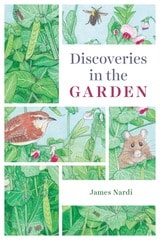
Discoveries in the Garden
James B. Nardi
University of Chicago Press, 2018
Leading us through the garden gate, Nardi reveals the extraordinary daily lives and life cycles of a quick-growing, widely available, and very accommodating group of study subjects: garden plants. Through close observations and simple experiments we all can replicate at home, we learn the hidden stories behind how these plants grow, flower, set seeds, and produce fruits, as well as the vital role dead and decomposing plants play in nourishing the soil. From pollinators to parasites, plant calisthenics to the wisdom of weeds, Nardi’s tale also introduces us to our fellow animal and microbial gardeners, the community of creatures both macro- and microscopic with whom we share our raised beds. Featuring a copse of original, informative illustrations that are as lush as the garden plants themselves, Discoveries in the Garden is an enlightening romp through the natural history, science, beauty, and wonder of these essential green places.
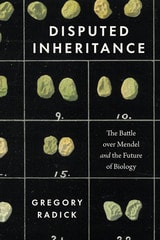
Disputed Inheritance
The Battle over Mendel and the Future of BiologyGregory Radick
University of Chicago Press, 2023
In 1900, almost no one had heard of Gregor Mendel. Ten years later, he was famous as the father of a new science of heredity—genetics. Even today, Mendelian ideas serve as a standard point of entry for learning about genes. The message students receive is plain: the twenty-first century owes an enlightened understanding of how biological inheritance really works to the persistence of an intellectual inheritance that traces back to Mendel’s garden.
Disputed Inheritance turns that message on its head. As Gregory Radick shows, Mendelian ideas became foundational not because they match reality—little in nature behaves like Mendel’s peas—but because, in England in the early years of the twentieth century, a ferocious debate ended as it did. On one side was the Cambridge biologist William Bateson, who, in Mendel’s name, wanted biology and society reorganized around the recognition that heredity is destiny. On the other side was the Oxford biologist W. F. R. Weldon, who, admiring Mendel's discoveries in a limited way, thought Bateson's "Mendelism" represented a backward step, since it pushed growing knowledge of the modifying role of environments, internal and external, to the margins. Weldon's untimely death in 1906, before he could finish a book setting out his alternative vision, is, Radick suggests, what sealed the Mendelian victory.
Bringing together extensive archival research with searching analyses of the nature of science and history, Disputed Inheritance challenges the way we think about genetics and its possibilities, past, present, and future.

Distribution of Illinois Vascular Plants
Robert H. Mohlenbrock and Douglas M. Ladd
Southern Illinois University Press, 1978
There are 251 pages of distribution maps included in this book. The plants are arranged alphabetically by genus, and under each genus alphabetically by species. The nomenclature follows Mohlenbrock, Guide to the Vascular Flora of Illinois (1975).
In addition, a list of synonyms applied to Illinois taxa by Fernald (1950), Gleason (1952), and Jones (1963) follows the distribution maps.
Finally, in order to gain an understanding of relationships of the plants in the Illinois flora, all 3,001 taxa are arranged in a phylogenetic sequence at the end of the book.

Diving Seals and Meditating Yogis
Strategic Metabolic RetreatsRobert Elsner
University of Chicago Press, 2015
As Elsner reveals, survival in extreme conditions such as those faced by seals is often not about running for cover or coming up for air, but rather about working within the confines of an environment and suppressing normal bodily function. Animals in this withdrawn state display reduced resting metabolic rates and are temporarily less dependent upon customary levels of oxygen. For diving seals—creatures especially well-adapted to prolonged submergence in the ocean’s cold depths—such periods of rest lengthen dive endurance. But while human divers share modest, brief adjustments of suppressed metabolism with diving seals, it is the practiced response achieved during deep meditation that is characterized by metabolic rates well below normal levels, sometimes even approaching those of non-exercising diving seals. And the comparison does not end here: hibernating animals, infants during birth, near-drowning victims, and clams at low tide all also display similarly reduced metabolisms.
By investigating these states—and the regulatory functions that help maintain them—across a range of species, Elsner offers suggestive insight into the linked biology of survival and well-being.
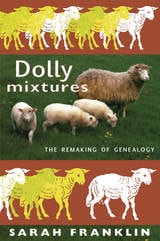
Dolly Mixtures
The Remaking of GenealogySarah Franklin
Duke University Press, 2007
Franklin combines wide-ranging sources—from historical accounts of sheep-breeding, to scientific representations of cloning by nuclear transfer, to popular media reports of Dolly's creation and birth—as she draws on gender and kinship theory as well as postcolonial and science studies. She argues that there is an urgent need for more nuanced responses to the complex intersections between the social and the biological, intersections which are literally reshaping reproduction and genealogy. In Dolly Mixtures, Franklin uses the renowned sheep as an opportunity to begin developing a critical language to identify and evaluate the reproductive possibilities that post-Dolly biology now faces, and to look back at some of the important historical formations that enabled and prefigured Dollys creation.
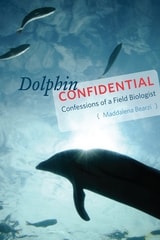
Dolphin Confidential
Confessions of a Field BiologistMaddalena Bearzi
University of Chicago Press, 2012
In this intimate narrative, Bearzi recounts her experiences at sea, tracing her own evolution as a woman and a scientist from her earliest travails to her transformation into an advocate for conservation and dolphin protection. These compelling, in-depth descriptions of her fieldwork also present a captivating look into dolphin social behavior and intelligence. The central part of the book is devoted to the metropolitan bottlenose dolphins of California, as Bearzi draws on her extensive experience to offer insights into the daily lives of these creatures—as well as the difficulties involved in collecting the data that transforms hunches into hypotheses and eventually scientific facts. The book closes by addressing the critical environmental and conservation problems facing these magnificent, socially complex, highly intelligent, and emotional beings.
An honest, down-to-earth analysis of what it means to be a marine biologist in the field today, Dolphin Confidential offers an entertaining, refreshingly candid, and always informative description of life among the dolphins.
Don't Look, Don't Touch, Don't Eat
The Science Behind RevulsionValerie Curtis
University of Chicago Press, 2013
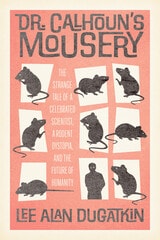
Dr. Calhoun's Mousery
The Strange Tale of a Celebrated Scientist, a Rodent Dystopia, and the Future of HumanityLee Alan Dugatkin
University of Chicago Press, 2024
A bizarre and compelling biography of a scientist and his work, using rodent cities to question the potential catastrophes of human overpopulation.
It was the strangest of experiments. What began as a utopian environment, where mice had sumptuous accommodations, had all the food and water they could want, and were free from disease and predators, turned into a mouse hell. Science writer and animal behaviorist Lee Alan Dugatkin introduces readers to the peculiar work of rodent researcher John Bumpass Calhoun. In this enthralling tale, Dugatkin shows how an ecologist-turned-psychologist-turned-futurist became a science rock star embedded in the culture of the 1960s and 1970s. As interest grew in his rodent cities, Calhoun was courted by city planners and his work was reflected in everything from Tom Wolfe’s hard-hitting writing to the children’s book Mrs. Frisby and the Rats of NIMH. He was invited to meetings with the Royal Society and the pope and taken seriously when he proposed a worldwide cybernetic brain—a decade before others made the internet a reality.
Readers see how Calhoun’s experiments—rodent apartment complexes like “Mouse Universe 25”—led to his concept of “behavioral sinks” with real effects on public policy discussions. Overpopulation in Calhoun’s mouse (and rat) complexes led to the loss of sex drive, the absence of maternal care, and a class of automatons that included “the beautiful ones,” who spent their time grooming themselves while shunning socialization. Calhoun—and those who followed his work—saw the collapse of this mouse population as a harbinger of the ill effects of an overpopulated human world.
Drawing on previously unpublished archival research and interviews with Calhoun’s family and former colleagues, Dugatkin offers a riveting account of an intriguing scientific figure. Considering Dr. Calhoun’s experiments, he explores the changing nature of scientific research and delves into what the study of animal behavior can teach us about ourselves.
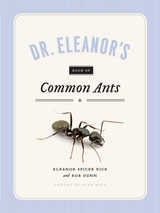
Dr. Eleanor's Book of Common Ants
Eleanor Spicer Rice, Alex Wild, and Rob Dunn
University of Chicago Press, 2017
No longer! In this witty, accessible, and beautifully illustrated guide, Eleanor Spicer Rice, Alex Wild, and Rob Dunn metamorphose creepy-crawly revulsion into myrmecological wonder. Emerging from Dunn’s ambitious citizen science project Your Wild Life (an initiative based at North Carolina State University), Dr. Eleanor’s Book of Common Ants provides an eye-opening entomological overview of the natural history of species most noted by project participants—and even offers tips on keeping ant farms in your home. Exploring species from the spreading red imported fire ant to the pavement ant, and featuring Wild’s stunning photography, this guide will be a tremendous resource for teachers, students, and scientists alike. But more than this, it will transform the way we perceive the environment around us by deepening our understanding of its littlest inhabitants, inspiring everyone to find their inner naturalist, get outside, and crawl across the dirt—magnifying glass in hand.
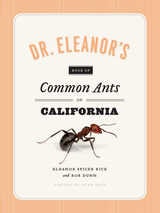
Dr. Eleanor's Book of Common Ants of California
Eleanor Spicer Rice, Alex Wild, and Rob Dunn
University of Chicago Press, 2017
No longer! In this witty, accessible, and beautifully illustrated guide, Eleanor Spicer Rice, Alex Wild, and Rob Dunn metamorphose creepy-crawly revulsion into myrmecological wonder. Emerging from Dunn’s ambitious citizen science project Your Wild Life (an initiative based at North Carolina State University) and the work of Brian Fisher with the California Academy of Sciences, Dr. Eleanor’s Book of Common Ants of California provides an eye-opening entomological overview of the natural history of California’s species most noted by project participants—and even offers tips on keeping ant farms in your home. Exploring species from the high noon and harvester ants to the honeypot and acrobat ants, and featuring Wild’s stunning photography, this guide will be a tremendous resource for teachers, students, and scientists alike. But more than this, it will transform the way Californians perceive the environment around them by deepening their understanding of its littlest inhabitants, inspiring everyone to find their inner naturalist, get outside, and crawl across the dirt—magnifying glass in hand.
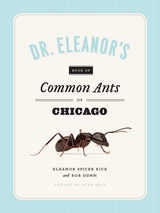
Dr. Eleanor's Book of Common Ants of Chicago
Eleanor Spicer Rice, Alex Wild, and Rob Dunn
University of Chicago Press, 2017
No longer! In this witty, accessible, and beautifully illustrated guide, Eleanor Spicer Rice, Alex Wild, and Rob Dunn metamorphose creepy-crawly revulsion into myrmecological wonder. Emerging from Dunn’s ambitious citizen science project Your Wild Life (an initiative based at North Carolina State University), Dr. Eleanor’s Book of Common Ants of Chicago provides an eye-opening entomological overview of the natural history of Chicago’s species most noted by project participants—and even offers tips on keeping ant farms in your home. Exploring species from the hobbit ant to the tiny trapjaw ant, and featuring contributions from E. O. Wilson and Field Museum ant scientist Corrie Moreau as well as Wild’s stunning photography, this guide will be a tremendous resource for teachers, students, and scientists alike. But more than this, it will transform the way Chicagoans perceive the environment around them by deepening their understanding of its littlest inhabitants, inspiring everyone to find their inner naturalist, get outside, and crawl across the dirt—magnifying glass in hand.
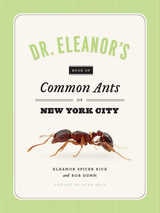
Dr. Eleanor's Book of Common Ants of New York City
Eleanor Spicer Rice, Alex Wild, and Rob Dunn
University of Chicago Press, 2017
No longer! In this witty, accessible, and beautifully illustrated guide, Eleanor Spicer Rice, Alex Wild, and Rob Dunn metamorphose creepy-crawly revulsion into myrmecological wonder. Emerging from Dunn’s ambitious citizen science project Your Wild Life (an initiative based at North Carolina State University), Dr. Eleanor’s Book of Common Ants of New York City provides an eye-opening entomological overview of the natural history of New York’s species most noted by project participants—and even offers insight into the ant denizens of the city’s subways and Central Park. Exploring species from the honeyrump ant to the Japanese crazy ant, and featuring Wild’s stunning photography as well as tips on keeping ant farms in your home, this guide will be a tremendous resource for teachers, students, and scientists alike. But more than this, it will transform the way New Yorkers perceive the environment around them by deepening their understanding of its littlest inhabitants, inspiring everyone to find their inner naturalist, get outside, and crawl across the dirt—magnifying glass in hand.

Dr. Eleanor's Book of Common Spiders
Christopher M. Buddle and Eleanor Spicer Rice
University of Chicago Press, 2018
No longer! In this witty, accessible, and beautifully illustrated guide, Christopher M. Buddle and Eleanor Spicer Rice metamorphose creepy-crawly revulsion into spider wonder. Emerging from ambitious citizen science project Your Wild Life (an initiative based at North Carolina State University), Dr. Eleanor's Book of Common Spiders provides an eye-opening arachnological overview of the natural history of species most noted by project participants, showcasing some of the fascinating spiders found in our attics and tents, front lawns and forests—and even introducing us to spiders that fish. Exploring species from the tiny (but gymnastic) zebra jumping spider to the naturally shy and woefully misunderstood black widow, this guide will be a tremendous resource for teachers, students, and scientists alike. But more than this, it will transform the way we perceive the environment around us by deepening our understanding of its littlest inhabitants, inspiring all of us to find our inner naturalist, get outside, and crawl across the dirt—magnifying glass in hand.
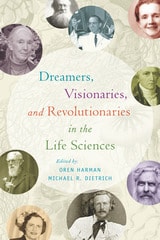
Dreamers, Visionaries, and Revolutionaries in the Life Sciences
Edited by Oren Harman and Michael R. Dietrich
University of Chicago Press, 2018
From the Frenchman Jean-Baptiste Lamarck, who coined the word “biology” in the early nineteenth century, to the American James Lovelock, for whom the Earth is a living, breathing organism, these dreamers innovated in ways that forced their contemporaries to reexamine comfortable truths. With this collection readers will follow Jane Goodall into the hidden world of apes in African jungles and Francis Crick as he attacks the problem of consciousness. Join Mary Lasker on her campaign to conquer cancer and follow geneticist George Church as he dreams of bringing back woolly mammoths and Neanderthals. In these lives and the many others featured in these pages, we discover visions that were sometimes fantastical, quixotic, and even threatening and destabilizing, but always a challenge to the status quo.

Duane Jeffery
A Mormon EvolutionistSteven L. Peck
University of Illinois Press, 2026
An overdue look at a singular figure, Duane Jeffery tells the story of the scientist whose work reshaped how many Church members understand evolution.