Results by title
458 books match the query 'Literature' and 13 start with d
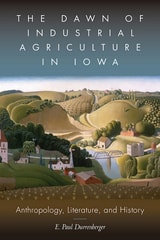
Dawn of Industrial Agriculture in Iowa
Anthropology, Literature, and HistoryE. Paul Durrenberger
University Press of Colorado, 2021
Durrenberger tells the story that Corey aimed to record and preserve of the industrialization of Iowa’s agriculture and the death of its family farms. He analyzes Corey’s regionalist focus on Iowa farming and regionalism’s contemporaneous association in Europe with rising fascism. He explores Corey’s adoption of naturalism, evident in his resistance to heroes and villains, to plot structure and resolution, and to moral judgment, as well as his ethnographic tendency to focus on groups rather than individuals.
An unusual and wide-ranging study, The Dawn of Industrial Agriculture in Iowa offers important insight into the relationships among fiction, individual lives, and anthropological practice, as well as into a pivotal period in American history.
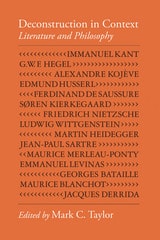
Deconstruction in Context
Literature and PhilosophyEdited by Mark C. Taylor
University of Chicago Press, 1986
"This invaluable philosophical sampler brings together many of the threads out of which deconstruction is woven. taylor's anthology does not make deconstruction easy; much more usefully, it provides a meticulous guide to the sources – and significance – of the difficulties. – Barbara E. Johnson
"The book will be of great value as a set of readings with authoritative explanation for all those interested in the current relations of literature and philosophy. It is the best book of its kind I know. – J. Hillis Miller, Yale University

Demarcating the Disciplines
Philosophy, Literature, ArtSamuel Weber, Henry Sussman, and Wlad Godzich, Editors
University of Minnesota Press, 1986
Demarcating the Disciplines was first published in 1986. Minnesota Archive Editions uses digital technology to make long-unavailable books once again accessible, and are published unaltered from the original University of Minnesota Press editions.
With publication of this volume, Glyph begins a new stage in its existence: the move from Johns Hopkins University Press to the University of Minnesota Press is accompanied by a change in focus. In its first incarnation Glyph provided a forum in which established notions of reading, writing, and criticism could be questioned and explored. Since then, the greater currency of such concerns has brought with it new problems and priorities. Setting aside the battles of the past, the new Glyph looks ahead - to confront historical issues and to address the institutional and pedagogical questions emerging from the contemporary critical landscape.
Each volume in the new Glyph series is organized around a specific issue. The essays in this first volume explore the relations between the practice of reading and writing and the operations of the institution. Though their approaches differ from one another, the authors of these essays all recognize that the questions of the institution - most notably the university - points toward a series of constraints that define, albeit negatively, the possibilities for change.
The contributors: Samuel Weber, Jacques Derrida, Tom Conley, Malcolm Evans, Ruth Salvaggio, Robert Young, Henry Sussman, Peter Middleton, David Punter, and Donald Preziosi.
Devotion
Three Inquiries in Religion, Literature, and Political ImaginationConstance M. Furey, Sarah Hammerschlag, and Amy Hollywood
University of Chicago Press, 2021
We are living in a time of radical uncertainty, faced with serious political, ecological, economic, epidemiological, and social problems. Scholars of religion Constance M. Furey, Sarah Hammerschlag, and Amy Hollywood come together in this volume with a shared conviction that what and how we read opens new ways of imagining our political futures and our lives.
Each essay in this book suggests different ways to characterize the object of devotion and the stance of the devout subject before it. Furey writes about devotion in terms of vivification, energy, and artifice; Hammerschlag in terms of commentary, mimicry, and fetishism; and Hollywood in terms of anarchy, antinomianism, and atopia. They are interested in literature not as providing models for ethical, political, or religious life, but as creating the site in which the possible—and the impossible—transport the reader, enabling new forms of thought, habits of mind, and ways of life. Ranging from German theologian Martin Luther to French-Jewish philosopher Sarah Kofman to American poet Susan Howe, this volume is not just a reflection on forms of devotion and their critical and creative import but also a powerful enactment of devotion itself.
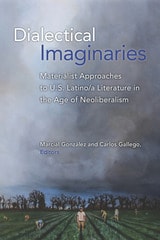
Dialectical Imaginaries
Materialist Approaches to U.S. Latino/a Literature in the Age of NeoliberalismMarcial González and Carlos Gallego, editors
University of Michigan Press, 2018
Dialogics of the Oppressed
Peter Hitchcock
University of Minnesota Press, 1992
Dialogics of the Oppressed was first published in 1992. Minnesota Archive Editions uses digital technology to make long-unavailable books once again accessible, and are published unaltered from the original University of Minnesota Press editions.
Formulated within and against the context of Russian formalism that became the backbone of semiotics, Mikhail Bakhtin's work has enabled contemporary critical theories to return to specific sociopolitical and historical moments that had been closed off by formalist abstractions. In Dialogics of the Oppressed, Peter Hitchcock looks through the lens of Bakhtin's theory of dialogism for an analysis of subaltern writing. Rather than assume an integral "subaltern subject" as the object of analysis, Hitchcock - in case studies of four global feminists, Nawal el Saadawi, Pat Barker, Zhang Jie, and Agnes Smedley - emphasizes the cultural agency of the subaltern and shows the political implications this agency might have for literary analysis in general and cultural studies in particular.
"Presents a provocative set of readings-through the Bakhtinian model of dialogism-of texts by four women writers of the twentieth century. . . instructive and compelling." Barbara Harlow, University of Texas
Dialogics of the Oppressed argues from an internationalistic perspective to underline that the heterogeneity of dialogic feminism itself constitutes a significant array of discursive resistance to the hegemony of disciplines and so-called area studies operative in the metropolitan First World academy. Hitchcock demonstrates through dialogic analyses of the writings of these four feminists that a form of multicultural materialism can itself disrupt the restrictive logics and practices of literary studies in the Western academy, and that indeed, there is a counterlogic in the culture of the subaltern. Hitchcock's underlying objective is the development of a powerful critique of the epistemological bases of the academy that marginalize and devalorize certain cultural productions and subjects, as well as a cognitive mapping of the politics of pedagogy in current transformations of disciplinarity.
Peter Hitchcock is professor of English at Baruch College of the City University of New York. He is the author of Working-Class Fiction in Theory and Practice and has published essays on radical writing, multiculturalism, film, and Third World fiction.
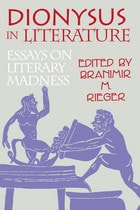
Dionysus in Literature
Essays on Literary MadnessEdited by Branimir M. Rieger
University of Wisconsin Press, 1994
In this anthology, outstanding authorities present their assessments of literary madness in a variety of topics and approaches. The entire collection of essays presents intriguing aspects of the Dionysian element in literature.

Distant Horizons
Digital Evidence and Literary ChangeTed Underwood
University of Chicago Press, 2019
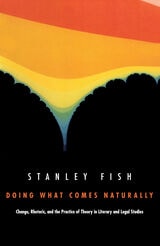
Doing What Comes Naturally
Change, Rhetoric, and the Practice of Theory in Literary & Legal StudiesStanley Fish
Duke University Press, 1989
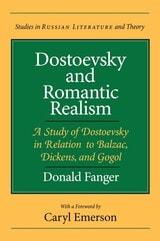
Dostoevsky and Romantic Realism
A Study of Dostoevsky in Relation to Balzac, Dickens, and GogolDonald Fanger
Northwestern University Press, 1998
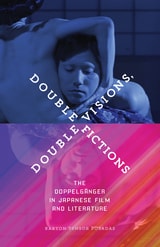
Double Visions, Double Fictions
The Doppelgänger in Japanese Film and LiteratureBaryon Tensor Posadas
University of Minnesota Press, 2018
A fresh take on the dopplegänger and its place in Japanese film and literature—past and present
Since its earliest known use in German Romanticism in the late 1700s, the word Doppelgänger (double-walker) can be found throughout a vast array of literature, culture, and media. This motif of doubling can also be seen traversing historical and cultural boundaries. Double Visions, Double Fictions analyzes the myriad manifestations of the doppelgänger in Japanese literary and cinematic texts at two historical junctures: the interwar period of the 1920s and 1930s and the present day.
According to author Baryon Tensor Posadas, the doppelgänger marks the intersection of the historical impact of psychoanalytic theory, the genre of detective fiction in Japan, early Japanese cinema, and the cultural production of Japanese colonialism. He examines the doppelgänger’s appearance in the works of Edogawa Rampo, Tanizaki Jun’ichiro, and Akutagawa Ryunosuke, as well as the films of Tsukamoto Shin’ya and Kurosawa Kiyoshi, not only as a recurrent motif but also as a critical practice of concepts. Following these explorations, Posadas asks: What were the social, political, and material conditions that mobilized the desire for the doppelgänger? And how does the dopplegänger capture social transformations taking place at these historical moments?
Double Visions, Double Fictions ultimately reveals how the doppelgänger motif provides a fascinating new backdrop for understanding the enmeshment of past and present.
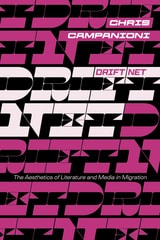
Drift Net
The Aesthetics of Literature and Media in MigrationChris Campanioni
Lever Press, 2025
Through a model Campanioni calls a “migratory text,” Drift Net advances a theory of literature and art born in translation that calls into question established theories of world literature, national literatures, literary periodization, and translation itself. Through an analysis of works born in translation and produced in passage, detention, and exile, Campanioni utilizes this model to read creatively across a wide range of social and political formations, from the experience of his parents' exiles to alternative housing initiatives and asylum reform efforts throughout Europe, including the largest LGBT+ refugee center in the world. Drawing on a mixed methodology of qualitative interviews with asylum applicants and shelter directors, textual analysis, and autoethnographic narrative, Drift Net traces literary developments alongside contemporary social and political interventions. This approach proposes interventions on the organizational levels of asylum, integration, public housing, and membership. It also marks the ways migrant creators have reformulated subjectivity through the same genres and modes that have contributed to their devaluation as minoritized subjects.
Drift Net both deepens and broadens our conceptualization of migrant literature, and recovers an understanding and application of transmedia that predates digital cultures. Campanioni offers a wide-ranging study of texts including Edward Said and Jean Mohr’s After the Last Sky: Palestinian Lives, Edgar Garcia’s Skins of Columbus, Anna Seghers’s Transit, Francis Ponge’s Soap, Walid Raad’s The Atlas Group, Klára Hosnedlová’s embroidered paintings, Reem Karssli and Caroline Williams’s Now is the Time To Say Nothing, Cornelia Schleime’s paper prints, and more. Drift Net formulates the “migratory” as a site of artistic production, resistance, and possibility, where theory is not an end but the beginning of tools and practices that might help researchers, instructors, and organizers to develop their strategies.
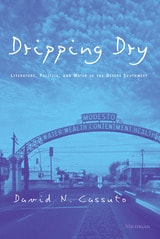
Dripping Dry
Literature, Politics and Water in the Desert SouthwestDavid N. Cassuto
University of Michigan Press, 2001
The four works selected (Animal Dreams, The Monkey Wrench Gang, The Grapes of Wrath, and The Ford) present a composite portrait of reclamation, which the author argues is one of the most important cultural and ecological phenomena in the nation's history. The tensions and contradictions presented by the novels underscore the compelling need for an ecocritique of the relationship between literature and politics. David N. Cassuto deciphers the myths of reclamation and restoration and presents a third alternative--sustainability--in their stead. The challenge is a large one, because of the size and complexity of the region and because nature continues to evolve and create itself, a process involving language, ideology, and the land.
The book is designed to be an interdisciplinary contribution both to the emerging field of literature and the environment, as well as to environmental studies. It will be welcomed by scholars as well as general readers interested in new approaches to literature and environmental issues, and by those interested in the geography and literature of the western United States.
David N. Cassuto, formerly of the English Department of the University of Missouri-Rolla, is a practicing attorney in San Francisco, specializing in environmental issues.