Results by title
1488 books match the query 'Media Studies' and 80 start with d

DOOM
SCARYDARKFASTDan Pinchbeck
University of Michigan Press, 2013
In December 1993, gaming changed forever. id Software's seminal shooter DOOM was released, and it shook the foundations of the medium. Daniel Pinchbeck brings together the complete story of DOOM for the first time.
This book takes a look at the early days of first-person gaming and the video game studio system. It discusses the prototypes and the groundbreaking technology that drove the game forward and offers a detailed analysis of gameplay and level design. Pinchbeck also examines DOOM's contributions to wider gaming culture, such as online multiplay and the modding community, and the first-person gaming genre, focusing on DOOM's status as a foundational title and the development of the genre since 1993. Pinchbeck draws extensively from primary data: from the game itself, from the massive fan culture surrounding the title, and from interviews with the developers who made it. This book is not only the definitive work on DOOM but a snapshot of a period of gaming history, a manifesto for a development ethos, and a celebration of game culture at its best.
Daily Planet
A Critic on the Capitalist Culture BeatPatricia Aufderheide
University of Minnesota Press, 2000

Dance, Disability and Law
InVisible DifferenceEdited by Sarah Whatley, Charlotte Waelde, Shawn Harmon, Abbe Brown, Karen Wood, and Hetty Blades
Intellect Books, 2018

Dangerous Dames
Women and Representation in Film Noir and the Weimar Street FilmJans B. Wager
Ohio University Press, 1999
Both film noir and the Weimar street film hold a continuing fascination for film spectators and film theorists alike. The female characters, especially the alluring femmes fatales, remain a focus for critical and popular attention. In the tradition of such attention, Dangerous Dames focuses on the femme fatale and her antithesis, the femme attrapée.
Unlike most theorists, Jans Wager examines these archetypes from the perspective of the female spectator and rejects the persistence of vision that allows a reading of these female characters only as representations of unstable postwar masculinity. Professor Wager suggests that the woman in the audience has always seen and understood these characters as representations of a complex aspect of her existence.
Dangerous Dames looks at the Weimar street films The Street, Variety, Asphalt, and M and the film noir movies The Maltese Falcon, Gun Crazy, and The Big Heat. This book opens the doors to spectators and theorists alike, suggesting cinematic pleasures outside the bounds of accepted readings and beyond the narrow categorization of film noir and the Weimar street film as masculine forms.

Dangerous Knowledge
Art Simon
Temple University Press, 1996
Data Fluencies
Philippa R. Adams
University of Minnesota Press, 2027
Creating communities of care in the digital world
Data Fluencies offers a model for enacting theories of data justice, methods of community engagement, and practical approaches to disrupting institutions and infrastructures that have diminished the capacities of everyday digital technology users. Combining humanities-based critical thinking, computational data analyses, arts-based research cocreation, and media making, data fluencies offer creative and imaginative approaches to investigating and countering algorithmic discrimination, digital surveillance, mis- and disinformation, and deep fake versions of reality.
Not fixed or static, data fluencies move with, through, and against data streams to build the worlds we want, not the ones algorithms push on us. Presenting real-world examples, the authors demonstrate how data fluencies transcend difference and counter the proliferation of hate and toxicity online. As they outline visions for disrupting the past to reimagine the future, the authors guide the way in devising new ways to think, act, and imagine—to influence and reshape the currents that flow through our data-driven world.
Distributed for meson press.
Retail e-book files for this title are screen-reader friendly with images accompanied by short alt text and/or extended descriptions.
Data Grab
The New Colonialism of Big Tech and How to Fight BackUlises A. Mejias and Nick Couldry
University of Chicago Press, 2024
Large technology companies like Meta, Amazon, and Alphabet have unprecedented access to our daily lives, collecting information when we check our email, count our steps, shop online, and commute to and from work. Current events are concerning—both the changing owners (and names) of billion-dollar tech companies and regulatory concerns about artificial intelligence underscore the sweeping nature of Big Tech’s surveillance and the influence such companies hold over the people who use their apps and platforms.
As trusted tech experts Ulises A. Mejias and Nick Couldry show in this eye-opening and convincing book, this vast accumulation of data is not the accidental stockpile of a fast-growing industry. Just as nations stole territories for ill-gotten minerals and crops, wealth, and dominance, tech companies steal personal data important to our lives. It’s only within the framework of colonialism, Mejias and Couldry argue, that we can comprehend the full scope of this heist.
Like the land grabs of the past, today’s data grab converts our data into raw material for the generation of corporate profit against our own interests. Like historical colonialism, today’s tech corporations have engineered an extractive form of doing business that builds a new social and economic order, leads to job precarity, and degrades the environment. These methods deepen global inequality, consolidating corporate wealth in the Global North and engineering discriminatory algorithms. Promising convenience, connection, and scientific progress, tech companies enrich themselves by encouraging us to relinquish details about our personal interactions, our taste in movies or music, and even our health and medical records. Do we have any other choice?
Data Grab affirms that we do. To defy this new form of colonialism we will need to learn from previous forms of resistance and work together to imagine entirely new ones. Mejias and Couldry share the stories of voters, workers, activists, and marginalized communities who have successfully opposed unscrupulous tech practices. An incisive discussion of the digital media that’s transformed our world, Data Grab is a must-read for anyone concerned about privacy, self-determination, and justice in the internet age.
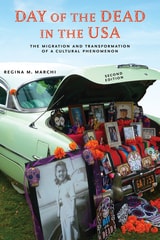
Day of the Dead in the USA, Second Edition
The Migration and Transformation of a Cultural PhenomenonRegina M Marchi
Rutgers University Press, 2022
Focusing on the power of public ritual to serve as a communication medium, this revised and updated edition combines a mix of ethnography, historical research, oral history, and critical cultural analysis to explore the manifold and unexpected transformations that occur when the tradition is embraced by the mainstream. A testament to the complex role of media and commercial forces in constructions of ethnic identity, Day of the Dead in the USA provides insight into the power of art and ritual to create community, transmit oppositional messages, and advance educational, political, and economic goals.
Today Chicano-style Day of the Dead events take place in all fifty states. This revised edition provides new information about:
- The increase in events across the US, incorporating media coverage and financial aspects,
- Recent political movements expressed in contemporary Day of the Dead celebrations, including #BlackLivesMatter and #MeToo
- Greater media coverage and online presence of the celebration in blogs, websites, and streaming video
- Día de los Muertos themes and iconography in video games and films
- The proliferation of commercialized merchandise such as home goods, apparel, face paints and jewelry at mainstream big box and web retailers, as well as the widespread proliferation of calavera-themed decorations and costumes for Halloween
- 24 new full color illustrations
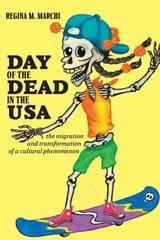
Day of the Dead in the USA
The Migration and Transformation of a Cultural PhenomenonMarchi, Regina M
Rutgers University Press, 2009
Focusing on the power of ritual to serve as a communication medium, Regina M. Marchi combines a mix of ethnography, historical research, oral history, and critical cultural analysis to explore the manifold and unexpected transformations that occur when the tradition is embraced by the mainstream. A testament to the complex nature of ethnic identity, Day of the Dead in the USA provides insight into the power of ritual to create community, transmit oppositional messages, and advance educational, political, and economic goals.
Debates in the Digital Humanities 2016
Matthew K. Gold
University of Minnesota Press, 2016
Pairing full-length scholarly essays with shorter pieces drawn from scholarly blogs and conference presentations, as well as commissioned interviews and position statements, Debates in the Digital Humanities 2016 reveals a dynamic view of a field in negotiation with its identity, methods, and reach. Pieces in the book explore how DH can and must change in response to social justice movements and events like #Ferguson; how DH alters and is altered by community college classrooms; and how scholars applying DH approaches to feminist studies, queer studies, and black studies might reframe the commitments of DH analysts. Numerous contributors examine the movement of interdisciplinary DH work into areas such as history, art history, and archaeology, and a special forum on large-scale text mining brings together position statements on a fast-growing area of DH research. In the multivalent aspects of its arguments, progressing across a range of platforms and environments, Debates in the Digital Humanities 2016 offers a vision of DH as an expanded field—new possibilities, differently structured.
Published simultaneously in print, e-book, and interactive webtext formats, each DH annual will be a book-length publication highlighting the particular debates that have shaped the discipline in a given year. By identifying key issues as they unfold, and by providing a hybrid model of open-access publication, these volumes and the Debates in the Digital Humanities series will articulate the present contours of the field and help forge its future.
Contributors: Moya Bailey, Northeastern U; Fiona Barnett; Matthew Battles, Harvard U; Jeffrey M. Binder; Zach Blas, U of London; Cameron Blevins, Rutgers U; Sheila A. Brennan, George Mason U; Timothy Burke, Swarthmore College; Rachel Sagner Buurma, Swarthmore College; Micha Cárdenas, U of Washington–Bothell; Wendy Hui Kyong Chun, Brown U; Tanya E. Clement, U of Texas–Austin; Anne Cong-Huyen, Whittier College; Ryan Cordell, Northeastern U; Tressie McMillan Cottom, Virginia Commonwealth U; Amy E. Earhart, Texas A&M U; Domenico Fiormonte, U of Roma Tre; Paul Fyfe, North Carolina State U; Jacob Gaboury, Stony Brook U; Kim Gallon, Purdue U; Alex Gil, Columbia U; Brian Greenspan, Carleton U; Richard Grusin, U of Wisconsin, Milwaukee; Michael Hancher, U of Minnesota; Molly O’Hagan Hardy; David L. Hoover, New York U; Wendy F. Hsu; Patrick Jagoda, U of Chicago; Jessica Marie Johnson, Michigan State U; Steven E. Jones, Loyola U; Margaret Linley, Simon Fraser U; Alan Liu, U of California, Santa Barbara; Elizabeth Losh, U of California, San Diego; Alexis Lothian, U of Maryland; Michael Maizels, Wellesley College; Mark C. Marino, U of Southern California; Anne B. McGrail, Lane Community College; Bethany Nowviskie, U of Virginia; Julianne Nyhan, U College London; Amanda Phillips, U of California, Davis; Miriam Posner, U of California, Los Angeles; Rita Raley, U of California, Santa Barbara; Stephen Ramsay, U of Nebraska–Lincoln; Margaret Rhee, U of Oregon; Lisa Marie Rhody, Graduate Center, CUNY; Roopika Risam, Salem State U; Stephen Robertson, George Mason U; Mark Sample, Davidson College; Jentery Sayers, U of Victoria; Benjamin M. Schmidt, Northeastern U; Scott Selisker, U of Arizona; Jonathan Senchyne, U of Wisconsin, Madison; Andrew Stauffer, U of Virginia; Joanna Swafford, SUNY New Paltz; Toniesha L. Taylor, Prairie View A&M U; Dennis Tenen; Melissa Terras, U College London; Anna Tione; Ted Underwood, U of Illinois, Urbana–Champaign; Ethan Watrall, Michigan State U; Jacqueline Wernimont, Arizona State U; Laura Wexler, Yale U; Hong-An Wu, U of Illinois, Urbana–Champaign.
Debates in the Digital Humanities 2019
Matthew K. Gold
University of Minnesota Press, 2019
The latest installment of a digital humanities bellwether
Contending with recent developments like the shocking 2016 U.S. Presidential election, the radical transformation of the social web, and passionate debates about the future of data in higher education, Debates in the Digital Humanities 2019 brings together a broad array of important, thought-provoking perspectives on the field’s many sides. With a wide range of subjects including gender-based assumptions made by algorithms, the place of the digital humanities within art history, data-based methods for exhuming forgotten histories, video games, three-dimensional printing, and decolonial work, this book assembles a who’s who of the field in more than thirty impactful essays.
Contributors: Rafael Alvarado, U of Virginia; Taylor Arnold, U of Richmond; James Baker, U of Sussex; Kathi Inman Berens, Portland State U; David M. Berry, U of Sussex; Claire Bishop, The Graduate Center, CUNY; James Coltrain, U of Nebraska–Lincoln; Crunk Feminist Collective; Johanna Drucker, U of California–Los Angeles; Jennifer Edmond, Trinity College; Marta Effinger-Crichlow, New York City College of Technology–CUNY; M. Beatrice Fazi, U of Sussex; Kevin L. Ferguson, Queens College–CUNY; Curtis Fletcher, U of Southern California; Neil Fraistat, U of Maryland; Radhika Gajjala, Bowling Green State U; Michael Gavin, U of South Carolina; Andrew Goldstone, Rutgers U; Andrew Gomez, U of Puget Sound; Elyse Graham, Stony Brook U; Brian Greenspan, Carleton U; John Hunter, Bucknell U; Steven J. Jackson, Cornell U; Collin Jennings, Miami U; Lauren Kersey, Saint Louis U; Kari Kraus, U of Maryland; Seth Long, U of Nebraska, Kearney; Laura Mandell, Texas A&M U; Rachel Mann, U of South Carolina; Jason Mittell, Middlebury College; Lincoln A. Mullen, George Mason U; Trevor Muñoz, U of Maryland; Safiya Umoja Noble, U of Southern California; Jack Norton, Normandale Community College; Bethany Nowviskie, U of Virginia; Élika Ortega, Northeastern U; Marisa Parham, Amherst College; Jussi Parikka, U of Southampton; Kyle Parry, U of California, Santa Cruz; Brad Pasanek, U of Virginia; Stephen Ramsay, U of Nebraska–Lincoln; Matt Ratto, U of Toronto; Katie Rawson, U of Pennsylvania; Ben Roberts, U of Sussex; David S. Roh, U of Utah; Mark Sample, Davidson College; Moacir P. de Sá Pereira, New York U; Tim Sherratt, U of Canberra; Bobby L. Smiley, Vanderbilt U; Lauren Tilton, U of Richmond; Ted Underwood, U of Illinois, Urbana-Champaign; Megan Ward, Oregon State U; Claire Warwick, Durham U; Alban Webb, U of Sussex; Adrian S. Wisnicki, U of Nebraska–Lincoln.
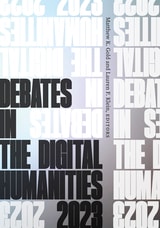
Debates in the Digital Humanities 2023
Matthew K. Gold
University of Minnesota Press, 2023
A cutting-edge view of the digital humanities at a time of global pandemic, catastrophe, and uncertainty
Where do the digital humanities stand in 2023? Debates in the Digital Humanities 2023 presents a state-of-the-field vision of digital humanities amid rising social, political, economic, and environmental crises; a global pandemic; and the deepening of austerity regimes in U.S. higher education. Providing a look not just at where DH stands but also where it is going, this fourth volume in the Debates in the Digital Humanities series features both established scholars and emerging voices pushing the field’s boundaries, asking thorny questions, and providing space for practitioners to bring to the fore their research and their hopes for future directions in the field. Carrying forward the themes of political and social engagement present in the series throughout, it includes crucial contributions to the field—from a vital forum centered on the voices of Black women scholars, manifestos from feminist and Latinx perspectives on data and DH, and a consideration of Indigenous data and artificial intelligence, to essays that range across topics such as the relation of DH to critical race theory, capital, and accessibility.
Contributors: Harmony Bench, Ohio State U; Christina Boyles, Michigan State U; Megan R. Brett, George Mason U; Michelle Lee Brown, Washington State U; Patrick J. Burns, New York U; Kent K. Chang, U of California, Berkeley; Rico Devara Chapman, Clark Atlanta U; Marika Cifor, U of Washington; María Eugenia Cotera, U of Texas; T. L. Cowan, U of Toronto; Marlene L. Daut, U of Virginia; Quinn Dombrowski, Stanford U; Kate Elswit, U of London; Nishani Frazier, U of Kansas; Kim Gallon, Brown U; Patricia Garcia, U of Michigan; Lorena Gauthereau, U of Houston; Masoud Ghorbaninejad, University of Victoria; Abraham Gibson, U of Texas at San Antonio; Nathan P. Gibson, Ludwig-Maximilians-Universität, Munich; Kaiama L. Glover, Barnard College; Hilary N. Green, Davidson College; Jo Guldi, Southern Methodist U; Matthew N. Hannah, Purdue U Libraries; Jeanelle Horcasitas, DigitalOcean; Christy Hyman, Mississippi State U; Arun Jacob, U of Toronto; Jessica Marie Johnson, Johns Hopkins U and Harvard U; Martha S. Jones, Johns Hopkins U; Annette K. Joseph-Gabriel, Duke U; Mills Kelly, George Mason U; Spencer D. C. Keralis, Digital Frontiers; Zoe LeBlanc, U of Illinois at Urbana-Champaign; Jason Edward Lewis, Concordia U; James Malazita, Rensselaer Polytechnic Institute; Alison Martin, Dartmouth College; Linda García Merchant, U of Houston Libraries; Rafia Mirza, Southern Methodist U; Mame-Fatou Niang, Carnegie Mellon U; Jessica Marie Otis, George Mason U; Marisa Parham, U of Maryland; Andrew Boyles Petersen, Michigan State U Libraries; Emily Pugh, Getty Research Institute; Olivia Quintanilla, UC Santa Barbara; Jasmine Rault, U of Toronto Scarborough; Anastasia Salter, U of Central Florida; Maura Seale, U of Michigan; Celeste Tường Vy Sharpe, Normandale Community College; Astrid J. Smith, Stanford U Libraries; Maboula Soumahoro, U of Tours; Mel Stanfill, U of Central Florida; Tonia Sutherland, U of Hawaiʻi at Mānoa; Gabriela Baeza Ventura, U of Houston; Carolina Villarroel, U of Houston; Melanie Walsh, U of Washington; Hēmi Whaanga, U of Waikato; Bridget Whearty, Binghamton U; Jeri Wieringa, U of Alabama; David Joseph Wrisley, NYU Abu Dhabi.
Cover alt text: A text-based cover with the main title repeating right-side up and upside down. The leftmost iteration appears in black ink; all others are white.
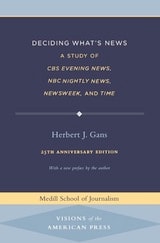
Deciding What's News
A Study of CBS Evening News, NBC Nightly News, Newsweek, and TimeHerbert J. Gans
Northwestern University Press, 2005
Deciding What's News has become a classic. A new preface outlines the major changes that have taken place in the news media since Gans first wrote the book, but it also suggests that the basics of news judgment and the structures of news organizations have changed little. Gans's book is still the most comprehensive sociological account of some of the country's most prominent national news media. The book received the 1979 Theatre Library Association Award and the 1980 Book Award of the National Association of Educational Broadcasters. This is the first work to be published under the Medill School of Journalism's "Visions of the American Press" imprint, a new journalism history series featuring both original volumes and reprints of important classics.
Decolonial Media Imaginaries
Ian Reilly
Intellect Books, 2026
Decolonial Media Imaginaries (DMI) begins from the basic premise that imaginaries play a crucial role in articulating and elaborating identity, community, and solidarity—particularly through their function in the collaborative shaping of ways of life and living. Historically, however, such imaginaries have been structured by the imperatives of colonialism, capitalism, and global neoliberal expansion. Through the prism of contemporary decolonial politics, the book aims to decenter enduring imaginaries rooted in colonial, capitalist, and neoliberal fantasies about what constitutes the good life, in favor of centering decolonial imaginaries that redraw the lines of possibility surrounding emancipatory futures for human and more-than-human worlds.
DMI presents a concise overview of the terrain prepared by decolonial thinkers (broadly conceived) to foreground the strategies, tools, tactics, and praxis that may be useful in bringing decolonial futures more closely within reach. This wide-ranging work explores ideas surrounding spectacle and display, corporatized technological fantasy, energy infrastructure, community-centered storytelling, pedagogical reparations, artworld decolonial praxis, and Black and Indigenous media futures. The book offers a speculative yet theoretically engaged discussion of how imaginaries-work contributes to a vital redrawing of shared futures grounded in justice, relationality, and collective flourishing.
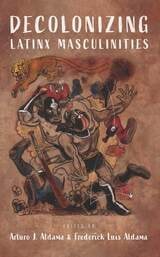
Decolonizing Latinx Masculinities
Edited by Arturo J. Aldama and Frederick Luis Aldama
University of Arizona Press, 2020
Together they explore how legacies of colonization and capitalist exploitation and oppression have created toxic forms of masculinity that continue to suffocate our existence as Latinxs. And while the authors seek to identify all cultural phenomena that collectively create reductive, destructive, and toxic constructions of masculinity that traffic in misogyny and homophobia, they also uncover the many spaces—such as Xicanx-Indígena languages, resistant food cultures, music performances, and queer Latinx rodeo practices—where Latinx communities can and do exhale healing masculinities.
With unity of heart and mind, the creative and the scholarly, Decolonizing Latinx Masculinities opens wide its arms to all non-binary, decolonial masculinities today to grow a stronger, resilient, and more compassionate new generation of Latinxs tomorrow.
Contributors
Arturo J. Aldama
Frederick Luis Aldama
T. Jackie Cuevas
Gabriel S. Estrada
Wayne Freeman
Jonathan D. Gomez
Ellie D. Hernández
Alberto Ledesma
Jennie Luna
Sergio A. Macías
Laura Malaver
Paloma Martinez-Cruz
L. Pancho McFarland
William Orchard
Alejandra Benita Portillos
John-Michael Rivera
Francisco E. Robles
Lisa Sánchez González
Kristie Soares
Nicholas Villanueva Jr.
Deep Mapping the Media City
Shannon Mattern
University of Minnesota Press, 2015
Going beyond current scholarship on the “media city” and the “smart city,” Shannon Mattern argues that our global cities have been mediated and intelligent for millennia. Deep Mapping the Media City advocates for urban media archaeology, a multisensory approach to investigating the material history of networked cities. Mattern explores the material assemblages and infrastructures that have shaped the media city by taking archaeology literally—using techniques like excavation and mapping to discover the modern city’s roots in time.
Forerunners: Ideas First is a thought-in-process series of breakthrough digital publications. Written between fresh ideas and finished books, Forerunners draws on scholarly work initiated in notable blogs, social media, conference plenaries, journal articles, and the synergy of academic exchange. This is gray literature publishing: where intense thinking, change, and speculation take place in scholarship.
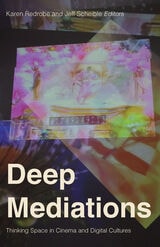
Deep Mediations
Thinking Space in Cinema and Digital CulturesKaren Redrobe
University of Minnesota Press, 2021
The preoccupation with “depth” and its relevance to cinema and media studies
For decades the concept of depth has been central to critical thinking in numerous humanities-based disciplines, legitimizing certain modes of inquiry over others. Deep Mediations examines why and how this is, as scholars today navigate the legacy of depth models of thought and vision, particularly in light of the “surface turn” and as these models impinge on the realms of cinema and media studies.
The collection’s eighteen essays seek to understand the decisive but evolving fixation on depth by considering the term’s use across a range of conversations as well as its status in relation to critical methodologies and the current mediascape. Engaging contemporary debates about new computing technologies, the environment, history, identity, affect, audio/visual culture, and the limits and politics of human perception, Deep Mediations is a timely interrogation of depth’s ongoing importance within the humanities.
Contributors: Laurel Ahnert; Taylor Arnold, U of Richmond; Erika Balsom, King’s College London; Brooke Belisle, Stony Brook University; Jinhee Choi, King’s College London; Jennifer Fay, Vanderbilt U; Lisa Han, UC Santa Barbara; Jean Ma, Stanford U; Shaka McGlotten, Purchase College-SUNY; Susanna Paasonen, U of Turku, Finland; Jussi Parikka, U of Southampton; Alessandra Raengo, Georgia State U; Pooja Rangan, Amherst College; Katherine Rochester, VIA Art Fund in Boston; Karl Schoonover, University of Warwick (UK); Jordan Schonig, Michigan State U; John Paul Stadler, North Carolina State U; Nicole Starosielski, New York U; Lauren Tilton, U of Richmond.
DeepAesthetics
Computational Experience in a Time of Machine LearningAnna Munster
Duke University Press, 2025

Deepwater Alchemy
Extractive Mediation and the Taming of the SeafloorLisa Yin Han
University of Minnesota Press, 2024
How underwater mediation has transformed deep-sea spaces into resource-rich frontiers
Green energy technologies such as windmills, solar panels, and electric vehicles may soon depend on material found at the seabed. How did a space once imagined to be empty and unfathomable come to be thought of as a treasure trove of resources? Lisa Yin Han traces how contemporary developments in underwater sensing and imaging materially and imaginatively transmogrify the ocean bottom into a resource frontier capable of sustaining a digitally connected global future.
Set against the backdrop of climate change, energy transition, and the expansion of industrial offshore extractions, Deepwater Alchemy looks at oceanic media and its representation of the seabed in terms of valuable resources. From high-tech simulations to laboratories and archives that collect and analyze sediments, Han explores the media technologies that survey, visualize, and condition the possibility for industrial resource extraction, introducing the concept of extractive mediation to describe the conflations between resource prospecting and undersea knowledge production. Moving away from anthropocentric frameworks, she argues that we must equalize access to deep ocean mediation and include the submerged perspectives of multispecies communities.
From the proliferation of petroleum seismology to environmental-impact research on seabed mining to the development of internet-enabled seafloor observatories, Deepwater Alchemy shows us that deepwater mediation is entangled in existential hopes and fears for our planetary future. As the ocean bottom becomes increasingly accessible to people, Han prompts us to ask not whether we can tame the seafloor, but, rather, why and for whom are we taming it?
Demanding Images
Democracy, Mediation, and the Image-Event in IndonesiaKaren Strassler
Duke University Press, 2019
Democracy and Other Neoliberal Fantasies
Communicative Capitalism and Left PoliticsJodi Dean
Duke University Press, 2009
Dean’s critique ranges from her argument that the term democracy has become a meaningless cipher invoked by the left and right alike to an analysis of the fantasy of free trade underlying neoliberalism, and from an examination of new theories of sovereignty advanced by politicians and left academics to a look at the changing meanings of “evil” in the speeches of U.S. presidents since the mid-twentieth century. She emphasizes the futility of a politics enacted by individuals determined not to offend anyone, and she examines questions of truth, knowledge, and power in relation to 9/11 conspiracy theories. Dean insists that any reestablishment of a vital and purposeful left politics will require shedding the mantle of victimization, confronting the marriage of neoliberalism and democracy, and mobilizing different terms to represent political strategies and goals.
Democracy in Print
The Best of The Progressive Magazine, 1909–2009Edited by Matthew Rothschild
University of Wisconsin Press, 2009
Readers will discover the vision of the magazine’s founder, Robert “Fighting Bob” La Follette, and his suffragist wife, Belle Case La Follette. They’ll find historic gems from the likes of Jane Addams, Carl Sandburg, Huey Long, and John Kenneth Galbraith, and profound essays by Theodore Dreiser, Barbara Ehrenreich, Noam Chomsky, Upton Sinclair, Arundhati Roy, James Baldwin, Edwidge Danticat, and Edward Said. The collection is leavened with humor from Kate Clinton, Will Durst, Michael Feldman, and Molly Ivins, and graced by poems from such writers as Mahmoud Darwish, Rita Dove, Martín Espada, Maxine Kumin, Adrienne Rich, and Sandra Cisneros. Fascinating interviews bring readers into conversations with prominent cultural figures, including Chuck D, the Dalai Lama, Allen Ginsberg, Amy Goodman, Harold Pinter, Patti Smith, Susan Sarandon, and Yevgeny Yevtushenko.
Eminently browsable, this book is for anyone concerned with American democracy, the global community, and the perils of the planet. With contributions by actors and Supreme Court justices, comedians and Nobel Prize-winners, Democracy in Print offers all readers nourishing food for thought.
Democracy's News
A Primer on Journalism for Citizens Who Care about DemocracyG. Michael Killenberg and Rob Anderson
University of Michigan Press, 2023
Since the Founding, America’s faith in a democratic republic has depended on citizens who could be trusted to be communicators. Vigorous talk about equality, rights, and collaboration fueled the revolution, the Declaration of Independence, and the Constitution with its amendments. In a republic, the people set the terms for their lives not individually, but in community. The genius of keeping it alive exists in how everyday citizens talk and listen, write and read, for a common good. Dialogue and deliberation—rather than an accumulation of individual preferences—sustains a republic, yet a diminished and scarred institution of journalism jeopardizes citizens’ access to shared and truthful information. A disturbing “what’s in it for me?” attitude has taken over many citizens, and a creeping, autocratic sense of dismissive accusation too often characterizes the political style of elected officials.
The basic fuel for democracy is the willingness of informed citizens to take each other seriously as they talk about political choices. Once we begin to clam up, build walls, and dismiss each other, we unravel the threads tying us to the Founders’ vision of a republic. A free press and free speech become meaningless if not supported by sustained listening to multiple positions. There are those who profit by dividing citizens into two camps: a comfortable “us” versus a scary “them.” They make their case with accusations and often with lies. They warp the very meaning of communication, hoping citizens never truly discover each other’s humanity. Democracy’s News discusses today’s problems of public communication in the context of history, law, and interpersonal life. News should not be something to dread, mistrust, or shun. Aided by reliable, factual journalism, citizens can develop a community-based knowledge to cope with social issues great and small. They come to treat neighbors and strangers as more than stereotypes or opponents. They become collaborators with whom to identify and sustain a working republic where news, citizenship, and public discourse merge.
Demographic Angst
Cultural Narratives and American Films of the 1950sNadel, Alan
Rutgers University Press, 2017
Demographic Angst argues that mandated normativity—as a political agenda and a social ethic—precluded explicit expression of the anxiety produced by America’s radically reconfigured postwar population. Alan Nadel explores influential non-fiction books, magazine articles, and public documents in conjunction with films such as Singin’ in the Rain, On the Waterfront, Sunset Boulevard, and Sayonara, to examine how these films worked through fresh anxieties that emerged during the 1950s.

Demon in the Box
Jews, Arabs, Politics, and Culture in the Making of Israeli TelevisionOren, Tasha G
Rutgers University Press, 2004
What does a country's television programming say about its deep character, beliefs, dreams, and fears? In Demon in the Box, Tasha G. Oren recounts the volatile history of Israeli television and thereby reveals the history of the nation itself.
Initially rejected as a corrupting influence on "the people of the book," television became the object of fantasies and anxieties that went to the heart of Israel's most pressing concerns: Arab-Israeli relations, immigration, and the forging of a modern Israeli culture. Television broadcasting was aimed toward external relations-the flow of messages across borders, Arab-Israeli conflict, and the shaping of public opinion worldwide-as much as it was toward internal needs and interests. Through archival research and analysis of public scandals and early programs, Oren traces Israeli television's transformation from a feared agent of decadence to a powerful national communication tool, and eventually, to a vastly popular entertainment medium.
Design for Business
Volume 3Edited by Gjoko Muratovski
Intellect Books, 2015
Designing Culture
The Technological Imagination at WorkAnne Balsamo
Duke University Press, 2011
Destination Detroit
Discourses on the Refugee in a Post-Industrial CityRashmi Luthra
University of Michigan Press, 2024
Few U.S. locations provide a more vivid case study of this fight than Metro Detroit, where competing interest groups are waging war over the meaning of the figure of the refugee. This book dives deeply into the discourse on refugees occurring among various institutions in Metro Detroit. The way in which local institutions talk about refugees gives us vital clues as to how they are negotiating competing pressures and how the city overall is negotiating competing imperatives. Indeed, this local discourse gives us a crucial glimpse into how U.S. cities are defining and redefining themselves today. The figure of the refugee becomes a slate on which groups with varied interests write their stories, aspirations, and fears. Consequently, we can figure out from local refugee discourses the ongoing question of what it means to be a Metro Detroiter—and by extension, what it means to be a revitalizing U.S. city in this age.

Destructive Sublime
World War II in American Film and MediaAllison, Tanine
Rutgers University Press, 2018
Destructive Sublime traces a new aesthetic history of the World War II combat genre by looking back at it through the lens of contemporary video games like Call of Duty. Allison locates some of video games’ glorification of violence, disruptive audiovisual style, and bodily sensation in even the most canonical and seemingly conservative films of the genre. In a series of case studies spanning more than seventy years—from wartime documentaries like The Battle of San Pietro to fictional reenactments like The Longest Day and Saving Private Ryan to combat video games like Medal of Honor—this book reveals how the genre’s aesthetic forms reflect (and influence) how American culture conceives of war, nation, and representation itself.
Developing Dialogues
Indigenous and Ethnic Community Broadcasting in AustraliaSusan Forde, Kerrie Foxwell, and Michael Meadows
Intellect Books, 2009
The traditional audience/producer boundary has collapsed in indigenous and ethnic community broadcasting, and this is the first comprehensive study of this homegrown media sector. Based on firsthand research of radio and television audiences in Australia, the authors argue that community radio and television worldwide performs an essential service for indigenous and ethnic audiences, empowering them at various levels, fostering active citizenry, and enhancing democracy. Developing Dialogues offers international researchers a new perspective on Australian community broadcasting and presents evidence of global trends in the media industry.
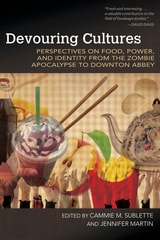
Devouring Cultures
Perspectives on Food, Power, and Identity from the Zombie Apocalypse to Downton AbbeyCammie M. Sublette
University of Arkansas Press, 2016
Devouring Cultures brings together contributors from a wide range of disciplines including media studies, rhetoric, gender studies, philosophy, anthropology, literary criticism, film criticism, race theory, history, and linguistics to examine the ways food signifies both culture and identity.
These scholars look for answers to intriguing questions: What does our choice of dining house say about our social class? Can restaurants teach us about a culture? How does food operate in Downton Abbey? How does food consumption in zombie apocalypse films and apocalyptic literature relate to contemporary food-chain crises and food nostalgia? What aspects of racial conflict, assimilation, and empowerment may be represented in restaurant culture and food choice?
Restaurants, from their historical development to their modern role as surrogate kitchen, are studied as markers of gender, race, and social class, and also as forums for the exhibition of tensions or spaces where culture is learned through the language of food. Food, as it is portrayed in literature, movies, and television, is illuminated as a platform for cultural assimilation, a way for the oppressed to find agency, or even a marker for the end of a civilization.
The essays in Devouring Cultures show how our choices about what we eat, where we eat, and with whom we eat are linked to identity and meaning and how the seemingly simple act of consumption has implications that extend far beyond sustenance.
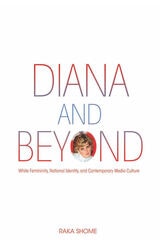
Diana and Beyond
White Femininity, National Identity, and Contemporary Media CultureRaka Shome
University of Illinois Press, 2014
Raka Shome investigates the factors that led to this defining cultural/political moment and unravels just what the Diana phenomenon represented for comprehending the relation between white femininity and the nation in postcolonial Britain and its connection to other white female celebrity figures in the millennium. Digging into the media and cultural artifacts that circulated in the wake of Diana's death, Shome investigates a range of theoretical issues surrounding motherhood and the production of national masculinities, global humanitarianism, transnational masculinities, the intersection of fashion and white femininity, and spirituality and national modernity. Her analysis explores how images of white femininity in popular culture intersect with issues of race, gender, class, sexuality, and transnationality in the performance of Anglo national modernities.
Moving from ideas on the positioning of privileged white women in global neoliberalism to the emergence of new formations of white femininity in the millennium , Diana and Beyond fearlessly explains the late princess's never-ending renaissance and ongoing cultural relevance.
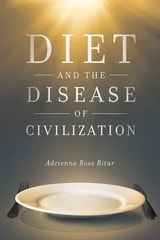
Diet and the Disease of Civilization
Adrienne Rose Bitar
Rutgers University Press, 2017
Diet books contribute to a $60-billion industry as they speak to the 45 million Americans who diet every year. Yet these books don’t just tell readers what to eat: they offer complete philosophies about who Americans are and how we should live. Diet and the Disease of Civilization interrupts the predictable debate about eating right to ask a hard question: what if it’s not calories—but concepts—that should be counted?
Cultural critic Adrienne Rose Bitar reveals how four popular diets retell the “Fall of Man” as the narrative backbone for our national consciousness. Intensifying the moral panic of the obesity epidemic, they depict civilization itself as a disease and offer diet as the one true cure.
Bitar reads each diet—the Paleo Diet, the Garden of Eden Diet, the Pacific Island Diet, the detoxification or detox diet—as both myth and manual, a story with side effects shaping social movements, driving industry, and constructing fundamental ideas about sickness and health. Diet and the Disease of Civilization unearths the ways in which diet books are actually utopian manifestos not just for better bodies, but also for a healthier society and a more perfect world.
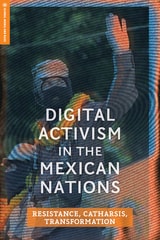
Digital Activism in the Mexican Nations
Resistance, Catharsis, TransformationDavid S. Dalton
Rutgers University Press, 2026
Digital Activism in the Mexican Nations analyzes Mexico’s rich history of digital activism, which is among the most vibrant of any country in the Hispanic world. The book begins with a discussion of the Zapatista uprising of 1994—which is widely understood as the first digital social movement in the history of the world—and ends with a discussion of the digital strategies of migrant communities trekking through Mexico into the present.
Conceptualizing (digital) activism as a type of performance, the book opens a dialogue with Brecht’s binary of cathartic and transformative performance. As such, it suggests that activist movements centered on expressive manifestations of emotion tend to stifle a social movement’s revolutionary potential by stifling their ability to resonate with potential allies outside their community. At the same time, it argues that the most successful digital social movements seek strategies to build connections with allies who can help them to shift state policy.
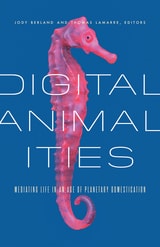
Digital Animalities
Mediating Life in an Age of Planetary DomesticationJody Berland
University of Minnesota Press, 2026
Exploring where animality meets digital media in the shadow of climate crisis
Digital Animalities is a groundbreaking investigation into the entanglements of animal life, media infrastructures, and digital technologies in a time of environmental precarity and digital saturation. Revealing the digital as a dynamic site where animal agency and technological systems collide, the contributors eschew simplistic binaries to emphasize complex mediations between animals and digital media.
From wildlife camera traps and virtual zoos to gaming environments and animation tools, these essays explore how animals are captured, played with, and consumed through digital technologies, elaborating their agency in these mediations of ecological and biopolitical processes. Rethinking animality as a fluid and contested terrain shaped by climate change, extinction pressures, and emerging ecopolitical paradigms, Digital Animalities shifts how we consider the impact of the digital on sentient lives and their futures.
Contributors: Giovanni Aloi, Art Institute of Chicago; Etienne S. Benson, Max Planck Institute for the History of Science, Berlin; Sarah Bezan, U College Cork; Michael Fisch, U of Chicago; Kate Galloway, Rensselaer Polytechnic Institute; Christine L. Marran, U of Minnesota; Brian McCormack; Jonathan Osborn; Hannah Tollefson, U of Toronto Scarborough; Tom Tyler, U of Leeds; Paul Wells, Loughborough U; Hang Wu.
Retail e-book files for this title are screen-reader friendly with images accompanied by short alt text and/or extended descriptions.
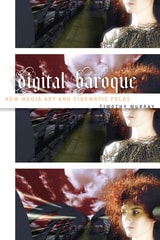
Digital Baroque
New Media Art and Cinematic FoldsTimothy Murray
University of Minnesota Press, 2008
A surprising and original application of theories of new media art
In this intellectually groundbreaking work, Timothy Murray investigates a paradox embodied in the book’s title: What is the relationship between digital, in the form of new media art, and baroque, a highly developed early modern philosophy of art? Making an exquisite and unexpected connection between the old and the new, Digital Baroque analyzes the philosophical paradigms that inform contemporary screen arts.
Examining a wide range of art forms, Murray reflects on the rhetorical, emotive, and social forces inherent in the screen arts’ dialogue with early modern concepts. Among the works discussed are digitally oriented films by Peter Greenaway, Jean-Luc Godard, and Chris Marker; video installations by Thierry Kuntzel, Keith Piper, and Renate Ferro; and interactive media works by Toni Dove, David Rokeby, and Jill Scott. Sophisticated readings reveal the electronic psychosocial webs and digital representations that link text, film, and computer. Murray puts forth an innovative Deleuzian psychophilosophical approach—one that argues that understanding new media art requires a fundamental conceptual shift from linear visual projection to nonlinear temporal folds intrinsic to the digital form.
Digital Cinema
Stephen Prince
Rutgers University Press, 2019
Stephen Prince offers a clear, concise account of how digital cinema both extends longstanding traditions of filmmaking and challenges some fundamental assumptions about film. It is essential reading for anyone interested in understanding how movies are shot, produced, distributed, and consumed in the twenty-first century.
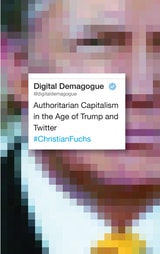
Digital Demagogue
Authoritarian Capitalism in the Age of Trump and TwitterChristian Fuchs
Pluto Press, 2018
This book delves into new political-economic structures as expressed through political communication to explain the rise of authoritarian capitalism, nationalism and right-wing ideology throughout the world. Christian Fuchs does this through updating Marxist theory and the Frankfurt School's critical theory. He re-invigorates the works on authoritarianism of Franz L. Neumann, Theodor W. Adorno, Erich Fromm, Herbert Marcuse, Max Horkheimer, Wilhelm Reich, Leo Lowenthal and Klaus Theweleit in the age of Trump and Twitter.
In the age of big data and social media, Digital Demagogue studies the expressions of ideology, nationalism and authoritarianism today and discusses prospects for overcoming capitalism and renewing the Left.
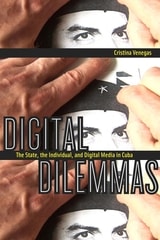
Digital Dilemmas
The State, the Individual, and Digital Media in CubaVenegas, Cristina
Rutgers University Press, 2010
Digital Dilemmas views Cuba from the Soviet Union's demise to the present, to assess how conflicts over media access play out in their both liberating and repressive potential. Drawing on extensive scholarship and interviews, Cristina Venegas questions myths of how Internet use necessarily fosters global democracy and reveals the impact of new technologies on the country's governance and culture. She includes film in the context of broader media history, as well as artistic practices such as digital art and networks of diasporic communities connected by the Web. This book is a model for understanding the geopolitic location of power relations in the age of digital information sharing.

Digital Energetics
Anne Pasek
University of Minnesota Press, 2023
Exploring the connections between energy and media—and what those connections mean for our current moment
Energy and media are the entangled middles of social life—and also of each other. This volume traces the contours of both a media analytic of energy and an energy analytic of media across the cultural, environmental, and economic relations they undergird. Digital Energetics argues that media and energy require joint theorization—not only in their potential to universalize but also in the many contingent and intermeshed relations that they bind together across contemporary informational and fossil regimes. Focusing specifically on digital operations, the coauthors analyze how data and energy have jointly modulated the character of the materiality and labor of digital systems in a warming world.
Anne Pasek provides a brief energy history of the bit, tracing how the electrification and digitization of American computing propelled a turn toward efficiency as both a solution and instigator of parallel crises in the workforce and the climate. Zane Griffin Talley Cooper traces these concerns within cryptographic proof-of-work systems and the heat they necessarily produce and seek to manage. Following heat through the twinned histories of thermodynamics and information theory, he argues that such systems are best approached as a paradigmatic, rather than exceptional, example of computing infrastructures. Cindy Kaiying Lin focuses on the practical and political frictions created as database and management designs move from the Global North to South, illustrating how the energy constraints and software cultures of Indonesia open new spaces of autonomy within environmental governance. Finally, Jordan B. Kinder offers a theorization of “platform energetics,” demonstrating how public energy discourses and settler land claims are entangled in the digital infrastructures of data colonialism in Canada.
Digital Exhaustion
Burnout, Fatigue and Overload in the Age of Constant ConnectivityEdited by A.R.E. Taylor
Intellect Books, 2026
Unpacking the affective toll of constant connectivity, this book reframes digital exhaustion as a defining experience of our times.
Overflowing inboxes. Back-to-back Zoom meetings. Nonstop notifications.
Daily life in digital culture can be exhausting.
This timely and urgent edited collection introduces ‘digital exhaustion’ as a conceptual lens to critically examine the ever-expanding presence of digital technologies in our personal and professional lives. Drawing on interdisciplinary perspectives, this book explores how digital exhaustion is experienced, felt, and articulated in our hyper-connected culture – through burnout, brain rot, binge-watching, data extraction, energy consumption, and social media compulsion. Digital exhaustion emerges as a key structure of feeling in an era of constant connectivity and algorithmic demands.
Accessible yet theoretically grounded, this collection is an essential resource for scholars in cultural and technology studies, while also speaking to broader debates in anthropology, psychology, digital geography, urban studies, and consumer research. Responsive to the urgent need to engage in sustained dialogue about digital futures, this book offers fresh insights into how we might understand – and rethink – digital wellbeing, social media addiction, and the growing demand for a right to disconnect.
Digital Fiction and the Unnatural
Transmedial Narrative Theory, Method, and AnalysisAstrid Ensslin and Alice Bell
The Ohio State University Press, 2021
Digital Futures of Graduate Study in the Humanities
Gabriel Hankins
University of Minnesota Press, 2024
A resource for planning, reimagining, and participating in the digital transformation of graduate study in the humanities
How are the humanities adapting to the rise of digital technologies, and what are some of the tried and tested ways that postsecondary institutions are proving the importance of humanities training at the graduate level? Bringing together a diverse group of scholars and students, Digital Futures of Graduate Study in the Humanities invites a reimagining of current models of graduate education to address ongoing challenges to the humanities and to create sustainable and humane pedagogies, classes, and institutions.
The essays cover a wide range of topics, including the skills required to learn and practice digital methods, the resources needed to support students and faculty in this enterprise, the lack of meaningful credit for undertaking this time-intensive work, and the diminished employment possibilities within academia for graduate students who emerge with these skills. Mapping the broad terrain through which to address and intervene in these particular issues and beyond, this book offers deep insights into the digital futures of graduate studies in the humanities.
Contributors: Maria José Afanador-Llach, U de los Andes, Bogotá; Maria K. Alberto, U of Utah; Agnieszka Backman; Travis M. Bartley, CUNY Graduate Center; Peggy Bockwinkel, U Stuttgart; Alison Booth, U of Virginia; Donna Alfano Bussell, U of Illinois Springfield; Joshua Casmir Catalano, Clemson U; Laura Crossley, George Mason U; Quinn Dombrowski, Stanford U; Stuart Dunn, King’s College London; Jennifer Edmond, Trinity College Dublin; Natalia Ermolaev, Princeton U; Laura Estill, St. Francis Xavier U; Malte Gäckle-Heckelen; Vicky Garnett, Trinity College Dublin; Daniel Gorman Jr., U of Rochester; Sabrina T. Grimberg, Stanford U; Tena L. Helton, U of Illinois Springfield; Jeanelle Horcasitas; Melissa A. Hosek, Stanford U; Hoyeol Kim; Brady Krien, U of Iowa; Benjamin Charles Germain Lee, U of Washington; Pamela E. Mack, Clemson U; Meredith Martin, Princeton U; Germán Camilo Martínez Peñaloza, U de los Andes, Bogotá; E. L. Meszaros, Brown U; Sara Mohr, Hamilton College; Sethunya Mokoko, U of Virginia; Rebecca Munson; Erin Francisco Opalich; Olivia Quintanilla, MiraCosta College; Cecily Raynor, McGill U; Amanda E. Regan, Clemson U; Heather Richards-Rissetto, U of Nebraska–Lincoln; Jacob D. Richter, George Washington U; Stephen Robertson, George Mason U; Katina L. Rogers; Claus-Michael Schlesinger, Humboldt U Berlin; Douglas Seefeldt, Clemson U; Kayla Shipp, Yale Digital Humanities Lab; Serenity Sutherland, SUNY Oswego; Toma Tasovac, Belgrade Center for Digital Humanities; Hannah Taylor, Duke U; Manfred Thaller, U of Cologne; Madeline Ullrich, U of Rochester; Ted Underwood, U of Illinois Urbana-Champaign; Gabriel Viehhauser, U Stuttgart; Brandon Walsh, U of Virginia Library; Sean Weidman, Lycoming College; Alex Wermer-Colan, Temple U; Adrian S. Wisnicki, U of Nebraska–Lincoln; Alexander J. Zawacki, U Göttingen.
Retail e-book files for this title are screen-reader friendly with images accompanied by short alt text and/or extended descriptions.
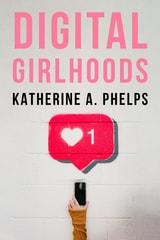
Digital Girlhoods
Katherine A. Phelps
Temple University Press, 2025
Featuring in-depth interviews with a cross section of tween girls, Phelps allows them to give meanings to their relationships with social media and their peers in their own words. As tween girls embody and negotiate the many contradictions of American girlhoods through social media participation (for example, the “Pretty or Ugly” YouTube trend), Phelps asks, how are tween girls living and experiencing girlhoods in the digital age?
The processes of experiencing and enacting tweenhood and girlhood online are explicitly gendered. Digital Girlhoods thoughtfully considers what tween girlhoods look and feel like in America today.
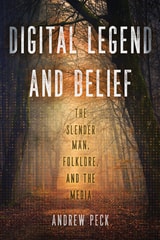
Digital Legend and Belief
The Slender Man, Folklore, and the MediaAndrew Peck
University of Wisconsin Press, 2023
Peck argues that the story of the Slender Man is really a story about the changing nature of belief in the age of the internet. Widely adopted digital technologies, from smartphones to social media, offer vast potential for extending traditional and expressive social behaviors in new ways. As such, understanding the online landscape of contemporary folklore is crucial for grasping the formation and circulation of belief in the digital age. Ultimately, Peck argues that advancing our comprehension of legends online can help us better understand how similar belief genres—like fake news, conspiracy theories, hoaxes, rumors, meme culture, and anti-expert movements—are enabled by digital media.
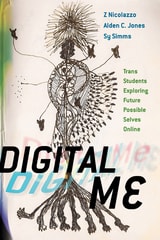
Digital Me
Trans Students Exploring Future Possible Selves OnlineZ Nicolazzo
Rutgers University Press, 2023
Digital Memory and the Archive
Wolfgang Ernst
University of Minnesota Press, 2012
In the popular imagination, archives are remote, largely obsolete institutions: either antiquated, inevitably dusty libraries or sinister repositories of personal secrets maintained by police states. Yet the archive is now a ubiquitous feature of digital life. Rather than being deleted, e-mails and other computer files are archived. Media software and cloud storage allow for the instantaneous cataloging and preservation of data, from music, photographs, and videos to personal information gathered by social media sites.
In this digital landscape, the archival-oriented media theories of Wolfgang Ernst are particularly relevant. Digital Memory and the Archive, the first English-language collection of the German media theorist’s work, brings together essays that present Ernst’s controversial materialist approach to media theory and history. His insights are central to the emerging field of media archaeology, which uncovers the role of specific technologies and mechanisms, rather than content, in shaping contemporary culture and society.
Ernst’s interrelated ideas on the archive, machine time and microtemporality, and the new regimes of memory offer a new perspective on both current digital culture and the infrastructure of media historical knowledge. For Ernst, different forms of media systems—from library catalogs to sound recordings—have influenced the content and understanding of the archive and other institutions of memory. At the same time, digital archiving has become a contested site that is highly resistant to curation, thus complicating the creation and preservation of cultural memory and history.
Digital Music Videos
Shaviro, Steven
Rutgers University Press, 2017
As these videos have proliferated online, they have become more widely accessible than ever before. In Digital Music Videos, Steven Shaviro examines the ways that music videos interact with and change older media like movies and gallery art; the use of technologies like compositing, motion control, morphing software, and other digital special effects in order to create a new organization of time and space; how artists use music videos to project their personas; and how less well known musicians use music videos to extend their range and attract attention.
Surveying a wide range of music videos, Shaviro highlights some of their most striking innovations while illustrating how these videos are creating a whole new digital world for the music industry.
Digital Objects, Digital Subjects
Interdisciplinary Perspectives on Capitalism, Labour and Politics in the Age of Big DataDavid Chandler and Christian Fuchs
University of Westminster Press, 2019
This volume explores activism, research and critique in the age of digital subjects and objects and Big Data capitalism after a digital turn said to have radically transformed our political futures. Optimists assert that the ‘digital’ promises: new forms of community and ways of knowing and sensing, innovation, participatory culture, networked activism, and distributed democracy. Pessimists argue that digital technologies have extended domination via new forms of control, networked authoritarianism and exploitation, dehumanization and the surveillance society. Leading international scholars present varied interdisciplinary assessments of such claims – in theory and via dialogue – and of the digital’s impact on society and the potentials, pitfalls, limits and ideologies, of digital activism. They reflect on whether computational social science, digital humanities and ubiquitous datafication lead to digital positivism that threatens critical research or lead to new horizons in theory and society.
An electronic version of this book is freely available, thanks to the support of libraries working with Knowledge Unlatched. KU is a collaborative initiative designed to make high quality books Open Access for the public good. More information about the initiative and details about KU’s Open Access programme can be found at www.knowledgeunlatched.org.
Digital Platforms and Algorithmic Subjectivities
Emiliana Armano, Marco Briziarelli and Elisabetta Risi
University of Westminster Press, 2022