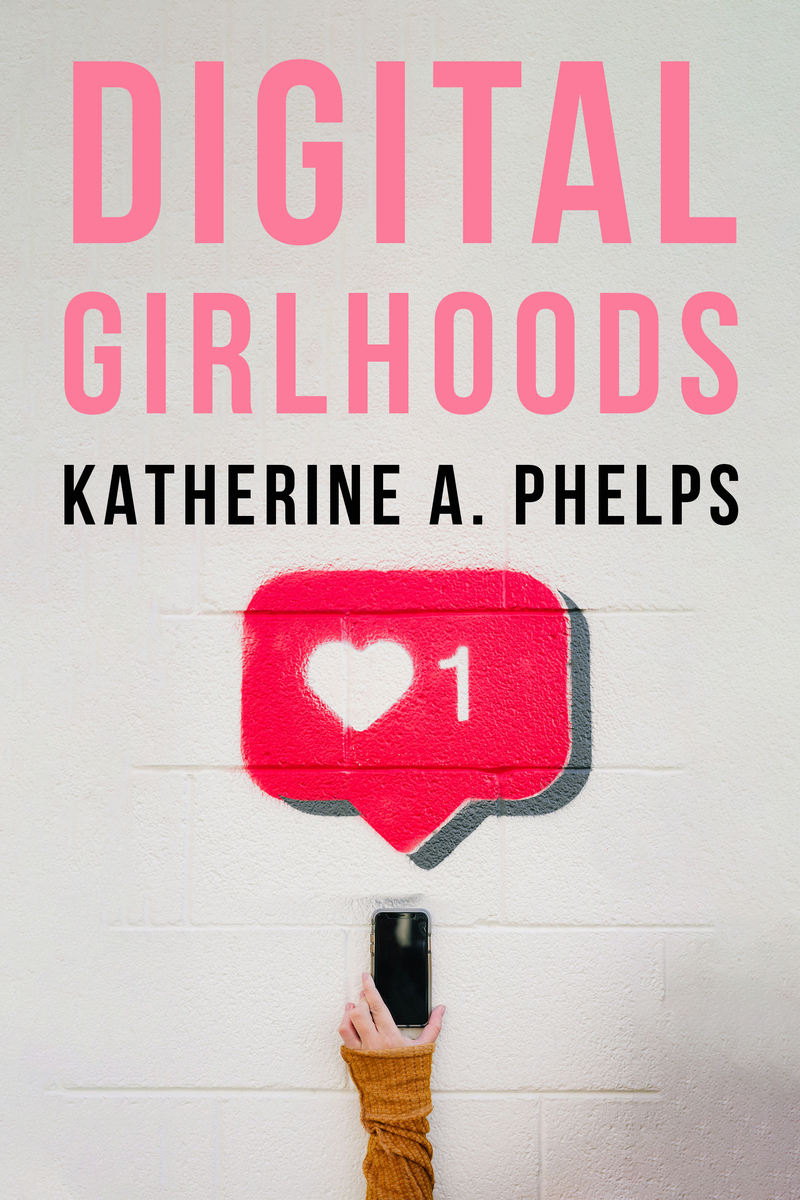
Digital Girlhoods
Temple University Press, 2025
Cloth: 978-1-4399-2580-5 | Paper: 978-1-4399-2581-2 | eISBN: 978-1-4399-2582-9
Library of Congress Classification HQ711.15
Dewey Decimal Classification 649.124
Cloth: 978-1-4399-2580-5 | Paper: 978-1-4399-2581-2 | eISBN: 978-1-4399-2582-9
Library of Congress Classification HQ711.15
Dewey Decimal Classification 649.124
ABOUT THIS BOOK | AUTHOR BIOGRAPHY | REVIEWS | TOC | REQUEST ACCESSIBLE FILE
ABOUT THIS BOOK
Tween girls in America today are growing up on social media, posting selfies and sharing “stories.” In Digital Girlhoods, Katherine Phelps emphasizes tween girls’ agency on social media vis-à-vis identity formation, content creation, and community building. When a tween girl posts a video on YouTube asking the world, “Am I pretty or ugly?”, she is also asking, “Who am I?” This content makes visible the pitfalls and potentials of these tweens creating their own digital narratives—and it asks us to take them seriously.
Featuring in-depth interviews with a cross section of tween girls, Phelps allows them to give meanings to their relationships with social media and their peers in their own words. As tween girls embody and negotiate the many contradictions of American girlhoods through social media participation (for example, the “Pretty or Ugly” YouTube trend), Phelps asks, how are tween girls living and experiencing girlhoods in the digital age?
The processes of experiencing and enacting tweenhood and girlhood online are explicitly gendered. Digital Girlhoods thoughtfully considers what tween girlhoods look and feel like in America today.
See other books on: Feminism & Feminist Theory | Gender Studies | Media Studies | Social Science | United States
See other titles from Temple University Press