Results by title
941 books match the query 'Military' and 34 start with d
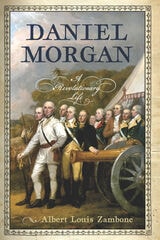
Daniel Morgan
A Revolutionary LifeAlbert Louis Zambone
Westholme Publishing, 2018
On January 17, 1781, at Cowpens, South Carolina, the notorious British cavalry officer Banastre Tarleton and his legion had been destroyed along with the cream of Lord Cornwallis’s troops. The man who planned and executed this stunning American victory was Daniel Morgan. Once a barely literate backcountry laborer, Morgan now stood at the pinnacle of American martial success. Born in New Jersey in 1736, he left home at seventeen and found himself in Virginia’s Shenandoah Valley. There he worked in mills and as a teamster, and was recruited for Braddock’s disastrous expedition to take Fort Duquesne from the French in 1755. When George Washington called for troops to join him at the siege of Boston in 1775, Morgan organized a select group of riflemen and headed north. From that moment on, Morgan’s presence made an immediate impact on the battlefield and on his superiors. Washington soon recognized Morgan’s leadership and tactical abilities. When Morgan’s troops blocked the British retreat at Saratoga in 1777, ensuring an American victory, he received accolades from across the colonies.
In Daniel Morgan: A Revolutionary Life, the first biography of this iconic figure in forty years, historian Albert Louis Zambone presents Morgan as the quintessential American everyman, who rose through his own dogged determination from poverty and obscurity to become one of the great battlefield commanders in American history. Using social history and other advances in the discipline that had not been available to earlier biographers, the author provides an engrossing portrait of this storied personality of America’s founding era—a common man in uncommon times.
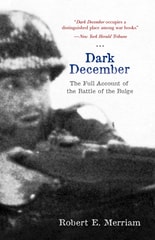
Dark December
The Full Account of the Battle of the BulgeRobert E. Merriam
Westholme Publishing, 2011
One of the Most Important Histories of the Greatest Battle on the Western Front in World War II
“Dark December occupies a distinguished place among war books. Every paragraph is based upon evidence, not flimsy wartime rumors. Technical enough for the professional, accurate enough for the historian (in fact, it is history of the best), it is lucid and understandable for the general reader.”—New York Herald Tribune
“If other veterans of the Army’s historical division can maintain Mr. Merriam’s high standard of stimulating, critical and painstaking work, we will be fortunate. Dark December can be heartily recommended to anyone faintly interested in the war.”—New York Times
“The book explodes a number of myths which have been winning their improper way into general belief.” —Arthur Schlesinger, Jr., Booklist
The massive German counteroffensive through Belgium’s Ardennes forest in December 1944 took the American and British armies by surprise and changed the outcome of the war. With whole divisions destroyed and decimated, the American army scrambled to contain the German threat, while also trying to determine how such an attack had gone undetected. The Americans succeeded in winning the month-long battle, commonly known as the Battle of the Bulge, through the tenacity of several pockets of troops, notably those in the Belgian town of Bastogne, and the remarkable rapid movement of Patton’s Third Army to seal the breech in the American lines. The battle stalled the British and American advances and lengthened the war with the result that the Soviet Union was able to make greater gains in Europe than previously anticipated. Dark December is a thorough and engrossing examination of the Battle of the Bulge by a historian who had the opportunity to prepare notes as the battle was occurring and consult classified American as well as German records. Notably, the book contains unique and critical information, including details gleaned from interviews conducted by the author with commanding officers on both sides, some of which are the only reports gathered from these sources. Originally published in 1947, this the first paperback edition with the complete original text and maps.
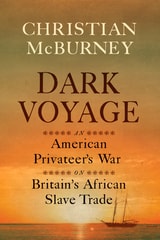
Dark Voyage
An American Privateer's War on Britain's African Slave TradeChristian M. McBurney
Westholme Publishing, 2026
One privateer was given an extraordinary task: to sail across the Atlantic to attack British slave trading posts and ships on the coast of West Africa. Based on a little-known contemporary primary source, The Journal of the Good Ship Marlborough, the story of this remarkable voyage is told here for the first time and will have a major impact on our understanding of the Atlantic slave trade and the American Revolution. The voyage of the Marlborough was the brainchild of John Brown, a prominent Rhode Island merchant—and an investor in two slave trading voyages himself. The motivation was not altruistic. The officers and crew of the Marlborough wanted to advance the cause of independence from Britain through harming Britain’s economy, but they also desired to enrich themselves by selling the plunder they captured—including enslaved Africans.
The work of the Marlborough and other American privateers was so disruptive that it led to an unintended consequence: virtually halting the British slave trade. British slave merchants, alarmed at losing money from their ships being captured, invested in many fewer slave voyages. As a result tens of thousands of Africans were not forced onto slave ships, transported to the New World, and consigned to a lifetime of slavery or an early death.
In Dark Voyage: An American Privateer’s War on Britain’s African Slave Trade, veteran researcher and writer Christian McBurney recreates the harrowing voyage of the Marlborough, while placing it in the context of Atlantic World slavery. In Africa, Marlborough’s officers come across an array of African and European slave traders willing to assist them in attacking the British. This book is also the first study to detail the many captures American privateers made of British slave ships during the Revolutionary War.
Dartmouth Veterans
Vietnam PerspectivesEdited by Phillip C. Schaefer
Brandeis University Press, 2014
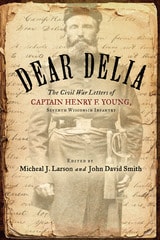
Dear Delia
The Civil War Letters of Captain Henry F. Young, Seventh Wisconsin InfantryHenry F. Young, edited by Micheal J. Larson and John David Smith
University of Wisconsin Press, 2019
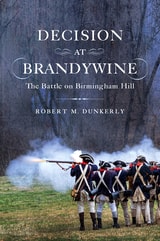
Decision at Brandywine
The Battle on Birmingham HillRobert Dunkerly
Westholme Publishing, 2025
The Battle of Brandywine, fought on September 11, 1777, along its namesake creek in the bucolic Pennsylvania countryside, was one of the largest engagements of the Revolutionary War. To those who participated in this massive battle, spread out over ten square miles and lasting from late afternoon until dark, it was unforgettable. Soon after the action, Major Joseph Bloomfield of the 3rd New Jersey recorded that it was “the grandest scene I ever saw, a sight beyond description.” Brandywine was the first major battle for the recently reorganized Continental Army. Units had fought in small engagements, but not until Brandywine did the army fight as a whole against the British. As the two armies clashed, a ferocious and desperate action developed on a hill at the heart of the battlefield, and it was here where the battle’s outcome was determined.
Despite its size and significance—Brandywine was the third bloodiest engagement of the war, with 1,300 American and 581 British casualties—the battle has been the subject of very few studies. In Decision at Brandywine: The Battle on Birmingham Hill, historian Robert M. Dunkerly analyzes the fighting near the Birmingham Meeting House where the battle turned. By dissecting the struggle on Birmingham Hill in detail, he offers a case study in weapons, tactics, and terrain analysis critical to a holistic understanding of the entire battle and what it would mean for the future of the Continental Army. In the process he not only explains how the Continental Army’s lack of uniformed training and inexperience in large open-field battles played a major role in their defeat, but also provides important information about Revolutionary War combat in general.
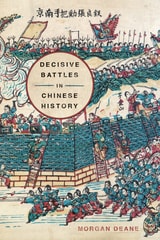
Decisive Battles in Chinese History
Morgan Deane
Westholme Publishing, 2024
“If you know the enemy and know yourself, you need not fear the result of a hundred battles. If you know yourself but not the enemy, for every victory gained you will also suffer a defeat. If you know neither the enemy nor yourself, you will succumb in every battle.”― Sun Tzu, The Art of War
The study of Chinese battles faces many hurdles that include different spelling systems, a haze of seemingly impenetrable names, places, and ideas, and different approaches to recording history. Early indigenous Chinese histories were written by Confucians with an antimilitary bias, and used rather laconic phrases to describe battles. These accounts were then transmitted to Jesuit missionaries who shared the Confucian disdain for martial matters. The modern discipline of history developed in the West during a time of particular Chinese weakness and political division, resulting in the lack of parallel material. Decisive Battles in Chinese History by Morgan Deane overcomes these obstacles to present the vast span of recorded Chinese history through key battles, from Maling, fought in 342 BC during the Warring States period, to Hengyang in 1944, which marked the end of major Japanese operations in China. Each of the twelve chapters highlights a significant conflict that selectively focuses on unique Chinese characteristics of the time, including belief systems, ruling ideology, the connection between technology and warfare, military theory, political events and rulers, and foreign policy, including China’s eventual interaction with the West. The book pushes back on a variety of ideas and stereotypes, ranging from the Chinese use of gunpowder, their supposedly weak reaction to the West, the viability of the Dynastic Cycle in studying history, the context of Chinese military theory, the exclusivity of martial and cultural spheres, and the uniqueness of Western imperialism. It also offers a groundbreaking reassessment of Mao Zedong’s leadership and his impact on the development of guerilla warfare. In a world filled with disturbing reports of conflict and potential warfare, Decisive Battles in Chinese History offers a unique addition to students, historians, and general readers wishing to better understand Chinese history.
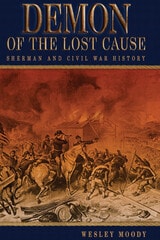
Demon of the Lost Cause
Sherman and Civil War HistoryWesley Moody
University of Missouri Press, 2011
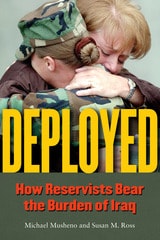
Deployed
How Reservists Bear the Burden of IraqMichael Musheno and Susan M. Ross
University of Michigan Press, 2008
"Deployed is an important and deeply moving book. Here, in this story, the heroic tradition of the American citizen-soldier lives on."
---Andrew J. Bacevich, Professor, Boston University, and author of The New American Militarism: How Americans Are Seduced by War
"Whatever your feelings about Iraq, Deployed is an important and compelling work that illuminates the real human cost of the war, and gives voice to those compelled to fight it."
---Ken Wells, Senior Editor, Condé Nast Portfolio
"Currently, there are few to no books dealing with the sociology of Iraq, and even fewer have empirical data on the experiences of American soldiers. More important, this work provides a strong and needed voice for soldiers---their words are compelling, rich, and moving."
---Morten Ender, Professor of Sociology, United States Military Academy at West Point
"This is a unique book that weaves historical, ethnographic, and organizational approaches for a study of Iraq-War military reservists. . . . the authors' findings challenge the pervading wisdom on reservists' motivations for service; the chemistry between family, reserve duty, and relations with regular military; and the effect that service in Iraq had on them."
---Jerry Lembcke, Associate Professor of Sociology, Holy Cross College
What is it like to be one of the citizen-soldiers summoned to duty in Iraq and Afghanistan? The events of 9/11 were a call to arms for many reservists, as shock, anger, and fear propelled large numbers to volunteer for the opportunity to serve their country in the Middle East. Even the most patriotic, however, had not expected that the wars would last so long or that the Army Reserve would supply so much of the manpower.
Using the soldiers' own voices, Deployed draws upon the life stories of members of an Army Reserve MP Company, who were called to extraordinary service after September 11. The book explores how and why they joined the Army Reserve, how they dealt with the seismic changes in their lives during and after deployment, the evolution of their relationships inside and outside their military unit, and their perspectives on the U.S. Army.
Musheno and Ross uncover five pathways that led these citizens to join the reserves, showing how basic needs and cultural idioms combined to stimulate enlistments. Whatever path led to enlistment, the authors find that citizen-soldiers fall into three distinct categories: adaptive reservists who adjust quickly to the huge changes in their lives abroad and at home, struggling reservists whose troubles are more a product of homegrown circumstances than experiences specific to serving in a war zone, and reservists who are dismissive of military life while they live it and oppose the war even as they fight it. Perhaps most important, Deployed challenges the prevailing stereotype of returning soldiers as war-damaged citizens.
Jacket photograph: AP Photo/Hutchinson News, Travis Morisse.
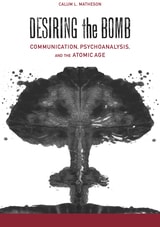
Desiring the Bomb
Communication, Psychoanalysis, and the Atomic AgeCalum L. Matheson
University of Alabama Press, 2019
Every culture throughout history has obsessed over various “end of the world” scenarios. The dawn of the Atomic Age marked a new twist in this tale. For the first time, our species became aware of its capacity to deliberately destroy itself. Since that time the Bomb has served as an organizing metaphor, a symbol of human annihilation, a stand-in for the unspeakable void of extinction, and a discursive construct that challenges the limits of communication itself. The parallel fascination with and abhorrence of nuclear weapons has metastasized into a host of other end-of-the-world scenarios, from global pandemics and climate change to zombie uprisings and asteroid collisions.
Desiring the Bomb: Communication, Psychoanalysis, and the Atomic Age explores these world-ending fantasies through the lens of psychoanalysis to reveal their implications for both contemporary apocalyptic culture and the operations of language itself. What accounts for the enduring power of the Bomb as a symbol? What does the prospect of annihilation suggest about language and its limits? Thoroughly researched and accessibly written, this study expands on the theories of Kenneth Burke, Jacques Lacan, Sigmund Freud, and many others from a variety of disciplines to arrive at some answers to these questions.
Calum L. Matheson undertakes a series of case studies—including the Trinity test site, nuclear war games, urban shelter schemes, and contemporary survivalism—and argues that contending with the anxieties (individual, social, cultural, and political) born of the Atomic Age depends on rhetorical conceptions of the “real,” an order of experience that cannot be easily negotiated in language. Using aspects of media studies, rhetorical theory, and psychoanalysis, the author deftly engages the topics of Atomic Age survival, extinction, religion, and fantasy, along with their enduring cultural legacies, to develop an account of the Bomb as a signifier and to explore why some Americans have become fascinated with fantasies of nuclear warfare and narratives of postapocalyptic rebirth.
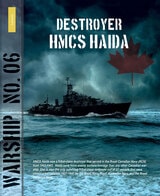
Destroyer HMCS Haida
Rindert van Zinderen-Bakker
Amsterdam University Press, 2023
Nowadays she is the only surviving Tribal-class destroyer out of 27 units that were constructed between 1937-1945 for the Royal Navy, Royal Australian Navy, and the Royal Canadian Navy.
Destroyer HNLMS Kortenaer
Rindert van Zinderen-Bakker
Amsterdam University Press, 2023
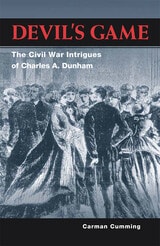
Devil's Game
The Civil War Intrigues of Charles A. DunhamCarman Cumming
University of Illinois Press, 2003
The first book-length study of one of the Civil War's most outlandish and mysterious characters
Devil's Game traces the amazing career of Charles A. Dunham, Civil War spy, forger, journalist, and master of dirty tricks. Writing for a variety of New York papers under alternate names, Dunham routinely faked stories, created new identities, and later boldly cast himself to play those roles. He achieved his greatest infamy when he was called to testify in Washington concerning Abraham Lincoln's assassination. Many parts of Dunham's career remain shadowy, but Cumming offers the first detailed tour of Dunham's convoluted, high-stakes, international deceits, including his effort to sell Lincoln on plans for a raid to capture Jefferson Davis.
Exhaustively researched and unprecedented in depth, this carefully crafted assessment of Dunham's motives, personality, and the complex effects of his schemes changes assumptions about covert operations during the Civil War.
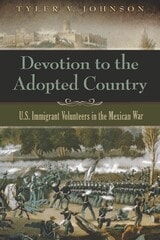
Devotion to the Adopted Country
U.S. Immigrant Volunteers in the Mexican WarTyler V. Johnson
University of Missouri Press, 2012
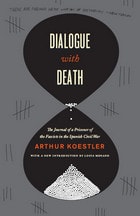
Dialogue with Death
The Journal of a Prisoner of the Fascists in the Spanish Civil WarArthur Koestler
University of Chicago Press, 2011
In 1937 during the Spanish Civil War, Arthur Koestler, a German exile writing for a British newspaper, was arrested by Nationalist forces in Málaga. He was then sentenced to execution and spent every day awaiting death—only to be released three months later under pressure from the British government. Out of this experience, Koestler wrote Darkness at Noon, his most acclaimed work in the United States, about a man arrested and executed in a Communist prison.
Dialogue with Death is Koestler’s riveting account of the fall of Málaga to rebel forces, his surreal arrest, and his three months facing death from a prison cell. Despite the harrowing circumstances, Koestler manages to convey the stress of uncertainty, fear, and deprivation of human contact with the keen eye of a reporter.
Diary of General Patrick Gordon of Auchleuchries 1635-1699
Volume 1: 1635-1659Dmitry Fedosov and Patrick Gordon
Aberdeen University Press, 2009
Diary of General Patrick Gordon of Auchleuchries 1635-1699
Volume 2: 1659-1667Dmitry Fedosov and Patrick Gordon
Aberdeen University Press, 2009
Diary of General Patrick Gordon of Auchleuchries 1635-1699
Volume 3: 1677-1678Dmitry Fedosov and Patrick Gordon
Aberdeen University Press, 2012
Diary of General Patrick Gordon of Auchleuchries 1635-1699
Volume 4: 1684-1689Dmitry Fedosov and Patrick Gordon
Aberdeen University Press, 2013
Diary of General Patrick Gordon of Auchleuchries 1635-1699
Volume 5: 1690-1695Dmitry Fedosov and Patrick Gordon
Aberdeen University Press, 2014
Diary of General Patrick Gordon of Auchleuchries 1635-1699
Volume 6: 1696-1699Dmitry Fedosov and Patrick Gordon
Aberdeen University Press, 2016
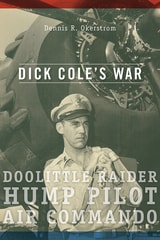
Dick Cole’s War
Doolittle Raider, Hump Pilot, Air CommandoDennis R. Okerstrom
University of Missouri Press, 2026
With the 100th anniversary of his birth on September 7, 2015 Dick Cole has long stood in the powerful spotlight of fame that has followed him since his B-25 was launched from a Navy carrier and flown toward Japan just four months after the attack on Pearl Harbor. In recognition the tremendous boost Doolittle’s Raid gave American morale, members of The Tokyo Doolittle Raiders were awarded the Congressional Gold Medal in May 2014.
Doolittle’s Raid was only the opening act of Cole’s flying career during the war. When that mission was complete and all of the 16 aircraft had crash-landed in China, many of the survivors were assigned to combat units in Europe. Cole remained in India after their rescue and was assigned to Ferrying Command, flying the Hump of the Himalayas for a year in the world’s worst weather, with inadequate aircraft, few aids to navigation, and inaccurate maps. More than 600 aircraft with their crews were lost during this monumental effort to keep China in the war, but Cole survived and rotated home in 1943. He was home just a few months when he was recruited for the First Air Commandos and he returned to India to participate in Project 9, the aerial invasion of Burma.
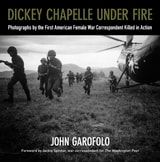
Dickey Chapelle Under Fire
Photographs by the First American Female War Correspondent Killed in ActionJohn Garofolo
Wisconsin Historical Society Press, 2026
Striking photographs and stories from more than two decades on the frontlines by a groundbreaking photojournalist—and the first female American war correspondent to be killed in action.
In 1941, twenty-two-year-old Georgette "Dickey" Chapelle sold her first photo essay to Look magazine. A year later, with World War II underway, she was photographing American soldiers in combat training in Panama. By the end of the war, she had captured the devastation at Iwo Jima and Okinawa, and in the ensuing decades, Dickey and her camera were on the scene at many of the world’s hotspots—from Cuba and the Dominican Republic to Algeria and Lebanon to Vietnam and Laos. Dickey Chapelle Under Fire exposes her remarkable story and shares over 150 stunning images from her extraordinary career as a photojournalist.
In the male-dominated world of war journalism, Chapelle fought to be taken seriously. She eventually earned the respect of many of her male colleagues and broke down barriers for future generations of female journalists. She embedded herself with military units on frontlines around the globe, capturing not only the horrors of war but also the camaraderie and everyday routines of service men and women.
Always one to follow the action, Chapelle traveled with Algerian rebels across the North African desert and with Fidel Castro through the jungles of Cuba. She spent two months in a Hungarian prison after being caught smuggling aid to refugees fleeing a Soviet invasion. Beginning in 1961, Chapelle set her lens and viewfinder on Southeast Asia, capturing the growing conflict there, until she was killed while on patrol with marines in Vietnam in April 1965—making her the first female American war correspondent to be killed in action.
For twenty-five years, Chapelle's photographs graced the pages of National Geographic, the National Observer, Life, and other major publications. Despite her tragic end, Chapelle’s tenacity, courage, and compassion shine throughout her work, highlighting the human impact of war while revealing the larger stories beyond the battlefield. Her legacy lives on through this powerful collection.
Diplomacy and War at NATO
The Secretary General and Military Action After the Cold WarRyan C. Hendrickson
University of Missouri Press, 2006
Disabled Veterans in History
David A. Gerber, Editor
University of Michigan Press, 2012
Disarming Doomsday
The Human Impact of Nuclear Weapons since HiroshimaBecky Alexis-Martin
Pluto Press, 2019
Disease, War, and the Imperial State
The Welfare of the British Armed Forces during the Seven Years' WarErica Charters
University of Chicago Press, 2014
In Disease, War, and the Imperial State, Erica Charters demonstrates how disease played a vital role in shaping strategy and campaigning, British state policy, and imperial relations during the Seven Years’ War. Military medicine was a crucial component of the British war effort; it was central to both eighteenth-century scientific innovation and the moral authority of the British state. Looking beyond the traditional focus of the British state as a fiscal war-making machine, Charters uncovers an imperial state conspicuously attending to the welfare of its armed forces, investing in medical research, and responding to local public opinion. Charters shows military medicine to be a credible scientific endeavor that was similarly responsive to local conditions and demands.
Disease, War, and the Imperial State is an engaging study of early modern warfare and statecraft, one focused on the endless and laborious task of managing manpower in the face of virulent disease in the field, political opposition at home, and the clamor of public opinion in both Britain and its colonies.
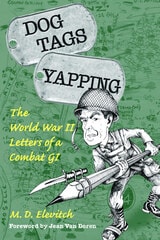
Dog Tags Yapping
The World War II Letters of a Combat GIM.D. Elevitch. Foreword by Jean Van Doren
Southern Illinois University Press, 2003
A chronicle of war infused with uncommon cheer, Dog Tags Yapping: The World War II Letters of a Combat GI is a young man’s education in life and death and a narrative of war told completely in letters.
During World War II, thousands of high school graduates were drafted into the army to be trained in colleges as engineers or other technicians but instead were assigned to fighting units and joined the great assault in Europe after D-Day. One of those reprogrammed combat infantrymen was Morton Elevitch from Duluth, Minnesota. Elevitch’s cartoons, drawings, and extremely unconventional letters home—rescued from box-in-the-basement oblivion after a more than fifty-year dormancy—recover the story of one rerouted GI in a voice that is compelling and new. Embellished with a boyish flair, the quirky and playful documents collected here impart a distinctly personal and uncalculated record of war, family, and coming of age. “It’s much easier to wield a melancholy pen than to sit down and cry,” Elevitch declares to his father.
Sparkling with a patina of wit and the bittersweet allure of lost innocence, the words and letters of “Privitch Elevate” offer the immediacy of the events as they unfolded. With the ease and expertise expected of a more seasoned storyteller, the young Elevitch escorts readers through his basic training and departure for Europe, duty in Brittany with the 94th Division and departure for Germany, combat under Patton’s command, wounding by mortar fragments, convalescence in England, and his return to France with the Signal Corps to guard prisoners and await demobilization. But along with these letters are the stories of his relationships with his parents, his brother, the men of his company and even the prisoners of war. The author’s perspectives on the war radically change. Both comic and tragic in its treatment of war’s chaos and tedium, this sensitive personal history covers experiences from the adjustment to military life and the temptations of flesh to the pain of wounds and recovery and the exposure to foreign countries and cultures.
Presaging his career as a novelist and editor, Elevitch’s words and drawings sketch an audacious and highly imaginative portrait of a young man during an exceptional time in world history. Evocative of life lived and nearly lost, his jarring accounts of combat reveal a soldier who was wounded not only in body but also in soul, in a war that changed him forever—just as it changed everyone it touched. Reproduced here as they were originally written, alongside a gallery of photos and hand-drawn battle maps, Elevitch’s cartoons and letters were initially intended for only three persons. But with their unique historical value and affecting exploration of the human spirit, they resurface in Dog Tags Yapping and result in an exhilarating ride for all readers through his “wild bivouac of the mind.”
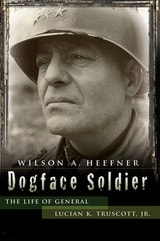
Dogface Soldier
The Life of General Lucian K. Truscott, Jr.Wilson A. Heefner
University of Missouri Press, 2026
Yet no definitive history of his life has been compiled. Wilson Heefner corrects that with the first authoritative biography of this distinguished American military leader. Heefner has undertaken impressive research in primary sources—as well as interviews with family members and former associates—to shed new light on this overlooked hero. He presents Truscott as a soldier who was shaped by his upbringing, civilian and military education, family life, friendships, and evolving experiences as a commander both in and out of combat.
Heefner’s brisk narrative explores Truscott’s career through his three decades in the Army and defines his roles in key operations. It also examines Truscott’s postwar role as military governor of Bavaria, particularly in improving living conditions for Jewish displaced persons, removing Nazis from civil government, and assisting in the trials of German war criminals. And it offers the first comprehensive examination of his subsequent career in the Central Intelligence Agency, where he served as senior CIA representative in West Germany during the early days of the Cold War, and later as CIA Director Allen Dulles’s deputy director for coordination in Washington.
Dogface Soldier is a portrait of a man who earned a reputation for being honest, forthright, fearless, and aggressive, both as a military officer and in his personal life—a man who, at the dedication ceremony for the Anzio-Nettuno American cemetery in 1945, turned away from the crowd and to the thousands of crosses stretching before him to address those buried there. Heefner has written a definitive biography of a great soldier and patriot.
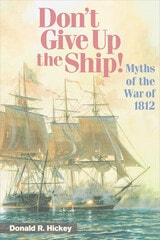
Don't Give Up the Ship!
Myths of the War of 1812Donald R. Hickey
University of Illinois Press, 2006
No longer willing to accept naval blockades, the impressment of American seamen, and seizures of American ships and cargos, the United States declared war on Great Britain. The aim was to frighten Britain into concessions and, if that failed, to bring the war to a swift conclusion with a quick strike at Canada. But the British refused to cave in to American demands, the Canadian campaign ended in disaster, and the U.S. government had to flee Washington, D.C., when it was invaded and burned by a British army.
By all objective measures, the War of 1812 was a debacle for the young republic, and yet it was celebrated as a great military triumph. The American people believed they had won the war and expelled the invader. Oliver H. Perry became a military hero, Francis Scott Key composed what became the national anthem and commenced a national reverence for the flag, and the U.S.S. Constitution, "Old Ironsides," became a symbol of American invincibility. Every aspect of the war, from its causes to its conclusion, was refashioned to heighten the successes, obscure the mistakes, and blur embarrassing distinctions, long before there were mass media or public relations officers in the Pentagon.
In this entertaining and meticulously researched book by America's leading authority on the War of 1812, Donald R. Hickey dispels the many misconcep-tions that distort our view of America's second war with Great Britain. Embracing military, naval, political, economic, and diplomatic analyses, Hickey looks carefully at how the war was fought between 1812 and 1815, and how it was remembered thereafter. Was the original declaration of war a bluff? What were the real roles of Canadian traitor Joseph Willcocks, Mohawk leader John Norton, pirate Jean Laffite, and American naval hero Lucy Baker? Who killed the Shawnee chief Tecumseh and who shot the British general Isaac Brock? Who actually won the war, and what is its lasting legacy? Hickey peels away fantasies and embellishments to explore why cer-tain myths gained currency and how they contributed to the way that the United States and Canada view themselves and each other.
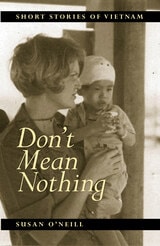
Don't Mean Nothing
Short Stories of VietnamSusan O'Neill
University of Massachusetts Press, 2004
For American nurses in Vietnam, and the men among whom they worked and lived, a common defense against the steady onslaught of dead and dying, wounded and maimed, was a feigned indifference—the irony of the powerless. With the assistance of alcohol, drugs, and casual sex, "Don't mean nothing" became their mantra, a means of coping with the other war—the war against total mental breakdown.
Each or these tales offers new and profound insight into the ways the war in Vietnam forever changed the lives of everyone who served there.
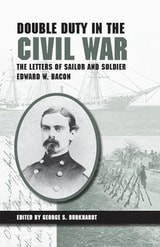
Double Duty in the Civil War
The Letters of Sailor and Soldier Edward W. BaconEdited by George S. Burkhardt
Southern Illinois University Press, 2009
In 1861 at the age of eighteen, Edward Woolsey Bacon, a Yale student and son of well-known abolitionist minister Leonard Bacon, left his home in New Haven, Connecticut, to fight for the United States. Over the next four years Bacon served in both the Union navy and army, which gave him a sweeping view of the Civil War. His postings included being a captain’s clerk on the USS Iroquois, a hospital clerk in his hometown, a captain in the 29th Connecticut Infantry (Colored), and a major in the 117th U.S. Colored Infantry, and he described these experiences in vibrant letters to his friends and family. Historian George S. Burkhardt has compiled these letters, as well as Bacon’s diary in the impressive Double Duty in the Civil War: The Letters of Sailor and Soldier Edward W. Bacon.
Bacon tells of hunting Confederate commerce raiders on the high seas, enduring the tedium of blockade duty, and taking part in riverine warfare on the Mississippi. He recalls sweating in South Carolina as an infantry officer during drill and picket duty, suffering constant danger in the battlefield trenches of Virginia, marching victoriously on fallen Richmond, and tolerating the boredom of occupation duty in Texas.
His highly entertaining letters shed new light on naval affairs and reveal a close-knit family life. The narrative of his duty with black troops is especially valuable, since few first-hand accounts from white officers of the U.S. Colored Troops exist. Furthermore, his beliefs about race, slavery, and the Union cause were unconventional for the time and stand in contrast to those held by many of his contemporaries.
Double Duty in the Civil War is filled with lively descriptions of the men Bacon met and the events he experienced. With Burkhardt’s careful editing and useful annotations, Bacon’s letters and diary excerpts give rare insight into areas of the Civil War that have been neglected because of a lack of available sources. Given the scarcity of eyewitness testimonies to navy life and life in African American regiments, this book is a rarity indeed.
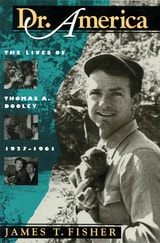
Dr. America
The Lives of Thomas A. Dooley, 1927-1961James T. Fisher
University of Massachusetts Press, 1997
This book chronicles the life of Tom Dooley, the American doctor whose much-publicized exploits in Vietnam and Laos during the 1950s helped lay the ideological groundwork for the U.S. military intervention a decade later. The scion of an upper-middle-class St. Louis family, Dooley was an enormously complex and fascinating individual. He was a devoutly religious Roman Catholic as well as a self-styled playboy socialite, a devoted physician to the poor and a tireless propagandist for the “Vietnam Lobby,” a shameless self-promoter and a closeted homosexual, a victim of Navy persecution and a beneficiary of CIA support. Dooley first gained notoriety as a young Navy doctor charged with overseeing the evacuation of Catholic refugees from North Vietnam in the wake of the 1954 Geneva Accords. His celebrity grew after his book Deliver Us from Evil, a fervently anticommunist account of his experiences, was serialized in Reader's Digest. By the end of the decade, as his name became associated (albeit mistakenly) with a ballad popularized by the Kingston Trio, he had achieved the status of “America's first pop star saint.” In addition to exposing the roots of the Vietnam War, Dooley's story illuminates a broad range of developments in post-World War II United States culture—from the “Americanization” of Catholicism to the rise of the mass media.
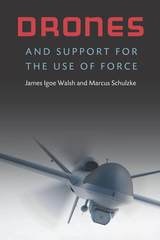
Drones and Support for the Use of Force
James Igoe Walsh and Marcus Schulzke
University of Michigan Press, 2018
Drones and Support for the Use of Force uses experimental research to analyze the effects of combat drones on Americans’ support for the use of force. The authors’ findings—that drones have had important but nuanced effects on support for the use of force—have implications for democratic control of military action and civil-military relations and provide insight into how the proliferation of military technologies influences foreign policy.