Results by title
100 books match the query 'Commentary' and 19 start with a
A Commentary on Aristophanes' Knights
Carl Arne Anderson and T. Keith Dix
University of Michigan Press, 2020
In addition to the complete Greek text and commentary, this volume includes a substantial introduction to the playwright’s career and to the historical and political background of the play. It includes advice for students on grammar and syntax, meter, festivals and staging, as well as topical and literary references and allusions that will help guide students to a mature appreciation of the comedy’s humor, seriousness, and artistic quality. Priced and sized for classroom use, this is the first full commentary on Knights since 1901 and will be widely welcomed.
A Commentary on Cicero, De Divinatione I
Celia E. Schultz
University of Michigan Press, 2014
A Commentary on Cicero, De Divinatione II
Andrew R. Dyck
University of Michigan Press, 2020
Celia Schultz’s earlier volume in this series presented the text and commentary for De Divinatione I. With Andrew Dyck’s companion volume on the second book of De Divinatione, students and teachers are well served with crucial texts from one of Rome’s most famous philosophers, as he considers important Roman practices and beliefs.
A Commentary on Cicero, De Legibus
Andrew R. Dyck
University of Michigan Press, 2004
Surprisingly, de Legibus has been one of Cicero's most neglected works. Andrew R. Dyck's commentary is the first to appear on the complete work in well over one hundred years. Dyck provides a detailed interpretation and sets the essay into the context of the politics and philosophical thought of its time. While previous commentaries focused primarily on grammar and textual criticism, this one also seeks to relate Cicero's text to the political, philosophical, and religious trends of his day. The author identifies the influences on Cicero's thinking and analyzes the relation of this theoretical treatise to his other works. This commentary is based on a new text, worked out in consultations between the author and Jonathan Powell of Royal Holloway, London.
Andrew Dyck is Professor of Classics, University of California at Los Angeles.
A Commentary on Cicero, De Natura Deorum II
Andrew R. Dyck
University of Michigan Press, 2025
A Commentary on Cicero, De Officiis
Andrew R. Dyck
University of Michigan Press, 1997
Composed in haste shortly before Cicero's death, de Officiis has exercised enormous influence over the centuries. It is all the more surprising that Andrew R. Dyck's volume is the first detailed English commentary on the work written in this century. It deals with the problems of the Latin text (taking account of Michael Winterbottom's new edition), it delineates the work's structure and sometimes elusive train of thought, clarifies the underlying Greek and Latin concepts, and provides starting points for approaching the philosophical and historical problems that de Officiis raises.
A work of major importance for classicists, philosophers, and ancient historians, this Commentary will be an invaluable companion to all readers of Cicero's last philosophical work.
Andrew R. Dyck is Professor of Classics, University of California, Los Angeles.
Publication of this volume is supported by a grant from the National Endowment for the Humanities.
A Commentary on Jean-Paul Sartre's Being and Nothingness
Joseph S. Catalano
University of Chicago Press, 1985
A Commentary on Jean-Paul Sartre's Critique of Dialectical Reason, Volume 1, Theory of Practical Ensembles
Joseph S. Catalano
University of Chicago Press, 1986
A Commentary on Kant's Critique of Practical Reason
Lewis White Beck
University of Chicago Press, 1996
This Critique is the only writing in which Kant weaves his thoughts on practical reason into a unified argument. Lewis White Beck offers a classic examination of this argument and expertly places it in the context of Kant's philosophy and of the moral philosophy of the eighteenth century.
A Commentary on Plato's Meno
Jacob Klein
University of Chicago Press, 1989
"A major addition to the literature on the Meno and necessary reading for every student of the dialogue."—Alexander Seasonske, Philosophical Review
"There exists no other commentary on Meno which is so thorough, sound, and enlightening."—Choice
Jacob Klein (1899-1978) was a student of Martin Heidegger and a tutor at St. John's College from 1937 until his death. His other works include Plato's Trilogy: Theaetetus, the Sophist, and the Statesman, also published by the University of Chicago Press.
A Commentary on Plautus' Curculio
T. H. M. Gellar-Goad
University of Michigan Press, 2024
This up-to-date, authoritative commentary on the play will prove useful to directors and actors and will readily introduce students to the joys of Roman comedy.
A Commentary on The Complete Greek Tragedies. Aeschylus
James C. Hogan
University of Chicago Press, 1985
James C. Hogan provides a general introduction to Aeschylean theater and drama, followed by a line-by-line commentary on each of the seven plays. He places Aeschylus in the historical, cultural, and religious context of fifth-century Athens, showing how the action and metaphor of Aeschylean theater can be illuminated by information on Athenian law athletic contests, relations with neighboring states, beliefs about the underworld, and countless other details of Hellenic life. Hogan clarifies terms that might puzzle modern readers, such as place names and mythological references, and gives special attention to textual and linguistic issues: controversial questions of interpretation; difficult or significant Greek words; use of style, rhetoric, and commonplaces in Greek poetry; and Aeschylus's place in the poetic tradition of Homer, Hesiod, and the elegiac poets. Practical information on staging and production is also included, as are maps and illustrations, a bibliography, indexes, and extensive cross-references between the seven plays. Forthcoming volumes will cover the works of Sophocles and Euripides.
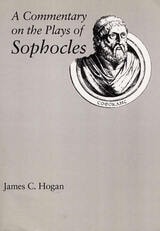
A Commentary on the Plays of Sophocles
James C. Hogan
Southern Illinois University Press, 1991
James C. Hogan introduces each play by highlighting specific and interpretive problems relevant to that play before turning to a line-by-line analysis. The line analysis is comprehensive, ranging from the meanings of words and phrases that pertain to a variety of Greek ideas and institutions to metaphor and imagery specific to each play as well as plots and borrowings from earlier poetry, styles, and characterizations.
Along with his examination of the seven extant plays of Sophocles in English translations, Hogan provides a general introduction to the theatre in Sophocles’ time, discussing staging, the conventions of the Greek theatre, the text of the plays, and mythology and religion.
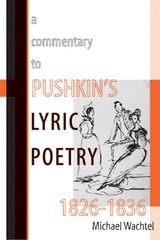
A Commentary to Pushkin’s Lyric Poetry, 1826–1836
Michael Wachtel
University of Wisconsin Press, 2012
Alexander Pushkin’s lyric poetry—much of it known to Russians by heart—is the cornerstone of the Russian literary tradition, yet until now there has been no detailed commentary of it in any language.
Michael Wachtel’s book, designed for those who can read Russian comfortably but not natively, provides the historical, biographical, and cultural context needed to appreciate the work of Russia’s greatest poet. Each entry begins with a concise summary highlighting the key information about the poem’s origin, subtexts, and poetic form (meter, stanzaic structure, and rhyme scheme). In line-by-line fashion, Wachtel then elucidates aspects most likely to challenge non-native readers: archaic language, colloquialisms, and unusual diction or syntax. Where relevant, he addresses political, religious, and folkloric issues.
Pushkin’s verse has attracted generations of brilliant interpreters. The purpose of this commentary is not to offer a new interpretation, but to give sufficient linguistic and cultural contextualization to make informed interpretation possible.
A Karamazov Companion
Commentary on the Genesis, Language, and Style of Dostoevsky's NovelVictor Terras
University of Wisconsin Press, 1981
In his introduction, Terras outlines the genesis, main ideas, and structural peculiarities of the novel as well as Dostoevsky’s political, philosophical, and aesthetic stance. The detailed commentary takes the reader through the novel, clarifying aspects of Russian life, the novel’s sociopolitical background, and a number of polemic issues. Terras identifies and explains hundreds of literary and biblical quotations and allusions. He discusses symbols, recurrent images, and structural stylistic patterns, including those lost in English translation.
A William Ernest Hocking Reader
with CommentaryJohn Lachs
Vanderbilt University Press, 2004
Anselm's Pursuit of Joy
A Commentary on the ProslogionGavin R. Ortlund
Catholic University of America Press, 2020
Antisthenes of Athens
Texts, Translations, and CommentarySusan H. Prince
University of Michigan Press, 2015
Aristophanes' Clouds
A CommentaryS. Douglas Olson
University of Michigan Press, 2021
This is the first substantial commentary on Clouds since Dover’s 1968 edition. Intended for intermediate Greek students at undergraduate and graduate levels, the commentary pays careful attention to the basic characteristics of ancient Greek syntax, as well as to how Greek words are formed and can be analyzed. It offers robust staging notes, information about daily life in late 5th-century Athens, and constant reference to the rhetorical and dramatic strategies of the text. Full support is offered for those interested in the metrical structure of the songs, but in a way that allows instructors to leave such issues aside, should they choose to do so. The first and second appendices offer a basic means of entry into the rich but complex world of the comic fragments. An English-language bibliography is provided. The edition will interest professional classicists of all sorts seeking an accessible introduction to one of Aristophanes’ greatest plays, to philosophers concerned with Socrates and the sophistic movement, and to theater professionals who wish to stage the play.