Results by title
1761 books match the query 'Public Policy' and 72 start with d

Damaged Parents
An Anatomy of Child NeglectNorman A. Polansky, Mary Ann Chalmers, Elizabeth Werthan Buttenwieser, and David P. Williams
University of Chicago Press, 1983
"Norman Polansky and his colleagues have produced a truly remarkable book. . . . One of the consequences of [the] relative invisibility of child neglect is that we also know less about it. But this book will help to correct that for it contains reports of findings from two systematic efforts to define, measure, classify, and understand child neglect."—Thomas M. Young, Social Service Review
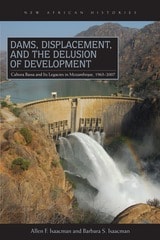
Dams, Displacement, and the Delusion of Development
Cahora Bassa and Its Legacies in Mozambique, 1965–2007Allen F. Isaacman
Ohio University Press, 2013
Cahora Bassa Dam on the Zambezi River, built in the early 1970s during the final years of Portuguese rule, was the last major infrastructure project constructed in Africa during the turbulent era of decolonization. Engineers and hydrologists praised the dam for its technical complexity and the skills required to construct what was then the world’s fifth-largest mega-dam. Portuguese colonial officials cited benefits they expected from the dam—from expansion of irrigated farming and European settlement, to improved transportation throughout the Zambezi River Valley, to reduced flooding in this area of unpredictable rainfall. “The project, however, actually resulted in cascading layers of human displacement, violence, and environmental destruction. Its electricity benefited few Mozambicans, even after the former guerrillas of FRELIMO (Frente de Libertação de Moçambique) came to power; instead, it fed industrialization in apartheid South Africa.” (Richard Roberts)
This in-depth study of the region examines the dominant developmentalist narrative that has surrounded the dam, chronicles the continual violence that has accompanied its existence, and gives voice to previously unheard narratives of forced labor, displacement, and historical and contemporary life in the dam’s shadow.
Darwinian Politics
The Evolutionary Origin of FreedomRubin, Paul H.
Rutgers University Press, 2002
Darwinian Politics is the first book to examine political behavior from a modern evolutionary perspective. Here, Paul H. Rubin discusses group or social behavior, including ethnic and racial conflict; altruism and cooperation; envy; political power; and the role of religion in politics ¾ issues that have formed the hallmark of human social behavior.
Adopting a Darwinian perspective, Rubin demonstrates why certain political-moral philosophies succeed or fail in modern Western culture. He begins by showing relationships between biology and natural selection and the history of political philosophy and explains why desirable policies must treat each person as an individual. He considers the notion of group identity and conflict, observing a human propensity to form in-groups, a behavior that does not necessitate but often leads to deviancies such as racism. In discussing altruism, Rubin shows that people are willing to aid the poor if they are convinced that the recipients are not shirkers or free loaders. This explains why recent welfare reforms are widely viewed as successful. Envy, a trait that is often counterproductive in today’s world, is also addressed. In comparing major moral philosophical systems, Rubin contends that utilitarianism is broadly consistent with our evolved preferences. He illustrates evolutionary premises for religious belief and for desires to regulate the behavior of others, and how in today’s world such regulation may not serve any useful purpose.
Ultimately, Rubin argues that humans naturally seek political freedom, and modern Western society provides more freedom than any previous one. In light of his analysis, the author extrapolates that, while there are still areas for improvements, humans have done a remarkably good job of satisfying their evolved political preferences.
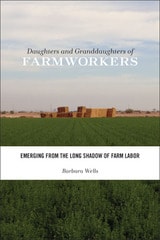
Daughters and Granddaughters of Farmworkers
Emerging from the Long Shadow of Farm LaborWells, Barbara
Rutgers University Press, 0
In Daughters and Granddaughters of Farmworkers, Barbara Wells examines the work and family lives of Mexican American women in a community near the U.S.-Mexican border in California’s Imperial County. Decades earlier, their Mexican parents and grandparents had made the momentous decision to migrate to the United States as farmworkers. This book explores how that decision has worked out for these second- and third-generation Mexican Americans.
Wells provides stories of the struggles, triumphs, and everyday experiences of these women. She analyzes their narratives on a broad canvas that includes the social structures that create the barriers, constraints, and opportunities that have shaped their lives. The women have constructed far more settled lives than the immigrant generation that followed the crops, but many struggle to provide adequately for their families.
These women aspire to achieve the middle-class lives of the American Dream. But upward mobility is an elusive goal. The realities of life in a rural, agricultural border community strictly limit social mobility for these descendants of immigrant farm laborers. Reliance on family networks is a vital strategy for meeting the economic challenges they encounter. Wells illustrates clearly the ways in which the “long shadow” of farm work continues to permeate the lives and prospects of these women and their families.
Dead in the Water
Global Lessons from the World Bank's Model Hydropower Project in LaosEdited by Bruce Shoemaker and William Robichaud; foreword by Yos Santasombat; afterword by Philip Hirsch
University of Wisconsin Press, 2019
In the 2000s, as the World Bank was reeling from revelations of past hydropower failures, it nonetheless promoted the enormous Nam Theun 2 project. NT2, the Bank believed, offered a new, wiser model of dam development that would alleviate poverty, protect the environment, engage locally affected people in a transparent fashion, and stimulate political transformation. This was a tall order. For the first time, this book shows in detail why, despite assertions of success from the World Bank and other agencies involved in the project, the dam's true story has been one of substantial loss for affected villagers and the regional environment. Nam Theun 2 is an important case study that illustrates much broader problems of global development policy.
Deaf and Disability Studies
Interdisciplinary PerspectivesSusan Burch
Gallaudet University Press, 2010
This collection presents 14 essays by renowned scholars on Deaf people, Deafhood, Deaf histories, and Deaf identity, but from different points of view on the Deaf/Disability compass. Editors Susan Burch and Alison Kafer have divided these works around three themes. The first, Identities and Locations, explores Deaf identity in different contexts. Topics range from a history of activism shaped by the ableism of Deaf elites in the United States from 1880–1920, to a discussion of the roles that economics, location, race, and culture play in the experiences of a Deaf woman from northern Nigeria now living in Washington, D.C.
Alliances and Activism showcases activism organized across differences. Studies include a feminist analysis of how deaf and hearing women working together share responsibility, and an examination of how intra-cultural variations in New York City and Quebec affect deaf-focus HIV/AIDS programs. The third theme, Boundaries and Overlaps, explicitly addresses the relationships between Deaf Studies and Disability Studies. Interviews with scholars from both disciplines help define these relationships. Another contributor calls for hearing/not-deaf people with disabilities to support their Deaf peers in gaining langue access to the United Nations. Deaf and Disability Studies: Interdisciplinary Perspectives reveals that different questions often lead to contrary conclusions among their authors, who still recognize that they all have a stake in this partnership.

Debating the American Dream
How Explanations for Inequality Polarize PoliticsElizabeth Suhay
Russell Sage Foundation, 2025
Drawing on public opinion surveys spanning more than four decades, Suhay finds that Americans’ belief in the American Dream is strongly related to their political party affiliation. Democratic Party leaders have increasingly questioned the fairness of the American economy, and, in effect, have called into question whether the American Dream is “real.” Republican Party leaders, by contrast, have consistently defended the fairness of the economy and the American Dream. While it is true that Americans have become more skeptical of the American Dream overall, Suhay finds this skepticism is concentrated among Democratic members of the public. Despite the increasingly working-class make-up of the Republican coalition, most Republican members of the public continue to believe the American Dream is reality.
Suhay finds that both Democrats and Republicans tend to adhere to their party’s economic narratives when identifying the causes of inequality between rich and poor, White and Black and Latino Americans, and men and women. Democrats and liberals often attribute inequality between these groups to societal causes, such as lack of access to education and jobs or discrimination. Republicans and conservatives, on the other hand, are more likely to blame individuals and lower income groups for their difficulties. However, Americans’ beliefs are less polarized when they consider socioeconomic inequalities rarely debated by politicians. For example, when asking Republicans and Democrats about the roots of rural-urban and White-Asian inequality, there is no clear unequal opportunity-individual responsibility partisan divide. Suhay argues that the availability of partisan “scripts” helps to explain differences in the public’s views on inequality between groups that have been politicized. These beliefs appear to bolster support for the two parties’ policy agendas among party supporters, driving a wedge between Democrats and Republicans in support for redistributive economic policy as well as the political candidates who support or oppose redistribution.
Debating the American Dream provides fascinating insights into politics’ role in Americans’ beliefs and attitudes concerning inequality.

Deception and Abuse at the Fed
Henry B. Gonzalez Battles Alan Greenspan's BankBy Robert D. Auerbach
University of Texas Press, 2008
The Federal Reserve—the central bank of the United States—is the most powerful peacetime bureaucracy in the federal government. Under the chairmanship of Alan Greenspan (1987-2006), the Fed achieved near mythical status for its part in managing the economy, and Greenspan was lauded as a genius. Few seemed to notice or care that Fed officials operated secretly with almost no public accountability. There was a courageous exception to this lack of oversight, however: Henry B. Gonzalez (D-TX)—chairman of the U.S. House of Representatives Financial Services (banking) Committee.
In Deception and Abuse at the Fed, Robert Auerbach, a former banking committee investigator, recounts major instances of Fed mismanagement and abuse of power that were exposed by Rep. Gonzalez, including:
- Blocking Congress and the public from holding powerful Fed officials accountable by falsely declaring—for 17 years—it had no transcripts of its meetings;
- Manipulating the stock and bond markets in 1994 under cover of a preemptive strike against inflation;
- Allowing $5.5 billion to be sent to Saddam Hussein from a small Atlanta branch of a foreign bank—the result of faulty bank examination practices by the Fed;
- Stonewalling Congressional investigations and misleading the Washington Post about the $6,300 found on the Watergate burglars.
Auerbach provides documentation of these and other abuses at the Fed, which confirms Rep. Gonzalez's belief that no government agency should be allowed to operate with the secrecy and independence in which the Federal Reserve has shrouded itself. Auerbach concludes with recommendations for specific, broad-ranging reforms that will make the Fed accountable to the government and the people of the United States.
Decisiveness and Fear of Disorder
Political Decision-Making in Times of CrisisJulius Maximilian Rogenhofer
University of Michigan Press, 2024
Rogenhofer shows how his theoretical approach allows us to reinterpret a range of crisis situations beyond the irregular migration context, including democracies’ initial responses to Covid-19, the European Sovereign Debt Crisis, and United States climate politics. These additional case studies help position concerns with decisiveness amid the challenges that populism and technocracy increasingly pose to representative democracies.
Decolonizing the University
Edited by Gurminder K. Bhambra, Kerem Nisancioglu and Dalia Gebrial
Pluto Press, 2018
In 2015, students at the University of Cape Town demanded the removal of a statue of Cecil Rhodes, the imperialist, racist business magnate, from their campus. Their battle cry, #RhodesMustFall, sparked an international movement calling for the decolonization of universities all over the world.
Today, as the movement develops beyond the picket line, how might it go on to radically transform the terms upon which universities exist? In this book, students, activists, and scholars discuss the possibilities and the pitfalls of doing decolonial work in the heart of the establishment. Subverting curricula, demanding diversity, and destroying old boundaries, this is a radical call for a new era of education. Chapters include:
*Rhodes Must Fall: Oxford and Movements for Change (Dalia Febrial)
*Race and the Neoliberal University ((John Holmwood)
*Black/Academia (Robbie Shilliam)
*The Challenge for Black Studies in the Neoliberal University (Kehinde Andrews)
*Open Initiatives for Decolonising the Curriculum (Pat Lockley)
*Decolonising Education: A Pedagogic Intervention (Carol Azumah Dennis)
*Understanding Eurocentrism as a Structural Problem of Undone Science (William Jamal Richardson)
As the book’s insightful Introduction states, "Taking colonialism as a global project as a starting point, it becomes difficult to turn away from the Western university as a key site through which colonialism—and colonial knowledge in particular—is produced, consecrated, institutionalized and naturalized." Offering resources for students and academics to challenge and resist colonialism inside and outside the classroom, Decolonizing the University provides the tools for radical change in educational disciplines, pedagogies, and institutions.
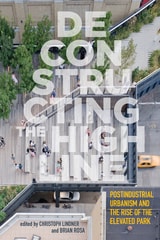
Deconstructing the High Line
Postindustrial Urbanism and the Rise of the Elevated ParkLindner, Christoph
Rutgers University Press, 2017
The High Line, an innovative promenade created on a disused elevated railway in Manhattan, is one of the world’s most iconic new urban landmarks. Since the opening of its first section in 2009, this unique greenway has exceeded all expectations in terms of attracting visitors, investment, and property development to Manhattan’s West Side. Frequently celebrated as a monument to community-led activism, adaptive re-use of urban infrastructure, and innovative ecological design, the High Line is being used as a model for numerous urban redevelopment plans proliferating worldwide.
Deconstructing the High Line is the first book to analyze the High Line from multiple perspectives, critically assessing its aesthetic, economic, ecological, symbolic, and social impacts. Including several essays by planners and architects directly involved in the High Line’s design, this volume also brings together a diverse range of scholars from the fields of urban studies, geography, anthropology, sociology, and cultural studies. Together, they offer insights into the project’s remarkable success, while also giving serious consideration to the critical charge that the High Line is “Disney World on the Hudson,” a project that has merely greened, sanitized, and gentrified an urban neighborhood while displacing longstanding residents and businesses.
Deconstructing the High Line is not just for New Yorkers, but for anyone interested in larger issues of public space, neoliberal redevelopment, creative design practice, and urban renewal.

Defence and the UK Constitution
Nigel D. White
Haus Publishing, 2025
Defense and security policy lies at the heart of the British state but can appear entirely untrammeled by the constitution. In fact, when political and military leaders exercise their executive powers, the UK Parliament and the judiciary have limited oversight, let alone control, over their actions. Defence and the UK Constitution introduces key constitutional issues to a general audience and pinpoints the differences between the “legal constitution” and the “political constitution,” with reference to the lack of accountability within modern British security structures. Nigel White traces this imbalance back to the 1680 Bill of Rights and examines the evolution of war and emergency powers, placing them within the context of international law.
Advocating for a rebalancing of the efficient and democratic, as well as the legal and political, elements of the constitution, this short work aims to address the inherent “defense paradox” in the UK constitution and to indicate which constitutional changes are needed to safeguard Britain’s democratic principles and limit excessive uses of discretionary power.

Defending a Borderland
Canadian and American Environmental Activism in the St. Lawrence ValleyNeil S. Forkey
University of Massachusetts Press, 2026
On the morning of June 23, 1976, the NEPCO 140 barge, carrying 8.7 million gallons of thick crude oil, ruptured twice while plying the swift straits of the St. Lawrence River’s Thousand Islands region. Before the spill was halted, 300,000 gallons of oil had leaked, polluting eighty miles of the river and ruining shorelines on both the New York and Canadian sides. It was the largest inland oil spill in United States history to that date, and the clean-up took 122 days and cost around $8 million. The disaster also prompted concerned citizens to form Save the River, one of the most enduring environmental organizations in North America.
In Defending a Borderland, environmental historian Neil S. Forkey examines environmental activism along the St. Lawrence River from both sides of the international border. He focuses on the period from the 1970s to the 1990s, when numerous citizen groups activated to protect the natural environment against pollution, development, and other perceived threats. Along with reacting to the “Slick of ’76,” their actions included stopping low-level military flights, preventing government land acquisition to create an extended park, and blocking new power lines through the countryside.
By considering the St. Lawrence Valley—a shared space between Canada, the United States, and Mohawk territory—Forkey brings a rare transnational approach to environmental analysis. He also highlights rural, local, and conservative perspectives, all of which are understudied. Using deep archival research and oral histories, Forkey reveals the myriad ways US and Canadian citizens organized before social media, gathering around kitchen tables, and in school auditoriums, to determine ways to reach government officials and neighbors and make lasting changes to protect the natural areas around them for future generations.

Defensive Internationalism
Providing Public Goods in an Uncertain WorldDavis B. Bobrow and Mark A. Boyer
University of Michigan Press, 2005
-Todd Sandler, Robert R. and Katheryn A. Dockson Professor of International Relations & Economics, University of Southern California
"Boyer and Bobrow's well-written, data-rich analysis of such pressing issues as development assistance, debt management, UN peacekeeping, and environmental protection makes Defensive Internationalism a highly original and provocative contribution to the study of global governance."
-Yale H. Ferguson, Co-Director, Center for Global Change and Governance, Rutgers University
In this pathbreaking study, authors Davis B. Bobrow and Mark A. Boyer argue for "muted optimism" about the future of international cooperation. Leaders of a growing movement that integrates constructivism into traditional international studies concepts and methods, Bobrow and Boyer analyze four key international issues: development cooperation, debt management, peacekeeping operations, and environmental affairs. Their approach integrates elements of public goods theory, identity theory, new institutionalism, and rational choice. Defensive Internationalism is a well-written, creative and coherent synthesis of ideas that have up to now been considered irreconcilable. It is appropriate for upper-level undergraduate and graduate students in international relations, conflict studies, and political economy, and promises to become a foundational work in its field.
Davis B. Bobrow is Professor of Public and International Affairs and Political Science at the University of Pittsburgh.
Mark A. Boyer is Professor of Political Science at the University of Connecticut.
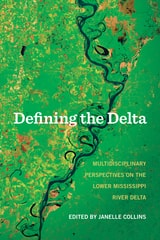
Defining the Delta
Multidisciplinary Perspectives on the Lower Mississippi River DeltaJanelle Collins
University of Arkansas Press, 2015
Here are essays examining the Delta’s physical properties, boundaries, and climate from a geologist, archeologist, and environmental historian. The Delta is also viewed through the lens of the social sciences and humanities—historians, folklorists, and others studying the connection between the land and its people, in particular the importance of agriculture and the culture of the area, especially music, literature, and food.
Every turn of the page reveals another way of seeing the seven-state region that is bisected by and dependent on the Mississippi River, suggesting ultimately that there are myriad ways of looking at, and defining, the Delta.
Defusing Democracy
Central Bank Autonomy and the Transition from Authoritarian RuleDelia M. Boylan
University of Michigan Press, 2001
Delegating Responsibility
International Cooperation on Migration in the European UnionNicholas R. Micinski
University of Michigan Press, 2022
Delegating Responsibility explores the politics of migration in the European Union and explains how the EU responded to the 2015–17 refugee crisis. Based on 86 interviews and fieldwork in Greece and Italy, Nicholas R. Micinski proposes a new theory of international cooperation on international migration. States approach migration policies in many ways—such as coordination, collaboration, subcontracting, and unilateralism—but which policy they choose is based on capacity and on credible partners on the ground. Micinski traces the fifty-year evolution of EU migration management, like border security and asylum policies, and shows how EU officials used “crises” as political leverage to further Europeanize migration governance. In two in-depth case studies, he explains how Italy and Greece responded to the most recent refugee crisis. He concludes with a discussion of policy recommendations regarding contemporary as well as long-term aspirations for migration management in the EU.
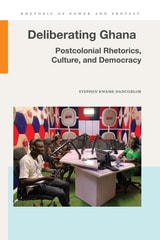
Deliberating Ghana
Postcolonial Rhetorics, Culture, and DemocracyStephen Kwame Dadugblor
Michigan State University Press, 2025
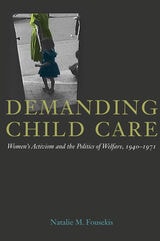
Demanding Child Care
Women's Activism and the Politics of Welfare, 1940-1971Natalie M. Fousekis
University of Illinois Press, 2013
During World War II, as women stepped in to fill jobs vacated by men in the armed services, the federal government established public child care centers in local communities for the first time. When the government announced plans to withdraw funding and terminate its child care services at the end of the war, women in California protested and lobbied to keep their centers open, even as these services rapidly vanished in other states.
Analyzing the informal networks of cross-class and cross-race reformers, policymakers, and educators, Demanding Child Care: Women's Activism and the Politics of Welfare, 1940–1971 traces the rapidly changing alliances among these groups. During the early stages of the childcare movement, feminists, Communists, and labor activists banded together, only to have these alliances dissolve by the 1950s as the movement welcomed new leadership composed of working-class mothers and early childhood educators. In the 1960s, when federal policymakers earmarked child care funds for children of women on welfare and children described as culturally deprived, it expanded child care services available to these groups but eventually eliminated public child care for the working poor.
Deftly exploring the possibilities for partnership as well as the limitations among these key parties, Fousekis helps to explain the barriers to a publically funded comprehensive child care program in the United States.
Democracy and the Left
Social Policy and Inequality in Latin AmericaEvelyne Huber and John D. Stephens
University of Chicago Press, 2012
Although inequality in Latin America ranks among the worst in the world, it has notably declined over the last decade, offset by improvements in health care and education, enhanced programs for social assistance, and increases in the minimum wage.
Democracy in a Pandemic
Participation in Response to CrisisGraham Smith, Tim Hughes, Lizzie Adams and Charlotte Obijiaku
University of Westminster Press, 2021
Covid-19 has highlighted limitations in our democratic politics – but also lessons for how to deepen our democracy and more effectively respond to future crises. In the face of an emergency, the working assumption all too often is that only a centralised, top-down response is possible. This book exposes the weakness of this assumption, making the case for deeper participation and deliberation in times of crises. During the pandemic, mutual aid and self-help groups have realised unmet needs. And forward-thinking organisations have shown that listening to and working with diverse social groups leads to more inclusive outcomes.
Participation and deliberation are not just possible in an emergency. They are valuable, perhaps even indispensable.
This book draws together a diverse range of voices of activists, practitioners, policy makers, researchers and writers. Together they make visible the critical role played by participation and deliberation during the pandemic and make the case for enhanced engagement during and beyond emergency contexts.
Another, more democratic world can be realised in the face of a crisis. The contributors to this book offer us meaningful insights into what this could look like.
Democracy's Education
Public Work, Citizenship, and the Future of Colleges and UniversitiesHarry C. Boyte
Vanderbilt University Press, 2015
Democracy's Education grows from the American Commonwealth Partnership, a year-long project to revitalize the democratic narrative of higher education that began with an invitation to Harry Boyte from the White House to put together a coalition aimed at strengthening higher education as a public good. The project was launched at the beginning of 2012 to mark the 150th anniversary of the Morrill Act, which created land grant colleges.
Beginning with an essay by Harry C. Boyte, "Reinventing Citizenship as Public Work," which challenges educators and their partners to claim their power to shape the story of higher education and the civic careers of students, the collection brings world-famous scholars, senior government officials, and university presidents together with faculty, students, staff, community organizers, and intellectuals from across the United States and South Africa and Japan. Contributors describe many constructive responses to change already taking place in different kinds of institutions, and present cutting-edge ideas like "civic science," "civic studies," "citizen professionalism," and "citizen alumni." Authors detail practical approaches to making change, from new faculty and student roles to changes in curriculum and student life and strategies for everyday citizen empowerment. Overall, the work develops a democratic story of education urgently needed to address today's challenges, from climate change to growing inequality.
Democracy's Hidden Heroes
Fitting Policy to People and PlaceDavid C. Campbell
Temple University Press, 2024
David Campbell recounts compelling stories of the workarounds, sidesteps, informal agreements, and grantor–grantee negotiations that help policy initiatives succeed as intended. The settings include schools, human services departments, workforce development agencies, and community-based organizations. He explains why it is difficult, though necessary, to translate locally attuned implementation dynamics into accountability metrics for distant funders.
Drawing on 2,000 interviews, Democracy’s Hidden Heroes is the culmination of decades spent talking to people who must reconcile bureaucratic and community cultures. Campbell’s grounded approach and balanced perspective bring fresh insights to the analysis of policy implementation, public management, and results accountability, while offering both cautionary advice and a hopeful prognosis.

Democracy, Governance, and Growth
Stephen Knack, Editor
University of Michigan Press, 2003
The difference between developmental success and failure in this view has little to do with natural resource availability, climate, aid, or developed nations' policies. Rather, it is largely a function of whether incentives within a given society steer wealth-maximizing individuals toward producing new wealth or toward diverting it from others. The chapters, seminal essays written by Mancur Olson and his IRIS Center colleagues, provide theoretical and/or empirical underpinnings for the emerging consensus that differences in the way governments and societies are organized have enormous implications for the structure of incentives faced by politicians, bureaucrats, investors, and workers, which in turn determines the level of a nation's material well-being.
Overall this volume applies tools and concepts from the "New Institutional Economics" to some of the major issues in economic development. It will be of interest to scholars and students of various disciplines--including political science, law, and sociology as well as economics--interested in the determinants of economic development and global economic change. The book will also be of interest to many aid practitioners, particularly those working in anticorruption and public sector reform issues.
Stephen Knack is Senior Research Economist, Development Research Group, the World Bank.

Democratic Laboratories
Policy Diffusion among the American StatesAndrew Karch
University of Michigan Press, 2010
"Observers have long marveled at the spread of ideas and policies from state to state in American democracy. But why and how do politicians, professionals, and citizens in one state take inspiration from national policy debates and imitate, resist, and rework legislative models from other states? For the first time in this important new book, Andrew Karch analyzes in depth the process of policy 'diffusion' across the states, offering a nuanced and powerful framework to explain one of the most important and recurrent features of U.S. politics."
---Theda Skocpol, Victor S. Thomas Professor of Government and Sociology, Harvard University
"Karch does two things with remarkable skill. First, he makes sense of the copious literature on policy diffusion and extends that literature in a very fruitful way. Second, he conducts the most thorough and methodologically sound empirical study of policy diffusion to date, using both qualitative and quantitative analysis. This book is so well written and thoughtful that it will likely stimulate a whole new wave of study of state policy and its diffusion."
---Chris Mooney, editor of State Politics and Policy Quarterly
"Democratic Laboratories goes beyond standard 'diffusion of innovation' approaches to analyze the complex interaction of interstate and intrastate political forces that shapes policy change. The book is a major contribution to the study of American federalism---and a very good read."
---Kent Weaver, Brookings Institution
---Virginia Gray, University of North Carolina, Chapel Hill
"Democratic Laboratories is the seminal work on policy diffusion among the American states. Rigorously designed and well written, it is the new starting place for anyone interested in this important topic. The findings are copious and loaded with insights into the future of this valuable research."
---Harrell Rodgers, Professor and Chair, Department of Political Science, University of Houston
Andrew Karch is Assistant Professor of Government at the University of Texas at Austin.
Democratizing Urban Development
Community Organizations for Housing across the United States and BrazilMaureen M. Donaghy
Temple University Press, 2018
Rising housing costs put secure and decent housing in central urban neighborhoods in peril. How do civil society organizations (CSOs) effectively demand accountability from the state to address the needs of low-income residents? In her groundbreaking book, Democratizing Urban Development, Maureen Donaghy charts the constraints and potential opportunities facing these community organizations. She assesses the various strategies CSOs engage to influence officials and ensure access to affordable housing through policies, programs, and institutions.
Democratizing Urban Development presents efforts by CSOs in four cities across the hemispheric divide: Rio de Janeiro, São Paulo, Washington, DC, and Atlanta. Donaghy studies the impact and outcomes that ensue from these efforts, noting that CSOs must sometimes shift their own ideology or adapt to the political environment in which they operate to ensure access to housing and support the goals of an inclusive city.
Derelict Paradise
Homelessness and Urban Development in Cleveland, OhioDaniel R. Kerr
University of Massachusetts Press, 2011
Seeking answers to the question, “Who benefits from homelessness?” this book takes the reader on a sweeping tour of Cleveland's history from the late nineteenth-century through the early twenty-first. Daniel Kerr shows that homelessness has deep roots in the shifting ground of urban labor markets, social policy, downtown development, the criminal justice system, and corporate power. Rather than being attributable to the illnesses and inadequacies of the unhoused themselves, it is a product of both structural and political dynamics shaping the city. Kerr locates the origins of today's shelter system in the era that followed the massive railroad rebellions of 1877. From that period through the Great Depression, business and political leaders sought to transform downtown Cleveland to their own advantage. As they focused on bringing business travelers and tourists to the city and beckoned upper-income residents to return to its center, they demolished two downtown working-class neighborhoods and institutionalized a shelter system to contain and control the unhoused and unemployed. The precedents from this period informed the strategies of the post–World War II urban renewal era as the "new urbanism" of the late twentieth century. The efforts of the city's elites have not gone uncontested. Kerr documents a rich history of opposition by people at the margins of whose organized resistance and everyday survival strategies have undermined the grand plans crafted by the powerful and transformed the institutions designed to constrain the lives of the homeless.

Desert Water
The Future of Utah's Water ResourcesHal Crimmel
University of Utah Press, 2014

Deserving Americans
Partisanship and the New Politics of Social PolicyChris Faricy and Christopher Ellis
University of Chicago Press, 0
A new framework for showing why deservingness politics, more than ideology, has become the central battleground for social policy in a polarized age.
Why do Americans support some government programs but not others? In Deserving Americans, Chris Faricy and Christopher Ellis argue that the answer lies in identity, not ideology. Specifically, support for particular social policies depends on perceptions of whether beneficiaries of government assistance actually deserve the aid that they receive. As partisanship and social identity have converged, partisans increasingly view government aid as a vehicle for rewarding ingroups and punishing outgroups, creating a politics polarized on identity and who government should serve.
Faricy and Ellis show how these dynamics play out across a wide range of policy domains, from antipoverty to health care to family policy and more. Their findings help to clarify many of our current predicaments, yielding insights that explain trends in public opinion and partisan debates over public policy. Deserving Americans offers a powerful new framework for understanding how Americans view social policy—and each other.
Despite Good Intentions
Why Development Assistance to the Third World Has FailedThomas W. Dichter
University of Massachusetts Press, 2003
For more than thirty-five years, Thomas W. Dichter has worked in the field of international development, managing and evaluating projects for nongovernmental organizations, directing a Peace Corps country program, and serving as a consultant for such agencies as USAID, UNDP, and the World Bank. On the basis of this extensive and varied experience, he has become an outspoken critic of what he terms the “international poverty alleviation industry.” He believes that efforts to reduce world poverty have been well-intentioned but largely ineffective. On the whole, the development industry has failed to serve the needs of the people it has sought to help.
To make his case, Dichter reviews the major trends in development assistance from the 1960s through the 1990s, illustrating his analysis with eighteen short stories based on his own experiences in the field. The analytic chapters are thus grounded in the daily life of development workers as described in the stories.
Dichter shows how development organizations have often become caught up in their own self-perpetuation and in public relations efforts designed to create an illusion of effectiveness. Tracing the evolution of the role of money (as opposed to ideas) in development assistance, he suggests how financial imperatives have reinforced the tendency to sponsor time-bound projects, creating a dependency among aid recipients. He also examines the rise of careerism and increased bureaucratization in the industry, arguing that assistance efforts have become disconnected from important lessons learned on the ground, and often lessons of world history.
In the end, Dichter calls for a more light-handed and artful approach to development assistance, with fewer agencies and experts involved. His stance is pragmatic, rather than ideological or political. What matters, he says, is what works, and the current practices of the development industry are simply not effective.

Destinies of the Disadvantaged
The Politics of Teen ChildbearingFrank F. Furstenberg
Russell Sage Foundation, 2007

Dethroning the Deceitful Pork Chop
Rethinking African American Foodways from Slavery to ObamaJennifer Jensen Wallach
University of Arkansas Press, 2015
2017 Association for the Study of Food and Society Award, best edited collection.
The fifteen essays collected in Dethroning the Deceitful Pork Chop utilize a wide variety of methodological perspectives to explore African American food expressions from slavery up through the present. The volume offers fresh insights into a growing field beginning to reach maturity. The contributors demonstrate that throughout time black people have used food practices as a means of overtly resisting white oppression—through techniques like poison, theft, deception, and magic—or more subtly as a way of asserting humanity and ingenuity, revealing both cultural continuity and improvisational finesse. Collectively, the authors complicate generalizations that conflate African American food culture with southern-derived soul food and challenge the tenacious hold that stereotypical black cooks like Aunt Jemima and the depersonalized Mammy have on the American imagination. They survey the abundant but still understudied archives of black food history and establish an ongoing research agenda that should animate American food culture scholarship for years to come.

Developing the City
Community Development, Power, and Urban Democracy in U.S. CitiesEdited by Ashley E. Nickels and Zachary D. Wood
Temple University Press, 2027
Developing the City investigates the forms, levels, and spaces of power (visible, hidden, and invisible) involved in community development ecosystems. The editors and contributors, a mix of embedded activists, academics, and community leaders, provide a series of diverse case studies that evaluate the local dynamics that shape urban policy.
Chapters address racialized power dynamics in Cleveland, OH, community development funding in Memphis, TN, economic growth and inclusion in Newark, NJ, housing policies in Denver and Colorado Springs, CO, and participatory governance in Reno, NV among other topics. They reflect the unique manifestations of power within each local context, shaped by distinctive histories and sociopolitical dynamics.
In addition to exploring how various dimensions of power influence decision-making, resource allocation, democratic engagement, and civic participation, Developing the City provides a systematic framework for understanding and questioning these power dynamics, and advocates for a power-conscious approach to foster more equitable and democratic urban futures with respect to economic, racial, social, and environmental justice.
Contributors: Nakeefa Cilicia Bernard, Prentiss A. Dantzler, Caraline Feairheller, Austin Harrison, Brad A. M. Johnson, Katherine Lambert-Pennington, Eric Stokan, Robert Stoker, Jill Yordy, and the editors
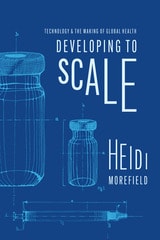
Developing to Scale
Technology and the Making of Global HealthHeidi Morefield
University of Chicago Press, 2023
In 1973, economist E. F. Schumacher published Small Is Beautiful, which introduced a mainstream audience to his theory of “appropriate technology”: the belief that international development projects in the Global South were most sustainable when they were small-scale, decentralized, and balanced between the traditional and the modern. His theory gained widespread appeal, as cuts to the foreign aid budget, the national interests of nations seeking greater independence, postcolonial activism, and the rise of the United States’ tech sector drove stakeholders across public and private institutions toward cheaper tools. In the ensuing decades, US foreign assistance shifted away from massive modernization projects, such as water treatment facilities, toward point-of-use technologies like village water pumps and oral rehydration salts. This transition toward the small scale had massive implications for the practice of global health.
Developing to Scale tells the history of appropriate technology in international health and development, relating the people, organizations, and events that shaped this consequential idea. Heidi Morefield examines how certain technologies have been defined as more or less “appropriate” for the Global South based on assumptions about gender, race, culture, and environment. Her study shows appropriate technology to be malleable, as different constituencies interpreted its ideas according to their own needs. She reveals how policymakers wielded this tool to both constrain aid to a scale that did not threaten Western interests and to scale the practice of global health through the development and distribution of technical interventions.
Developing to Scale
Technology and the Making of Global HealthHeidi Morefield
University of Chicago Press, 2023
The first critical book on “appropriate technology,” Developing to Scale shows how global health came to be understood as a problem to be solved with the right technical interventions.
In 1973, economist E. F. Schumacher published Small Is Beautiful, which introduced a mainstream audience to his theory of “appropriate technology”: the belief that international development projects in the Global South were most sustainable when they were small-scale, decentralized, and balanced between the traditional and the modern. His theory gained widespread appeal, as cuts to the foreign aid budget, the national interests of nations seeking greater independence, postcolonial activism, and the rise of the United States’ tech sector drove stakeholders across public and private institutions toward cheaper tools. In the ensuing decades, US foreign assistance shifted away from massive modernization projects, such as water treatment facilities, toward point-of-use technologies like village water pumps and oral rehydration salts. This transition toward the small scale had massive implications for the practice of global health.
Developing to Scale tells the history of appropriate technology in international health and development, relating the people, organizations, and events that shaped this consequential idea. Heidi Morefield examines how certain technologies have been defined as more or less “appropriate” for the Global South based on assumptions about gender, race, culture, and environment. Her study shows appropriate technology to be malleable, as different constituencies interpreted its ideas according to their own needs. She reveals how policymakers wielded this tool to both constrain aid to a scale that did not threaten Western interests and to scale the practice of global health through the development and distribution of technical interventions.
Development and Crisis of the Welfare State
Parties and Policies in Global MarketsEvelyne Huber and John D. Stephens
University of Chicago Press, 2001
Building on their previous research, Huber and Stephens show how high wages and generous welfare states are still possible in an age of globalization and trade competition.

Development as Communication
A Perspective on IndiaUma Narula
Southern Illinois University Press, 1986
This book applies a systematic communication theory to the 30-plus years of development experience in India.
Never before has development been treated from a communication perspective. This perspective demonstrates that the role of communication in development is not limited to the technology of satellites or to the economics of mass media; it is a way of thinking about the interaction among all agents involved.
The empirical data describe patterns of social realities, actions, and communication networks among planners, contact agents, and the masses in two Indian communities. The result is an analytical review of development theories and practice in India.
This study is practical as well as theoretical. The authors show how the theory of the “coordinated management of meaning” applies to large-scale social interactions. They also offer specific recommendations for Indian development planners.
Development in Multiple Dimensions
Social Power and Regional Policy in IndiaAlexander Lee
University of Michigan Press, 2019

Devils Hole Pupfish
The Unexpected Survival of an Endangered Species in the Modern American WestKevin C. Brown
University of Nevada Press, 2021
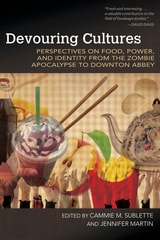
Devouring Cultures
Perspectives on Food, Power, and Identity from the Zombie Apocalypse to Downton AbbeyCammie M. Sublette
University of Arkansas Press, 2016
Devouring Cultures brings together contributors from a wide range of disciplines including media studies, rhetoric, gender studies, philosophy, anthropology, literary criticism, film criticism, race theory, history, and linguistics to examine the ways food signifies both culture and identity.
These scholars look for answers to intriguing questions: What does our choice of dining house say about our social class? Can restaurants teach us about a culture? How does food operate in Downton Abbey? How does food consumption in zombie apocalypse films and apocalyptic literature relate to contemporary food-chain crises and food nostalgia? What aspects of racial conflict, assimilation, and empowerment may be represented in restaurant culture and food choice?
Restaurants, from their historical development to their modern role as surrogate kitchen, are studied as markers of gender, race, and social class, and also as forums for the exhibition of tensions or spaces where culture is learned through the language of food. Food, as it is portrayed in literature, movies, and television, is illuminated as a platform for cultural assimilation, a way for the oppressed to find agency, or even a marker for the end of a civilization.
The essays in Devouring Cultures show how our choices about what we eat, where we eat, and with whom we eat are linked to identity and meaning and how the seemingly simple act of consumption has implications that extend far beyond sustenance.
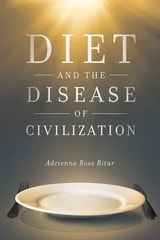
Diet and the Disease of Civilization
Adrienne Rose Bitar
Rutgers University Press, 2017
Diet books contribute to a $60-billion industry as they speak to the 45 million Americans who diet every year. Yet these books don’t just tell readers what to eat: they offer complete philosophies about who Americans are and how we should live. Diet and the Disease of Civilization interrupts the predictable debate about eating right to ask a hard question: what if it’s not calories—but concepts—that should be counted?
Cultural critic Adrienne Rose Bitar reveals how four popular diets retell the “Fall of Man” as the narrative backbone for our national consciousness. Intensifying the moral panic of the obesity epidemic, they depict civilization itself as a disease and offer diet as the one true cure.
Bitar reads each diet—the Paleo Diet, the Garden of Eden Diet, the Pacific Island Diet, the detoxification or detox diet—as both myth and manual, a story with side effects shaping social movements, driving industry, and constructing fundamental ideas about sickness and health. Diet and the Disease of Civilization unearths the ways in which diet books are actually utopian manifestos not just for better bodies, but also for a healthier society and a more perfect world.

Dirt, Sweat, and Diesel
A Family Farm in the Twenty-first CenturySteven L. Hilty
University of Missouri Press, 2016
With very few people engaged in agriculture today, it is no surprise that most Americans have little understanding of the challenges that modern farmers face. This book provides readers a glimpse into life on a modern Missouri farm where a variety of grains, grass seed, corn, and cattle are produced. All of the conversations, events, and descriptions are drawn from the author’s experience working alongside and observing this father and son family farm operation during the course of a year.
Farming today is technologically complex and requires a broad set of skills that range from soil conservation, animal husbandry, and mechanics to knowledge of financial markets and computer technology. The focus on skills, in addition to the size of the financial risks, and the number of unexpected challenges along the way provides readers with a new perspective and appreciation for modern farm life.
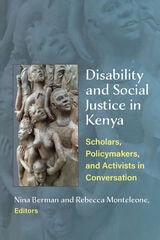
Disability and Social Justice in Kenya
Scholars, Policymakers, and Activists in ConversationNina Berman and Rebecca Monteleone, Editors
University of Michigan Press, 2022
Disability in Africa has received significant attention as a dimension of global development and humanitarian initiatives. Little international attention is given, however, to the ways in which disability is discussed and addressed in specific countries in Africa. Little is known also about the ways in which persons with disabilities have advocated for themselves over the past one hundred years and how their needs were or were not met in locations across the continent. Kenya has been on the forefront of disability activism and disability rights since the middle of the twentieth century. The country was among the first African states to create a legal framework addressing the rights of persons with disabilities, namely the Persons with Disabilities Act of 2003. Kenya, however, has a much longer history of institutions and organizations that are dedicated to addressing the specific needs of persons with disabilities, and substantial developments have occurred since the introduction of the legal framework in 2003.
Disability and Social Justice in Kenya: Scholars, Policymakers, and Activists in Conversation is the first interdisciplinary and multivocal study of its kind to review achievements and challenges related to the situation of persons with disabilities in Kenya today, in light of the country’s longer history of disability and the wide range of local practices and institutions. It brings together scholars, activists, and policymakers who comment on topics including education, the role of activism, the legal framework, culture, the impact of the media, and the importance of families and the community.
Disability, Civil Rights, and Public Policy
The Politics of ImplementationStephen L. Percy
University of Alabama Press, 1989
Following on the heels of other Civil Rights movements, disability rights laws emerged in the late 1960s and early 1970s. Often these laws were more symbolic than precise in terms of objectives and strategies to guide the implementation of antidiscrimination policies. Policy refinement, the process of translating legislative mandates into strategies and procedures to govern administrative action, is both dynamic and controversial.
The premise of Disability, Civil Rights, and Public Policy is that implementation policies in these areas evolved through protracted political struggles among a variety of persons and groups affected by disability rights laws. Efforts to influence policies extended far beyond the process of legislative enactment and resulted in struggles that were played out in the courts and in the executive branch. Included within this examination of federal disability rights laws are the role of symbolic politics, the strengths and weaknesses of contemporary models used for the study of policy implementation, and the politics of administrative policymaking.
Disabled State
Deborah Stone
Temple University Press, 1986
Disaster Nationalism
Tsunami and Civil War in Sri LankaVivian Y. Choi
Duke University Press, 2025

Discerning Experts
The Practices of Scientific Assessment for Environmental PolicyMichael Oppenheimer, Naomi Oreskes, Dale Jamieson, Keynyn Brysse, Jessica O’Reilly, Matthew Shindell, and Milena Wazeck
University of Chicago Press, 2019
Discerning Experts uncovers factors that can generate systematic bias and error, and recommends how the process can be improved. As the first study of the internal workings of large environmental assessments, this book reveals their strengths and weaknesses, and explains what assessments can—and cannot—be expected to contribute to public policy and the common good.
Disconnected
Haves and Have-Nots in the Information AgeWresch, William
Rutgers University Press, 1996
In the Information Age, information is power. Who produces all that information, how does it move around, who uses it, to what ends, and under what constraints? Who gets that power? And what happens to the people who have no access to it?
Disconnected begins with a striking vignette of two men: One is the thriving manager of a company selling personal computers and computer services. The other is just one among thousands of starving laborers. He has no way to find the information that might help him find a job, he cannot afford newspapers, rarely sees television, cannot understand the dialect of local radio broadcasts, will probably never touch a computer. These two men happen to live in Windhoek, Namibia, but this is not a story about Africa––it is a story that could be repeated almost anywhere in the world, even next door.
With vivid anecdotes and data, William Wresch contrasts the opportunities of the information-rich with the limited prospects of the information-poor. Surveying the range of information––personal, public, organizational, commercial––that has become the currency of exchange in today’s world, he shows how each represents a form of power. He analyzes the barriers that keep people information-poor: geography, tyranny, illiteracy, psychological blinders, “noise,” crime. Technology alone, he demonstrates, is not the answer. Even the technology-rich do not always get access to important information––or recognize its value.
Wresch spells out the grim consequences of information inequity for individuals and society. Yet he ends with reasons for optimism and stories of people who are working to pull down the impediments to the flow of information.
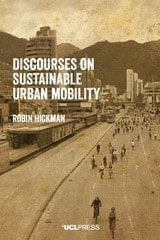
Discourses on Sustainable Urban Mobility
Robin Hickman
University College London, 2025
From reducing car dependency and expanding EVs to promoting public transport, sustainable mobility has been a hot topic in urban planning and the transportation sector. Arriving at this timely moment, Discourses on Sustainable Urban Mobility challenges the dominant discourses of motorization and the ineffective implementation of sustainable mobility. It argues that transport planning history is not merely a record of successful projects but a reflection of how transport has been provided, including who and what has been included or excluded. Using discourse analysis, the book examines physical transport infrastructure against the socially constructed realities in transport planning across a variety of international case studies, including Oxford, Bogotá, Chongqing, Rio de Janeiro, Copenhagen, and Delhi. In each case, the discursive frameworks surrounding transport and urban planning point toward promising pathways for achieving greater sustainability in transportation.

Discriminating Taste
How Class Anxiety Created the American Food RevolutionFinn, S. Margot
Rutgers University Press, 2017
For the past four decades, increasing numbers of Americans have started paying greater attention to the food they eat, buying organic vegetables, drinking fine wines, and seeking out exotic cuisines. Yet they are often equally passionate about the items they refuse to eat: processed foods, generic brands, high-carb meals. While they may care deeply about issues like nutrition and sustainable agriculture, these discriminating diners also seek to differentiate themselves from the unrefined eater, the common person who lives on junk food.
Discriminating Taste argues that the rise of gourmet, ethnic, diet, and organic foods must be understood in tandem with the ever-widening income inequality gap. Offering an illuminating historical perspective on our current food trends, S. Margot Finn draws numerous parallels with the Gilded Age of the late nineteenth century, an era infamous for its class divisions, when gourmet dinners, international cuisines, slimming diets, and pure foods first became fads.
Examining a diverse set of cultural touchstones ranging from Ratatouille to The Biggest Loser, Finn identifies the key ways that “good food” has become conflated with high status. She also considers how these taste hierarchies serve as a distraction, leading middle-class professionals to focus on small acts of glamorous and virtuous consumption while ignoring their class’s larger economic stagnation. A provocative look at the ideology of contemporary food culture, Discriminating Taste teaches us to question the maxim that you are what you eat.