Results by title
391 books match the query 'Public opinion' and 17 start with d
Dangerous Frames
How Ideas about Race and Gender Shape Public OpinionNicholas J. G. Winter
University of Chicago Press, 2008

Dangerous Migration
Mexican Labor and the Fight for Immigrant RightsEladio B. Bobadilla
University of Illinois Press, 2026
Beginning with Mexican American opposition to the Bracero Program, Eladio Bobadilla traces the movement’s fault lines that formed around the issue of undocumented workers. Bobadilla reveals how internationalist and human rights discourse influenced the rise of the Chicano movement and its defense of Mexican undocumented immigrants. As time passed, anti-Mexican social, political, and legislative forces produced a nativist backlash that put immigration at the center of the United States’ culture wars and created the fantasy of undocumented workers as an existential threat.
Engaging and vivid, Dangerous Migration illuminates the history of debates over Mexican labor, the emergence of the immigrant rights activism, and the nativist movements that united Latinos with right-wing white Americans.

Dealing with Risk
Why the Public and the Experts Disagree on Environmental IssuesHoward Margolis
University of Chicago Press, 1997
In Dealing with Risk, Howard Margolis moves beyond the usual "rival rationalities" explanation proffered by risk analysts for the rift between expert and lay opinion. He reveals the conflicts of intuition that undergird those concerns, and proposes a new approach to the psychology of persuasion and belief. Examining the role of intuition, mental habits, and cognitive frameworks in the construction of public opinion, this compelling account bridges the public policy impasse that has plagued controversial environmental issues.
Deepening the Dialogue
Jewish-Americans and Israelis Envisioning the Jewish-Democratic StateRabbi Stanley M. Davids
Central Conference of American Rabbis, 2020
Democracy and the Culture of Skepticism
The Politics of Trust in Argentina and MexicoMatthew R. Cleary
Russell Sage Foundation, 2006
Democracy at Risk
How Terrorist Threats Affect the PublicJennifer L. Merolla and Elizabeth J. Zechmeister
University of Chicago Press, 2009
How do threats of terrorism affect the opinions of citizens? Speculation abounds, but until now no one had marshaled hard evidence to explain the complexities of this relationship. Drawing on data from surveys and original experiments they conducted in the United States and Mexico, Jennifer Merolla and Elizabeth Zechmeister demonstrate how our strategies for coping with terrorist threats significantly influence our attitudes toward fellow citizens, political leaders, and foreign nations.
The authors reveal, for example, that some people try to restore a sense of order and control through increased wariness of others—especially of those who exist outside the societal mainstream. Additionally, voters under threat tend to prize “strong leadership” more highly than partisan affiliation, making some politicians seem more charismatic than they otherwise would. The authors show that a wary public will sometimes continue to empower such leaders after they have been elected, giving them greater authority even at the expense of institutional checks and balances. Having demonstrated that a climate of terrorist threat also increases support for restrictive laws at home and engagement against terrorists abroad, Merolla and Zechmeister conclude that our responses to such threats can put democracy at risk.
Democracy's Meanings
How the Public Understands Democracy and Why It MattersNicholas T. Davis, Keith Gåddie, and Kirby Goidel
University of Michigan Press, 2022
Democracy’s Meanings challenges conventional wisdom regarding how the public thinks about and evaluates democracy. Mining both political theory and more than 75 years of public opinion data, the book argues that Americans think about democracy in ways that go beyond voting or elected representation. Instead, citizens have rich and substantive views about the material conditions that democracy should produce, which draw from their beliefs about equality, fairness, and justice.
The authors construct a typology of views about democracy. Procedural views of democracy take a minimalistic quality. While voting and fair treatment are important to this vision of democracy, ideas about equality are mostly limited to civil liberties. In contrast, social views of democracy incorporate both civil and economic equality; according to people with these views, democracy ought to meet the basic social and material needs of citizens. Complementing these two groups are moderate and indifferent views about democracy. While moderate views sit somewhere in between procedural and social perspectives regarding the role of democracy in producing social and economic equality, indifferent views of democracy involve disaffection toward it. For a small group of apathetic citizens, democracy is an ambiguous and ill-defined concept.
Demon of the Lost Cause
Sherman and Civil War HistoryWesley Moody
University of Missouri Press, 2011

Dickinson in Her Own Time
A Biographical Chronicle of Her Life, Drawn from Recollections, Interviews, and Memoirs by Family, Friends, and AssociatesJane Donahue Eberwein, Stephanie Farrar, and Cristanne Miller
University of Iowa Press, 2015
In addition, promotional items, reviews, and correspondence relating to early publications are included, as well as some later documents that reveal the changing assessments of Dickinson’s poetry in response to evolving critical standards. These documents provide evidence that counters many popular conceptions of her life and reception, such as the belief that the writer best known for poems focused on loss, death, and immortality was herself a morose soul. In fact, those who knew her found her humorous, playful, and interested in other people.
Dickinson maintained literary and personal correspondence with major representatives of the national literary scene, developing a reputation as a remarkable writer even as she maintained extreme levels of privacy. Evidence compiled here also demonstrates that she herself made considerable provision for the survival of her poems and laid the groundwork for their eventual publication. Dickinson in Her Own Time reveals the poet as her contemporaries knew her, before her legend took hold.
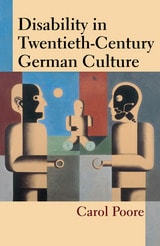
Disability in Twentieth-Century German Culture
Carol Poore
University of Michigan Press, 2010
"Comprehensively researched, abundantly illustrated and written in accessible and engaging prose . . . With great skill, Poore weaves diverse types of evidence, including historical sources, art, literature, journalism, film, philosophy, and personal narratives into a tapestry which illuminates the cultural, political, and economic processes responsible for the marginalization, stigmatization, even elimination, of disabled people---as well as their recent emancipation."
---Disability Studies Quarterly
"A major, long-awaited book. The chapter on Nazi images is brilliant---certainly the best that has been written in this arena by any scholar."
---Sander L. Gilman, Emory University
"An important and pathbreaking book . . . immensely interesting, it will appeal not only to students of twentieth-century Germany but to all those interested in the growing field of disability studies."
---Robert C. Holub, University of Tennessee
Disability in Twentieth-Century German Culture covers the entire scope of Germany's most tragic and tumultuous century---from the Weimar Republic to the current administration---revealing how central the notion of disability is to modern German cultural history. By examining a wide range of literary and visual depictions of disability, Carol Poore explores the contradictions of a nation renowned for its social services programs yet notorious for its history of compulsory sterilization and eugenic dogma. This comprehensive volume focuses particular attention on the horrors of the Nazi era, when those with disabilities were considered "unworthy of life," but also investigates other previously overlooked topics including the exile community's response to disability, socialism and disability in East Germany, current bioethical debates, and the rise and gains of Germany's disability rights movement.
Richly illustrated, wide-ranging, and accessible, Disability in Twentieth-Century German Culture gives all those interested in disability studies, German studies, visual culture, Nazi history, and bioethics the opportunity to explore controversial questions of individuality, normalcy, citizenship, and morality. The book concludes with a memoir of the author's experiences in Germany as a person with a disability.
Carol Poore is Professor of German Studies at Brown University.
Illustration: "Monument to the Unknown Prostheses" by Heinrich Hoerle © 2007 Artists Rights Society (ARS), New York / VG Bild-Kunst, Bonn
A volume in the series Corporealities: Discourses of Disability
"Insightful and meticulously researched . . . Using disability as a concept, symbol, and lived experience, the author offers valuable new insights into Germany's political, economic, social, and cultural character . . . Demonstrating the significant ‘cultural phenomena' of disability prior to and long after Hitler's reign achieves several important theoretical and practical aims . . . Highly recommended."
---Choice
Disability, the Environment, and Colonialism
Edited by Tatiana Konrad
Temple University Press, 2024
The editor and contributors provide a careful analysis of the intersection of disability, the environment, and colonialism to understand issues such as eco-ableism, environmental degradation, homogenized approaches to environmentalism, and climate change. They also look at the body as a site of colonial oppression and environmental exploitation.
Contributors: Holly Caldwell, Matthew J. C. Cella, John Gulledge, Memona Hossain, Nancy J. Hirschmann, Iain Hutchison, Andrew B. Jenks, Suha Kudsieh, Gordon M. Sayre, Jessica A. Schwartz, Anna Stenning, Aubrey Tang, Alice Wexler, and the editor.
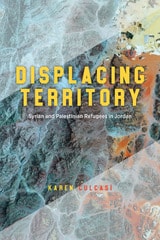
Displacing Territory
Syrian and Palestinian Refugees in JordanKaren Culcasi
University of Chicago Press, 2023
Based on fieldwork with Palestinian and Syrian refugees in Jordan, Displacing Territory explores how the lived realities of refugees are deeply affected by their imaginings of what constitutes territory and their sense of belonging to different places and territories. Karen Culcasi shows how these individual conceptualizations about territory don’t always fit the Western-centric division of the world into states and territories, thus revealing alternative or subordinated forms and scales of territory. She also argues that disproportionate attention to “refugee crises” in the Global North has diverted focus from other parts of the world that bear the responsibility of protecting the majority of the world’s refugees. By focusing on Jordan, a Global South state that hosts the world’s second-largest number of refugees per capita, this book provides insights to consider alternate ways to handle the situation of refugees elsewhere. In the process, Culcasi brings the reader into refugees’ diverse realities through their own words, inherently arguing against the tendency of many people in the Global North to see refugees as aberrant, burdensome, or threatening.
Dissing Elizabeth
Negative Representations of GlorianaJulia M. Walker, ed.
Duke University Press, 1998
As editor Julia M. Walker suggests, the breadth of dissent considered in this collection points to a dark side of the Cult of Elizabeth. Reevaluating neglected texts that had not previously been perceived as critical of the queen or worthy of critical appraisal, contributors consider dissent in a variety of forms, including artwork representing (and mocking) the queen, erotic and pornographic metaphors for Elizabeth in the popular press, sermons subtly critiquing her actions, and even the hostility encoded in her epitaph and in the placement of her tomb. Other chapters discuss gossip about Elizabeth, effigies of the queen, polemics against her marriage to the Duke of Alençon, common verbal slander, violence against emblems of her authority, and the criticism embedded in the riddles, satires, and literature of the period.
Distorted Mirrors
Americans and Their Relations with Russia and China in the Twentieth CenturyDonald E. Davis & Eugene P. Trani
University of Missouri Press, 2009
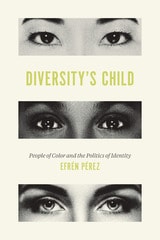
Diversity's Child
People of Color and the Politics of IdentityEfrén O. Pérez
University of Chicago Press, 2021
For decades now, pundits and political scientists have been pointing to a major demographic change that’s underway in the United States. Demographers project that whites will become a minority of the US population and that minority groups will jointly comprise a majority before 2050.
Diversity’s Child appraises the political ramifications of this change. Efrén O. Pérez deftly argues that America’s changing demographics are forging a new identity for many as people of color—that unifies the political outlook of assorted minority groups. Drawing on opinion surveys of multiple minority groups, social science experiments with minority adults, content analyses of newspapers and congressional archives, and in-depth interviews with minority individuals, Pérez makes two key points. First, a person of color's identity does exist, and we can reliably measure it, as well as distinguish it from other identities that minorities hold. Second, across a wide swath of circumstances, identifying as a person of color profoundly shapes how minorities view themselves and their political system. Diversity’s Child is a vital and engaging look at America’s identity politics as well as at how people of color think about racial disparities and how politics can best solve them.

Drones and Support for the Use of Force
James Igoe Walsh and Marcus Schulzke
University of Michigan Press, 2018
Drones and Support for the Use of Force uses experimental research to analyze the effects of combat drones on Americans’ support for the use of force. The authors’ findings—that drones have had important but nuanced effects on support for the use of force—have implications for democratic control of military action and civil-military relations and provide insight into how the proliferation of military technologies influences foreign policy.
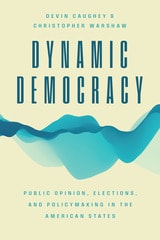
Dynamic Democracy
Public Opinion, Elections, and Policymaking in the American StatesDevin Caughey and Christopher Warshaw
University of Chicago Press, 2022
Scholars of American politics have long been skeptical of ordinary citizens’ capacity to influence, let alone control, their governments. Drawing on over eight decades of state-level evidence on public opinion, elections, and policymaking, Devin Caughey and Christopher Warshaw pose a powerful challenge to this pessimistic view. Their research reveals that although American democracy cannot be taken for granted, state policymaking is far more responsive to citizens’ demands than skeptics claim.
Although governments respond sluggishly in the short term, over the long term, electoral incentives induce state parties and politicians—and ultimately policymaking—to adapt to voters’ preferences. The authors take an empirical and theoretical approach that allows them to assess democracy as a dynamic process. Their evidence across states and over time gives them new leverage to assess relevant outcomes and trends, including the evolution of mass partisanship, mass ideology, and the relationship between partisanship and ideology since the mid-twentieth century; the nationalization of state-level politics; the mechanisms through which voters hold incumbents accountable; the performance of moderate candidates relative to extreme candidates; and the quality of state-level democracy today relative to state-level democracy in other periods.