Results by title
1927 books match the query 'Technology & Engineering' and 97 start with d
DC Distribution Systems and Microgrids
Tomislav Dragičević
The Institution of Engineering and Technology, 2018

DIGITAL RESOURCES
FRANCES CONDRON
West Virginia University Press, 2001
Darney's Circuit Modelling for Electromagnetic Compatibility
Ian B. Darney
The Institution of Engineering and Technology, 2026

Darney's Circuit Theory and Modelling
Updated and extended for EMC/EMIIan B. Darney
The Institution of Engineering and Technology, 2024

Data Communications and Networks
R.L. Brewster
The Institution of Engineering and Technology, 1994
Data Fusion in Wireless Sensor Networks
A statistical signal processing perspectiveDomenico Ciuonzo
The Institution of Engineering and Technology, 2019
Data Grab
The New Colonialism of Big Tech and How to Fight BackUlises A. Mejias and Nick Couldry
University of Chicago Press, 2024
Large technology companies like Meta, Amazon, and Alphabet have unprecedented access to our daily lives, collecting information when we check our email, count our steps, shop online, and commute to and from work. Current events are concerning—both the changing owners (and names) of billion-dollar tech companies and regulatory concerns about artificial intelligence underscore the sweeping nature of Big Tech’s surveillance and the influence such companies hold over the people who use their apps and platforms.
As trusted tech experts Ulises A. Mejias and Nick Couldry show in this eye-opening and convincing book, this vast accumulation of data is not the accidental stockpile of a fast-growing industry. Just as nations stole territories for ill-gotten minerals and crops, wealth, and dominance, tech companies steal personal data important to our lives. It’s only within the framework of colonialism, Mejias and Couldry argue, that we can comprehend the full scope of this heist.
Like the land grabs of the past, today’s data grab converts our data into raw material for the generation of corporate profit against our own interests. Like historical colonialism, today’s tech corporations have engineered an extractive form of doing business that builds a new social and economic order, leads to job precarity, and degrades the environment. These methods deepen global inequality, consolidating corporate wealth in the Global North and engineering discriminatory algorithms. Promising convenience, connection, and scientific progress, tech companies enrich themselves by encouraging us to relinquish details about our personal interactions, our taste in movies or music, and even our health and medical records. Do we have any other choice?
Data Grab affirms that we do. To defy this new form of colonialism we will need to learn from previous forms of resistance and work together to imagine entirely new ones. Mejias and Couldry share the stories of voters, workers, activists, and marginalized communities who have successfully opposed unscrupulous tech practices. An incisive discussion of the digital media that’s transformed our world, Data Grab is a must-read for anyone concerned about privacy, self-determination, and justice in the internet age.

Data Power
Radical Geographies of Control and ResistanceJim E. Thatcher
Pluto Press, 2021
In recent years, popular media has inundated audiences with sensationalized headlines recounting data breaches, new forms of surveillance and other dangers of our digital age. Despite their regularity, such accounts treat each case as unprecedented and unique. This book proposes a radical rethinking of the history, present and future of our relations with the digital, spatial technologies that increasingly mediate our everyday lives.
From smartphones to surveillance cameras, to navigational satellites, these new technologies offer visions of integrated, smooth and efficient societies, even as they directly conflict with the ways users experience them. Recognizing the potential for both control and liberation, the authors argue against both acquiescence to and rejection of these technologies.
Through intentional use of the very systems that monitor them, activists from Charlottesville to Hong Kong are subverting, resisting and repurposing geographic technologies. Using examples as varied as writings on the first telephones to the experiences of a feminist collective for migrant women in Spain, the authors present a revolution of everyday technologies. In the face of the seemingly inevitable circumstances, these technologies allow us to create new spaces of affinity, and a new politics of change.
Data as Infrastructure for Smart Cities
Larissa Suzuki
The Institution of Engineering and Technology, 2019
Data-Driven Modeling, Filtering and Control
Methods and applicationsCarlo Novara
The Institution of Engineering and Technology, 2019
Dead Reckoning
Air Traffic Control, System Effects, and RiskDiane Vaughan
University of Chicago Press, 2021
When two airplanes were flown into the World Trade Center towers on September 11, 2001, Americans watched in uncomprehending shock as first responders struggled to react to the situation on the ground. Congruently, another remarkable and heroic feat was taking place in the air: more than six hundred and fifty air traffic control facilities across the country coordinated their efforts to ground four thousand flights in just two hours—an achievement all the more impressive considering the unprecedented nature of the task.
In Dead Reckoning, Diane Vaughan explores the complex work of air traffic controllers, work that is built upon a close relationship between human organizational systems and technology and is remarkably safe given the high level of risk. Vaughan observed the distinct skill sets of air traffic controllers and the ways their workplaces changed to adapt to technological developments and public and political pressures. She chronicles the ways these forces affected their jobs, from their relationships with one another and the layouts of their workspace to their understanding of their job and its place in society. The result is a nuanced and engaging look at an essential role that demands great coordination, collaboration, and focus—a role that technology will likely never be able to replace. Even as the book conveys warnings about complex systems and the liabilities of technological and organizational innovation, it shows the kinds of problem-solving solutions that evolved over time and the importance of people.

Debt and Dispossession
Farm Loss in America's HeartlandKathryn Marie Dudley
University of Chicago Press, 2000
The farm crisis of the 1980s was the worst economic disaster to strike rural America since the Depression—thousands of farmers lost their land and homes, irrevocably altering their communities and, as Kathryn Marie Dudley shows, giving rise to devastating social trauma that continues to affect farmers today. Through interviews with residents of an agricultural county in western Minnesota, Dudley provides an incisive account of the moral dynamics of loss, dislocation, capitalism, and solidarity in farming communities.
Decentralizing Knowledges
Essays on Distributed AgencyLeandro Rodriguez Medina and Sandra Harding, editor
Duke University Press, 2025
Contributors: Linda Martín Alcoff, Elías Barticevic, Johan Henrik Buljo, Ronald Cancino, Cristina Flores, Kim Fortun, Sandra Harding, Line Aimee Kalak, Duygu Kasdogan, Wiebke Keim, Aalok Khandekar, Daniel Lee Kleinman, Wen-Hua Kuo, John Law, Les Levidow, Leandro Rodriguez Medina, Angela Okune, Liv Østmo, Ari Sitas, Maka Suarez, Sharon Traweek, Hebe Vessuri
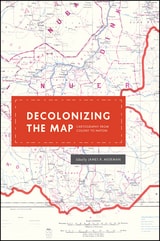
Decolonizing the Map
Cartography from Colony to NationEdited by James R. Akerman
University of Chicago Press, 2017
These essays, originally delivered as the 2010 Kenneth Nebenzahl, Jr., Lectures in the History of Cartography at the Newberry Library, encompass more than two centuries and three continents—Latin America, Africa, and Asia. Ranging from the late eighteenth century through the mid-twentieth, contributors study topics from mapping and national identity in late colonial Mexico to the enduring complications created by the partition of British India and the racialized organization of space in apartheid and post-apartheid South Africa. A vital contribution to studies of both colonization and cartography, Decolonizing the Map is the first book to systematically and comprehensively examine the engagement of mapping in the long—and clearly unfinished—parallel processes of decolonization and nation building in the modern world.
Deep Learning Models in Medical Imaging
Diagnostic innovations and clinical intelligenceRajakumar Girija
The Institution of Engineering and Technology, 2027
Deep Learning in Medical Image Processing and Analysis
Khaled Rabie
The Institution of Engineering and Technology, 2023
Deep Neural Network Design for Radar Applications
Sevgi Zubeyde Gurbuz
The Institution of Engineering and Technology, 2021
Deep Reinforcement Learning for Reconfigurable Intelligent Surfaces and UAV Empowered Smart 6G Communications
Antonino Masaracchia
The Institution of Engineering and Technology, 2024

Deep River
A Memoir of a Missouri FarmDavid Hamilton
University of Missouri Press, 2014
Deep River uncovers the layers of history—both personal and regional—that have accumulated on a river-bottom farm in west-central Missouri. This land was part of a late frontier, passed over, then developed through the middle of the last century as the author's father and uncle cleared a portion of it and established their farm.
Hamilton traces the generations of Native Americans, frontiersmen, settlers, and farmers who lived on and alongside the bottomland over the past two centuries. It was a region fought over by Union militia and Confederate bushwhackers, as well as by their respective armies; an area that invited speculation and the establishment of several small towns, both before and after the Civil War; land on which the Missouri Indians made their long last stand, less as a military force than as a settlement and civilization; land that attracted French explorers, the first Europeans to encounter the Missouris and their relatives, the Ioways, Otoes, and Osage, a century before Lewis and Clark. It is land with a long history of occupation and use, extending millennia before the Missouris. Most recently it was briefly and intensively receptive to farming before being restored in large part as state-managed wetlands.
Deep River is composed of four sections, each exploring aspects of the farm and its neighborhood. While the family story remains central to each, slavery and the Civil War in the nineteenth century and Native American history in the centuries before that become major themes as well. The resulting portrait is both personal memoir and informal history, brought up from layers of time, the compound of which forms an emblematic American story.
DeepAesthetics
Computational Experience in a Time of Machine LearningAnna Munster
Duke University Press, 2025
Deepwater Alchemy
Extractive Mediation and the Taming of the SeafloorLisa Yin Han
University of Minnesota Press, 2024
How underwater mediation has transformed deep-sea spaces into resource-rich frontiers
Green energy technologies such as windmills, solar panels, and electric vehicles may soon depend on material found at the seabed. How did a space once imagined to be empty and unfathomable come to be thought of as a treasure trove of resources? Lisa Yin Han traces how contemporary developments in underwater sensing and imaging materially and imaginatively transmogrify the ocean bottom into a resource frontier capable of sustaining a digitally connected global future.
Set against the backdrop of climate change, energy transition, and the expansion of industrial offshore extractions, Deepwater Alchemy looks at oceanic media and its representation of the seabed in terms of valuable resources. From high-tech simulations to laboratories and archives that collect and analyze sediments, Han explores the media technologies that survey, visualize, and condition the possibility for industrial resource extraction, introducing the concept of extractive mediation to describe the conflations between resource prospecting and undersea knowledge production. Moving away from anthropocentric frameworks, she argues that we must equalize access to deep ocean mediation and include the submerged perspectives of multispecies communities.
From the proliferation of petroleum seismology to environmental-impact research on seabed mining to the development of internet-enabled seafloor observatories, Deepwater Alchemy shows us that deepwater mediation is entangled in existential hopes and fears for our planetary future. As the ocean bottom becomes increasingly accessible to people, Han prompts us to ask not whether we can tame the seafloor, but, rather, why and for whom are we taming it?
Demystifying Marketing
A guide to the fundamentals for engineersPatrick Forsyth
The Institution of Engineering and Technology, 2007
Design Thinking for Engineering
A practical guideIñigo Cuiñas
The Institution of Engineering and Technology, 2023

Design and Development of Multi-Lane Smart Electromechanical Actuators
Fawaz Yahya Annaz
The Institution of Engineering and Technology, 2014
Design of Embedded Robust Control Systems Using MATLAB® / Simulink®
Petko Hristov Petkov
The Institution of Engineering and Technology, 2018

Design of High Frequency Integrated Analogue Filters
Yichuang Sun
The Institution of Engineering and Technology, 2002
Design of High-Efficiency Integrated AC-DC Convertors
Ke-Horng Chen
The Institution of Engineering and Technology, 2018
Design of Modern Control Systems
D.J. Bell
The Institution of Engineering and Technology, 1982
Design of Multi-Frequency CW Radars
M. Jankiraman
The Institution of Engineering and Technology, 2007
Design of Terahertz CMOS Integrated Circuits for High-Speed Wireless Communication
Minoru Fujishima
The Institution of Engineering and Technology, 2019

Design, Control and Monitoring of Tidal Stream Turbine Systems
Mohamed Benbouzid
The Institution of Engineering and Technology, 2023
Design, Control, Predict
Logistical Governance in the Smart CityAaron Shapiro
University of Minnesota Press, 2020
An in-depth look at life in the “smart” city
Technology has fundamentally transformed urban life. But today’s “smart” cities look little like what experts had predicted. Aaron Shapiro shows us the true face of the revolution in urban technology, taking the reader on a tour of today’s smart city. Along the way, he develops a new lens for interpreting urban technologies—logistical governance—to critique an urban future based on extraction and rationalization.
Through ethnographic research, journalistic interviews, and his own hands-on experience, Shapiro helps us peer through cracks in the smart city’s facade. He investigates the true price New Yorkers pay for “free,” ad-funded WiFi, finding that it ultimately serves the ends of commercial media. He also builds on his experience as a bike courier for a food delivery startup to examine how promises of “flexible employment” in the gig economy in fact pave the way for strict managerial control. And he turns his eye toward hot-button debates around police violence and new patrol technologies, asking whether algorithms are really the answer to reforming our cities’ ongoing crises of criminal justice.
Through these gripping accounts of the new technological urbanism, Design, Control, Predict makes vital contributions to conversations around data privacy and algorithmic governance. Shapiro brings much-needed empirical research to a field that has often relied on “10,000-foot views.” Timely, important, and expertly researched, Design, Control, Predict doesn’t just help us comprehend urbanism today—it advances strategies for critiquing and resisting a dystopian future that can seem inevitable.
Designer's Guide to Energy Efficient Electrical Installations
The Institution of Engineering and Technology
The Institution of Engineering and Technology, 2016
Designing Businesses
How to develop and lead a high technology companyGeorge Young
The Institution of Engineering and Technology, 1997
Designing Electronic Systems for EMC
William G. Duff
The Institution of Engineering and Technology, 2011
Designing Multilingual Experiences in Technical Communication
Laura Gonzales
Utah State University Press, 2022
Through grounded case studies of multilingual technical communication projects in the US, Mexico, and Nepal, Laura Gonzales illustrates the multiple tensions at play in transnational research and demonstrates how technical communicators can leverage contemporary translation practices and methodologies to engage in research with multilingual communities that is justice-driven, participatory, and reciprocal.
Designing Multilingual Experiences in Technical Communication is of value to researchers and students across fields who are interested in designing projects alongside multilingual communities from historically marginalized backgrounds.

Designing Sound
Audiovisual Aesthetics in 1970s American CinemaBeck, Jay
Rutgers University Press, 2016

Destroyer HMCS Haida
Rindert van Zinderen-Bakker
Amsterdam University Press, 2023
Nowadays she is the only surviving Tribal-class destroyer out of 27 units that were constructed between 1937-1945 for the Royal Navy, Royal Australian Navy, and the Royal Canadian Navy.
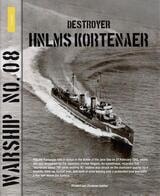
Destroyer HNLMS Kortenaer
Rindert van Zinderen-Bakker
Amsterdam University Press, 2023
Deterministic Control of Uncertain Systems
A.S.I. Zinober
The Institution of Engineering and Technology, 1990
Developing Effective Engineering Leadership
Ray Morrison
The Institution of Engineering and Technology, 2003
Developing a Make or Buy Strategy for Manufacturing Business
David Probert
The Institution of Engineering and Technology, 1997
Developments in Antenna Analysis and Design, Volume 1
Raj Mittra
The Institution of Engineering and Technology, 2019
Developments in Antenna Analysis and Design, Volume 2
Raj Mittra
The Institution of Engineering and Technology, 2019
Developments in Antenna Analysis and Synthesis
Raj Mittra
The Institution of Engineering and Technology, 2018

Developments in Control Theory Towards Glocal Control
Li Qiu
The Institution of Engineering and Technology, 2012

Diagnosis and Fault Tolerance of Electrical Machines, Power Electronics and Drives
Antonio J. Marques Cardoso
The Institution of Engineering and Technology, 2019

Diffraction of Electromagnetic Waves by Small Apertures
Applications to transmission, absorption, and scattering resonancesYoung Ki Cho
The Institution of Engineering and Technology, 2024
Digital Communication Modulation, Coding, and Information Theory
Kim Winick
Michigan Publishing Services, 2025
The modern era of digital communication dates to Claude Shannon’s three seminal papers appearing in 1948 and 1949 in the Bell System Technical Journal. Digital communication advanced rapidly in the following years and generated a large number of technologies, including cell phones, Wi-Fi, fiber optic communication, MP3 players, JPEG-encoded photographs, high-definition television (HDTV), etc. With increasing demands for remote and high-speed digital access to data and real-time video, advances are likely to continue for the foreseeable future. The topics covered in this book constitute a “first course” on digital communication because with a few exceptions, primarily related to the multipath propagation effects and fading, only the point-to-point additive white Gaussian noise channel is considered. This was one of the first channels to be seriously studied in the modern era of digital communication that began with Shannon. From a practical perspective, modulation and coding for the deep-space channel motivated much of the early work in this field. The material covered in this textbook is still widely used and forms the basis for subsequent and ongoing advancements in the field. Broadly speaking, the fundamentals covered in this textbook are the notion of information, entropy, lossless data compression, error-correcting methods in the presence of noise, the fundamental limits of reliable communication, channel capacity, optimum decision theory and optimum receiver principals, common modulation types, the relationship between bandwidth and dimensionality, system performance using modulation and coding, and the fundamental trade-off between energy-efficiency and bandwidth-efficiency.
Digital Communications
Principles and systemsIfiok Otung
The Institution of Engineering and Technology, 2014