Results by title
22279 books match the query 'Social Science' and 859 start with d

Discordant Development
Global Capitalism and the Struggle for Connection in BangladeshKaty Gardner
Pluto Press, 2012
What happens when a vast multinational mining company operates a gas plant situated close to four densely populated villages in rural Bangladesh? How does its presence contribute to local processes of ‘development’? And what do corporate claims of ‘community engagement’ involve? Drawing from author Katy Gardner’s longstanding relationship with the area, Discordant Development reveals the complex and contradictory ways that local people attempt to connect to, and are disconnected by, foreign capital.
Everyone has a story to tell: whether of dispossession and scarcity, the success of Corporate Social Responsibility, or imperialist exploitation and corruption. Yet as Gardner argues, what really matters in the struggles over resources is which of these stories are heard, and the power of those who tell them.
Based around the discordant narratives of dispossessed land owners, urban activists, mining officials and the rural landless, Discordant Development touches on some of the most urgent economic and political questions of our time, including resource ownership and scarcity, and the impact of foreign investment and industrialisation on global development.
Discorrelated Images
Shane Denson
Duke University Press, 2020

Discourse and Destruction
The City of Philadelphia versus MOVERobin Wagner-Pacifici
University of Chicago Press, 1993
How did this struggle between the city and MOVE go from memos and meetings to tear gas and bombs? And how does the mandate to defend public order become a destructive force? Sifting through the hearings that followed the deadly encounter, Robin Wagner-Pacifici reconstructs the conflict between MOVE and the city of Philadelphia. Against this richly nuanced account, in which the participants—from the mayor and the police officers to members of MOVE and their neighbors—offer opposing versions of their aims, assumptions, and strategies, Wagner-Pacifici develops a compelling analysis of the relation between definition and action, between language and violence.
Was MOVE simply a radical, black separatist group with an alternative way of life? Or was it a terrorist cult that held a neighborhood and politicians hostage to its offensive language and bizarre behavior? Wagner-Pacifici shows how competing definitions of MOVE led to different strategies for managing the conflict. In light of the shockingly similar, and even more deadly, 1993 Branch Davidian disaster in Waco, Texas, such an analysis becomes imperative. Indeed, for those who hope to understand—and, finally, to forestall—the moment when language and violence are inexorably drawn together, this book demands attention.
Discourse in Signed Languages
Cynthia B. Roy
Gallaudet University Press, 2011
In this volume, editor Cynthia B. Roy presents a stellar cast of cognitive linguists, sociolinguists, and discourse analysts to discover and demonstrate how sign language users make sense of what is going on within their social and cultural contexts in face-to-face interactions. In the first chapter, Paul Dudis presents an innovative perspective on depiction in discourse. Mary Thumann follows with her observations on constructed dialogue and constructed action. Jack Hoza delineates the discourse and politeness functions of hey and well in ASL as examples of discourse markers in the third chapter.
Laurie Swabey investigates reference in ASL discourse in the fourth chapter. In Chapter 5, Christopher Stone offers insights on register related to genre in British Sign Language discourse, and Daniel Roush addresses in Chapter 6 the “conduit” metaphor in English and ASL. Jeffrey Davis completes this collection by mapping out the nature of discourse in Plains Indian Sign Language, a previously unstudied language. The major thread that ties together the work of these varying linguists is their common focus on the forms and functions of sign languages used by people in actual situations. They each provide new keys to answering how thoughts expressed in one setting with one term or one utterance may mean something totally different when expressed in a different setting with different participants and different purposes.
Discourses of Sexuality
From Aristotle to AIDSDonna C. Stanton, Editor
University of Michigan Press, 1993
Discourses of Weakness in Modern China
Historical Diagnoses of the "Sick Man of East Asia"Edited by Iwo Amelung
Campus Verlag, 2018
Discourses of the Vanishing
Modernity, Phantasm, JapanMarilyn Ivy
University of Chicago Press, 1995
Ivy shows how a fascination with cultural margins accompanied the emergence of Japan as a modern nation-state. This fascination culminated in the early twentieth-century establishment of Japanese folklore studies and its attempts to record the spectral, sometimes violent, narratives of those margins. She then traces the obsession with the vanishing through a range of contemporary reconfigurations: efforts by remote communities to promote themselves as nostalgic sites of authenticity, storytelling practices as signs of premodern presence, mass travel campaigns, recallings of the dead by blind mediums, and itinerant, kabuki-inspired populist theater.
Discovering North American Rock Art
Edited by Lawrence L. Loendorf, Christopher Chippindale, and David S. Whitley
University of Arizona Press, 2005
Discovering Paquimé
Edited by Paul E. Minnis and Michael E. Whalen
University of Arizona Press, 2016
". . . many houses of great size, strength, and height . . . six and seven stories, with towers and walls like fortresses for protection and defense against the enemies who undoubtedly used to make war on its inhabitants . . . large and magnificent patios paved with enormous and beautiful stones resembling jasper . . ."
Casas Grandes, now a UNESCO World Heritage Site, is under the purview of the Instituto Nacional de Antropología e Historia, which oversees a world-class museum near the ruins. Paquimé visitors can learn about the site’s history and its excavations, which were conducted under the pioneering research of Charles Di Peso and Eduardo Contreras Sánchez and their colleagues from INAH and the Amerind Foundation.
Based on a half century of modern research since the Joint Casas Grandes Project, this book explores the recent discoveries about important site and its neighbors. Drawing the expertise of fourteen scholars from the United States, Mexico, and Canada, who have long worked in the region, the chapters revel new insights about Paquimé and its influence, bringing this fascinating place and its story to light.
Discovering Vietnam’s Ancient Capital
The Archaeology and History of the Imperial Citadel of Thang Long-HanoiEdited by Andrew Hardy and Tien Ðông Nguyen
National University of Singapore Press, 2023
As Vietnam entered the twenty-first century it began to prepare for the 1000th anniversary of the founding of its capital Thang Long, now Hanoi. In the heart of the city, a rescue excavation was launched on land earmarked for the construction of a new National Assembly building. Archaeologists unearthed thirteen centuries of vestiges of the ancient city of Thang Long, yielding a richer record than anyone had dared to hope for. Construction plans were shelved, excavations widened, and at the city's millennial celebrations in 2010, UNESCO announced its inscription of the Imperial Citadel of Thang Long on its World Heritage List.
This archaeological discovery has two histories. The first, told here by the archaeologists involved, is the story of the dig, which brought to light the bricks, tiles, pillars, sculptures, and ceramics of countless ancient temples and palaces. The second is the history of the citadel itself, in its early years as an outpost of the Chinese empire, in its heyday as the Forbidden City of Vietnam’s emperors, and in its downgrading and eventual destruction at the hands of the Nguyen dynasty and French colonial rulers. Bringing together history, urban history, and a fascinating story of the interplay of influences from China and Southeast Asia, this is also a fascinating case of an Asian capital city coming to understand its history and deciding how to preserve its archaeological remains.
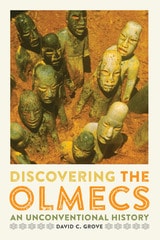
Discovering the Olmecs
An Unconventional HistoryBy David C. Grove
University of Texas Press, 2014
The Olmecs are renowned for their massive carved stone heads and other sculptures, the first stone monuments produced in Mesoamerica. Seven decades of archaeological research have given us many insights into the lifeways of the Olmecs, who inhabited parts of the modern Mexican states of Veracruz and Tabasco from around 1150 to 400 BC, and there are several good books that summarize the current interpretations of Olmec prehistory. But these formal studies don’t describe the field experiences of the archaeologists who made the discoveries. What was it like to endure the Olmec region’s heat, humidity, mosquitoes, and ticks to bring that ancient society to light? How did unforeseen events and luck alter carefully planned research programs and the conclusions drawn from them? And, importantly, how did local communities and individuals react to the research projects and discoveries in their territories?
In this engaging book, a leading expert on the Olmecs tells those stories from his own experiences and those of his predecessors, colleagues, and students. Beginning with the first modern explorations in the 1920s, David Grove recounts how generations of archaeologists and local residents have uncovered the Olmec past and pieced together a portrait of this ancient civilization that left no written records. The stories are full of fortuitous discoveries and frustrating disappointments, helpful collaborations and deceitful shenanigans. What emerges is an unconventional history of Olmec archaeology, a lively introduction to archaeological fieldwork, and an exceptional overview of all that we currently know about the Olmecs.

Discretionary Justice
Looking Inside a Juvenile Drug CourtPaik, Leslie
Rutgers University Press, 2011
Juvenile drug courts are on the rise in the United States, as a result of a favorable political climate and justice officials' endorsement of the therapeutic jurisprudence movement--the concept of combining therapeutic care with correctional discipline. The goal is to divert nonviolent youth drug offenders into addiction treatment instead of long-term incarceration. Discretionary Justice overviews the system, taking readers behind the scenes of the juvenile drug court. Based on fifteen months of ethnographic fieldwork and interviews at a California court, Leslie Paik explores the staff's decision-making practices in assessing the youths' cases, concentrating on the way accountability and noncompliance are assessed. Using the concept of "workability," Paik demonstrates how compliance, and what is seen by staff as "noncompliance," are the constructed results of staff decisions, fluctuating budgets, and sometimes questionable drug test results.
While these courts largely focus on holding youths responsible for their actions, this book underscores the social factors that shape how staff members view progress in the court. Paik also emphasizes the perspectives of children and parents. Given the growing emphasis on individual responsibility in other settings, such as schools and public welfare agencies, Paik's findings are relevant outside the juvenile justice system.
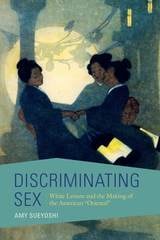
Discriminating Sex
White Leisure and the Making of the American "Oriental"Amy Sueyoshi
University of Illinois Press, 2018
Amy Sueyoshi draws on everything from newspapers to felony case files to oral histories in order to examine how whites' pursuit of gender and sexual fulfillment gave rise to racial caricatures. As she reveals, white reporters, writers, artists, and others conflated Chinese and Japanese, previously seen as two races, into one. There emerged the Oriental—a single pan-Asian American stereotype weighted with sexual and gender meaning. Sueyoshi bridges feminist, queer, and ethnic studies to show how the white quest to forge new frontiers in gender and sexual freedom reinforced—and spawned—racial inequality through the ever evolving Oriental.
Informed and fascinating, Discriminating Sex reconsiders the origins and expression of racial stereotyping in an American city.

Discriminating Taste
How Class Anxiety Created the American Food RevolutionFinn, S. Margot
Rutgers University Press, 2017
For the past four decades, increasing numbers of Americans have started paying greater attention to the food they eat, buying organic vegetables, drinking fine wines, and seeking out exotic cuisines. Yet they are often equally passionate about the items they refuse to eat: processed foods, generic brands, high-carb meals. While they may care deeply about issues like nutrition and sustainable agriculture, these discriminating diners also seek to differentiate themselves from the unrefined eater, the common person who lives on junk food.
Discriminating Taste argues that the rise of gourmet, ethnic, diet, and organic foods must be understood in tandem with the ever-widening income inequality gap. Offering an illuminating historical perspective on our current food trends, S. Margot Finn draws numerous parallels with the Gilded Age of the late nineteenth century, an era infamous for its class divisions, when gourmet dinners, international cuisines, slimming diets, and pure foods first became fads.
Examining a diverse set of cultural touchstones ranging from Ratatouille to The Biggest Loser, Finn identifies the key ways that “good food” has become conflated with high status. She also considers how these taste hierarchies serve as a distraction, leading middle-class professionals to focus on small acts of glamorous and virtuous consumption while ignoring their class’s larger economic stagnation. A provocative look at the ideology of contemporary food culture, Discriminating Taste teaches us to question the maxim that you are what you eat.

Discrimination by Design
A Feminist Critique of the Man-Made EnvironmentLeslie Kanes Weisman
University of Illinois Press, 1992
-- Women's Review of Books
"A readable account of the force of male dominance in the built environment. . . . Those looking to this book for a clearer vision of the changes that need to be made in the organization and design of housing, work, and public space to foster gender equality will not be disappointed."
-- Journal of Planning Education and Research
"A pioneering work that will pave new territory not only for feminists but all those who are prepared to rethink environmental and societal issues."
-- Choice

Discrimination in Modern Japan
Case Studies in Identity PoliticsJ. Mark Ramseyer
University of Chicago Press, 2023
In this book, J. Mark Ramseyer, a noted authority on Japan looks at discrimination against groups in Japanese society, focusing on the Korean, Okinawan, and Burakumin groups. Ramseyer asks why they experience discrimination in Japan, an unusually homogeneous society. Is it because of some prejudice on the part of the majority that prevents their integration into mainstream Japanese society? Or is it because some of the dynamics within the group create incentives for the group to stay together and to be on the fringes of society?
Ramseyer argues that the real explanation is the latter, and each of these three groups has been victimized by its own leadership. Precisely because the groups are dysfunctional, members of the group cannot control members who would appoint themselves group leaders. The result has been the capture of leadership positions by people who manipulate the group to their own private advantage and to the detriment of the group as a whole.
Discrimination, Jobs, and Politics
The Struggle for Equal Employment Opportunity in the United States since the New DealPaul Burstein
University of Chicago Press, 1985
"This is an important, well-researched book. . . . Burstein has had the courage to break through narrow specializations within sociology . . . and even to address the types of acceptable questions usually associated with three different disciplines (political science, sociology, and economics). . . . This book should be read by all professionals interested in political sociology and social movements."—Donald Tomaskovic-Devey, Social Forces
"Discrimination, Jobs and Politics [is] satisfying because it tells a more complete story . . . than does most sociological research. . . . I find myself returning to it when I'm studying the U.S. women's movement and recommending it to students struggling to do coherent research."—Rachel Rosenfeld, Contemporary Sociology

Disease Prevention as Social Change
The State, Society, and Public Health in the United States, France, Great Britain, and CanadaConstance A. Nathanson
Russell Sage Foundation, 2007

Diseased States
Epidemic Control in Britain and the United StatesCharles Allan McCoy
University of Massachusetts Press, 2020
To understand why these two nations have handled contemporary disease threats in such different ways, Charles Allan McCoy examines when and how disease control measures were adopted in each country from the nineteenth century onward, which medical theory of disease was dominant at the time, and where disease control was located within the state apparatus. Particular starting conditions put Britain and the United States on distinct trajectories of institutionalization that led to their respective systems of disease control. As McCoy shows, even the seemingly objective matter of contagion is deeply enmeshed in social and political realities, and by developing unique systems of biopower to control the spread of disease, Britain and the United States have established different approaches of exerting political control over citizens' lives and bodies.
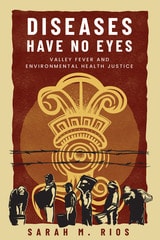
Diseases Have No Eyes
Valley Fever and Environmental Health JusticeSarah M. Rios
Temple University Press, 2026
Diseases Have No Eyes investigates how communities in Central Valley, California deal with Valley Fever, a painful illness caused by a soil fungus. The airborne disease’s symptoms can last from two months to a patient’s lifetime and may be fatal. Nearly a third of the national cases are reported in California, where those infected are disproportionately farmworkers and people incarcerated in the region. Poverty, pollution, and prison expose these groups to cumulative environmental and health risks that deny Valley Fever patients adequate medical treatment.
Sarah M. Rios examines how these populations face racial health disparities and develop strategies of care. She connects environmental justice activists as well as prison advocates and abolitionists who mobilize protests and issue calls to action to the past and ongoing efforts for medical autonomy and healthy communities. Diseases Have No Eyes emphasizes that vulnerable groups have developed an expertise and understanding of Valley Fever out of necessity. In the process, these community members offer an alternative public health response that extends beyond the individual body.
In the series Insubordinate Spaces

Disenchanted Lives
Apostasy and Ex-Mormonism among the Latter-day SaintsBrooks, E. Marshall
Rutgers University Press, 2018

Disenchanting Citizenship
Mexican Migrants and the Boundaries of BelongingLuis F. B. Plascencia
Rutgers University Press, 2012
The book explores the meaning of U.S. citizenship through the experience of a unique group of Mexican migrants who were granted Temporary Status under the “legalization” provisions of the 1986 IRCA, attained Lawful Permanent Residency, and later became U.S. citizens. Plascencia integrates an extensive and multifaceted collection of interviews, ethnographic fieldwork, ethno-historical research, and public policy analysis in examining efforts that promote the acquisition of citizenship, the teaching of citizenship classes, and naturalization ceremonies. Ultimately, he unearths citizenship’s root as a Janus-faced construct that encompasses a simultaneous process of inclusion and exclusion. This notion of citizenship is mapped on to the migrant experience, arguing that the acquisition of citizenship can lead to disenchantment with the very status desired. In the end, Plascencia expands our understanding of the dynamics of U.S. citizenship as a form of membership and belonging.
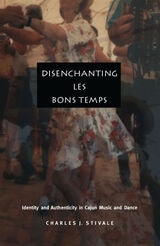
Disenchanting Les Bons Temps
Identity and Authenticity in Cajun Music and DanceCharles J. Stivale
Duke University Press, 2003
Stivale combines his personal knowledge and love of Cajun music and dance with the theoretical insights of Gilles Deleuze and Félix Guattari to consider representations of things Cajun. He examines the themes expressed within the lyrics of the Cajun musical repertoire and reflects on the ways Cajun cultural practices are portrayed in different genres including feature films, documentaries, and instructional dance videos. He analyzes the dynamic exchanges between musicians, dancers, and spectators at such venues as bars and music festivals. He also considers a number of thorny socio-political issues underlying Cajun culture, including racial tensions and linguistic isolation. At the same time, he describes various efforts by contemporary musicians and their fans to transcend the limitations of cultural stereotypes and social exclusion.
Disenchanting Les Bons Temps will appeal to those interested inCajun culture, issues of race and ethnicity, music and dance, and the intersection of French and Francophone studies with Anglo and American cultural studies.
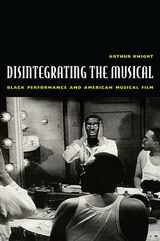
Disintegrating the Musical
Black Performance and American Musical FilmArthur Knight
Duke University Press, 2002
Arthur Knight focuses on American film’s classic sound era, when Hollywood studios made eight all-black-cast musicals—a focus on Afro-America unparalleled in any other genre. It was during this same period that the first black film stars—Paul Robeson, Louis Armstrong, Lena Horne, Harry Belafonte, Dorothy Dandridge—emerged, not coincidentally, from the ranks of musical performers. That these films made so much of the connection between African Americans and musicality was somewhat ironic, Knight points out, because they did so in a form (song) and a genre (the musical) celebrating American social integration, community, and the marriage of opposites—even as the films themselves were segregated and played before even more strictly segregated audiences.
Disintegrating the Musical covers territory both familiar—Show Boat, Stormy Weather, Porgy and Bess—and obscure—musical films by pioneer black director Oscar Micheaux, Lena Horne’s first film The Duke Is Tops, specialty numbers tucked into better-known features, and lost classics like the short Jammin’ the Blues. It considers the social and cultural contexts from which these films arose and how African American critics and audiences responded to them. Finally, Disintegrating the Musical shows how this history connects with the present practices of contemporary musical films like O Brother, Where Art Thou? and Bamboozled.
Dislocalism
The Crisis of Globalization and the Remobilizing of AmericanismSarika Chandra
The Ohio State University Press, 2011
Notwithstanding its now extensive, trans-disciplinary bibliography, the full reality of globalization remains less well understood than commonly thought. As an objective, secular phenomenon, globalization has continued to be obscured by ideological and rhetorical strategies that travel under the same name but posit it as simply the abstract-universal other of the local. Dislocalism: The Crisis of Globalization and the Remobilizing of Americanism makes such strategies and the global/local binary they reinforce into objects of critical analysis.
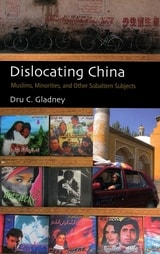
Dislocating China
Muslims, Minorities, and Other Subaltern SubjectsDru C. Gladney
University of Chicago Press, 2004
Gladney locates China and Chinese culture not in some unchanging, essential "Chinese-ness," but in the context of historical and contemporary multicultural complexity. He investigates how this complexity plays out among a variety of places and groups, examining representations of minorities and majorities in art, movies, and theme parks; the invention of folklore and creation myths; the role of pilgrimages in constructing local identities; and the impact of globalization and economic reforms on non-Han groups such as the Muslim Hui. In the end, Gladney argues that just as peoples in the West have defined themselves against ethnic others, so too have the Chinese defined themselves against marginalized groups in their own society.

Dismembering the Male
Men's Bodies, Britain, and the Great WarJoanna Bourke
University of Chicago Press, 1996
Each chapter explores a different facet of the war and masculinity in depth. Joanna Bourke discovers that those who were dismembered and disabled by the war were not viewed as passive or weak, like their civilian counterparts, but were the focus of much government and public sentiment. Those suffering from disease were viewed differently, often finding themselves accused of malingering.
Joanna Bourke argues convincingly that military experiences led to a greater sharing of gender identities between men of different classes and ages. Dismembering the Male concludes that ultimately, attempts to reconstruct a new type of masculinity failed as the threat of another war, and with it the sacrifice of a new generation of men, intensified.
Disney Culture
Wills, John
Rutgers University Press, 2017
Disney Culture proposes that there is still a unifying Disney ethos, one that can be traced back to the corporate philosophy that Walt Disney himself developed back in the 1920s. Yet, as cultural historian John Wills demonstrates, Disney’s values have also adapted to changing social climates. At the same time, the world of Disney has profoundly shaped how Americans view the world.
Wills offers a nuanced take on the corporate ideologies running through animated and live-action Disney movies from Frozen to Fantasia, from Mary Poppins to Star Wars: The Force Awakens. But Disney Culture encompasses much more than just movies as it explores the intersections between Disney’s business practices and its cultural mythmaking. Welcome to “the Disney Way.”

Disney's Most Notorious Film
Race, Convergence, and the Hidden Histories of Song of the SouthBy Jason Sperb
University of Texas Press, 2012
The Walt Disney Company offers a vast universe of movies, television shows, theme parks, and merchandise, all carefully crafted to present an image of wholesome family entertainment. Yet Disney also produced one of the most infamous Hollywood films, Song of the South. Using cartoon characters and live actors to retell the stories of Joel Chandler Harris, SotS portrays a kindly black Uncle Remus who tells tales of Brer Rabbit, Brer Fox, and the “Tar Baby” to adoring white children. Audiences and critics alike found its depiction of African Americans condescending and outdated when the film opened in 1946, but it grew in popularity—and controversy—with subsequent releases. Although Disney has withheld the film from American audiences since the late 1980s, SotS has an enthusiastic fan following, and pieces of the film—such as the Oscar-winning “Zip-a-Dee-Doo-Dah”—remain throughout Disney’s media universe.
Disney’s Most Notorious Film examines the racial and convergence histories of Song of the South to offer new insights into how audiences and Disney have negotiated the film’s controversies over the last seven decades. Jason Sperb skillfully traces the film’s reception history, showing how audience perceptions of SotS have reflected debates over race in the larger society. He also explores why and how Disney, while embargoing the film as a whole, has repurposed and repackaged elements of SotS so extensively that they linger throughout American culture, serving as everything from cultural metaphors to consumer products.
Disney's Star Wars
Forces of Production, Promotion, and ReceptionWilliam Proctor and Richard McCulloch
University of Iowa Press, 2019
Covering the period from Disney’s purchase through the release of The Force Awakens, the book reveals how fans anticipated, interpreted, and responded to the steady stream of production stories, gossip, marketing materials, merchandise, and other sources in the build-up to the movie’s release. From fears that Princess Leia would be turned into a “Disney princess” to collaborative brand management, the authors explore the shifting relationship between fans, texts, and media industries in the context of a crucial rebranding campaign. The result is a fascinating examination of a critical moment in the iconic series’ history.
Disobedient Aesthetics
Surveillance, Bodies, ControlAnthony Stagliano
University of Alabama Press, 2024
A compelling inquiry into the rhetorical and aesthetic techniques that subvert contemporary regimes of digital surveillance, embodiment, and control.
The contemporary world bristles with tools of observation and manipulation. Security cameras, social media, data mining, biometric scans, and other instruments ensnare the individual in a web of surveillance. In Disobedient Aesthetics, Anthony Stagliano exposes the use of human lives as sites of data exploitation and outlines paths of resistance. From the thermal-vision systems used on military drones, which use human body heat itself as a media object, to facial recognition platforms that use human faces as data mines, and from law enforcement tools of DNA analysis to data-driven urban governance, the realm of algorithmic surveillance and control is wide and subtle.
Disobedient Aesthetics outlines interventions into the technical systems subtending data-driven surveillance and control. Stagliano maps not only the surveillant regimes afforded by recent networked technologies, but also the inventive, artistic research into ways of undermining, upending, or redirecting such technologies. The concluding chapter examines creative, critical, and collective efforts to democratize access to the technology that undergirds such scrutiny and enables ways to detect and contest its power.
In a fascinating epilogue, Stagliano revisits current theories of control and offers an alternative reading of Gilles Deleuze’s oft-cited thesis on control societies: namely that it is not a matter of “finding new weapons” to undermine control but developing new techniques, new designs, new prototypes, and new modes of creative escape.

Disorderly Families
Infamous Letters from the Bastille ArchivesArlette Farge
University of Minnesota Press, 2021
The first English translation of letters of arrest from eighteenth century France held in the archives of the Bastille
Drunken and debauched husbands; libertine wives; vagabonding children. These and many more are the subjects of requests for confinement written to the king of France in the eighteenth century. These letters of arrest (lettres de cachet) from France’s Ancien Régime were often associated with excessive royal power and seen as a way for the king to imprison political opponents. In Disorderly Families, first published in French in 1982, Arlette Farge and Michel Foucault collect ninety-four letters from ordinary families who, with the help of hired scribes, submitted complaints to the king to intervene and resolve their family disputes.
Gathered together, these letters show something other than the exercise of arbitrary royal power, and offer unusual insight into the infamies of daily life. From these letters come stories of divorce and marital conflict, sexual waywardness, reckless extravagance, and abandonment. The letters evoke a fluid social space in which life in the home and on the street was regulated by the rhythms of relations between husbands and wives, or parents and children. Most impressively, these letters outline how ordinary people seized the mechanisms of power to address the king and make demands in the name of an emerging civil order.
Arlette Farge and Michel Foucault were fascinated by the letters’ explosive qualities and by how they both illustrated and intervened in the workings of power and governmentality. Disorderly Families sheds light on Foucault’s conception of political agency and his commitment to theorizing how ordinary lives come to be touched by power. This first English translation is complete with an introduction from the book’s editor, Nancy Luxon, as well as notes that contextualize the original 1982 publication and eighteenth-century policing practices.

Disorders Of Desire
Janice Irvine
Temple University Press, 1991
This revised and expanded edition features new chapters addressing:
- The diagnosis of "sex addiction"in the 1970s and its social and political implications.
- New developments within the field of sexology, including the "Viagra Revolution" that began in the 1990s.
- The pharmaceutical industry's role in the development of sexual enhancements and the search for the female equivalent of Viagra.
Disorders Of Desire Rev
Sexuality And Gender In Modern American SexologyJanice Irvine
Temple University Press, 2005
This revised and expanded edition features new chapters addressing:
•The diagnosis of "sex addiction"in the 1970s and its social and political implications.
•New developments within the field of sexology, including the "Viagra Revolution" that began in the 1990s.
•The pharmaceutical industry's role in the development of sexual enhancements and the search for the female equivalent of Viagra.
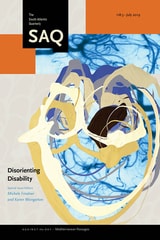
Disorienting Disability
Michele Friedner and Karen Weingarten, special issue editors
Duke University Press, 2020
Drawing on feminist studies, critical race studies, and queer studies, the contributors probe the meanings of the term disability and consider disability in relation to other categories of difference such as race, gender, and class. Essays challenge the historicity of disability; push disability studies to consider questions of loss, pain, and trauma; question the notion of disability as another form of diversity; and expand arguments about the ethics of care to consider communities not conventionally defined as disabled.
Contributors. Christina Crosby, Lisa Diedrich, Arseli Dokumaci, Michele Friedner, Cassandra Hartblay, Talia Schaffer, Margrit Shildrick, Karen Weingarten

Disorienting Phenomenology
Queer Space and Trans LifeEden Kinkaid
University of Minnesota Press, 2026
Rethinking space from the ground up through trans theory, philosophy, and radical possibility
Disorienting Phenomenology takes as its point of departure the trans mundane: entering a public restroom, moving through airport security, navigating professional spaces. These ordinary yet unsettling encounters become portals into urgent philosophical questions about space, embodiment, perception, power, and violence. Attending closely to how trans people experience everyday life, Eden Kinkaid shows that space is never neutral. It is felt, negotiated, and contested at the level of the body, shaping one’s capacities, safety, and sense of self.
Weaving together philosophy, queer and trans studies, geography, and personal narrative, Kinkaid develops an intersectional theory of space grounded in lived experience. They bring the foundational spatial theories of Henri Lefebvre together with critical phenomenologies of gender, race, and disability to demonstrate how systems of oppression are built into the environments we inhabit, configuring movement and constraining possibility for minoritized people. Bold and interdisciplinary, Disorienting Phenomenology offers vital conceptual tools for understanding—and transforming—the worlds we move through each day.
Retail e-book files for this title are screen-reader friendly.

Disorienting Politics
Chimerican Media and Transpacific EntanglementsFan Yang
University of Michigan Press, 2024
Examining how Chimerican media are shaped by and perpetuate uneven power relations, Disorienting Politics argues that the pervasive tendency among wide-ranging cultural producers to depict the Chinese state as a racialized Other in American media life diminishes the possibility of engaging transpacific entanglements as a basis for envisioning new political horizons. Such othering of China not only results in overt racism against people of Asian descent, Yang argues, but also impacts the wellbeing of people of color more generally. This interdisciplinary book demonstrates the ways in which race is embedded in geopolitics even when the subject of discussion is not the people, but the (Chinese) state. Bridging media and cultural studies, Asian and Asian American studies, geography, and globalization studies, Disorienting Politics calls for a relational politics that acknowledges the multifarious interconnectivity between people, places, media, and environment.
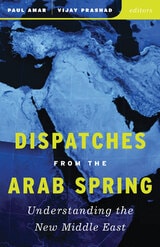
Dispatches from the Arab Spring
Understanding the New Middle EastPaul Amar
University of Minnesota Press, 2013
The Arab Spring unleashed forces of liberation and social justice that swept across North Africa and the Middle East with unprecedented speed, ferocity, and excitement. Although the future of the democratic uprisings against oppressive authoritarian regimes remains uncertain in many places, the revolutionary wave that started in Tunisia in December 2010 has transformed how the world sees Arab peoples and politics. Bringing together the knowledge of activists, scholars, journalists, and policy experts uniquely attuned to the pulse of the region, Dispatches from the Arab Spring offers an urgent and engaged analysis of a remarkable ongoing world-historical event that is widely misinterpreted in the West.
Tracing the flows of protest, resistance, and counterrevolution in every one of the countries affected by this epochal change—from Morocco to Iraq and Syria to Sudan—the contributors provide ground-level reports and new ways of teaching about and understanding the Middle East in general, and contextualizing the social upheavals and political transitions that defined the Arab Spring in particular. Rejecting outdated and invalid (yet highly influential) paradigms to analyze the region—from depictions of the “Arab street” as a mindless, reactive mob to the belief that Arab culture was “unfit” for democratic politics—this book offers fresh insights into the region’s dynamics, drawing from social history, political geography, cultural creativity, and global power politics. Dispatches from the Arab Spring is an unparalleled introduction to the changing Middle East and offers the most comprehensive and accurate account to date of the uprisings that profoundly reshaped North Africa and the Middle East.
Contributors: Sheila Carapico, U of Richmond; Nouri Gana, UCLA; Toufic Haddad; Adam Hanieh, SOAS/U of London; Toby C. Jones, Rutgers U; Anjali Kamat; Khalid Medani, McGill U; Merouan Mekouar; Maya Mikdashi, NYU; Paulo Gabriel Hilu Pinto, U Federal Fluminense, Brazil; Jillian Schwedler, Hunter College, CUNY; Ahmad Shokr; Susan Slyomovics, UCLA; Haifa Zangana.

Dispatches from the Fort Apache Scout
White Mountain and Cibecue Apache History Through 1881Lori Davisson with Edgar Perry and the Original Staff of the White Mountain Apache Cultural Center; Edited by John R. Welch
University of Arizona Press, 2016
The book showcases and annotates dispatches published between June 1973 and October 1977, in the tribe’s Fort Apache Scout newspaper. This twenty-eight-part series of articles shared Western Apache culture and history through 1881 and the Battle of Cibecue, emphasizing early encounters with Spanish, Mexican, and American outsiders. Along the way, rich descriptions of Ndee ties to the land, subsistance, leadership, and values emerge. The articles were the result of the dogged work of journalist, librarian, and historian Lori Davisson along with Edgar Perry, a charismatic leader of White Mountain Apache culture and history programs, and his staff who prepared these summaries of historical information for the local readership of the Scout.
Davisson helped to pioneer a mutually beneficial partnership with the White Mountain Apache Tribe. Pursuing the same goal, Welch’s edited book of the dispatches stakes out common ground for understanding the earliest relations between the groups contesting Southwest lands, powerfully illustrating how, as elder Cline Griggs, Sr., writes in the prologue, “the past is present.”
Dispatches from the Fort Apache Scout is both a tribute to and continuation of Davisson’s and her colleagues’ work to share the broad outlines and unique details of the early history of Ndee and Ndee lands.

Displaced
Life in the Katrina DiasporaEdited by Lynn Weber and Lori Peek
University of Texas Press, 2012
Hurricane Katrina forced the largest and most abrupt displacement in U.S. history. About 1.5 million people evacuated from the Gulf Coast preceding Katrina’s landfall. New Orleans, a city of 500,000, was nearly emptied of life after the hurricane and flooding. Katrina survivors eventually scattered across all fifty states, and tens of thousands still remain displaced. Some are desperate to return to the Gulf Coast but cannot find the means. Others have chosen to make their homes elsewhere. Still others found a way to return home but were unable to stay due to the limited availability of social services, educational opportunities, health care options, and affordable housing.
The contributors to Displaced have been following the lives of Katrina evacuees since 2005. In this illuminating book, they offer the first comprehensive analysis of the experiences of the displaced. Drawing on research in thirteen communities in seven states across the country, the contributors describe the struggles that evacuees have faced in securing life-sustaining resources and rebuilding their lives. They also recount the impact that the displaced have had on communities that initially welcomed them and then later experienced “Katrina fatigue” as the ongoing needs of evacuees strained local resources. Displaced reveals that Katrina took a particularly heavy toll on households headed by low-income African American women who lost the support provided by local networks of family and friends. It also shows the resilience and resourcefulness of Katrina evacuees who have built new networks and partnered with community organizations and religious institutions to create new lives in the diaspora.
Displacement, Diaspora, and Geographies of Identity
Smadar Lavie and Ted Swedenburg, eds.
Duke University Press, 1996
This volume exemplifies a cross-disciplinary cultural studies and a concept of culture rooted in lived experience as well as textual readings. Anthropologists and scholars from related fields deploy a range of methodologies and styles of writing to blur and complicate conventional dualisms between authors and subjects of research, home and away, center and periphery, and first and third world. Essays discuss topics such as Rai, a North African pop music viewed as westernized in Algeria and as Arab music in France; the place of Sephardic and Palestinian writers within Israel’s Ashkenazic-dominated arts community; and the use and misuse of the concept “postcolonial” as it is applied in various regional contexts.
In exploring histories of displacement and geographies of identity, these essays call for the reconceptualization of theoretical binarisms such as modern and postmodern, colonial and postcolonial. It will be of interest to a broad spectrum of scholars and students concerned with postmodern and postcolonial theory, ethnography, anthropology, and cultural studies.
Contributors. Norma Alarcón, Edward M. Bruner, Nahum D. Chandler, Ruth Frankenberg, Joan Gross, Dorinne Kondo, Kristin Koptiuch, Smadar Lavie, Lata Mani, David McMurray, Kirin Narayan, Greg Sarris, Ted Swedenburg
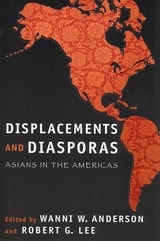
Displacements and Diasporas
Asians in the AmericasAnderson, Wanni W.
Rutgers University Press, 2005
With an emphasis on anthropological and historical contexts, the essays show how the experiences of Asians across the Americas have been shaped by the social dynamics and politics of settlement locations as much as by transnational connections and the economic forces of globalization. Contributors bring new insights to the unique situations of Asian communities previously overlooked by scholars, such as Vietnamese Canadians and the Lao living in Rhode Island. Other topics include Chinese laborers and merchants in Latin America and the Caribbean, Japanese immigrants and their descendants in Brazil, Afro-Amerasians in America, and the politics of second-generation Indian American youth culture.
Together the essays provide a valuable comparative portrait of Asians across the Americas. Engaging issues of diaspora, transnational social practice and community building, gender, identity, institutionalized racism, and deterritoriality, this volume presents fresh perspectives on displacement, opening the topic up to a wider, more interdisciplinary terrain of inquiry and teaching.
Displacing Homophobia
Ronald R. Butters, John M. Clum, and Michael Moon, eds.
Duke University Press, 1989
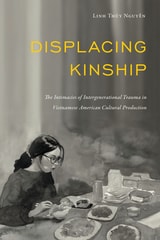
Displacing Kinship
The Intimacies of Intergenerational Trauma in Vietnamese American Cultural ProductionLinh Thuy Nguyen
Temple University Press, 2024
Second-generation texts illustrate how the children of refugees from Vietnam are haunted by trauma and a violent, ever-present, but mostly unarticulated past. Linh Thủy Nguyễn's analysis reveals that present experiences of economic insecurity and racism also shape these narratives of familial loss.
Developing a theory of intergenerational trauma, Nguyễn rethinks how U.S. imperialism, the discourse of communism, and assimilation impacted families across generations. Through ethnic studies and feminist and queer-of-color critique, Displacing Kinship offers a critical approach for reading family tensions and interpersonal conflict as affective investments informed by the material, structural conditions of white supremacy and racial capitalism.
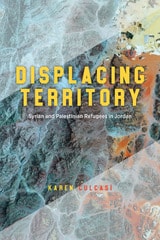
Displacing Territory
Syrian and Palestinian Refugees in JordanKaren Culcasi
University of Chicago Press, 2023
Based on fieldwork with Palestinian and Syrian refugees in Jordan, Displacing Territory explores how the lived realities of refugees are deeply affected by their imaginings of what constitutes territory and their sense of belonging to different places and territories. Karen Culcasi shows how these individual conceptualizations about territory don’t always fit the Western-centric division of the world into states and territories, thus revealing alternative or subordinated forms and scales of territory. She also argues that disproportionate attention to “refugee crises” in the Global North has diverted focus from other parts of the world that bear the responsibility of protecting the majority of the world’s refugees. By focusing on Jordan, a Global South state that hosts the world’s second-largest number of refugees per capita, this book provides insights to consider alternate ways to handle the situation of refugees elsewhere. In the process, Culcasi brings the reader into refugees’ diverse realities through their own words, inherently arguing against the tendency of many people in the Global North to see refugees as aberrant, burdensome, or threatening.
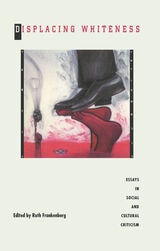
Displacing Whiteness
Essays in Social and Cultural CriticismRuth Frankenberg, ed.
Duke University Press, 1997
Approaching whiteness as a plural rather than singular concept, the essays describe, for instance, African American, Chicana/o, European American, and British experiences of whiteness. The contributors offer critical readings of theory, literature, film and popular culture; ethnographic analyses; explorations of identity formation; and examinations of racism and political process. Essays examine the alarming epidemic of angry white men on both sides of the Atlantic; far-right electoral politics in the UK; underclass white people in Detroit; whiteness in "brownface" in the film Gandhi; the engendering of whiteness in Chicana/o movement discourses; "whiteface" literature; Roland Barthes as a critic of white consciousness; whiteness in the black imagination; the inclusion and exclusion of suburban "brown-skinned white girls"; and the slippery relationships between culture, race, and nation in the history of whiteness. Displacing Whiteness breaks new ground by specifying how whiteness is lived, engaged, appropriated, and theorized in a range of geographical locations and historical moments, representing a necessary advance in analytical thinking surrounding the burgeoning study of race and culture.
Contributors. Rebecca Aanerud, Angie Chabram-Dernersesian, Phil Cohen, Ruth Frankenberg, John Hartigan Jr., bell hooks, T. Muraleedharan, Chéla Sandoval, France Winddance Twine, Vron Ware, David Wellman
Display, Distribute, Disrupt
Contemporary Moving Image PracticesEdited by Wolfgang Brückle and Fred Truniger
Diaphanes, 2023
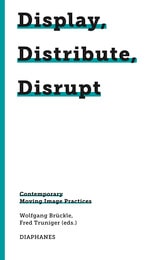
Over the last two decades, the field of audiovisual media has changed dramatically. Until recently, there was only a small number of technologies, distribution channels were few, and moving images were largely limited to cinemas, televisions, galleries, or art museums. Also, both the producers and the audiences of such content clearly identified as human beings. Those days are over.
The digitization of image production and distribution ushered in a massive disruption to the traditional landscape of the moving image that had existed since the advent of the audiovisual industry. Touching on discussions such as child producers, the marketing interests of big corporations, and the origins of new media formats and practices, Display, Distribute, Disrupt maps the new conditions for creative work in the ever-widening sphere of audiovisual media.
Displaying Death and Animating Life
Human-Animal Relations in Art, Science, and Everyday LifeJane C. Desmond
University of Chicago Press, 2016
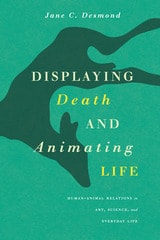
Desmond, a pioneer in the field of animal studies, builds the book on a number of case studies. She conducts research on-site at major museums, taxidermy conventions, pet cemeteries, and even at a professional conference for writers of obituaries. She goes behind the scenes at zoos, wildlife clinics, and meetings of pet cemetery professionals. We journey with her as she meets Kanzi, the bonobo artist, and a host of other animal-artists—all of whom are preparing their artwork for auction. Throughout, Desmond moves from a consideration of the visual display of unindividuated animals, to mourning for known animals, and finally to the marketing of artwork by individual animals. The first book in the new Animal Lives series, Displaying Death and Animating Life is a landmark study, bridging disciplines and reaching across divisions from the humanities and social sciences to chart new territories of investigation.

Disputing Discipline
Child Protection, Punishment, and Piety in Zanzibar SchoolsFranziska Fay
Rutgers University Press, 2021

Disrupted Childhoods
Children of Women in PrisonSiegel, Jane A
Rutgers University Press, 2011
Millions of children in the United States have a parent who is incarcerated and a growing number of these nurturers are mothers. Disrupted Childhoods explores the issues that arise from a mother's confinement and provides first-person accounts of the experiences of children with moms behind bars. Jane A. Siegel offers a perspective that recognizes differences over the long course of a family's interaction with the criminal justice system.
Presenting an unparalleled view into the children's lives both before and after their mothers are imprisoned, this book reveals the many challenges they face from the moment such a critical caregiver is arrested to the time she returns home from prison. Based on interviews with nearly seventy youngsters and their mothers conducted at different points of their parent's involvement in the process, the rich qualitative data of Disrupted Childhoods vividly reveals the lived experiences of prisoners' children, telling their stories in their own words. Siegel places the mother's incarceration in context with other aspects of the youths' experiences, including their family life and social worlds, and provides a unique opportunity to hear the voices of a group that has been largely silent until now.