Results by title
28164 books match the query 'History' and 908 start with d

Disease, War, and the Imperial State
The Welfare of the British Armed Forces during the Seven Years' WarErica Charters
University of Chicago Press, 2014
In Disease, War, and the Imperial State, Erica Charters demonstrates how disease played a vital role in shaping strategy and campaigning, British state policy, and imperial relations during the Seven Years’ War. Military medicine was a crucial component of the British war effort; it was central to both eighteenth-century scientific innovation and the moral authority of the British state. Looking beyond the traditional focus of the British state as a fiscal war-making machine, Charters uncovers an imperial state conspicuously attending to the welfare of its armed forces, investing in medical research, and responding to local public opinion. Charters shows military medicine to be a credible scientific endeavor that was similarly responsive to local conditions and demands.
Disease, War, and the Imperial State is an engaging study of early modern warfare and statecraft, one focused on the endless and laborious task of managing manpower in the face of virulent disease in the field, political opposition at home, and the clamor of public opinion in both Britain and its colonies.
Diseased States
Epidemic Control in Britain and the United StatesCharles Allan McCoy
University of Massachusetts Press, 2020
To understand why these two nations have handled contemporary disease threats in such different ways, Charles Allan McCoy examines when and how disease control measures were adopted in each country from the nineteenth century onward, which medical theory of disease was dominant at the time, and where disease control was located within the state apparatus. Particular starting conditions put Britain and the United States on distinct trajectories of institutionalization that led to their respective systems of disease control. As McCoy shows, even the seemingly objective matter of contagion is deeply enmeshed in social and political realities, and by developing unique systems of biopower to control the spread of disease, Britain and the United States have established different approaches of exerting political control over citizens' lives and bodies.
Disestablishment and Religious Dissent
Church-State Relations in the New American States, 1776-1833Edited by Carl H. Esbeck and Jonathan J. Den Hartog
University of Missouri Press, 2026
traditions of church-state relations rooted in the colony’s peoples, their country of origin, and religion.
This definitive volume, comprising twenty-one original essays by eminent historians and political scientists, is a comprehensive state-by-state account of disestablishment in the original thirteen states, as well as a look at similar events in the soon-to-be-admitted states of Vermont, Tennessee, and Kentucky. Also considered are disestablishment in Ohio (the first state admitted from the Northwest Territory), Louisiana and Missouri (the first states admitted from the Louisiana Purchase), and Florida (wrestled from Spain under U.S. pressure). The volume makes a unique scholarly contribution by recounting in detail the process of disestablishment in each of the colonies, as well as religion’s constitutional and legal place in the new states of the federal republic.

Disfiguring
Art, Architecture, ReligionMark C. Taylor
University of Chicago Press, 1992
Disforming The American Canon
African-Arabic Slave Narratives and the VernacularRonald A.T. Judy
University of Minnesota Press, 1993
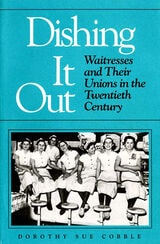
Dishing It Out
Waitresses and Their Unions in the Twentieth CenturyDorothy Sue Cobble
University of Illinois Press, 1991
Back when SOS or Adam and Eve on a raft were things to order if you were hungry but a little short on time and money, nearly one-fourth of all waitresses belonged to unions. By the time their movement peaked in the 1940s and 1950s, the women had developed a distinctive form of working-class feminism, simultaneously pushing for equal rights and pay and affirming their need for special protections.
Dorothy Sue Cobble shows how sexual and racial segregation persisted in wait work, but she rejects the idea that this was caused by employers' actions or the exclusionary policies of male trade unionists. Dishing It Out contends that the success of waitress unionism was due to several factors: waitresses, for the most part, had nontraditional family backgrounds, and most were primary wage-earners. Their close-knit occupational community and sex-separate union encouraged female assertiveness and a decidedly unromantic view of men and marriage. Cobble skillfully combines oral interviews and extensive archival records to show how waitresses adopted the basic tenets of male-dominated craft unions but rejected other aspects of male union culture. The result is a book that will expand our understanding of feminism and unionism by including the gender conscious perspectives of working women.
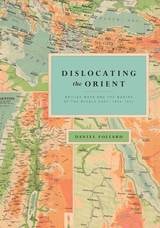
Dislocating the Orient
British Maps and the Making of the Middle East, 1854-1921Daniel Foliard
University of Chicago Press, 2017
Using a wide variety of primary texts and historical maps to show how the idea of the Middle East came into being, Dislocating the Orient will interest historians of the Middle East, the British empire, cultural geography, and cartography.
Dismembering the Male
Men's Bodies, Britain, and the Great WarJoanna Bourke
University of Chicago Press, 1996
Each chapter explores a different facet of the war and masculinity in depth. Joanna Bourke discovers that those who were dismembered and disabled by the war were not viewed as passive or weak, like their civilian counterparts, but were the focus of much government and public sentiment. Those suffering from disease were viewed differently, often finding themselves accused of malingering.
Joanna Bourke argues convincingly that military experiences led to a greater sharing of gender identities between men of different classes and ages. Dismembering the Male concludes that ultimately, attempts to reconstruct a new type of masculinity failed as the threat of another war, and with it the sacrifice of a new generation of men, intensified.
Dismembering the Whole
Composition and Purpose of Judges 19-21Cynthia Edenburg
SBL Press, 2016
A fresh literary analysis of political polemic in the Bible
The Book of Judges ends with a bizarre narrative of sex and violence that starts with a domestic tiff and ends with the decimation of a tribe that is restored by means of abduction and rape. Cynthia Edenburg applies a fresh literary analysis, recent understandings of historical linguistics, and historical geography in her exploration of the origin of the anti-Benjamin polemic found in Judges 19–21, the growth and provenance of the book of Judges, and the shape of the Deuteronomistic History. Her study exposes how Judges 19–21 function as political polemic reflecting not the pre-monarchic period but instead the historical realities of the settlement of Benjamin during the Babylonian and Persian period.
Features:
- Methodological discussions that open each chapter
- Charts and tables
- Engagement with current research produced by scholars from around the world
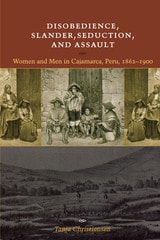
Disobedience, Slander, Seduction, and Assault
Women and Men in Cajamarca, Peru, 1862-1900By Tanja Christiansen
University of Texas Press, 2004
Though the law and courts of nineteenth-century Peru were institutions created by and for the ruling elite, women of all classes used the system to negotiate the complexities of property rights, childrearing, and marriage, and often to defend their very definitions of honor. Drawing on the trial transcripts of Cajamarca, a northern Peruvian province, from more than a century ago, this book shares eye-opening details about life among this community, in which reputation could determine a woman's chances of survival.
Exploring the processes of courtship, seduction, and familial duties revealed in these court records, historian Tanja Christiansen has unearthed a compelling panorama that includes marital strife, slander, disobedience, street brawls, and spousal abuse alongside documents that give evidence of affection and devotion. Her research also yields much new information about the protocols for conflict and cooperation among nineteenth-century Peruvian women from all social strata, and the prevalence of informal unions in an economy driven in large part by migratory male labor. Reviving a little-known aspect of Latin American history, Christiansen's book simultaneously brings to light an important microcosm of women's history during the nineteenth century.
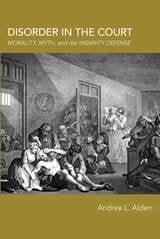
Disorder in the Court
Morality, Myth, and the Insanity DefenseAndrea L. Alden
University of Alabama Press, 2018
The first book-length rhetorical history and analysis of the legal and moral questions behind the insanity defense.
The insanity defense is considered one of the most controversial, most misunderstood, and least straightforward subjects in the American legal system. Disorder in the Court: Morality, Myth, and the Insanity Defense traces the US legal standards for the insanity defense as they have evolved from 1843, when they were first codified in England, to 1984, when the US government attempted to revise them through the Insanity Defense Reform Act. Throughout this period “insanity” existed primarily as a legal term rather than a medical one; yet the testimony of psychiatric experts is required in cases in which an insanity defense is raised.
The adjudication of such cases by courtroom practice is caught between two different but overlapping discourses, the legal and the medical, both of which have historically sought to assert and maintain firm disciplinary boundaries. Both expert and lay audiences have struggled to understand and apply commonplace definitions of sanity, and the portrayal of the insanity defense in popular culture has only served to further frustrate such understandings.
Andrea L. Alden argues that the problems with understanding the insanity defense are, at their foundation, rhetorical. The legal concept of what constitutes insanity and, therefore, an abdication of responsibility for one’s actions does not map neatly onto the mental health professions’ understandings of mental illness and how that affects an individual’s ability to understand or control his or her actions. Additionally, there are multiple layers of persuasion involved in any effort to convince a judge, jury—or a public, for that matter—that a defendant is or is not responsible for his or her actions at a particular moment in time.
Alden examines landmark court cases such as the trial of Daniel McNaughtan, Durham v. United States, and the trial of John Hinckley Jr. that signal the major shifts in the legal definitions of the insanity defense. Combining archival, textual, and rhetorical analysis, Alden offers a close reading of texts including trial transcripts, appellate court opinions, and relevant medical literature from the time period. She contextualizes these analyses through popular texts—for example, newspaper articles and editorials—showing that while all societies have maintained some version of mental illness as a mitigating factor in their penal systems, the insanity defense has always been fraught with controversy.
Disordering the Establishment
Participatory Art and Institutional Critique in France, 1958–1981Lily Woodruff
Duke University Press, 2020

Disorderly Families
Infamous Letters from the Bastille ArchivesArlette Farge
University of Minnesota Press, 2021
The first English translation of letters of arrest from eighteenth century France held in the archives of the Bastille
Drunken and debauched husbands; libertine wives; vagabonding children. These and many more are the subjects of requests for confinement written to the king of France in the eighteenth century. These letters of arrest (lettres de cachet) from France’s Ancien Régime were often associated with excessive royal power and seen as a way for the king to imprison political opponents. In Disorderly Families, first published in French in 1982, Arlette Farge and Michel Foucault collect ninety-four letters from ordinary families who, with the help of hired scribes, submitted complaints to the king to intervene and resolve their family disputes.
Gathered together, these letters show something other than the exercise of arbitrary royal power, and offer unusual insight into the infamies of daily life. From these letters come stories of divorce and marital conflict, sexual waywardness, reckless extravagance, and abandonment. The letters evoke a fluid social space in which life in the home and on the street was regulated by the rhythms of relations between husbands and wives, or parents and children. Most impressively, these letters outline how ordinary people seized the mechanisms of power to address the king and make demands in the name of an emerging civil order.
Arlette Farge and Michel Foucault were fascinated by the letters’ explosive qualities and by how they both illustrated and intervened in the workings of power and governmentality. Disorderly Families sheds light on Foucault’s conception of political agency and his commitment to theorizing how ordinary lives come to be touched by power. This first English translation is complete with an introduction from the book’s editor, Nancy Luxon, as well as notes that contextualize the original 1982 publication and eighteenth-century policing practices.
Disowned by Memory
Wordsworth's Poetry of the 1790sDavid Bromwich
University of Chicago Press, 1998
"This very Wordsworthian combination of apparently low subjects with extraordinary 'high argument' makes for very rewarding, though often challenging reading."—Kenneth R. Johnston, Washington Times
"Wordsworth emerges from this short and finely written book as even stranger than we had thought, and even more urgently our contemporary."—Grevel Lindop, Times Literary Supplement
"[Bromwich's] critical interpretations of the poetry itself offer readers unusual insights into Wordworth's life and work."—Library Journal
"An added benefit of this book is that it restores our faith that criticism can actually speak to our needs. Bromwich is a rigorous critic, but he is a general one whose insights are broadly applicable. It's an intellectual pleasure to rise to his complexities."—Vijay Seshadri, New York Times Book Review
Dispatches from Dystopia
Histories of Places Not Yet ForgottenKate Brown
University of Chicago Press, 2015
In Dispatches from Dystopia, Brown wanders the Chernobyl Zone of Alienation, first on the Internet and then in person, to figure out which version—the real or the virtual—is the actual forgery. She also takes us to the basement of a hotel in Seattle to examine the personal possessions left in storage by Japanese-Americans on their way to internment camps in 1942. In Uman, Ukraine, we hide with Brown in a tree in order to witness the annual male-only Rosh Hashanah celebration of Hasidic Jews. In the Russian southern Urals, she speaks with the citizens of the small city of Kyshtym, where invisible radioactive pollutants have mysteriously blighted lives. Finally, Brown returns home to Elgin, Illinois, in the midwestern industrial rust belt to investigate the rise of “rustalgia” and the ways her formative experiences have inspired her obsession with modernist wastelands.
Dispatches from Dystopia powerfully and movingly narrates the histories of locales that have been silenced, broken, or contaminated. In telling these previously unknown stories, Brown examines the making and unmaking of place, and the lives of the people who remain in the fragile landscapes that are left behind.
Dispatches from Pakistan
Madiha R. Tahir
University of Minnesota Press, 2014
Since 9/11, Pakistan has loomed large in the geopolitical imagination of the West. A key ally in the global war on terror, it is also the country in which Osama bin Laden was finally found and killed—and the one that has borne the brunt of much of the ongoing conflict’s collateral damage. Despite its prominence on the front lines and on the front pages, Pakistan has been depicted by Western observers simplistically in terms of its corruption, its fundamentalist Islamic beliefs, and its propensity for violence. Dispatches from Pakistan, in contrast, reveals the complexities, the challenges, and the joys of daily life in the country, from the poetry of Gilgit to the graffiti of Gwadar, from an army barrack in Punjab to the urban politics of Karachi.
This timely book brings together journalists, activists, academics, and artists to provide a rich, in-depth, and intriguing portrait of contemporary Pakistani society. Straddling a variety of boundaries—geographic, linguistic, and narrative—Dispatches from Pakistan is a vital attempt to speak for the multitude of Pakistanis who, in the face of seemingly unimaginable hardships, from drone strikes to crushing poverty, remain defiantly optimistic about their future. While engaging in conversations on issues that make the headlines in the West, the contributors also introduce less familiar dimensions of Pakistani life, highlighting the voices of urban poets, rural laborers, industrial workers, and religious-feminist activists—and recovering Pakistani society’s inquilabi (revolutionary) undercurrents and its hopeful overtones.
Contributors: Mahvish Ahmad; Nosheen Ali, U of California, Berkeley; Shafqat Hussain, Trinity College; Humeira Iqtidar, King’s College London; Amina Jamal, Ryerson U; Hafeez Jamali, U of Texas at Austin; Iqbak Khattak; Zahra Malkani; Raza Mir; Hammad Nasar; Junaid Rana, U of Illinois at Urbana–Champaign; Maliha Safri, Drew U; Aasim Sajjad Akhtar, Lahore U of Management Sciences; Ayesha Siddiqa; Sultan-i-Rome, Government Jahanzeb Postgraduate College, Swat, Pakistan; Saadia Toor, Staten Island College.
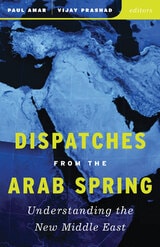
Dispatches from the Arab Spring
Understanding the New Middle EastPaul Amar
University of Minnesota Press, 2013
The Arab Spring unleashed forces of liberation and social justice that swept across North Africa and the Middle East with unprecedented speed, ferocity, and excitement. Although the future of the democratic uprisings against oppressive authoritarian regimes remains uncertain in many places, the revolutionary wave that started in Tunisia in December 2010 has transformed how the world sees Arab peoples and politics. Bringing together the knowledge of activists, scholars, journalists, and policy experts uniquely attuned to the pulse of the region, Dispatches from the Arab Spring offers an urgent and engaged analysis of a remarkable ongoing world-historical event that is widely misinterpreted in the West.
Tracing the flows of protest, resistance, and counterrevolution in every one of the countries affected by this epochal change—from Morocco to Iraq and Syria to Sudan—the contributors provide ground-level reports and new ways of teaching about and understanding the Middle East in general, and contextualizing the social upheavals and political transitions that defined the Arab Spring in particular. Rejecting outdated and invalid (yet highly influential) paradigms to analyze the region—from depictions of the “Arab street” as a mindless, reactive mob to the belief that Arab culture was “unfit” for democratic politics—this book offers fresh insights into the region’s dynamics, drawing from social history, political geography, cultural creativity, and global power politics. Dispatches from the Arab Spring is an unparalleled introduction to the changing Middle East and offers the most comprehensive and accurate account to date of the uprisings that profoundly reshaped North Africa and the Middle East.
Contributors: Sheila Carapico, U of Richmond; Nouri Gana, UCLA; Toufic Haddad; Adam Hanieh, SOAS/U of London; Toby C. Jones, Rutgers U; Anjali Kamat; Khalid Medani, McGill U; Merouan Mekouar; Maya Mikdashi, NYU; Paulo Gabriel Hilu Pinto, U Federal Fluminense, Brazil; Jillian Schwedler, Hunter College, CUNY; Ahmad Shokr; Susan Slyomovics, UCLA; Haifa Zangana.

Dispatches from the Fort Apache Scout
White Mountain and Cibecue Apache History Through 1881Lori Davisson with Edgar Perry and the Original Staff of the White Mountain Apache Cultural Center; Edited by John R. Welch
University of Arizona Press, 2016
The book showcases and annotates dispatches published between June 1973 and October 1977, in the tribe’s Fort Apache Scout newspaper. This twenty-eight-part series of articles shared Western Apache culture and history through 1881 and the Battle of Cibecue, emphasizing early encounters with Spanish, Mexican, and American outsiders. Along the way, rich descriptions of Ndee ties to the land, subsistance, leadership, and values emerge. The articles were the result of the dogged work of journalist, librarian, and historian Lori Davisson along with Edgar Perry, a charismatic leader of White Mountain Apache culture and history programs, and his staff who prepared these summaries of historical information for the local readership of the Scout.
Davisson helped to pioneer a mutually beneficial partnership with the White Mountain Apache Tribe. Pursuing the same goal, Welch’s edited book of the dispatches stakes out common ground for understanding the earliest relations between the groups contesting Southwest lands, powerfully illustrating how, as elder Cline Griggs, Sr., writes in the prologue, “the past is present.”
Dispatches from the Fort Apache Scout is both a tribute to and continuation of Davisson’s and her colleagues’ work to share the broad outlines and unique details of the early history of Ndee and Ndee lands.

Dispatches from the Revolution
Russia 1916-1918Morgan Philips Price
Duke University Press, 1998
This collection includes Price’s pre-censored observations and comment, written for a range of British publications, as well as letters, postcards, and other writings. A foreword by Eric Hobsbawm and introductory material by Rose place Price’s observations in biographical and historical context. Dispatches from the Revolution offers an account of the Russian Revolution from an eyewitness whose political commitment, fluency in Russian, and extensive travel far beyond the cities permitted him to write, uniquely, not only of metropolitan news and politics, but also of the experiences and issues signficant to ordinary peasants, workers, and soldiers in remote areas of the Russian empire.
An important source to scholars of Russian history, this book will also appeal to general readers with interests in Russia, journalism, and world affairs.
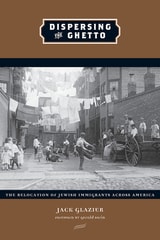
Dispersing the Ghetto
The Relocation of Jewish Immigrants Across AmericaJack Glazier
Michigan State University Press, 2005
In the early 20th century, the population of New York City’s Lower East Side swelled with vast numbers of eastern European Jewish immigrants. The tenements, whose inhabitants faced poverty and frequent unemployment, provoked the hostile attention of immigration restrictionists, many of whom disdained Jews, racial minorities, and foreigners as inferior. Accordingly, they aimed to stifle the growth of dense ethnic settlements by curtailing immigration.
Dispersing the Ghetto is the first book to describe in detail an important but little-known chapter in American immigration history, that of the Industrial Removal Office (IRO), founded in 1901. Established American Jews—arrivals from the German states only a generation before—felt vulnerable. They feared their security was at risk owing to the rising tide of Russian Jews on the east coast. German American Jews believed they too might become the objects of anti-Semitic scorn, which would be disastrous for German and Russian Jews alike if it were allowed to shape public policy. As a defensive measure to undercut the immigration restrictionist movement, American Jews of German origin established the Industrial Removal Office to promote the relocation of the immigrants to the towns and cities of the nation’s interior. Until the onset of World War I, the IRO directed the resettlement of Jewish immigrants from New York and other port cities to hundreds of communities nationwide.
Drawing on a variety of sources, including the IRO archive, first-person accounts of resettlement, local records, and the Jewish press, Glazier recounts the operation of the IRO and the complex relationship between two sets of Jewish immigrants.
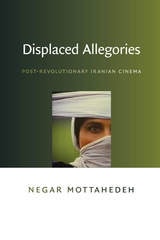
Displaced Allegories
Post-Revolutionary Iranian CinemaNegar Mottahedeh
Duke University Press, 2008
Mottahedeh asserts that, in response to the prohibitions against the desiring look, a new narrative cinema emerged as the displaced allegory of the constraints on the post-Revolutionary Iranian film industry. Allegorical commentary was not developed in the explicit content of cinematic narratives but through formal innovations. Offering close readings of the work of the nationally popular and internationally renowned Iranian auteurs Bahram Bayza’i, Abbas Kiarostami, and Mohsen Makhmalbaf, Mottahedeh illuminates the formal codes and conventions of post-Revolutionary Iranian films. She insists that such analyses of cinema’s visual codes and conventions are crucial to the study of international film. As Mottahedeh points out, the discipline of film studies has traditionally seen film as a medium that communicates globally because of its dependence on a (Hollywood) visual language assumed to be universal and legible across national boundaries. Displaced Allegories demonstrates that visual language is not necessarily universal; it is sometimes deeply informed by national culture and politics.
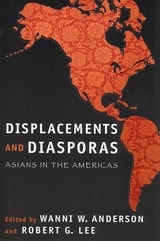
Displacements and Diasporas
Asians in the AmericasAnderson, Wanni W.
Rutgers University Press, 2005
With an emphasis on anthropological and historical contexts, the essays show how the experiences of Asians across the Americas have been shaped by the social dynamics and politics of settlement locations as much as by transnational connections and the economic forces of globalization. Contributors bring new insights to the unique situations of Asian communities previously overlooked by scholars, such as Vietnamese Canadians and the Lao living in Rhode Island. Other topics include Chinese laborers and merchants in Latin America and the Caribbean, Japanese immigrants and their descendants in Brazil, Afro-Amerasians in America, and the politics of second-generation Indian American youth culture.
Together the essays provide a valuable comparative portrait of Asians across the Americas. Engaging issues of diaspora, transnational social practice and community building, gender, identity, institutionalized racism, and deterritoriality, this volume presents fresh perspectives on displacement, opening the topic up to a wider, more interdisciplinary terrain of inquiry and teaching.
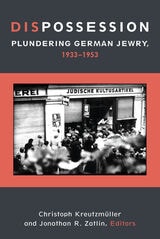
Dispossession
Plundering German Jewry, 1933-1953Christoph Kreutzmüller and Jonathan R. Zatlin, Editors
University of Michigan Press, 2020
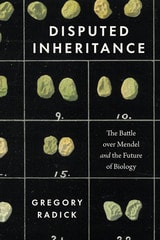
Disputed Inheritance
The Battle over Mendel and the Future of BiologyGregory Radick
University of Chicago Press, 2023
In 1900, almost no one had heard of Gregor Mendel. Ten years later, he was famous as the father of a new science of heredity—genetics. Even today, Mendelian ideas serve as a standard point of entry for learning about genes. The message students receive is plain: the twenty-first century owes an enlightened understanding of how biological inheritance really works to the persistence of an intellectual inheritance that traces back to Mendel’s garden.
Disputed Inheritance turns that message on its head. As Gregory Radick shows, Mendelian ideas became foundational not because they match reality—little in nature behaves like Mendel’s peas—but because, in England in the early years of the twentieth century, a ferocious debate ended as it did. On one side was the Cambridge biologist William Bateson, who, in Mendel’s name, wanted biology and society reorganized around the recognition that heredity is destiny. On the other side was the Oxford biologist W. F. R. Weldon, who, admiring Mendel's discoveries in a limited way, thought Bateson's "Mendelism" represented a backward step, since it pushed growing knowledge of the modifying role of environments, internal and external, to the margins. Weldon's untimely death in 1906, before he could finish a book setting out his alternative vision, is, Radick suggests, what sealed the Mendelian victory.
Bringing together extensive archival research with searching analyses of the nature of science and history, Disputed Inheritance challenges the way we think about genetics and its possibilities, past, present, and future.
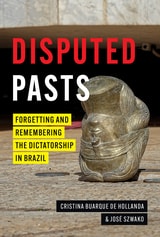
Disputed Pasts
Forgetting and Remembering the Dictatorship in BrazilCristina Buarque de Hollanda and José Szwako
University of Texas Press, 2026
How the memory of military dictatorship shapes Brazil's political divides and the far-right's rise.
Brazil’s military dictatorship ended in 1985, but its history still looms large over the country. Since the restoration of democracy, national politics have been shaped by heated contestation over the dictatorship’s legacy. Cristina Buarque de Hollanda and José Szwako examine how the state, the military, and civil society have variously mourned, celebrated, and suppressed memories of Brazil’s violent past—and to what ends.
As the dictatorship faltered under pressure from the opposition in the streets and in Congress, popular opinion favored democracy, which often meant forgetting. Today, the Brazilian left contends that the past has been silenced, paving the way for Jair Bolsonaro and the far right. Yet the past has been intensely contested: media outlets, social movements, and official commissions have long documented the dictatorship and spurred reparations. Disputed Pasts argues that the conservative ascendency is a reaction to these efforts of remembrance. The right seeks to rehabilitate the violent past by discrediting victims and elevating the dictatorship’s anti-communist ideology. Far from forgetting the past, Bolsonaro and Bolsonarismo actively remember and celebrate it.
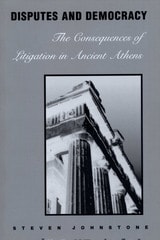
Disputes and Democracy
The Consequences of Litigation in Ancient AthensBy Steven Johnstone
University of Texas Press, 1999
Athenians performed democracy daily in their law courts. Without lawyers or judges, private citizens, acting as accusers and defendants, argued their own cases directly to juries composed typically of 201 to 501 jurors, who voted on a verdict without deliberation. This legal system strengthened and perpetuated democracy as Athenians understood it, for it emphasized the ideological equality of all (male) citizens and the hierarchy that placed them above women, children, and slaves.
This study uses Athenian court speeches to trace the consequences for both disputants and society of individuals' decisions to turn their quarrels into legal cases. Steven Johnstone describes the rhetorical strategies that prosecutors and defendants used to persuade juries and shows how these strategies reveal both the problems and the possibilities of language in the Athenian courts. He argues that Athenian "law" had no objective existence outside the courts and was, therefore, itself inherently rhetorical. This daring new interpretation advances an understanding of Athenian democracy that is not narrowly political, but rather links power to the practices of a particular institution.
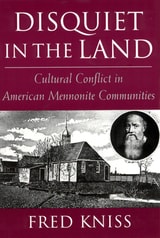
Disquiet in the Land
Cultural Conflict in American Mennonite CommunitiesKniss, Fred
Rutgers University Press, 1997
Mennonites have long referred to themselves as "The Quiet in the Land," but their actual historical experience has been marked by internal disquiet and contention over religious values and cultural practice. As Fred Kniss argues in his impressive study of Mennonite history, the story of this sectarian pacifist group is a story of conflict. How can we understand the ironic phenomenon of Mennonite conflict? How do ideas and symbols-both those of the American mainstream and those that are specifically Mennonite-influence the emergence and course of this conflict? What is the relationship betweenintra-Mennonite conflict and the changing historical context in which Mennonites are situated?
Through a rigorous analysis of a century of disputes over dress codes, congregational authority, and religious practice, Kniss offers the tools both to understand conflict within a specific religious group and to answer larger questions about culture, ideology, and social and historical change.
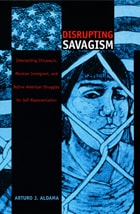
Disrupting Savagism
Intersecting Chicana/o, Mexican Immigrant, and Native American Struggles for Self-RepresentationArturo J. Aldama
Duke University Press, 2001
Arturo J. Aldama begins by presenting a genealogy of the term “savage,” looking in particular at the work of American ethnologist Lewis Henry Morgan and a sixteenth-century debate between Juan Ginés de Sepúlveda and Bartolomé de las Casas. Aldama then turns to more contemporary narratives, examining ethnography, fiction, autobiography, and film to illuminate the historical ideologies and ethnic perspectives that contributed to identity formation over the centuries. These works include anthropologist Manuel Gamio’s The Mexican Immigrant: His Life Story, Leslie Marmon Silko’s Ceremony, Gloria Anzaldúa’s Borderlands/La Frontera, and Miguel Arteta’s film Star Maps. By using these varied genres to investigate the complex politics of racialized, subaltern, feminist, and diasporic identities, Aldama reveals the unique epistemic logic of hybrid and mestiza/o cultural productions.
The transcultural perspective of Disrupting Savagism will interest scholars of feminist postcolonial processes in the United States, as well as students of Latin American, Native American, and literary studies.

Disruption in Detroit
Autoworkers and the Elusive Postwar BoomDaniel J. Clark
University of Illinois Press, 2018
Disruptions as Opportunities
Governing Chinese Society with Interactive AuthoritarianismTaiyi Sun
University of Michigan Press, 2023
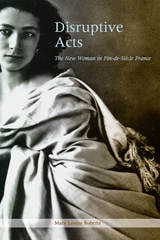
Disruptive Acts
The New Woman in Fin-de-Siecle FranceMary Louise Roberts
University of Chicago Press, 2002
Mary Louise Roberts examines a constellation of famous new women active in journalism and the theater, including Marguerite Durand, founder of the women's newspaper La Fronde; the journalists Séverine and Gyp; and the actress Sarah Bernhardt. Roberts demonstrates how the tolerance for playacting in both these arenas allowed new women to stage acts that profoundly disrupted accepted gender roles. The existence of La Fronde itself was such an act, because it demonstrated that women could write just as well about the same subjects as men—even about the volatile Dreyfus Affair. When female reporters for La Fronde put on disguises to get a scoop or wrote under a pseudonym, and when actresses played men on stage, they demonstrated that gender identities were not fixed or natural, but inherently unstable. Thanks to the adventures of new women like these, conventional domestic femininity was exposed as a choice, not a destiny.
Lively, sophisticated, and persuasive, Disruptive Acts will be a major work not just for historians, but also for scholars of cultural studies, gender studies, and the theater.
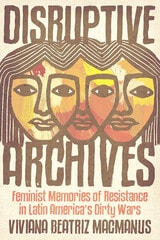
Disruptive Archives
Feminist Memories of Resistance in Latin America's Dirty WarsViviana Beatriz MacManus
University of Illinois Press, 2020
Haunting and methodologically innovative, Disruptive Archives attests to the power of women's storytelling and memory in the struggle to reclaim history.
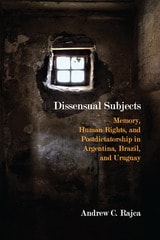
Dissensual Subjects
Memory, Human Rights, and Postdictatorship in Argentina, Brazil, and UruguayAndrew C. Rajca
Northwestern University Press, 2018
Through an engaging exploration of the concept of “never again” (nunca más/nunca mais) and close analysis of photography exhibits, audiovisual installations, and other art forms in spaces of cultural memory, the book explores how aesthetic interventions can suggest alternative ways of framing human rights subjectivity beyond the rhetoric of liberal humanitarianism. The book visits sites of memory, two of which functioned as detention and torture centers during dictatorships, to highlight the tensions between the testimonial tenor of permanent exhibits and the aesthetic interventions of temporary installations there. Rajca thus introduces perspectives that both undo common understandings of authoritarian violence and its effects as well as reconfigure who or what are made visible as subjects of memory and human rights in postdictatorship countries.
Dissensual Subjects offers much to those concerned with numerous interlocking fields: memory, human rights, political subjectivity, aesthetics, cultural studies, visual culture, Southern Cone studies, postdictatorship studies, and sites of memory.
Dissent from the Homeland
Essays After September 11, Volume 101Stanley Hauerwas and Frank Lentricchia, eds.
Duke University Press, 0
Addressing such questions as why the Middle East harbors a deep-seated hatred for the U.S., the contributors refuse to settle for the easy answers preferred by the mass media. "Thoughts in the Presence of Fear" urges Americans away from the pitfall of national self-righteousness toward an active peaceableness—an alert, informed, practiced state of being—deeply contrary to both passivity and war. Another essay argues that the U.S. drive to win the Cold War made the nation more like its enemies, leading the government to support ruthless anti-Communist tyrants such as Mobutu, Suharto, and Pinochet. "Groundzeroland" offers a sharp commentary on the power of American consumer culture to absorb the devastation and loss of life by transforming the attack sites into patriotic tourist attractions. James Nachtwey’s photo essay provides a visual document of the devastation of the attacks.
Contributors. Michael Baxter, Jean Baudrillard, Robert Bellah, Daniel Berrigan, Wendell Berry, Vincent Cornell, Stanley Hauerwas, Fredric Jameson, Frank Lentricchia, Catherine Lutz, Jody McAuliffe, John Milbank, James Nachtwey, Peter Ochs, Anne Rosalind Slifkin, Rowan Williams, Susan Willis, Slavoj Zizek
For more information about SAQ, please visit http://www.dukeupress.edu/saq/
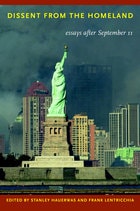
Dissent from the Homeland
Essays after September 11Stanley Hauerwas and Frank Lentricchia, eds.
Duke University Press, 2003
Whether illuminating the narratives that have been used to legitimate the war on terror, reflecting on the power of American consumer culture to transform the attack sites into patriotic tourist attractions, or insisting that to be a Christian is to be a pacifist, these essays refuse easy answers. They consider why the Middle East harbors a deep-seated hatred for the United States. They argue that the U.S. drive to win the cold war made the nation more like its enemies, leading the government to support ruthless anti-Communist tyrants such as Mobutu, Suharto, and Pinochet. They urge Americans away from the pitfall of national self-righteousness toward an active peaceableness—an alert, informed, practiced state of being—deeply contrary to both passivity and war. Above all, the essays assembled in Dissent from the Homeland are a powerful entreaty for thought, analysis, and understanding. Originally published as a special issue of the journal South Atlantic Quarterly, Dissent from the Homeland has been expanded to include new essays as well as a new introduction and postscript.
Contributors. Srinivas Aravamudan, Michael J. Baxter, Jean Baudrillard, Robert N. Bellah, Daniel Berrigan, Wendell Berry, Vincent J. Cornell, David James Duncan, Stanley Hauerwas, Fredric Jameson, Frank Lentricchia, Catherine Lutz, Jody McAuliffe, John Milbank, Peter Ochs, Donald E. Pease, Anne R. Slifkin, Rowan Williams, Susan Willis, Slavoj Zizek
Dissent in American Religion
Revised EditionEdwin Scott Gaustad
University of Chicago Press, 2006
This new edition, which reinaugurates the Chicago History of American Religion series under the new editorship of John Corrigan, features new commentary by Gaustad and Corrigan on the past thirty years of American religious history and the importance of understanding dissent in American religion today.
“This is an important and erudite work which shows the originality and scope which scholarship can bring to human experience.” —Los Angeles Times
“We shall understand the religious past and present better for reading Gaustad’s brief, well-written, helpful book.” —Commonweal
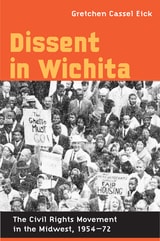
Dissent in Wichita
The Civil Rights Movement in the Midwest, 1954-72Gretchen Cassel Eick
University of Illinois Press, 2001
Winner of the Richard L. Wentworth Prize in American History, Byron Caldwell Smith Book Prize, and the William Rockhill Nelson Award
On a hot summer evening in 1958, a group of African American students in Wichita, Kansas, quietly entered Dockum's Drug Store and sat down at the whites-only lunch counter. This was the beginning of the first sustained, successful student sit-in of the modern civil rights movement, instigated in violation of the national NAACP's instructions.
Dissent in Wichita traces the contours of race relations and black activism in this unexpected locus of the civil rights movement. Based on interviews with more than eighty participants in and observers of Wichita's civil rights struggles, this powerful study hones in on the work of black and white local activists, setting their efforts in the context of anticommunism, FBI operations against black nationalists, and the civil rights policies of administrations from Eisenhower through Nixon.
Through her close study of events in Wichita, Eick reveals the civil rights movement as a national, not a southern, phenomenon. She focuses particularly on Chester I. Lewis, Jr., a key figure in the local as well as the national NAACP. Lewis initiated one of the earliest investigations of de facto school desegregation by the Department of Health, Education, and Welfare and successfully challenged employment discrimination in the nation's largest aircraft industries.
Dissent in Wichita offers a moving account of the efforts of Lewis, Vivian Parks, Anna Jane Michener, and other courageous individuals to fight segregation and discrimination in employment, public accommodations, housing, and schools. This volume also offers the first extended examination of the Young Turks, a radical movement to democratize and broaden the agenda of the NAACP for which Lewis provided critical leadership.
Through a close study of personalities and local politics in Wichita over two decades, Eick demonstrates how the tenor of black activism and white response changed as economic disparities increased and divisions within the black community intensified. Her analysis, enriched by the words and experiences of men and women who were there, offers new insights into the civil rights movement as a whole and into the complex interplay between local and national events.
Dissident Practices
Brazilian Women Artists, 1960s–2020sClaudia Calirman
Duke University Press, 2023
Dissident Syria
Making Oppositional Arts Officialmiriam cooke
Duke University Press, 2007
A renowned scholar of Arab cultures, cooke spent six months in Syria during the mid-1990s familiarizing herself with the country’s literary scene, particularly its women writers. While she was in Damascus, dissidents told her that to really understand life under Hafiz Asad, she had to speak with playwrights, filmmakers, and, above all, the authors of “prison literature.” She shares what she learned in Dissident Syria. She describes touring a sculptor’s studio, looking at the artist’s subversive work as well as at pieces commissioned by the government. She relates a playwright’s view that theater is unique in its ability to stage protest through innuendo and gesture. Turning to film, she shares filmmakers’ experiences of making movies that are praised abroad but rarely if ever screened at home. Filled with the voices of writers and artists, Dissident Syria reveals a community of conscience within Syria to those beyond its borders.
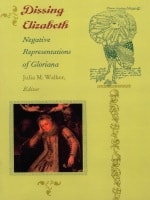
Dissing Elizabeth
Negative Representations of GlorianaJulia M. Walker, ed.
Duke University Press, 1998
As editor Julia M. Walker suggests, the breadth of dissent considered in this collection points to a dark side of the Cult of Elizabeth. Reevaluating neglected texts that had not previously been perceived as critical of the queen or worthy of critical appraisal, contributors consider dissent in a variety of forms, including artwork representing (and mocking) the queen, erotic and pornographic metaphors for Elizabeth in the popular press, sermons subtly critiquing her actions, and even the hostility encoded in her epitaph and in the placement of her tomb. Other chapters discuss gossip about Elizabeth, effigies of the queen, polemics against her marriage to the Duke of Alençon, common verbal slander, violence against emblems of her authority, and the criticism embedded in the riddles, satires, and literature of the period.
Dissonant Heritage in Tourism
Confronting Difficult Pasts in Italy and BeyondMaria Paola Pasini
Central European University Press, 2026
Dissonant Voices
Race, Jazz, and Innovative Poetics in Midcentury AmericaJoseph Pizza
University of Iowa Press, 2023
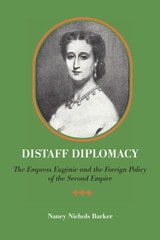
Distaff Diplomacy
The Empress Eugénie and the Foreign Policy of the Second EmpireBy Nancy Nichols Barker
University of Texas Press, 1967
The Empress Eugénie, wife of Napoleon III and one of the most beautiful women ever to grace a throne, was the victim of her own inconstant mind. A daughter of an aristocratic Spanish family, she had a natural reverence for legitimate monarchy; yet her high-spirited temperament and chivalric outlook made her admire instinctively the boldness and aura of glory that she associated with the Napoleonic empire. The incongruous principles of Legitimism and Bonapartism battling within the Empress produced in her a double-mindedness that had tragic consequences.
The Empress has always been a controversial figure. Her enemies have blamed her the fall of the Second Empire and the defeat of France; her admirers have disclaimed for her any part in the mistakes that led to the disastrous Franco-Prussian War of 1870. To determine the actual role that Eugénie played, Barker, using material from public and private European archives and a wide range of published works, examines in Distaff Diplomacy the development of the Empress' views on foreign affairs and ascertains their effect on the formation of the policies of the Second Empire.
Eugénie's influence fluctuated widely over the years. As a bride she was neither interested in nor knowledgable about foreign matters; as a middle-aged woman, in the late years of the Empire, she was discredited by her past errors, but she continued to pull strings outside of normal diplomatic channels. Her most sustained and effective work, from 1861 to 1863, was largely the inspiration for a grand design to remake the map to assure French hegemony in Europe and to establish an empire in Mexico. The success of this design rested on an Austro-French alliance; but the design itself, reflecting the Empress' incoherent thinking, contained the fatal inconsistencies that made Austrian rejection of it inevitable. Since the Mexican expedition and the diplomatic muddle of 1863 were the watershed from which the subsequent troubles of the Empire flowed, the Empress must be held responsible for seriously undermining the foreign policy of the Empire. Despite Eugénie's many fine qualities—her generosity of spirit, her splendid courage, and her moral integrity—her diplomatic efforts, affected as they were by her background, temperament, state of health, and changing moods, did not amount to statesmanship. This first systematic examination of the Empress' influence on foreign policy delves deeply and carefully into the subject.
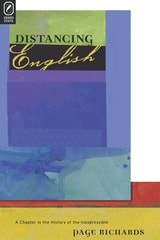
Distancing English
A Chapter in the History of the InexpressiblePage Richards
The Ohio State University Press, 2009
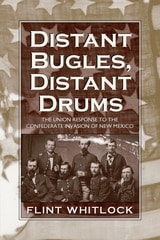
Distant Bugles, Distant Drums
The Union Response to the Confederate Invasion of New MexicoFlint Whitlock
University Press of Colorado, 2006
Drawing on previously overlooked diaries, letters, and contemporary newspaper accounts, military historian Flint Whitlock brings the Civil War in the West to life. Distant Bugles, Distant Drums details the battles of 1,000 Coloradans against 3,000 Confederate soldiers in New Mexico and offers vivid portraits of the leaders and soldiers involved - men whose strengths and flaws would shape the fate of the nation.
On their way to Colorado in search of gold and silver for the Confederacy's dwindling coffers, Texan Confederates won a series of engagements along the Rio Grande. Hastily assembled troops that had marched to meet them from Colorado finally turned them back in an epic conflict at Gloriéta Pass.
Miners, farmers, and peacetime officers turned themselves overnight into soldiers to keep the Confederacy from capturing the West's mines, shaping the outcome of the Civil War. Distant Bugles, Distant Drums tells their story. Southwest Book Award Winner from the Border Regional Library Association

Distant Corners
American Soccer's History of Missed Opportunities and Lost CausesDavid Wangerin
Temple University Press, 2014
In Distant Corners, his follow-up to Soccer in a Football World, David Wangerin details several of the people, places, and events that shaped American soccer history. Despite its struggle for popular acceptance, soccer in the United States has a rich history. Wangerin profiles Tom Cahill, the almost-forgotten "father of American soccer," and writes passionately about the 1979 North American Soccer League season, the high-water mark of the game in the twentieth century.
Wangerin shows how the American appetite for soccer has ebbed and grown over the years, chronicling the game at the college and professional levels and describing the city of St. Louis's unique historic attachment to the sport. Wangerin believes that the time is ripe for American fans to look into their own history and recognize the surprisingly deep connection their country has to soccer.
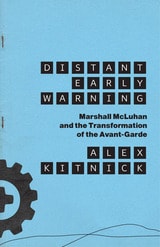
Distant Early Warning
Marshall McLuhan and the Transformation of the Avant-GardeAlex Kitnick
University of Chicago Press, 2021
Kitnick builds the story of McLuhan’s entanglement with artists by carefully drawing out the connections among McLuhan, his theories, and the artists themselves. The story is packed with big names: Marcel Duchamp, Niki de Saint Phalle, Jasper Johns, Andy Warhol, Nam June Paik, and others. Kitnick masterfully weaves this history with McLuhan’s own words and his provocative ideas about what art is and what artists should do, revealing McLuhan’s influence on the avant-garde through the confluence of art and theory. The illuminating result sheds light on new aspects of McLuhan, showing him not just as a theorist, or an influencer, but as a richly multifaceted figure who, among his many other accolades, affected multiple generations of artists and their works. The book finishes with Kitnick overlaying McLuhan’s ethos onto the state of contemporary and post-internet art. This final channeling of McLuhan is a swift and beautiful analysis, with a personal touch, of art’s recent transgressions and what its future may hold.

Distant Islands
The Japanese American Community in New York City, 1876-1930sDaniel H. Inouye
University Press of Colorado, 2018
The New York Japanese American community was a composite of several micro communities divided along status, class, geographic, and religious lines. Using a wealth of primary sources—oral histories, memoirs, newspapers, government documents, photographs, and more—Daniel H. Inouye tells the stories of the business and professional elites, mid-sized merchants, small business owners, working-class families, menial laborers, and students that made up these communities. The book presents new knowledge about the history of Japanese immigrants in the United States and makes a novel and persuasive argument about the primacy of class and status stratification and relatively weak ethnic cohesion and solidarity in New York City, compared to the pervading understanding of nikkei on the West Coast. While a few prior studies have identified social stratification in other nikkei communities, this book presents the first full exploration of the subject and additionally draws parallels to divisions in German American communities.
Distant Islands is a unique and nuanced historical account of an American ethnic community that reveals the common humanity of pioneering Japanese New Yorkers despite diverse socioeconomic backgrounds and life stories. It will be of interest to general readers, students, and scholars interested in Asian American studies, immigration and ethnic studies, sociology, and history.
Winner- Honorable Mention, 2018 Immigration and Ethnic History Society First Book Award
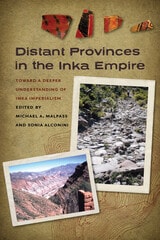
Distant Provinces in the Inka Empire
Toward a Deeper Understanding of Inka ImperialismMichael A. Malpass
University of Iowa Press, 2010
Who was in charge of the widespread provinces of the great Inka Empire of the fifteenth and sixteenth centuries: Inka from the imperial heartland or local leaders who took on the trappings of their conquerors, either by coercion or acceptance? By focusing on provinces far from the capital of Cuzco, the essays in this multidisciplinary volume provide up-to-date information on the strategies of domination asserted by the Inka across the provinces far from their capital and the equally broad range of responses adopted by their conquered peoples.
Contributors to this cutting-edge volume incorporate the interaction of archaeological and ethnohistorical research with archaeobotany, biometrics, architecture, and mining engineering, among other fields. The geographical scope of the chapters—which cover the Inka provinces in Bolivia, in southeast Argentina, in southern Chile, along the central and north coast of Peru, and in Ecuador—build upon the many different ways in which conqueror and conquered interacted. Competing factors such as the kinds of resources available in the provinces, the degree of cooperation or resistance manifested by local leaders, the existing levels of political organization convenient to the imperial administration, and how recently a region had been conquered provide a wealth of information on regions previously understudied. Using detailed contextual analyses of Inka and elite residences and settlements in the distant provinces, the essayists evaluate the impact of the empire on the leadership strategies of conquered populations, whether they were Inka by privilege, local leaders acculturated to Inka norms, or foreign mid-level administrators from trusted ethnicities.
By exploring the critical interface between local elites and their Inka overlords, Distant Provinces in the Inka Empire builds upon Malpass’s 1993 Provincial Inca: Archaeological and Ethnohistorical Assessment of the Impact of the Inca State to support the conclusions that Inka strategies of control were tailored to the particular situations faced in different regions. By contributing to our understanding of what it means to be marginal in the Inka Empire, this book details how the Inka attended to their political and economic goals in their interactions with their conquered peoples and how their subjects responded, producing a richly textured view of the reality that was the Inka Empire.
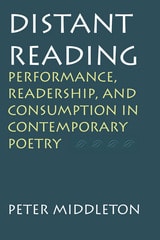
Distant Reading
Performance, Readership, and Consumption in Contemporary PoetryPeter Middleton
University of Alabama Press, 2005
A dynamic account of the history, practice, and theory of poetry as performance.
Distant Reading considers poetry as performance, offers new insights into its popularity, and proposes a new history of its origins. It also explores related issues concerning the reception of poetry, the impact of the computer on how we read poetry, the persistence of the letter "I" in poems by avant-garde poets, the strangeness of the line-break as a demand on the reader's attention, and the idea of the reader as consumer. These themes are connected by a historically contextualized and theoretically sophisticated discussion of contemporary American and British poets continuing to work in the modernist tradition.
The introductory essay establishes a new methodology that transforms close reading into what Middleton calls "distant reading," interpretive reading that acknowledges the distances that texts travel from their point of composition to readers in other geographical and historical locations. It indicates that poetic innovation is often driven by a desire on the part of the poet to make this distance do cultural work in the meanings that the poem generates.
Ultimately, Distant Reading treats poetry as a cultural practice that is always situated within specific sites of performance—recited on stage, displayed in magazines, laid out on a page, scrolled on the computer screen—rather than as a transcendent cloud of meaning tethered only to its words.