Results by title
5550 books match the query 'Biography & Autobiography' and 216 start with d
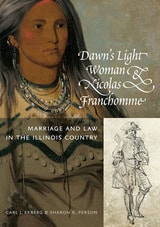
Dawn's Light Woman & Nicolas Franchomme
Marriage and Law in the Illinois CountryCarl J. Ekberg and Sharon K. Person
Southern Illinois University Press, 2022
Native women’s marital rights and roles in colonial Illinois society
Kaskaskia, Illinois, once the state’s capital, torn from the state by flood waters, and now largely forgotten, was once the home to a couple who helped transform the region in the 1720s from a frontier village to a civil society. In the heart of France’s North American empire, the village was a community of French-Canadian fur traders and Kaskaskia Indians who not only lived together but often intermarried. These Indigenous and French intermarriages were central to colonial Illinois society, and the coupling of Marguerite 8assecam8c8e (Dawn’s Light Woman) and Nicolas Franchomme, in particular, was critical to expanding the jurisdiction of French law.
While the story of Marguerite and Nicolas is unknown today, it is the story of how French customary law (Coutume de Paris) governed colonial marriage, how mixed Indian-French marriages stood at the very core of early colonial Illinois society, and how Illinois Indian women benefited, socially and legally, from being married to French men. All of this came about due to a lawsuit in which Nicolas successfully argued that his wife had legal claim to her first husband’s estate—a legal decision that created a precedent for society in the Illinois Country.
Within this narrative of a married couple and their legal fight—based on original French manuscripts and supported by the comprehensively annotated 1726 Illinois census—is also the story of the village of Kaskaskia during the 1720s, of the war between Fox Indians and French settlers, with their Indian allies, in Illinois, and of how the spread of plow agriculture dramatically transformed the Illinois Country’s economy from largely fur trade–based to expansively agricultural.

Day by Day
The Chronicles of a Hard of Hearing ReporterElizabeth Thompson
Gallaudet University Press, 2008
The Seventh Volume in the Deaf Lives Series
Elizabeth Thompson’s hearing loss was detected when she was in elementary school, and her hearing continued to deteriorate until she became completely deaf. Like many other hard of hearing and late-deafened individuals, her hearing loss complicated the general challenges of life. She struggled through school, worked as a secretary, married, had a daughter, and then found herself living as a single mother. She remarried, and soon after learned that she had contracted Multiple Sclerosis (MS). Despite these hurdles, Thompson always expressed her determination to enjoy the best life had to offer. Her astonishing exuberance might have gone unnoticed if she hadn’t accepted a new position as a reporter/columnist in 1998 for the Suburban News Publications (SNP). Day by Day: The Chronicles of a Hard of Hearing Reporter presents a marvelous blend of her experiences and best SNP columns that illustrate how she crafted her remarkable outlook.
In her columns, Thompson presented how she handled her hearing loss as a personal guide for readers. She used every stratagem available to function full-throttle – hearing aids, FM systems, lights for alarms, TTYs, even training her dog Snert. She also gently counseled readers on how to treat deaf and hard of hearing people with practical consideration and respect. Her pursuit of a fully realized life enabled her to do what she loved most, to meet and write about inspiring persons, many of whom are profiled in her memoir. Thompson eventually underwent cochlear implantation that restored 95% of her hearing, an exalting moment for her. Yet, Day by Day celebrates the entire arc of her life, a wonderful testament to her joyous resilience.
Days and Memory
Charlotte Delbo
Northwestern University Press, 2001
This definitive translation is by Delbo's close friend, the author and theater critic Rosette Lamont, an expert on the works of Ionesco and Beckett. Lamont wrote that Delbo was, like Beckett, "a minimalist of infinite pain, a voice of conscience."
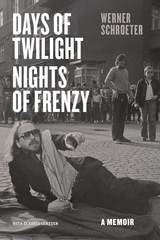
Days of Twilight, Nights of Frenzy
A MemoirWerner Schroeter and Claudia Lenssen
University of Chicago Press, 2017
Written in the last years of his life, Days of Twilight, Nights of Frenzy sees Schroeter looking back at his life with the help of film critic and friend Claudia Lenssen. Born in 1945, Schroeter grew up near Heidelberg and spent just a few weeks in film school before leaving to create his earliest works. Over the years, he would work with acclaimed artists, including Marianne Hopps, Isabelle Huppert, Candy Darling, and Christine Kaufmann. In the 1970s, Schroeter also embarked on prolific parallel careers in theater and opera, where he worked in close collaboration with the legendary diva Maria Callas. His childhood; his travels in Italy, France, and Latin America; his coming out and subsequent life as an gay man in Europe; and his run-ins with Hollywood are but a few of the subjects Schroeter recalls with insights and characteristic understated humor.
A sharp, lively, even funny memoir, Days of Twilight, Nights of Frenzy captures Schroeter’s extravagant life vividly over a vast prolific career, including many stories that might have been lost were it not for this book. It is sure to fascinate cinephiles and anyone interested in the culture around film and the arts.
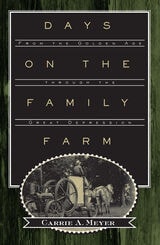
Days on the Family Farm
From the Golden Age through the Great DepressionCarrie A. Meyer
University of Minnesota Press, 2007
From the beginning of the twentieth century to World War II, farm wife May Lyford Davis kept a daily chronicle that today offers a window into a way of life that has all but disappeared. May and her husband Elmo lived through two decades of prosperity, the Great Depression, and two World Wars in their Midwestern farming community. Like many women of her time, Davis kept diaries that captured the everyday events of the family farm; she also kept meticulous farming accounts. In doing so, she left an extraordinary record that reflects not only her own experiences but also the history of early twentieth-century American agriculture.
May and Elmo’s story, engagingly told by Carrie A. Meyer, showcases the large-scale evolution of agriculture from horses to automobile and tractors, a surprisingly vibrant family and community life, and the business of commercial farming. Details such as what items were bought and sold, what was planted and harvested, the temperature and rainfall, births and deaths, and the direction of the wind are gathered to reveal a rich picture of a world shared by many small farmers.
With sustainable and small-scale farming again on the rise in the United States, Days on the Family Farm resonates with both the profound and mundane aspects of rural life—past and present—in the Midwest.
Carrie A. Meyer is associate professor of economics at George Mason University.
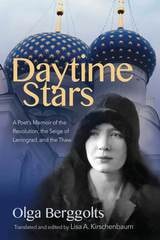
Daytime Stars
Olga Berggolts, translated by Lisa Kirschenbaum
University of Wisconsin Press, 2018
Berggolts wrote her memoir Daytime Stars in the spirit of the thaw after Stalin's death. In it, she celebrated the ideals of the revolution and the heroism of the Soviet people while also criticizing censorship of writers and recording her doubts and despair. This English translation by Lisa A. Kirschenbaum makes available a unique autobiographical work by an important author of the Soviet era. In her foreword, Katharine Hodgson comments on experiences of the Terror about which Berggolts was unable or unwilling to write.
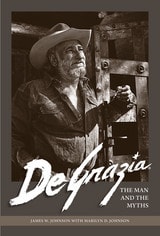
De Grazia
The Man and the MythsJames W. Johnson with Marilyn D. Johnson
University of Arizona Press, 2014
Born in Arizona Territory to Italian immigrant parents, De Grazia had a humble childhood as a copper miner’s son, which later influenced his famous persona. De Grazia often held forth at his gallery in Tucson’s Catalina foothills dressed in a pseudo-prospector’s getup of scraggly beard, jeans, flannel shirt, boots, and beat-up cowboy hat. Outrageous stories of womanizing, scores of children, and drinking binges created an eclectic image that fueled stories of mythic proportions, along with global sales of his colorful paintings inspired by the Southwest and Mexico. He made millions through his paintings and the licensing of his art for greeting cards and trinkets. Critics called his work kitsch or commercial, yet thousands of admirers continue to love it.
Calling De Grazia a complicated man doesn’t begin to explain him. He once described himself as “not saint nor devil, but both.” In this first comprehensive biography of De Grazia, authors James W. Johnson with Marilyn D. Johnson tell the story of a life remarkably lived.
Dead Moose on Isle Royale
Off Trail with the Citizen Scientists of the Wolf-Moose ProjectJeffrey M Holden
Michigan State University Press, 2025
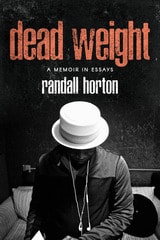
Dead Weight
A Memoir in EssaysRandall Horton
Northwestern University Press, 2022
The memoir begins with a conversation between Horton and Ralph Ellison’s Invisible Man statue in New York City. Their imagined dialogue examines the psychological impact of racism on Black men and boys, including Horton’s separation from his mother, immediately after his birth, in a segregated Alabama hospital. From his current life as a professor and prison reformer, Horton looks back on his experiences as a drug smuggler and trafficker during the 1980s–1990s as well as the many obstacles he faced after his release. He also examines the lasting impact of his drug activity on those around him, reflecting on the allure of economic freedom and the mental escapism that cocaine provided, an allure so strong that both sellers and users were willing to risk prison. Horton shares historical context and vivid details about people caught in the war on drugs who became unsuspecting protagonists in somebody else’s melodrama.
Lyrical and gripping, Dead Weight reveals the lifelong effects of one man’s incarceration on his psyche, his memories, and his daily experience of American society.
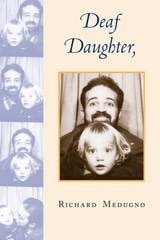
Deaf Daughter, Hearing Father
Richard Medugno
Gallaudet University Press, 2005
Medugno first researched the best communication mode for Miranda. Quickly dismissing the speech pathology model, he and his wife chose ASL alone as the best, natural language for Miranda. He surrounded his daughter with opportunities to learn ASL, by arranging to meet deaf individuals and families, and also by hiring deaf babysitters. He also determined to learn ASL himself, to ensure communication with his daughter. As Miranda neared school age, Medugno spearheaded a transcontinental search for exactly the right school for her education. So that Miranda could attend the California School for the Deaf (CSD), the Medugno family moved from Toronto, Canada to Fremont, CA.
In Deaf Daughter, Hearing Father, Medugno shares practical information on many of the common challenges faced by hearing parents. He provides a list of games that hearing and deaf children can play together, an important consideration for many families. His enthusiasm for all possibilities, from exploring the potential of video phones to helping stage CSD musicals, reveals his abiding devotion to Miranda. Such a foundation has enabled her to feel proud, confident, and happy in her pursuits. At the same time, Medugno recognizes that the rewards of having a deaf daughter are far greater than he could have hoped for or imagined.
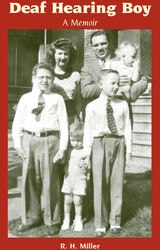
Deaf Hearing Boy
A MemoirR.H. Miller
Gallaudet University Press, 2004
Born in 1938, R. H. Miller was the oldest of four hearing boys with deaf parents in Defiance, Ohio, a small agricultural community. Deaf Hearing Boy is Miller’s compelling account of the complex dynamics at work in his family, including the inter-generational conflicts in which he found himself, the oldest child of deaf adults (CODA), caught in the middle.
In 1942, Miller’s family moved to Toledo so that his father could find work. There, they fared well during World War II because his father worked in manufacturing as a member of Roosevelt’s “civilian army.” Miller’s mother loved urban life, where she and the family could immerse themselves in the Toledo Deaf community, especially at the Toledo Silent Club. The end of the war marked the end of prosperity for the Miller family. Returning soldiers displaced all of the deaf workers, who then had to scrape for a living. The Millers, close to destitution, returned to the family farm in Defiance.
Miller depicts the return to farm life as one of tremendous hardship, both economically and psychologically. They lived off the land from hand to mouth. He also describes his grandparents’ distrust of his parents because they were deaf, and he writes candidly of his role as an unwilling agent in the misunderstandings between them. Miller also portrays the bias he endured in school and town. Parents of girlfriends would force their daughters to stop dating him for fear that his family’s deafness would be passed down.
In the early 1950s, Miller’s grandparents sold the farm and his parents returned to industrial work. Miller excelled at school, and eventually left home for college and life in academia. His later reflections reveal a deep, abiding respect for his parents, despite his early difficulties. Deaf Hearing Boy presents an intimate depiction of a changing time for hearing and deaf Americans alike, when the family farm disappeared and the isolation of Deaf people also began to fade. In witnessing this transformation of society through his family’s life, Miller adds an important chapter to the collective narrative of Deaf people, one made all the more poignant and vivid as told by their Deaf Hearing boy.
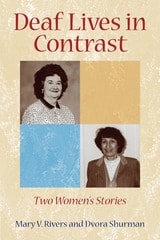
Deaf Lives in Contrast
Two Women's StoriesMary V. Rivers
Gallaudet University Press, 2008
The Eighth Volume in the Deaf Lives Series
Deaf Lives in Contrast: Two Women’s Stories might seem to bring together polar opposites in the broad range of deaf experience. Yet, as these narratives unfold, the reader will recognize that common threads run through them despite their different circumstances.
Mary V. Rivers, who came from a “dirt poor” Cajun family in Louisiana, was only 17 when she married Bruce Rivers, a member of the U.S. Air Force during World War II. She bore three children in quick succession, all boys, and traveled with them to Europe with her husband. When her third son Clay was nearly two, however, she learned that he was deaf. From that time on, she devoted her life to securing a good education for Clay.
Dvora Shurman’s parents, deaf Jewish immigrants from Russia, met in Chicago after World War I. Both were educated orally, declaring “I am not born deaf. Signing only for born-deaf.” They did sign, but they also wanted hearing children, stemming from their own sense of devaluation. Shurman lived a dual life in the deaf and hearing worlds. She saw herself as her deaf parents’ ears, their voice to the hearing world, and as sharing with her mother the task of being mother.
The resonating theme that echoes with both of these women centers on their resentment of the treatment received by their deaf loved ones. Early in her life, Shurman adopted a slogan with her sister, “‘It's Not Fair,’ to rebel against the shaming, the demeaning, our family suffered.” After years of struggling for her son, Rivers asserts that “deaf people have a right to prove themselves as first class citizens.” Their uncommon stories reveal that they share more in common, a belief in equal rights for all, deaf and hearing.
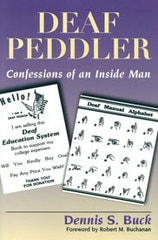
Deaf Peddler
Confessions of an Inside ManDennis S. Buck
Gallaudet University Press, 2000
In airports and train stations it is not unusual for waiting passengers to be approached by a person who will hand out a brochure or trinket, then indicate that he or she is deaf and ask for payment, anything they can afford. In many instances, the travelers feel pity for the poor unfortunate and dole out a dollar or two, yet most are utterly unaware that these pitiful beggars earn hundred of dollars this way in a matter of a few hours. Dennis Buck knows this unique form of panhandling intimately because, despite holding a degree in computer science and receiving Supplemental Security Income (SSI) and Social Security Disability Insurance (SSDI), he was a deaf peddler for 11 years.
In Deaf Peddler: Confessions of an Inside Man, Buck unveils all of the ins and outs of exploiting his “disabilities” to earn easy money. Buck details the day-to-day life of a deaf peddler, including where to go to make the most money in the least time (airports with their constant transient clientele, malls on weekends, and fast food restaurants), how to live on the cheap (wait for people checking out to leave their motel rooms, then sneak in to use the shower), and how to live well when business is good. He also explains how he organized his rounds using a spreadsheet program.
Deaf Peddler also provides a historical perspective on deaf peddling as a way for under-educated deaf people to make a living when jobs were hard to find, wages were low, and Social Security did not exist. The “no good” life served as the rationale to many deaf people for peddling, but many more in the Deaf community deplored their actions, and the National Association of the Deaf campaigned to discourage this behavior that reinforced deaf stereotypes. Buck abandoned peddling himself for this reason, but he points out that deaf peddling survives today, frequently in the highly exploitative form of rings of deaf workers completely controlled by oppressive deaf and hearing overseers. Deaf Peddler presents in engaging fashion a little-known cultural phenomenon that offers a revealing turn on the general issue of panhandling in our society today.
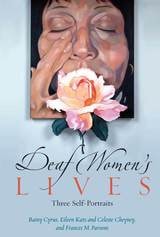
Deaf Women's Lives
Three Self-PortraitsBainy Cyrus
Gallaudet University Press, 2005
Three deaf women with widely varying stories share their experiences in this unique collection, revealing the vast differences in the circumstances of their lives, but also striking similarities. In Bainy Cyrus’s All Eyes, she vividly describes her life as a young child who was taught using the oral method at the Clarke School for the Deaf in Northampton, MA. Her account of the methods used (for example, repeating the same word over and over again, as many as 35 times), animates the extraordinary amount of work performed by deaf children to learn to read and speak. Cyrus also relates the importance of her lifelong friendships with two girls she met at Clarke, and how the different paths that they took influenced her as an adult.
Eileen Katz’s story, as told to Celeste Cheyney, offers a glimpse into a deaf girl’s life a generation before Cyrus. In Making Sense of It All: The Battle of Britain Through a Jewish Deaf Girl’s Eyes, Katz juxtaposes the gradual learning of the words who, what, where, and why with the confusing events of 1938 to 1941. As she and her fellow students grasped the meanings of these questions, they also realized the threat from the Nazi air attacks upon England. Katz also understood the compound jeopardy that she and her classmates faced by being both deaf and Jewish.
In contrast to the predominantly oral orientation of Cyrus and Katz, Frances M. Parsons writes of a year-long journey overseas in 1976 to lecture about Total Communication. Parsons traveled to Iran, India, Ceylon, Thailand, Malaysia, Singapore, Hong Kong, Taipei, the Philippines, Australia, and seven countries in Africa to teach administrators, teachers, and deaf students to communicate using sign, speechreading, writing, and any other means available. Her harrowing and fascinating anecdotes detail visits to ministries of education, schools, hospitals, clinics, palaces, hovels for the poorest of the poor, and all kinds of residential homes and apartments. Taken together, her travels testify to the aptness of her title I Dared!
The combined effect of these three Deaf women’s stories, despite the variation in their experiences, reveals the common thread that weaves through the lives of all deaf individuals.
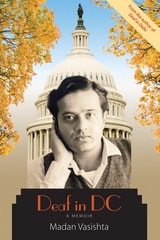
Deaf in DC
A MemoirMadan Vasishta
Gallaudet University Press, 2011
In his first memoir, Madan Vasishta described being a deaf boy in his homeland India, where “deaf” meant someone who is not human. After rising from herding cattle to being a respected photographer in Delhi, his first memoir concluded with his acceptance at Gallaudet College far away in America. Vasishta’s new memoir begins with his arrival in Washington, DC in 1967 with $40.00 in his pocket and very little knowledge of the new worlds he was entering.
Vasishta faced myriad challenges from the outset— he knew no American Sign Language and could not speech read, yet he found himself thrust into classes at Gallaudet two weeks into the semester. Cultural differences mystified him, such as how all American car accidents were someone else’s fault even when one’s car hits a stationary object. He was amazed that his fellow students did not deride him for his mistakes, unlike in India where he would have been scorned for his weakness. After five years, he returned home to India for a visit and was stunned to learn that he no longer fit in, that “even if you do not have an American Dream, the American Dream will have you.”
Deaf in DC follows Vasishta through half a century living in America. He witnessed the transformation from facing bias as a deaf, foreign man of color who could not get a job despite having a Ph.D., to receiving five offers as a school superintendent in the wake of the Civil Rights movement and Deaf President Now. His new memoir reflects a genuine worldview informed by the sage perceptions of a person who has lived widely in many worlds.
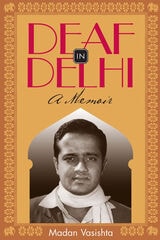
Deaf in Delhi
A MemoirMadan Vasishta
Gallaudet University Press, 2006
Vasishta’s story reflects the India of his youth, an emerging nation where most people struggled with numbing poverty and depended upon close family ties, tradition, and faith to see them through. His family’s search for a cure took him to a host of medical specialists and just as many sadhus and mahatmas, holy men and priests. The school in his small village was ill-prepared to educate deaf students then, so he herded the family cattle, usually the work of hired servants. Vasishta refused to accept this as his final lot in life and fantasized constantly about better jobs. Eventually, he moved to Delhi where his dream of becoming a photographer came true. He also discovered the Delhi Deaf community that, with his family, helped him to achieve an even higher goal, traveling to America to earn a degree at Gallaudet College.
Vasishta, a natural raconteur, imbues Deaf in Delhi with the ever-present ebullience that served him so well in his journey. Readers will savor his good humor and honest observations and look forward to his next book with great relish.
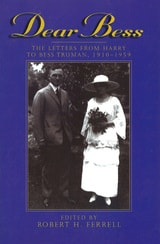
Dear Bess
The Letters from Harry to Bess Truman, 1910-1959Edited by Robert H. Ferrell
University of Missouri Press, 1998
Once again available is the critically acclaimed Dear Bess, a collection of more than 600 letters that Harry S. Truman wrote to his beloved wife, Bess, from 1910 to 1959. Selected from 1,268 letters discovered in Bess's house after her death in 1982, this extraordinary collection provides an inside look at Truman's life, his thoughts, and his dreams.
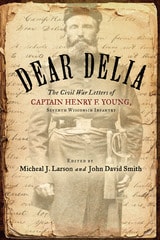
Dear Delia
The Civil War Letters of Captain Henry F. Young, Seventh Wisconsin InfantryHenry F. Young, edited by Micheal J. Larson and John David Smith
University of Wisconsin Press, 2019
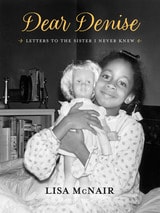
Dear Denise
Letters to the Sister I Never KnewLisa McNair
University of Alabama Press, 2022
Poignant, honest, and heartfelt letters to a sister who perished in the 16th Street Baptist Church bombing.
Lisa McNair was born in 1964, one year after her older sister, Denise, was murdered in the bombing of the 16th Street Baptist Church in Birmingham, Alabama. Dear Denise is a collection of forty letters from Lisa addressed to the sister she never knew, but in whose shadow of sacrifice and lost youth she was raised. These letters offer an intimate look into the life of a family touched by one of the most heinous tragedies of the Civil Rights Movement.
Written in a genuine, accessible, familiar, and easy-to-read voice, Lisa’s letters apprise her late sister of all that has come to pass in the years since her death. Lisa considers her own challenges and accomplishments as a student in remarkably different—and very racially complex—schools; the birth of their baby sister, Kim; their father’s election to the Alabama legislature; her evolving sense of faith and place, and sometimes lack thereof, within the Black church; her college experiences; and her own sense of self as she’s matured into adulthood. She reveals some of the family’s difficulties and health challenges, and shares some of their joys and celebrations.
The letters are accompanied by 29 black-and-white photographs, most of them from the McNair family collection, many of them taken by her father, a professional photographer who documented the Civil Rights Movement in Alabama both before and after Denise’s murder. An unswervingly candid, gentle, and nuanced book, Dear Denise is a testament to one singular life lived bravely and truthfully (if sometimes confusedly or awkwardly), during decades of bewildering social change and in the shadow of one life never fully lived.
Dear Queer Self
An Experiment in MemoirJonathan Alexander
Acre Books, 2022
In this unconventional memoir, Jonathan Alexander addresses wry and affecting missives to a conflicted younger self. Focusing on three years—1989, 1993, and 1996—Dear Queer Self follows the author through the homophobic heights of the AIDS epidemic, the fall of the Berlin Wall, the election of Bill Clinton, and the steady advancements in gay rights that followed. With humor and wit afforded by hindsight, Alexander relives his closeted college years, his experiments with his sexuality in graduate school, his first marriage to a woman, and his budding career as a college professor.
As he moves from tortured self-denial to hard-won self-acceptance, the author confronts the deeply uncomfortable ways he is implicated in his own story. More than just a coming-out narrative, Dear Queer Self is both an intimate psychological exploration and a cultural examination—a meshing of inner and outer realities and a personal reckoning with how we sometimes torture the truth to make a life. It is also a love letter, an homage to a decade of rapid change, and a playlist of the sounds, sights, and feelings of a difficult, but ultimately transformative, time.

Dear World
Contemporary Uses of the DiaryKylie Cardell
University of Wisconsin Press, 2014
In Dear World, Kylie Cardell is sensitive to how changes to our notions of privacy and the personal—spurred by the central presence the Internet has come to occupy in our daily lives—impact how and why diaries are written, and for whom. She considers what these new uses of the diary tell us about the cultural politics of self-representation in a time of mass attention to (and anxiety about) the personal. Cardell sees the twenty-first-century diary as a vibrant and popular cultural practice as much as a literary form, one that plays a key role in mass-mediated notions of authenticity, subjectivity, and truth. Dear World provides much-needed new attention to the innovation, evolution, and persistence of a familiar yet complex autobiographical mode.
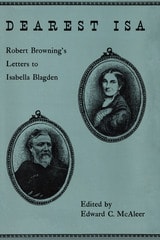
Dearest Isa
Robert Browning's letters to Isabella BlagdenBy Robert Browning<br>Edited by Edward C. McAleer
University of Texas Press, 1951
Robert Browning's friendship for Isabella Blagden was almost as remarkable as was his love for Elizabeth Barrett. After Elizabeth's death (June 1861), Browning went to England to educate their son, but he hoped eventually to return to Italy, principally so that he might be near his friend "Isa." He asked her to write to him once a month on the twelfth, promising to answer her letter on the nineteenth.
The fulfillment of this obligation resulted in a correspondence which is remarkable from the standpoint of continuity. Most collections of letters suffer from their fragmentary form; there are no continuing threads of interest which hold them together. Not so the letters which Browning wrote to Miss Blagden. They are not in the great English letter writing tradition, being obviously written for Isa rather than for posterity, but they are filled with the most intimate and interesting sort of gossip and informal exchanges of ideas which give them a character all their own.
One hundred and fifty-four letters from Browning to Isabella Blagden are known to be in existence; all of them are included in the present volume, together with copious explanatory notes and an illuminating introduction.
Edward C. McAleer has approached every detail of his editorial task with thoroughness, imagination, and skill. His notes will add immeasurably to the pleasure of reading the letters, in addition to making a substantial contribution to the world's knowledge of Browning and his associates.
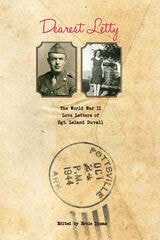
Dearest Letty
The World War II Love Letters of Sgt. Leland DuvallLeland Duvall
University of Arkansas Press, 2011
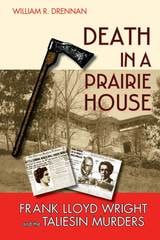
Death in a Prairie House
Frank Lloyd Wright and the Taliesin MurdersDrennan
University of Wisconsin Press, 2008
In response to the scandal generated by his open affair with the proto-feminist and free love advocate Mamah Borthwick Cheney, Wright had begun to build Taliesin as a refuge and "love cottage" for himself and his mistress (both married at the time to others).
Conceived as the apotheosis of Wright’s prairie house style, the original Taliesin would stand in all its isolated glory for only a few months before the bloody slayings that rocked the nation and reduced the structure itself to a smoking hull.
Supplying both a gripping mystery story and an authoritative portrait of the artist as a young man, Drennan wades through the myths surrounding Wright and the massacre, casting fresh light on the formulation of Wright’s architectural ideology and the cataclysmic effects that the Taliesin murders exerted on the fabled architect and on his subsequent designs.
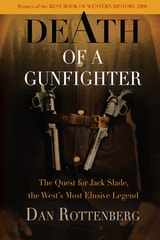
Death of a Gunfighter
The Quest for Jack Slade, the West's Most Elusive LegendDan Rottenberg
Westholme Publishing, 2008
The True Story of One of America’s Most Enigmatic and Tragic Heroes
Awarded Best Western History Book of 2008 by the Wild West History Association
"A superb biography"—Foreword Reviews
"An ambitious, well-written effort to restore a Wild West desperado to history.... Readers will surely remember Jack Slade from henceforth. A treat for Western history buffs and fans of true crime."—Kirkus Reviews
"An enjoyable read, and it is also a heroic effort."—Wall Street Journal
"Every bit the page-turner as Roughing It, with one added advantage—Rottenberg's book approaches the truth."—Wild West magazine
"Now and then a book of Western history comes along that captures an era and clears up many a mystery; Death of a Gunfighter is such a book."—Colorado Central magazine
In 1859, as the United States careened toward civil war, Washington's only northern link with America's richest state, California, was a stagecoach line operating between Missouri and the Pacific. Yet the stage line was plagued by graft, outlaws, and hostile Indians. At this critical moment, the company enlisted a former wagon train captain and Mexican War veteran to clean up its most dangerous division. Over the next three years, Joseph Alfred "Jack" Slade exceeded his employers' wildest dreams, capturing bandits and horse thieves and driving away gangs; he even shot to death a disruptive employee. He kept the stagecoaches and the U.S. Mail running, and helped launch the Pony Express, all of which kept California in the Union—and without California's gold, the Union would have failed to finance its cause. Across the Great Plains he became known as "The Law West of Kearny."
Slade's legend grew when he was shot multiple times and left for dead, only to survive and exact revenge on his would-be killer. But once Slade had restored the peace, leaving him without challenges, his life descended into an alcoholic Dr. Jekyll and Mr. Hyde nightmare, transforming him from a courageous leader, charming gentleman, and devoted husband into a vicious, quick-triggered ruffian—a purported outlaw —who finally lost his life at the hands of vigilantes.
Since Slade's death in 1864, persistent myths and stories have defied the efforts of writers and historians, including Mark Twain, to capture the real Jack Slade. Despite his notoriety, the pieces of Slade's fascinating life—including his marriage to the beautiful Maria Virginia—have remained scattered and hidden. He was never photographed and left almost no personal writings, not even a letter. In Death of a Gunfighter: The Quest for Jack Slade, the West's Most Elusive Legend, journalist Dan Rottenberg assembles years of research to reveal the true story of Jack Slade, one of America's greatest tragic heroes.
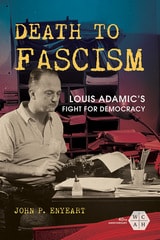
Death to Fascism
Louis Adamic's Fight for DemocracyJohn P. Enyeart
University of Illinois Press, 2019
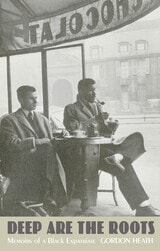
Deep Are the Roots
Memoirs of a Black ExpatriateGordon Heath
University of Massachusetts Press, 1992

Deep Powder Snow
Forty Years of Ecstatic Skiing, Avalanches, and Earth WisdomDolores LaChapelle
University of Wyoming Press, 2027
“Everything I know, I learned from skiing powder.”— Dolores LaChapelle, the godmother of powder skiing
An out-of-print classic returns… Deep Powder Snow, originally published in 1993, is an autobiographical account of how Dolores LaChapelle’s experiences powder skiing gave her a path to cultural resistance. More than a memoir of one woman’s love for the sport, this philosophical exploration of skiing and the relationship between humanity and nature became a cult classic for mountain recreationists around the world who connected deeply with her worldview.
LaChapelle’s words still give voice to why skiing and other outdoor recreation feel like so much more than a pastime to so many. In this reprint of the classic text, ski journalist and historian Clare George offers a new generation of readers the opportunity to engage with LaChappelle, adding a foreword with critical contextualization of the book’s significance and impact.
Deep Powder Snow is more relevant than ever. In the age of rapid climate change and the ever-more-jarring effects of the Anthropocene, this memoir advocates for a different way of thinking about our place in the world and of skiing as not merely a hobby but the foundation of a good life.
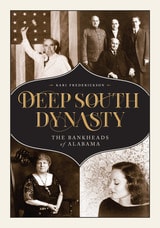
Deep South Dynasty
The Bankheads of AlabamaKari Frederickson
University of Alabama Press, 2022
WINNER OF THE GULF SOUTH HISTORICAL ASSOCIATION'S MICHAEL V. R. THOMASON BOOK AWARD
Family, influence, and the making of Southern power.
From Reconstruction through the end of World War II, the Bankheads served as the principal architects of the political, economic, and cultural framework of Alabama and the greater South. As a family, they were instrumental in fashioning the New South and the twentieth century American political economy, but now the Bankhead name is largely associated only with place names.
Deep South Dynasty: The Bankheads of Alabama is a deeply researched epic family biography that reflects the complicated and evolving world inhabited by three generations of the extremely accomplished—if problematic—Bankhead family of northwest Alabama. Kari Frederickson’s expertly crafted account traces the careers of five members of the family—John Hollis Bankhead; his sons, John Hollis Bankhead Jr. and William Brockman Bankhead; his daughter, Marie Bankhead Owen; and his granddaughter, Tallulah Brockman Bankhead.
A Confederate veteran and son of a slaveholder, John Hollis Bankhead held political office almost continuously from 1865 until his death in 1920, first in state-level positions and ultimately in Congress–in the House then in the Senate–for thirty-three years. Two of his three sons, John Jr. and William, followed in their father’s political footsteps. John Jr., a successful corporate attorney, was elected to the state legislature and then to the US Senate in 1930; William was elected to the House of Representatives in 1916 and chosen Speaker of the House in 1936. Together, father and sons played key roles in crafting and maintaining a conservative political culture, legal code, and economic system that facilitated economic opportunities for cotton farmers, coal barons, and emerging industries in Alabama and across the South while perpetuating White supremacy.
Daughter Marie Bankhead Owen extended the family’s cultural power during her thirty-five-year tenure as director of the Alabama Department of Archives and History. From this position and through her work with groups like the United Daughters of the Confederacy, she embraced and disseminated a historical narrative steeped in Lost Cause mythology that validated the power and privilege of White elites and naturalized the second-class status of African Americans. William’s daughter, actress Tallulah Bankhead, benefited from her family’s rich political bloodlines and in turn lent them a touch of glamour and made the Bankheads modern. Frederickson’s meticulously researched examination of this once-powerful but now largely forgotten southern family is a sweeping and complex story of the region and its relationship with the wider world over the course of eight decades, from the wreckage of the Civil War to the dawn of the nuclear age.
Deep Woods, Wild Waters
A MemoirDouglas Wood
University of Minnesota Press, 2025
A journey through the wilds of nature and the twists and turns of daily life with an icon of the North Woods—now in paperback
Wait, young Douglas’s grandfather says as the bobber twitches on the surface of Little Lake. Be patient. And so begins an encounter with the wonder and promise of nature that will last a lifetime. Deep Woods, Wild Waters traces the winding path that carried Douglas Wood from one marvel to the next, through a landscape of rocks, woods, and waters, with stops along the way for questions and reflections that link human nature to the larger mysteries of the natural world.
Like life itself, the author’s way is not linear. One landmark leads back to a favorite campsite, another prompts him to consider the “gospel of rocks,” another launches him into the wilderness beyond the stars—a contemplation of time and space and humanity’s place in all of it. The creator of thirty-four books, including the classic Old Turtle, and an expert woodsman and wilderness canoe guide, Wood brings all his storytelling and bushwhacking skills to bear as he takes us hurtling down wild rapids, crossing stormy lakes, or simply navigating the treacherous currents and twisty trails of everyday life.
A warm, generous, and knowing guide, Wood maps a journey that, as he says, “anyone can take, through a landscape anyone can know.” Turning the pages, hiking the portages, running the rapids, or scanning the wild country from a high promontory, he invites us to say, in a soul-satisfying moment of recognition, “I know that place.”
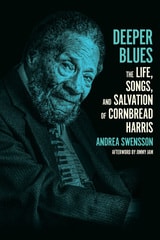
Deeper Blues
The Life, Songs, and Salvation of Cornbread HarrisAndrea Swensson
University of Minnesota Press, 2024
The emotional, epic story of James “Cornbread” Harris—a self-proclaimed “blessed dude” and one of Minneapolis’s most influential musicians
From the heart of the Minnesota blues comes the story of James “Cornbread” Harris Jr., the songwriter, pianist, and consummate bluesman whose seventy years making music helped to shape the Minneapolis Sound. “I am a blessed dude,” Cornbread tells Andrea Swensson, taking us along on his musical journey from a first “gig” entertaining his fellow soldiers during World War II to his subsequent years playing music for audiences across Minnesota. Following Cornbread’s extraordinary life story, Deeper Blues is a unique history of Minnesota music that evolves into a heartfelt tale of reconciliation and forgiveness, all to the tune of the legendary musician’s signature sound.
Cornbread’s career started in the 1950s, when he played with the Augie Garcia Quintet and cowrote their hit “Hi Ho Silver.” A tireless entertainer, he has been performing live ever since, influencing an entire generation of musicians credited with putting Minneapolis on the map in the 1980s—including his long-estranged son, Grammy-winning Rock and Roll Hall of Famer James “Jimmy Jam” Harris III. Going beyond the music, Deeper Blues turns toward family, atonement, and peace when Cornbread reunites with Jimmy Jam after a five-decade separation and they perform together on stage.
Through conversations with Cornbread, Jimmy Jam, and many others, Swensson reveals a story of perseverance and unfailing grace, a firsthand account of making music in the face of racism and segregation, and a hard-won acceptance of the personal sacrifices that are often required when dedicating one’s life to making music. As the man himself says, “All of my hardships ended up to be blessings.”
A rich mix of present-day anecdotes and historical vignettes, animated by voices from Cornbread’s life and the Twin Cities music scene, underscored by the bluesman’s original lyrics of heartache and hope, and featuring never-before-seen photographs of Cornbread and Jimmy Jam, Deeper Blues tells a singular story—one imprinted on the history, heart, and soul of the Minneapolis Sound.
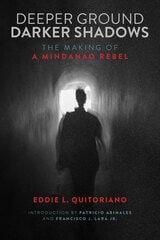
Deeper Ground, Darker Shadows
The Making of a Mindanao RebelEddie L. Quitoriano
University of Wisconsin Press, 2025
Quitoriano finds revolutionary life thrilling but dangerous, with secretly arranged meetings and drops, doctored passports, and hastily planned plastic surgery. He wrestles with the global implications of his work, experiences daily struggles to survive in always-changing political circumstances, and is profoundly human in his love and concern for the family he has left behind in the Philippines. What emerges is a view of international revolutionary movements that only an insider could write. Quitoriano provides an essential and unique missing piece of twentieth-century Philippine and leftist history.

Defender of the Faithful
The Life and Thought of Rabbi Levi Yitshak of BerdychivArthur Green
Brandeis University Press, 2022
Defender of the Faithful explores the life and thought of Levi Yitshak of Berdychiv (1740–1809), one of the most fascinating and colorful Hasidic leaders of his time. This is an intellectual and religious biography, a reading of the development of his thought and career. Featuring examples of Levi Yitshak’s extraordinary texts alongside insightful analysis by scholar and theologian Arthur Green, Defender of the Faithful is a compelling study of both Levi Yitshak’s theology and broader philosophy.
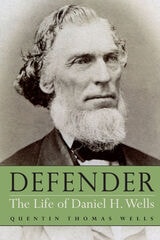
Defender
The Life of Daniel H. WellsQuentin Thomas Wells
Utah State University Press, 2022
Defender is the first and only scholarly biography of Daniel H. Wells, one of the important yet historically neglected leaders among the nineteenth-century Mormons—leaders like Heber C. Kimball, George Q. Cannon, and Jedediah M. Grant. An adult convert to the Mormon faith during the Mormons’ Nauvoo period, Wells developed relationships with men at the highest levels of the church hierarchy, emigrated to Utah with the Mormon pioneers, and served in a series of influential posts in both church and state.
Wells was known especially as a military leader in both Nauvoo and Utah—he led the territorial militia in four Indian conflicts and a confrontation with the US Army (the Utah War). But he was also the territorial attorney general and obtained title to all the land in Salt Lake City from the federal government during his tenure as the mayor of Salt Lake City. He was Second Counselor to Brigham Young in the LDS Church's First Presidency and twice served as president of the Mormon European mission. Among these and other accomplishments, he ran businesses in lumbering, coal mining, manufacturing, and gas production; developed roads, ferries, railroads, and public buildings; and presided over a family of seven wives and thirty-seven children.
Wells witnessed and influenced a wide range of consequential events that shaped the culture, politics, and society of Utah in the latter half of the nineteenth century. Using research from relevant collections, sources in public records, references to Wells in the Joseph Smith papers, other contemporaneous journals and letters, and the writings of Brigham Young, Quentin Thomas Wells has created a serious and significant contribution to Mormon history scholarship.

Defoe's Britain
jeremy black
St. Augustine's Press, 2023
Defoe was an outsider, a man of many interests whom Black asserts evades too precise a portrait or coherent description of character and career. But he is a traveler, in the literal and imaginative senses, and in his engagement with life and its issues and willingness to associate with 'low-life' prefigures later literary giants like Smollett and Fielding. More than the establishment of genre, Defoe created the writer "whose business is observation." Black's account of this parcel of the British past is impeccable because it is in fact an account that the past, in Defoe, gives of itself. "As a writer, Defoe brought together a reality usually presented as, and endorsed by, history, with the imaginative focus of storytelling, and the direction of, variously, propaganda, analysis, and exemplary tale."

Degas at the Gas Station
EssaysThomas Beller
Duke University Press, 2025
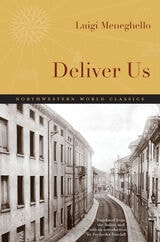
Deliver Us
Luigi Meneghello, Translated from the Russian by Frederika Randall
Northwestern University Press, 2011
Only loosely chronological, Deliver Us proceeds by themes—childhood games, Fascist symbols, religious precepts, and the rites of poverty, of death, of eros, and of love. Meneghello’s ironic musings and profoundly honest recollections make an utterly unsentimental human comedy of that was the whole world to his dawning consciousness.
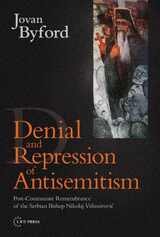
Denial and Repression of Anti-Semitism
Post-Communist Rehabilitation of the Serbian Bishop Nikolaj VelimirovicJovan Byford
Central European University Press, 2008
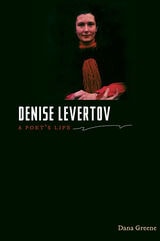
Denise Levertov
A Poet's LifeDana Greene
University of Illinois Press, 2014
Kenneth Rexroth called Denise Levertov (1923–1997) "the most subtly skillful poet of her generation, the most profound, . . . and the most moving." Author of twenty-four volumes of poetry, four books of essays, and several translations, Levertov became a lauded and honored poet. Born in England, she published her first book of poems at age twenty-three, but it was not until she married and came to the United States in 1948 that she found her poetic voice, helped by the likes of William Carlos Williams, Robert Duncan, and Robert Creeley. Shortly before her death in 1997, the woman who claimed no country as home was nominated to be America's poet laureate.
Levertov was the quintessential romantic. She wanted to live vividly, intensely, passionately, and on a grand scale. She wanted the persistence of Cézanne and the depth and generosity of Rilke. Once she acclimated herself to America, the dreamy lyric poetry of her early years gave way to the joy and wonder of ordinary life. By the late 1960s and early 1970s, however, her poems began to engage the issues of her times. Vehement and strident, her poetry of protest was both acclaimed and criticized. The end of both the Vietnam War and her marriage left her mentally fatigued and emotionally fragile, but gradually, over the span of a decade, she emerged with new energy. The crystalline and luminous poetry of her last years stands as final witness to a lifetime of searching for the mystery embedded in life itself. Through all the vagaries of life and art, her response was that of a "primary wonder."
In this illuminating biography, Dana Greene examines Levertov's interviews, essays, and self-revelatory poetry to discern the conflict and torment she both endured and created in her attempts to deal with her own psyche, her relationships with family, friends, lovers, colleagues, and the times in which she lived. Denise Levertov: A Poet's Life is the first complete biography of Levertov, a woman who claimed she did not want a biography, insisting that it was her work that she hoped would endure. And yet she confessed that her poetry in its various forms--lyric, political, natural, and religious--derived from her life experience. Although a substantial body of criticism has established Levertov as a major poet of the later twentieth century, this volume represents the first attempt to set her poetry within the framework of her often tumultuous life.
Depth of Field
Stanley Kubrick, Film, and the Uses of HistoryEdited by Geoffrey Cocks, James Diedrick, and Glenn Perusek
University of Wisconsin Press, 2006
Director of some of the most controversial films of the twentieth century, Stanley Kubrick created a reputation as a Hollywood outsider as well as a cinematic genius. His diverse yet relatively small oeuvre—he directed only thirteen films during a career that spanned more than four decades—covers a broad range of the themes that shaped his century and continues to shape the twenty-first: war and crime, gender relations and class conflict, racism, and the fate of individual agency in a world of increasing social surveillance and control.
In Depth of Field, leading screenwriters and scholars analyze Kubrick's films from a variety of perspectives. They examine such groundbreaking classics as Dr. Strangelove and 2001: A Space Odyssey and later films whose critical reputations are still in flux. Depth of Field ends with three viewpoints on Kubrick's final film, Eyes Wide Shut, placing it in the contexts of film history, the history and theory of psychoanalysis, and the sociology of sex and power. Probing Kubrick's whole body of work, Depth of Field is the first truly multidisciplinary study of one of the most innovative and controversial filmmakers of the twentieth century.
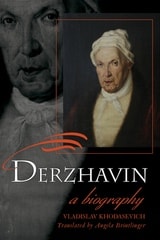
Derzhavin
A BiographyVladislav Khodasevich, Translated and with an introduction by Angela Brintlinger
University of Wisconsin Press, 2007
“Khodasevich’s light narrative touch (as translated by Brintlinger) lends a novelistic quality to the biography, making it a genuine tour de force. All students and scholars – of history, literature, poetry, biography – will find something of interest here.”—Choice

Desert Birthright
A Midwife's MemoirLori Wrankle
University of Utah Press, 2025
Lori Wrankle was sixteen when she helped deliver her first baby. “I witnessed the entire universe unfold at my feet,” she writes in Desert Birthright. Later, working as a hospital doula, Wrankle observed firsthand the suffering inflicted upon birthing women by male-dominated Western childbirth practices, from casual racism to unnecessary and nonconsensual procedures, including the dreaded “husband stitch.” After a traumatic labor and delivery of her own, she decided to take back woman-centered childbirth and start a homebirth midwifery practice.
Desert Birthright traverses twenty-five years of midwifery, often in fundamentalist polygamist circles, weaving together birth stories with childhood memories as Wrankle grapples with her shifting Mormon faith. Her poetic voice shines—a placenta becomes the tree of life, the folds in a baby’s arm layers of sand in the desert. Desert Birthright is a deeply personal story of life, death, and modern womanhood in the rural Southwest, and of one midwife’s journey of faith, self-discovery, and liberation in the face of adversity.
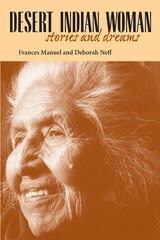
Desert Indian Woman
Stories and DreamsFrances Manuel and Deborah Neff
University of Arizona Press, 2001
Basket weaver, storyteller, and tribal elder, Frances Manuel is a living preserver of Tohono O’odham culture. Speaking in her own words from the heart of the Arizona desert, she now shares the story of her life. She tells of O’odham culture and society, and of the fortunes and misfortunes of Native Americans in the southwestern borderlands over the past century.
In Desert Indian Woman, Frances relates her life and her stories with the wit, humor, and insight that have endeared her to family and friends. She tells of her early childhood growing up in a mesquite brush house, her training in tribal traditions, her acquaintance with Mexican ways, and her education in an American boarding school. Through her recollections of births and deaths, heartache and happiness, we learn of her family’s migration from the reservation to the barrios and back again. In the details of her everyday life, we see how Frances has navigated between O’odham and American societies, always keeping her grandparents’ traditional teachings as her compass.
It is extraordinary to hear from a Native American woman like Frances, in her own words and her own point of view, to enter the complex and sensitive aspects of her life experience, her sorrows, and her dreams. We also become privy to her continuing search for her identity across the border, and the ways in which Frances and Deborah have attempted to make sense of their friendship over twenty-odd years. Throughout the book, Deborah captures the rhythms of Frances’s narrative style, conveying the connectedness of her dreams, songs, and legends with everyday life, bringing images and people from faraway times and places into the present.
Deborah Neff brings a breadth of experience in anthropology and Southwest Native American cultures to the task of placing Frances Manuel’s life in its broader historical context, illuminating how history works itself out in people’s everyday lives. Desert Indian Woman is the story of an individual life lived well and a major contribution to the understanding of history from a Native American point of view.
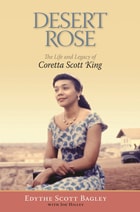
Desert Rose
The Life and Legacy of Coretta Scott KingEdythe Scott Bagley with Joe Hilley
University of Alabama Press, 2012
An intimate biography illuminating the life, leadership, and legacy of Coretta Scott King within the American Civil Rights Movement.
Coretta Scott King—noted author, human rights activist, and wife and partner of famed Civil Rights Movement leader Martin Luther King Jr.—grew up in the rural Alabama Black Belt with her older sister, Edythe Scott Bagley. Bagley chronicles the sisters’ early education together at the Crossroads School and later at the progressive Lincoln School in Marion. She describes Coretta’s burgeoning talent for singing and her devotion to musical studies, and the sisters’ experiences matriculating at Antioch College, an all-white college far from the rural South. Bagley provides vivid insights into Coretta’s early passion for racial and economic justice, which lead to her involvement in the Peace Movement and the National Association for the Advancement of Colored People.
As Coretta’s older sister, Edythe shared in almost all of Coretta’s many trials and tribulations. Desert Rose charts Coretta’s hesitance about her romance with Martin Luther King and the prospect of having to sacrifice her dream of a career in music to become a minister’s wife. Ultimately, Coretta chose to utilize her artistic gifts and singing voice for the Movement through the development and performance of Freedom Concerts. This book also charts Coretta’s own commitment and dedication, in the years that followed King’s death, to the causes of international civil rights, the antiapartheid movement, and the establishment of the King Center in Atlanta and the national King Holiday. Coretta’s devotion to activism, motherhood, and the movement led by her husband, and her courageous assumption of the legacy left in the wake of King’s untimely assassination, are wonderfully detailed in this intimate biography.
Destruction and Sorrow beneath the Heavens
ReportageLászló Krasznahorkai
Seagull Books, 2016
Known for his brilliantly dark fictional visions, László Krasznahorkai is one of the most respected European writers of his generation and the winner of the 2015 Man Booker International Prize. Here, he brings us on a journey through China at the dawn of the new millennium. On the precipice of its emergence as a global power, China is experiencing cataclysms of modernity as its harsh Maoist strictures meet the chaotic flux of globalism. What remains of the Middle Kingdom’s ancient cultural riches? And can a Westerner truly understand China’s past and present—or the murky waters where the two meet?
Destruction and Sorrow beneath the Heavens is both a travel memoir and the chronicle of a distinct intellectual shift as one of the most captivating contemporary writers and thinkers begins to engage with the cultures of Asia and the legacies of its interactions with Europe in a newly globalized society. Rendered in English by award-winning translator Ottilie Mulzet, Destruction and Sorrow beneath the Heavens is an important work, marking the emergence of Krasznahorkai as a truly global novelist.
Praise for Krasznahorkai
“The contemporary Hungarian master of the apocalypse.”—Susan Sontag
“Krasznahorkai delights in unorthodox description; no object is too insignificant for his worrying gaze. . . . He offers us stories that are relentlessly generative and defiantly irresolvable. They are haunting, pleasantly weird, and ultimately, bigger than the worlds they inhabit.”—New York Times
“Krasznahorkai is an expert with the complexity of human obsessions. Each of his books feel like an event, a revelation.”—Daily Beast
Detailing Trauma
A Poetic AnatomyArianne Zwartjes
University of Iowa Press, 2012
Zwartjes’s beautifully crafted poetic prose humanizes the technical descriptions of medical conditions and illuminates the scientific understanding of emotional states. Far more than a popularization of science, Detailing Trauma explores the wondrous anatomy and physiology of the human body, a geography of our human frailties—and also our wealth, as humans, of love and hope and the capacity for meditative thought.
Devil's Game
The Civil War Intrigues of Charles A. DunhamCarman Cumming
University of Illinois Press, 2003
The first book-length study of one of the Civil War's most outlandish and mysterious characters
Devil's Game traces the amazing career of Charles A. Dunham, Civil War spy, forger, journalist, and master of dirty tricks. Writing for a variety of New York papers under alternate names, Dunham routinely faked stories, created new identities, and later boldly cast himself to play those roles. He achieved his greatest infamy when he was called to testify in Washington concerning Abraham Lincoln's assassination. Many parts of Dunham's career remain shadowy, but Cumming offers the first detailed tour of Dunham's convoluted, high-stakes, international deceits, including his effort to sell Lincoln on plans for a raid to capture Jefferson Davis.
Exhaustively researched and unprecedented in depth, this carefully crafted assessment of Dunham's motives, personality, and the complex effects of his schemes changes assumptions about covert operations during the Civil War.
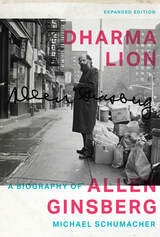
Dharma Lion
A Biography of Allen GinsbergMichael Schumacher
University of Minnesota Press, 2016
With the sweep of an epic novel, Michael Schumacher tells the story of Allen Ginsberg and his times, with fascinating portraits of Jack Kerouac, Neal Cassady, and William Burroughs, among others, along with many rarely seen photographs.
Dialogue with Death
The Journal of a Prisoner of the Fascists in the Spanish Civil WarArthur Koestler
University of Chicago Press, 2011
In 1937 during the Spanish Civil War, Arthur Koestler, a German exile writing for a British newspaper, was arrested by Nationalist forces in Málaga. He was then sentenced to execution and spent every day awaiting death—only to be released three months later under pressure from the British government. Out of this experience, Koestler wrote Darkness at Noon, his most acclaimed work in the United States, about a man arrested and executed in a Communist prison.
Dialogue with Death is Koestler’s riveting account of the fall of Málaga to rebel forces, his surreal arrest, and his three months facing death from a prison cell. Despite the harrowing circumstances, Koestler manages to convey the stress of uncertainty, fear, and deprivation of human contact with the keen eye of a reporter.
Diamond and Juba
The Raucous World of 19th-Century Challenge DancingApril F. Masten
University of Illinois Press, 2025