Results by title
1761 books match the query 'Public Policy' and 72 start with d

Disease Prevention as Social Change
The State, Society, and Public Health in the United States, France, Great Britain, and CanadaConstance A. Nathanson
Russell Sage Foundation, 2007
Disneyland Politics
How a Medium-Size City and Corporate Giant CoexistPeter F. Burns, Matthew O. Thomas, and Max R. Bieganski
Temple University Press, 2026
Disneyland Politics is a cogent examination of this urban power struggle, which has been playing out for 70 years. The authors show how the city was initially bound to the Disneyland Imperative, which placed the theme park above everything else in the city, including other economic development projects. However, starting in the 1990s, citizens pushed back against the corporation and its supporters, wanting a more balanced public policy agenda and ultimately loosening the stranglehold Disneyland had over the city’s political order.
Recounting the history of Disney’s power in action and the tension between democratic governance and reliance on private investment, Disneyland Politics illustrates how those who pursue alternative agendas attempt to get their way, and how the fight for a more balanced public policy agenda has changed local power dynamics to be less favorable to Disneyland over time.
In the series Urban Life, Landscape, and Policy

Disrupting the Speculative City
Property, Power and Community Resistance in LondonAmy Horton and Joe Penny
University College London, 2024
Disrupting the Speculative City tells the story of how the Haringey Development Vehicle community coalition, defeated one of the most ambitious programs of state-led gentrification in London. Drawing on the accounts of those at the heart of local statecraft and grassroots organizations, and analyzing crucial developments in property investment, this book explores a significant and inspirational success for campaigners in London, where social cleansing has become the default outcome of redevelopment.
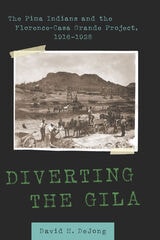
Diverting the Gila
The Pima Indians and the Florence-Casa Grande Project, 1916–1928David H. DeJong
University of Arizona Press, 2021
Diverting the Gila explores the complex web of tension, distrust, and political maneuvering to divide and divert the scarce waters of the Gila River. Residents of Florence, Casa Grande, and the Pima Reservation fought for vital access to water rights. Into this political foray stepped Arizona’s freshman congressman Carl Hayden, who not only united the farming communities but also used Pima water deprivation to the advantage of Florence-Casa Grande and Upper Gila Valley growers. The result was the federal Florence-Casa Grande Project that, as legislated, was intended to benefit Pima growers on the Gila River Indian Reservation first and foremost. As was often the case in the West, well-heeled, nontribal political interests manipulated the laws at the expense of the Indigenous community.
Diverting the Gila is the sequel to David H. DeJong’s 2009 Stealing the Gila, and it continues to tell the story of the forerunner to the San Carlos Irrigation Project and the Gila River Indian Community’s struggle to regain access to their water.

Divide and Pacify
Strategic Social Policies and Political Protests in Post-Communist DemocraciesPieter Vanhuysse
Central European University Press, 2006
Despite dramatic increases in poverty, unemployment, and social inequalities, the Central and Eastern European transitions from communism to market democracy in the 1990s have been remarkably peaceful. This book proposes a new explanation for this unexpected political quiescence. It shows how reforming governments in Poland, Hungary and the Czech Republic have been able to prevent massive waves of strikes and protests by the strategic use of welfare state programs such as pensions and unemployment benefits.
Divide and Pacify explains how social policies were used to prevent massive job losses with softening labor market policies, or to split up highly aggrieved groups of workers in precarious jobs by sending some of them onto unemployment benefits and many others onto early retirement and disability pensions. From a narrow economic viewpoint, these policies often appeared to be immensely costly or irresponsibly populist. Yet a more inclusive social-scientific perspective can shed new light on these seemingly irrational policies by pointing to deeper political motives and wider sociological consequences.

Divide, Provide and Rule
An Integrative History of Poverty Policy, Social Reform, and Social Policy in Hungary under the Habsburg MonarchySusan Zimmermann
Central European University Press, 2011
Doctors and Demonstrators
How Political Institutions Shape Abortion Law in the United States, Britain, and CanadaDrew Halfmann
University of Chicago Press, 2011
Does Business Learn?
Tax Breaks, Uncertainty, and Political StrategiesSandra L. Suarez
University of Michigan Press, 2000
Does Local Government Matter?
How Urban Policies Shape Civic EngagementElaine B. Sharp
University of Minnesota Press, 2012
Until recently, policy evaluation has mostly meant assessing whether government programs raise reading levels, decrease teen pregnancy rates, improve air quality levels, lower drunk-driving rates, or achieve any of the other goals that government programs are ostensibly created to do. Whether or not such programs also have consequences with respect to future demands for government action and whether government programs can heighten—or dampen—citizen involvement in civic activities are questions that are typically overlooked.
This book applies such questions to local government. Employing policy feedback theory to a series of local government programs, Elaine B. Sharp shows that these programs do have consequences with respect to citizens’ political participation. Unlike other feedback theory investigations, which tend to focus on federal government programs, Sharp’s looks at a broad range of policy at the local level, including community policing programs, economic development for businesses, and neighborhood empowerment programs.
With this clear-eyed analysis, Sharp finds that local governments’ social program activities actually dampen participation of the have-nots, while cities’ development programs reinforce the political involvement of already-privileged business interests. Meanwhile, iconic urban programs such as community policing and broader programs of neighborhood empowerment fail to enhance civic engagement or build social capital at the neighborhood level; at worst, they have the potential to deepen divisions—especially racial divisions—that undercut urban neighborhoods.
Doing Comparable Worth
Gender, Class, and Pay EquityJoan Acker
Temple University Press, 1991
Doing Comparable Worth is the first empirical study of the actual process of attempting to translate into reality the idea of equal pay for work of equal value. This political ethnography documents a large project undertaken by the state of Oregon to evaluate 35,000 jobs of state employees, identify gender-based pay inequities, and remedy these inequities. The book details both the technical and political processes, showing how the technical was always political, how management manipulated and unions resisted wage redistribution, and how initial defeat was turned into partial victory for pay equity by labor union women and women's movement activists.
As a member of the legislative task force that was responsible for implementing the legislation requiring a pay equity study in Oregon, Joan Acker gives an insider's view of how job evaluation, job classification, and the formulation of an equity plan were carried out. She reveals many of the political and technical problems in doing comparable worth that are not evident to outsiders. She also places comparable worth within a feminist theoretical perspective.
In the series Women in the Political Economy, edited by Ronnie J. Steinberg.

Domestic Choices, International Markets
Dismantling National Barriers and Liberalizing Securities MarketsAndrew C. Sobel
University of Michigan Press, 1994

Don't Kill in Our Names
Families of Murder Victims Speak Out against the Death PenaltyKing, Rachel
Rutgers University Press, 2003
Could you forgive the murderer of your husband? Your mother? Your son?
Families of murder victims are often ardent and very public supporters of the death penalty. But the people whose stories appear in this book have chosen instead to forgive their loved ones’ murderers, and many have developed personal relationships with the killers and have even worked to save their lives. They have formed a nationwide group, Murder Victims’ Families for Reconciliation (MVFR), to oppose the death penalty.
MVFR members are often treated as either saints or lunatics, but the truth is that they are neither. They are ordinary people who have responded to an extraordinary and devastating tragedy with courage and faith, choosing reconciliation over retribution, healing over hatred. Believing that the death penalty is a form of social violence that only repeats and perpetuates the violence that claimed their loved one’s lives, they hold out the hope of redemption even for those who have committed the most hideous crimes.
Weaving third-person narrative with wrenching first-hand accounts, King presents the stories of ten MVFR members. Each is a heartrending tale of grief, soul searching, and of the challenge to choose forgiveness instead of revenge. These stories, which King sets in the context of the national discussion over the death penalty debate and restorative versus retributive justice, will appeal not only to those who oppose the death penalty, but also to those who strive to understand how people can forgive the seemingly unforgivable.
Down Ballot
How a Local Campaign Became a National Referendum on AbortionPatrick Wohl
University of Illinois Press, 2024
In 1990, a suburban Chicago race for the Republican Party nomination for state representative unexpectedly became a national proxy battle over abortion in the United States. But the hard-fought primary also illustrated the overlooked importance of down-ballot contests in America’s culture wars. Patrick Wohl offers the dramatic account of a rollercoaster campaign that, after attracting political celebrities and a media circus, came down to thirty-one votes, a coin toss to determine the winner, and a recount fight that set a precedent for how to count dimpled chads. As the story unfolds, Wohl provides a rare nuts-and-bolts look at an election for state office from its first days through the Illinois Supreme Court decision that decided the winner--and set the stage for a decisive 1992 rematch.
A compelling political page-turner, Down Ballot takes readers behind the scenes of a legendary Illinois election.
Down, Out, and Under Arrest
Policing and Everyday Life in Skid RowForrest Stuart
University of Chicago Press, 2016
Juliette, a woman he met during that time, has been stopped by police well over one hundred times, arrested upward of sixty times, and has given up more than a year of her life serving week-long jail sentences. Her most common crime? Simply sitting on the sidewalk—an arrestable offense in LA.
Why? What purpose did those arrests serve, for society or for Juliette? How did we reach a point where we’ve cut support for our poorest citizens, yet are spending ever more on policing and prisons? That’s the complicated, maddening story that Stuart tells in Down, Out and Under Arrest, a close-up look at the hows and whys of policing poverty in the contemporary United States. What emerges from Stuart’s years of fieldwork—not only with Skid Row residents, but with the police charged with managing them—is a tragedy built on mistakes and misplaced priorities more than on heroes and villains. He reveals a situation where a lot of people on both sides of this issue are genuinely trying to do the right thing, yet often come up short. Sometimes, in ways that do serious harm.
At a time when distrust between police and the residents of disadvantaged neighborhoods has never been higher, Stuart’s book helps us see where we’ve gone wrong, and what steps we could take to begin to change the lives of our poorest citizens—and ultimately our society itself—for the better.
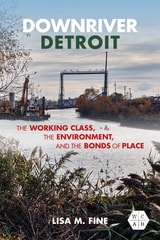
Downriver Detroit
The Working Class, the Environment, and the Bonds of PlaceLisa M. Fine
University of Illinois Press, 2026
Lisa M. Fine examines important moments in the ongoing efforts of the area’s citizens to create a humane and habitable environment. Her analysis shows how people preserved wetlands and the river by working through sportsmen’s organizations, appealing to state agencies, and forming grassroots movements. Fueled by enduring connections to place, local unions fought a proposed nuclear power plant in the 1950s. Years later, steel workers facing the steamroller of deindustrialization tried to preserve their communities by purchasing their own company. The ties that bind gave a unique character to activism in the Downriver region, challenging stereotypes of working-class attitudes toward the environment.
A creative merger of labor and environmental history, Downriver Detroit shows that working people have a right to live in and protect the places they love.
Dreams Derailed
Undocumented Youths in the Trump EraWilliam A. Schwab
University of Arkansas Press, 2018
During the 2016 presidential campaign millions of voters, concerned about the economic impact of illegal immigration, rallied behind the notion of a border wall between the United States and Mexico. Well into the Trump presidency, immigration endures as a hotly contested issue in United States politics.
In Dreams Derailed sociologist William A. Schwab shares the stories of immigration reform advocates and follows up on stories told in his 2013 book Right to DREAM, which argued in favor of the DREAM Act that would have provided conditional residency for undocumented youth brought to the United States as children, a version of which was later enacted by executive order and referred to as DACA (Deferred Action for Childhood Arrivals).
Taking as its focal point the Trump administration’s decision to rescind Obama-era DACA protection, Dreams Derailed delves into the economic, political, and social factors that inform the public conversation about immigration, making a clear case for the many benefits of inclusive policies and the protection of undocumented youths. Schwab also takes a close look at the factors that carried Donald Trump to the White House, demonstrates how economic upheaval and the issue of immigration influenced the 2016 presidential election, analyzes current immigration laws, and suggests next steps for reform.
Drilled to Write
Becoming a Cadet Writer at a Senior Military Collegeby J. Michael Rifenburg
Utah State University Press, 2022
Drilled to Write offers a rich account of US Army cadets navigating the unique demands of Army writing at a senior military college. In this longitudinal case study, J. Michael Rifenburg follows one cadet, Logan Blackwell, for four years and traces how he conceptualizes Army writing and Army genres through immersion in military science classes, tactical exercises in the Appalachian Mountains, and specialized programs like Airborne School.
Drawing from research on rhetorical genre studies, writing transfer, and materiality, Drilled to Write speaks to scholars in writing studies committed to capturing how students understand their own writing development. Collectively, these chapters articulate four ways Blackwell leveraged resources through ROTC to become a cadet writer at this military college. Each chapter is dedicated to one year of his undergraduate experience with focus on curricular writing for his business management major and military science classes as well as his extracurricular writing, like his Ballroom Dance Club bylaws and a three-thousand-word short story.
In Drilled to Write, Rifenburg invites readers to see how cadets are positioned between civilian and military life—a curiously liminal space where they develop as writers. Using Army ROTC as an entry into genre theory and larger conversations about the role higher education plays in developing Army officers, he shows how writing students develop genre awareness and flexibility while forging a personal identity.

Drop Dead
Performance in Crisis, 1970s New YorkHillary Miller
Northwestern University Press, 2016
Winner, 2017 American Theater and Drama Society John W. Frick Book Award
Winner, 2017 ASTR Barnard Hewitt Award for Outstanding Research in Theater History
Hillary Miller’s Drop Dead: Performance in Crisis, 1970s New York offers a fascinating and comprehensive exploration of how the city’s financial crisis shaped theater and performance practices in this turbulent decade and beyond.
New York City’s performing arts community suffered greatly from a severe reduction in grants in the mid-1970s. A scholar and playwright, Miller skillfully synthesizes economics, urban planning, tourism, and immigration to create a map of the interconnected urban landscape and to contextualize the struggle for resources. She reviews how numerous theater professionals, including Ellen Stewart of La MaMa E.T.C. and Julie Bovasso, Vinnette Carroll, and Joseph Papp of The Public Theater, developed innovative responses to survive the crisis.
Combining theater history and close readings of productions, each of Miller’s chapters is a case study focusing on a company, a production, or an element of New York’s theater infrastructure. Her expansive survey visits Broadway, Off-, Off-Off-, Coney Island, the Brooklyn Academy of Music, community theater, and other locations to bring into focus the large-scale changes wrought by the financial realignments of the day.
Nuanced, multifaceted, and engaging, Miller’s lively account of the financial crisis and resulting transformation of the performing arts community offers an essential chronicle of the decade and demonstrates its importance in understanding our present moment.
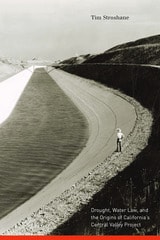
Drought, Water Law, and the Origins of California's Central Valley Project
Tim Stroshane
University of Nevada Press, 2016
Dual City
Restructuring New YorkJohn H. Mollenkopf
Russell Sage Foundation, 1991
Dying Inside
The HIV/AIDS Ward at Limestone PrisonBenjamin Fleury-Steiner
University of Michigan Press, 2008
"The HIV+ men incarcerated in Limestone Prison's Dorm 16 were put there to be forgotten. Not only do Benjamin Fleury-Steiner and Carla Crowder bring these men to life, Fleury-Steiner and Crowder also insist on placing these men in the middle of critical conversations about health policy, mass incarceration, and race. Dense with firsthand accounts, Dying Inside is a nimble, far-ranging and unblinking look at the cruelty inherent in our current penal policies."
---Lisa Kung, Director, Southern Center for Human Rights
"The looming prison health crisis, documented here at its extreme, is a shocking stain on American values and a clear opportunity to rethink our carceral approach to security."
---Jonathan Simon, University of California, Berkeley
"Dying Inside is a riveting account of a health crisis in a hidden prison facility."
---Michael Musheno, San Francisco State University, and coauthor of Deployed
"This fresh and original study should prick all of our consciences about the horrific consequences of the massive carceral state the United States has built over the last three decades."
---Marie Gottschalk, University of Pennsylvania, and author of The Prison and the Gallows
"An important, bold, and humanitarian book."
---Alison Liebling, University of Cambridge
"Fleury-Steiner makes a compelling case that inmate health care in America's prisons and jails has reached the point of catastrophe."
---Sharon Dolovich, University of California, Los Angeles
"Fleury-Steiner's persuasive argument not only exposes the sins of commission and omission on prison cellblocks, but also does an excellent job of showing how these problems are the natural result of our nation's shortsighted and punitive criminal justice policy."
---Allen Hornblum, Temple University, and author of Sentenced to Science
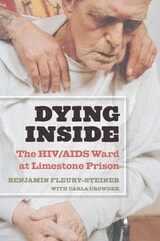
Dying Inside brings the reader face-to-face with the nightmarish conditions inside Limestone Prison's Dorm 16---the segregated HIV ward. Here, patients chained to beds share their space with insects and vermin in the filthy, drafty rooms, and contagious diseases spread like wildfire through a population with untreated---or poorly managed at best---HIV.
While Dorm 16 is a particularly horrific human rights tragedy, it is also a symptom of a disease afflicting the entire U.S. prison system. In recent decades, prison populations have exploded as Americans made mass incarceration the solution to crime, drugs, and other social problems even as privatization of prison services, especially health care, resulted in an overcrowded, underfunded system in which the most marginalized members of our society slowly wither from what the author calls "lethal abandonment."
This eye-opening account of one prison's failed health-care standards is a wake-up call, asking us to examine how we treat our forgotten citizens and compelling us to rethink the American prison system in this increasingly punitive age.

Dying Inside
The HIV/AIDS Ward at Limestone PrisonBenjamin Fleury-Steiner
University of Michigan Press, 2009
"The HIV+ men incarcerated in Limestone Prison's Dorm 16 were put there to be forgotten. Not only do Benjamin Fleury-Steiner and Carla Crowder bring these men to life, Fleury-Steiner and Crowder also insist on placing these men in the middle of critical conversations about health policy, mass incarceration, and race. Dense with firsthand accounts, Dying Inside is a nimble, far-ranging and unblinking look at the cruelty inherent in our current penal policies."
---Lisa Kung, Director, Southern Center for Human Rights
"The looming prison health crisis, documented here at its extreme, is a shocking stain on American values and a clear opportunity to rethink our carceral approach to security."
---Jonathan Simon, University of California, Berkeley
"Dying Inside is a riveting account of a health crisis in a hidden prison facility."
---Michael Musheno, San Francisco State University, and coauthor of Deployed
"This fresh and original study should prick all of our consciences about the horrific consequences of the massive carceral state the United States has built over the last three decades."
---Marie Gottschalk, University of Pennsylvania, and author of The Prison and the Gallows
"An important, bold, and humanitarian book."
---Alison Liebling, University of Cambridge
"Fleury-Steiner makes a compelling case that inmate health care in America's prisons and jails has reached the point of catastrophe."
---Sharon Dolovich, University of California, Los Angeles
"Fleury-Steiner's persuasive argument not only exposes the sins of commission and omission on prison cellblocks, but also does an excellent job of showing how these problems are the natural result of our nation's shortsighted and punitive criminal justice policy."
---Allen Hornblum, Temple University, and author of Sentenced to Science
Dying Inside brings the reader face-to-face with the nightmarish conditions inside Limestone Prison's Dorm 16---the segregated HIV ward. Here, patients chained to beds share their space with insects and vermin in the filthy, drafty rooms, and contagious diseases spread like wildfire through a population with untreated---or poorly managed at best---HIV.
While Dorm 16 is a particularly horrific human rights tragedy, it is also a symptom of a disease afflicting the entire U.S. prison system. In recent decades, prison populations have exploded as Americans made mass incarceration the solution to crime, drugs, and other social problems even as privatization of prison services, especially health care, resulted in an overcrowded, underfunded system in which the most marginalized members of our society slowly wither from what the author calls "lethal abandonment."
This eye-opening account of one prison's failed health-care standards is a wake-up call, asking us to examine how we treat our forgotten citizens and compelling us to rethink the American prison system in this increasingly punitive age.