Results by title
2194 books match the query 'Women's Studies' and 97 start with d
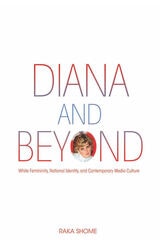
Diana and Beyond
White Femininity, National Identity, and Contemporary Media CultureRaka Shome
University of Illinois Press, 2014
Raka Shome investigates the factors that led to this defining cultural/political moment and unravels just what the Diana phenomenon represented for comprehending the relation between white femininity and the nation in postcolonial Britain and its connection to other white female celebrity figures in the millennium. Digging into the media and cultural artifacts that circulated in the wake of Diana's death, Shome investigates a range of theoretical issues surrounding motherhood and the production of national masculinities, global humanitarianism, transnational masculinities, the intersection of fashion and white femininity, and spirituality and national modernity. Her analysis explores how images of white femininity in popular culture intersect with issues of race, gender, class, sexuality, and transnationality in the performance of Anglo national modernities.
Moving from ideas on the positioning of privileged white women in global neoliberalism to the emergence of new formations of white femininity in the millennium , Diana and Beyond fearlessly explains the late princess's never-ending renaissance and ongoing cultural relevance.

Digging for Hope
A Feminist Ethnography in the Land of Mass GravesR. Aída Hernández Castillo
University of Arizona Press, 2026
Through physical and spiritual practices such as exhumation, mourning, and poetic remembrance, these women reclaim dignity for the dead and challenge a society that has normalized disappearance. At the heart of this book is a profound exploration of what Hernández Castillo calls a “pedagogy of love”—a political and ethical framework rooted in care, solidarity, and the refusal to forget. These women are not only searching for bodies; they are building emotional communities, crafting new languages of justice, and offering a reimagining of what it means to resist violence. Their practices, often overlooked by traditional scholarship, restore humanity and dignify the disappeared.
Digging for Hope is essential reading for anyone seeking to understand the gendered dimensions of violence and the grassroots movements that rise in response. With clarity and compassion, Hernández Castillo brings readers into the intimate spaces of grief and resistance, offering a model for feminist ethnography that is both rigorous and deeply humane.
Dignity
Lower Income Women Tell of Their Lives and StrugglesFran Leeper Buss
University of Michigan Press, 1985
Dilemmas of Difference
Indigenous Women and the Limits of Postcolonial Development PolicySarah A. Radcliffe
Duke University Press, 2015
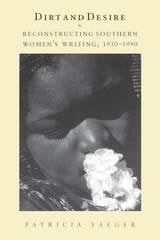
Dirt and Desire
Reconstructing Southern Women's Writing, 1930-1990Patricia Yaeger
University of Chicago Press, 2000
For Yaeger, works by black and white southern women writers reveal a shared obsession with monstrosity and the grotesque and with the strange zones of contact between black and white, such as the daily trauma of underpaid labor and the workings of racial and gender politics in the unnoticed yet all too familiar everyday. Yaeger also excavates a southern fascination with dirt—who owns it, who cleans it, and whose bodies are buried in it.
Yaeger's brilliant, theoretically informed readings of Zora Neale Hurston, Harper Lee, Carson McCullers, Toni Morrison, Flannery O'Connor, Alice Walker, and Eudora Welty (among many others) explode the mystifications of southern literary tradition and forge a new path for southern studies.
The book won the Barbara Perkins and George Perkins Award given by the Society for the Study of Narrative Literature.
Disarming Manhood
Roots of Ethical ResistanceDavid A.J. Richards
Ohio University Press, 2005
Disciplining Feminism
From Social Activism to Academic DiscourseEllen Messer-Davidow
Duke University Press, 2002
Working within a firm theoretical framework and drawing on years of both personal involvement and fieldwork in and outside of academe, Messer-Davidow traces the metamorphosis of a once insurgent project in three steps. After illustrating how early feminists meshed their activism with institutional processes to gain footholds on campuses and in disciplinary associations, she turns to the relay between institutionalization and intellectualization, examining the way feminist studies coalesced into an academic field beginning in the mid-1970s. Without denying the successes of this feminist passage into the established system of higher learning, Messer-Davidow nonetheless insists that the process of institutionalization itself necessarily alters all new entrants—no matter how radical. Her final chapters look to the future of feminism in an increasingly conservative environment and to the possibilities for social change in general.
Disciplining Feminism’s interdisciplinary scope and cross-sector analysis will attract a broad range of readers interested in women’s studies, American higher education, and the dynamics of social transformation.
Discourses of Sexuality
From Aristotle to AIDSDonna C. Stanton, Editor
University of Michigan Press, 1993
Discriminating Sex
White Leisure and the Making of the American "Oriental"Amy Sueyoshi
University of Illinois Press, 2018
Amy Sueyoshi draws on everything from newspapers to felony case files to oral histories in order to examine how whites' pursuit of gender and sexual fulfillment gave rise to racial caricatures. As she reveals, white reporters, writers, artists, and others conflated Chinese and Japanese, previously seen as two races, into one. There emerged the Oriental—a single pan-Asian American stereotype weighted with sexual and gender meaning. Sueyoshi bridges feminist, queer, and ethnic studies to show how the white quest to forge new frontiers in gender and sexual freedom reinforced—and spawned—racial inequality through the ever evolving Oriental.
Informed and fascinating, Discriminating Sex reconsiders the origins and expression of racial stereotyping in an American city.

Discrimination by Design
A Feminist Critique of the Man-Made EnvironmentLeslie Kanes Weisman
University of Illinois Press, 1992
-- Women's Review of Books
"A readable account of the force of male dominance in the built environment. . . . Those looking to this book for a clearer vision of the changes that need to be made in the organization and design of housing, work, and public space to foster gender equality will not be disappointed."
-- Journal of Planning Education and Research
"A pioneering work that will pave new territory not only for feminists but all those who are prepared to rethink environmental and societal issues."
-- Choice
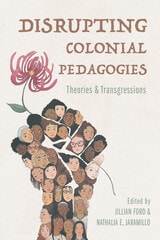
Disrupting Colonial Pedagogies
Theories and TransgressionsEdited by Jillian Ford and Nathalia Jaramillo
University of Illinois Press, 2023
Jillian Ford and Nathalia E. Jaramillo edit a collection of writings by women that examine womanist worldviews in philosophy, theory, curriculum, public health, and education. Drawing on thinkers like bell hooks and Cynthia Dillard, the essayists challenge the colonizing hegemonies that raise and sustain patriarchal and male-centered systems of teaching and learning. Part One examines how womanist theorizing and creative activity offer a space to study the impact of conquest and colonization on the Black female body and spirit. In Part Two, the contributors look at ways of using text, philosophy, and research methodologies to challenge colonizing and colonial definitions of womanhood, enlightenment, and well-being. The essays in Part Three undo the colonial pedagogical project and share the insights they have gained by freeing themselves from its chokehold.
Powerful and interdisciplinary, Disrupting Colonial Pedagogies challenges colonialism and its influence on education to advance freer and more just forms of knowledge making.
Contributors: Silvia García Aguilár, Khalilah Ali, Angela Malone Cartwright, Adriana Diego, LeConté Dill, Sameena Eidoo, Genevieve Flores-Haro, Jillian Ford, Leena Her, Nathalia E. Jaramillo, Patricia Krueger-Henney, Claudia Lozáno, Liliana Manriquez, Alberta Salazár, León Salazár, and Lorri Santamaría

Disruptive Acts
The New Woman in Fin-de-Siecle FranceMary Louise Roberts
University of Chicago Press, 2002
Mary Louise Roberts examines a constellation of famous new women active in journalism and the theater, including Marguerite Durand, founder of the women's newspaper La Fronde; the journalists Séverine and Gyp; and the actress Sarah Bernhardt. Roberts demonstrates how the tolerance for playacting in both these arenas allowed new women to stage acts that profoundly disrupted accepted gender roles. The existence of La Fronde itself was such an act, because it demonstrated that women could write just as well about the same subjects as men—even about the volatile Dreyfus Affair. When female reporters for La Fronde put on disguises to get a scoop or wrote under a pseudonym, and when actresses played men on stage, they demonstrated that gender identities were not fixed or natural, but inherently unstable. Thanks to the adventures of new women like these, conventional domestic femininity was exposed as a choice, not a destiny.
Lively, sophisticated, and persuasive, Disruptive Acts will be a major work not just for historians, but also for scholars of cultural studies, gender studies, and the theater.
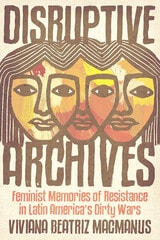
Disruptive Archives
Feminist Memories of Resistance in Latin America's Dirty WarsViviana Beatriz MacManus
University of Illinois Press, 2020
Haunting and methodologically innovative, Disruptive Archives attests to the power of women's storytelling and memory in the struggle to reclaim history.
Disruptive Voices
The Possibilities of Feminist ResearchMichelle Fine
University of Michigan Press, 1992
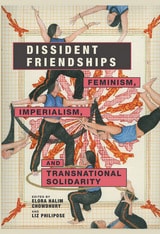
Dissident Friendships
Feminism, Imperialism, and Transnational SolidarityEdited by Elora Halim Chowdhury and Liz Philipose
University of Illinois Press, 2016
Disturbing Practices
History, Sexuality, and Women's Experience of Modern WarLaura Doan
University of Chicago Press, 2013
Divas in the Convent
Nuns, Music, and Defiance in Seventeenth-Century ItalyCraig A. Monson
University of Chicago Press, 2012

Divas on Screen
Black Women in American FilmMia Mask
University of Illinois Press, 2008
This insightful study places African American women's stardom in historical and industrial contexts by examining the star personae of five African American women: Dorothy Dandridge, Pam Grier, Whoopi Goldberg, Oprah Winfrey, and Halle Berry. Interpreting each woman's celebrity as predicated on a brand of charismatic authority, Mia Mask shows how these female stars have ultimately complicated the conventional discursive practices through which blackness and womanhood have been represented in commercial cinema, independent film, and network television.
Mask examines the function of these stars in seminal yet underanalyzed films. She considers Dandridge's status as a sexual commodity in films such as Tamango, revealing the contradictory discourses regarding race and sexuality in segregation-era American culture. Grier's feminist-camp performances in sexploitation pictures Women in Cages and The Big Doll House and her subsequent blaxploitation vehicles Coffy and Foxy Brown highlight a similar tension between representing African American women as both objectified stereotypes and powerful, self-defining icons. Mask reads Goldberg's transforming habits in Sister Act and The Associate as representative of her unruly comedic routines, while Winfrey's daily television performance as self-made, self-help guru echoes Horatio Alger narratives of success. Finally, Mask analyzes Berry's meteoric success by acknowledging the ways in which Dandridge's career made Berry's possible.
Diversifying STEM
Multidisciplinary Perspectives on Race and GenderEbony O. McGee
Rutgers University Press, 2020
Research frequently neglects the important ways that race and gender intersect within the complex structural dynamics of STEM. Diversifying STEM fills this void, bringing together a wide array of perspectives and the voices of a number of multidisciplinary scholars. The essays cover three main areas: the widely-held ideology that science and mathematics are “value-free,” which promotes pedagogies of colorblindness in the classroom as well as an avoidance of discussions around using mathematics and science to promote social justice; how male and female students of color experience the intersection of racist and sexist structures that lead to general underrepresentation and marginalization; and recognizing that although there are no quick fixes, there exists evidence-based research suggesting concrete ways of doing a better job of including individuals of color in STEM. As a whole this volume will allow practitioners, teachers, students, faculty, and professionals to reimagine STEM across a variety of educational paradigms, perspectives, and disciplines, which is critical in finding solutions that broaden the participation of historically underrepresented groups within the STEM disciplines.

Diversity
Gender, Color, and CulturePhilomena Essed
University of Massachusetts Press, 1996
Essed examines these problems in a series of interrelated essays, urging us throughout the book to create a society in which diversity is accepted, encouraged, and made central to everyday life.

Do All the Good You Can
How Faith Shaped Hillary Rodham Clinton’s PoliticsGary Scott Smith
University of Illinois Press, 2023
Methodism in the public and private lives of the politician
After more than forty contentious years in the public eye, Hillary Rodham Clinton is one of the best-known political figures in the nation. Yet the strong religious faith at the heart of her politics and personal life often remains confounding, if not mysterious, to longtime observers. Even many of her admirers would be surprised to hear Clinton state that her Methodist outlook has “been a huge part of who I am and how I have seen the world, and what I believe in, and what I have tried to do in my life.”
Gary Scott Smith’s biography of Clinton’s journey in faith begins with her Methodist upbringing in Park Ridge, Illinois, where she faithfully attended worship services, Sunday school, and youth group meetings. Like many mainline Protestants, Clinton’s spiritual commitment developed gradually throughout childhood, while her combination of missionary zeal and impressive personal talents has informed her career from the time of her pro bono work at Yale on behalf of children to the present.
Her Methodist faith has been very important to many of Clinton’s high-profile endeavors and in helping her cope with the prominent travails brought on by two presidential campaigns, never-ending conservative rancor, and her husband’s infidelity. Smith’s account examines Clinton’s faith in the context of work ranging from her 1990s pursuit of healthcare reform to a “Hillary doctrine” of foreign policy focused on her longtime goal of providing basic human rights for children and women--a project she saw as essential to United States security. The result is an enlightening reconsideration of an extraordinary political figure who has defied private doubts and public controversy to live by John Wesley’s dictum: “Do all the good you can, by all the means you can, in all the ways you can, in all the places you can, at all the times you can, to all the people you can, as long as ever you can.”

Doing Comparable Worth
Gender, Class, and Pay EquityJoan Acker
Temple University Press, 1991
Doing Comparable Worth is the first empirical study of the actual process of attempting to translate into reality the idea of equal pay for work of equal value. This political ethnography documents a large project undertaken by the state of Oregon to evaluate 35,000 jobs of state employees, identify gender-based pay inequities, and remedy these inequities. The book details both the technical and political processes, showing how the technical was always political, how management manipulated and unions resisted wage redistribution, and how initial defeat was turned into partial victory for pay equity by labor union women and women's movement activists.
As a member of the legislative task force that was responsible for implementing the legislation requiring a pay equity study in Oregon, Joan Acker gives an insider's view of how job evaluation, job classification, and the formulation of an equity plan were carried out. She reveals many of the political and technical problems in doing comparable worth that are not evident to outsiders. She also places comparable worth within a feminist theoretical perspective.
In the series Women in the Political Economy, edited by Ronnie J. Steinberg.
Doing Without
Women and Work after Welfare ReformEdited by Jane Henrici
University of Arizona Press, 2006
In Doing Without, Jane Henrici brings together nine contributions to tell the story of welfare reform from inside the lives of the women who live with it. Cases from Chicago and Boston are combined with a focus on San Antonio from one of the largest multi-city investigations on welfare reform ever undertaken. The contributors argue that the employment opportunities available to poorer women, particularly single mothers and ethnic minorities, are insufficient to lift their families out of poverty. Typically marked by variable hours, inadequate wages, and short-term assignments, both employment and training programs fail to provide stability or the kinds of benefits—such as health insurance, sick days, and childcare options—that are necessary to sustain both work and family life. The chapters also examine the challenges that the women who seek assistance, and those who work in public and private agencies to provide it, together must face as they navigate ever-changing requirements and regulations, decipher alterations in Medicaid, and apply for training and education. Contributors urge that the nation should repair the social safety net for women in transition and offer genuine access to jobs with wages that actually meet the cost of living.
Doing Women's Film History
Reframing Cinemas, Past and FutureEdited by Christine Gledhill and Julia Knight
University of Illinois Press, 2015
Dolor y Alegria
Women and Social Change in Urban MexicoSarah LeVine; In Collaboration with Clara Sunderland Correa
University of Wisconsin Press, 1993
While many earlier publications have focused on the poor of Latin America who live at the margins of urban life, Dolor y Alegría explores the experiences of ordinary working and lower-middle class women, most of them transplants from villages and small towns to a densely populated city neighborhood. In their early years, many experienced family disruption, emotional deprivation, and economic hardship; but steadily increasing educational opportunities, improved health care, and easily available contraception have significantly altered how the younger women relate to their families and the larger society.
Today’s Mexican schoolgirl, LeVine shows, is encouraged to apply herself to her studies for her own benefit, and the longer she remains in school, the greater the self-confidence she will carry with her into the world of work and later into marriage and motherhood. Hard economic times have forced many married women into the workplace where their sense of personal efficacy is enhanced; at the same time, in the domestic sphere, their earnings allow them greater negotiating power with husbands and male relatives. Changes are not confined to the younger generation. Older women are enjoying better health and living longer; but with adult children either less able or willing to accept responsibility for aged parents than they were in the past, anxiety runs high and family relations are often strained.
Dolor y Alegría takes a close look at the efforts of three generations of Mexican women to redefine themselves in both family and workplace; it shows that today’s young woman has very different expectations of herself and others from those that her grandmother or even her mother had.
Domestic Contradictions
Race and Gendered Citizenship from Reconstruction to Welfare ReformPriya Kandaswamy
Duke University Press, 2021
Domestic Economies
Women, Work, and the American Dream in Los AngelesSusanna Rosenbaum
Duke University Press, 2017
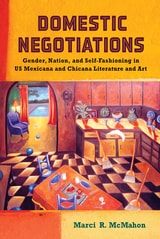
Domestic Negotiations
Gender, Nation, and Self-Fashioning in US Mexicana and Chicana Literature and ArtMcMahon, Marci R
Rutgers University Press, 2013
This interdisciplinary study explores how US Mexicana and Chicana authors and artists across different historical periods and regions use domestic space to actively claim their own histories. Through “negotiation”—a concept that accounts for artistic practices outside the duality of resistance/accommodation—and “self-fashioning,” Marci R. McMahon demonstrates how the very sites of domesticity are used to engage the many political and recurring debates about race, gender, and immigration affecting Mexicanas and Chicanas from the early twentieth century to today.
Domestic Negotiations covers a range of archival sources and cultural productions, including the self-fashioning of the “chili queens” of San Antonio, Texas, Jovita González’s romance novel Caballero, the home economics career and cookbooks of Fabiola Cabeza de Baca, Sandra Cisneros’s “purple house controversy” and her acclaimed text The House on Mango Street, Patssi Valdez’s self-fashioning and performance of domestic space in Asco and as a solo artist, Diane Rodríguez’s performance of domesticity in Hollywood television and direction of domestic roles in theater, and Alma López’s digital prints of domestic labor in Los Angeles. With intimate close readings, McMahon shows how Mexicanas and Chicanas shape domestic space to construct identities outside of gendered, racialized, and xenophobic rhetoric.
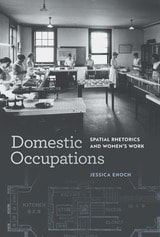
Domestic Occupations
Spatial Rhetorics and Women’s WorkJessica Enoch
Southern Illinois University Press, 2019
Enoch explores how three different groups of women workers—teachers, domestic scientists, and World War II factory employees—contended with the physical and ideological space of the home, examining how this everyday yet powerful space thwarted or enabled their financial and familial security as well as their intellectual engagements and work-related opportunities.
Domestic Occupations demonstrates a multimodal and multigenre research method for conducting spatio-rhetorical analysis that serves as a model for new kinds of thinking and new kinds of scholarship. This study adds historical depth and exigency to an important contemporary conversation in the public sphere about how women’s ties to the home inflect their access to work and professional advancement.
Domestic Violence at the Margins
Readings on Race, Class, Gender, and CultureSokoloff, Natalie J.
Rutgers University Press, 2005
"An exciting and powerful collection that eloquently critiques some of the current thinking in domestic violence and raises key concerns for advocates and scholars working in the area."—Sujata Warrier, president, board of directors, Manavi: An organization for South Asian women
"Sokoloff has assembled an impressive array of authors who challenge us to ‘think outside of our contemporary domestic violence box.’"—Angela M. Moore Parmley, chief, violence and victimization research division, National Institute of Justice
This groundbreaking anthology reorients the field of domestic violence research by bringing long-overdue attention to the structural forms of oppression in communities marginalized by race, ethnicity, religion, sexuality, or social class.
Reprints of the most influential recent work in the field as well as more than a dozen newly commissioned essays explore theoretical issues, current research, service provision, and activism among Latinos, African Americans, Asian Americans, Jewish Americans, and lesbians. The volume rejects simplistic analyses of the role of culture in domestic violence by elucidating the support systems available to battered women within different cultures, while at the same time addressing the distinct problems generated by that culture. Together, the essays pose a compelling challenge to stereotypical images of battered women that are racist, homophobic, and xenophobic.
The most up-to-date and comprehensive picture of domestic violence available, this anthology is an essential text for courses in sociology, criminology, social work, and women’s studies. Beyond the classroom, it provides critical information and resources for professionals working in domestic violence services, advocacy, social work, and law enforcement.
Domesticity And Dirt
Housewives and Domestic Servants in the United States, 1920-1945Phyllis Palmer
Temple University Press, 1991
In the era after Suffrage, white middle-class housewives abandoned moves toward paid work for themselves, embraced domestic life, and felt entitled to servants. In Domesticity and Dirt, Phyllis Palmer examines the cultural norms that led such women to take on the ornamental and emotional elements of the job while relegating the hard physical work and demeaning service tasks to servants—mainly women of color. Using novels, films, magazine articles, home economics texts, and government-funded domestic training course manuals, the author details cultural expectations about middle-class homelife.
Palmer describes how government-funded education programs encouraged the divisions of labor and identity and undercut domestic workers’ organized efforts during the 1930s to win inclusion in New Deal programs regulating labor conditions. Aided by less powerful black civil rights groups, without the assistance of trade unions or women’s clubs, domestics failed to win legal protections and the legal authority and self-respect these brought to covered workers. The author also reveals how middle- class women responded ambivalently to the call to aid women workers when labor reforms threatened their domestic arrangements.
Throughout her study, Palmer questions why white middle-class women looked to new technology and domestic help to deal with cultural demands upon "the perfect housewife" rather than expecting their husbands to help. When the supply of servants declined during the 1950s, middle-class housewives were left isolated with lots of housework. Although they rapidly followed their servants into paid work outside the home, they remain responsible for housework and child care.
In the series Women in the Political Economy, edited by Ronnie J. Steinberg.

Dominatrix
Gender, Eroticism, and Control in the DungeonDanielle J. Lindemann
University of Chicago Press, 2012

Doris Lessing
The Poetics of ChangeGayle Greene
University of Michigan Press, 1997
Doris Lessing has been a chronicler of our age for nearly half a century, and a study of her writing career does not yield easy generalizations. Difficult though she is to categorize, she is always concerned with change, with a search for "something new" against "the nightmare repetition" of history. The feminist quest she articulated in The Children of Violence and The Golden Notebook entered the culture with the force of a new myth: these books changed lives. The Golden Notebook--together with such works as The Second Sex and The Feminine Mystique--raised the consciousness of a generation of women readers and played a major part in making the second wave of feminism. It is the power of Lessing's novels to change people's lives, the effect she had raising the consciousness of a generation of women and the effect she continues to have on young readers, that is the subject of this book.
Gayle Greene employs an eclectic range of approaches (psychoanalytic, Marxist, biographical, historical, intertextual, formalist, feminist) to shed new light on Lessing's remarkable achievement. She sees Lessing as a feminist writer, not in offering strong female role models who climb top the top of existing social structures, but in envisioning, and indeed helping to bring about, a transformation of those structures. Lessing critiques Western values of individualism, competition, and materialism in terms similar to those developed by feminism; and, in getting us to view our culture from without, in teaching us to read cultural constructs as systems, her novels perform the deconstructing and demystifying work of feminism.
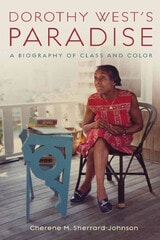
Dorothy West's Paradise
A Biography of Class and ColorSherrard-Johnson, Cherene
Rutgers University Press, 2012
Dorothy West is best known as one of the youngest writers involved in the Harlem Renaissance. Subsequently, her work is read as a product of the urban aesthetics of this artistic movement. But West was also intimately rooted in a very different milieu—Oak Bluffs, an exclusive retreat for African Americans on Martha’s Vineyard. She played an integral role in the development and preservation of that community. In the years between publishing her two novels, 1948’s The Living is Easy and the 1995 bestseller The Wedding, she worked as a columnist for the Vineyard Gazette.
Dorothy West’s Paradise captures the scope of the author’s long life and career, reading it alongside the unique cultural geography of Oak Bluffs and its history as an elite African American enclave—a place that West envisioned both as a separatist refuge and as a space for interracial contact. An essential book for both fans of West’s fiction and students of race, class, and American women’s lives, Dorothy West’s Paradise offers an intimate biography of an important author and a privileged glimpse into the society that shaped her work.
Downtown Ladies
Informal Commercial Importers, a Haitian Anthropologist and Self-Making in JamaicaGina A. Ulysse
University of Chicago Press, 2008
Both by-products of and participants in globalization, ICIs operate on multiple levels and, since their emergence in the 1970s, have made significant contributions to the regional, national, and global economies. Gina Ulysse carefully explores how ICIs, determined to be self-employed, struggle with government regulation and other social tensions to negotiate their autonomy. Informing this story of self-fashioning with reflections on her own experience as a young Haitian anthropologist, Ulysse combines the study of political economy with the study of individual and collective identity to reveal the uneven consequences of disrupting traditional class, color, and gender codes in individual societies and around the world.

Downwardly Global
Women, Work, and Citizenship in the Pakistani DiasporaLalaie Ameeriar
Duke University Press, 2017

Doña María's Story
Life History, Memory, and Political IdentityDaniel James
Duke University Press, 2000
Doña María’s testimony is grounded in both the local context (based on the author’s thirteen years of historical and ethnographic research in Berisso) and a broader national narrative. In this way, it differs from the dominant genre of women’s testimonial literature, and much recent ethnographic work in Latin America, which have often neglected historical and communal contextualization in order to celebrate individual agency and self-construction. James examines in particular the ways that gender influences Doña María’s representation of her story. He is careful to acknowledge that oral history challenges the historian to sort through complicated sets of motivations and desires—the historian’s own wish to uncover “the truth” of an informant’s life and the interviewee’s hope to make sense of her or his past and encode it with myths of the self. This work is thus James’s effort to present his research and his relationship with Doña María with both theoretical sophistication and recognition of their mutual affection.
While written by a historian, Doña María’s Story also engages with concerns drawn from such disciplines as anthropology, cultural studies, and literary criticism. It will be especially appreciated by those involved in oral, Latin American, and working-class history.
Dr. Harriot Kezia Hunt
Nineteenth-Century Physician and Woman’s Rights AdvocateMyra C. Glenn
University of Massachusetts Press, 2018
Harriot Kezia Hunt was a pioneer in a number of ways. The first woman to establish a successful medical practice in the United States, she began seeing patients in Boston in 1835 and promoted a new method of treatment by listening to women's troubles or their “heart histories.” Her unsuccessful efforts to attend lectures at Harvard's Medical School galvanized her activism in the woman's rights movement. During the 1850s she played a prominent role in the annual woman's rights conventions and was the first woman in Massachusetts to publicly protest the injustice of taxing propertied women while denying them the franchise.
In this first comprehensive, full-length biography of Hunt, Myra C. Glenn shows how this single woman from a working-class Boston home became a successful physician and noted reformer, illuminating the struggle for woman's rights and the fractious and gendered nature of medicine in antebellum America.
Dr. Mary Walker
An American Radical, 1832-1919Harris, Sharon M
Rutgers University Press, 2009
Perhaps more telling about her life are the words of an 1866 London Anglo-American Times reporter, "Her strange adventures, thrilling experiences, important services and marvelous achievements exceed anything that modern romance or fiction has produced. . . . She has been one of the greatest benefactors of her sex and of the human race."
In this biography Sharon M. Harris steers away from a simplistic view and showcases Walker as a Medal of Honor recipient, examining her work as an activist, author, and Civil War surgeon, along with the many nineteenth-century issues she championed:political, social, medical, and legal reforms, abolition, temperance, gender equality, U.S. imperialism, and the New Woman.
Rich in research and keyed to a new generation, Dr. Mary Walker captures its subject's articulate political voice, public self, and the realities of an individual whose ardent beliefs in justice helped shape the radical politics of her time.
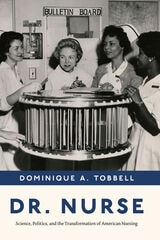
Dr. Nurse
Science, Politics, and the Transformation of American NursingDominique A. Tobbell
University of Chicago Press, 2022
Nurses represent the largest segment of the U.S. health care workforce and spend significantly more time with patients than any other member of the health care team. Dr. Nurse probes their history to examine major changes that have taken place in American health care in the second half of the twentieth century. The book reveals how federal and state health and higher education policies shaped education within health professions after World War II.
Starting in the 1950s, academic nurses sought to construct a science of nursing—distinct from that of the related biomedical or behavioral sciences—that would provide the basis for nursing practice. Their efforts transformed nursing’s labor into a valuable site of knowledge production and proved how the application of their knowledge was integral to improving patient outcomes. Exploring the knowledge claims, strategies, and politics involved as academic nurses negotiated their roles and nursing’s future, Dr. Nurse highlights how state-supported health centers have profoundly shaped nursing education and health care delivery.
Dr. Nurse
Science, Politics, and the Transformation of American NursingDominique A. Tobbell
University of Chicago Press, 2022
An analysis of the efforts of American nurses to establish nursing as an academic discipline and nurses as valued researchers in the decades after World War II.
Nurses represent the largest segment of the U.S. health care workforce and spend significantly more time with patients than any other member of the health care team. Dr. Nurse probes their history to examine major changes that have taken place in American health care in the second half of the twentieth century. The book reveals how federal and state health and higher education policies shaped education within health professions after World War II.
Starting in the 1950s, academic nurses sought to construct a science of nursing—distinct from that of the related biomedical or behavioral sciences—that would provide the basis for nursing practice. Their efforts transformed nursing’s labor into a valuable site of knowledge production and proved how the application of their knowledge was integral to improving patient outcomes. Exploring the knowledge claims, strategies, and politics involved as academic nurses negotiated their roles and nursing’s future, Dr. Nurse highlights how state-supported health centers have profoundly shaped nursing education and health care delivery.

Dreaming of a Mail-Order Husband
Russian-American Internet RomanceEricka Johnson
Duke University Press, 2007
Each chapter presents one woman’s story and then links it to a discussion of gender roles, the mail-order bride industry, and the severe economic and social constraints of life in Russia. The transitional economy has often left people, after a month’s work, either unpaid or paid unexpectedly with a supply of sunflower oil or toilet paper. Women over twenty-three are considered virtually unmarriageable in Russian society. Russia has a large population of women who are single, divorced, or widowed, who would like to be married yet feel that they have no chance finding a Russian husband. Grim realities such as these motivate women to seek better lives abroad. For many of those seeking a mail-order husband, children or parents play significant roles in the search for better lives, and they play a role in Johnson’s account as well. In addition to her research in the former Soviet Union, Johnson conducted interviews in the United States, and she shares the insights—about dating, marriage, and cross-cultural communication—of a Russian-American married couple who met via the Internet.

Dreams, Questions, Struggles
South Asian Women in BritainAmrit Wilson
Pluto Press, 2006
This book explores the lives and struggles of two generations of British Asian women to present a political account of their experiences: personal and public, individual and collective, their struggles take on power structures within the family, the community and, on occasion, the British state.
Combining their personal testimony within a theoretical framework, Amrit Wilson locates their experiences in the wider context of global and regional politics. She examines what impact the feminist movement has had on their lives, and explores issues such as domestic violence, Asian marriages, representations of Asian women, mental disturbance and suicide.

Dressed for Freedom
The Fashionable Politics of American FeminismEinav Rabinovitch-Fox
University of Illinois Press, 2021
A fascinating account of clothing as an everyday feminist practice, Dressed for Freedom brings fashion into discussions of American feminism during the long twentieth century.

Driven toward Madness
The Fugitive Slave Margaret Garner and Tragedy on the OhioNikki M. Taylor
Ohio University Press, 2016
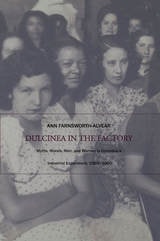
Dulcinea in the Factory
Myths, Morals, Men, and Women in Colombia's Industrial Experiment, 1905-1960Ann Farnsworth-Alvear
Duke University Press, 2000
Ann Farnsworth-Alvear’s analyses of archived personnel records, internal factory correspondence, printed regulations, and company magazines are combined with illuminating interviews with retired workers to allow a detailed reconstruction of the world behind the mill gate. In a place where the distinction between virgins and nonvirgins organized the labor market for women, the distance between chaste and unchaste behavior underlay a moral code that shaped working women’s self-perceptions. Farnsworth-Alvear challenges the reader to understand gender not as an opposition between female and male but rather as a normative field, marked by “proper” and “improper” ways of being female or male. Disputing the idea that the shift in the mills’ workforce over several decades from mainly women to almost exclusively men was based solely on economic factors, the author shows how gender and class, as social practices, converged to shape industrial development itself.
Innovative in its creative employment of subtle and complex material, Dulcinea in the Factory addresses long-standing debates within labor history about proletarianization and work culture. This book’s focus on Colombia will make it valuable to Latin Americanists, but it will also appeal to a wide readership beyond Latin American and labor studies, including historians and sociologists, as well as students of women’s studies, social movements, and anthropology.
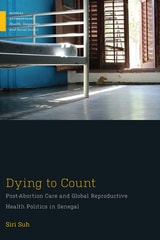
Dying to Count
Post-Abortion Care and Global Reproductive Health Politics in SenegalSiri Suh
Rutgers University Press, 2021