Results by title
28164 books match the query 'History' and 908 start with d

Dark December
The Full Account of the Battle of the BulgeRobert E. Merriam
Westholme Publishing, 2011
One of the Most Important Histories of the Greatest Battle on the Western Front in World War II
“Dark December occupies a distinguished place among war books. Every paragraph is based upon evidence, not flimsy wartime rumors. Technical enough for the professional, accurate enough for the historian (in fact, it is history of the best), it is lucid and understandable for the general reader.”—New York Herald Tribune
“If other veterans of the Army’s historical division can maintain Mr. Merriam’s high standard of stimulating, critical and painstaking work, we will be fortunate. Dark December can be heartily recommended to anyone faintly interested in the war.”—New York Times
“The book explodes a number of myths which have been winning their improper way into general belief.” —Arthur Schlesinger, Jr., Booklist
The massive German counteroffensive through Belgium’s Ardennes forest in December 1944 took the American and British armies by surprise and changed the outcome of the war. With whole divisions destroyed and decimated, the American army scrambled to contain the German threat, while also trying to determine how such an attack had gone undetected. The Americans succeeded in winning the month-long battle, commonly known as the Battle of the Bulge, through the tenacity of several pockets of troops, notably those in the Belgian town of Bastogne, and the remarkable rapid movement of Patton’s Third Army to seal the breech in the American lines. The battle stalled the British and American advances and lengthened the war with the result that the Soviet Union was able to make greater gains in Europe than previously anticipated. Dark December is a thorough and engrossing examination of the Battle of the Bulge by a historian who had the opportunity to prepare notes as the battle was occurring and consult classified American as well as German records. Notably, the book contains unique and critical information, including details gleaned from interviews conducted by the author with commanding officers on both sides, some of which are the only reports gathered from these sources. Originally published in 1947, this the first paperback edition with the complete original text and maps.
Dark Designs and Visual Culture
Michele Wallace
Duke University Press, 2004
Beginning with a new introduction in which Wallace reflects on her life and career, this volume includes other autobiographical essays; articles focused on popular culture, the arts, and literary theory; and explorations of issues in black visual culture. Wallace discusses growing up in Harlem; how she dealt with the media attention and criticism she received for Black Macho and the Myth of the Superwoman, which was published when she was just twenty-seven years old; and her relationship with her family, especially her mother, the well-known artist Faith Ringgold. The many articles devoted to black visual culture range from the historical tragedy of the Hottentot Venus, an African woman displayed as a curiosity in nineteenth-century Europe, to films that sexualize the black body—such as Watermelon Woman, Gone with the Wind, and Paris Is Burning. Whether writing about the Anita Hill–Clarence Thomas hearings, rap music, the Million Man March, Toshi Reagon, multiculturalism, Marlon Riggs, or a nativity play in Bedford Stuyvesant, Wallace is a bold, incisive critic. Dark Designs and Visual Culture brings the scope of her career and thought into sharp focus.

Dark End Of The Street
Margins in American Vanguard PoetryMaria Damon
University of Minnesota Press, 1993
Damon foregrounds a number of modern American poets work and lives in order to argue that the American avant-garde is located in the experimental literary works of social "outsiders." Discussed is the work of Black/Jewish surrealist street poet Bob Kaufman, Boston-Brahmin Robert Lowell and three teenaged women writing from a South Boston housing project, pre-Stonewall gay poets Jack Spicer and Robert Duncan, and Jewish lesbian-in-exile Gertrude Stein.
"An engaging and important book. Damon's sophisticated, theoretical approaches to American verse, coupled with her fresh, writerly style in The Dark End of The Street, put her on the forefront of American poetry's next generation of literary criticism." -American Literature"A work of art as well as a work of criticism. Addresses important questions about art and social life, about the margins and the center, and about oppression and suppression." -George Lipsitz
Dark Hope
Working for Peace in Israel and PalestineDavid Shulman
University of Chicago Press, 2007
For decades, we’ve been shocked by images of violent clashes between Israelis and Palestinians in the West Bank and Gaza. But for all their power, those images leave us at a loss: from our vantage at home, it’s hard for us to imagine the struggles of those living in the midst of the fighting. Now, American-born Israeli David Shulman takes us right into the heart of the conflict with Dark Hope, an eye-opening chronicle of his work as a member of the peace group Ta‘ayush, which takes its name from the Arabic for “living together.”
Though Shulman never denies the complexity of the issues fueling the conflict—nor the culpability of people on both sides—he forcefully clarifies the injustices perpetrated by Israel by showing us the human dimension of the occupation. Here we meet Palestinians whose houses have been blown up by the Israeli army, shepherds whose sheep have been poisoned by settlers, farmers stripped of their land by Israel’s dividing wall. We watch as whip-swinging police on horseback attack crowds of nonviolent demonstrators, as Israeli settlers shoot innocent Palestinians harvesting olives, and as families and communities become utterly destroyed by the unrelenting violence of the occupation.
Opposing such injustices, Shulman and his companions—Israeli and Palestinian both—doggedly work through checkpoints to bring aid, rebuild houses, and physically block the progress of the dividing wall. As they face off against police, soldiers, and hostile Israeli settlers, anger mixes with compassion, moments of kinship alternate with confrontation, and, throughout, Shulman wrestles with his duty to fight the cruelty enabled by “that dependable and devastating human failure to feel.”
With Dark Hope, Shulman has written a book of deep moral searching, an attempt to discover how his beloved Israel went wrong—and how, through acts of compassionate disobedience, it might still be brought back.
Dark Journey
Black Mississippians in the Age of Jim CrowNeil R. McMillen
University of Illinois Press, 1989
"Dark Journey is a superb piece of scholarship, a book that all students of southern and African-American history will find valuable and informative."--David J. Garrow, Georgia Historical Quarterly

Dark Laughter
Spanish Film, Comedy, and the NationJuan F. Egea
University of Wisconsin Press, 2013
Egea begins his analysis with General Franco's dictatorship in the 1960s—a regime that opened the country to new economic forces while maintaining its repressive nature—exploring key works by Luis García Berlanga, Marco Ferreri, Fernando Fernán-Gómez, and Luis Buñuel. Dark Laughter then moves to the first films of Pedro Almodóvar in the early 1980s during the Spanish political transition to democracy before examining Alex de la Iglesia and the new dark comedies of the 1990s. Analyzing this younger generation of filmmakers, Egea traces dark comedy to Spain's displays of ultramodernity such as the Universal Exposition in Seville and the Barcelona Olympic Games.
At its core, Dark Laughter is a substantial inquiry into the epistemology of comedy, the intricacies of visual modernity, and the relationship between cinema and a wider framework of representational practices.

Dark Lens
Imaging Germany, 1945Françoise Meltzer
University of Chicago Press, 2019
The ruins of war have long held the power to stupefy and appall. Can such ruins ever be persuasively depicted and comprehended? Can images of ruins force us to identify with the suffering of the enemy and raise uncomfortable questions about forgiveness and revenge?
Françoise Meltzer explores these questions in Dark Lens, which uses the images of war ruins in Nazi Germany to investigate problems of aestheticization and the representation of catastrophe. Through texts that give accounts of bombed-out towns in Germany in the last years of the war, painters’ attempts to depict the destruction, and her own mother’s photographs taken in 1945, Meltzer asks if any medium offers a direct experience of war ruins for the viewer. Refreshingly accessible and deeply personal, Dark Lens is a compelling look at the role images play in constructing memory.
Dark Mirror
African Americans and the Federal Writers' ProjectJ. J. Butts
The Ohio State University Press, 2021
Dark Side of the Light
Slavery and the French EnlightenmentLouis Sala-Molins
University of Minnesota Press, 2006
Translated into English for the first time, Dark Side of the Light scrutinizes Condorcet’s Reflections on NegroSlavery and the works of Montesquieu, Rousseau, and Diderot side by side with the Code Noir (the royal document that codified the rules of French Caribbean slavery) in order to uncover attempts to uphold the humanist project of the Enlightenment while simultaneously justifying slavery. Wielding the pen of both the ironist and the moralist, Sala-Molins demonstrates the flawed nature of these attempts and the reasons given for this denial of rights, from the imperatives of public order to the incomplete humanity of the slave (and thus the need for his progressive humanization through slavery), to the economic prosperity that depended on his labor. At the same time, Sala-Molins uses the techniques of literature to give equal weight to the perspective of the “barefooted, the starving, and the slaves” through expository prose and scenes between slave and philosopher, giving moral agency and flesh-and-blood dimensions to issues most often treated as abstractions.
Both an urgent critique and a measured analysis, Dark Side of the Light reveals the moral paradoxes of Enlightenment philosophies and their world-changing consequences.
Louis Sala-Molins is a moral and political philosopher and emeritus professor at the University of Toulouse. He is the author of many books, including Le Code Noir, ou Le calvaire de Canaan and L’Afrique aux Amériques.
John Conteh-Morgan is associate professor of French and Francophone, African-American, and African studies at Ohio State University. He is the author of Theatre and Drama in Francophone Africa: A Critical Introduction.
Dark Victorians
Vanessa D. Dickerson
University of Illinois Press, 2007
Dark Voices
W. E. B. Du Bois and American Thought, 1888-1903Shamoon Zamir
University of Chicago Press, 1995
Bringing to light materials from the Du Bois archives that have not been discussed before, Shamoon Zamir explores Du Bois's deep engagement with American and European philosophy and social science. He examines the impact on Du Bois of his studies at Harvard with William James and George Santayana, and shows how the experience of post-Reconstruction racism moved Du Bois from metaphysical speculation to the more instrumentalist knowledge of history and the new discipline of sociology, as well as toward the very different kind of understanding embodied in the literary imagination. Providing a new and detailed reading of The Souls of Black Folk in comparison with Hegel's Phenomenology of Mind, Zamir challenges accounts that place Du Bois alongside Emerson and James, or characterize him as a Hegelian idealist. This reading also explores Du Bois's relationship to African American folk culture, and shows how Du Bois was able to dramatize the collapse of many of his hopes for racial justice and liberation.
The first book to place The Souls of Black Folk in its intellectual context, Dark Voices is a case study of African American literary development in relation to the broader currents of European and American thought.

Dark Voyage
An American Privateer's War on Britain's African Slave TradeChristian M. McBurney
Westholme Publishing, 2026
One privateer was given an extraordinary task: to sail across the Atlantic to attack British slave trading posts and ships on the coast of West Africa. Based on a little-known contemporary primary source, The Journal of the Good Ship Marlborough, the story of this remarkable voyage is told here for the first time and will have a major impact on our understanding of the Atlantic slave trade and the American Revolution. The voyage of the Marlborough was the brainchild of John Brown, a prominent Rhode Island merchant—and an investor in two slave trading voyages himself. The motivation was not altruistic. The officers and crew of the Marlborough wanted to advance the cause of independence from Britain through harming Britain’s economy, but they also desired to enrich themselves by selling the plunder they captured—including enslaved Africans.
The work of the Marlborough and other American privateers was so disruptive that it led to an unintended consequence: virtually halting the British slave trade. British slave merchants, alarmed at losing money from their ships being captured, invested in many fewer slave voyages. As a result tens of thousands of Africans were not forced onto slave ships, transported to the New World, and consigned to a lifetime of slavery or an early death.
In Dark Voyage: An American Privateer’s War on Britain’s African Slave Trade, veteran researcher and writer Christian McBurney recreates the harrowing voyage of the Marlborough, while placing it in the context of Atlantic World slavery. In Africa, Marlborough’s officers come across an array of African and European slave traders willing to assist them in attacking the British. This book is also the first study to detail the many captures American privateers made of British slave ships during the Revolutionary War.
Dark and Bloody Ground
The American Revolution Along the Southern FrontierRichard D. Blackmon
Westholme Publishing, 2012
The American Revolution marked a dramatic change in the struggle for land along the southern frontier. In the colonial era, American Indian leaders and British offi cials attempted to accommodate the westward expansion of Anglo-Americans through land cessions designed to have the least impact on Indian societies. The region remained generally peaceful, but with the onset of the Revolution, the British no longer exercised sole authority to curb the settlements appearing within territory claimed by the Creeks, Shawnee, and most importantly, the Cherokee. Whether it was to escape the economic uncertainty of the east, the rigors of the confl ict, or the depredations of troops and militias on both sides, settlers fl ooded west. Under these conditions, the war in the south took on a savage character as Indians, Loyalists, and Whigs all desperately fought to defend their communities and maintain control of their own destinies. Taking advantage of the political turmoil in the east, the Cherokee Nation launched a coordinated offensive in 1776 against illegal frontier settlements. The Whigs responded with a series of expeditions from each of the Southern colonies that razed Cherokee towns and their food supplies. All the while, both British and Whig leaders walked a fi ne line: If the Indians attacked settlers without distinguishing between Loyalists and Whigs, those groups could unite and thwart both British and Indian interests; if the Indians attacked the western frontier with Loyalist and British support, the Whigs would face a two-front war—an event that ended up happening.
In Dark and Bloody Ground: The American Revolution Along the Southern Frontier, Richard Blackmon uses a wealth of primary source material to recount the confl ict between American Indians and Anglo-Americans in the colonial South during one of the most turbulent periods of North American history. He explains the complex points of contact in Georgia, Kentucky, North Carolina, South Carolina, Tennessee, and Virginia between native groups and settlers, while revealing the political gamesmanship between rival British and Whig traders and offi cials to secure Indian loyalty. The author also explains the critical role of the southern frontier to the American victory, a victory achieved long after the decision at Yorktown. Before the war, clashes between Cherokee and Shawnee hunters in Kentucky had become so commonplace that it was known as a “dark and bloody ground.” With the rise in Anglo-American settlements there, led by Daniel Boone and others, the dark and bloody ground became a metaphor for the entire struggle for the Southern frontier.
Darkening Mirrors
Imperial Representation in Depression-Era African American PerformanceStephanie Leigh Batiste
Duke University Press, 2012
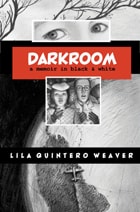
Darkroom
A Memoir in Black and WhiteLila Quintero Weaver
University of Alabama Press, 2012
A Latina girl’s journey through the shadows of the civil rights era.
Darkroom is a deeply moving graphic memoir that chronicles Lila Quintero Weaver’s experience growing up as an Argentine immigrant in 1960s Alabama during the height of the civil rights movement. Through striking black-and-white illustrations and heartfelt narrative, Weaver explores the complexities of race, identity, and belonging in a society divided by segregation. Neither Black nor White, her family occupies a unique position that offers a powerful lens on the struggles for justice and equality. This coming-of-age story blends personal history with pivotal social change, inviting readers to reflect on themes of immigration, cultural assimilation, and moral courage. Darkroom is both an intimate portrait and a universal tale of resilience, making it an essential read for those interested in civil rights, memoirs, and graphic storytelling.
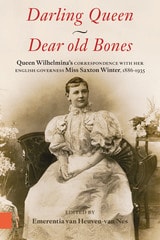
Darling Queen — Dear old Bones
Queen Whilemina's Correspondence with her English Governess Miss Saxton Winter, 1886–1935Edited by Emerentia van Heuven-van Nes
Amsterdam University Press, 2017

Dartmouth Song Book
Paul R. Zeller
Dartmouth College Press, 2002
Dartmouth Veterans
Vietnam PerspectivesEdited by Phillip C. Schaefer
Brandeis University Press, 2014
Darwin Deleted
Imagining a World without DarwinPeter J. Bowler
University of Chicago Press, 2013
In Darwin Deleted, Bowler argues that no one else, not even Wallace, was in a position to duplicate Darwin’s complete theory of evolution by natural selection. Evolutionary biology would almost certainly have emerged, but through alternative theories, which were frequently promoted by scientists, religious thinkers, and moralists who feared the implications of natural selection. Because non-Darwinian elements of evolutionism flourished for a time in the real world, it is possible to plausibly imagine how they might have developed, particularly if the theory of natural selection had not emerged until decades after the acceptance of the basic idea of evolution. Bowler’s unique approach enables him to clearly explain the non-Darwinian tradition—and in doing so, he reveals how the reception of Darwinism was historically contingent. By taking Darwin out of the equation, Bowler is able to fully elucidate the ideas of other scientists, such as Richard Owen and Thomas Huxley, whose work has often been misunderstood because of their distinctive responses to Darwin.
Darwin and the Emergence of Evolutionary Theories of Mind and Behavior
Robert J. Richards
University of Chicago Press, 1987
"Richards's book is now the obvious introduction to the history of ideas about mind and behavior in the nineteenth century."—Mark Ridley, Times Literary Supplement
"Not since the publication of Michael Ghiselin's The Triumph of the Darwinian Method has there been such an ambitious, challenging, and methodologically self-conscious interpretation of the rise and development and evolutionary theories and Darwin's role therein."—John C. Greene, Science
"His book . . . triumphantly achieves the goal of all great scholarship: it not only informs us, but shows us why becoming thus informed is essential to understanding our own issues and projects."—Daniel C. Dennett, Philosophy of Science
Darwin and the General Reader
The Reception of Darwin's Theory of Evolution in the British Periodical Press, 1859-1872Alvar Ellegård
University of Chicago Press, 1990
Darwin and the Making of Sexual Selection
Evelleen Richards
University of Chicago Press, 2017
Only now, with Darwin and the Making of Sexual Selection, do we have a comprehensive and meticulously researched account of Darwin’s path to its formulation—one that shows the man, rather than the myth, and examines both the social and intellectual roots of Darwin’s theory. Drawing on the minutiae of his unpublished notes, annotations in his personal library, and his extensive correspondence, Evelleen Richards offers a richly detailed, multilayered history. Her fine-grained analysis comprehends the extraordinarily wide range of Darwin’s sources and disentangles the complexity of theory, practice, and analogy that went into the making of sexual selection. Richards deftly explores the narrative strands of this history and vividly brings to life the chief characters involved. A true milestone in the history of science, Darwin and the Making of Sexual Selection illuminates the social and cultural contingencies of the shaping of an important—if controversial—biological concept that is back in play in current evolutionary theory.
Darwin and the Novelists
Patterns of Science in Victorian FictionGeorge Levine
University of Chicago Press, 1991
Darwin's Evolving Identity
Adventure, Ambition, and the Sin of SpeculationAlistair Sponsel
University of Chicago Press, 2018
Drawing on his own ambitious research in Darwin’s manuscripts and at the Beagle’s remotest ports of call, Sponsel takes us from the ocean to the Origin and beyond. He provides a vivid new picture of Darwin’s career as a voyaging naturalist and metropolitan author, and in doing so makes a bold argument about how we should understand the history of scientific theories.
Darwin's Footprint
Cultural Perspectives on Evolution in Greece (1880–1930s)Maria Zarimis
Central European University Press, 2015
Darwin’s Footprint examines the impact of Darwinism in Greece, investigating how it has shaped Greece in terms of its cultural and intellectual history, and in particular its literature.
The book demonstrates that in the late 19th to early 20th centuries Darwinism and associated science strongly influenced celebrated Greek literary writers and other influential intellectuals, which fueled debate in various areas such as ‘man’s place in nature’, eugenics, the nature-nurture controversy, religion, as well as class, race and gender.
In addition, the study reveals that many of these individuals were also considering alternative approaches to these issues based on Darwinian and associated biological post-Darwinian ideas. Their concerns included the Greek “race” or nation, its culture, language and identity; also politics and gender equality.
Zarimis’s monograph devotes considerable space to Xenopoulos (1867-1951), notable novelist, journalist and playwright.

Darwin's Most Wonderful Plants
A Tour of His Botanical LegacyKen Thompson
University of Chicago Press, 2019
Darwin was a brilliant and revolutionary botanist whose observations and theories were far ahead of his time. With Darwin’s Most Wonderful Plants, biologist and gardening expert Ken Thompson restores this important aspect of Darwin’s biography while also delighting in the botanical world that captivated the famous scientist. Thompson traces how well Darwin’s discoveries have held up, revealing that many are remarkably long-lasting. Some findings are only now being confirmed and extended by high-tech modern research, while some have been corrected through recent analysis.
We learn from Thompson how Darwin used plants to shape his most famous theory and then later how he used that theory to further push the boundaries of botanical knowledge. We also get to look over Darwin’s shoulder as he labors, learning more about his approach to research and his astonishing capacity for hard work. Darwin’s genius was to see the wonder and the significance in the ordinary and mundane, in the things that most people wouldn’t look at twice.
Both Thompson and Darwin share a love for our most wonderful plants and the remarkable secrets they can unlock. This book will instill that same joy in casual gardeners and botany aficionados alike.
Darwin's Orchids
Then and NowEdited by Retha Edens-Meier and Peter Bernhardt
University of Chicago Press, 2014
Mirroring the structure of Fertilisation of Orchids, Darwin’s Orchids investigates flowers from Darwin’s home in England, through the southern hemisphere, and on to North America and China as it seeks to address a set of questions first put forward by Darwin himself: What pollinates this particular type of orchid? How does its pollination mechanism work? Will an orchid self-pollinate or is an insect or other animal vector required? And how has this orchid’s lineage changed over time? Diverse in their colors, forms, aromas, and pollination schemes, orchids have long been considered ideal models for the study of plant evolution and conservation. Looking to the past, present, and future of botany, Darwin’s Orchids will be a vital addition to this tradition.
Darwin's Sacred Cause
Race, Slavery and the Quest for Human OriginsAdrian Desmond and James Moore
University of Chicago Press, 2011
There has always been a mystery surrounding Darwin: How did this quiet, respectable gentleman come to beget one of the most radical ideas in the history of human thought? It is difficult to overstate what Darwin was risking in publishing his theory of evolution. So it must have been something very powerful—a moral fire, as Desmond and Moore put it—that helped propel him. That moral fire, they argue, was a passionate hatred of slavery.
In opposition to the apologists for slavery who argued that blacks and whites had originated as separate species, Darwin believed the races belonged to the same human family. Slavery was a “sin,” and abolishing it became his “sacred cause.” By extending the abolitionists’ idea of human brotherhood to all life, Darwin developed our modern view of evolution.
Drawing on a wealth of fresh manuscripts, family letters, diaries, and even ships’ logs, Desmond and Moore argue that only by acknowledging Darwin’s abolitionist heritage can we fully understand the development of his groundbreaking ideas.
Das Arkansas Echo
A Year in the Life of Germans in the Nineteenth-Century SouthKathleen Condray
University of Arkansas Press, 2020
“Das Arkansas Echo”: A Year in the Life of Germans in the Nineteenth-Century South examines topics the newspaper covered during its inaugural year. Kathleen Condray illuminates the newspaper’s crusade against Prohibition, its advocacy for the protection of German schools and the German language, and its promotion of immigration. We also learn about aspects of daily living, including food preparation and preservation, religion, recreation, the role of women in the family and society, health and wellness, and practical housekeeping. And we see how the paper assisted German speakers in navigating civic life outside their immigrant community, including the racial tensions of the post-Reconstruction South.
“Das Arkansas Echo”: A Year in the Life of Germans in the Nineteenth-Century South offers a fresh perspective on the German speakers who settled in a modernizing Arkansas. Mining a valuable newspaper archive, Condray sheds light on how these immigrants navigated their new identity as southern Americans.
Dash of Pepper!
The Depression, The Hobo, and the 1931 World SeriesJustin Wingerter
University of Missouri Press, 2027
Dash of Pepper!: The Depression, The Hobo, and the 1931 World Series is the first book about the 1931 World Series and its unlikely star, Johnnie Leonard Roosevelt “Pepper” Martin. Born in Oklahoma in 1904, Martin grew up in poverty, performing farm labor with his family and attending school only sporadically (he was eventually expelled for his lack of shoes). Local sandlots served as his introduction to baseball, bringing him into an unpretentious world of hand-me-down leather, battered balls bursting at the seams, and boyhood. He was immediately hooked.
Martin spent his adolescence working a variety of odd jobs and playing for even odder baseball teams before making a living as a player for the East Texas League beginning in 1925, the owner of which sold him to the St. Louis Cardinals later that year. Martin played for the Cardinals’ minor league affiliates for the next two years, all while continuing his boyhood habit of “hoboing” freight trains to travel to games. Promoted to the major leagues in 1927, Martin was sent back down to the minors two years later, making his return to the Big Leagues in 1931 and soon thereafter emerging as the star of that year’s World Series. Historians still credit Martin, with his .500 batting average, 4 doubles, 1 home run, and 5 RBIs, for the Cardinals’ taking the championship.
Author Justin Wingerter documents the words of reporters from every state who told of a Depression-weary nation enthralled by the self-described hobo with endless hustle — “Don’t say Pepper, say STAR,” wrote The St. Louis Star (a play on its motto, “Don’t say ‘paper,’ say STAR”) after the Cardinals’ Game Three win. As Wingerter argues, Martin became a symbol of the forgotten man at a time when his fellow Americans needed a hero. His performance in the 1931 Series was followed obsessively by farmers, businesspeople, industrial workers, and even inmates, all of whom found in Martin a source of solace in a time of widespread misery. As one sportswriter opined in Waterloo, Iowa, “The Pepper Martins have a way of making us forget it all.”
In Dash of Pepper!, Wingerter explores the 1931 World Series in the context of the era’s national mood, populating the book’s pages with a host of colorful characters reaching far beyond Martin: One-Eyed Connelly, the famed gatecrasher who eventually met his match; the masked assailants of the St. Louis Milk War, a violent labor action that shared the city’s frontpages with the Series; banking regulators rushing to save deposits at Philadelphia’s Franklin Trust, and more.
With Dash of Pepper!, Wingerter makes an original contribution to the field, its focus on American society making it particularly valuable to lovers of United States history in addition to baseball fans.
Data Are Made, Not Found
A Story of Politics, Power, and the Civil Servants Who Saved the US Censusdanah boyd
University of Chicago Press, 2026
An eye-opening story of the people who make the census, the United States’ largest and most consequential dataset, and the growing threats to their crucial work.
By many measures, the US census is the government’s largest non-wartime operation, and one of the world’s oldest and biggest data-making endeavors. The 2020 census required more than a decade of planning and technical work—not to mention managing nearly a quarter of a million temporary workers simultaneously—to collect data about the American public. That data was then processed to count each of 331,449,281 residents once—and only once—and in the right place. The operation is also one of the country’s most consequential. Census data determine how political power and federal funding are allocated. Census data make politics, and consequently, politics make census data. In this urgent book, danah boyd explores what it took for the Census Bureau to make the 2020 census, amidst a global pandemic and natural disasters, and while navigating political forces that constrained the budget, micro-managed the schedule, and attacked statisticians’ methods.
With rare insider access to the Census Bureau, boyd observed and interviewed hundreds of government civil servants who made the 2020 census. By documenting the perspectives of government workers, Data Are Made, Not Found provides a rare glimpse into what it takes to make democracy’s data. Each chapter reveals a different challenge—ranging from the last-minute fights about a citizenship question to the not-so-helpful help of well-intended stakeholders to avoid undercounts—and shows how civil servants responded to each problem, controversy, and hurdle. Boyd shows how many of the challenges that the Census Bureau faced in 2020 resulted from decades of political operatives, data users, and various stakeholders playing what boyd calls “Jenga politics,” weakening the administrative state for short-term political gains by removing support and adding more requirements.
Civil servants saved the 2020 census, but future censuses—and other data-making efforts related to elections, health, and the economy—are precarious. Boyd’s message is clear and compelling: protecting democracy means protecting the people and institutions that produce this data.
Daughter of the Empire State
The Life of Judge Jane BolinJacqueline A. McLeod
University of Illinois Press, 2016
Bolin was appointed to New York City's domestic relations court in 1939 for the first of four ten-year terms. When she retired in 1978, her career had extended well beyond the courtroom. Drawing on archival materials as well as a meeting with Bolin in 2002, historian Jacqueline A. McLeod reveals how Bolin parlayed her judicial position to impact significant reforms of the legal and social service system in New York.
Beginning with Bolin's childhood and educational experiences at Wellesley and Yale, Daughter of the Empire State chronicles Bolin's relatively quick rise through the ranks of a profession that routinely excluded both women and African Americans. Deftly situating Bolin's experiences within the history of black women lawyers and the historical context of high-achieving black New Englanders, McLeod offers a multi-layered analysis of black women's professionalization in a segregated America.
Linking Bolin's activist leanings and integrationist zeal to her involvement in the NAACP, McLeod analyzes Bolin's involvement at the local level as well as her tenure on the organization's national board of directors. An outspoken critic of the discriminatory practices of New York City's probation department and juvenile placement facilities, Bolin also co-founded, with Eleanor Roosevelt, the Wiltwyck School for boys in upstate New York and campaigned to transform the Domestic Relations Court with her judicial colleagues. McLeod's careful and highly readable account of these accomplishments inscribes Bolin onto the roster of important social reformers and early civil rights trailblazers.
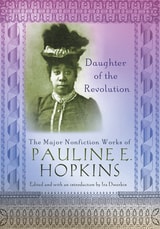
Daughter of the Revolution
The Major Nonfiction Works of Pauline HopkinsDworkin, Ira
Rutgers University Press, 2007
Pauline E. Hopkins (1859–1930) came to prominence in the early years of the twentieth century as an outspoken writer, editor, and critic. Frequently recognized for her first novel, Contending Forces, she is currently one of the most widely read and studied African American novelists from that period.
While nearly all of Hopkins’s fiction remains in print, there is very little of her nonfiction available. This reader brings together dozens of her hard-to-find essays, including longer nonfiction works such as Famous Men of the Negro Race and The Dark Races of the Twentieth Century, some of which are published here for the first time in their entirety.
Through these works, along with two juvenile essays from the 1870s, a personal letter, and two speeches, readers encounter a voice that is committed to constructing an international discourse on race, recovering the militant abolitionist tradition to combat Jim Crow, celebrating black political participation during and after the Reconstruction era, articulating the connections between race and labor, and insisting on equal rights for women. Hopkins’s writing will challenge contemporary scholars to rethink their understanding of black activism and modernity in the early twentieth century.
Daughters of Independence
Joanna Liddle
Rutgers University Press, 1989
For thousands of years Indian women have had a cultural tradition of resisting male domination. At the same time, the control of female sexuality has always been central to social hierarchies in India. Women are constrained in both class and caste hierarchies, to help distinguish the men at the top of the hierarchy from men at the bottom, where women are less constrained. In class society the seclusion of women allowed men to have sexual control over women and to retain the property that was transferred in marriage.
In contemporary India, professional women have had success entering the professions as the social groups to which they belong move increasingly to class rather than caste structures. But men continue to control the type of education they receive and the type of employment open to them, and to participate in the sexual harassment of women in the workplace. The concept that women are inferior to men--a concept that is not part of the Indian cultural heritage--is growing. In a sense, working professional women strengthen male control. The class structure is no more egalitarian than the caste structure, as oppression simply takes other forms.
Daughters of Time
Women in the Western TraditionMary Kinnear
University of Michigan Press, 1982
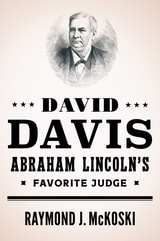
David Davis, Abraham Lincoln's Favorite Judge
Raymond J. McKoski
University of Illinois Press, 2025
One of Abraham Lincoln’s staunchest and most effective allies, Judge David Davis masterminded the floor fight that gave Lincoln the presidential nomination at the 1860 Republican National Convention. This history-changing event emerged from a long friendship between the two men. It also altered the course of Davis’s career, as Lincoln named him to the U.S. Supreme Court in 1862.
Raymond J. McKoski offers a biography of Davis’s public life, his impact on the presidency and judiciary, and his personal, professional, and political relationships with Lincoln. Davis lent his vast network of connections, organizational and leadership abilities, and personal persuasiveness to help Lincoln’s political rise. When Davis became a judge, he honed an ability to hear each case with complete impartiality, a practice that endeared him to Lincoln but one day put him at odds with the president over important Civil War–era rulings. McKoski details these cases while providing an in-depth account of Davis’s role in Lincoln’s two unsuccessful campaigns for U.S. Senate and the fateful run for the presidency.

David Lloyd George
Great BritainAlan Sharp
Haus Publishing, 2010
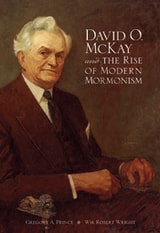
David O. McKay and the Rise of Modern Mormonism
Gregory A Prince
University of Utah Press, 2005
Ordained as an apostle in 1906, David O. McKay served as president of the Church of Jesus Christ of Latter-day Saints from 1951 until his death in 1970. Under his leadership, the church experienced unparalleled growth—nearly tripling in total membership—and becoming a significant presence throughout the world.
The first book to draw upon the David O. McKay Papers at the J. Willard Marriott Library at the University of Utah, in addition to some two hundred interviews conducted by the authors, David O. McKay and the Rise of Modern Mormonism focuses primarily on the years of McKay's presidency. During some of the most turbulent times in American and world history, McKay navigated the church through uncharted waters as it faced the challenges of worldwide growth in an age of communism, the civil rights movement, and ecumenism. Gregory Prince and Robert Wright have compiled a thorough history of the presidency of a much-loved prophet who left a lasting legacy within the LDS Church.
Winner of the Evans Handcart Award.
Winner of the Mormon History Association Turner-Bergera Best Biography Award.
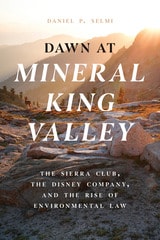
Dawn at Mineral King Valley
The Sierra Club, the Disney Company, and the Rise of Environmental LawDaniel P. Selmi
University of Chicago Press, 2022
In our current age of climate change–induced panic, it’s hard to imagine a time when private groups were not actively enforcing environmental protection laws in the courts. It wasn’t until 1972, however, that a David and Goliath–esque Supreme Court showdown involving the Sierra Club and Disney set a revolutionary legal precedent for the era of environmental activism we live in today.
Set against the backdrop of the environmental movement that swept the country in the late 1960s and early 1970s, Dawn at Mineral King Valley tells the surprising story of how the US Forest Service, the Disney company, and the Sierra Club each struggled to adapt to the new, rapidly changing political landscape of environmental consciousness in postwar America. Proposed in 1965 and approved by the federal government in 1969, Disney’s vast development plan would have irreversibly altered the practically untouched Mineral King Valley, a magnificently beautiful alpine area in the Sierra Nevada mountains. At first, the plan met with unanimous approval from elected officials, government administrators, and the press—it seemed inevitable that this expanse of wild natural land would be radically changed and turned over to a private corporation. Then the scrappy Sierra Club forcefully pushed back with a lawsuit that ultimately propelled the modern environmental era by allowing interest groups to bring litigation against environmentally destructive projects.
An expert on environmental law and appellate advocacy, Daniel P. Selmi uses his authoritative narrative voice to recount the complete history of this revolutionary legal battle and the ramifications that continue today, almost 50 years later.

Dawn in Arctic Alaska
Diamond Jenness
University of Chicago Press, 1985
In 1913 a young ethnologist from New Zealand boarded a ship for the Arctic, beginning a personal journey that was to make Diamond Jenness one of the twentieth century's foremost authorities on Alaskan Eskimos. Jenness had been asked to join the Stefansson expedition, and his official duties were to collect ethnographic details on the Eskimos—their culture, technology, religion, and social organization. His account of the expedition was published as People of the Twilight in 1928, but Jenness also kept a diary of his three years among the Eskimos. He was eventually persuaded to publish it as Dawn in Arctic Alaska.
Predating the genre of personal ethnographies that has become so popular and important today, Jenness's tales blend his keen observations of the Arctic and its people with his own reflections and sensory experiences. He expresses great adimiration for the customs and character of the Eskimos and great regret and disappointment over the destruction of their lifeway through contact with white men.
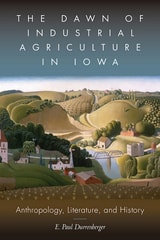
Dawn of Industrial Agriculture in Iowa
Anthropology, Literature, and HistoryE. Paul Durrenberger
University Press of Colorado, 2021
Durrenberger tells the story that Corey aimed to record and preserve of the industrialization of Iowa’s agriculture and the death of its family farms. He analyzes Corey’s regionalist focus on Iowa farming and regionalism’s contemporaneous association in Europe with rising fascism. He explores Corey’s adoption of naturalism, evident in his resistance to heroes and villains, to plot structure and resolution, and to moral judgment, as well as his ethnographic tendency to focus on groups rather than individuals.
An unusual and wide-ranging study, The Dawn of Industrial Agriculture in Iowa offers important insight into the relationships among fiction, individual lives, and anthropological practice, as well as into a pivotal period in American history.
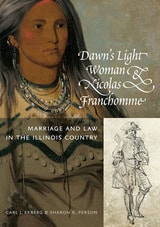
Dawn's Light Woman & Nicolas Franchomme
Marriage and Law in the Illinois CountryCarl J. Ekberg and Sharon K. Person
Southern Illinois University Press, 2022
Native women’s marital rights and roles in colonial Illinois society
Kaskaskia, Illinois, once the state’s capital, torn from the state by flood waters, and now largely forgotten, was once the home to a couple who helped transform the region in the 1720s from a frontier village to a civil society. In the heart of France’s North American empire, the village was a community of French-Canadian fur traders and Kaskaskia Indians who not only lived together but often intermarried. These Indigenous and French intermarriages were central to colonial Illinois society, and the coupling of Marguerite 8assecam8c8e (Dawn’s Light Woman) and Nicolas Franchomme, in particular, was critical to expanding the jurisdiction of French law.
While the story of Marguerite and Nicolas is unknown today, it is the story of how French customary law (Coutume de Paris) governed colonial marriage, how mixed Indian-French marriages stood at the very core of early colonial Illinois society, and how Illinois Indian women benefited, socially and legally, from being married to French men. All of this came about due to a lawsuit in which Nicolas successfully argued that his wife had legal claim to her first husband’s estate—a legal decision that created a precedent for society in the Illinois Country.
Within this narrative of a married couple and their legal fight—based on original French manuscripts and supported by the comprehensively annotated 1726 Illinois census—is also the story of the village of Kaskaskia during the 1720s, of the war between Fox Indians and French settlers, with their Indian allies, in Illinois, and of how the spread of plow agriculture dramatically transformed the Illinois Country’s economy from largely fur trade–based to expansively agricultural.
Dawnland Encounters
Indians and Europeans in Northern New EnglandEdited by Colin G. Calloway
University Press of New England, 1991
Day of Days
John Smolens
Michigan State University Press, 2020
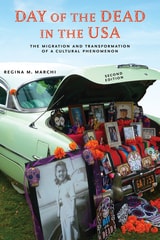
Day of the Dead in the USA, Second Edition
The Migration and Transformation of a Cultural PhenomenonRegina M Marchi
Rutgers University Press, 2022
Focusing on the power of public ritual to serve as a communication medium, this revised and updated edition combines a mix of ethnography, historical research, oral history, and critical cultural analysis to explore the manifold and unexpected transformations that occur when the tradition is embraced by the mainstream. A testament to the complex role of media and commercial forces in constructions of ethnic identity, Day of the Dead in the USA provides insight into the power of art and ritual to create community, transmit oppositional messages, and advance educational, political, and economic goals.
Today Chicano-style Day of the Dead events take place in all fifty states. This revised edition provides new information about:
- The increase in events across the US, incorporating media coverage and financial aspects,
- Recent political movements expressed in contemporary Day of the Dead celebrations, including #BlackLivesMatter and #MeToo
- Greater media coverage and online presence of the celebration in blogs, websites, and streaming video
- Día de los Muertos themes and iconography in video games and films
- The proliferation of commercialized merchandise such as home goods, apparel, face paints and jewelry at mainstream big box and web retailers, as well as the widespread proliferation of calavera-themed decorations and costumes for Halloween
- 24 new full color illustrations
Days on the Family Farm
From the Golden Age through the Great DepressionCarrie A. Meyer
University of Minnesota Press, 2007
From the beginning of the twentieth century to World War II, farm wife May Lyford Davis kept a daily chronicle that today offers a window into a way of life that has all but disappeared. May and her husband Elmo lived through two decades of prosperity, the Great Depression, and two World Wars in their Midwestern farming community. Like many women of her time, Davis kept diaries that captured the everyday events of the family farm; she also kept meticulous farming accounts. In doing so, she left an extraordinary record that reflects not only her own experiences but also the history of early twentieth-century American agriculture.
May and Elmo’s story, engagingly told by Carrie A. Meyer, showcases the large-scale evolution of agriculture from horses to automobile and tractors, a surprisingly vibrant family and community life, and the business of commercial farming. Details such as what items were bought and sold, what was planted and harvested, the temperature and rainfall, births and deaths, and the direction of the wind are gathered to reveal a rich picture of a world shared by many small farmers.
With sustainable and small-scale farming again on the rise in the United States, Days on the Family Farm resonates with both the profound and mundane aspects of rural life—past and present—in the Midwest.
Carrie A. Meyer is associate professor of economics at George Mason University.
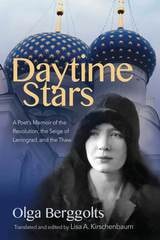
Daytime Stars
Olga Berggolts, translated by Lisa Kirschenbaum
University of Wisconsin Press, 2018
Berggolts wrote her memoir Daytime Stars in the spirit of the thaw after Stalin's death. In it, she celebrated the ideals of the revolution and the heroism of the Soviet people while also criticizing censorship of writers and recording her doubts and despair. This English translation by Lisa A. Kirschenbaum makes available a unique autobiographical work by an important author of the Soviet era. In her foreword, Katharine Hodgson comments on experiences of the Terror about which Berggolts was unable or unwilling to write.
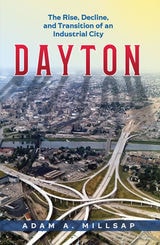
Dayton
The Rise, Decline, and Transition of an Industrial CityAdam A. Millsap
The Ohio State University Press, 2019
Thoroughly researched and engagingly written, Millsap’s book explores the economic background of the region made famous by J. D. Vance’s Hillbilly Elegy. From early twentieth-century optimism, through the Great Depression and post-WWII manufacturing decline, to Dayton now, with its labor-force problems and opioid crisis, Millsap tracks the underlying forces driving the city’s trajectory. Race relations, interstates, suburbanization, climate, crime, geography, and government policies all come into play as Millsap develops a picture of the city, past and present. By examining the past, Millsap proposes a plan for the future, claiming that there is hope for Dayton to thrive again. And if Dayton can rise from its industrial ashes, then perhaps the Rust Belt can shed its stigma and once again become the backbone of American innovation.
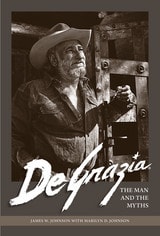
De Grazia
The Man and the MythsJames W. Johnson with Marilyn D. Johnson
University of Arizona Press, 2014
Born in Arizona Territory to Italian immigrant parents, De Grazia had a humble childhood as a copper miner’s son, which later influenced his famous persona. De Grazia often held forth at his gallery in Tucson’s Catalina foothills dressed in a pseudo-prospector’s getup of scraggly beard, jeans, flannel shirt, boots, and beat-up cowboy hat. Outrageous stories of womanizing, scores of children, and drinking binges created an eclectic image that fueled stories of mythic proportions, along with global sales of his colorful paintings inspired by the Southwest and Mexico. He made millions through his paintings and the licensing of his art for greeting cards and trinkets. Critics called his work kitsch or commercial, yet thousands of admirers continue to love it.
Calling De Grazia a complicated man doesn’t begin to explain him. He once described himself as “not saint nor devil, but both.” In this first comprehensive biography of De Grazia, authors James W. Johnson with Marilyn D. Johnson tell the story of a life remarkably lived.
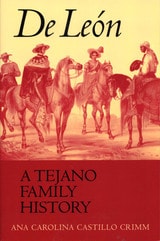
De León, a Tejano Family History
By Ana Carolina Castillo Crimm
University of Texas Press, 2003
Winner, Presidio La Bahia Award, 2004
San Antonio Conservation Society Citation, 2005
La familia de León was one of the foundation stones on which Texas was built. Martín de León and his wife Patricia de la Garza left a comfortable life in Mexico for the hardships and uncertainties of the Texas frontier in 1801. Together, they established family ranches in South Texas and, in 1824, the town of Victoria and the de León colony on the Guadalupe River (along with Stephen F. Austin's colony, the only completely successful colonization effort in Texas). They and their descendents survived and prospered under four governments, as the society in which they lived evolved from autocratic to republican and the economy from which they drew their livelihood changed from one of mercantile control to one characterized by capitalistic investments.
Combining the storytelling flair of a novelist with a scholar's concern for the facts, Ana Carolina Castillo Crimm here recounts the history of three generations of the de León family. She follows Martín and Patricia from their beginnings in Mexico through the establishment of the family ranches in Texas and the founding of the de León colony and the town of Victoria. Then she details how, after Martín's death in 1834, Patricia and her children endured the Texas Revolution, exile in New Orleans and Mexico, expropriation of their lands, and, after returning to Texas, years of legal battles to regain their property. Representative of the experiences of many Tejanos whose stories have yet to be written, the history of the de León family is the story of the Tejano settlers of Texas.