Results by title
4531 books match the query 'Cultural & Ethnic Studies' and 181 start with d

Double Quartet, Volume I
Nathaniel Mackey
Duke University Press, 2027
Double Quartet, Volume II
Nathaniel Mackey
Duke University Press, 2027
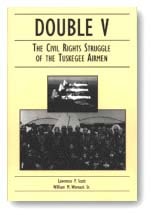
Double V
The Civil Rights Struggle of the Tuskegee AirmenLawrence P. Scott
Michigan State University Press, 1994
On April 12, 1945, the United States Army Air Force arrested 101 of its African American officers. They were charged with disobeying a direct order from a superior officer—a charge that could carry the death penalty upon conviction. They were accused of refusing to sign an order that would have placed them in segregated housing and recreational facilities. Their plight was virtually ignored by the press at the time, and books written about the subject did not detail the struggle these aviators underwent to win recognition of their civil rights.
The central theme of Double V is the promise held out to African American military personnel that service in World War II would deliver to them a double victory—a "double V"—over tyranny abroad and racial prejudice at home. The book's authors, Lawrence P. Scott and William M. Womack Sr., chronicle for the first time, in detail, one of America's most dramatic failures to deliver on that promise. In the course of their narrative, the authors demonstrate how the Tuskegee airmen suffered as second-class citizens while risking their lives to serve their country. Among the contributions made by this work is a detailed examination of how 101 Tuskegee airmen, by refusing to live in segregated quarters, triggered one of the most significant judicial proceedings in U.S. military history. Double V uses oral accounts and heretofore unused government documents to portray this little-known struggle by one of America's most celebrated flying units.
In addition to providing background material about African American aviators before World War II. the authors also demonstrate how the Tuskegee airmen's struggle foretold dilemmas faced by the civil rights movement in the second half of the 20th century. Double V is destined to become an important contribution in the rapidly growing body of civil rights literature.
Double-Consciousness/Double Bind
Theoretical Issues in Twentieth-Century Black LiteratureSandra Adell
University of Illinois Press, 1994
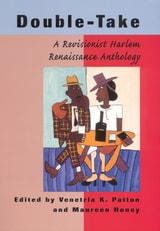
Double-Take
A Revisionist Harlem Renaissance AnthologyPatton, Venetria K
Rutgers University Press, 2001
The editors have included works from a wide variety of genres-poetry, short stories, drama, and essays-allowing readers to understand the true interdisciplinary quality of this cultural movement. Biographical sketches of the authors are provided and most of the pieces are included in their entirety. Double-Take also includes artwork and illustrations, many of which are from original journals and have never before been reprinted. Significantly, Double-Take is the first Harlem Renaissance title to include song lyrics to illustrate the interrelation of various art forms.
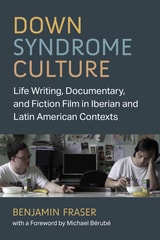
Down Syndrome Culture
Life Writing, Documentary, and Fiction Film in Iberian and Latin American ContextsBenjamin Fraser
University of Michigan Press, 2024
Down Syndrome Culture also pushes the traditionally Anglophone borders of disability studies by examining examples in Spanish, Catalan, and Portuguese-language texts, and incorporating the work of thinkers in Iberian and Latin American studies. Through a close analysis of life writing, documentaries, and fiction films, the book emphasizes the central role of people with Down syndrome in contemporary cultural production. Chapters discuss the autobiography of Andy Trias Trueta, the social actors of the documentary Los niños [The Grown-Ups] (2016), dancers from Danza Mobile, and a variety of fiction films, challenging ableist understandings of disability in nuanced ways. Ultimately, this book reveals the lives, cultural work, and representations of people with trisomy 21 in an international context.
Down and Dirty
Toward a Sucialogy of Queer Chicane LifeDeborah R. Vargas
Duke University Press, 2027
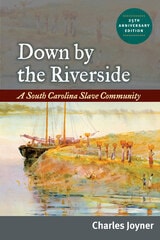
Down by the Riverside
A South Carolina Slave CommunityCharles Joyner
University of Illinois Press, 2009
Joyner recovers an entire lost society and way of life from the letters, diaries, and memoirs of the plantation whites and their guests, from quantitative analysis of census and probate records, and above all from the folklore and oral history of the enslaved Americans. His classic reconstruction of daily life in All Saints Parish is an inspiring testimony to the ingenuity and solidarity of a people.
This anniversary edition of Joyner's landmark study includes a new introduction in which the author recounts his process of writing the book, reflects on its critical and popular reception, and surveys the past three decades of scholarship on the history of enslaved people in the United States.

Downed by Friendly Fire
Black Girls, White Girls, and Suburban SchoolingSignithia Fordham
University of Minnesota Press, 2016
Most Americans would never willingly revisit their high school experiences; the nation’s school systems reflect the broader society’s hierarchical emphasis on race, class, and gender. While schools purport to provide equal opportunities for all students, this rarely happens in actuality—particularly for girls.
In Downed by Friendly Fire, Signithia Fordham unmasks and examines female-centered bullying in schools, arguing that it is essential to unmask female aggression, bullying, and competition, all of which directly relate to the structural violence embedded in the racialized and gendered social order. For two and a half years, Fordham conducted field research at “Underground Railroad High School,” a suburban high school in upstate New York. Through a series of composite student profiles, she examines the girls’ relationships to academic achievement, social competition, and aggression toward one another. Fordham argues that girls academically “compete to lose,” which only perpetuates their subordination through the misrecognition of their own competitive behaviors. She goes further to expand the meaning of violence to include what is seen as normal, including suffering, humiliation, and social and economic abuse.
Using the concept “symbolic violence,” Fordham theorizes the psychological and social damage suffered especially by black girls in schools. The five narratives in Downed by Friendly Fire ultimately highlight the pain and suffering this violence produces as well as the ways in which it promotes inequality, exclusion, and marginalization among girls.

Drawing the Sea Near
Satoumi and Coral Reef Conservation in OkinawaC. Anne Claus
University of Minnesota Press, 2020
How Japanese coastal residents and transnational conservationists collaborated to foster relationships between humans and sea life
Drawing the Sea Near opens a new window to our understanding of transnational conservation by investigating projects in Okinawa shaped by a “conservation-near” approach—which draws on the senses, the body, and memory to collapse the distance between people and their surroundings and to foster collaboration and equity between coastal residents and transnational conservation organizations. This approach contrasts with the traditional Western “conservation-far” model premised on the separation of humans from the environment.
Based on twenty months of participant observation and interviews, this richly detailed, engagingly written ethnography focuses on Okinawa’s coral reefs to explore an unusually inclusive, experiential, and socially just approach to conservation. In doing so, C. Anne Claus challenges orthodox assumptions about nature, wilderness, and the future of environmentalism within transnational organizations. She provides a compelling look at how transnational conservation organizations—in this case a field office of the World Wide Fund for Nature in Okinawa—negotiate institutional expectations for conservation with localized approaches to caring for ocean life.
In pursuing how particular projects off the coast of Japan unfolded, Drawing the Sea Near illuminates the real challenges and possibilities of work within the multifaceted transnational structures of global conservation organizations. Uniquely, it focuses on the conservationists themselves: why and how has their approach to project work changed, and how have they themselves been transformed in the process?
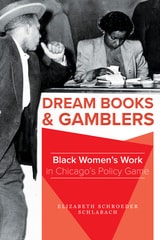
Dream Books and Gamblers
Black Women's Work in Chicago's Policy GameElizabeth Schroeder Schlabach
University of Illinois Press, 2022
Elizabeth Schroeder Schlabach examines the complexities of Black women’s work in policy gambling. Policy provided Black women with a livelihood for themselves and their families. At the same time, navigating gender expectations, aggressive policing, and other hazards of the infromal economy led them to refashion ideas about Black womanhood and respectability. Policy earnings also funded above-board enterprises ranging from neighborhood businesses to philanthropic institutions, and Schlabach delves into the various ways Black women straddled the illegal policy business and reputable community involvement.
Vivid and revealing, Dream Books and Gamblers tells the stories of Black women in the underground economy and how they used their work to balance the demands of living and laboring in Black Chicago.

Dream Factories of a Former Colony
American Fantasies, Philippine CinemaJosé B. Capino
University of Minnesota Press, 2010
By tracking American fantasies in Philippine movies from the postindependence period to the present, José B. Capino offers an innovative account of cinema's cultural work in decolonization and globalization. Capino examines how a third world nation's daydreams both articulate empire and mobilize against it, provide imaginary maps and fables of identity for its migrant workers and diasporan subjects, pose challenges to the alibis of patriarchy and nationalism, and open up paths for participating in the cultures of globality.
Through close readings of more than twenty Philippine movies, Capino demonstrates the postcolonial imagination's vital role in generating pragmatic and utopian visions of living with empire. Illuminating an important but understudied cinema, he creates a model for understanding the U.S. image in the third world.
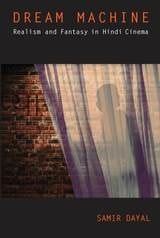
Dream Machine
Realism and Fantasy in Hindi CinemaSamir Dayal
Temple University Press, 2015
Popular Hindi films offer varied cinematic representations ranging from realistic portraits of patriotic heroes to complex fantasies that go beyond escapism. In Dream Machine, Samir Dayal provides a history of Hindi cinema starting with films made after India’s independence in 1947. He constructs a decade-by-decade consideration of Hindi cinema’s role as a site for the construction of “Indianness.”
Dayal suggests that Hindi cinema functions as both mirror and lamp, reflecting and illuminating new and possible representations of national and personal identity, beginning with early postcolonial films including Awaara and Mother India, a classic of the Golden Age. More recent films address critical social issues, such as My Name is Khan and Fire, which concern terrorism and sexuality, respectively. Dayalalso chronicles changes in the industry and in audience reception, and the influence of globalization, considering such films as Slumdog Millionaire.
Dream Machine analyzes the social and aesthetic realism of these films concerning poverty and work, the emergence of the middle class, crime, violence, and the law while arguing for their sustained and critical attention to forms of fantasy.
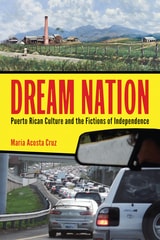
Dream Nation
Puerto Rican Culture and the Fictions of IndependenceAcosta Cruz, María
Rutgers University Press, 2014
Bringing together texts from Puerto Rican literature, history, and popular culture, Dream Nation shows how imaginings of national independence have served many competing purposes. They have given authority to the island’s literary and artistic establishment but have also been a badge of countercultural cool. These ideas have been fueled both by nostalgia for an imagined past and by yearning for a better future. They have fostered local communities on the island, and still helped define Puerto Rican identity within U.S. Latino culture.
In clear, accessible prose, Acosta Cruz takes us on a journey from the 1898 annexation of Puerto Rico to the elections of 2012, stopping at many cultural touchstones along the way, from the canonical literature of the Generación del 30 to the rap music of Tego Calderón. Dream Nation thus serves both as a testament to how stories, symbols, and heroes of independence have inspired the Puerto Rican imagination and as an urgent warning about how this culture has become detached from the everyday concerns of the island’s people.
A volume in the American Literature Initiatives series
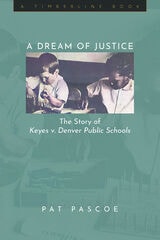
Dream of Justice
The Story of Keyes v. Denver Public Schoolsby Pat Pascoe
University Press of Colorado, 2023
Pascoe details Denver’s desegregation battle, beginning with the citizen studies that exposed the inequities of segregated schools and Rachel Noel’s resolution to integrate the system, followed by the momentous pro-integration Benton-Pascoe campaign of Ed Benton and Monte Pascoe for the school board in 1969. When segregationists won that election and reversed the integration plan for northeast Denver, Black, white, and Latino parents filed Keyes v. School District No. 1. This book follows the arguments in the case through briefs, transcripts, and decisions from district court to the Supreme Court of the United States and back, to its ultimate order to desegregate all Denver schools “root and branch.” It was the first northern city desegregation suit to be brought before the Supreme Court. However, with the end of court-ordered busing in 1995, schools quickly resegregated and are now more segregated than before Keyes was filed.
Pascoe asserts that school integration is a necessary step toward eliminating systemic racism in our country and should be the objective of every school board. A Dream of Justice will appeal to students, scholars, and readers interested in the history of civil rights in America, Denver history, and the history of US education.
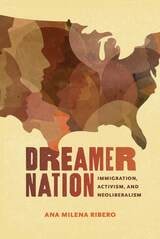
Dreamer Nation
Immigration, Activism, and NeoliberalismAna Milena Ribero
University of Alabama Press, 2023
Dreamer Nation tells the story of how Dreamers in the Obama era creatively confronted a complex sociopolitical landscape to advocate for immigrant rights and empower undocumented youth to proudly represent their lives and identities, all while under the ever-present threat of detention and deportation. Contributing to rhetorical studies of social movements, immigration, and minoritized rhetorics, Ribero argues that even though Dreamer rhetorics were reflective of the discursive limits of the neoliberal milieu, they also worked to disrupt neoliberal constraints through activism that troubled the primacy of the nation-state and citizenship, refused to adhere to respectability politics, forwarded embodied identity and transnational belonging, and looked for liberation in community—not solely in legislative action.
Each chapter presents a different rhetorical situation within the US “crisis” of immigration and the rhetoric that Dreamers used to respond to it. Organized chronologically, the chapters document Dreamer activism during the Obama presidency, from the 2010 hunger strikes advocating for the DREAM Act to undocuqueer “artivism” responding to Trump’s presidential campaign. The author draws not only on the methods and theories of rhetorical studies but also on women of color feminisms, ethnic studies, critical theory, and queer theory. In this way, the book looks across disciplines to illustrate the rhetorical savvy of one of the most important US social movements of our time.
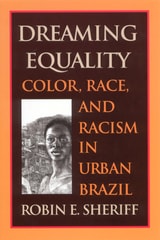
Dreaming Equality
Color, Race, and Racism in Urban BrazilSheriff, Robin E.
Rutgers University Press, 2001
This myth contrasts starkly with the realities of a pernicious racial inequality that permeates every aspect of Brazilian life. To study the grip of this myth on African Brazilians’ views of themselves and their nation, Robin E. Sheriff spent twenty months in a primarily black shantytown in Rio de Janeiro, studying the inhabitants’s views of race and racism. How, she asks, do poor African Brazilians experience and interpret racism in a country where its very existence tends to be publicly denied? How is racism talked about privately in the family and publicly in the community—or is it talked about at all?
Sheriff’s analysis is particularly important because most Brazilians live in urban settings, and her examination of their views of race and racism sheds light on common but underarticulated racial attitudes. This book is the first to demonstrate that urban African Brazilians do not subscribe to the racial democracy myth and recognize racism as a central factor shaping their lives.
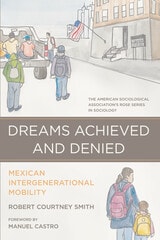
Dreams Achieved and Denied
Mexican Intergenerational MobilityRobert Courtney Smith
Russell Sage Foundation, 2024
For over twenty years, Smith followed the lives and mobility of nearly one hundred children of Mexican immigrants in New York City. Smith’s longitudinal, ethnographic data enabled him to intimately describe how specific mechanisms blocked or promoted mobility for years as his participants moved from adolescence through early adulthood and into established adulthood. Smith documents how having or gaining legal status made certain New York City or New York State policies and practices more efficacious in supporting individual and family efforts and strategies for mobility. Such immigrant-inclusive and mobility-promoting measures include enabling undocumented people to attend public colleges at in-state tuition rates, and later to get driver’s licenses, offering healthcare to all in New York City, and the City’s subway and school choice systems, which enabled students to attend better schools or take opportunities outside their neighborhoods.
Smith finds that keeping the immigrant bargain – whereby children of immigrants redeem their parents’ sacrifice by doing well in school, helping their parents and siblings, and becoming “good” people (in their parents’ words) – helped them towards better adult outcomes and lives. Having mentors, picking academically stronger schools and friends, and using second chance mechanisms also promoted more adult mobility. However, lacking legal status blocked mobility, by preventing them from benefiting from these same mobility-promoting city and state policies, from mentors, or from working hard and keeping the immigrant bargain.
Dreams Achieved and Denied deeply analyzes the historic upward mobility of U.S.-born Mexicans in New York City. Itcounters the dominant story research and public discourse tell about Mexican mobility in the U.S. and shows how thoughtful public policy can improve the lives of young immigrants and families.
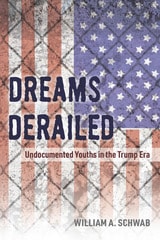
Dreams Derailed
Undocumented Youths in the Trump EraWilliam A. Schwab
University of Arkansas Press, 2018
During the 2016 presidential campaign millions of voters, concerned about the economic impact of illegal immigration, rallied behind the notion of a border wall between the United States and Mexico. Well into the Trump presidency, immigration endures as a hotly contested issue in United States politics.
In Dreams Derailed sociologist William A. Schwab shares the stories of immigration reform advocates and follows up on stories told in his 2013 book Right to DREAM, which argued in favor of the DREAM Act that would have provided conditional residency for undocumented youth brought to the United States as children, a version of which was later enacted by executive order and referred to as DACA (Deferred Action for Childhood Arrivals).
Taking as its focal point the Trump administration’s decision to rescind Obama-era DACA protection, Dreams Derailed delves into the economic, political, and social factors that inform the public conversation about immigration, making a clear case for the many benefits of inclusive policies and the protection of undocumented youths. Schwab also takes a close look at the factors that carried Donald Trump to the White House, demonstrates how economic upheaval and the issue of immigration influenced the 2016 presidential election, analyzes current immigration laws, and suggests next steps for reform.
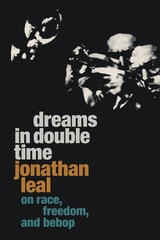
Dreams in Double Time
On Race, Freedom, and BebopJonathan Leal
Duke University Press, 2023
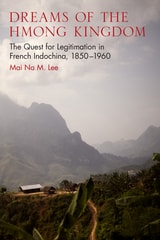
Dreams of the Hmong Kingdom
The Quest for Legitimation in French Indochina, 1850–1960Mai Na M. Lee
University of Wisconsin Press, 2015
In China, Vietnam, and Laos, the Hmong continuously negotiated with these states and with the French to maintain political autonomy in a world of shifting boundaries, emerging nation-states, and contentious nationalist movements and ideologies. Often divided by clan rivalries, the Hmong placed their hope in finding a leader who could unify them and recover their sovereignty. In a compelling analysis of Hmong society and leadership throughout the French colonial period, Mai Na M. Lee identifies two kinds of leaders—political brokers who allied strategically with Southeast Asian governments and with the French, and messianic resistance leaders who claimed the Mandate of Heaven. The continuous rise and fall of such leaders led to cycles of collaboration and rebellion. After World War II, the powerful Hmong Ly clan and their allies sided with the French and the new monarchy in Laos, but the rival Hmong Lo clan and their supporters allied with Communist coalitions.
Lee argues that the leadership struggles between Hmong clans destabilized French rule and hastened its demise. Martialing an impressive array of oral interviews conducted in the United States, France, and Southeast Asia, augmented with French archival documents, she demonstrates how, at the margins of empire, minorities such as the Hmong sway the direction of history.
Best books for public & secondary school libraries from university presses, American Library Association
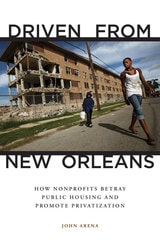
Driven from New Orleans
How Nonprofits Betray Public Housing and Promote PrivatizationJohn Arena
University of Minnesota Press, 2012
In the early 1980s the tenant leaders of the New Orleans St. Thomas public housing development and their activist allies were militant, uncompromising defenders of the city’s public housing communities. Yet ten years later these same leaders became actively involved in a planning effort to privatize and downsize their community—an effort that would drastically reduce the number of affordable apartments. What happened? John Arena—a longtime community and labor activist in New Orleans—explores this drastic change in Driven from New Orleans, exposing the social disaster visited on the city’s black urban poor long before the natural disaster of Katrina magnified their plight.
Arena argues that the key to understanding New Orleans’s public housing transformation from public to private is the co-optation of grassroots activists into a government and foundation-funded nonprofit complex. He shows how the nonprofit model created new political allegiances and financial benefits for activists, moving them into a strategy of insider negotiations that put the profit-making agenda of real estate interests above the material needs of black public housing residents. In their turn, white developers and the city’s black political elite embraced this newfound political “realism” because it legitimized the regressive policies of removing poor people and massively downsizing public housing, all in the guise of creating a new racially integrated, “mixed-income” community.
In tracing how this shift occurred, Driven from New Orleans reveals the true nature, and the true cost, of reforms promoted by an alliance of a neoliberal government, nonprofits, community activists, and powerful real estate interests.
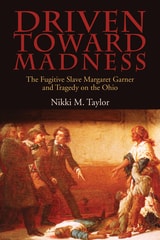
Driven toward Madness
The Fugitive Slave Margaret Garner and Tragedy on the OhioNikki M. Taylor
Ohio University Press, 2016

Drones, Tones, and Timbres
Sounding Place among Nomads of the Inner Asian Mountain-SteppesCarole Pegg
University of Illinois Press, 2024
Based on more than twenty years of collaborative research, Carole Pegg’s long-awaited participatory ethnography explores how Indigenous nomadic peoples of Russia’s southern Siberian republics (Altai, Khakassia, Tyva) sound multiphonies of place in a post-Soviet global world. Inspired by the mountain-steppe ecology and pathways of nomadism, soundscapes created in performative ritual events cross political and multiple-world boundaries in a shamanic-animist universe, enabling human and spirit actor interactions in a series of sensuous worlds. As with the “throat-singing” for which Indigenous Altai-Sayan peoples are famous, senses of place involve sonic relations, rootedness, movement, and plurality. Pegg echoes their drone-partials musical and ontological models in an innovative theoretical entwinement. Three strands form the book’s multivocal drone, the partials of which sound in each chapter: ontological sonicality and musicality that enables emplacement and movement; the importance of shamanism-animism--at the core of Indigenous spiritual practices--for personhood and community; and the agency of sonic performances. Sounding place, Pegg demonstrates, is essential to the identities, ways of life, and very senses of being of Indigenous Altai-Sayan peoples.

Droppin Science
William Perkins
Temple University Press, 1996
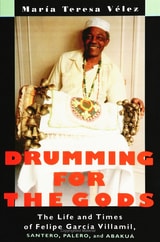
Drumming For The Gods
Maria Velez
Temple University Press, 2000
This book focuses on three periods of Felipe's life, each marked by changes in his personal life and by important historical events. The first period covers his formative years during which he received his initial training. Through Felipe's story, we explore the legacy of slavery in Cuba, the nature of Afro-Cuban religions and their musical traditions, and the history of bata drums. The second period covers the critical years of the Cuban Revolution. Here we see the effect of social turmoil both n music and religious practice (santero, palero, and abakua). The third period covers Felipe's life in New York as a refugee/immigrant, and the role of music in rebuilding his identity. Felipe's story illuminates his cultural practices and beliefs as well as the ways in which an individual musician selects and modifies the elements of his cultural heritage to create a voice that is personal and unique. Felipe not only lives through history but also makes history, shaping an identity that cannot be described as "Cuban immigrant," "Afro-Cuban," "religious drummer," or "santeria initiate," but is composed of all of them.
Through Felipe's experiences, Maria Teresa Velez reveals the interaction between social, political, economic, and cultural forces and an individual's own actions. The professionalization of musicians in Cuba following the Revolution and the plight of Afro-Cuban immigrants in New York are seen as large historical and social problems to which Felipe must personally respond. A noted ethnomusicologist, Velez provides the most insightful and comprehensive English-language study of an individual Cuban religious drummer available.
Drumming for the Gods is a must-read for those interested in ethnomusicology, Caribbean studies, and Afro-Cuban religions and culture.
Dumb Luck
A Novel by Vu Trong PhungPeter Zinoman, Editor
University of Michigan Press, 2002
Dumb Luck is the first translation of a major work by Vu Trong Phung, arguably the greatest Vietnamese writer of the twentieth century. The novel's clever plot, richly drawn characters and humorous tone and its preoccupation with sex, fashion and capitalism will appeal to a wide audience. It will appeal to students and scholars of Vietnam, comparative literature, colonial and postcolonial studies, and Southeast Asian civilization.
Vu Trong Phung died in Hanoi, in 1939 at the age of twenty-seven. He is the author of at least eight novels, seven plays, and several other works of fiction in addition to Dumb Luck.
Peter Zinoman is Associate Professor of Southeast Asian History, University of California, Berkeley. Nguyen Nguyet Cam is Vietnamese Language Instructor, University of California, Berkeley.
Dust Devils
A NovellaRobert Laxalt
University of Nevada Press, 1997

Dyeing with the Earth
Textiles, Tradition, and Sustainability in Contemporary JapanCharlotte Linton
Duke University Press, 2025
Dying to Count
Post-Abortion Care and Global Reproductive Health Politics in SenegalSiri Suh
Rutgers University Press, 2021
dear elia
Letters from the Asian American AbyssMimi Khúc
Duke University Press, 2024