Results by title
22279 books match the query 'Social Science' and 859 start with d

Devotion in Motion
Pilgrimage in Modern MexicoEdward Wright-Ríos
University of Chicago Press, 2025
For many, pilgrimage conjures ideas about ancient traditions and somber journeys of self-discovery—an escape from modern life. In Devotion in Motion, Edward Wright-Ríos argues that we misunderstand pilgrimage (past and present) if we ignore its dynamic relationship with the rhythms of daily life and community.
Through the story of a centuries-old, ever-changing Catholic shrine to Our Lady of Juquila in Oaxaca, Mexico, Wright-Ríos reveals how tradition, innovation, marketing, and devotion coexist and interact in pilgrimage. Devotees, he shows, are not dissuaded by the embeddedness of the sacred site in the complexities, hierarchies, or conflicts of their lives. In fact, the truckers, accountants, and health-care workers we meet in this book actively seek new resources (including social media) to aid and share their devotion. Part microhistory, part ethnography, Devotion in Motion is a celebration of pilgrimage as a living experience in every generation.
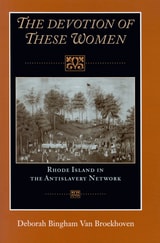
Devotion of These Women
Rhode Island in the Antislavery NetworkDeborah B. Van Broekhoven
University of Massachusetts Press, 2009
Despite the efforts of these groups, by 1842 the antislavery movement in Rhode Island was nearly moribund, the unified hopes of earlier years having fallen victim to political wrangling. A year later the largest auxiliary in the state, the Providence Antislavery Society, turned its funds over to Amarancy Paine, who in concert with other women not only revived the abolitionist movement in the state but kept it running for another ten years.
This detailed study explores how and why women like Paine emerged from the background to resuscitate and lead the antislavery cause in Rhode Island. It suggests that women more than men were accustomed to working behind the scenes, informally and without much public recognition.
The crumbling of the male-centered organization revealed a previously invisible female-based structure of personal ties on which leaders were able to build the Rhode Island State Anti-Slavery Society. Because these informal ties crossed traditional racial, geographic, and gender-role boundaries, they were often tenuous and fragile. Nevertheless, by developing this network among themselves and then extending it to national leaders, a few dedicated women managed to continue a program of antislavery petitioning, meetings, and literature circulation.
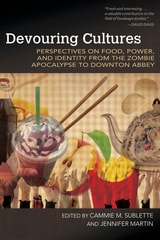
Devouring Cultures
Perspectives on Food, Power, and Identity from the Zombie Apocalypse to Downton AbbeyCammie M. Sublette
University of Arkansas Press, 2016
Devouring Cultures brings together contributors from a wide range of disciplines including media studies, rhetoric, gender studies, philosophy, anthropology, literary criticism, film criticism, race theory, history, and linguistics to examine the ways food signifies both culture and identity.
These scholars look for answers to intriguing questions: What does our choice of dining house say about our social class? Can restaurants teach us about a culture? How does food operate in Downton Abbey? How does food consumption in zombie apocalypse films and apocalyptic literature relate to contemporary food-chain crises and food nostalgia? What aspects of racial conflict, assimilation, and empowerment may be represented in restaurant culture and food choice?
Restaurants, from their historical development to their modern role as surrogate kitchen, are studied as markers of gender, race, and social class, and also as forums for the exhibition of tensions or spaces where culture is learned through the language of food. Food, as it is portrayed in literature, movies, and television, is illuminated as a platform for cultural assimilation, a way for the oppressed to find agency, or even a marker for the end of a civilization.
The essays in Devouring Cultures show how our choices about what we eat, where we eat, and with whom we eat are linked to identity and meaning and how the seemingly simple act of consumption has implications that extend far beyond sustenance.
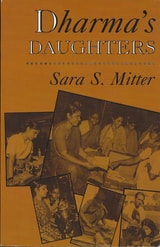
Dharma's Daughters
Contemporary Indian Women and Hindu CultureMitter, Sara S
Rutgers University Press, 1991
Women in India today are faced with a major conflict: how to adjust to rapid modernization and industrialization without abandoning traditional roles and customs. One of the assets of Hinduism has been its ability to incorporate seemingly unorthodox ideas, not fight against them. Contemporary Indian women today are trying to reconcile innovation with tradition as they assert that women are significant participants in the economy, that crimes against women should be investigated and prosecuted, and that a woman can divorce her husband. This is no easy task in light of the highly structured nature of Indian society. It is both hierarchical and patriarchal. Regardless of a family's economic position, women in the family are considered inferior. It is the woman's job, first and foremost, to be loyal to her husband and to be a good mother to her children.
Dharma's Daughters is divided into three sections. The first introduces us to women who live and work in Bombay, where the population is dense and the housing is inadequate. We meet manual laborers, members of construction crews, and illiterate domestic workers who live in shanties. Mitter paints a vivid picture of the harried lives of these women. In the second section Mitter describes Hindu mythology and the traditions that form the basis for women's lives. In the final section, Mitter tells of the increasing mobilization and resistance of Indian women since the 1970s.
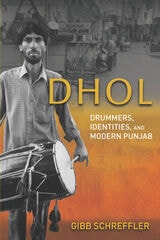
Dhol
Drummers, Identities, and Modern PunjabGibb Schreffler
University of Illinois Press, 2021
Gibb Schreffler draws on two decades of research to investigate dhol's place among the cultural formations within Punjabi communities. Analyzing the identities of musicians, Schreffler illuminates concepts of musical performance, looks at how these concepts help create or articulate Punjabi social structure, and explores identity construction at the intersections of ethnicity, class, and nationality in Punjab and the diaspora. As he shows, understanding the identities of dhol players is an ethical necessity that acknowledges their place in Punjabi cultural history and helps to repair their representation.
An engaging and rich ethnography, Dhol reveals a beloved instrumental form and the musical and social practices of its overlooked performers.
Diabetes among the Pima
Stories of SurvivalCarolyn Smith-Morris
University of Arizona Press, 2006
Click here for a Facilitator’s Guide to Diabetes among the Pima
Diagnosing America
Anthropology and Public EngagementShepard Forman, Editor
University of Michigan Press, 1995
Debunking the notion of anthropology as a "value-free" science, the authors argue forcefully for an anthropology expressly committed to cultural pluralism and democratic participation.
At the same time, individual essays demonstrate the applicability of standard anthropological methods to the study of contemporary U.S. society and culture as they investigate contested values, community politics, middle-class economics, and workplace culture or describe the psychophysiological stress effects of exclusion on African- Americans and the coping mechanisms of Mexican-Americans along the border.
Diagnosing America and the challenging "Statement to the Profession" that concludes it call for anthropologists to reach beyond the parochialism of their own discipline and to engage history, economics, sociology, and the policy sciences. It will be of interest to scholars in each of these fields who are concerned with the study and resolution of contemporary social problems in the United States and to students of American culture in this country and abroad.
Shepard Forman is Director of the International Affairs Program of the Ford Foundation and a former Professor of Anthropology, University of Michigan.
Diagnosing Desire
Biopolitics and Femininity into the Twenty-First CenturyAlyson K. Spurgas
The Ohio State University Press, 2020
In Diagnosing Desire: Biopolitics and Femininity into the Twenty-First Century, Alyson K. Spurgas examines the “new science of female sexuality” from a critical, sociological perspective, considering how today’s feminist-identified sex researchers study and manage women with low desire. Diagnosing Desire investigates experimental sex research that measures the disconnect between subjective and genital female arousal, contemporary psychiatric diagnoses for low female desire, new models for understanding women’s sexual response, and cutting-edge treatments for low desire in women—including from the realms of mindfulness and alternative healing.
Spurgas makes the case that, together, all of these technologies create a “feminized responsive desire framework” for understanding women’s sexuality, and that this, in fact, produces women’s sexuality as a complex problem to be solved. The biggest problem, Spurgas argues, is that gendered and sexualized trauma—including as it is produced within technoscientific medicine itself—is too often ignored in contemporary renderings. Through incisive textual analysis and in-depth qualitative research based on interviews with women with low desire, Spurgas argues for a more radical and communal form of care for feminized—and traumatized—populations, in opposition to biopolitical mandates to individualize and neoliberalize forms of self-care. Ultimately, this is a book not just about a specific diagnosis or dysfunction but about the material-discursive regimes that produce and regulate femininity.
Dialect and Dichotomy
Literary Representations of African American SpeechLisa Cohen Minnick
University of Alabama Press, 2007
Applies linguistics methods for a richer understanding of literary texts and spoken language.
Dialect and Dichotomy outlines the history of dialect writing in English and its influence on linguistic variation. It also surveys American dialect writing and its relationship to literary, linguistic, political, and cultural trends, with emphasis on African American voices in literature.
Furthermore, this book introduces and critiques canonical works in literary dialect analysis and covers recent, innovative applications of linguistic analysis of literature. Next, it proposes theoretical principles and specific methods that can be implemented in order to analyze literary dialect for either linguistic or literary purposes, or both. Finally, the proposed methods are applied in four original analyses of African American speech as represented in major works of fiction of the American South—Mark Twain's Adventures of Huckleberry Finn, Charles W. Chesnutt's The Conjure Woman, William Faulkner's The Sound and the Fury, and Zora Neale Hurston's Their Eyes Were Watching God.
Dialect and Dichotomy is designed to be accessible to audiences with a variety of linguistic and literary backgrounds. It is an ideal research resource and course text for students and scholars interested in areas including American, African American, and southern literature and culture; linguistic applications to literature; language in the African American community; ethnicity and representation; literary dialect analysis and/or computational linguistics; dialect writing as genre; and American English.
Dialectical Imaginaries
Materialist Approaches to U.S. Latino/a Literature in the Age of NeoliberalismMarcial González and Carlos Gallego, editors
University of Michigan Press, 2018

Dialectical Materialism
Henri Lefebvre
University of Minnesota Press, 2009
This edition contains a new introduction by Stefan Kipfer, explaining the book’s contemporary ramifications in the ever-expanding reach of the urban in the twentieth-century Western world.
Dialogic Education
Conversation About Ideas and Between PersonsRonald C. Arnett
Southern Illinois University Press, 1993
Dialogue Across Difference
Practice, Theory, and Research on Intergroup DialoguePatricia Gurin
Russell Sage Foundation, 2013
Dialogue at the Margins
Whorf, Bakhtin, and Linguistic RelativityEmily A. Schultz
University of Wisconsin Press, 1990
The “linguistic relativity principle” of pioneering American linguist Benjamin Whorf has been a focus of controversy among scholars of language for half a century. Many claim that this principle amounts to Whorf’s assertion that language determines thought and culture, while others vigorously reject such a claim. Emily Schultz rereads Whorf in terms of Russian theorist Mikhail Bakhtin, and argues that the Whorfian controversy is rooted in the polyphonic character of his best known texts. By combining Whorfian and Bakhtinian insights concerning variation within and across languages, Schultz offers a new dialogic interpretation of linguistic relativity that has profound implications for students and scholars of anthropology, linguistics, cognitive psychology, philosophy of language, and literary and art criticism.
Dialogue on the Infinity of Love
Tullia d'Aragona
University of Chicago Press, 1997
Sexually liberated and financially independent, Tullia d'Aragona dared to argue that the only moral form of love between woman and man is one that recognizes both the sensual and the spiritual needs of humankind. Declaring sexual drives to be fundamentally irrepressible and blameless, she challenged the Platonic and religious orthodoxy of her time, which condemned all forms of sensual experience, denied the rationality of women, and relegated femininity to the realm of physicality and sin. Human beings, she argued, consist of body and soul, sense and intellect, and honorable love must be based on this real nature.
By exposing the intrinsic misogyny of prevailing theories of love, Aragona vindicates all women, proposing a morality of love that restores them to intellectual and sexual parity with men. Through Aragona's sharp reasoning, her sense of irony and humor, and her renowned linguistic skill, a rare picture unfolds of an intelligent and thoughtful woman fighting sixteenth-century stereotypes of women and sexuality.
Dialogue with Europe, Dialogue with the Past
Colonial Nahua and Quechua Elites in Their Own WordsJustyna Olko
University Press of Colorado, 2018
In each chapter a particular document is transcribed exactly as it appears in the original manuscript or colonial printed document, with the editor placing it in historical context and considering the degree of European influence. These texts show the nobility through documents they themselves produced or caused to be produced—such as wills, land deeds, and petitions—and prioritize indigenous ways of expression, perspectives, and concepts. Together, the chapters demonstrate that native elites were independent actors as well as agents of social change and indigenous sustainability in colonial society. Additionally, the volume diversifies the commonly homogenous term “cacique” and recognizes the differences in elites throughout Mesoamerica and the Andes.
Showcasing important and varied colonial genres of indigenous writing, Dialogue with Europe, Dialogue with the Past reveals some of the realities, needs, strategies, behaviors, and attitudes associated with the lives of the elites. Each document and its accompanying commentary provide additional insight into how the nobility negotiated everyday life. The book will be of great interest to students and researchers of Mesoamerican and Andean history, as well as those interested in indigenous colonial societies in the Spanish Empire.
Contributors: Agnieszka Brylak, Maria Castañeda de la Paz, Katarzyna Granicka, Gregory Haimovich, Anastasia Kalyuta, Julia Madajczak, Patrycja Prządka-Giersz
Dialogues and Addresses
Madame de Maintenon
University of Chicago Press, 2004
Denounced by her contemporaries as a political schemer and religious fanatic, Maintenon has long been criticized as an opponent of gender equality. The writings in this volume faithfully reflect Maintenon's respect for social hierarchy and her stoic call for women to accept the duties of their state in life. But the writings also echo Maintenon's more feminist concerns: the need to redefine the virtues in the light of women's experience, the importance of naming the constraints on women's freedom, and the urgent need to remedy the scandalous neglect of the education of women.
In her writings as well as in her own model school at Saint-Cyr, Maintenon embodies the demand for educational reform as the key to the empowerment of women at the dawn of modernity.
Dialogues in Cuban Archaeology
Edited by L. Antonio Curet, Shannon Lee Dawdy, and Gabino La Rosa Corzo
University of Alabama Press, 2005
A critical, dialogic examination of Cuban and Caribbean archaeology, advancing contemporary interpretations of heritage and identity.
Many Americans are aware of the political, economic, and personal impacts of the U.S. embargo on Cuba. But the communication blockade between scholars has also affected the historical course of academic disciplines and research in general. With the easing of restrictions in the 1990s, academics are now freer to conduct research in Cuba, and the Cuban government has been more receptive to collaborative projects.
This volume provides a forum for the principal Cuban and American archaeologists to update the current state of Cuban archaeological research--from rock art and potsherds to mortuary practices and historical renovation--thereby filling in the information gap created by the political separation. Each group of researchers brings significant new resources to the effort, including strong conservation regulations, innovative studies of lithic and shell assemblages, and transculturation theories. Cuban research on the hacienda system, slavery, and urban processes has in many ways anticipated developments in North American archaeology by a decade or more. Of special interest are the recent renovation projects in Old Havana that fully integrate the work of historians, architects, and archaeologists--a model project conducted by agreement between the Cuban government and UNESCO.
The selection of papers for this collection is based on a desire to answer pressing research questions of interest for North American Caribbeanists and to present a cross-section of Cuban archaeological work. With this volume, then, the principal players present results of recent collaborations and begin a renewed conversation, a dialogue, that can provide a foundation for future coordinated efforts.
Diana and Beyond
White Femininity, National Identity, and Contemporary Media CultureRaka Shome
University of Illinois Press, 2014
Raka Shome investigates the factors that led to this defining cultural/political moment and unravels just what the Diana phenomenon represented for comprehending the relation between white femininity and the nation in postcolonial Britain and its connection to other white female celebrity figures in the millennium. Digging into the media and cultural artifacts that circulated in the wake of Diana's death, Shome investigates a range of theoretical issues surrounding motherhood and the production of national masculinities, global humanitarianism, transnational masculinities, the intersection of fashion and white femininity, and spirituality and national modernity. Her analysis explores how images of white femininity in popular culture intersect with issues of race, gender, class, sexuality, and transnationality in the performance of Anglo national modernities.
Moving from ideas on the positioning of privileged white women in global neoliberalism to the emergence of new formations of white femininity in the millennium , Diana and Beyond fearlessly explains the late princess's never-ending renaissance and ongoing cultural relevance.
Diaphanous Bodies
Ability, Disability, and Modernist Irish LiteratureJessica Colangelo
University of Michigan Press, 2021
Diaphanous Bodies: Ability, Disability, and Modernist Irish Literature examines ability, as a category of embodiment and embodied experience, and in the process opens up a new area of inquiry in the growing field of literary disability studies. It argues that the construction of ability arises through a process of exclusion and forgetting, in which the depiction of sensory information and epistemological judgment subtly (or sometimes un-subtly) elide the fact of embodied subjectivity. The result is what Colangelo calls “the myth of the diaphanous abled body,” a fiction that holds that an abled body is one which does not participate in or situate experience. The diaphanous abled body underwrites the myth that abled and disabled constitute two distinct categories of being rather than points on a constantly shifting continuum.
In any system of marginalization, the dominant identity always sets itself up as epistemologically and experientially superior to whichever group it separates itself from. Indeed, the norm is always most powerful when it is understood as an empty category or a view from nowhere. Diaphanous Bodies explores the phantom body that underwrites the artificial dichotomy between abled and disabled upon which the representation of embodied experience depends.
Diary of a Philosophy Student
Volume 3, 1926-30Simone de Beauvoir. Translation by Barbara Klaw. Edited by Barbara Klaw, Sylvie Le Bon de Beauvoir, and Margaret A. Simons with Marybeth Timmermann. Foreword by Sylvie Le Bon de Beauvoir
University of Illinois Press, 2024
In addition, the editors include a wealth of important supplementary material. Barbara Klaw provides a detailed consideration of the Diary’s role in the development of Beauvoir’s writing style by exploring her use of metanarrative and other literary techniques, part of a process of literary creation that saw Beauvoir use the notebooks to cultivate her talent. Margaret A. Simons’s essay places the assault by Sartre within an appraisal of Beauvoir’s complicated legacy for #MeToo while suggesting readers engage with the diary through the lens of trauma.
Diaspora Without Displacement
The Coloniality and Promise of Capoeira in SenegalCelina de Sá
Duke University Press, 2025

Diaspora and Immigration, Volume 98
V. Y. Mudimbe and Sabine Engel
Duke University Press, 0
Experts from a variety of fields—anthropology, sociology, history, literature, and African, Hispanic, and Jewish studies—examine specific diasporas, immigrant communities, and “border identities” ranging from Muslims in Europe to Chicanos in Texas, from Chinese immigrants in California to the "peach blossom diaspora" in Taiwan. They discuss the Jewish Diaspora and the creation of the State of Israel, as well as two centuries of Irish diasporic experiences in Australia and America. Following testimonies by German, Filipino, Italian American, and South African Israeli academics, who scrutinize their respective "personal diasporas," this special issue concludes with some afterthoughts on diaspora and the potential for global unity in the face of today's global diversity.
Contributors. Jean Bazin, Louis Shabat Bethlehem, Gordon H. Chang, Ngwarsungu Chiwengo, Eileen Cheng-yin Chow, Christopher Davis, Marcel Detienne, Sabine Engel, Daphna Golan, Hans Ulrich Gumbrecht, Ramón A. Gutiérrez, Daniel Itzkovitz, Riva Kastoryano, Vassilis Lambropoulos, V. Y. Mudimbe, Peter Murphy, Richard Roberts, Aron Rodrigue, Ramón Saldívar, Kenneth J. Surin, Neferti Xina M. Tadiar, Marianna De Marco Torgovnick, Danielle Trudeau, Candice Ward, Steven Zipperstein
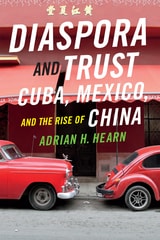
Diaspora and Trust
Cuba, Mexico, and the Rise of ChinaAdrian H. Hearn
Duke University Press, 2016
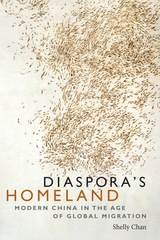
Diaspora's Homeland
Modern China in the Age of Global MigrationShelly Chan
Duke University Press, 2018
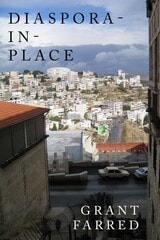
Diaspora-in-Place
Grant Farred
Temple University Press, 2027
“I was gone before I left,” writes Grant Farred in his compelling philosophical meditation, Diaspora-in-Place. Building on a concept he introduced in his critique The Perversity of Gratitude, Farred rethinks diaspora as not just physical deracination and relocation, but also a state of being in exile at home while remaining, visibly, in place. Partially the consequence of growing up in South Africa during apartheid, Farred extends the concept to “the Palestinian condition” of living in/out of place in Gaza.
Divided into a series of witty fragments, evocative epigrams, and sobering aphorisms, Diaspora-in-Place builds on thinkers ranging from Edward Said and Jacques Derrida, to the poetry of Olivia Elias, to musicians Bob Dylan, Miles Davis, and John Coltrane to examine how individuals process their national identity and subjecthood in a place where they feel out of place.
Farred writes eloquently about this expansive but not universal contradiction as being “a mobile immobility” or “an immobile mobility.” In doing so, he offers an entirely new and provocative way of conceiving how we understand diaspora.
Diasporas in the New Media Age
Identity, Politics, and CommunityAndoni Alonso
University of Nevada Press, 2010
The explosion of digital information and communication technologies has influenced almost every aspect of contemporary life. Diasporas in the New Media Age is the first book-length examination of the social use of these technologies by emigrants and diasporas around the world. The eighteen original essays in the book explore the personal, familial, and social impact of modern communication technology on populations of European, Asian, African, Caribbean, Middle Eastern, and Latin American emigrants. It also looks at the role and transformation of such concepts as identity, nation, culture, and community in the era of information technology and economic globalization. The contributors, who represent a number of disciplines and national origins, also take a range of approaches—empirical, theoretical, and rhetorical—and combine case studies with thoughtful analysis. Diasporas in the New Media Age is both a discussion of the use of communication technologies by various emigrant groups and an engaging account of the immigrant experience in the contemporary world. It offers important insights into the ways that dispersed populations are using digital media to maintain ties with their families and homeland, and to create new communities that preserve their culture and reinforce their sense of identity. In addition, the book is a significant contribution to our understanding of the impact of technology on society in general.
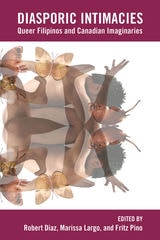
Diasporic Intimacies
Queer Filipinos and Canadian ImaginariesEdited by Robert Diaz, Marissa Largo, and Fritz Pino
Northwestern University Press, 2018
Addressing a wide range of issues beyond the academy, the authors present a rich and under-studied archive of personal reflections, in-depth interviews, creative works, and scholarly essays. Their trandsdisciplinary approach highlights the need for queer, transgressive, and utopian practices that render visible histories of migration, empire building, settler colonialism, and globalization.
Timely, urgent, and fascinating, Diasporic Intimacies offers an accessible entry point for readers who seek to pursue critically engaged community work, arts education, curatorial practice, and socially inflected research on sexuality, gender, and race in this ever-changing world.
Diasporic Mediations
Between Home and LocationRajagopalan Radhakrishnan
University of Minnesota Press, 1996
A series of meditations on the relationship between theory and practice.
In the heated, often rancorous debates that are the “culture wars,” identity politics has been at the center of both popular and academic discussion. In this series of meditations on the relationship between theory and practice, R. Radhakrishnan probes the intersections of poststructuralism and postcoloniality that lie at the heart of contemporary controversies over identity and difference.
Diasporic Mediations records Radhakrishnan's attempt to make theory accountable to the world, even while eschewing narrow methodologies or “isms.” Rather than embracing one totalizing point of view, these essays move in the spaces “between” to establish a productive dialogue between different disciplines and critical practices-to elaborate what the author calls “common ground.” Considering issues of location, language, tradition, gender, ethnicity, nationalism, colonialism, culture, and history, Radhakrishnan reclaims poststructuralism as a tool for both understanding postcolonial reality and working for social change. Diasporic location functions in this book as a perennially negotiated borderland-a real and symbolic space that adjudicates between solidarity and critique. Radhakrishnan's engagement with theory is always motivated by a desire both to build bridges with other communities of color and to engage in meaningful and constructive dialogue. He is particularly concerned with coalition, with overcoming compartmentalization and drawing fragmented movements together into if not a common cause, at least a common set of concerns. Radhakrishnan is adept at synthesizing current debates, reframing questions raised by them so that practical issues can be better understood. Momentous and wise, Diasporic Mediations provides thought-provoking considerations of contemporary issues surrounding identity, serving as a map of the postcolonial condition, or, in the author's words, of how to be “both past- and future-oriented within the history of the present.”Rajagopalan Radhakrishnan is professor in the Department of English at the University of Massachusetts, Amherst. In the heated, often rancorous debates that are the “culture wars,” identity politics has been at the center of both popular and academic discussion. In this series of meditations on the relationship between theory and practice, R. Radhakrishnan probes the intersections of poststructuralism and postcoloniality that lie at the heart of contemporary controversies over identity and difference.Diasporic Mediations records Radhakrishnan's attempt to make theory accountable to the world, even while eschewing narrow methodologies or “isms.” Rather than embracing one totalizing point of view, these essays move in the spaces “between” to establish a productive dialogue between different disciplines and critical practices-to elaborate what the author calls “common ground.” Considering issues of location, language, tradition, gender, ethnicity, nationalism, colonialism, culture, and history, Radhakrishnan reclaims poststructuralism as a tool for both understanding postcolonial reality and working for social change. Momentous and wise, Diasporic Mediations provides thought-provoking considerations of contemporary issues surrounding identity, serving as a map of the postcolonial condition, or, in the author's words, of how to be “both past- and future-oriented within the history of the present.”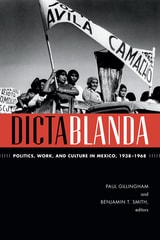
Dictablanda
Politics, Work, and Culture in Mexico, 1938–1968Paul Gillingham and Benjamin T. Smith, eds.
Duke University Press, 2014
This deliberately heterodox volume brings together social historians, anthropologists, sociologists, and political scientists to offer a radical new understanding of the emergence and persistence of the modern Mexican state. It also proposes bold, multidisciplinary approaches to critical problems in contemporary politics. With its blend of contested elections, authoritarianism, and resistance, Mexico foreshadowed the hybrid regimes that have spread across much of the globe. Dictablanda suggests how they may endure.
Contributors. Roberto Blancarte, Christopher R. Boyer, Guillermo de la Peña, María Teresa Fernández Aceves, Paul Gillingham, Rogelio Hernández Rodríguez, Alan Knight, Gladys McCormick, Tanalís Padilla, Wil G. Pansters, Andrew Paxman, Jaime Pensado, Pablo Piccato, Thomas Rath, Jeffrey W. Rubin, Benjamin T. Smith, Michael Snodgrass
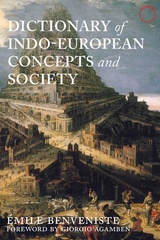
Dictionary of Indo-European Concepts and Society
Émile Benveniste
HAU, 2016
This book has famously inspired a wealth of thinkers, including Roland Barthes, Claude Lévi-Strauss, Pierre Bourdieu, Jacques Derrida, Umberto Eco, Giorgio Agamben, François Jullien, and many others. In this new volume, Benveniste’s masterpiece on the study of language and society finds new life for a new generation of scholars. As political fictions continue to separate and reify differences between European, Middle Eastern, and South Asian societies, Benveniste reminds us just how historically deep their interconnections are and that understanding the way our institutions are evoked through the words that describe them is more necessary than ever.

Dido's Daughters
Literacy, Gender, and Empire in Early Modern England and FranceMargaret W. Ferguson
University of Chicago Press, 2003
Our common definition of literacy is the ability to read and write in one language. But as Margaret Ferguson reveals in Dido's Daughters, this description is inadequate, because it fails to help us understand heated conflicts over literacy during the emergence of print culture. The fifteenth through seventeenth centuries, she shows, were a contentious era of transition from Latin and other clerical modes of literacy toward more vernacular forms of speech and writing.
Fegurson's aim in this long-awaited work is twofold: to show that what counted as more valuable among these competing literacies had much to do with notions of gender, and to demonstrate how debates about female literacy were critical to the emergence of imperial nations. Looking at writers whom she dubs the figurative daughters of the mythological figure Dido—builder of an empire that threatened to rival Rome—Ferguson traces debates about literacy and empire in the works of Marguerite de Navarre, Christine de Pizan, Elizabeth Cary, and Aphra Behn, as well as male writers such as Shakespeare, Rabelais, and Wyatt. The result is a study that sheds new light on the crucial roles that gender and women played in the modernization of England and France.
Diet and the Disease of Civilization
Adrienne Rose Bitar
Rutgers University Press, 2017
Diet books contribute to a $60-billion industry as they speak to the 45 million Americans who diet every year. Yet these books don’t just tell readers what to eat: they offer complete philosophies about who Americans are and how we should live. Diet and the Disease of Civilization interrupts the predictable debate about eating right to ask a hard question: what if it’s not calories—but concepts—that should be counted?
Cultural critic Adrienne Rose Bitar reveals how four popular diets retell the “Fall of Man” as the narrative backbone for our national consciousness. Intensifying the moral panic of the obesity epidemic, they depict civilization itself as a disease and offer diet as the one true cure.
Bitar reads each diet—the Paleo Diet, the Garden of Eden Diet, the Pacific Island Diet, the detoxification or detox diet—as both myth and manual, a story with side effects shaping social movements, driving industry, and constructing fundamental ideas about sickness and health. Diet and the Disease of Civilization unearths the ways in which diet books are actually utopian manifestos not just for better bodies, but also for a healthier society and a more perfect world.
Diet, Health, and Status among the Pasion Maya
A Reappraisal of the CollapseLori E. Wright
Vanderbilt University Press, 2006
This volume also provides an independent assessment of the results of other Petexbatun region subprojects and a comparative evaluation of recent studies by other projects of Late and Terminal Classic culture change. For bioarchaeologists, this work sets a new standard in breadth and depth of osteological study. For Pre-Columbian scholars in general, it provides new insights into the environmental and biological issues involved in the debate on the end of the Classic period of Maya civilization.
VIMA Series #2
Dietary Reconstruction at Chalcatzingo
A Formative Period Site in Morelos, MexicoMargaret J. Schoeninger
University of Michigan Press, 2019
Differences in Medicine
Unraveling Practices, Techniques, and BodiesMarc Berg and Annemarie Mol, eds.
Duke University Press, 1998
Combining theoretical work with interviews and direct observation of the activities and interactions of doctors, nurses, technicians, and patients, the contributors to this volume provide comparative studies of specific cases. Individual chapters explore topics such as the contested domain of fetal surgery in a California hospital, the construction of gender identity before transsexual surgery in Germany, and differences in the treatment and definition of pain by two clinics in France. Differences in Medicine advances earlier studies on medicine’s social diversity and regional variations to expose significant differences in the presumptions and decisions that affect patients’ lives, and marks a dramatic development in both the study of medicine and in science studies generally.
Revealing the ways in which the bodies and lives of people are constructed as medical objects by practitioners, technologies, and textbooks, this collection calls for and initiates new, more textured investigations and theories of the body in medicine and the practice of science. It will open new discussions among medical and healthcare professionals as well as scholars in medical anthropology, science studies, sociology, philosophy, and the history of medicine.
Contributors. Isabelle Baszanger, Marc Berg, Geoffrey C. Bowker, Monica J. Casper, Charis M. Cussins, Nicolas Dodier, Stefan Hirschauer, Annemarie Mol, Vicky Singleton, Susan Leigh Star, Stefan Timmermans, Dick Willems
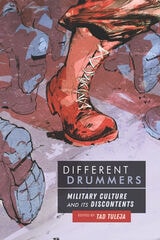
Different Drummers
Military Culture and Its DiscontentsTad Tuleja
Utah State University Press, 2020
This multidisciplinary collection brings in the perspectives of scholars from folklore, literary studies, psychology, and media studies, as well as the first-person perspectives of veterans. It includes chapters on the vernacular genres of bodylore, folksong, personal narrative, and legend; literary items like soldiers’ memoirs and poetry; the artwork of soldier cartoonists; and accounts of defying the chain of command in the field. Ideally, the goal of military basic training is to replace recruits’ focus on their own individuality with an unquestioned devotion to group solidarity. In reality, unit cohesion is constantly challenged by humans clinging obstinately to their non-collective personalities. Different Drummers focuses on those in uniform who feel themselves to be both of the military culture and at odds with it. It shows how these loyal “discontents” find ways of communicating and interacting with others that sometimes defy institutional expectations.
Contributors:
Ron Ben-Tovim, Carol Burke, Richard Allen Burns, Catherine Calloway, James I. Deutsch, Ronald Fry, Angus Kress Gillespie, Christina M. Knopf, Jay Mechling, Matthew David Perry, Mark C. Russell, John Paul Wallis
Difficult Attachments
Anxieties of Kinship and CareKathryn E. Goldfarb
Rutgers University Press, 2025
Difficult Reputations
Collective Memories of the Evil, Inept, and ControversialGary Alan Fine
University of Chicago Press, 2001
Presenting essays on America's most reviled traitor, its worst president, and its most controversial literary ingénue (Benedict Arnold, Warren G. Harding, and Lolita), among others, sociologist Gary Alan Fine analyzes negative, contested, and subcultural reputations. Difficult Reputations offers eight compelling historical case studies as well as a theoretical introduction situating the complex roles in culture and history that negative reputations play.
Arguing the need for understanding real conditions that lead to proposed interpretations, as well as how reputations are given meaning over time, this book marks an important contribution to the sociologies of culture and knowledge.
Digest of the Krasnyi Arkhiv--Red Archives
Vol. 31-106Compiled and annotated by Leona W. Eisele under the direction of Andrei A. Lobanov-Rostovsky
University of Michigan Press, 1955
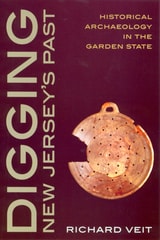
Digging New Jersey's Past
Historical Archaeology in the Garden StateVeit, Richard F
Rutgers University Press, 2002
Richard Veit takes readers on a well-organized guided tour through four hundred years of Garden State development as seen through archaeology in Digging New Jerseys Past. This illustrated guidebook takes readers to some of the states most interesting discoveries and tells us what has been learned or is being learned from them. The diverse array of archaeological sites, drawn from all parts of the state, includes a seventeenth-century Dutch trading post, the site of the Battle of Monmouth, the gravemarkers of freed slaves, and a 1920s railroad roundhouse, among others.
Veit begins by explaining what archaeologists do: How do they know where to dig? What sites are likely to yield important information? How do archaeologists excavate a site? How are artifacts cataloged, stored, and interpreted? He then moves through the states history, from the contact of first peoples and explorers, to colonial homesteads, Revolutionary War battlefields, cemeteries, railroads, and factories. Veit concludes with some thoughts about the future of archaeological research in New Jersey and with suggestions on ways that interested individuals can become involved in the field.
Digging and Discovery, 2nd edition
Wisconsin ArchaeologyDiane Holliday
Wisconsin Historical Society Press, 2006
Digging and Discovery, TG, 2nd edition
Wisconsin ArchaeologyBobbie Malone
Wisconsin Historical Society Press, 2000

Digging for Gold
Papers on Archaeology for ProfitEdited by William K. Macdonald
University of Michigan Press, 2019
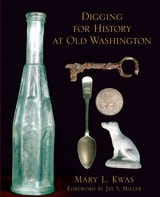
Digging for History at Old Washington
Mary L. Kwas
University of Arkansas Press, 2009

Digging for Hope
A Feminist Ethnography in the Land of Mass GravesR. Aída Hernández Castillo
University of Arizona Press, 2026
Through physical and spiritual practices such as exhumation, mourning, and poetic remembrance, these women reclaim dignity for the dead and challenge a society that has normalized disappearance. At the heart of this book is a profound exploration of what Hernández Castillo calls a “pedagogy of love”—a political and ethical framework rooted in care, solidarity, and the refusal to forget. These women are not only searching for bodies; they are building emotional communities, crafting new languages of justice, and offering a reimagining of what it means to resist violence. Their practices, often overlooked by traditional scholarship, restore humanity and dignify the disappeared.
Digging for Hope is essential reading for anyone seeking to understand the gendered dimensions of violence and the grassroots movements that rise in response. With clarity and compassion, Hernández Castillo brings readers into the intimate spaces of grief and resistance, offering a model for feminist ethnography that is both rigorous and deeply humane.
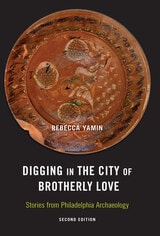
Digging in the City of Brotherly Love
Stories from Philadelphia ArchaeologyYamin, Rebecca
Temple University Press, 2023
Rebecca Yamin adds three new chapters that showcase several major discoveries from recent finds including unmarked early eighteenth-century burial grounds, one of which associated with the first African Methodist Episcopal (AME) Church, in the oldest part of the city; a nineteenth-century working-class neighborhood built along the path of what is now Route I-95 and was once home to Native American life; and the remains of two taverns found on the site of the current Museum of the American Revolution.
Yamin describes the research and state-of-the-art techniques used to study these exciting discoveries. In chronicling the value of looking into a city’s past, Digging in the City of Brotherly Love brings to life the people who lived in the early city and the people in the present who study them.

Digging into Popular Culture
Theories and Methodologies in Archeology, Anthropology, and Other FieldsPat Browne
University of Wisconsin Press, 1991
This volume presents archeological studies in conjunction with cultural anthropological studies as a means to enhance popular culture studies. Scholar Malcolm K. Shuman points out that the study of archeology must be careful to chart the total human content of an artifact, because archeology “is a profoundly human (and humanizing) endeavor that cannot be divorced from the matrix of human life.” The other ten essays cover aspects of archeology and cultural anthropology, and the authors are meticulous in studying their subject in context.
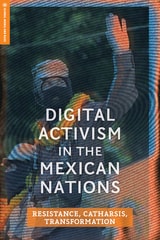
Digital Activism in the Mexican Nations
Resistance, Catharsis, TransformationDavid S. Dalton
Rutgers University Press, 2026
Digital Activism in the Mexican Nations analyzes Mexico’s rich history of digital activism, which is among the most vibrant of any country in the Hispanic world. The book begins with a discussion of the Zapatista uprising of 1994—which is widely understood as the first digital social movement in the history of the world—and ends with a discussion of the digital strategies of migrant communities trekking through Mexico into the present.
Conceptualizing (digital) activism as a type of performance, the book opens a dialogue with Brecht’s binary of cathartic and transformative performance. As such, it suggests that activist movements centered on expressive manifestations of emotion tend to stifle a social movement’s revolutionary potential by stifling their ability to resonate with potential allies outside their community. At the same time, it argues that the most successful digital social movements seek strategies to build connections with allies who can help them to shift state policy.
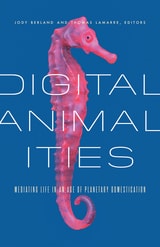
Digital Animalities
Mediating Life in an Age of Planetary DomesticationJody Berland
University of Minnesota Press, 2026
Exploring where animality meets digital media in the shadow of climate crisis
Digital Animalities is a groundbreaking investigation into the entanglements of animal life, media infrastructures, and digital technologies in a time of environmental precarity and digital saturation. Revealing the digital as a dynamic site where animal agency and technological systems collide, the contributors eschew simplistic binaries to emphasize complex mediations between animals and digital media.
From wildlife camera traps and virtual zoos to gaming environments and animation tools, these essays explore how animals are captured, played with, and consumed through digital technologies, elaborating their agency in these mediations of ecological and biopolitical processes. Rethinking animality as a fluid and contested terrain shaped by climate change, extinction pressures, and emerging ecopolitical paradigms, Digital Animalities shifts how we consider the impact of the digital on sentient lives and their futures.
Contributors: Giovanni Aloi, Art Institute of Chicago; Etienne S. Benson, Max Planck Institute for the History of Science, Berlin; Sarah Bezan, U College Cork; Michael Fisch, U of Chicago; Kate Galloway, Rensselaer Polytechnic Institute; Christine L. Marran, U of Minnesota; Brian McCormack; Jonathan Osborn; Hannah Tollefson, U of Toronto Scarborough; Tom Tyler, U of Leeds; Paul Wells, Loughborough U; Hang Wu.
Retail e-book files for this title are screen-reader friendly with images accompanied by short alt text and/or extended descriptions.