Results by title
1272 books match the query 'Asia' and 39 start with e
Early Film Culture in Hong Kong, Taiwan, and Republican China
Kaleidoscopic HistoriesEmilie Yueh-yu Yeh, Editor
University of Michigan Press, 2018
East is West and West is East
Gender, Culture, and Interwar Encounters between Asia and AmericaKaren Kuo
Temple University Press, 2012
Between 1919-1938, contact between Asia and America forced a reassessment of the normative boundaries of race, sex, gender, class, home, and nation. Karen Kuo’s provocative East Is West and West Is East looks closely at these global shifts to modernity.
In her analysis of five forgotten texts—the 1930 film East Is West, Frank Capra’s 1937 version of Lost Horizon and its 1973 remake, Younghill Kang's novel East Goes West, and Baroness Ishimoto’s memoir/manifesto, Facing Both Ways—Kuo elucidates how “Asia” played a role in shaping American gender and racial identities and how Asian authors understood modern America and its social, political, and cultural influence on Asia.
Kuo asserts that while notions of white and Asian racial difference remain salient, sexual and gendered constructions of Asians and whites were at times about similarity and intersections as much as they were about establishing differences.
Eating Her Curries and Kway
A Cultural History of Food in SingaporeNicole Tarulevicz
University of Illinois Press, 2013
Discovering Singaporean identity through cooking and cuisine
While eating is a universal experience, for Singaporeans it carries strong national connotations. The popular Singaporean-English phrase "Die die must try" is not so much hyperbole as it is a reflection of the lengths that Singaporeans will go to find great dishes.
In Eating Her Curries and Kway: A Cultural History of Food in Singapore, Nicole Tarulevicz argues that in a society that has undergone substantial change in a relatively short amount of time, food serves Singaporeans as a poignant connection to the past. Eating has provided a unifying practice for a diverse society, a metaphor for multiracialism and recognizable national symbols for a fledgling state. Covering the period from British settlement in 1819 to the present and focusing on the post–1965 postcolonial era, Tarulevicz tells the story of Singapore through the production and consumption of food.
Analyzing a variety of sources that range from cookbooks to architectural and city plans, Tarulevicz offer a thematic history of this unusual country, which was colonized by the British and operated as a port within Malaya. Connecting food culture to the larger history of Singapore, she discusses various topics including domesticity and home economics, housing and architecture, advertising, and the regulation of food-related manners and public behavior such as hawking, littering, and chewing gum. Moving away from the predominantly political and economic focus of other histories of Singapore, Eating Her Curries and Kway provides an important alternative reading of Singaporean society.
Echoes of Chongqing
Women in Wartime ChinaDanke Li
University of Illinois Press, 2010
This collection of annotated oral histories records the personal stories of twenty Chinese women who lived in the wartime capital of Chongqing during China's War of Resistance against Japan during World War II. By presenting women's remembrances of the war, this study examines the interplay between oral history and traditional historical narrative, public discourse, and private memories. The women interviewed came from differing social, economic, and educational backgrounds and experienced the war in a variety of ways, some of them active in the communist resistance and others trying to support families or pursue educations in the face of wartime upheaval. Their stories demonstrate that the War of Resistance had two faces: one presented by official propaganda and characterized by an upbeat unified front against Japan, the other a record of invisible private stories and a sobering national experience of death and suffering. The accounts of how women coped, worked, and lived during the war years in the Chongqing region recast historical understanding of the roles played by ordinary people in wartime and give women a public voice and face that, until now, have been missing from scholarship on the war.
Economics of Forestry and Rural Development
An Empirical Introduction from AsiaWilliam F. Hyde and Gregory S. Amacher, and Colleagues
University of Michigan Press, 2000
Edith and Winnifred Eaton
Chinatown Missions and Japanese RomancesDominika Ferens
University of Illinois Press, 2002
Arguing that Edith as much as Winnifred constructed her persona along with her pen name, Ferens considers the fiction of both Eaton sisters as ethnography. Edith and Winnifred Eaton suggests that both authors wrote through the filter of contemporary ethnographic discourse on the Far East and also wrote for readers hungry for "authentic" insight into the morals, manners, and mentality of an exotic other.
Ferens traces two distinct discursive traditions–-missionary and travel writing–-that shaped the meanings of "China" and "Japan" in the nineteenth century. She shows how these traditions intersected with the unconventional literary careers of the Eaton sisters, informing the sober, moralistic tone of Edith's stories as well as Winnifred's exotic narrative style, plots, settings, and characterizations.
Bringing to the Eatons' writings a contemporary understanding of the racial and textual politics of ethnographic writing, this important account shows how these two very different writers claimed ethnographic authority, how they used that authority to explore ideas of difference, race, class and gender, and how their depictions of nonwhites worked to disrupt the process of whites' self-definition.
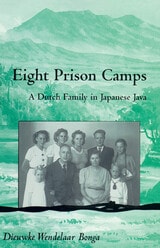
Eight Prison Camps
A Dutch Family in Japanese JavaDieuwke Wendelaar Bonga
Ohio University Press, 1996
Eldest daughter of eight children, the author grew up in Surakarta, Java, in what is now Indonesia. In the months following the bombing of Pearl Harbor, however, Dutch nationals were rounded up by Japanese soldiers and put in internment camps. Her father and brother were sent to separate men’s camps, leaving the author, her mother, and the five younger children in the women’s camp. In this and later seven other prison camps in central Java, their lives gradually deteriorated from early days of fear and crowding to near starvation, forced labor, beatings, and seeing others disappear or die. On the family’s return to Holland after the war, they found a nation recovering from German occupation and largely ignorant of the horror of the Far East experience.
Electoral Dynamics in the Philippines
Money Politics, Patronage and Clientelism at the GrassrootsEdited by Allen Hicken, Edward Aspinall, and Meredith Weiss
National University of Singapore Press, 2019
Electrifying Indonesia
Technology and Social Justice in National DevelopmentAnto Mohsin
University of Wisconsin Press, 2023
Elementary Aspects of Peasant Insurgency in Colonial India
Ranajit Guha
Duke University Press, 1999
This classic work in subaltern studies explores the common elements present in rebel consciousness during the Indian colonial period. Ranajit Guha—intellectual founder of the groundbreaking and influential Subaltern Studies Group—describes from the peasants’ viewpoint the relations of dominance and subordination in rural India from 1783 to 1900.
Challenging the idea that peasants were powerless agents who rebelled blindly against British imperialist oppression and local landlord exploitation, Guha emphasizes their awareness and will to effect political change. He suggests that the rebellions represented the birth of a theoretical consciousness and asserts that India’s long subaltern tradition lent power to the landmark insurgence led by Mahatma Gandhi. Yet as long as landlord authority remains dominant in a ruling culture, Guha claims, all mass struggles will tend to model themselves after the unfinished projects documented in this book.
Students and scholars will welcome this paperback edition of Guha’s 1983 original, which was distributed on a limited scale in the United States. It will influence new generations studying colonialism, postcolonialism, subaltern studies, historiography, anthropology, and Indian, Asian, and Latin American history.
Elementary Aspects of the Political
Histories from the Global SouthPrathama Banerjee
Duke University Press, 2020
Elephants and Kings
An Environmental HistoryThomas R. Trautmann
University of Chicago Press, 2015
Trautmann traces the history of the war elephant in India and the spread of the institution to the west—where elephants took part in some of the greatest wars of antiquity—and Southeast Asia (but not China, significantly), a history that spans 3,000 years and a considerable part of the globe, from Spain to Java. He shows that because elephants eat such massive quantities of food, it was uneconomic to raise them from birth. Rather, in a unique form of domestication, Indian kings captured wild adults and trained them, one by one, through millennia. Kings were thus compelled to protect wild elephants from hunters and elephant forests from being cut down. By taking a wide-angle view of human-elephant relations, Trautmann throws into relief the structure of India’s environmental history and the reasons for the persistence of wild elephants in its forests.
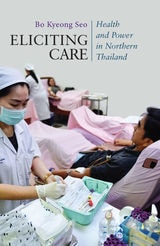
Eliciting Care
Health and Power in Northern ThailandBo Kyeong Seo
University of Wisconsin Press, 2020
Using the broader concept of elicitation, Seo analyzes the social encounters and forces that shape caregivers. These dynamics challenge dichotomies of subjugation and resistance, consent and coercion, and dependence and autonomy. The intimate and moving stories at the core of Eliciting Care from patients and providers draw attention to a broader, critically important phenomenon at the hospital level. Seo's poignant ethnography engages with feminist theory on the ethics of care, and in so doing, makes a significant contribution to emerging work in the field of health policy and politics.
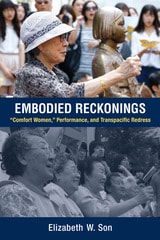
Embodied Reckonings
“Comfort Women,” Performance, and Transpacific RedressElizabeth W. Son
University of Michigan Press, 2018
Based on extensive archival and ethnographic research, the study argues for the central role of performance in how Korean survivors, activists, and artists have redressed the histories—and erasures—of this sexual violence. Merging cultural studies and performance theory with a transnational, feminist analysis, the book illuminates the actions of ordinary people, thus offering ways of reconceptualizing legal and political understandings of redress that tend to concentrate on institutionalized forms of state-based remediation.
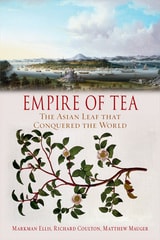
Empire of Tea
The Asian Leaf that Conquered the WorldMarkman Ellis, Richard Coulton, and Matthew Mauger
Reaktion Books, 2015
This impressively detailed book offers a rich cultural history of tea, from its ancient origins in China to its spread around the world. The authors recount tea’s arrival in London and follow its increasing salability and import via the East India Company throughout the eighteenth century, inaugurating the first regular exchange—both commercial and cultural—between China and Britain. They look at European scientists’ struggles to understand tea’s history and medicinal properties, and they recount the ways its delicate flavor and exotic preparation have enchanted poets and artists. Exploring everything from its everyday use in social settings to the political and economic controversies it has stirred—such as the Boston Tea Party and the First Opium War—they offer a multilayered look at what was ultimately an imperial industry, a collusion—and often clash—between the world’s greatest powers over control of a simple beverage that has become an enduring pastime.
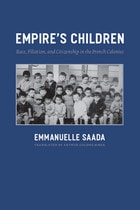
Empire's Children
Race, Filiation, and Citizenship in the French ColoniesEmmanuelle Saada
University of Chicago Press, 2012
Europe’s imperial projects were often predicated on a series of legal and scientific distinctions that were frequently challenged by the reality of social and sexual interactions between the colonized and the colonizers.When Emmanuelle Saada discovered a 1928 decree defining the status of persons of mixed parentage born in French Indochina—the métis—she found not only a remarkable artifact of colonial rule, but a legal bombshell that introduced race into French law for the first time. The decree was the culmination of a decades-long effort to resolve the “métis question”: the educational, social, and civil issues surrounding the mixed population. Operating at the intersection of history, anthropology, and law, Empire’s Children reveals the unacknowledged but central role of race in the definition of French nationality.
Through extensive archival work in both France and Vietnam, and a close reading of primary and secondary material from the Pacific islands and sub-Saharan and North Africa, Saada has created in Empire’s Children an original and compelling perspective on colonialism, law, race, and culture from the end of the nineteenth century until decolonization.
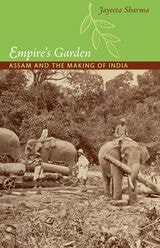
Empire's Garden
Assam and the Making of IndiaJayeeta Sharma
Duke University Press, 2011
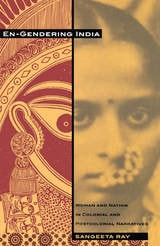
En-Gendering India
Woman and Nation in Colonial and Postcolonial NarrativesSangeeta Ray
Duke University Press, 2000
Through her readings of works by writers including Bankimchandra Chatterjee, Rabindranath Tagore, Harriet Martineau, Flora Annie Steel, Anita Desai, and Bapsi Sidhaa, Ray demonstrates that Indian women were presented as upper class and Hindu, an idealization that paradoxically served the needs of both colonial and nationalist discourses. The Indian nation’s goal of self-rule was expected to enable women’s full participation in private and public life. On the other hand, British colonial officials rendered themselves the protectors of passive Indian women against their “savage” male countrymen. Ray shows how the native woman thus became a symbol for both an incipient Indian nation and a fading British Empire. In addition, she reveals how the figure of the upper-class Hindu woman created divisions with the nationalist movement itself by underscoring caste, communal, and religious differences within the newly emerging state. As such, Ray’s study has important implications for discussions about nationalism, particularly those that address the concepts of identity and nationalism.
Building on recent scholarship in feminism and postcolonial studies, En-Gendering India will be of interest to scholars in those fields as well as to specialists in nationalism and nation-building and in Victorian, colonial, and postcolonial literature and culture.
Enchanted Modernities
Ancestral Vitalizations in the Upper MekongMicah F. Morton
University of Wisconsin Press, 2025
Although modernity and its colonial legacies are often portrayed as severing or at least attenuating people’s ancestral ties, Enchanted Modernities shows that those ties persist and, in fact, are on the rise. Akha and other Indigenous ancestral and animist resurgences are blossoming despite the paradigmatic Western framing of modernity as fundamentally at odds with Ancestors and, for that matter, kinship and even religion. Morton demonstrates that modernity and modernization proceed alongside the reproduction of new and old forms of enchantment.
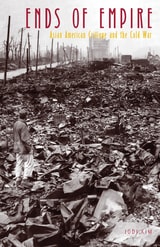
Ends of Empire
Asian American Critique and the Cold WarJodi Kim
University of Minnesota Press, 2010
Enduring Cancer
Life, Death, and Diagnosis in DelhiDwaipayan Banerjee
Duke University Press, 2020
England's Asian Renaissance
Su Fang Ng
University of Delaware Press, 2022
Published by the University of Delaware Press. Distributed worldwide by Rutgers University Press.
English Lessons
The Pedagogy of Imperialism in Nineteenth-Century ChinaJames L. Hevia
Duke University Press, 2003
Hevia analyzes British Foreign Office documents, diplomatic memoirs, auction house and museum records, nineteenth-century scholarly analyses of Chinese history and culture, campaign records, and photographs. He shows how Britain refigured its imperial project in
China as a cultural endeavor through examinations of the circulation of military loot in Europe, the creation of an art history of “things Chinese,” the construction of a field of knowledge about China, and the Great Game rivalry between Britain, Russia, and the Qing empire in Central Asia. In so doing, he illuminates the impact of these elements on the colonial project and the creation of a national consciousness in China.
Entangled Landscapes
Early Modern China and EuropeEdited by Yue Zhuang and Andrea M. Riemenschnitter
National University of Singapore Press, 2017
Entangled Landscapes focuses on the exchange of ideas of landscape practice between Europe and China in the sixteenth, seventeenth, and eighteenth centuries. Yue Zhuang and Andrea M. Riemenschnitter explore this through three themes—empire-building, mediators’ constraints, and aesthetic negotiations. They challenge our assumptions about how China and Europe influenced one another and go beyond well-documented outcomes like the jardin anglo-chinois and Européenerie styles. Interdisciplinary and revisionist, this brings the critical spirit of postcolonial studies to art history and will appeal to scholars in fields such as comparative literature and visual culture, history, and human geography.
Entering America
Northeast Asia and Beringia Before the Last Glacial MaximumDavid B. Madsen
University of Utah Press, 2004
Where did the first Americans come from and when did they get here? That basic question of American archaeology, long thought to have been solved, is re-emerging as a critical issue as the number of well-excavated sites dating to pre-Clovis times increases. It now seems possible that small populations of human foragers entered the Americas prior to the creation of the continental glacial barrier. While the archaeological and paleoecological aspects of a post-glacial entry have been well studied, there is little work available on the possibility of a pre-glacial entry.
Entering America seeks to fill that void by providing the most up-to-date information on the nature of environmental and cultural conditions in northeast Asia and Beringia (the Bering land bridge) immediately prior to the Last Glacial Maximum. Because the peopling of the New World is a question of international archaeological interest, this volume will be important to specialists and nonspecialists alike.
Entrepreneurial Seoulite
Culture and Subjectivity in Hongdae, SeoulMihye Cho
University of Michigan Press, 2019
Recent research on Korean culture approaches the K-wave phenomenon from the perspectives of cultural consumption, media analysis, and cultural management and policy. Meanwhile, studies on Seoul have centered on its transformation as a global, creative city. Rather than examining the K-wave or the city itself, this book explores the experience of living through the city-in-transition, focusing on the relationship between “the ideology that justified engagement in capitalism” and the “subjectification process.” The book aims to understand the project to institutionalize a cultural district in Hongdae as a demonstration of the coevolution of ideologies and citizenship in a society undergoing rapid liberalization—politically, culturally, and economically.
A cultural turn took place in Korea during the 1990s, amid the economic prosperity driven by state-led industrialization and the collapse of the military dictatorship due to democratization movements. Cultural critiques, emerging as an alternative to social movements, proliferated to assert the freedom and autonomy of individuals against regulatory systems and institutions. The nation was hit by the Asian financial crisis in 1997, and witnessed massive economic restructuring including layoffs, stakeouts, and a prevalence of contingent employment. As a result, the entire nation had to find new engines of economic growth while experiencing a creative destruction. At the center of this national transformation, Seoul has sought to recreate itself from a mega city to a global city, equipped with cutting-edge knowledge industries and infrastructures.
By juxtaposing the cultural turn and cultural/creative city-making, Entrepreneurial Seoulite interrogates the formation of new citizen subjectivity, namely the enterprising self, in post-Fordist Seoul. What kinds of logic guide individuals in the engagement of new urban realities in rapidly liberalized Seoul—culturally and economically? In order to explore this query, Mihye Cho draws on Weber’s concept of “the spirit of capitalism” on the formation of a new economic agency focusing on the re-configuration of meanings, and seeks to capture a transformative moment detailing when and how capitalism requests a different spirit and lifestyle of its participants. Likewise, this book approaches the enterprising self as the new spirit of post-Fordist Seoul and explores the ways in which people in Seoul internalize and negotiate this new enterprising self.
Environment and Society in the Japanese Islands
From Prehistory to the PresentBruce L. Batten
Oregon State University Press, 2015
Environment and Society in the Japanese Islands attempts to answer these questions through a series of case studies by leading Japanese and Western historians, geographers, archaeologists, and climatologists. These essays, on diverse topics from all periods of Japanese history and prehistory, are unified by their focus on the key concepts of “resilience” and “risk mitigation.” Taken as a whole, they place Japan’s experience in global context and call into question the commonly presumed division between pre-modern and modern environmental history.
Primarily intended for scholars and students in fields related to Japan or environmental history, these accessibly-written essays will be valuable to anyone wishing to learn about the historical roots of today’s environmental issues or the complex relationship between human society and the natural environment.
Envisioning Asia
On Location, Travel, and the Cinematic Geography of U.S. OrientalismJeanette Roan
University of Michigan Press, 2010
"Whereas some other scholars read selected films mainly to illustrate political arguments, Roan never loses sight of the particularities of film as a distinctive cultural form and practice. Her drive to see 'cinema as a mechanism of American orientalism' results in not just a textual analysis of these films, but also a history of their material production and distribution."
---Josephine Lee, University of Minnesota
"Envisioning Asia offers an exciting new contribution to our understandings of the historical developments of American Orientalism. Jeannette Roan deftly situates changing cinematic technologies within the context of U.S. imperial agendas in this richly nuanced analysis of 'shooting on location' in Asia in early 20th century American cinema."
---Wendy Kozol, Oberlin College
"Through her vivid illustration of the role of American cinema in the material, visual, and ideological production of Asia, Jeanette Roan takes the reader on a journey to Asia through a very different route from the virtual travel taken by the viewers of the films she discusses."
---Mari Yoshihara, University of Hawai'i at Manoa
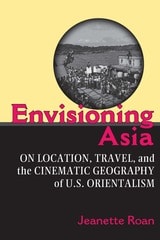
The birth of cinema coincides with the beginnings of U.S. expansion overseas, and the classic Hollywood era coincides with the rise of the United States as a global superpower. In Envisioning Asia, Jeanette Roan argues that throughout this period, the cinema's function as a form of virtual travel, coupled with its purported "authenticity," served to advance America's shifting interests in Asia. Its ability to fulfill this imperial role depended, however, not only on the cinematic representations themselves but on the marketing of the films' production histories---and, in particular, their use of Asian locations. Roan demonstrates this point in relation to a wide range of productions, offering an engaging and useful survey of a largely neglected body of film. Not only that, by focusing on the material practices involved in shooting films on location---that is, the actual travels, negotiations, and labor of making a film---she moves beyond formal analysis to produce a richly detailed history of American interests, attitudes, and cultural practices during the first half of the twentieth century.
Jeanette Roan is Adjunct Professor of Visual Studies at California College of the Arts and author of "Exotic Explorations: Travels to Asia and the Pacific in Early Cinema" in Re/collecting Early Asian America: Essays in Cultural History (2002).
Cover art: Publicity still, Tokyo File 212 (Dorrell McGowan and Stuart McGowan, 1951). The accompanying text reads: "Hundreds of spectators gather on the sidelines as technicians prepare to photograph a parade scene in 'Tokyo File 212,' a Breakston-McGowan Production filmed in Japan for RKO Radio distribution." Courtesy of the Academy of Motion Picture Arts and Sciences.
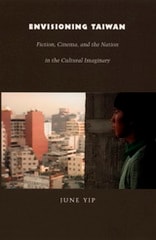
Envisioning Taiwan
Fiction, Cinema, and the Nation in the Cultural ImaginaryJune Yip
Duke University Press, 2004
Yip traces a distinctly Taiwanese sense of self vis-à-vis China, Japan, and the West through two of the island’s most important cultural movements: the hsiang-t’u (or “nativist”) literature of the 1960s and 1970s, and the Taiwanese New Cinema of the 1980s and 1990s. At the heart of the book are close readings of the work of the hsiang-t’u writer Hwang Chun-ming and the New Cinema filmmaker Hou Hsiao-hsien. Key figures in Taiwan’s assertion of a national identity separate and distinct from China, both artists portray in vibrant detail daily life on the island. Through Hwang’s and Hou’s work and their respective artistic movements, Yip explores “the imagining of a nation” on the local, national, and global levels. In the process, she exposes a perceptible shift away from traditional models of cultural authenticity toward a more fluid, postmodern hybridity—an evolution that reflects both Taiwan’s peculiar multicultural reality and broader trends in global culture.
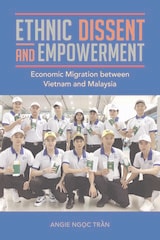
Ethnic Dissent and Empowerment
Economic Migration between Vietnam and MalaysiaAngie Ngoc Tran
University of Illinois Press, 2022
A rare study of labor migration in the Global South, Ethnic Dissent and Empowerment answers essential questions about why nations export and import migrant workers and how the workers protect themselves not only within the system, but by circumventing it altogether.
Ethnography #9
Alan Klima
Duke University Press, 2019
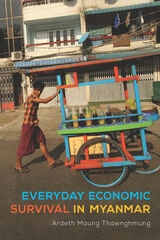
Everyday Economic Survival in Myanmar
Ardeth Maung Thawnghmung
University of Wisconsin Press, 2022
Thawnghmung conducted in-depth interviews and surveys of 372 individuals from all walks of life and across geographical locations in Myanmar between 2008 and 2015. To frame her analysis, she provides context from countries with comparable political and economic situations. Her findings will be welcomed by political scientists and policy analysts, as well by journalists and humanitarian activists looking for substantive, reliable information about everyday life in a country that remains largely in the shadows.
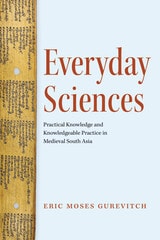
Everyday Sciences
Practical Knowledge and Knowledgeable Practice in Medieval South AsiaEric Moses Gurevitch
University of Chicago Press, 2027
How people across society in medieval South Asia—including coppersmiths, merchants, bureaucrats, philosophers, and physicians—pioneered new vernacular sciences.
Starting in the eleventh century, South Asian scholars and artisans began to investigate and shape the world in a novel manner. Intellectuals translated Sanskrit texts into regional languages such as Kannada, situating knowledge in particular places. At the same time, architects and artisans began to assert their intellectual and literary presence, often claiming the title of “scholar” as they negotiated a space between classical textual erudition, professional expertise, and personal experience. Working within the perilous world of court politics, a new class of scholar-administrators began collecting recipes and composing texts about weather prediction, horticulture, mathematics, astrology, sexual life, and medicine.
Everyday Sciences traces this emergence of vernacular sciences by engaging with untapped archives and an array of sources in multiple languages. By exploring how historical actors resolved disputes about the physiology of vision, the use of meat and alcohol in medicine, and the management of information in elephant stables, Eric Moses Gurevitch unveils the complex textual and social orders that structured medieval society in India. He argues that a focus on everyday sciences in the non-modern non-West allows historians to reassess how places outside—and even inside—Europe are brought into narratives of a global history of science. Gurevitch articulates a “big-enough” history of science in South Asia, one open to little voices and unexpected connections that might not make their way through the fray in other histories.
Everyday Sciences demonstrates how practical, everyday activities were engines of profound intellectual innovation—and it shows the promise of revisiting the past without colonial hang-ups, and with fresh eyes.
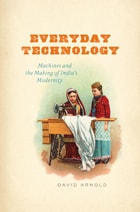
Everyday Technology
Machines and the Making of India's ModernityDavid Arnold
University of Chicago Press, 2013
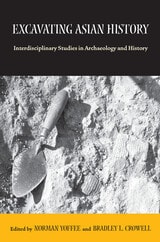
Excavating Asian History
Interdisciplinary Studies in Archaeology and HistoryNorman Yoffee
University of Arizona Press, 2006
Excavating Asian History contains case studies and theoretical articles that show how archaeologists have been investigating historical, social, and economic organizations and that explore the relationship between history and archaeology in the study of pre-modern Asia. These contributions consider biases in both historical and archaeological data that have occasioned rival claims to knowledge in the two disciplines. Ranging widely across the region from the Levant to China and from the third millennium BC to the second millennium AD, they demonstrate that archaeological and historical studies can complement each other and should be used in tandem.
The contributors are leading historians and archaeologists of Asia who present data, issues, and debates revolving around the most recent research on the ancient Near East, early Islam, India, China, and Southeast Asian states. Their chapters illustrate the benefits of interdisciplinary investigations and show in particular how archaeology is changing our understanding of history. Commentary chapters by Miriam Stark and Philip Kohl add new perspectives to the findings.
By showing the evolving relationship between those who study archaeological material and those who investigate textual data, Excavating Asian History offers practical demonstrations of how research has been and must continue to be structured.
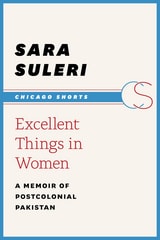
Excellent Things in Women
A Memoir of Postcolonial PakistanSara Suleri Goodyear
University of Chicago Press, 1989
Sometimes, only the most heartbreaking memories possess the capacity—in their elegiac immediacy—to take our breath away. With Excellent Things in Women, Sara Suleri offers the reader a delicately wrought memoir of life in postcolonial Pakistan. Suleri intertwines the violent history of Pakistan's independence with her own intimate experiences—relating the tumult of growing up female during a time of fierce change in the Middle East in the 1960s and ’70s. In the two selections presented here, “Excellent Things in Women” and “Meatless Days,” we watch as Suleri re-encounters the relationships that inform her voyage from adolescence to womanhood—with her Welsh mother; her Pakistani father, prominent political journalist Z. A. Suleri; and her tenacious grandmother, Dadi, along with her five siblings—as she comes to terms with the difficulties of growing up and her own complicated passage to the West.
Exile and the Nation
The Parsi Community of India and the Making of Modern IranBy Afshin Marashi
University of Texas Press, 2020
Honorable Mention, Hamid Naficy Iranian Studies Book Award from the Association of Iranian Studies
In the aftermath of the seventh-century Islamic conquest of Iran, Zoroastrians departed for India. Known as the Parsis, they slowly lost contact with their ancestral land until the nineteenth century, when steam-powered sea travel, the increased circulation of Zoroastrian-themed books, and the philanthropic efforts of Parsi benefactors sparked a new era of interaction between the two groups.Tracing the cultural and intellectual exchange between Iranian nationalists and the Parsi community during the late nineteenth and early twentieth centuries, Exile and the Nation shows how this interchange led to the collective reimagining of Parsi and Iranian national identity—and the influence of antiquity on modern Iranian nationalism, which previously rested solely on European forms of thought. Iranian nationalism, Afshin Marashi argues, was also the byproduct of the complex history resulting from the demise of the early modern Persianate cultural system, as well as one of the many cultural heterodoxies produced within the Indian Ocean world. Crossing the boundaries of numerous fields of study, this book reframes Iranian nationalism within the context of the connected, transnational, and global history of the modern era.
Exporting Japan
Politics of Emigration to Latin AmericaToake Endoh
University of Illinois Press, 2008
Exporting Japan examines the domestic origins of the Japanese government's policies to promote the emigration of approximately three hundred thousand native Japanese citizens to Latin America between the 1890s and the 1960s. This imperialist policy, spanning two world wars and encompassing both the pre-World War II authoritarian government and the postwar conservative regime, reveals strategic efforts by the Japanese state to control its populace while building an expansive nation beyond its territorial borders.
Toake Endoh compellingly argues that Japan's emigration policy embodied the state's anxieties over domestic political stability and its intention to remove marginalized and radicalized social groups by relocating them abroad. Documenting the disproportionate focus of the southwest region of Japan as a source of emigrants, Endoh considers the state's motivations in formulating emigration policies that selected certain elements of the Japanese population for "export." She also recounts the situations migrants encountered once they reached Latin America, where they were often met with distrust and violence in the "yellow scare" of the pre-World War II period.
Expressions of Sufi Culture in Tajikistan
Benjamin Gatling
University of Wisconsin Press, 2018
Gatling demonstrates how Sufis transcend the oppressive religious politics of contemporary Tajikistan by using these forms to inhabit multiple times: the paradoxical present, the Persian sacred past, and the Soviet era. In a world consumed with the supposed political dangers of Islam, Gatling shows the intricate, ground-level ways that Muslim expressive culture intersects with authoritarian politics, not as artful forms of resistance but rather as a means to shape Sufi experiences of the present.