Results by title
384 books match the query 'Black Studies (Global)' and 15 start with e
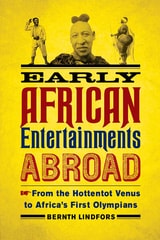
Early African Entertainments Abroad
From the Hottentot Venus to Africa's First OlympiansBernth Lindfors
University of Wisconsin Press, 2014
Using period illustrations and texts, Early African Entertainments Abroad illuminates the mindset of the era's largely white audiences as they viewed wax models of Africans with tails and watched athletic competitions showcasing hungry cannibals. White spectators were thus assured of their racial superiority. And blacks were made to appear less than fully human precisely at the time when abolitionists were fighting to end slavery and establish equality.
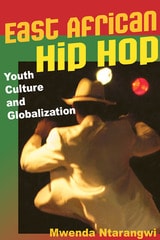
East African Hip Hop
Youth Culture and GlobalizationMwenda Ntarangwi
University of Illinois Press, 2008
In this book, Mwenda Ntarangwi analyzes how young hip hop artists in the East African nations of Kenya, Uganda, and Tanzania showcase the opportunities and challenges brought by the globalization of music. Combining local popular music traditions with American and Jamaican styles of rap, East African hip hop culture reflects the difficulty of creating commercially accessible music while honoring tradition and East African culture. Ntarangwi pays special attention to growing cross-border exchanges within East African hip hop, collaborations in recording music and performances, and themes and messages that transcend local geographic boundaries.
In using hip hop as a medium for discussing changes in East African political, economic, and social conditions, artists vocalize their concerns about economic policies, African identity, and political establishments, as well as important issues of health (such as HIV/AIDS), education, and poverty. Through three years of fieldwork, rich interviews with artists, and analysis of live performances and more than 140 songs, Ntarangwi finds that hip hop provides youth an important platform for social commentary and cultural critique and calls attention to the liberating youth music culture in East Africa.
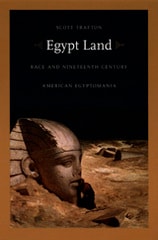
Egypt Land
Race and Nineteenth-Century American EgyptomaniaScott Trafton
Duke University Press, 2004
Drawing on literary and cultural studies, art and architectural history, political history, religious history, and the histories of archaeology and ethnology, Trafton illuminates anxieties related to race in different manifestations of nineteenth-century American Egyptomania, including the development of American Egyptology, the rise of racialized science, the narrative and literary tradition of the imperialist adventure tale, the cultural politics of the architectural Egyptian Revival, and the dynamics of African American Ethiopianism. He demonstrates how debates over what the United States was and what it could become returned again and again to ancient Egypt. From visions of Cleopatra to the tales of Edgar Allan Poe, from the works of Pauline Hopkins to the construction of the Washington Monument, from the measuring of slaves’ skulls to the singing of slave spirituals—claims about and representations of ancient Egypt served as linchpins for discussions about nineteenth-century American racial and national identity.
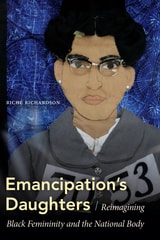
Emancipation's Daughters
Reimagining Black Femininity and the National BodyRiché Richardson
Duke University Press, 2021
Embodying Black Religions in Africa and Its Diasporas
Yolanda Covington-Ward and Jeanette S. Jouili, editors
Duke University Press, 2021
Contributors. Rachel Cantave, Youssef Carter, N. Fadeke Castor, Yolanda Covington-Ward, Casey Golomski, Elyan Jeanine Hill, Nathanael J. Homewood, Jeanette S. Jouili, Bertin M. Louis Jr., Camee Maddox-Wingfield, Aaron Montoya, Jacob K. Olupona, Elisha P. Renne

Emergent Quilombos
Black Life and Hip-Hop in BrazilBryce Henson
University of Texas Press, 2023
2024 Best Book Award, National Communication Association, Ethnography Division
2024 Roberto Reis Book Prize, First Book category, Brazilian Studies Association
2024 Outstanding Book Award, National Communication Association, Critical and Cultural Studies Division
2024 International and Intercultural Best Book Award, National Communication Association, International and Intercultural Division
How disenfranchised Black Brazilians use hip-hop to reinvigorate the Black radical tradition.
Known as Black Rome, Salvador da Bahia, Brazil, is a predominantly Black city. The local art, food, and dance are closely linked to the population’s African roots. Yet many Black Brazilian residents are politically and economically disenfranchised. Bryce Henson details a culture of resistance and activism that has emerged in response, expressed through hip-hop and the social relations surrounding it.
Based on years of ethnographic research, Emergent Quilombos illuminates how Black hip-hop artists and their circles contest structures of anti-Black racism by creating safe havens and alternative social, cultural, and political systems that serve Black people. These artists valorize and empower marginalized Black peoples through song, aesthetics, media, visual art, and community action that emphasize diasporic connections, ancestrality, and Black identifications in opposition to the anti-Black Brazilian nation. In the process, Henson argues, the Salvador hip-hop scene has reinvigorated and reterritorialized a critical legacy of Black politicocultural resistance: the quilombo, maroon communities of Black fugitives who refused slavery as a way of life, gathered away from the spaces of their oppression, protected their communities, and nurtured Black life in all its possibilities.
Enter the Lion
The 1966 State Visit of Emperor Haile Selassie I to the CaribbeanJohn P. Homiak, Giulia Bonacci, and Jahlani A. Niaah
Duke University Press, 2026
Envisioning African Intersex
Challenging Colonial and Racist Legacies in South African MedicineAmanda Lock Swarr
Duke University Press, 2023
All author royalties from Envisioning African Intersex will be donated to Intersex South Africa.

Essential Essays (Two-volume set)
Foundations of Cultural Studies & Identity and DiasporaStuart Hall
Duke University Press, 2018
From his arrival in Britain in the 1950s and involvement in the New Left, to founding the field of cultural studies and examining race and identity in the 1990s and early 2000s, Stuart Hall has been central to shaping many of the cultural and political debates of our time. Essential Essays—a landmark two volume set—brings together Stuart Hall's most influential and foundational works. Spanning the whole of his career, these volumes reflect the breadth and depth of his intellectual and political projects while demonstrating their continued vitality and importance.
Volume 1: Foundations of Cultural Studies focuses on the first half of Hall's career, when he wrestled with questions of culture, class, representation, and politics. This volume's stand-out essays include his field-defining “Cultural Studies and Its Theoretical Legacies;” the prescient “The Great Moving Right Show,” which first identified the emergent mode of authoritarian populism in British politics; and “Encoding and Decoding in the Television Discourse,” one of his most influential pieces of media criticism. As a whole, Volume 1 provides a panoramic view of Hall's fundamental contributions to cultural studies.
Volume 2: Identity and Diaspora draws from Hall's later essays, in which he investigated questions of colonialism, empire, and race. It opens with “Gramsci's Relevance for the Study of Race and Ethnicity,” which frames the volume and finds Hall rethinking received notions of racial essentialism. In addition to essays on multiculturalism and globalization, black popular culture, and Western modernity's racial underpinnings, Volume 2 contains three interviews with Hall, in which he reflects on his life to theorize his identity as a colonial and diasporic subject.

Essential Essays, Volume 1
Foundations of Cultural StudiesStuart Hall
Duke University Press, 2018
Volume 1: Foundations of Cultural Studies focuses on the first half of Hall's career, when he wrestled with questions of culture, class, representation, and politics. This volume's stand-out essays include his field-defining “Cultural Studies and Its Theoretical Legacies"; the prescient “The Great Moving Right Show,” which first identified the emergent mode of authoritarian populism in British politics; and “Encoding and Decoding in the Television Discourse,” one of his most influential pieces of media criticism. As a whole, Volume 1 provides a panoramic view of Hall's fundamental contributions to cultural studies.

Essential Essays, Volume 2
Identity and DiasporaStuart Hall
Duke University Press, 2018
Volume 2: Identity and Diaspora draws from Hall's later essays, in which he investigated questions of colonialism, empire, and race. It opens with “Gramsci's Relevance for the Study of Race and Ethnicity,” which frames the volume and finds Hall rethinking received notions of racial essentialism. In addition to essays on multiculturalism and globalization, black popular culture, and Western modernity's racial underpinnings, Volume 2 contains three interviews with Hall, in which he reflects on his life to theorize his identity as a colonial and diasporic subject.
Evidence of Things Not Seen
Fantastical Blackness in Genre FictionsRhonda D. Frederick
Rutgers University Press, 2022

Exchange Is Not Robbery
More Stories of an African Bar GirlJohn M. Chernoff
University of Chicago Press, 2004
In Exchange Is Not Robbery and its predecessor, Hustling Is Not Stealing, a chronicle of exploitation is transformed by verbal art into an ebullient comedy. In Hustling Is Not Stealing, Hawa is a playful warrior struggling against circumstances in Ghana and Togo. In Exchange Is Not Robbery, Hawa returns to her native Burkina Faso, where she achieves greater control over her life but faces new difficulties. As a woman making sacrifices to live independently, Hawa sees her own situation become more complex as she confronts an atmosphere in Burkina Faso that is in some ways more challenging than the one she left behind, and the moral ambiguities of her life begin to intensify.
Combining elements of folklore and memoir, Hawa's stories portray the diverse social landscape of West Africa. Individually the anecdotes can be funny, shocking, or poignant; assembled together they offer a sweeping critical and satirical vision.
Exorbitance
A Speculative Ethnography of InheritanceDeborah A. Thomas
Duke University Press, 2025
Ezili's Mirrors
Imagining Black Queer GendersOmise'eke Natasha Tinsley
Duke University Press, 2018