851 books match the query 'Congresses' and 46 start with e
cover of Economic Adjustment and Exchange Rates in Developing Countries

Economic Adjustment and Exchange Rates in Developing Countries

Edited by Sebastian Edwards and Liaquat Ahamed

University of Chicago Press, 1986

In spite of the attention paid exchange rates in recent economic debates on developing countries, relatively few studies have systematically analyzed in detail the various ramifications of exchange rate policy in these countries. In this new volume from the National Bureau of Economic Research, leading economists use rigorous models to tackle various exchange rate issues, while also illuminating policy implications that emerge from their analyses.

The volume, divided into four main sections, addresses: the role of exchange rates in stabilization programs and the adjustment process; the importance of exchange rate policy during liberalization reform in developing countries; exchange rate problems relevant and unique to developing countries, illustrated by case studies; and the problems defining, measuring, and identifying determinants of real exchange rates. Authors of individual papers examine the relation between commercial policies and exchange rates, the role of exchange rate policy in stabilization programs, the effectiveness of devaluations as a policy tool, and the interaction between exchange rate terms of trade an capital flow. This research will not only prove crucial to our understanding of the role of exchange rates in developing countries, but will clearly set the standard for future work in the field.
[more]
cover of Economic Aspects of Health

Economic Aspects of Health

Edited by Victor R. Fuchs

University of Chicago Press, 1982

Unlike earlier work in medical economics, which has focused on medical care, these ten papers stress the production and consequences of health itself. They reveal a serious concern with real-world health problems in their investigation of such subjects as infant mortality, life expectancy, morbidity, and disability. These papers are unusual, as well, in bringing to bear on these problems new and powerful theoretical and statistical tools. They draw on, and in some cases are, original sources for new bodies of data. As such, Economic Aspects of Health comprises a useful blend of relevance and rigor.
[more]
cover of Economic Aspects of Obesity

Economic Aspects of Obesity

Edited by Michael Grossman and Naci Mocan

University of Chicago Press, 2011

In the past three decades, the number of obese adults in the United States has doubled and the number of obese children almost tripled, which may lead to increased medical expenditures, productivity loss, and stress on the health care system. Economic analysis now shows that weight gain is the result of individual choices in response to economic environments and demonstrates that incentives can influence individual behaviors affecting weight. Determinants are varied and include year- and area-specific food prices, availability of food outlets and recreational facilities, health insurance, and minimum wage levels. Timely and important, Economic Aspects of Obesity provides a strong foundation for evaluating the costs and benefits of various proposals designed to control obesity rates.
[more]
cover of Economic Exchange and Social Interaction in Southeast Asia: Perspectives from Prehistory, History, and Ethnography

Economic Exchange and Social Interaction in Southeast Asia

Perspectives from Prehistory, History, and Ethnography

Karl L. Hutterer, Editor

University of Michigan Press, 1978

Economic behavior is governed by two major sets of boundary conditions: environmental and technological factors on the one hand, and conditions of social organization on the other hand. Indeed, social scientists are often particularly interested in the framework of exchange relationships: exchange of goods, services, personnel, and information. Economic exchanges lend concrete manifestations to social relations that themselves may transcend the economic realm and that otherwise are often difficult to trace.
Yet in social science research in Southeast Asia, the area of economic studies has lagged behind, despite the great study potential represented by the tremendous diversity of its physical and human environment. Economic Exchange and Social Interaction in Southeast Asia attempts to take advantage of that opportunity. As a number of the contributions to this volume show, many if not most of the systems organized on very different levels of integration interact with each other. Taken as a whole, they provide evidence of the incredible diversity of economic and social systems that may be investigated in Southeast Asia.
 
[more]
cover of Economic Policy Reforms and the Indian Economy

Economic Policy Reforms and the Indian Economy

Edited by Anne O. Krueger

University of Chicago Press, 2002

India is the second most populous country in the world and also one of the poorest. From the late 1940s to 1980, India's per capita income grew at an average annual rate of only two percent. Expansionist economic reforms during the 1980s boosted economic growth but also unfortunately resulted in high inflation and a balance of payments crisis. As a consequence, in 1991 the government announced sweeping new changes in economic policies.

Economic Policy Reforms and the Indian Economy evaluates the effects of those changes and identifies areas of the Indian economy still in urgent need of reform. After an overview of Indian economic policies and development since independence, papers focus on the country's fiscal situation, the environment for private economic activity, education, the reservation of certain activities for small-scale industry, and determinants of differentials in rates of growth across the different Indian states. Contributors include respected academic specialists on India and policy reform, high-level Indian administrators, and present and past policymakers.

[more]
cover of Economic Reform in China: Problems and Prospects

Economic Reform in China

Problems and Prospects

James A. Dorn and Wang Xi

University of Chicago Press, 1990

In this volume, distinguished Chinese and Western scholars provide a detailed examination of the problems associated with China's transition to a market-oriented system. A variety of reform proposals, aimed at resolving the contradictions inherent in piecemeal reform, are discussed along with the chances for future liberalization.

These clearly written and insightful essays address the roots of China's crisis. The authors focus on institutional changes necessary for a spontaneous market order and point to the close relation between economic reform and political-constitutional reform. Topics include the speed and degree of the transition, whether ownership reform must precede price reform, how inflation can be avoided, steps to depoliticize economic life, how to create an environment conducive to foreign trade and investment, and how to institute basic constitutional change and open China to the outside world.

The revolutionary changes now shaking the foundations of socialism and central planning in the Soviet Union and Eastern and Central Europe are sure to have an impact on China's future. Despite their seriousness, the events of Tiananmen Square may constitute only a temporary detour on the road toward a private market order. The essays in this volume help lay a rational framework for understanding China's present problems and for discussing the prospects for future reform.
[more]
cover of Economic Regulation and Its Reform: What Have We Learned?

Economic Regulation and Its Reform

What Have We Learned?

Edited by Nancy L. Rose

University of Chicago Press, 2014

The past thirty years have witnessed a transformation of government economic intervention in broad segments of industry throughout the world. Many industries historically subject to economic price and entry controls have been largely deregulated, including natural gas, trucking, airlines, and commercial banking. However, recent concerns about market power in restructured electricity markets, airline industry instability amid chronic financial stress, and the challenges created by the repeal of the Glass-Steagall Act, which allowed commercial banks to participate in investment banking, have led to calls for renewed market intervention.

Economic Regulation and Its Reform collects research by a group of distinguished scholars who explore these and other issues surrounding government economic intervention. Determining the consequences of such intervention requires a careful assessment of the costs and benefits of imperfect regulation. Moreover, government interventions may take a variety of forms, from relatively nonintrusive performance-based regulations to more aggressive antitrust and competition policies and barriers to entry. This volume introduces the key issues surrounding economic regulation, provides an assessment of the economic effects of regulatory reforms over the past three decades, and examines how these insights bear on some of today’s most significant concerns in regulatory policy.
[more]
cover of Economic and Financial Crises in Emerging Market Economies

Economic and Financial Crises in Emerging Market Economies

Edited by Martin Feldstein

University of Chicago Press, 2003

In the late 1990s, economic and financial crises raged through East Asia, devastating economies that had previously been considered among the strongest in the developing world. The crises eventually spread to Russia, Turkey, and Latin America, and impacted the economies of many industrialized nations as well. In today's increasingly interdependent world, finding ways to reduce the risk of future crises—and to improve the management of crises when they occur—has become an international policy challenge of paramount importance.

This book rises to that challenge, presenting accessible papers and commentaries on the topic not only from leading academic economists, but also from high-ranking government officials (in both industrial and developing nations), senior policymakers at international institutions, and major financial investors. Six non-technical papers, each written by a specialist in the topic, provide essential economic background, introducing sections on exchange rate regimes, financial policies, industrial country policies, IMF stabilization policies, IMF structural programs, and creditor relations. Next, personal statements from the major players give firsthand accounts of what really went on behind the scenes during the crises, giving us a rare glimpse into how international economic policy decisions are actually made. Finally, wide-ranging discussions and debates sparked by these papers and statements are summarized at the end of each section.

The result is an indispensable overview of the key issues at work in these crises, written by the people who move markets and reshape economies, and accessible to not just economists and policymakers, but also to educated general readers.

Contributors:
Montek S. Ahluwalia, Domingo F. Cavallo, William R. Cline, Andrew Crockett, Michael P. Dooley, Sebastian Edwards, Stanley Fischer, Arminio Fraga, Jeffrey Frankel, Jacob Frenkel, Timothy F. Geithner, Morris Goldstein, Paul Keating, Mervyn King, Anne O. Krueger, Roberto Mendoza, Frederic S. Mishkin, Guillermo Ortiz, Yung Chul Park, Nouriel Roubini, Robert Rubin, Jeffrey Sachs, Ammar Siamwalla, George Soros
[more]
cover of Economics of Research and Innovation in Agriculture

Economics of Research and Innovation in Agriculture

Edited by Petra Moser

University of Chicago Press, 2021

Feeding the world’s growing population is a critical policy challenge for the twenty-first century. With constraints on water, arable land, and other natural resources, agricultural innovation is a promising path to meeting the nutrient needs for future generations. At the same time, potential increases in the variability of the world’s climate may intensify the need for developing new crops that can tolerate extreme weather. Despite the key role for scientific breakthroughs, there is an active discussion on the returns to public and private spending in agricultural R&D, and many of the world’s wealthier countries have scaled back the share of GDP that they devote to agricultural R&D. Dwindling public support leaves universities, which historically have been a major source of agricultural innovation, increasingly dependent on industry funding, with uncertain effects on the nature and direction of agricultural research. All of these factors create an urgent need for systematic empirical evidence on the forces that drive research and innovation in agriculture. This book aims to provide such evidence through economic analyses of the sources of agricultural innovation, the challenges of measuring agricultural productivity, the role of universities and their interactions with industry, and emerging mechanisms that can fund agricultural R&D. 
[more]
cover of Economics of the Family: Marriage, Children, and Human Capital

Economics of the Family

Marriage, Children, and Human Capital

Edited by Theodore W. Schultz

University of Chicago Press, 1975
[more]
cover of Educating Economists

Educating Economists

David Colander and Reuven Brenner, Editors

University of Michigan Press, 1992
What should economists learn in undergraduate and graduate programs? And how does this differ from what students are being taught?In a series of provocative essays, the contributors to Educating Economists cast a critical eye upon the profession and offer solutions to the serious problems they identify in contemporary economics education.The failure of economics teaching is the theme that connects all of the papers in this volume: the failure to develop the skills needed by undergraduate teachers of economics and the failure to prepare students to do work in government and business.The authors point out that professors have lost sight of the skills needed to deal with real-world data, to gain access to existing knowledge, and to critically examine issues, models, and data. Instead, they argue, tenure-minded graduate professors, focused on the use of high-powered mathematical techniques to write formal, technical articles, prepare students only to do abstract research within a framework that just a few other fellow graduates can understand. This situation results in the systematic degradation of the quality of undergraduate economics education and of the institutional usefulness of economics.The contributors conclude that a substantial restructuring of economics education and of the economics profession, including its tenure requirements, is needed and would allow the discipline—and its practitioners—to make a much stronger and more relevant contribution to the people and institutions whose behavior it attempts to explain.
[more]
cover of Education, Skills, and Technical Change: Implications for Future US GDP Growth

Education, Skills, and Technical Change

Implications for Future US GDP Growth

Edited by Charles R. Hulten and Valerie A. Ramey

University of Chicago Press, 2018

Over the past few decades, US business and industry have been transformed by the advances and redundancies produced by the knowledge economy. The workplace has changed, and much of the work differs from that performed by previous generations. Can human capital accumulation in the United States keep pace with the evolving demands placed on it, and how can the workforce of tomorrow acquire the skills and competencies that are most in demand?

Education, Skills, and Technical Change explores various facets of these questions and provides an overview of educational attainment in the United States and the channels through which labor force skills and education affect GDP growth. Contributors to this volume focus on a range of educational and training institutions and bring new data to bear on how we understand the role of college and vocational education and the size and nature of the skills gap. This work links a range of research areas—such as growth accounting, skill development, higher education, and immigration—and also examines how well students are being prepared for the current and future world of work.

[more]
cover of Egypt and the Classical World: Cross-Cultural Encounters in Antiquity

Egypt and the Classical World

Cross-Cultural Encounters in Antiquity

Jeffrey Spier

J. Paul Getty Trust, The, 2022

Presenting dynamic research, this publication explores two millennia of cultural interactions between Egypt, Greece, and Rome.
 
From Mycenaean weaponry found among the cargo of a Bronze Age shipwreck off the Turkish coast to the Egyptian-inspired domestic interiors of a luxury villa built in Greece during the Roman Empire, Egypt and the Classical World documents two millennia of cultural and artistic interconnectedness in the ancient Mediterranean. This volume gathers pioneering research from the Getty scholars' symposium that helped shape the major international loan exhibition Beyond the Nile: Egypt and the Classical World (J. Paul Getty Museum, 2018).
 
Generously illustrated essays consider a range of artistic and other material evidence, including archaeological finds, artworks, papyri, and inscriptions, to shed light on cultural interactions between Egypt, Greece, and Rome from the Bronze Age to the Late Period and Ptolemaic dynasty to the Roman Empire. The military's role as a conduit of knowledge and ideas in the Bronze Age Aegean, and an in-depth study of hieroglyphic Egyptian inscriptions found on Roman obelisks offer but two examples of scholarly lacunae addressed by this publication. Specialists across the fields of art history, archaeology, Classics, Egyptology, and philology will benefit from the volume's investigations into syncretic processes that enlivened and informed nearly twenty-five hundred years of dynamic cultural exchange.
 
The free online edition of this open-access publication is available at www.getty.edu/publications/egypt-classical-world/ and includes zoomable, high-resolution photography. Also available are free PDF, EPUB, and Kindle/MOBI downloads of the book.

[more]
cover of Empire's End: Transnational Connections in the Hispanic World

Empire's End

Transnational Connections in the Hispanic World

Akiko Tsuchiya

Vanderbilt University Press, 2015

The fall of the Spanish Empire: that period in the nineteenth century when it lost its colonies in Spanish America and the Philippines. How did it happen? What did the process of the "end of empire" look like? Empire's End considers the nation's imperial legacy beyond this period, all the way up to the present moment. In addition to scrutinizing the political, economic, and social implications of this "end," these chapters emphasize the cultural impact of this process through an analysis of a wide range of representations—literature, literary histories, periodical publications, scientific texts, national symbols, museums, architectural monuments, and tourist routes—that formed the basis of transnational connections and exchange. The book breaks new ground by addressing the ramifications of Spain's imperial project in relation to its former colonies, not only in Spanish America, but also in North Africa and the Philippines, thus generating new insights into the circuits of cultural exchange that link these four geographical areas that are rarely considered together.

Empire's End showcases the work of scholars of literature, cultural studies, and history, centering on four interrelated issues crucial to understanding the end of the Spanish empire: the mappings of the Hispanic Atlantic, race, human rights, and the legacies of empire.
[more]
cover of Empirical Studies of Commercial Policy

Empirical Studies of Commercial Policy

Edited by Robert E. Baldwin

University of Chicago Press, 1991

The need for careful research on trade policy is particularly acute, and this volume empirically addresses these and many other important issues. The contributors offer studies which integrate the institutional details of current trade policy with creative economic analyses.

Marked by a shift from a traditional reliance on simulation models, these papers take their inspiration from recent changes in the assumptions traditionally underlying research in international trade theory. No longer are government policies viewed as being somehow "given" to the researcher; in part 1, "Analyses with a Political Economy Perspective," four papers treat such policies as endogenous and explicable in terms of political economy. Neither are product and factor markets seen as perfectly competitive; instead, the three papers in part 2, "Trade Policy Effects under Imperfectly Competitive Market Conditions," assume that firms consider the actions of other companies when formulating their decisions. In part 3, "A New Measure of Trade Restrictiveness and Estimates of Trade Policy Effects with CGE Models," the first essay explores the quantitative restrictions on cheese to develop and implement a new model of restrictive trade. Two final contributions address problems for which simulation modeling is especially useful. The first considers the effectiveness of an import surcharge in reducing the U.S. trade deficit and the second treats the welfare effects of liberalization in South Korea where increasing returns to scale are significant

These innovative studies focus on economic behavior that will provide valuable insights for policymakers, academic economists, and students.
[more]
cover of Empirical and Experimental Methods in Cognitive/Functional Research

Empirical and Experimental Methods in Cognitive/Functional Research

Edited by Sally Rice and John Newman

CSLI, 2010

Empirical and Experimental Methods in Cognitive/Functional Research consists of selected papers from the seventh meeting of the Conceptual Structure, Discourse, and Language Conference, held at the University of Alberta in October 2004. The papers fall into five main categories, reflecting the cognitive and functional orientation of the conference: reciprocity between lexis and syntax, semantic factors affecting form patterning, grammaticalization of basic verbs, form/meaning pairings in discourse, and experimental investigations of language/mind and language/use interactions. In addition, a plenary paper by Nick Evans on complex events, propositional overlay, and the special status of reciprocal clauses is included.
[more]
cover of Empowering Exporters: Reciprocity, Delegation, and Collective Action in American Trade Policy

Empowering Exporters

Reciprocity, Delegation, and Collective Action in American Trade Policy

Michael J. Gilligan

University of Michigan Press, 1997

Until the New Deal, most groups seeking protection from imports were successful in obtaining relief from Congress. In general the cost of paying the tariffs for consumers was less than the cost of mounting collective action to stop the tariffs. In 1934, with the passage of the Reciprocal Trade Agreements Act, all of this changed. The six decades that followed have produced a remarkable liberalization of trade policy in the United States. This occurred despite the fact that domestic politics, according to some of the best developed theories, should have prevented this liberalization.
Michael Gilligan argues that liberalization has succeeded because it has been reciprocal with liberalization in other countries. Our trade barriers have been reduced as an explicit quid pro quo for reduction of trade barriers in other countries. Reciprocity, Gilligan argues, gives exporters the incentive to support free trade policies because it gives them a clear gain from free trade and thus enables the exporters to overcome collective action problems. The lobbying by exporters, balancing the interests of groups seeking protection, changes the preferences of political leaders in favor of more liberalization.
Gilligan tests his theory in a detailed exploration of the history of American trade policy and in a quantitative analysis showing increases in the demand for liberalization as the result of reciprocity in trade legislation from 1890 to the present. This book should appeal to political scientists, economists, and those who want to understand the political underpinnings of American trade policy.
Michael J. Gilligan is Assistant Professor of Politics, New York University.
[more]
cover of Empowerment and Black Deaf Persons

Empowerment and Black Deaf Persons

Lindsay Moeletsi Dunn

Gallaudet University Press, 2024

Empowerment and Black Deaf Persons is a collection of papers from a 1990 conference that brought together an audience of mostly Black Deaf and hearing people to address three themes: leadership and advocacy, the dynamics and dilemmas of being multiply marginalized, and issues related to language and community. Scholars, students, and community members will find this volume invaluable for understanding the origins and evolution of Black Deaf Studies. Lindsay Dunn, co-chair of the original conference, contributes a new foreword, offering contemporary insights and reflections.
 
This is the inaugural volume in the Early Papers in Deaf Studies series, which will consist of reissued works originally published by the Gallaudet University College for Continuing Education but long out of print. The aim of this series is to restore these foundational papers to the scholarly community. Empowerment and Black Deaf Persons is available in both print and open digital formats, ensuring broad access to this important contribution to the literature.
[more]
cover of Empty Spaces: perspectives on emptiness  in modern history

Empty Spaces

perspectives on emptiness in modern history

Edited by Courtney J. Campbell, Allegra Giovine, and Jennifer Keating

University of London Press, 2019

How is emptiness made and what historical purpose does it serve? What cultural, material and natural work goes into maintaining ‘nothingness’? Why have a variety of historical actors, from colonial powers to artists and urban dwellers, sought to construct, control and maintain (physically and discursively) empty space, and by which processes is emptiness discovered, visualised and reimagined? This volume draws together contributions from authors working on landscapes and rurality, along with national and imperial narratives, from Brazil to Russia and Ireland. It considers the visual, including the art of Edward Hopper and the work of the British Empire Marketing Board, while concluding with a section that examines constructions of emptiness in relation to capitalism, development and the (re)appropriation of urban space. In doing so, it foregrounds the importance of emptiness as a productive prism through which to interrogate a variety of imperial, national, cultural and urban history.
[more]
cover of Enoch and the Synoptic Gospels: Reminiscences, Allusions, Intertextuality

Enoch and the Synoptic Gospels

Reminiscences, Allusions, Intertextuality

Loren T. Stuckenbruck

SBL Press, 2016

Essential research for students and scholars of Second Temple Judaism and the New Testament

Since Richard Laurence published the first English translation of 1 Enoch in 1821, its importance for an understanding of early Christianity has been generally recognized. The present volume is the first book of essays contributed by international specialists in Second Temple Judaism devoted to the significance of traditions found in 1 Enoch for the interpretation of the Synoptic Gospels in the New Testament. Areas covered by the contributions include demonology, Christology, angelology, cosmology, birth narratives, forgiveness of sins, veneration, wisdom, and priestly tradition. The contributors are Joseph L. Angel, Daniel Assefa, Leslie Baynes, Gabriele Boccaccini, Kelley Coblentz Bautch, Henryk Drawnel, André Gagné, Lester L. Grabbe, Daniel M. Gurtner, Andrei A. Orlov, Anders Klostergaard Petersen, Amy E. Richter, Loren T. Stuckenbruck, Benjamin Wold, and Archie T. Wright.

Features:

  • Multiple approaches to thinking about the relationship between 1 Enoch and the Synoptic Gospels
  • Exploration of the common socio-cultural and religious framework within which the traditions concerning Enoch and Jesus developed
  • Articles presented at the Seventh Enoch Seminar in 2013
[more]
cover of Enterprising America: Businesses, Banks, and Credit Markets in Historical Perspective

Enterprising America

Businesses, Banks, and Credit Markets in Historical Perspective

Edited by William J. Collins and Robert A. Margo

University of Chicago Press, 2015

The rise of America from a colonial outpost to one of the world’s most sophisticated and productive economies was facilitated by the establishment of a variety of economic enterprises pursued within the framework of laws and institutions that set the rules for their organization and operation.
           
To better understand the historical processes central to American economic development, Enterprising America brings together contributors who address the economic behavior of American firms and financial institutions—and the associated legal institutions that shaped their behavior—throughout the nineteenth and early twentieth centuries. Collectively, the contributions provide an account of the ways in which businesses, banks, and credit markets promoted America’s extraordinary economic growth. Among the topics that emerge are the rise of incorporation and its connection to factory production in manufacturing, the organization and operation of large cotton plantations in comparison with factories, the regulation and governance of banks, the transportation revolution’s influence on bank stability and survival, and the emergence of long-distance credit in the context of an economy that was growing rapidly and becoming increasingly integrated across space.

[more]
cover of Environment and Society in the Japanese Islands: From Prehistory to the Present

Environment and Society in the Japanese Islands

From Prehistory to the Present

Bruce L. Batten

Oregon State University Press, 2015

Over the long course of Japan’s history, its people profited from their rich natural environment while simultaneously facing significant environmental challenges. Over time, they have altered their natural environment in numerous ways, from landscape modification to industrial pollution. How has the human-nature relationship changed over time in Japan? How does Japan’s environmental history compare with that of other countries, or that of the world as a whole?

Environment and Society in the Japanese Islands attempts to answer these questions through a series of case studies by leading Japanese and Western historians, geographers, archaeologists, and climatologists. These essays, on diverse topics from all periods of Japanese history and prehistory, are unified by their focus on the key concepts of “resilience” and “risk mitigation.” Taken as a whole, they place Japan’s experience in global context and call into question the commonly presumed division between pre-modern and modern environmental history.

Primarily intended for scholars and students in fields related to Japan or environmental history, these accessibly-written essays will be valuable to anyone wishing to learn about the historical roots of today’s environmental issues or the complex relationship between human society and the natural environment.
[more]
cover of Environmental Assessment in Countries in Transintion

Environmental Assessment in Countries in Transintion

Norman Lee

Central European University Press, 2000
The countries included in this study on the regulations and practices relating environmental assessment are Armenia, Belarus, Bulgaria, Croatia, the Czech Republic, Estonia, Hungary, Kazakhstan, Latvia, Lithuania, Moldova, Montenegro, Poland, Romania, Russia, Slovenia, Ukraine. Each country study has been prepared by specialists from within the country concerned. This study will be of interest to EA practitioners in public administration; development and consultant organizations; training and educational and research institutes; and international and bilateral aid agencies. Project level EIA (Environmental Impact Assessment) and, to a lesser extent, SEA (Strategic Environmental Assessment) for planning and other strategic-level actions have been, or are being, introduced in the great majority of countries in transition (CIT). As yet, however, most of the countries have only limited experience in formulating "state of the art" EIA regulations and applying them satisfactorily. Furthermore, such experiences in CITs that do exist are not yet sufficiently well documented and widely disseminated. This report should be of considerable value in helping strengthen EA regulation and practice in the region.
[more]
cover of Envisioning Eastern Europe: Postcommunist Cultural Studies

Envisioning Eastern Europe

Postcommunist Cultural Studies

Michael D. Kennedy, Editor

University of Michigan Press, 1994

How does one envision the sequel to communist rule in Eastern Europe and the Soviet Union? In this volume of postcommunist cultural studies, artists, activists, and experts capture the complexity of ideological transformations and identities in formation in this region. The contributors reach beyond the discourses of civil society and nationalism, which usually structure our imagination of alternatives, to consider how the utopia, memory, and monuments of socialism might be transformed after the death of their communist master; how the Yugoslav War is shaped by the creation, and destruction, of fantasy; the range of alternative nationalisms in Eastern Europe; and how the civil society project is threatened, and how it might be reconstructed. By challenging the simple identities of citizen, consumer, and capitalist embedded in the discussion of political options with more complex images, this volume opens up the analysis of "transition" and encourages a new theoretical imagination that draws on interdisciplinary engagements among literary studies, history, political theory, psychoanalysis, and sociology.Contributors are Andrew Arato, Nicolae Harsanyi, Michael D. Kennedy, Vitaly Komar, Alexander Melamid, Ina Merkel, Edmund Mokrzycki, Mykola Ryabchuk, Renata Salecl, Vladimir Tismaneanu, and Konrad Weiss.
[more]
cover of Envisioning Nature, Science, and Religion

Envisioning Nature, Science, and Religion

Jim Proctor

Templeton Press, 2009

Contemporary scholarship has given rise to several modes of understanding biophysical and human nature, each entangled with related notions of science and religion. Envisioning Nature, Science, and Religion represents the culmination of three years of collaboration by an international group of fourteen natural scientists, social scientists, humanists, and theologians. The result is an intellectually stimulating volume that explores how the ideas of nature pertain to science and religion.

Editor James D. Proctor has gathered sixteen in-depth essays, each examining and comparing five central metaphors or "visions" of biophysical and human nature. These visions are evolutionary nature, emergent nature, malleable nature, nature as sacred, and nature as culture. The book's diverse contributors offer a wide variety of unique perspectives on these five visions, spanning the intellectual spectrum and proposing important and often startling implications for religion and science alike. Throughout the essays, the authors do a great deal of cross-referencing and engaging each other's ideas, creating a cohesive dialogue on the visions of nature.

Envisioning Nature, Science, and Religion offers a blend of scholarly rigor and readable prose that will be appreciated by anyone engaged in the fields of religion, philosophy, and the natural sciences.

 

[more]
cover of Ernest Hemingway: The Oak Park Legacy

Ernest Hemingway

The Oak Park Legacy

James Nagel

University of Alabama Press, 1996

Ernest Hemingway: The Oak Park Legacy is the first extensive examination of the relationship of Hemingway to his hometown, Oak Park, Illinois, and the influence its people, places, and underlying values had on his early work. In this volume, 11 leading Hemingway scholars explore various aspects of these issues, from the migration of the Hemingway family from Connecticut to Illinois in the 1850s, to Hemingway's high-school stories and the dramatic breakthrough of In Our Time and The Sun Also Rises. With these books, Hemingway suddenly became one of the most influential writers of the 20th century. The essays in this collection explore the social and family background that provided the material and sensibility for these literary masterpieces.

In these essays, James Nagel provides the first account ever published of the move of the Hemingway family from Connecticut to Illinois. Writing his account after the discovery of a lost diary by one of Hemingway's ancestors, Nagel explores dates and places, the motivation for the move to the Midwest, and the tragedies that awaited the family there, including the death of two young men in the Civil War. Michael Reynolds, the premiere biographer of Ernest Hemingway, describes the culture of the village of Oak Park at the turn of the century, and Larry E. Grimes presents an important new assessment of the religious training the Hemingway children received. David Marut discusses the short stories Hemingway published while still a highschool student, and Carlos Azevedo, Mary Anne O'Neal, Abby H. P. Werlock, and George Monteiro examine the early stories about Nick Adams. In an insightful afterword, Morris Buske, the Historian of the Ernest Hemingway Foundation of Oak Park, reflects on the differing values of Ernest Hemingway's parents, the artistic, cultured Hall family as opposed to the scientific, more practical Hemingways, charting the influence the two traditions had on the young Ernest.
[more]
cover of Essays in French Colonial History: Proceedings of the 21st Annual Meeting of the French Colonial Historical Society

Essays in French Colonial History

Proceedings of the 21st Annual Meeting of the French Colonial Historical Society

A.J.B. Johnston

Michigan State University Press, 1997

On 31 May - 3 June 1995, more than 200 participants gathered in Sydney and at Fortress Louisbourg, Nova Scotia, for the 21st annual conference of the French Colonial Historical Society. Essays in French Colonial History contains seventeen of the best articles presented at this meeting. It is a wide-ranging collection that explores many new and innovative facets of the French experience outre mer. The contributors, a mix of established experts and younger scholars, examine French activity in North America, the West Indies, Africa, and South America and focus on issues military, social, cultural, native, and political history. 
     Among the subject areas explored are: the 16th century French colonies in Brazil and Florida; Victor Hugues and the Reign of Terror on Guadeloupe; commerce and the distinctiveness of Louisbourg; the importance of letter-writing and compagnonnage; unresolved territory of the Creek Nation; case studies in the area of transition patrimonial; French colonial interests and policies in Atlantic Canada, Africa, and South America; attitudes among African Americans in post-French St. Louis; and a research report on the Historical Atlas of Quebec.

[more]
cover of Essays on Gogol: Logos and the Russian Word

Essays on Gogol

Logos and the Russian Word

Susanne Fusso and Priscilla Meyer

Northwestern University Press, 1994

These fourteen essays reflect the increasingly interdisciplinary character of Russian literature research in general and of the study of Gogol in particular, focusing on specific works, Gogol's own character, and the various approaches to aesthetic, religious, and philosophical issues raised by his writing.
[more]
cover of Essays on Karolina Pavlova

Essays on Karolina Pavlova

Susanne Fusso and Alexander Lehrman

Northwestern University Press, 2001

A collection of essays by American, Russian, and German scholars examining the work of the poet Karolina Pavlova.
[more]
cover of Ethics and Theological Disclosures: The Thought of Robert Sokolowski

Ethics and Theological Disclosures

The Thought of Robert Sokolowski

Guy Mansini, O.S.B.

Catholic University of America Press, 2003
[more]
cover of Ethnic Diversity and the Control of Natural Resources in Southeast Asia

Ethnic Diversity and the Control of Natural Resources in Southeast Asia

A. Terry Rambo, Kathleen Gillogly, and Karl L. Hutterrer, Editors

University of Michigan Press, 1988
The authors consider the ways in which the high degree of ethnic diversity within the region is related to the nature of tropical Asian environments, on the one hand, and the nature of Southeast Asian political systems and the ways in which they manipulate natural resources, on the other. Rather than focus on defining the phenomenon of ethnicity, this book examines the different social evolutionary contexts in which the phenomenon is manifested.
Companion volume to Cultural Values and Human Ecology in Southeast Asia (Michigan Papers no. 27).
[more]
cover of Ethnobiology at the Millennium: Past Promise and Future Prospects

Ethnobiology at the Millennium

Past Promise and Future Prospects

Edited by Richard I. Ford

University of Michigan Press, 2001
A collection of papers from the Ethnobiology 2000 millennium conference in Ann Arbor. Contributions by Richard Ford, Elizabeth Wing, Steven Weber, Paul Minnis, Karen Adams, Eugene Hunn, Cecil Brown, Catherine Fowler, Nancy Turner, and Eugene Anderson.
[more]
cover of Ethnography and Human Development: Context and Meaning in Social Inquiry

Ethnography and Human Development

Context and Meaning in Social Inquiry

Edited by Richard Jessor, Anne Colby, and Richard A. Shweder

University of Chicago Press, 1996

Studies of human development have taken an ethnographic turn in the 1990s. In this volume, leading anthropologists, psychologists, and sociologists discuss how qualitative methodologies have strengthened our understanding of cognitive, emotional, and behavioral development, and of the difficulties of growing up in contemporary society.

Part 1, informed by a post-positivist philosophy of science, argues for the validity of ethnographic knowledge. Part 2 examines a range of qualitative methods, from participant observation to the hermeneutic elaboration of texts. In Part 3, ethnographic methods are applied to issues of human development across the life span and to social problems including poverty, racial and ethnic marginality, and crime.

Restoring ethnographic methods to a central place in social inquiry, these twenty-two lively essays will interest everyone concerned with the epistemological problems of context, meaning, and subjectivity in the behavioral sciences.

[more]
cover of Europe and the Euro

Europe and the Euro

Edited by Alberto Alesina and Francesco Giavazzi

University of Chicago Press, 2010
It is rare for countries to give up their currencies and thus their ability to influence such critical aspects of their economies as interest and exchange rates. Yet ten years ago a number of European countries did exactly that when they adopted the euro. Despite some dissent, there were a number of arguments in favor of this policy change: it would facilitate exchange of goods, money, and people by decreasing costs; it would increase trade; and it would enhance efficiency and competitiveness at the international level.
A decade is an ideal time frame over which to evaluate the success of the euro and whether it has lived up to expectations. To that aim, Europe and the Euro looks at a number of important issues, including the effects of the euro on reform of goods and labor markets; its influence on business cycles and trade among members; and whether the single currency has induced convergence or divergence in the economic performance of member countries. While adoption of the euro may not have met the expectations of its most optimistic proponents, the benefits have been many, and there is reason to believe that the euro is robust enough to survive recent economic shocks. This volume is an essential reference on the first ten years of the euro and the workings of a monetary union.
[more]
cover of Evaluating Science and Scientists

Evaluating Science and Scientists

Mark S. Frankel

Central European University Press, 1997

The shift to a market economy in post-communist Eastern Europe has had a profound impact on science and scientists across the region, leading to reforms in research management practices and to drastic cuts in funding levels everywhere. Many countries are moving to a system of competitive research grants awarded on the basis of peer review. The introduction of peer review is not simply a technical matter. It signifies a fundamental change in the social structure of science, enhancing profession-al autonomy and giving working scientists a voice in the allocation of resources. This book combines first-hand accounts of the reform process with analyses of the strengths and weaknesses of both peer review and quantitative indicators.
[more]
cover of Evolution of Desert Biota

Evolution of Desert Biota

Edited by David W. Goodall

University of Texas Press, 1976

Written by specialists in the field, the papers in this volume explore evolution of animals and plants on the deserts of North America, South America, and Australia. Together, the articles constitute a complete survey of the geological history of the deserts of three continents, the evolution of the animals and plants of those deserts, and their adaptations to the environments in which they live.

The first paper, by Otto T. Solbrig, discusses the flora of the South American temperate and semidesert regions, citing numerous genera and reasons that they are found in the different areas. John S. Beard uses the same approach in his discussion of the evolution of Australian desert plants and focuses on western Australian areas. Guillermo Sarmiento appraises the evolution of arid vegetation in tropical America, including the Lesser Antilles and the Coast Range of Venezuela and Colombia. A. R. Main surveys the adaptation of Australian vertebrates to desert conditions and gives examples of how various species of birds, reptiles, and amphibians adapt to their environment in order for the greatest number to survive. James A. MacMahon designates specific communities in the Mojave, Sonoran, and Chihuahuan deserts and discusses the similarity of species of the North American desert mammal faunas found there, while Bobbi S. Low focuses on the evolution of amphibian life histories in the desert and compiles a lengthy table of amphibia comparing egg size, habitat, number of eggs per clutch, and so forth. Finally, W. Frank Blair treats adaptation of anurans to equivalent desert scrub of North and South America and cites various species of frogs and toads that are found in similar areas.

The volume also includes an introduction by the editor and an index. Evolution of Desert Biota is the result of a symposium held during the First International Congress of Systematic and Evolutionary Biology in Boulder, Colorado; in August 1973.
[more]
cover of Exchange Rate Theory and Practice

Exchange Rate Theory and Practice

Edited by John F. Bilson and Richard C. Marston

University of Chicago Press, 1984
This volume grew out of a National Bureau of Economic Research conference on exchange rates held in Bellagio, Italy, in 1982. In it, the world's most respected international monetary economists discuss three significant new views on the economics of exchange rates - Rudiger Dornbusch's overshooting model, Jacob Frenkel's and Michael Mussa's asset market variants, and Pentti Kouri's current account/portfolio approach. Their papers test these views with evidence from empirical studies and analyze a number of exchange rate policies in use today, including those of the European Monetary System.
[more]
cover of Exchange Rates and International Macroeconomics

Exchange Rates and International Macroeconomics

Edited by Jacob A. Frenkel

University of Chicago Press, 1983

This volume, presenting some of the finest new research on exchange rates and international macroeconomics, contains  papers and critical commentary by thirty-two leading economists. Taken together, these papers provide sound evidence about the effects of real and monetary factors on exchange rates  and extend the analyses of exchange rates and international macroeconomics by outlining the kinds of behavior and institutional arrangements that can be incorporated into such analyses.

Both empirical and theoretical research are represented, and the contributors analyze such issues as the performance of various models of exchange rate determination, the role of risk and speculation in the forward market for foreign exchange, the rational expectations hypothesis in such markets,  the performance of monetary policy in ten industrial countries, the role that labor market contracts play in exchange rate policies, the effect of  he oil shocks on the evolution of exchange rates, and the output cost of bringing down inflation in the open economy.

[more]
cover of Exclusion and Engagement: Social Policy in Latin America

Exclusion and Engagement

Social Policy in Latin America

Edited by Christopher Abel and Colin M. Lewis

University of London Press, 2002

This collection offers a reappraisal of social policy in response to the scale of the challenges confronting Latin America. Divided into four sections --Concepts, Models and Practice; Health and Social Security; Education; and Household and Community --the book explores the functions of social policy and the prospects of it's performing a new and more dynamic role. The authors place contemporary social policy in historical perspective, study the connection between growth and welfare, and consider the efficacy of the state in the social sphere from both macro and micro perspectives. Underpinning the collection are issues relating to the question of the social contract between state and citizen and how the exercise of citizenship connects society and state.
[more]
cover of Exhibiting Electricity

Exhibiting Electricity

K.G. Beauchamp

The Institution of Engineering and Technology, 1997

Throughout the 19th and 20th centuries technical exhibitions, held for the benefit of both cognoscente and the general public alike, have presented a mirror to the progress of science, engineering and, towards the second half of the 19th century and throughout the 20th century, to electrical technology.
[more]
cover of Experientia, Volume 2: Linking Text and Experience

Experientia, Volume 2

Linking Text and Experience

Colleen Shantz

SBL Press, 2012

This collection of essays continues the investigation of religious experience in early Judaism and early Christianity begun in Experientia, Volume 1, by addressing one of the traditional objections to the study of experience in antiquity. The authors address the relationship between the surviving evidence, which is textual, and the religious experiences that precede or ensue from those texts. Drawing on insights from anthropology, sociology, social memory theory, neuroscience, and cognitive science, they explore a range of religious phenomena including worship, the act of public reading, ritual, ecstasy, mystical ascent, and the transformation of gender and of emotions. Through careful and theoretically informed work, the authors demonstrate the possibility of moving from written documents to assess the lived experiences that are linked to them. The contributors are István Czachesz, Frances Flannery, Robin Griffith-Jones, Angela Kim Harkins, Bert Jan Lietaert Peerbolte, John R. Levison, Carol A. Newsom, Rollin A. Ramsaran, Colleen Shantz, Leif E. Vaage, and Rodney A. Werline.
[more]
cover of Explaining Christian Origins and Early Judaism: Contributions from Cognitive and Social Science

Explaining Christian Origins and Early Judaism

Contributions from Cognitive and Social Science

Petri Luomanen

SBL Press, 2016

Now in paperback!

Cognitive science of religion is a radically new paradigm in the study of religion. Historians of religion have shown increasing interest in this approach. The book is in four parts: an introduction to cognitive and social-scientific approaches, applications of cognitive science, applications of conceptual blending theory, and applications of socio-cognitive analyses.

Features:

  • Paperback format of an essential Brill resource
  • Essays that combine cognitive analysis with historical and social-scientific approaches to biblical materials, Christian origins, and early Judaism
  • Research for historians of religion, biblical scholars, and those working in the cognitive science of religion.
[more]
cover of Explaining Process and Change: Approaches to Evolutionary Economics

Explaining Process and Change

Approaches to Evolutionary Economics

Ulrich Witt, Editor

University of Michigan Press, 1992

Recently, many economists have advocated the adoption of an evolutionary perspective to better understand the permanent flux of the economy. So far, most of the work in this budding field has been confined to industrial organization research in the Schumpeterian tradition. In Explaining Process and Change, Ulrich Witt presents for the first time the potential uses of the evolutionary approach in a broad range of other fields. Witt, a leading expert in evolutionary economics, assembles essays by a number of economists whose findings might otherwise remain unavailable to North American economists. Their work offers insights into the application of evolutionary thinking to consumer theory, price theory, growth theory, industrial policy, game theory, and computer science. All of the essays focus on change and transition and the forces that create variability in the economy, as opposed to equilibrium states and the quest for optimality. Economists interested in the emerging evolutionary paradigm in economics will find Explaining Process and Change an invaluable and insightful guide to this new field. The many interdisciplinary relationships pointed out in each chapter make the book appealing to other social scientists as well.
[more]
cover of Exploring Ethnic Diversity in Burma

Exploring Ethnic Diversity in Burma

Edited by Mikael Gravers

National University of Singapore Press, 2007
While the image of modern Myanmar/Burma tends to be couched in human rights terms – and especially of a heroic Aung San Suu Kyi opposing an oppressive military regime – in reality there are several conflicts with ethnic and religious dimensions, as well as political and ideological differences between the opposition and the ruling military regime. This is not surprising in a country where 30% of the population and much of the land area are non-Burman, and where contradictory tendencies towards regional separatism versus unitary rule have divided the people since before independence. In what is probably the most comprehensive study of Burma’s ethnic minorities to date, this volume discusses the historical formation of ethnic identity and its complexities in relation to British colonial rule as well as to the modern state, the present situation of military rule and its policy of ‘Myanmarification’. Changes of identity in exile and due to religious conversion are also analysed and discussed. Finally, the book deals with relevant and recent anthropological and sociological theoretical discussions on the ethnic identity, boundaries and space of all the main ethnic groups in Burma. It probes into the complexity and diversity of ethnicity in Burma and it provides more details and up-to-date information than previously collected in one volume.
[more]
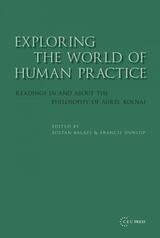
cover of Exploring the World of Human Practice: Readings in and about the Philosophy of Aurel Kolnai

Exploring the World of Human Practice

Readings in and about the Philosophy of Aurel Kolnai

Zoltán Balázs

Central European University Press, 2005

Aurel Kolnai was born in Budapest, in 1900 and died in London, in 1973. He was, according to Karl Popper and the late Bernard Williams, one of the most original, provocative, and sensitive philosophers of the twentieth century. Kolnai's moral philosophy is best described in his own words as intrinsicalist, non-naturalist, non-reductionist", which took its original impetus from Scheler's value ethics, and was developed by using a natural phenomenologist method. The unique combination of linguistic analysis and phenomenology yields highly original ideas on classical fields of moral theory, such as responsibility and free will, the meaning of right and wrong, the universalisability of ethical norms, the role of moral emotions, internalism vs externalism, to mention a few. The volume presents a selection of essays by Kolnai, including his main political theoretical work, "What is Politics About", available in English here for the first time. The second half of the book Kolnai's work is analyzed in a series of essays by eminent scholars
[more]
cover of Ezra Pound and China

Ezra Pound and China

Zhaoming Qian, Editor

University of Michigan Press, 2003

Ezra Pound and China, the first collection to explore the American poet's career-long relationship with China, considers how Pound's engagement with the Orient broadens the textual, cultural, and political boundaries of his modernism. The book's contributors discuss, among other topics, issues of cultural transmission; the influence of Pound's Chinese studies on twentieth-century poetics; the importance of his work to contemporary theories of translation; and the effects of Confucianism, Buddhism, and Taoism on Pound's political and economic thought.
Richly illustrated, the book draws readers closer to the heart of Pound's vision. Ezra Pound and China will become an invaluable resource to students and scholars of Pound, cultural studies, translation theory, poetics, Confucianism, and literary transmission and reception.
Zhaoming Qian is Professor of English, the University of New Orleans.
[more]
