Results by title
3369 books match the query 'Cultural & Social' and 124 start with e
E.T. Culture
Anthropology in OuterspacesDebbora Battaglia, ed.
Duke University Press, 2005
Drawing on social science, science studies, linguistics, popular and expressive culture, and social and intellectual history, the writers of E.T. Culture unsettle the boundaries of science, magic, and religion as well as those of technological and human agency. They consider the ways that sufferers of “unmarked” diseases such as Chronic Fatigue Syndrome come to feel alien to both the “healthy” world and the medical community incapable of treating them; the development of alien languages like Klingon; attempts to formulate a communications technology—such as that created for the spaceship Voyager—that will reach alien beings; the pilgrimage spirit of UFO seekers; the out-of-time experiences of Nobel scientists; the embrace of the alien within Japanese animation and fan culture; and the physical spirituality of the Raëlian religious network.
Contributors. Debbora Battaglia, Richard Doyle, Joseph Dumit, Mizuko Ito, Susan Lepselter, Christopher Roth, David Samuels

Early Jewish Cookbooks
Essays on Hungarian Jewish Gastronomical HistoryAndrás Koerner
Central European University Press, 2022
Winner of the Association of Jewish Libraries' 2022 Judaica Bibliography Award.
The seven essays in this volume focus such previously unexplored subjects as the world’s first cookbook printed in Hebrew letters, published in 1854, and a wonderful 19th-century Jewish cookbook, which in addition to its Hungarian edition was also published in Dutch in Rotterdam. The author entertainingly reconstructs the history of bólesz, a legendary yeast pastry that was the specialty of a famous, but long defunct Jewish coffeehouse in Pest, and includes the modernized recipe of this distant relative of cinnamon rolls. Koerner also tells the history of the first Jewish bookstore in Hungary (founded as early as in 1765!) and examines the influence of Jewish cuisine on non-Jewish food.
In this volume András Koerner explores key issues of Hungarian Jewish culinary culture in greater detail and more scholarly manner than what space restrictions permitted in his previous work Jewish Cuisine in Hungary: A Cultural History, also published by CEU Press, which received the prestigious National Jewish Book Award in 2020. The current essays confirm the extent to which Hungarian Jewry was part of the Jewish life and culture of the Central European region before their almost total language shift by the turn of the 20th century.
Early Observations of Marquesan Culture, 1595–1813
Edwin N. Ferdon
University of Arizona Press, 1993
Early Settlement and Subsistence in the Casma Valley, Peru
Shelia Pozorski
University of Iowa Press, 1987

Early Tahiti As the Explorers Saw It, 1767–1797
Edwin N. Ferdon
University of Arizona Press, 1981
Early Tonga As the Explorers Saw It, 1616–1810
Edwin N. Ferdon
University of Arizona Press, 1987
The ethnohistorical approach to early Tongan culture offers not only a fascinating glimpse into a world long past but also a basis for the comparative study of European acculturation throughout Polynesia.
Edwin N. Ferdon first became interested in early Polynesia while serving as an archaeologist with Thor Heyerdahl’s 1955 expedition to Easter Island. He is also the author of Early Tahiti As the Explorers Saw It, 1767–1797.
Earth Beings
Ecologies of Practice across Andean WorldsMarisol de la Cadena
Duke University Press, 2015
Earth Politics
Religion, Decolonization, and Bolivia's Indigenous IntellectualsWaskar Ari
Duke University Press, 2014
East African Hip Hop
Youth Culture and GlobalizationMwenda Ntarangwi
University of Illinois Press, 2008
In this book, Mwenda Ntarangwi analyzes how young hip hop artists in the East African nations of Kenya, Uganda, and Tanzania showcase the opportunities and challenges brought by the globalization of music. Combining local popular music traditions with American and Jamaican styles of rap, East African hip hop culture reflects the difficulty of creating commercially accessible music while honoring tradition and East African culture. Ntarangwi pays special attention to growing cross-border exchanges within East African hip hop, collaborations in recording music and performances, and themes and messages that transcend local geographic boundaries.
In using hip hop as a medium for discussing changes in East African political, economic, and social conditions, artists vocalize their concerns about economic policies, African identity, and political establishments, as well as important issues of health (such as HIV/AIDS), education, and poverty. Through three years of fieldwork, rich interviews with artists, and analysis of live performances and more than 140 songs, Ntarangwi finds that hip hop provides youth an important platform for social commentary and cultural critique and calls attention to the liberating youth music culture in East Africa.
Eat Not This Flesh, 2nd Edition
Food Avoidances from Prehistory to the PresentFrederick J. Simoons
University of Wisconsin Press, 1994
Hailed as a classic when initially published in 1961, Eat Not This Flesh was the first book that explored, from a historical and cultural perspective, taboos against eating certain kinds of flesh. Frederick J. Simoons's research remains original and invaluable, the only attempt of its kind to reconstruct the origin and spread of food avoidances while challenging current Western explanations. In this expanded and updated edition, Simoons integrates new research as he examines the use and avoidance of flesh foods—including beef, pork, chicken, and eggs, camel, dog, horse, and fish—from antiquity to the present day.
Simoons suggests that Westerners are too ready, even in the absence of supporting evidence, to cite contemporary thinking about disease and environmental factors to explain why certain cultures avoid particular kinds of meat. He demonstrates how historical and archaeological evidence fails to support such explanations. He examines the origin of pork rejection in the Near East, explores the concept of the sacred cow in India and the ensuing ban on beef, and reveals how some African women abstain from chicken and eggs, fearing infertility.
While no single explanation exists for food taboos, Simoons finds that the powerful, recurrent theme of maintaining ritual purity, good health, and well-being underlies diet habits. He emphasizes that only a full range of factors can explain eating patterns, and he stresses the interplay of religious, moral, hygienic, ecological, and economic factors in the context of human culture. Maps, drawings, and photos highlighting food avoidance patterns in Africa, Asia, Europe, and the Pacific provide additional information throughout the book.
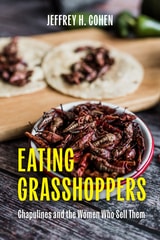
Eating Grasshoppers
Chapulines and the Women Who Sell ThemJeffrey H. Cohen
University of Texas Press, 2025
An approachable ethnography of how grasshoppers are harvested, sold, and consumed in Oaxaca.
Chapulines (toasted grasshoppers) are not a delicacy in Oaxaca. They are just food—good food—and a protein-rich seasonal snack that is the product of a long-standing industry based overwhelmingly on the labor of women. Jeffrey Cohen has interviewed dozens of these chapulineras, who harvest insects from corn and alfalfa fields, prepare them, and sell them in urban and rural marketplaces. An accessible ethnography, Eating Grasshoppers tells their story alongside the broader history of chapulines.
For tourists, chapulines are an experience—a gateway to the “real” Oaxaca. For locals, they are ordinary fare, but also a reminder of Indigenous stability and rural survival. In a sense, eating chapulines is a declaration of independence from a government that has condemned eating insects as backward. Yet, while chapulines are a generations-old favorite, eating them is not an act of preservation. Cohen shows that the business of this traditional food is thoroughly modern and ever evolving, with entrepreneurial chapulineras responding nimbly to complex and dynamic markets. From alfalfa fields to online markets, Eating Grasshoppers takes readers inside one of the world’s most fascinating food cultures.
Eating Her Curries and Kway
A Cultural History of Food in SingaporeNicole Tarulevicz
University of Illinois Press, 2013
Discovering Singaporean identity through cooking and cuisine
While eating is a universal experience, for Singaporeans it carries strong national connotations. The popular Singaporean-English phrase "Die die must try" is not so much hyperbole as it is a reflection of the lengths that Singaporeans will go to find great dishes.
In Eating Her Curries and Kway: A Cultural History of Food in Singapore, Nicole Tarulevicz argues that in a society that has undergone substantial change in a relatively short amount of time, food serves Singaporeans as a poignant connection to the past. Eating has provided a unifying practice for a diverse society, a metaphor for multiracialism and recognizable national symbols for a fledgling state. Covering the period from British settlement in 1819 to the present and focusing on the post–1965 postcolonial era, Tarulevicz tells the story of Singapore through the production and consumption of food.
Analyzing a variety of sources that range from cookbooks to architectural and city plans, Tarulevicz offer a thematic history of this unusual country, which was colonized by the British and operated as a port within Malaya. Connecting food culture to the larger history of Singapore, she discusses various topics including domesticity and home economics, housing and architecture, advertising, and the regulation of food-related manners and public behavior such as hawking, littering, and chewing gum. Moving away from the predominantly political and economic focus of other histories of Singapore, Eating Her Curries and Kway provides an important alternative reading of Singaporean society.
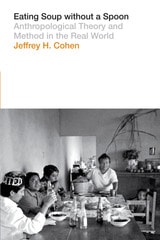
Eating Soup without a Spoon
Anthropological Theory and Method in the Real WorldBy Jeffrey H. Cohen
University of Texas Press, 2015
Significant scholarship exists on anthropological fieldwork and methodologies. Some anthropologists have also published memoirs of their research experiences. Renowned anthropologist Jeffrey Cohen’s Eating Soup without a Spoon is a first-of-its-kind hybrid of the two, expertly melding story with methodology to create a compelling narrative of fieldwork that is deeply grounded in anthropological theory.
Cohen’s first foray into fieldwork was in 1992, when he lived in Santa Anna del Valle in rural Oaxaca, Mexico. While recounting his experiences studying how rural folks adapted to far-reaching economic changes, Cohen is candid about the mistakes he made and the struggles in the village. From the pressures of gaining the trust of a population to the fear of making errors in data collection, Cohen explores the intellectual processes behind ethnographic research. He offers tips for collecting data, avoiding pitfalls, and embracing the chaos and shocks that come with working in an unfamiliar environment. Cohen’s own photographs enrich his vivid portrayals of daily life.
In this groundbreaking work, Cohen discusses the adventure, wonder, community, and friendships he encountered during his first year of work, but, first and foremost, he writes in service to the field as a place to do research: to test ideas, develop theories, and model how humans cope and react to the world.

Eating Together
Food, Friendship and InequalityAlice P. Julier
University of Illinois Press, 2013
Eating beside Ourselves
Thresholds of Foods and BodiesHeather Paxson, editor
Duke University Press, 2023
Contributors. Alex Blanchette, Deborah Heath, Hannah Landecker, Marianne Elisabeth Lien, Amy Moran-Thomas, Heather Paxson, Harris Solomon, Emily Yates-Doerr, Wim Van Daele
Eating in Theory
Annemarie Mol
Duke University Press, 2021
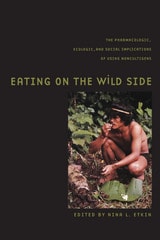
Eating on the Wild Side
The Pharmacologic, Ecologic and Social Implications of Using NoncultigensEdited by Nina L. Etkin
University of Arizona Press, 2000
Drawing on nonhuman primate studies, evidence from prehistoric human populations, and field research among contemporary peoples practicing a range of subsistence strategies, the book focuses on the processes and human ecological implications of gathering, semidomestication, and cultivation of plants that are unfamiliar to most of us. Contributions by distinguished cultural and biological anthropologists, paleobotanists, primatologists, and ethnobiologists explore a number of issues such as the consumption of unpalatable and famine foods, the comparative assessment of aboriginal diets with those of colonists and later arrivals, and the apparent self-treatment by sick chimpanzees with leaves shown to be pharmacologically active.
Collectively, these articles offer a theoretical framework emphasizing the cultural evolutionary processes that transform plants from wild to domesticated—with many steps in between—while placing wild plant use within current discussions surrounding biodiversity and its conservation. Eating on the Wild Side makes an important contribution to our understanding of the links between biology and culture, describing the interface between diet, medicine, and natural products. By showing how various societies have successfully utilized wild plants, it underscores the growing concern for preserving genetic diversity as it reveals a fascinating chapter in the human ecology.
CONTENTS
1. The Cull of the Wild, Nina L. Etkin
2. Agriculture and the Acquisition of Medicinal Plant Knowledge, Michael H. Logan & Anna R. Dixon
3. Ambivalence to the Palatability Factors in Wild Food Plants, Timothy Johns
4. Wild Plants as Cultural Adaptations to Food Stress, Rebecca Huss-Ashmore & Susan L. Johnston
Physiologic Implications of Wild Plant Consumption
5. Pharmacologic Implications of "Wild" Plants in Hausa Diet, Nina L. Etkin & Paul J. Ross
6. Wild Plants as Food and Medicine in Polynesia, Paul Alan Cox
7. Characteristics of "Wild" Plant Foods Used by Indigenous Populations in Amazonia, Darna L. Dufour & Warren M. Wilson
8. The Health Significance of Wild Plants for the Siona and Secoya, William T. Vickers
9. North American Food and Drug Plants, Daniel M. Moerman
Wild Plants in Prehistory
10. Interpreting Wild Plant Foods in the Archaeological Record, Frances B. King
11. Coprolite Evidence for Prehistoric Foodstuffs, Condiments, and Medicines, Heather B. Trigg, Richard I. Ford, John G. Moore & Louise D. Jessop
Plants and Nonhuman Primates
12. Nonhuman Primate Self-Medication with Wild Plant Foods, Kenneth E. Glander
13. Wild Plant Use by Pregnant and Lactating Ringtail Lemurs, with Implications for Early Hominid Foraging, Michelle L. Sauther
Epilogue
14. In Search of Keystone Societies, Brien A. Meilleur
Ecologics
Wind and Power in the AnthropoceneCymene Howe
Duke University Press, 2019
In her volume, Ecologics, Howe narrates how an antidote to the Anthropocene became both failure and success. Tracking the development of what would have been Latin America's largest wind park, Howe documents indigenous people's resistance to the project and the political and corporate climate that derailed its renewable energy potential. Using feminist and more-than-human theories, Howe demonstrates how the dynamics of energy and environment cannot be captured without understanding how human aspirations for energy articulate with nonhuman beings, technomaterial objects, and the geophysical forces that are at the heart of wind and power.
Ecologies of Comparison
An Ethnography of Endangerment in Hong KongTim Choy
Duke University Press, 2011

Economies of Abandonment
Social Belonging and Endurance in Late LiberalismElizabeth A. Povinelli
Duke University Press, 2011
Economies of Gender
Masculinity, "Mail Order Brides," and Women’s LaborJulia H. Meszaros
Rutgers University Press, 2026
Economy of Words
Communicative Imperatives in Central BanksDouglas R. Holmes
University of Chicago Press, 2013
Holmes examines the New York District Branch of the Federal Reserve, the European Central Bank, Deutsche Bundesbank, and the Bank of England, among others, and shows how officials there have created a new monetary regime that relies on collaboration with the public to achieve the ends of monetary policy. Central bankers, Holmes argues, have shifted the conceptual anchor of monetary affairs away from standards such as gold or fixed exchange rates and toward an evolving relationship with the public, one rooted in sentiments and expectations. Going behind closed doors to reveal the intellectual world of central banks,Economy of Words offers provocative new insights into the way our economic circumstances are conceptualized and ultimately managed.

Edges of Exposure
Toxicology and the Problem of Capacity in Postcolonial SenegalNoémi Tousignant
Duke University Press, 2018
Edible Medicines
An Ethnopharmacology of FoodNina L. Etkin
University of Arizona Press, 2006
This book investigates the health implications of foods from the cuisines of peoples around the world to describe the place of food in health maintenance. In this wide-ranging book, Nina Etkin reveals the pharmacologic potential of foods in the specific cultural contexts in which they are used. Incorporating co-evolution with a biocultural perspective, she addresses some of the physiological effects of foods across cultures and through history while taking into account both the complex dynamics of food choice and the blurred distinctions between food and medicine. Showing that food choice is more closely linked to health than is commonly thought, she helps us to understand the health implications of people’s food-centered actions in the context of real-life circumstances.
Drawing on an extensive literature that transects food and culture, the history of medicine, ethnopharmacology, food history, nutrition, and human evolution, Edible Medicines demonstrates the intricate relationship between culture and nature. It will appeal to a wide range of scholars and professionals, from anthropologists to nutritionists, as well as general readers seeking a greater understanding of the medicinal aspects of food.
Educating Across Borders
The Case of a Dual Language Program on the U.S.-Mexico BorderMaría Teresa de la Piedra, Blanca Araujo, and Alberto Esquinca; Foreword by Concha Delgado Gaitan
University of Arizona Press, 2018
The authors, who themselves live and work on the border, question artificially created cultural and linguistic borders. To explore this issue, they employed participant-observation, focus groups, and individual interviews with teachers, administrators, and staff members to construct rich understandings of the experiences of transfronterizx students. These ethnographic accounts of their daily lives counter entrenched deficit perspectives about transnational learners.
Drawing on border theory, immigration and border studies, funds of knowledge, and multimodal literacies, Educating Across Borders is a critical contribution toward the formation of a theory of physical and metaphorical border crossings that ethnic minoritized students in U.S. schools must make as they traverse the educational system.
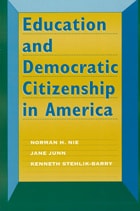
Education and Democratic Citizenship in America
Norman H. Nie, Jane Junn, and Kenneth Stehlik-Barry
University of Chicago Press, 1996
Norman H. Nie, Jane Junn, and Kenneth Stehlik-Barry provide answers by uncovering the causal relationship between education and democratic citizenship. They argue that citizenship encompasses both political engagement in pursuit of interests and commitment to democratic values that temper what citizens can do to win in politics. Education affects the two dimensions in distinct ways. Especially significant is the influence of education on political engagement through occupational prominence and position in social networks. Formal education orders the distribution of social position and connections and creates an uneven political playing field.
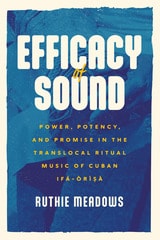
Efficacy of Sound
Power, Potency, and Promise in the Translocal Ritual Music of Cuban Ifá-ÒrìsàRuthie Meadows
University of Chicago Press, 2023
Hailing from Cuba, Nigeria, and various sites across Latin America and the Caribbean, Ifá missionary-practitioners are transforming the landscape of Ifá divination and deity (òrìṣà/oricha) worship through transatlantic travel and reconnection. In Cuba, where Ifá and Santería emerged as an interrelated, Yorùbá-inspired ritual complex, worshippers are driven to “African traditionalism” by its promise of efficacy: they find Yorùbá approaches more powerful, potent, and efficacious.
In the first book-length study on music and Ifá, Ruthie Meadows draws on extensive, multisited fieldwork in Cuba and Yorùbáland, Nigeria, to examine the controversial “Nigerian-style” ritual movement in Cuban Ifá divination. Meadows uses feminist and queer of color theory along with critical studies of Africanity to excavate the relation between utility and affect within translocal ritual music circulations. Meadows traces how translocal Ifá priestesses (ìyánífá), female batá drummers (bataleras), and priests (babaláwo) harness Yorùbá-centric approaches to ritual music and sound to heighten efficacy, achieve desired ritual outcomes, and reshape the conditions of their lives. Within a contentious religious landscape marked by the idiosyncrasies of revolutionary state policy, Nigerian-style Ifá-Òrìṣà is leveraged to transform femininity and masculinity, state religious policy, and transatlantic ritual authority on the island.
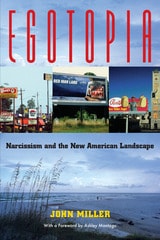
Egotopia
Narcissism and the New American LandscapeJohn Miller
University of Alabama Press, 1999
Egotopia explains why individual political and economic interests have eclipsed aesthetic considerations in the rampant billboards, malls, and urban sprawl of the New American Landscape
Egotopia begins where other critiques of the American landscape end: identifying the physical ugliness that defines and homogenizes America's cities, suburbs, and countryside. Believing that prevailing assessments of the American landscape are inadequate and injudicious, John Miller calls into question the conventional wisdom of environmentalists, urban planners,and architects alike. In this precedent-shattering examination of what he sees as the ugliness that is the American consumer society, Miller contends that our aesthetic condition can be fully understood only by explorers of the metaphoric environment.Metaphorically, the ugliness of America's great suburban sprawl is the physical manifestation of our increasing narcissism- our egotopia. The ubiquity of psychotherapy as a medium promoting self-indulgence has deified private man as it has demonized public man. The New American Landscape, Miller argues, is no longer the physical manifestation of public and communal values. Instead it has become a projection of private fantasies and narcissistic self-indulgence. Individual interests and private passions can no longer tolerate, nor even recognize, aesthetic concerns in such a landscape dedicated to uncompromising notions of utility.

Egypt’s Football Revolution
Emotion, Masculinity, and Uneasy PoliticsBy Carl Rommel
University of Texas Press, 2021
Both a symbol of the Mubarak government’s power and a component in its construction of national identity, football served as fertile ground for Egyptians to confront the regime’s overthrow during the 2011 revolution. With the help of the state, appreciation for football in Egypt peaked in the late 2000s. Yet after Mubarak fell, fans questioned their previous support, calling for a reformed football for a new, postrevolutionary nation.
In Egypt’s Football Revolution, Carl Rommel examines the politics of football as a space for ordinary Egyptians and state forces to negotiate a masculine Egyptian chauvinism. Basing his discussion on several years of fieldwork with fans, players, journalists, and coaches, he investigates the increasing attention paid to football during the Mubarak era; its demise with the 2011 uprisings and 2012 Port Said massacre, which left seventy-two fans dead; and its recent rehabilitation. Cairo’s highly organized and dedicated Ultras fans became a key revolutionary force through their antiregime activism, challenging earlier styles of fandom and making visible entrenched ties between sport and politics. As the appeal of football burst, alternative conceptions of masculinity, emotion, and politics came to the fore to demand or prevent revolution and reform.
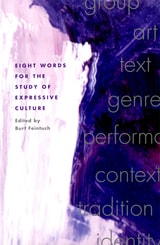
Eight Words for the Study of Expressive Culture
Edited by Burt Feintuch
University of Illinois Press, 2003
No matter where we are--in academic institutions, in cultural agencies, at home, or in a casual conversation--these are words we use when we talk about creative expression in its cultural contexts. Eight Words for the Study of Expressive Culture is a thoughtful, interdisciplinary examination of the keywords that are integral to the formulation of ideas about the diversity of human creativity, presented as a set of essays by leading folklorists.
Many of us use these eight words every day. We think with them. We teach with them. Much of contemporary scholarship rests on their meanings and implications. They form a significant part of a set of conversations extending through centuries of thought about creativity, meaning, beauty, local knowledge, values, and community. Their natural habitats range across scholarly disciplines from anthropology and folklore to literary and cultural studies and provide the framework for other fields of practice and performance as well.
Eight Words for the Study of Expressive Culture is a much-needed study of keywords that are frequently used but not easily explained. Anchored by Burt Feintuch’s cogent introduction, the book features essays by Dorothy Noyes, Gerald L. Pocius, Jeff Todd Titon, Trudier Harris, Deborah A. Kapchan, Mary Hufford, Henry Glassie, and Roger D. Abrahams.
Ejidos and Regions of Refuge in Northwestern Mexico
Edited by N. Ross Crumrine and Phil C. Weigand
University of Arizona Press, 1987
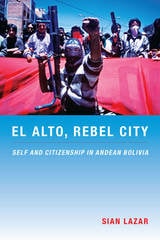
El Alto, Rebel City
Self and Citizenship in Andean BoliviaSian Lazar
Duke University Press, 2007
Drawing on ethnographic fieldwork conducted between 1997 and 2004, Lazar contends that in El Alto, citizenship is a set of practices defined by one’s participation in a range of associations, many of them collectivist in nature. Her argument challenges Western liberal notions of the citizen by suggesting that citizenship is not only individual and national but in many ways communitarian and distinctly local, constituted through different kinds of affiliations. Since in El Alto these affiliations most often emerge through people’s place of residence and their occupational ties, Lazar offers in-depth analyses of neighborhood associations and trade unions. In so doing, she describes how the city’s various collectivities mediate between the state and the individual. Collective organization in El Alto and the concept of citizenship underlying it are worthy of attention; they are the basis of the city’s formidable power to mobilize popular protest.
El Monte's New Itineraries
Afrodiasporic Spirituality in the Contemporary CaribbeanAlberto Sosa-Cabanas
Rutgers University Press, 2025
El Monte's New Itineraries is the first book fully devoted to the study of Cuban author and ethnographer Lydia Cabrera’s El Monte (1954), one of the most influential books in Caribbean cultural history. Highly referenced, if understudied, El Monte is a comprehensive work that intertwines ethnobotany, popular orality, and Afro-Cuban traditions. Its pages have enjoyed a transnational influence, enriching domains such as ethnography, politics, theater, and even science fiction literature in the Caribbean, and the knowledge contained in it lies at the heart of Afrodiasporic spirituality and ethnomedicinal practices across Hispanic Caribbean cultures and beyond.
El Monte
Notes on the Religions, Magic, and Folklore of the Black and Creole People of CubaLydia Cabrera
Duke University Press, 2023
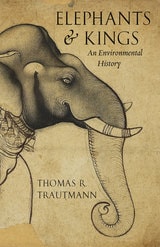
Elephants and Kings
An Environmental HistoryThomas R. Trautmann
University of Chicago Press, 2015
Trautmann traces the history of the war elephant in India and the spread of the institution to the west—where elephants took part in some of the greatest wars of antiquity—and Southeast Asia (but not China, significantly), a history that spans 3,000 years and a considerable part of the globe, from Spain to Java. He shows that because elephants eat such massive quantities of food, it was uneconomic to raise them from birth. Rather, in a unique form of domestication, Indian kings captured wild adults and trained them, one by one, through millennia. Kings were thus compelled to protect wild elephants from hunters and elephant forests from being cut down. By taking a wide-angle view of human-elephant relations, Trautmann throws into relief the structure of India’s environmental history and the reasons for the persistence of wild elephants in its forests.

Eliciting Care
Health and Power in Northern ThailandBo Kyeong Seo
University of Wisconsin Press, 2020
Using the broader concept of elicitation, Seo analyzes the social encounters and forces that shape caregivers. These dynamics challenge dichotomies of subjugation and resistance, consent and coercion, and dependence and autonomy. The intimate and moving stories at the core of Eliciting Care from patients and providers draw attention to a broader, critically important phenomenon at the hospital level. Seo's poignant ethnography engages with feminist theory on the ethics of care, and in so doing, makes a significant contribution to emerging work in the field of health policy and politics.
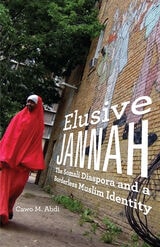
Elusive Jannah
The Somali Diaspora and a Borderless Muslim IdentityCawo M. Abdi
University of Minnesota Press, 2015
As a Somali working since high school in the United Arab Emirates, Osman considers himself “blessed” to be in a Muslim country, though citizenship, with the security it offers, remains elusive. For Ardo, smuggled out of Somalia to join her husband in South Africa, insecurities are of a more immediate, physical kind, and her economic prospects and legal status are more uncertain. Adam, in the United States—a destination often imagined as an earthly Eden, or jannah, by so many of his compatriots—now sees heaven in a return to Somalia.
The stories of these three people are among the many that emerge from mass migration triggered by the political turmoil and civil war plaguing Somalia since 1988. And they are among the diverse collection presented in eloquent detail in Elusive Jannah, a remarkable portrait of the very different experiences of Somali migrants in the UAE, South Africa, and the United States. Somalis in the UAE, a relatively closed Muslim nation, are a minority within a large South Asian population of labor migrants. In South Africa, they are part of a highly racialized and segregated postapartheid society. In the United States they find themselves in a welfare state with its own racial, socioeconomic, and political tensions. A comparison of Somali settlements in these three locations clearly reveals the importance of immigration policies in the migrant experience.
Cawo M. Abdi’s nuanced analysis demonstrates that a full understanding of successful migration and integration must go beyond legal, economic, and physical security to encompass a sense of religious, cultural, and social belonging. Her timely book underscores the sociopolitical forces shaping the Somali diaspora, as well as the roles of the nation-state, the war on terror, and globalization in both constraining and enabling their search for citizenship and security.
Elusive Kinship
Disability and Human Rights in Postcolonial LiteratureChristopher Krentz
Temple University Press, 2022
Characters with disabilities are often overlooked in fiction, but many occupy central places in literature by celebrated authors like Chinua Achebe, Salman Rushdie, J. M. Coetzee, Anita Desai, Jhumpa Lahiri, Edwidge Danticat, and others. These authors deploy disability to do important cultural work, writes Christopher Krentz in his innovative study, Elusive Kinship. Such representations not only relate to the millions of disabled people in the global South, but also make more vivid such issues as the effects of colonialism, global capitalism, racism and sexism, war, and environmental disaster.
Krentz is the first to put the fields of postcolonial studies, studies of human rights and literature, and literary disability in conversation with each other in a book-length study. He enhances our appreciation of key texts of Anglophone postcolonial literature of the global South, including Things Fall Apart and Midnight’s Children. In addition, he uncovers the myriad ways fiction gains energy, vitality, and metaphoric force from characters with extraordinary bodies or minds.
Depicting injustices faced by characters with disabilities is vital to raising awareness and achieving human rights. Elusive Kinship nudges us toward a fuller understanding of disability worldwide.
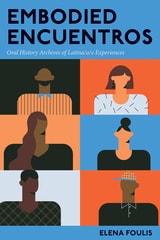
Embodied Encuentros
Oral History Archives of Latina/o/e ExperiencesElena Foulis
The Ohio State University Press, 2026
In Embodied Encuentros, Elena Foulis offers a practical guide for completing ethical fieldwork in Latina/o/e communities, emphasizing equitable and culturally sustaining practices for gathering oral histories. In her critical decolonial model, Foulis centers the agency of the people within these communities while considering the diversity and complexity of their experiences. In doing so, she advocates for the importance of building oral history archives that challenge our understandings of Latina/o/e peoples.
Foulis provides a conceptual framework for building on community knowledge that considers language, cultural practices, gender, and race. She suggests ways to involve students in ethical research; collect evolving oral histories; employ a language justice approach that acknowledges linguistic oppression, translanguaging, and bilingualism as essential aspects of this community; and consider the importance of digital archives for the creation of multimedia projects that foster community pláticas. Grounded in both theoretical approaches and a feminist ethics praxis, Embodied Encuentros ultimately outlines an important model for doing collaborative, ethical research—not only within Latina/o/e communities but within other minoritized communities as well.
Embodied Protests
Emotions and Women's Health in BoliviaMaria Tapias
University of Illinois Press, 2015
Evocative and compassionate, Embodied Protests gives voice to the human costs of the ongoing neoliberal experiment.
Embodying Biodiversity
Sensory Conservation as Refuge and SovereigntyTerese V. Gagnon
University of Arizona Press, 2024
Harnessing a myriad of methodologies and research spanning multiple continents, this volume delves into the power of everyday forms of biodiversity conservation, motivated by sensory and embodied engagement with plants. Through an array of interdisciplinary contributions, the authors argue that the vast majority of biodiversity conservation worldwide is carried out not by large-scale, hierarchical initiatives but by ordinary people who cultivate sensory-motivated, place-based bonds with plants.
Acknowledging the monumental role of everyday champions in tending biodiversity, the contributors write that this caretaking is crucial to countering ecological harm and global injustice stemming from colonial violence and racial capitalism.
Contributors
Mike Anastario
Ally Ang
Antonia Barreau
Julián Caviedes
Chen Chen
Evelyn Flores
Terese V. Gagnon
José Tomás Ibarra
Fred L. Joiner
Gary Nabhan
Virginia D. Nazarea
Shannon A. Novak
Valentina Peveri
Emily Ramsey
Yasuaki Sato
Justin Simpson
David E. Sutton
Embodying Black Religions in Africa and Its Diasporas
Yolanda Covington-Ward and Jeanette S. Jouili, editors
Duke University Press, 2021
Contributors. Rachel Cantave, Youssef Carter, N. Fadeke Castor, Yolanda Covington-Ward, Casey Golomski, Elyan Jeanine Hill, Nathanael J. Homewood, Jeanette S. Jouili, Bertin M. Louis Jr., Camee Maddox-Wingfield, Aaron Montoya, Jacob K. Olupona, Elisha P. Renne
Embracing Age
How Catholic Nuns Became Models of Aging WellAnna I. Corwin
Rutgers University Press, 2021
Embracing Age: How Catholic Nuns Became Models of Aging Well examines a community of individuals whose aging trajectories contrast mainstream American experiences. In mainstream American society, aging is presented as a “problem,” a state to be avoided as long as possible, a state that threatens one’s ability to maintain independence, autonomy, control over one’s surroundings. Aging “well” (or avoiding aging) has become a twenty-first century American preoccupation. Embracing Age provides a window into the everyday lives of American Catholic nuns who experience longevity and remarkable health and well-being at the end of life. Catholic nuns aren’t only healthier in older age, they are healthier because they practice a culture of acceptance and grace around aging. Embracing Age demonstrates how aging in the convent becomes understood by the nuns to be a natural part of the life course, not one to be feared or avoided. Anna I. Corwin shows readers how Catholic nuns create a cultural community that provides a model for how to grow old, decline, and die that is both embedded in American culture and quite distinct from other American models.
Instructor's Guide is available at no cost (https://www.rutgersuniversitypress.org/media/wysiwyg/documents/corwin_instructor_guide_final.pdf).
Open access edition funded by the National Endowment for the Humanities.
The text of this book is licensed under a Creative Commons Attribution NonCommercial-NoDerivatives 4.0 International License: https://creativecommons.org/licenses/by-nc-nd/4.0/
Download open access ebook here (https://www.rutgersuniversitypress.org/media/wysiwyg/documents/embracing_age_open_access.pdf).
Emergent Ecologies
Eben Kirksey
Duke University Press, 2015
Empathy and Performance
Enactments of Power in Latinx AmericaLaura V. Sández
Vanderbilt University Press, 2024
To survey different answers to these queries, Sández studies Indigurrito (Nao Bustamante); Dominicanish (Josefina Báez); ¡Bienvenidos Blancos! or Welcome White People! (Alex Torra); the apology delivered by the group Veterans Stand with Standing Rock during protests against the Dakota Access Pipeline; and Kukuli Velarde’s body of work, from We, the Colonized Ones to A Mi Vida. In these artistic enactments, which range from 1992 to 2021, the historical construct of boundaries and bodies becomes evident. Following recent work on empathy by Lanzoni, Maibom, Calloway-Thomas, Bloom, Hogan, and Matravers, among others, Sández examines in-group/out-group divisions, the establishment of identity categories through performance, and the exploration of subaltern identities.

Empire's Endgame
Racism and the British StateGargi Bhattacharyya
Pluto Press, 2021
Empires of Time
Calendars, Clocks, and Cultures, Revised EditionAnthony Aveni
University Press of Colorado, 2002
—The Sciences
Empires, Nations, and Natives
Anthropology and State-MakingBenoît de L Estoile, Federico Neiburg and Lygia Sigaud, eds.
Duke University Press, 2005
The contributors—social and cultural anthropologists from the Americas and Europe—report on both historical and contemporary processes. Moving beyond controversies that cast the relationship between scholarship and politics in binary terms of complicity or autonomy, they bring into focus a dynamic process in which states, anthropological knowledge, and population groups themselves are mutually constructed. Such a reflexive endeavor is an essential contribution to a critical anthropological understanding of a changing world.
Contributors: Alban Bensa, Marcio Goldman, Adam Kuper, Benoît de L’Estoile, Claudio Lomnitz, David Mills, Federico Neiburg, João Pacheco de Oliveira, Jorge Pantaleón, Omar Ribeiro Thomaz, Lygia Sigaud, Antonio Carlos de Souza Lima, Florence Weber
Enchanted Modernities
Ancestral Vitalizations in the Upper MekongMicah F. Morton
University of Wisconsin Press, 2025
Although modernity and its colonial legacies are often portrayed as severing or at least attenuating people’s ancestral ties, Enchanted Modernities shows that those ties persist and, in fact, are on the rise. Akha and other Indigenous ancestral and animist resurgences are blossoming despite the paradigmatic Western framing of modernity as fundamentally at odds with Ancestors and, for that matter, kinship and even religion. Morton demonstrates that modernity and modernization proceed alongside the reproduction of new and old forms of enchantment.
Encoding Race, Encoding Class
Indian IT Workers in BerlinSareeta Amrute
Duke University Press, 2016