Results by title
679 books match the query 'Ecology' and 65 start with e

Earth Rising
David Oates
Oregon State University Press, 1989
Earth in Our Care
Ecology, Economy, and SustainabilityMaser, Chris
Rutgers University Press, 2009
So writes Chris Maser in this compelling study of three interactive spheres of the ecosystem: atmosphere (air), litho-hydrosphere (rock that comprises the restless continents and the water that surrounds them), and biosphere (all life sandwiched in between).
Rich in detail and insightful analogies, Earth in Our Care addresses key issues including land-use policies, ecological restoration, forest management, local living, and sustainability thinking. Exploring our interconnectedness with the Earth, Maser examines today's problems and, more importantly, provides solutions for the future.
Eastern Alpine Guide
Natural History and Conservation of Mountain Tundra East of the RockiesEdited by Mike Jones and Liz Willey
University Press of New England, 2018
Eating Our Way through the Anthropocene
Jessica Fanzo
University of Utah Press, 2022
Originally delivered as the Stegner Lecture at the 2020 annual symposium of the Wallace Stegner Center for Land, Resources and the Environment, this book explores how, in the context of the broad global trends of population growth, climate crisis, and inequitable food availability, food systems need to be re-oriented to ensure they can produce enough food to nourish the world. Fanzo discusses moving toward on-farm sustainable food production practices, decreasing food loss and waste, addressing poverty by creating jobs and decent livelihoods, and providing safe, affordable, and healthy diets for everyone. At the same time, food systems must decrease the pressure on biodiversity loss, conserve land and water resources, minimize air and water pollution, and lower greenhouse gas emissions.

Ecofeminist Literary Criticism
Theory, Interpretation, PedagogyEdited by Greta Gaard and Patrick D. Murphy
University of Illinois Press, 1998
Ecofeminism is a practical movement for social change that discerns interconnections among all forms of oppression: the exploitation of nature, the oppression of women, class exploitation, racism, colonialism. Against binary divisions such as self/other, culture/nature, man/woman, humans/animals, and white/non-white, ecofeminist theory asserts that human identity is shaped by more fluid relationships and by an acknowledgment of both connection and difference.
Once considered the province of philosophy and women's studies, ecofeminism in recent years has been incorporated into a broader spectrum of academic discourse. Ecofeminist Literary Criticism assembles some of the most insightful advocates of this perspective to illuminate ecofeminism as a valuable component of literary criticism.
Ecohumanism and the Ecological Culture
The Educational Legacy of Lewis Mumford and Ian McHargWilliam J. Cohen
Temple University Press, 2019
Lewis Mumford, one of the most respected public intellectuals of the twentieth century, speaking at a conference on the future environments of North America, said, “In order to secure human survival we must transition from a technological culture to an ecological culture.” In Ecohumanism and the Ecological Culture, William Cohen shows how Mumford’s conception of an educational philosophy was enacted by Mumford’s mentee, Ian McHarg, the renowned landscape architect and regional planner at the University of Pennsylvania. McHarg advanced a new way to achieve an ecological culture―through an educational curriculum based on fusing ecohumanism to the planning and design disciplines.
Cohen explores Mumford’s important vision of ecohumanism—a synthesis of natural systems ecology with the myriad dimensions of human systems, or human ecology―and how McHarg actually formulated and made that vision happen. He considers the emergence of alternative energy systems and new approaches to planning and community development to achieve these goals.
The ecohumanism graduate curriculum should become the basis to train the next generation of planners and designers to lead us into the ecological culture, thereby securing the educational legacy of both Lewis Mumford and Ian McHarg.
Ecological Communication
Niklas Luhmann
University of Chicago Press, 1989
Luhmann extends the concept of "ecology" to refer to any analysis that looks at connections between social systems and the surrounding environment. He traces the development of the notion of "environment" from the medieval idea—which encompasses both human and natural systems—to our modern definition, which separates social systems from the external environment.
In Luhmann's thought, human beings form part of the environment, while social systems consist only of communications. Utilizing this distinctive theoretical perspective, Luhmann presents a comprehensive catalog of society's reactions to environmental problems. He investigates the spheres of the economy, law, science, politics, religion, and education to show how these areas relate to environmental issues.
Ecological Communication is an important work that critically examines claims central to our society—claims to modernity and rationality. It will be of great importance to scholars and students in sociology, political science, philosophy, anthropology, and law.
Ecological Explosions
The History of Biological Invasions and Invasion ScienceDaniel Simberloff
University of Chicago Press, 2025
From the arrival of the naval shipworm in the Black Sea in the first millennium BC to the escape of the Burmese python in Florida in 1992, humans have moved species to new locations, deliberately or inadvertently, for thousands of years. Agricultural and environmental impacts of some invasions were evident early, although whether observers recognized that the cause was an introduced species is uncertain. The history of invasion biology truly begins in the sixteenth through eighteenth centuries, when explorers noticed European species on various distant islands and in North America. In the nineteenth century, biogeographers, studying species distributions across the globe, introduced the first native and non-native species categorizations, and prominent researchers like Charles Darwin began to describe the impacts of introduced species. In the nineteenth and twentieth centuries, as humans moved increasing numbers of species across the globe, the advent of modern ecology deepened our understanding of the scope of the problem.
In Ecological Explosions, invasive species expert Daniel Simberloff provides a thorough overview of the development of invasion science, from early research—including from the perspectives of leading scientists like Aldo Leopold—to the field’s future. Simberloff explores the work of pioneering ecologists like Charles Elton, antecedents of what became today’s invasion biology, before discussing the field’s true emergence in the 1980s, its explosive methodological and theoretical expansion, its integration with other disciplines, and its increasing visibility, not only within the biological literature but also in government policies across the world in the 1990s. Finally, he investigates current controversies, such as the debate over whether the entire science is xenophobic, and asks how ecosystems might adapt to a rapidly globalizing world and ever-increasing numbers of introduced species—including the joro spider, lionfish, spotted lanternfly, common reed, and Asian carp.
Ecological Feelings
A Rhetorical CompendiumJoshua Trey Barnett
Michigan State University Press, 2025
Ecological Morphology
Integrative Organismal BiologyEdited by Peter C. Wainwright and Stephen M. Reilly
University of Chicago Press, 1994
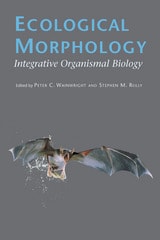
Through this interdisciplinary study, scientists have been able to understand, for instance, how bat wing design affects habitat use and bat diet; how the size of a predator affects its ability to capture and eat certain prey; and how certain mosquitoes have evolved physiologically and morphologically to tolerate salt-water habitats. Ecological Morphology also covers the history of the field, the role of the comparative method in studying adaptation, and the use of data from modern organisms for understanding the ecology of fossil communities.
This book provides an overview of the achievements and potential of ecological morphology for all biologists and students interested in the way animal design, ecology, and evolution interact.
Ecological Niches
Linking Classical and Contemporary ApproachesJonathan M. Chase and Mathew A. Leibold
University of Chicago Press, 2003
Chase and Leibold define the niche as including both what an organism needs from its environment and how that organism's activities shape its environment. Drawing on the theory of consumer-resource interactions, as well as its graphical analysis, they develop a framework for understanding niches that is flexible enough to include a variety of small- and large-scale processes, from resource competition, predation, and stress to community structure, biodiversity, and ecosystem function. Chase and Leibold's synthetic approach will interest ecologists from a wide range of subdisciplines.
Ecological and General Systems
An Introduction to Systems Ecology, Revised EditionHoward T. Odum
University Press of Colorado, 1994
First published as Systems Ecology in 1983, Ecological and General Systems proposes principles of self-organization and the designs that prevail by maximizing power and efficiency. Comparisons to fifty other systems languages are provided. Innovative presentations are given on earth homeostasis (Gaia); the inadequacy of presenting equations without network relationships and energy constraints; the alternative interpretation of high entropy complexity as adaptive structure; basic equations of ecological economics; and the energy basis of scientific hierarchy.
Part I introduces energetics, hierarchy, and systems modeling. Part II features design elements: intersections, autocatalytic modules, loops, series, parallel elements, and webs. Part III includes embodied energy, spectra of energy quality, temperature, complexity, spatial distribution, and diversity. Part IV discusses production, consumption, ecosystems, succession, economic systems, anthropological models, urban and regional models, global biogeochemistry, and the universe.
Ecologists and Environmental Politics
A History of Contemporary EcologyStephen Bocking
West Virginia University Press, 2017
Bocking tells this history through four case studies: the origins and early research of the Nature Conservancy in Great Britain; the development of ecology at the Oak Ridge National Laboratory in Tennessee; the work of the Hubbard Brook Ecosystem Study in New Hampshire; and research in fisheries ecology at the University of Toronto. By comparing these case studies, Bocking demonstrates how the places of contemporary science—laboratories, landscapes, and funding agencies—and science’s purposes, as expressed through the political roles of expertise and specific managerial and regulatory responsibilities, have shaped contemporary ecology and its application to pressing environmental problems.

Ecology As Politics
Andre Gorz
Pluto Press, 2014
Ecology Control and Economic Development in East African History
The Case of Tanganyika, 1850–1950Helge Kjekshus
Ohio University Press, 1995
The book puts people at the centre of events. It thus serves as a modification to nationalist history with its emphasis on leaders. It presents environmental factors that had been underestimated; for instance, it points to the critical importance of the rinderpest outbreak.
Helge Kjekshus provides evidence to suggest that the nineteenth century was a period of relative prosperity with well-developed trade. He questions the view that warfare was pervasive and that the slave trade led to depopulation. He points to a balance between man and the environment.
This book is reissued at the same time as the first publication of Custodians of the Land: Ecology and Culture in the History of Tanzania edited by Gregory Maddox, James I. Giblin and Isaria N. Kimambo. The footnotes in that book point to the importance of the work of Helge Kjekshus.
Ecology and Conservation of the San Pedro River
Edited by Juliet C. Stromberg and Barbara Tellman
University of Arizona Press, 2009
This book provides an extensive knowledge base on all aspects of the San Pedro, from flora and fauna to hydrology and human use to preservation. It describes the ecological patterns and processes of this aridland river and explores both the ongoing science-driven efforts by nonprofit groups and government agencies to sustain and restore its riparian ecosystems and the science that supports these management decisions.
An interdisciplinary team of fifty-seven contributors—biologists, ecologists, geomorphologists, historians, hydrologists, lawyers, political scientists—weave together threads from their diverse perspectives to reveal the processes that shape the past, present, and future of the San Pedro’s riparian and aquatic ecosystems. They review the biological communities of the San Pedro and the stream hydrology and geomorphology that affect its riparian biota. They then look at conservation and management challenges along three sections of the San Pedro, from its headwaters in Mexico to its confluence with the Gila River, describing legal and policy issues and their interface with science; activities related to mitigation, conservation, and restoration; and a prognosis of the potential for sustaining the basin’s riparian system.
These chapters demonstrate the complexity of the San Pedro’s ecological and hydrological conditions, showing that there are no easy answers to the problems—and that existing laws are inadequate to fully address them. Collectively, they offer students, professionals, and environmental advocates a better grasp of the San Pedro’s status as well as important lessons for restoring physical processes and biotic communities to rivers in arid and semiarid regions.

Ecology and Environmental Management of Lyme Disease
Ginsberg, Howard S
Rutgers University Press, 1993
Lyme disease--virtually unknown in the United States only a decade ago--has now been reported from almost every state; in the Northeast, it has become a major public health crisis. Under the name of borreliosis, the disease is also common in Europe. As Americans have become aware of the hazard they face from Lyme disease, they have become anxious to know how to avoid or control the disease. But the complex ecological interactions of Lyme disease make that extremely difficult. The disease is caused by a microorganism, a spirochete, which is carried by tiny ticks. The ticks, in turn, are transported from place to place by their hosts: humans, deer, white-tailed mice, dogs, lizards, and many other animals and birds. Both ticks and their hosts serve as a reservoir for the disease. As with any tick-borne disease, the best hope of prevention lies in understanding and interrupting the lifecycle of the microorganism, its vectors, and their hosts.
This book is the first attempt to survey the natural history, ecology, population dynamics, geography, and environmental management of Lyme disease. Eighteen leading American researchers on Lyme disease explain the current state of knowledge and comment candidly on the theoretical and practical advantages and difficulties with each technique of surveillance, self-protection, and tick control. The book includes suggestions for personal protection against the disease,
This is an essential resource for naturalists, ecologists, physicians, nurses, epidemiologists, public health officials, entomologists, veterinarians, pest control operators, wildlife managers, town planners, and anyone concerned with Lyme disease.
Ecology and Evolution in the Tropics
A Herpetological PerspectiveEdited by Maureen A. Donnelly, Brian I. Crother, Craig Guyer, Marvalee H. Wake,
University of Chicago Press, 2005
Ecology and Evolution of Poeciliid Fishes
Edited by Jonathan P. Evans, Andrea Pilastro, and Ingo Schlupp
University of Chicago Press, 2011
The history of biology is populated by numerous model species or organisms. But few vertebrate groups have aided evolutionary and ecological research more than the live-bearing fishes of the family Poeciliidae. Found throughout tropical and subtropical waters, poeciliids exhibit a fascinating variety of reproductive specializations, including viviparity, matrotrophy, unisexual reproduction, and alternative mating strategies, making them ideal models for research on patterns and processes in ecology, behavior, and evolution.
Ecology and Evolution of Poeciliid Fishes is a much-needed overview of the scientific potential and understanding of these live-bearing fishes. Chapters by leading researchers take up a wide range of topics, including the evolution of unisexual reproduction, life in extreme environments, life-history evolution, and genetics. Designed to provide a single and highly approachable reference, Ecology and Evolution of Poeciliid Fishes will appeal to students and specialists interested in all aspects of evolutionary ecology.
Ecology and Management of Cowbirds and Their Hosts
Studies in the Conservation of North American Passerine BirdsBy James N. M. Smith, Terry L. Cook, Stephen I. Rothstein, Scott K. Robinson, and Spencer G. Sealy
University of Texas Press, 2000
In the past two centuries, cowbirds have increased in numbers and extended their range across North America, while many of the native songbird species whose nests they parasitize to raise their young have declined. This timely book collects forty essays by most of the principal authorities on the biology and management of cowbirds. The book's goals are to explore the biology of cowbirds, the threats they pose to host species and populations, and the management programs that are being undertaken to minimize these threats.
The book is organized into five sections, each with an extended editors' introduction that places the contributions in a broad, up-to-date setting. The sections cover:
- The changing abundance of cowbirds and the ways in which their numbers can be estimated.
- Host choice by cowbirds, the negative effects of cowbirds on particular host species, and the daily patterns of cowbird behavior.
- Behavioral interactions between cowbirds and specific host species.
- Patterns of cowbird abundance and host use across varying landscapes.
- Management programs designed to control cowbirds and protect threatened songbirds.
Ecology and Management of North American Savannas
Guy R. McPherson
University of Arizona Press, 1997
Ecology and Management of the North American Moose, Second Edition
Charles C. Schwartz
University Press of Colorado, 2007
Contributors include Warren B. Ballard, Arnold H. Boer, Anthony B. Bubenik, M. E. Buss, Kenneth N. Child, Vincent F.J. Crichton, Albert W. Franzmann, Kris J. Hundertmark, Patrick D. Karns, Murray W. Lankester, Richard E. McCabe, James M. Peek, Henry M. Reeves, Wayne L. Regelin, Lyle A. Renecker, William M. Samuel, Charles C. Schwartz, Robert W. Stewart, Ian D. Thompson, H. R. Timmermann, and Victor Van Ballenberghe. A Wildlife Management Institute book
Ecology and the Environment
A Look at Ecosystems of the WorldAmy L. Tickle
University of Michigan Press, 1996

Ecology and the Environment
A Look at Ecosystems of the World: Teacher's ManualAmy L. Tickle
University of Michigan Press, 1996
Ecology and the Environment
The Mechanisms, Marrings, and Maintenance of NatureR. J. Berry
Templeton Press, 2011
Ecology and the Environment: The Mechanisms, Marring, and Maintenance of Nature is the ninth title published in the Templeton Science and Religion Series, in which scientists from a wide range of fields distill their experience and knowledge into brief tours of their respective specialties. In this volume, R. J. Berry, a well-known leader in the field of ecology, describes the basic concepts of ecology and seeks to put them into a general context for a reader who lacks any scientific background.
Ecology and the Sacred
Engaging the Anthropology of Roy A. RappaportEllen Messer and Michael Lambek, Editors
University of Michigan Press, 2001
At a time when anthropology is fractured by debates over whether it is a science or a humanistic tradition, theoretical or applied, this festschrift testifies that a unified anthropology is both possible and necessary for the understanding of humanity and global transformations. The volume will be of interest not only to anthropologists, but to geographers, sociologists, scholars in science-studies, historians, and experts and practitioners in religious studies, as well.
Ellen Messer is Visiting Associate Professor, Tufts University. Michael Lambek is Professor of Anthropology, University of Toronto.
Ecology of Pastoralism
P. Nick Kardulias
University Press of Colorado, 2015
In The Ecology of Pastoralism, diverse contributions from archaeologists and ethnographers address pastoralism’s significant impact on humanity’s basic subsistence and survival, focusing on the network of social, political, and religious institutions existing within various societies dependent on animal husbandry.
Pastoral peoples, both past and present, have organized their relationships with certain animals to maximize their ability to survive and adapt to a wide range of conditions over time. Contributors show that despite differences in landscape, environment, and administrative and political structures, these societies share a major characteristic—high flexibility. Based partially on the adaptability of various domestic animals to difficult environments and partially on the ability of people to establish networks allowing them to accommodate political, social, and economic needs, this flexibility is key to the survival of complex pastoral systems and serves as the connection among the varied cultures in the volume.
In The Ecology of Pastoralism, a variety of case studies from a broad geographic sampling uses archaeological and contemporary data and offers a new perspective on the study of pastoralism, making this volume a valuable contribution to current research in the area.
Ecology of Sonoran Desert Plants and Plant Communities
Edited by Robert H. Robichaux
University of Arizona Press, 1999
The essays explore the rich diversity of plant life in the Sonoran Desert and the ecological patterns and processes that underlie it. They also reveal the history and scientific legacy of the Desert Laboratory in Tucson, which has conducted research on the Sonoran Desert since 1903. Coverage includes diversity and affinities of the flora, physical environments and vegetation, landscape complexity and ecological diversity, population dynamics of annual plants, form and function of cacti, and the relationship between plants and the animals that use them as feeding and breeding resources. The text also examines the ecological consequences of modern agricultural development, as well as the impact on the modern biota of 40,000 years of change in climate, vegetation, megafauna, and ancient cultures.
This comprehensive book covers a broad range of spatial and temporal scales to highlight the diversity of research being pursued in the Sonoran Desert. It is both a testament to these ongoing studies and an authoritative introduction to the diverse plant life in the region.
1. Diversity and Affinities of the Flora of the Sonoran Floristic Province, Steven P. McLaughlin and Janice E. Bowers
2. Vegetation and Habitat Diversity at the Southern Edge of the Sonoran Desert, Alberto Bórquez, Angelina Martínez Yrízar, Richard S. Felger, and David Yetman
4. Population Ecology of Sonoran Desert Annual Plants, D. Lawrence Venable and Catherine E. Pake
5. Form and Function of Cacti, Park S. Nobel and Michael E. Loik
6. Ecological Genetics of Cactophilic Drosophila, William J. Etges, W. R. Johnson, G. A. Duncan, G. Huckins, and W. B. Heed
7. Ecological Consequences of Agricultural Development in a Sonoran Desert Valley, Laura L. Jackson and Patricia W. Comus
8. Deep History and a Wilder West, Paul S. Martin

Ecology of the Bay of Quinte
Health, Management and Global ImplicationsC.K. Minns
Michigan State University Press, 2022

Ecology of the Body
Styles of Behavior in Human LifeJoseph Lyons
Duke University Press, 1987

Ecology, Economy, Equity
The Path to a Carbon-Neutral LibraryMandy Henk
American Library Association, 2014
Ecopolitics
Building a Green SocietyColeman, Daniel
Rutgers University Press, 1994
Those solutions are just "Band-Aids on a bleeding Earth," argues environmental activist Daniel A. Coleman. Where conventional wisdom sees both the cause of the environmental crisis and its cure in individual actions, Coleman says: Look again. By blaming ourselves as individuals, we let governments and corporations off the hook. Making "50 simple" changes in our personal lifestyles is worthwhile, but must not divert our attention from the underlying causes of environmental disaster. The real causes are rooted deep in the politics of human affairs-and so are their solutions.We should be asking: Why do we allow such harm to our environment? How did we create a society with no stake in the future? How can we build a green society?
The good news is that we can reverse the process of environmental abuse. Political strategies driven by the key values of ecological responsibility, participatory democracy, environmental justice, and community action are effective. Dan Coleman's stories of citizen groups whose grassroots organizing has already put ecologically sound policies in place demonstrate that the sustainable society is indeed possible.
Lucid, lively, probing, serious, yet optimistic-Coleman's analysis is required reading for all who count the earth as their home.
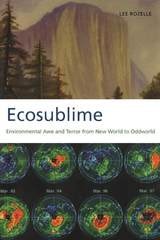
Ecosublime
Environmental Awe and Terror from New World to OddworldLee Rozelle
University of Alabama Press, 2006
Explores 19th-century, modern, postmodern, and millennial texts as they portray the changing ecological face of America
Lee Rozelle probes the metaphor of environmental catastrophe in American literature of the last 150 years. In each instance, Rozelle finds evidence that the ecosublime--nature experienced as an instance of wonder and fear--profoundly reflects spiritual and political responses to the natural world, America’s increasingly anti-ecological trajectory, and the ascendance of a post-natural landscape.
In the 19th century, Rozelle argues, Isabella Bird and Edgar Allan Poe represented the western wilderness as culturally constructed and idealized landscapes. Gardens, forests, and frontiers are conceptual frameworks that either misrepresent or uphold ecological space. Modernists like Nathanael West and William Carlos Williams, on the other hand, portray urban space as either wastelands or mythical urban gardens. A chapter on Charles W. Chesnutt and Rebecca Harding Davis analyzes a new breed of literary eco-advocate, educating and shocking mainstream readers through depictions of ecological disaster. A later chapter probes the writings of Edward Abbey and the Unabomber Manifesto to delve into the sublime dimensions of environmental activism, monkey-wrenching, and eco-terrorism.
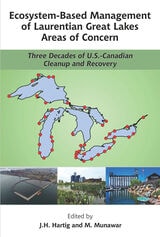
Ecosystem-Based Management of Laurentian Great Lakes Areas of Concern
Three Decades of U.S. - Canadian Cleanup and RecoveryJohn H. Hartig
Michigan State University Press, 2021
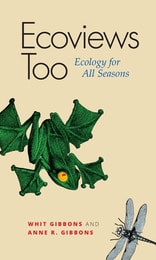
Ecoviews Too
Ecology for All SeasonsWhit Gibbons and Anne R. Gibbons
University of Alabama Press, 2017
Discover the wonders of ecology through the changing seasons of the natural world.
Whit Gibbons and Anne R. Gibbons’s Ecoviews Too: Ecology for All Seasons is based on the popular weekly column “Ecoviews,” published by numerous newspapers for more than thirty years. A follow-up to Ecoviews: Snakes, Snails and Environmental Tales, this lively and entertaining book provides a fascinating and thought-provoking look at the ecology of animals, plants, and their habitats, and promotes awareness of pressing environmental issues.
Because nature, in all its myriad and amazing manifestations, can be enjoyed all year round, this collection is conveniently divided into four sections paralleling the seasons and tracking the adaptations and responses of wildlife to the relentless changes that occur at any location over time. The ecological vignettes focus on seasonal happenings in the cycle of life. The authors not only draw parallels between the natural world and human activities but also highlight unique behaviors of various plant and animal species. They often use humor to get across their message regarding the need to protect our native species and the habitats they depend on for survival.
An intriguing and captivating publication, Ecoviews Too is comprised of fifty informative essays that address ecological topics such as camouflage and mimicry, hibernation and estivation, the human need to encounter scary animals, the mysteries of plant dormancy in winter, the comeback of the wild turkey coinciding with the decline of bobwhites, the chemistry behind the color change in fall leaves, and the top ten environmental problems facing the world today. Educating, entertaining, and delighting a general audience, especially those with an interest in nature, Ecoviews Too provides a useful resource for students and scientists alike.

Ecoviews
Snakes, Snails, and Environmental TalesWhit Gibbons and Anne R. Gibbons
University of Alabama Press, 1998
Discover the wonder of nature through stories that connect science, wildlife, and everyday life.
This lively and entertaining book provides a fascinating and thought-provoking look at the ecology of animals, plants, and their habitats and promotes awareness of pressing environmental issues. The eight informative chapters deliver effective environmental messages and supply compelling insight into the natural world and the ecologists who investigate its many mysteries.
From a concerned ecological stance, the authors show that human relationship with other organisms and the environment is always complex and can be exhilarating, inspiring, humorous, and irritating, depending on perspectives and circumstances. Writing truly to inform and delight, they give a captivating variety of examples from the natural world in hopes of making readers of all ages more compassionate, more tolerant, and more sensitive to other living organisms and their interrelationships. The book celebrates the intrinsic worth of all plants and animals in order to motivate people in a unified effort to preserve the Earth's rich array of life forms. The preservation of the integrity of our planet's biodiversity is, the authors illustrate, critical to our own survival.

Edge Effects
Notes From An Oregon ForestChris Anderson
University of Iowa Press, 1993
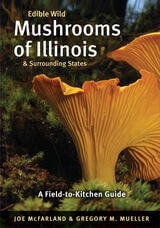
Edible Wild Mushrooms of Illinois and Surrounding States
A Field-to-Kitchen GuideJoe McFarland and Gregory M. Mueller
University of Illinois Press, 2008
Lavishly illustrated with nearly three hundred gorgeous full-color photos, this engaging guidebook carefully describes forty different edible species of wild mushrooms found around Illinois and surrounding states, including Iowa, Wisconsin, Missouri, Indiana, and Kentucky. With conversational and witty prose, the book provides extensive detail on each edible species, including photographs of potential look-alikes to help you safely identify and avoid poisonous species. Mushroom lovers from Chicago to Cairo will find their favorite local varieties, including morels, chanterelles, boletes, puffballs, and many others. Veteran mushroom hunters Joe McFarland and Gregory M. Mueller also impart their wisdom about the best times and places to find these hidden gems.
Edible Wild Mushrooms of Illinois and Surrounding States also offers practical advice on preparing, storing, drying, and cooking with wild mushrooms, presenting more than two dozen tantalizing mushroom recipes from some of the best restaurants and chefs in Illinois, including one of Food & Wine magazine's top 10 new chefs of 2007. Recipes include classics like Beer Battered Morels, Parasol Mushroom Frittatas, and even the highly improbable (yet delectable) Morel Tiramisu for dessert.
As the first new book about Illinois mushrooms in more than eighty years, this is the guide that mushroom hunters and cooks have been craving.
Visit the book's companion website at www.illinoismushrooms.com.
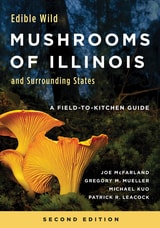
Edible Wild Mushrooms of Illinois and Surrounding States
A Field-to-Kitchen Guide, Second EditionJoe McFarland, Gregory M. Mueller, Michael Kuo, and Patrick R. Leacock
University of Illinois Press, 2027
* Fifty-two entries packed with information on edible species;
* Almost 400 color photographs;
* Tips on where and when to look for mushrooms, how to pick them, and identification and note-taking;
* Photographs of lookalikes for safely identifying and avoiding poisonous species;
* An extensive new section on truffles;
* Advice on preparing, storing, drying, and cooking with wild mushrooms, plus an expanded recipe section that invites cooks to serve up wild turkey and morels, toss an oyster mushroom salad, and add mushroom powder to everything.
Reader friendly and detailed, the second edition of Edible Wild Mushrooms of Illinois and Surrounding States is an invaluable morels-to-puffballs resource for Midwestern mushroom hunters.
Eighteenth-Century Environmental Humanities
Jeremy Chow
Bucknell University Press, 2023
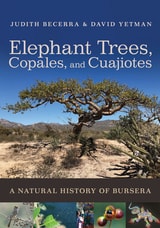
Elephant Trees, Copales, and Cuajiotes
A Natural History of BurseraJudith Becerra and David Yetman; Foreword by Exequiel Ezcurra
University of Arizona Press, 2024
In the United States, Bursera is represented by the short, contorted, and aromatic elephant tree of the hot Sonoran Desert and the stately and colorful gumbo limbo of southern Florida, while in the torrid lowlands of southern Mexico, the engines of evolution have produced forests dominated by dozens of species of Bursera, each with a peculiar ecological slot. This evolutionary tableau presents a complicated sex life that puzzles scientists. Recent research also reveals a gripping narrative of an epic struggle between trees and the insects that would subsist on their leaves: the insects seeking to exploit a food resource, the trees reacting with ever-changing, dramatic counter strategies. In addition to the fascinating and intricate workings of the genus’s ecological adaptations, burseras play a formative role in the lives of indigenous populations. Native peoples relish the plants’ aromatic resin, workable wood, and often colorful bark as a source for endless human applications.
Written in an engaging style, enhanced with two hundred color photographs, and complete with a compendium of species descriptions, this book will be an essential reference on a significant North American plant.
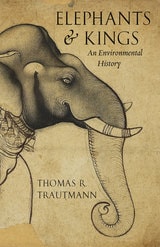
Elephants and Kings
An Environmental HistoryThomas R. Trautmann
University of Chicago Press, 2015
Trautmann traces the history of the war elephant in India and the spread of the institution to the west—where elephants took part in some of the greatest wars of antiquity—and Southeast Asia (but not China, significantly), a history that spans 3,000 years and a considerable part of the globe, from Spain to Java. He shows that because elephants eat such massive quantities of food, it was uneconomic to raise them from birth. Rather, in a unique form of domestication, Indian kings captured wild adults and trained them, one by one, through millennia. Kings were thus compelled to protect wild elephants from hunters and elephant forests from being cut down. By taking a wide-angle view of human-elephant relations, Trautmann throws into relief the structure of India’s environmental history and the reasons for the persistence of wild elephants in its forests.
Elinor Ostrom's Rules for Radicals
Cooperative Alternatives Beyond Markets and StatesDerek Wall
Pluto Press, 2017
Elinor Ostrom's Rules for Radicals fixes that injustice, revealing the indispensability of her work on green politics, alternative economics, and radical democracy. Derek Wall’s analysis of her theses addresses some of the common misconceptions of her work and reveals her strong commitment to a radical ideological framework. This helpful guide will engage scholars and activists across a range of disciplines, including political economy, political science, and ecology, as well as those keen to implement her work in practice. As activists continue to reject traditional models of centralized power, Ostrom’s theories will become even more crucial in creating economies that exist beyond markets and states.
Emerald Labyrinth
A Scientist's Adventures in the Jungles of the CongoEli Greenbaum
University Press of New England, 2017
Emerging Threats to Tropical Forests
Edited by William F. Laurance and Carlos A. Peres
University of Chicago Press, 2006
Empire and Environment
Ecological Ruin in the TranspacificJeffrey Santa Ana, Heidi Amin-Hong, Rina Garcia Chua, Zhou Xiaojing, Editors
University of Michigan Press, 2022
Empirical Ecocriticism
Environmental Narratives for Social ChangeMatthew Schneider-Mayerson
University of Minnesota Press, 2023
Finalist for the 2025 ASLE Ecocritical Book Award
A groundbreaking book that combines the environmental humanities and social sciences to study the impact of environmental stories
There is a growing consensus that environmental narratives can help catalyze the social change necessary to address today’s environmental crises; however, surprisingly little is known about their impact and effectiveness. In Empirical Ecocriticism, Matthew Schneider-Mayerson, Alexa Weik von Mossner, W. P. Malecki, and Frank Hakemulder combine an environmental humanities perspective with empirical methods derived from the social sciences to study the influence of environmental stories on our affects, attitudes, and actions.
Empirical Ecocriticism provides an approachable introduction to this growing field’s main methods and demonstrates their potential through case studies on topics ranging from the impact of climate fiction on readers’ willingness to engage in activism to the political empowerment that results from participating in environmental theater. Part manifesto, part toolkit, part proof of concept, and part dialogue, this introductory volume is divided into three sections: methods, case studies, and reflections. International in scope, it points toward a novel and fruitful synthesis of the environmental humanities and social sciences.
Contributors: Matthew Ballew, Yale U; Helena Bilandzic, U of Augsburg; Rebecca Dirksen, Indiana U; Greg Garrard, UBC Okanagan; Matthew H. Goldberg, Yale U; Abel Gustafson, U of Cincinnati; David I. Hanauer, Indiana U of Pennsylvania; Ursula K. Heise, UCLA; Jeremy Jimenez, SUNY Cortland; Anthony Leiserowitz, Yale U; David M. Markowitz, U of Oregon; Marcus Mayorga; Jessica Gall Myrick, Penn State U; Mary Beth Oliver, Penn State U; Yan Pang, Point Park U; Mark Pedelty, U of Minnesota; Seth A. Rosenthal, Yale U; Elja Roy, U of Memphis; Nicolai Skiveren, Aarhus U; Paul Slovic, U of Oregon; Scott Slovic, U of Idaho; Nicolette Sopcak, U of Alberta; Paul Sopcak, MacEwan U; Sara Warner, Cornell U.
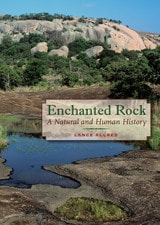
Enchanted Rock
A Natural and Human HistoryBy Lance Allred
University of Texas Press, 2009
With intriguing domes of pinkish granite surrounded by a sea of Hill Country limestone, Enchanted Rock State Natural Area attracts over 300,000 visitors every year who come to the park to hike, rock climb, spelunk, camp, picnic, and observe birds and wildflowers. Geologists from around the world come to Enchanted Rock to examine landforms that were shaped by forces on ancient continents of Earth more than one billion years ago! All of these visitors, however, are only the latest comers in a line of human history that stretches back 13,000 years to early Native Americans and includes Spanish explorers, Mexican and German settlers, and thirteen private and public owners up to the current owner, the state of Texas.
Surprisingly, given the area's wealth of unusual geology, native plants and animals, and human history, no comprehensive guide to Enchanted Rock has been published before now. In Enchanted Rock, you'll find everything you need to fully appreciate this unique place. Lance Allred draws on the work of specialists in many fields to offer a popular account of the park's history, geology, weather, flora, and fauna. Whether you want to know more about how Enchanted Rock was formed, identify a wildflower or butterfly, or learn more about plant communities along the hiking trails, you'll find accurate information here, presented in an inviting style. Over a thousand color photographs illustrate the enjoyable text.
Endangered and Threatened Wildlife of New Jersey
Edited by Bruce E. Beans and Larry Niles
Rutgers University Press, 2003
Every corner of New Jersey harbors natural wildlife of such value that it attracts birders and other naturalists from around the world. From the barrier beaches and coastal marshes at the ocean’s edge, through the flood plain forests and pine barrens, across the fertile rolling hills of the piedmont, to the highlands, ridges, and valleys of northwestern New Jersey, the state is a cornucopia of wildlife. With over 500 species calling the state home, New Jersey ranks as one of the most diverse wildlife habitats in the country. The state’s importance doesn’t end at the borders¾ New Jersey provides critical food and shelter to hundreds of species that use the state as a stop along their migratory route. Yet, in the nation’s most densely populated state, the loss of habitat continues at a relentless pace. The race is on to save natural areas and the species dependent upon them for survival.
Endangered and Threatened Wildlife of New Jersey is a richly illustrated color guide to the state’s fifty-four most imperiled species, from bobcats to bobolinks, shortnosed sturgeons to loggerhead turtles, frosted elfins to triangle floaters, blue whales to American burying beetles. Here, the authors detail each animal’s natural history, reasons for its decline, what’s been done so far¾and what must be done¾to keep New Jersey’s wildlife flourishing.
Written primarily by the people who know these species best, the biologists of the New Jersey’s Endangered and Nongame Species program, the book is divided into seven sections¾ mammals, birds, reptiles, amphibians, fish, insects, and bivalves. A chapter on individual species details animal identification, distribution, habitat, diet, life cycle, status and conservation, and limiting factors and threats, as well as recommendations for preservation. The authors also explore the particular characteristics of the species within New Jersey, including the species’ distribution, population status, and breeding and migration behaviors. Sixty-three detailed maps and more than one hundred spectacular color photos provide readers with a rare glimpse of these seldom-seen species.
Wildlife serves as a harbinger for our own environment: If the air, water, and earth aren’t healthy for animals, they surely can’t be healthy for humans. Endangered and Threatened Wildlife of New Jersey¾ an extraordinary resource and educational tool for anyone interested in preserving the state’s natural heritage¾provides a valuable wake-up call for us all.
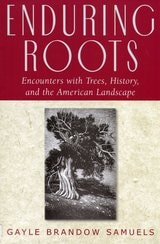
Enduring Roots
Encounters with Trees, History, and the American LandscapeGayle Brandow Samuels
Rutgers University Press, 2005
Trees are the grandest and most beautiful plant creations on earth. From their shade-giving, arching branches and strikingly diverse bark to their complex root systems, trees represent shelter, stability, place, and community as few other living objects can.
Enduring Roots tells the stories of historic American trees, including the oak, the apple, the cherry, and the oldest of the world’s trees, the bristlecone pine. These stories speak of our attachment to the land, of our universal and eternal need to leave a legacy, and demonstrate that the landscape is a gift, to be both received and, sometimes, tragically, to be destroyed.
Each chapter of this book focuses on a specific tree or group of trees and its relationship to both natural and human history, while exploring themes of community, memory, time, and place. Readers learn that colonial farmers planted marker trees near their homes to commemorate auspicious events like the birth of a child, a marriage, or the building of a house. They discover that Benjamin Franklin’s Newtown Pippin apples were made into a pie aboard Captain Cook’s Endeavour while the ship was sailing between Tahiti and New Zealand. They are told the little-known story of how the Japanese flowering cherry became the official tree of our nation’s capital—a tale spanning many decades and involving an international cast of characters. Taken together, these and many other stories provide us with a new ways to interpret the American landscape.
“It is my hope,” the author writes, “that this collection will be seen for what it is, a few trees selected from a great forest, and that readers will explore both—the trees and the forest—and find pieces of their own stories in each.”