Results by title
374 books match the query 'Economic History' and 23 start with e
East Texas Lumber Workers
An Economic and Social Picture, 1870-1950By Ruth A. Allen
University of Texas Press, 1961
In 1950 a million Texans—more than a tenth of the entire population of the state—lived in a region where one family in every two earned less than $2,000 a year. Composing that region are the thirty-two counties of northeastern Texas in which the lumber industry is concentrated. In eleven of these counties, 70 percent of family incomes were less than $2,000.
Until 1930 the Texas lumber industry furnished employment for more workers than any other manufacturing in the state. Though displaced in that year by oil refining, it still ranks near the top in the number of workers it hires. The aim of this study is to show how these people whose economic life has been dominated by a single industry have fared for eighty years in comparison with their fellow Texans and with lumber workers in the Pacific Northwest and the Lakes states.
Texas lumber workers have always been in many ways a peculiar people, conditioned by their historical roots, by isolation from the mainstream of national life, and by the deeply rural nature of their environment. A typical group portrait would show two of each three persons to be adult white males. One of three would be African American. It would not show any women. Here and there a face would bear the marks of alien birth. Most of the figures, however, would be natives not only of America but of East Texas.
In family background, in work experience, and in social and economic environment these people have been uniquely homogeneous. In the early 1950s the Congressional Committee on the Economic Report of the President designated the area as one of “deep poverty” and pinpointed it as one which had failed notably to reach the level of living achieved by the state and the nation. Its economic status has been lower than that of any other group in Texas except household servants, and its education level has been well below that of the state and nation and increasingly below the level of acceptance in any jobs other than those requiring a minimum of training and competence. The immediate past has shown not only no improvement but a positive deterioration.
Drawing upon personal investigation and state and federal reports, the author has put the contemporary situation in a historical setting. Her delineation is principally in terms of figures that weave a social fabric from which definite patterns emerge—insecure wages, illiteracy and inefficient production, unsuccessful attempts to achieve effective organization. Though the book is directed primarily toward those who should feel concern at its revelations, it also suggests a wealth of untapped sources for the ethnographer and the folklorist.
Easy Money
American Puritans and the Invention of Modern CurrencyDror Goldberg
University of Chicago Press, 2023
A sweeping history of the American invention of modern money.
Economists endlessly debate the nature of legal tender monetary systems—coins and bills issued by a government or other authority. Yet the origins of these currencies have received little attention.
Dror Goldberg tells the story of modern money in North America through the Massachusetts colony during the seventeenth century. As the young settlement transitioned to self-governance and its economy grew, the need to formalize a smooth exchange emerged. Printing local money followed.
Easy Money illustrates how colonists invented contemporary currency by shifting its foundation from intrinsically valuable goods—such as silver—to the taxation of the state. Goldberg traces how this structure grew into a worldwide system in which, monetarily, we are all Massachusetts. Weaving economics, law, and American history, Easy Money is a new touchstone in the story of monetary systems.
Easy Money
American Puritans and the Invention of Modern CurrencyDror Goldberg
University of Chicago Press, 2023
This is an auto-narrated audiobook edition of this book.
A sweeping history of the American invention of modern money.
Economists endlessly debate the nature of legal tender monetary systems—coins and bills issued by a government or other authority. Yet the origins of these currencies have received little attention.
Dror Goldberg tells the story of modern money in North America through the Massachusetts colony during the seventeenth century. As the young settlement transitioned to self-governance and its economy grew, the need to formalize a smooth exchange emerged. Printing local money followed.
Easy Money illustrates how colonists invented contemporary currency by shifting its foundation from intrinsically valuable goods—such as silver—to the taxation of the state. Goldberg traces how this structure grew into a worldwide system in which, monetarily, we are all Massachusetts. Weaving economics, law, and American history, Easy Money is a new touchstone in the story of monetary systems.
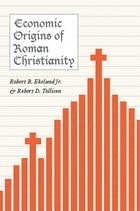
Economic Origins of Roman Christianity
Robert B. Ekelund Jr. and Robert D. Tollison
University of Chicago Press, 2011
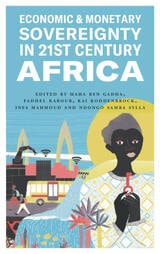
Economic and Monetary Sovereignty in 21st Century Africa
Maha Ben Gadha
Pluto Press, 2021
Over forty years after the formal end of colonialism, suffocating ties to Western financial systems continue to prevent African countries from achieving any meaningful monetary sovereignty.
Economic and Monetary Sovereignty in 21st Century Africa traces the recent history of African monetary and financial dependencies, looking at the ways African nations are resisting colonial legacies. Using a comparative, multi-disciplinary approach, this book uncovers what went wrong after the Pan-African approaches that defined the early stages of independence, and how most African economies fell into the firm grip of the IMF, World Bank, and the EU’s strict neoliberal policies.
This collection is the first to offer a wide-ranging, comparative and historical look at how African societies have attempted to increase their policy influence and move beyond neoliberal orthodoxy and US-dollar dependency. Economic and Monetary Sovereignty in 21st Century Africa is essential reading for anyone interested in the African quest for self-determination in a turbulent world of recurring economic and financial crises.
Economics and World History
Myths and ParadoxesPaul Bairoch
University of Chicago Press, 1993
In Economics and World History, Paul Bairoch clearly and succinctly debunks a number of commonly held beliefs about economic history and the causes and consequences of important events around the world. Taking on twenty commonly held misconceptions, including that free trade and population growth have historically led to periods of economic growth; that a move away from free trade caused the Great Depression; and that colonial powers in the nineteenth and early twentieth centuries became rich through the exploitation of the Third World, Bairoch shows in each case where the mistaken belief originated and why deeper knowledge of economics shows it to b wrong. The resulting book is a treasury for free thinkers, a book that will simultaneously clear up mistakes and help readers avoid making new ones.
Economics and the Antagonism of Time
Time, Uncertainty, and Choice in Economic TheoryDouglas Vickers
University of Michigan Press, 1994
Economists Lives
Biography and Autobiography in the History of Economics, Volume 39E. Roy Weintraub and Evelyn L. Forget, eds.
Duke University Press, 0
Contributors to this collection question whether biography is essential to understanding the history of economic ideas and consider how autobiographical materials should be read and interpreted by historians. Articles consider the treatment of autobiographical materials such as conversations and testimonies, the construction of heroes and villains, the relationship between scientific biography and literary biography, and concerns related to living subjects. Several essays address the role of biography and autobiography in the study of economists such as F. A. Hayek, Harry Johnson, Alfred Marshall, John Maynard Keynes, Oskar Morgenstern, and François Quesnay, concluding with several accounts of the interconnection of the historians’ projects with their own autobiographies.
All 2007 subscribers to History of Political Economy will receive a copy of “Economists’ Lives: Biography and Autobiography in the History of Economics” as part of their subscription.
Contributors
Roger E. Backhouse
Bruce Caldwell
Loïc Charles
William Coleman
Robert W. Dimand
Paul John Eakin
Ross B. Emmett
Evelyn L. Forget
Craufurd D. Goodwin
Peter Groenewegen
Malachi Haim Hacohen
Jan-Otmar Hesse
Patricia Laurence
Frederic S. Lee
Robert Leonard
Tiago Mata
D. E. Moggridge
Jeremy D. Popkin
Mike Reay
Christine Théré
E. Roy Weintraub

Economists Papers, 1750-1950
A Guide to Archive and other Manuscript Sources for the History of British and Irish Economic ThoughtR. P. Sturges
Duke University Press, 1975

Elinor Ostrom's Rules for Radicals
Cooperative Alternatives Beyond Markets and StatesDerek Wall
Pluto Press, 2017
Elinor Ostrom's Rules for Radicals fixes that injustice, revealing the indispensability of her work on green politics, alternative economics, and radical democracy. Derek Wall’s analysis of her theses addresses some of the common misconceptions of her work and reveals her strong commitment to a radical ideological framework. This helpful guide will engage scholars and activists across a range of disciplines, including political economy, political science, and ecology, as well as those keen to implement her work in practice. As activists continue to reject traditional models of centralized power, Ostrom’s theories will become even more crucial in creating economies that exist beyond markets and states.

Empire State-Building
War and Welfare in Kenya, 1925–1952Joanna Lewis
Ohio University Press, 2001
This history of administrative thought and practice in colonial Kenya looks at the ways in which white people tried to engineer social change.
It asks four questions:
- Why was Kenya’s welfare operation so idiosyncratic and spartan compared with that of other British colonies?
- Why did a transformation from social welfare to community development produce further neglect of the very poor?
- Why was there no equivalent to the French tradition of community medicine?
- If there was a transformatory element of colonial rule that sought to address poverty, where and why did it fall down?
The answers offer revealing insight into the dynamics of rule in the late colonial period in Kenya.
England's Great Transformation
Law, Labor, and the Industrial RevolutionMarc W. Steinberg
University of Chicago Press, 2016
Building his argument on three case studies—the Hanley pottery industry, Hull fisheries, and Redditch needlemakers—Steinberg employs both local and national analyses to emphasize the ways in which these master-servant laws allowed employers to use the criminal prosecutions of workers to maintain control of their labor force. Steinberg provides a fresh perspective on the dynamics of labor control and class power, integrating the complex pathways of Marxism, historical institutionalism, and feminism, and giving readers a subtle yet revelatory new understanding of workplace control and power during England’s Industrial Revolution.
Enterprising America
Businesses, Banks, and Credit Markets in Historical PerspectiveEdited by William J. Collins and Robert A. Margo
University of Chicago Press, 2015
To better understand the historical processes central to American economic development, Enterprising America brings together contributors who address the economic behavior of American firms and financial institutions—and the associated legal institutions that shaped their behavior—throughout the nineteenth and early twentieth centuries. Collectively, the contributions provide an account of the ways in which businesses, banks, and credit markets promoted America’s extraordinary economic growth. Among the topics that emerge are the rise of incorporation and its connection to factory production in manufacturing, the organization and operation of large cotton plantations in comparison with factories, the regulation and governance of banks, the transportation revolution’s influence on bank stability and survival, and the emergence of long-distance credit in the context of an economy that was growing rapidly and becoming increasingly integrated across space.
Entrepreneurship, Technological Innovation, and Economic Growth
Studies in the Schumpeterian TraditionFrederic M. Scherer and Mark Perlman, Editors
University of Michigan Press, 1992
Entropy Economics
The Living Basis of Value and ProductionJames K. Galbraith and Jing Chen
University of Chicago Press, 2025
Economists dream of equilibrium. It’s time to wake up.
In mainstream economics, markets are ideal if competition is perfect. When supply balances demand, economic maturity is orderly and disturbed only by shocks. These ideas are rooted in doctrines going back thousands of years, yet, as James K. Galbraith and Jing Chen show, they contradict the foundations of our scientific understanding of the physical and biological worlds.
Entropy Economics discards the conventions of equilibrium and presents a new basis for thinking about economic issues, one rooted in life processes—an unequal world of unceasing change in which boundaries, plans, and regulations are essential. Galbraith and Chen’s theory of value is based on scarcity, and it accounts for the power of monopoly. Their theory of production covers increasing and decreasing returns, uncertainty, fixed investments over time, and the impact of rising resource costs. Together, their models illuminate key problems such as trade, finance, energy, climate, conflict, and demography.
Entropy Economics is a thrilling framework for understanding the world as it is and will be keenly relevant to the economic challenges of a world threatened with disorder.
Essays in History
Financial, Economic, PersonalCharles P. Kindleberger
University of Michigan Press, 1999
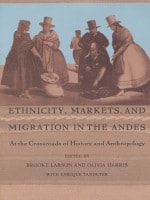
Ethnicity, Markets, and Migration in the Andes
At the Crossroads of History and AnthropologyBrooke Larson, Olivia Harris, and Enrique Tandeter, eds.
Duke University Press, 1995
Bringing together the work of outstanding scholars in Andean history, anthropology, and ethnohistory, these pioneering essays show how, from the very earliest period of Spanish rule, Andean peasants and their rulers embraced the new economic opportunities and challenged or subverted the new structures introduced by the colonial administration. They also convincingly explain why in the twentieth century the mistaken idea developed that Andean peasants were conservative and unable to participate effectively in different markets, and reveal how closely ethnic inequalities were tied to evolving market relations. Inviting a critical reconsideration of ethnic, class, and gender issues in the context of rural Andean markets, this book will revise the prevailing view of Andean history and provide a more fully informed picture of the complex mercantile activities of Andean peasants.

Europeans Engaging the Atlantic
Knowledge and Trade, 1500-1800Edited by Susanne Lachenicht
Campus Verlag, 2014
Everyone's Business
What Companies Owe SocietyAmit Ron and Abraham A. Singer
University of Chicago Press, 2024
Business is political. What are the ethics of it?
Businesses are political actors. They not only fund political campaigns, take stances on social issues, and wave the flags of identity groups – they also affect politics in their everyday hiring and investment decisions. As a highly polarized public demands political alignment from the powerful businesses they deal with, what’s a company to do?
Amit Ron and Abraham Singer show that the unavoidably political role of companies in modern life is both the fundamental problem and inescapable fact of business ethics: corporate power makes business ethics necessary, and business ethics must strive to mitigate corporate power. Because of its economic and social influence, Ron and Singer forcefully argue that modern business’s primary social responsibility is to democracy. Businesses must work to avoid wielding their power in ways that undermine key democratic practices like elections, public debate, and social movements. Pragmatic and urgent, Everyone’s Business offers an essential new framework for how we pursue profit—and democracy—in our increasingly divided world.
Exchange Rates and International Macroeconomics
Edited by Jacob A. Frenkel
University of Chicago Press, 1983
Both empirical and theoretical research are represented, and the contributors analyze such issues as the performance of various models of exchange rate determination, the role of risk and speculation in the forward market for foreign exchange, the rational expectations hypothesis in such markets, the performance of monetary policy in ten industrial countries, the role that labor market contracts play in exchange rate policies, the effect of he oil shocks on the evolution of exchange rates, and the output cost of bringing down inflation in the open economy.
Explaining Economic Backwardness
Post-1945 Polish Historians on Eastern EuropeAnna Sosnowska
Central European University Press, 2019
Explaining Social Institutions
Jack Knight and Itai Sened, Editors
University of Michigan Press, 1998
Much of the work being done under the rubric of "new institutionalism" focuses on how institutions shape social, economic, and political outcomes. This emphasis on influence has provided students of economics, political science, and political economy with surprisingly little theory to account for the origins of such institutions. Yet without understanding how institutions form and consequently develop influence, much of the other work lacks context. The contributors fill this void by utilizing a variety of perspectives and theoretical approaches. The twin focus of these articles on the origins of institutions and the development of institutional influence yield innovative and suggestive outcomes. Topics range from the framing of the United States Constitution to debate over the Senate at the Federal Convention; from equilibrium and social institutions to democratic stability.
Contributors include Randall Calvert, Jon Elster, Avner Greif, Jack Knight, Paul Milgrom, Douglass North, William Riker, Norman Schofield, Itai Sened, and Barry Weingast.
Jack Knight is Assistant Professor of Political Science, Washington University, St. Louis. Itai Sened is Assistant Professor of Political Science, Tel Aviv University.
Extraordinary Popular Delusions
Charles Mackay
Templeton Press, 2000
“Today, as in the time of the South Sea Bubble, human nature is drawn like a moth to a flame by the speculative fads of the marketplace. The excitement of new glamour issues in electronics or medical technology and the general euphoria over a rising market can lure even the most experienced investors. Their optimism overcomes their better judgment. They abandon critical analysis of the investment’s fundamental value. Like gamblers in a casino, they play against the odds, paying inflated prices and dreaming of quick profit.” —from the foreword by John Marks Templeton.
Mackay’s classic, first published in 1841, studies the psychology of crowds and mass mania throughout history, including accounts of classic scams, grand-scale madness, and deceptions. Some of these include the Mississippi scheme that swept France in 1720, the South Sea Bubble that ruined thousands in England simultaneously, and the tulip mania of Holland when fortunes were made and lost on single tulip bulbs.
Other chapters deal with fads and delusions that often spring from good ideas or causes, many of which still have their followers today: alchemy and the philosopher’s stone, the prophecies of Nostradamus, the coming of comets and judgment day, the Rosicrucians, and astrology.
Time and again, we can avoid disastrous pitfalls and learn to profit by seeing how history repeats itself. Fascinating, mesmerizing, strikingly strange, and amazingly wise, this book will never be forgotten and cannot be ignored.