Results by title
59 books match the query 'Ethnoarchaeology' and 4 start with e

Early State Formation in Central Madagascar
An Archaeological Survey of Western AvaradranoEdited by Henry T. Wright
University of Michigan Press, 2007
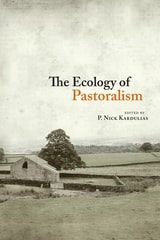
Ecology of Pastoralism
P. Nick Kardulias
University Press of Colorado, 2015
In The Ecology of Pastoralism, diverse contributions from archaeologists and ethnographers address pastoralism’s significant impact on humanity’s basic subsistence and survival, focusing on the network of social, political, and religious institutions existing within various societies dependent on animal husbandry.
Pastoral peoples, both past and present, have organized their relationships with certain animals to maximize their ability to survive and adapt to a wide range of conditions over time. Contributors show that despite differences in landscape, environment, and administrative and political structures, these societies share a major characteristic—high flexibility. Based partially on the adaptability of various domestic animals to difficult environments and partially on the ability of people to establish networks allowing them to accommodate political, social, and economic needs, this flexibility is key to the survival of complex pastoral systems and serves as the connection among the varied cultures in the volume.
In The Ecology of Pastoralism, a variety of case studies from a broad geographic sampling uses archaeological and contemporary data and offers a new perspective on the study of pastoralism, making this volume a valuable contribution to current research in the area.
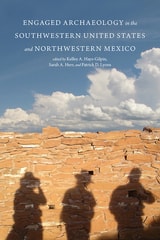
Engaged Archaeology in the Southwestern United States and Northwestern Mexico
Kelley A. Hays-Gilpin
University Press of Colorado, 2021
Organized around the theme of interdisciplinary perspectives, the book highlights collaborations with those who have other ways of knowing the past, from the traditional and proprietary knowledge of communities to new scientific methods, and considers the social context of archaeological practice and the modern relationships that inform interpretations of the past. Chapters show how cutting-edge practices lead to new archaeological understandings when archaeologists work in partnership with descendant and stakeholder communities and across international and disciplinary borders. Authors work across anthropological subfields and with the sciences, demonstrating that anthropological archaeology’s methods are starting points for investigation that allow for the expansion of understanding by incorporating long-remembered histories with innovative analytic methods.
Engaged Archaeology in the Southwestern United States and Northwestern Mexico identifies current and near-future trends in archaeological practice in the US Southwest and northwestern Mexico, including repatriation, community engagement, and cross-disciplinary approaches, and focuses on Native American archaeologists and their communities, research, collaborations, and interests. It will be of interest to archaeologists and anthropologists working in the Southwest and to any researchers interested in interdisciplinary approaches to archaeology, heritage studies, and the natural sciences.
Contributors: Christopher Caseldine, Chip Colwell, Guillermo Córdova Tello, Patrick Cruz, T. J. Ferguson, Cécile R. Ganteaume, Vernelda Grant, Neysa Grider-Potter, Christopher Grivas, Michael Heilen, Jane H. Hill, Leigh J. Kuwanwisiwma, Teresita Majewski, Debra L. Martin, Estela Martínez Mora, John A. McClelland, Emiliano Ricardo Melgar Tísoc, Darsita R. North, Scott Ortman, Peter J. Pilles Jr., Susan Sekaquaptewa, Arleyn W. Simon, Kimberly Spurr, Sarah Striker, Kerry F. Thompson, John A. Ware, Peter M. Whiteley, Lisa C. Young
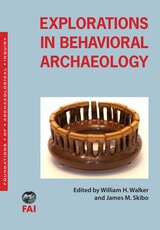
Explorations in Behavioral Archaeology
William H. Walker and James M. Skibo
University of Utah Press, 2015
Behavioral archaeology, defined as the study of people-object interactions in all times and places, emerged in the 1970s, in large part because of the innovative work of Michael Schiffer and colleagues. This volume provides an overview of how behavioral archaeology has evolved and how it has affected the field of archaeology at large.
The contributors to this volume are Schiffer’s former students, from his first doctoral student to his most recent. This generational span has allowed for chapters that reflect Schiffer’s research from the 1970s to 2012. They are iconoclastic and creative and approach behavioral archaeology from varied perspectives, including archaeological inference and chronology, site formation processes, prehistoric cultures and migration, modern material culture variability, the study of technology, object agency, and art and cultural resources. Broader questions addressed include models of inference and definitions of behavior, study of technology and the causal performances of artifacts, and the implications of artifact causality in human communication and the flow of behavioral history.