Results by title
484 books match the query 'Foreign relations' and 15 start with e
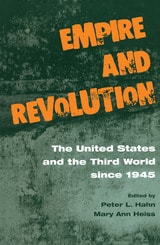
EMPIRE REVOLUTION
THE UNITED STATES AND THE THIRD WORLD SIPETER L. & MARY ANN HAHN & HEISS
The Ohio State University Press, 2000
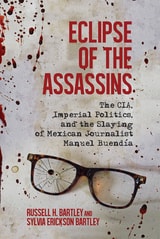
Eclipse of the Assassins
The CIA, Imperial Politics, and the Slaying of Mexican Journalist Manuel BuendíaRussell H. Bartley and Sylvia Erickson Bartley
University of Wisconsin Press, 2015
Authors Russell and Sylvia Bartley shed new light on the U.S.-instigated “dirty wars” that ravaged all of Latin America in the 1960s, ’70s, and ’80s and reveal—for the first time—how Mexican officials colluded with Washington in its proxy contra war against the Sandinista government of Nicaragua. They draw together the strands of a clandestine web linking:
- the assassination of prominent Mexican journalist Manuel Buendía
- the torture and murder of U.S. Drug Enforcement Administration agent Enrique Camarena
- the Iran-Contra scandal
- a major DEA sting against key CIA-linked Bolivian, Panamanian, and Mexican drug traffickers
- CIA-orchestrated suppression of investigative journalists
- criminal collusion of successive U.S. and Mexican administrations that has resulted in the unprecedented power of drug kingpins like “El Chapo” Guzmán.
Best books for public & secondary school libraries from university presses, American Library Association
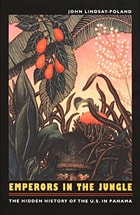
Emperors in the Jungle
The Hidden History of the U.S. in PanamaJohn Lindsay-Poland
Duke University Press, 2003
Analyzing new evidence gathered through interviews, archival research, and Freedom of Information Act requests, Lindsay-Poland discloses the hidden history of U.S.–Panama relations, including the human and environmental toll of the massive canal building project from 1904 to 1914. In stunning detail he describes secret chemical weapons tests—of toxins including nerve agent and Agent Orange—as well as plans developed in the 1960s to use nuclear blasts to create a second canal in Panama.
He chronicles sustained efforts by Panamanians and international environmental groups to hold the United States responsible for the disposal of the tens of thousands of explosives it left undetonated on the land it turned over to Panama in 1999. In the context of a relationship increasingly driven by the U.S. antidrug campaigns, Lindsay-Poland reports on the myriad issues that surrounded Panama’s takeover of the canal in accordance with the 1977 Panama Canal Treaty, and he assesses the future prospects for the Panamanian people, land, and canal area. Bringing to light historical legacies unknown to most U.S. citizens or even to many Panamanians, Emperors in the Jungle is a major contribution toward a new, more open relationship between Panama and the United States.
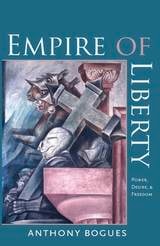
Empire of Liberty
Power, Desire, and FreedomAnthony Bogues
Dartmouth College Press, 2010

Empire's Law
The American Imperial Project and the 'War to Remake the World'Edited by Amy Bartholomew
Pluto Press, 2006
Jean L. Cohen Professor of Political Science, Columbia University
"This remarkable collection of essays illuminates -- more fully than any other volume -- the world order costs of the Iraq War, especially the radical denial of the relevance of international law in the US's pursuit of global empire. To understand this overarching geopolitical challenge of the early 21st century, citizens the world over should treat Empire's Law as required reading."
Richard A. Falk, Albert G. Milbank Professor of International Law and Practice Emeritus, Princeton University and currently Visiting Professor of Global and International Studies, University of California, Santa Barbara
"Right now there can't be enough discussion of America's role in world politics ... This is a much-needed collection from leading scholars."
Neil Stammers, Senior Lecturer in the Department of International Relations and Politics, University of Sussex
What is the legacy of the war in Iraq? Can democracy and human rights really be imposed "by fire and sword"? This book brings together some of the world's most outstanding theorists in the debate over empire and international law. They provide a uniquely lucid account of the relationship between American imperialism, the use and abuse of "humanitarian intervention", and its legal implications. Empire's Law is ideal for students who want a comprehensive critical introduction to the impact that the doctrine of pre-emptive war has had on our capacity to protect human rights and promote global justice.
Leading contributors including Leo Panitch, Sam Gindin, Jurgen Habermas, Ulrich Preuss, Andrew Arato, Samir Amin, Reg Whitaker, Denis Halliday and Hans von Sponeck tackle a broad range of issues. Covering everything from the role of Europe and the UN, to people's tribunals, to broader theoretical accounts of the contradictions of war and human rights, the contributors offer new and innovative ways of examining the problems that we face. It is essential reading for all students who want a systematic framework for understanding the long-term consequences of imperialism.
Amy Bartholomew is an Associate Professor in the Department of Law at Carleton University.
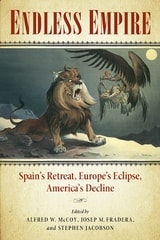
Endless Empire
Spain's Retreat, Europe's Eclipse, America's DeclineEdited by Alfred W. McCoy, Josep M. Fradera, and Stephen Jacobson
University of Wisconsin Press, 2012
- erosion of economic and fiscal strength needed for military power on a global scale
- misuse of military power through micro-military misadventures
- breakdown of alliances among major powers
- weakened controls over the subordinate elites critical for any empire’s exercise of global power
- insufficient technological innovation to sustain global force projection.
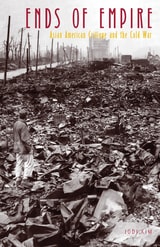
Ends of Empire
Asian American Critique and the Cold WarJodi Kim
University of Minnesota Press, 2010
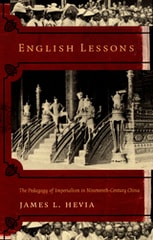
English Lessons
The Pedagogy of Imperialism in Nineteenth-Century ChinaJames L. Hevia
Duke University Press, 2003
Hevia analyzes British Foreign Office documents, diplomatic memoirs, auction house and museum records, nineteenth-century scholarly analyses of Chinese history and culture, campaign records, and photographs. He shows how Britain refigured its imperial project in
China as a cultural endeavor through examinations of the circulation of military loot in Europe, the creation of an art history of “things Chinese,” the construction of a field of knowledge about China, and the Great Game rivalry between Britain, Russia, and the Qing empire in Central Asia. In so doing, he illuminates the impact of these elements on the colonial project and the creation of a national consciousness in China.
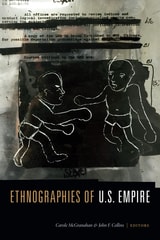
Ethnographies of U.S. Empire
Carole McGranahan and John F. Collins, editors
Duke University Press, 2018
Contributors: Kevin K. Birth, Joe Bryan, John F. Collins, Jean Dennison, Erin Fitz-Henry, Adriana María Garriga-López, Olívia Maria Gomes da Cunha, Matthew Gutmann, Ju Hui Judy Han, J. Kēhaulani Kauanui, Eleana Kim, Heonik Kwon, Soo Ah Kwon, Darryl Li, Catherine Lutz, Sunaina Maira, Carole McGranahan, Sean T. Mitchell, Jan M. Padios, Melissa Rosario, Audra Simpson, Ann Laura Stoler, Lisa Uperesa, David Vine
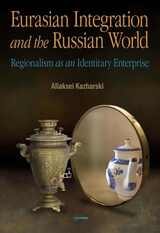
Eurasian Integration and the Russian World
Regionalism as an Identitiary EnterpriseAliaksei Kazharski
Central European University Press, 2019
This volume examines Russian discourses of regionalism as a source of identity construction practices for the country's political and intellectual establishment. The overall purpose of the monograph is to demonstrate that, contrary to some assumptions, the transition trajectory of post-Soviet Russia has not been towards a liberal democratic nation state that is set to emulate Western political and normative standards. Instead, its foreign policy discourses have been constructing Russia as a supranational community which transcends Russia's current legally established borders.
The study undertakes a systematic and comprehensive survey of Russian official (authorities) and semi-official (establishment affiliated think tanks) discourse for a period of seven years between 2007 and 2013. This exercise demonstrates how Russia is being constructed as a supranational entity through its discourses of cultural and economic regionalism. These discourses associate closely with the political project of Eurasian economic integration and the "Russian world" and "Russian civilization" doctrines. Both ideologies, the geoeconomic and culturalist, have gained prominence in the post-Crimean environment. The analysis tracks down how these identitary concepts crystallized in Russia's foreign policies discourses beginning from Vladimir Putin's second term in power.
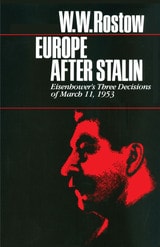
Europe after Stalin
Eisenhower's Three Decisions of March 11, 1953By W.W. Rostow
University of Texas Press, 1982
Stalin's death on March 6, 1953, reopened the debate within the Eisenhower administration over whether or not the United States should propose and actively promote the reunification of Germany at a summit conference. Written by an insider, this is the only published firsthand account of this foreign policy decision—a decision that illuminated the dilemmas of the Cold War at an important moment.
W. W. Rostow examines the origins of Eisenhower's "peace speech" of April 16, 1953, and of the National Security Council's debate on the German question between John Foster Dulles and presidential adviser C. D. Jackson. Jackson proposed immediate high-level diplomatic contact with the Soviet Union and the countries of Western Europe to discuss German reunification, as well as proposals for the general control of armaments and special security arrangements for Europe. Dulles, however, argued for a more reserved posture, which ruled out summitry and immediate negotiation with the Soviets. Dulles prevailed, but Eisenhower made his famous "peace speech."
In his concluding chapter, Rostow explores the question of whether or not anything was lost by this outcome. Was an opportunity for a united Germany forfeited when Eisenhower rejected Churchill's suggestion for a prompt summit meeting and backed Dulles against Jackson in the National Security Council meeting of March 11?
This is the third in a series of volumes by the author that probe the relationship between ideas and action in the making of major policy decisions. In this series, Rostow examines historic decision making from an insider's point of view while exploiting fully the rich documentary evidence.
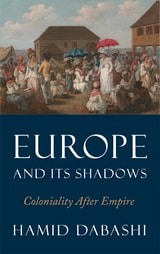
Europe and Its Shadows
Coloniality after EmpireHamid Dabashi
Pluto Press, 2019
Frantz Fanon’s assessment that 'Europe is literally the creation of the Third World' is still true today; but in more than one sense for the colonial has always been embedded in the capital, and the capital within the colonial. As the condition of coloniality shifts, so have the dividing lines between coloniser and colonised, and this shift calls for a reappraisal of our understanding of nationalism, xenophobia and sectarianism as the dangerous indices of the emerging worlds.
As the far-right populists captivate minds across Europe and Brexit upsets the balance of power in the European Union, this book, from a major scholar of postcolonial thought, is a timely and transformative intervention.
Europe's Alliance with Israel
Aiding the OccupationDavid Cronin
Pluto Press, 2010
In carefully crafted official statements, the European Union presents itself as an honest broker in the Middle East. In reality, however, the EU’s 27 governments have been engaged in a long process of accommodating Israel’s occupation of Palestinian territories.
Journalist David Cronin interrogates the relationship and its outcomes. A recent agreement for 'more intense, more fruitful, more influential co-operation' between the EU and Israel has meant that Israel has become a member state of the Union in all but name. Cronin shows that rather than using this relationship to encourage Israeli restraint, the EU has legitimised actions such as the ill-treatment of prisoners and the Gaza invasion.
Concluding his revealing and shocking account, Cronin calls for a continuation and deepening of international activism and protest to halt the EU's slide into complicity.
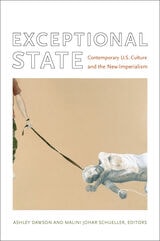
Exceptional State
Contemporary U.S. Culture and the New ImperialismAshley Dawson and Malini Johar Schueller, eds.
Duke University Press, 2007
The contributors address a range of topics, paying particular attention to the dynamics of gender and race. Their essays include a surprising reading of the ostensibly liberal movies Wag the Dog and Three Kings, an exploration of the rhetoric surrounding the plan to remake the military into a high-tech force less dependent on human bodies, a look at the significance of the popular Left Behind series of novels, and an interpretation of the Abu Ghraib prison photos. They scrutinize the national narrative created to justify the US invasions of Afghanistan and Iraq, the ways that women in those countries have responded to the invasions, the contradictions underlying calls for US humanitarian interventions, and the role of Africa in the US imperial imagination. The volume concludes on a hopeful note, with a look at an emerging anti-imperialist public sphere.
Contributors. Omar Dahbour, Ashley Dawson, Cynthia Enloe, Melani McAlister, Christian Parenti, Donald E. Pease, John Carlos Rowe, Malini Johar Schueller, Harilaos Stecopoulos
Exporting Revolution
Cuba's Global SolidarityMargaret Randall
Duke University Press, 2017