168 books match the query 'Health Policy' and 6 start with e

cover of Economic Aspects of Health

Economic Aspects of Health

Edited by Victor R. Fuchs

University of Chicago Press, 1982
Unlike earlier work in medical economics, which has focused on medical care, these ten papers stress the production and consequences of health itself. They reveal a serious concern with real-world health problems in their investigation of such subjects as infant mortality, life expectancy, morbidity, and disability. These papers are unusual, as well, in bringing to bear on these problems new and powerful theoretical and statistical tools. They draw on, and in some cases are, original sources for new bodies of data. As such, Economic Aspects of Health comprises a useful blend of relevance and rigor.
[more]
cover of Eliciting Care: Health and Power in Northern Thailand

Eliciting Care

Health and Power in Northern Thailand

Bo Kyeong Seo

University of Wisconsin Press, 2020

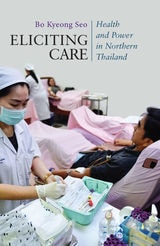
In 2001, Thailand introduced universal health care reforms that have become some of the most celebrated in the world, providing almost its entire population with health protection coverage. However, this remarkable implementation of health policy is not without its weaknesses. Drawing on two years of fieldwork at a district hospital in northern Thailand, Bo Kyeong Seo examines how people in marginal and dependent social positions negotiate the process of obtaining care.
Using the broader concept of elicitation, Seo analyzes the social encounters and forces that shape caregivers. These dynamics challenge dichotomies of subjugation and resistance, consent and coercion, and dependence and autonomy. The intimate and moving stories at the core of Eliciting Care from patients and providers draw attention to a broader, critically important phenomenon at the hospital level. Seo's poignant ethnography engages with feminist theory on the ethics of care, and in so doing, makes a significant contribution to emerging work in the field of health policy and politics.
[more]
cover of Ellen Johnson Sirleaf

Ellen Johnson Sirleaf

Pamela Scully

Ohio University Press, 2016

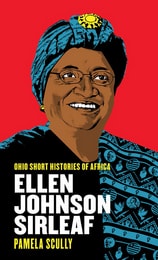
In this timely addition to the Ohio Short Histories of Africa series, Pamela Scully takes us from the 1938 birth of Nobel Peace Prize winner and two-time Liberian president Ellen Johnson through the Ebola epidemic of 2014–15. Charting her childhood and adolescence, the book covers Sirleaf’s relationship with her indigenous grandmother and urban parents, her early marriage, her years studying in the United States, and her career in international development and finance, where she developed her skill as a technocrat. The later chapters cover her years in and out of formal Liberian politics, her support for women’s rights, and the Ebola outbreak.

Sirleaf’s story speaks to many of the key themes of the twenty-first century. Among these are the growing power of women in the arenas of international politics and human rights; the ravaging civil wars in which sexual violence is used as a weapon; and the challenges of transitional justice in building postconflict societies. Ellen Johnson Sirleaf is an astute examination of the life of a pioneering feminist politician.
[more]
cover of Epidemic City: The Politics of Public Health in New York

Epidemic City

The Politics of Public Health in New York

James Colgrove

Russell Sage Foundation, 2011

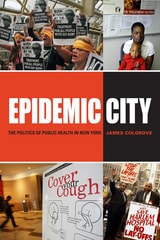
An insightful chronicle of the changing public health demands in New York City. The first permanent Board of Health in the United States was created in response to a cholera outbreak in New York City in 1866. By the mid-twentieth century, thanks to landmark achievements in vaccinations, medical data collection, and community health, the NYC Department of Health had become the nation's gold standard for public health. However, as the city's population grew in number and diversity, the department struggled to balance its efforts between the treatment of diseases—such as AIDS, tuberculosis, and West Nile Virus—and the prevention of illness-causing factors like lead paint, heroin addiction, homelessness, smoking, and unhealthy foods. In Epidemic City, historian of public health James Colgrove chronicles the challenges faced by the health department since New York City's mid-twentieth-century "peak" in public health provision. This insightful volume draws on archival research and oral histories to examine how the provision of public health has adapted to the competing demands of diverse public needs, public perceptions, and political pressure. Epidemic City analyzes the perspectives and efforts of the people responsible for the city's public health from the 1960s to the present—a time that brought new challenges, such as budget and staffing shortages, and new threats like bioterrorism. Faced with controversies such as needle exchange programs and AIDS reporting, the health department struggled to maintain a delicate balance between its primary focus on illness prevention and the need to ensure public and political support for its activities. In the past decade, after the 9/11 attacks and bioterrorism scares partially diverted public health efforts from illness prevention to threat response, Mayor Michael Bloomberg and Health Commissioner Thomas Frieden were still able to pass New York's Clean Indoor Air Act restricting smoking and significant regulations on trans-fats used by restaurants. This legislation—preventative in nature much like the department's original sanitary code—reflects a return to the nineteenth century roots of public health, when public health measures were often overtly paternalistic. The assertive laws conceived by Frieden and executed by Bloomberg demonstrate how far the mandate of public health can extend when backed by committed government officials. Epidemic City provides a compelling historical analysis of the individuals and groups tasked with negotiating the fine line between public health and political considerations. By examining the department's successes and failures during the ambitious social programs of the 1960s, the fiscal crisis of the 1970s, the struggles with poverty and homelessness in the 1980s and 1990s, and in the post-9/11 era, Epidemic City shows how the NYC Department of Health has defined the role and scope of public health services for the entire nation.
[more]
cover of Epidemics: The Story of South Africa’s Five Most Lethal Human Diseases

Epidemics

The Story of South Africa’s Five Most Lethal Human Diseases

Howard Phillips

Ohio University Press, 2012

This is the first history of epidemics in South Africa, lethal episodes that significantly shaped this society over three centuries. Focusing on five devastating diseases between 1713 and today—smallpox, bubonic plague, “Spanish influenza,” polio, and HIV/AIDS—the book probes their origins, their catastrophic courses, and their consequences in both the short and long terms. The impacts of these epidemics ranged from the demographic—the “Spanish flu,” for instance, claimed the lives of six percent of the country’s population in six weeks—to the political, the social, the economic, the spiritual, the psychological, and the cultural. Moreover, as each of these epidemics occurred at crucial moments in the country’s history—such as during the South African War and World War I—the book also examines how these processes affected and were affected by the five epidemics. To those who read this book, history will not look the same again.

[more]
cover of Experimentation with Human Beings: The Authority of the Investigator, Subject, Professions, and State in the Human Experimentation Process

Experimentation with Human Beings

The Authority of the Investigator, Subject, Professions, and State in the Human Experimentation Process

Jay Katz

Russell Sage Foundation, 1972

In recent years, increasing concern has been voiced about the nature and extent of human experimentation and its impact on the investigator, subject, science, and society. This casebook represents the first attempt to provide comprehensive materials for studying the human experimentation process. Through case studies from medicine, biology, psychology, sociology, and law—as well as evaluative materials from many other disciplines—Dr. Katz examines the problems raised by human experimentation from the vantage points of each of its major participants—investigator, subject, professions, and state. He analyzes what kinds of authority should be delegated to these participants in the formulation, administration, and review of the human experimentation process. Alternative proposals, from allowing investigators a completely free hand to imposing centralized governmental control, are examined from both theoretical and practical perspectives. The conceptual framework of Experimentation with Human Beings is designed to facilitate not only the analysis of such concepts as "harm," "benefit," and "informed consent," but also the exploration of the problems raised by man's quest for knowledge and mastery, his willingness to risk human life, and his readiness to delegate authority to professionals and rely on their judgment.
[more]