Results by title
944 books match the query 'Indians of North America' and 31 start with e
Early Encounters
Native Americans and Europeans in New England. From the Papers of W. Sears NickersonDelores Bird Carpenter
Michigan State University Press, 1994
Early Encounters contains a selection of nineteen essays from the papers of prominent New England historian, antiquarian, and genealogist Warren Sears Nickerson (1880-1966). This extensive study of his own family ties to the Mayflower, and his exhaustive investigation of the first contacts between Europeans and Native Americans, in what is today New England, made him an unquestioned authority in both fields.
The research upon which the text of Early Encounters is based occurred between the 1920s and the 1950s. Each of Nickerson’s works included in this carefully edited volume is placed in its context by Delores Bird Carpenter; she provides the reader with a wealth of useful background information about each essay’s origin, as well as Nickerson’s reasons for undertaking the research. Material is arranged thematically: the arrival of the Mayflower; conflicts between Europeans and Native Americans; and other topics related to the history and legends of early European settlement on Cape Cod. Early Encounters is a thoughtfully researched, readable book that presents a rich and varied account of life in colonial New England.
Early Pottery in the Southeast
Tradition and Innovation in Cooking TechnologyKenneth E. Sassaman
University of Alabama Press, 1993
A Dan Josselyn Memorial Publication
Among southeastern Indians pottery was an innovation that enhanced the economic value of native foods and the efficiency of food preparation. But even though pottery was available in the Southeast as early as 4,500 years ago, it took nearly two millenia before it was widely used. Why would an innovation of such economic value take so long to be adopted?
The answer lies in the social and political contexts of traditional cooking technology. Sassaman's book questions the value of using technological traits alone to mark temporal and spatial boundaries of prehistoric cultures and shows how social process shapes the prehistoric archaeological record.
Early Pottery
Technology, Function, Style, and Interaction in the Lower SoutheastEdited by Rebecca Saunders and Christopher T. Hays
University of Alabama Press, 2004
A synthesis of research on earthenware technologies of the Late Archaic Period in the southeastern U.S.
Information on social groups and boundaries, and on interaction between groups, burgeons when pottery appears on the social landscape of the Southeast in the Late Archaic period (ca. 5000-3000 years ago). This volume provides a broad, comparative review of current data from "first potteries" of the Atlantic and Gulf coastal plains and in the lower Mississippi River Valley, and it presents research that expands our understanding of how pottery functioned in its earliest manifestations in this region.
Included are discussions of Orange pottery in peninsular Florida, Stallings pottery in Georgia, Elliot's Point fiber-tempered pottery in the Florida panhandle, and the various pottery types found in excavations over the years at the Poverty Point site in northeastern Louisiana. The data and discussions demonstrate that there was much more interaction, and at an earlier date, than is often credited to Late Archaic societies. Indeed, extensive trade in pottery throughout the region occurs as early as 1500 B.C.
These and other findings make this book indispensable to those involved in research into the origin and development of pottery in general and its unique history in the Southeast in particular.
Earth Ovens and Desert Lifeways
10,000 Years of Indigenous Cooking in the Arid Landscapes of North AmericaEdited by Charles W. Koenig and Myles R. Miller
University of Utah Press, 2023
For over 10,000 years, earth ovens (semi-subterranean, layered arrangements of heated rocks, packing material, and food stuffs capped by earth) have played important economic and social roles for Indigenous peoples living across the arid landscapes of western North America. From hunter-gatherers to formative horticulturalists, sedentary farmers, and contemporary Indigenous groups, earth ovens have been used to convert inedible plants into digestible food, fiber, and beverages.
The remains of earth ovens range from tight, circular clusters of burned rocks, generally labeled “hearths” by archaeologists, to the massive accumulations of fire-cracked rock referred to as earth oven facilities, roasting pits, or burned rock middens. Remnants of these oven forms are common across the arid and semi-arid landscapes that stretch from Texas to California and south into Mexico. Despite the ubiquity of earth ovens from late Paleoindian times until today, and their broad spatial and cultural distribution, these features remain an under-studied aspect of Indigenous lifeways.
This edited volume explores the longevity and diversity of earth oven baking and examines the subsistence strategies, technological paradigms, and social contexts within which earth ovens functioned. It is the first study to cover such a broad geographic area, reflecting an array of promising research that highlights ongoing efforts to understand the archaeological record of earth ovens.
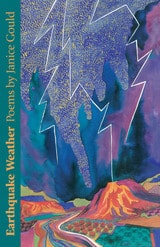
Earthquake Weather
PoemsJanice Gould
University of Arizona Press, 1996
Showing a steady courage in the midst of this alienation, her words are also stark testimony to the struggle of an individual caught in social and emotional contexts defined by others. In Earthquake Weather, as in an evolving friendship, Gould opens herself to the reader in stages. "I did not know how lonely I was / till we began to talk," she writes in an opening section, setting the introspective tone of what’s to come. She begins with a focus on those universal truths that both bind us and isolate us from each other: the pain of loss, the finality of death, our longing to see beneath the surface of things. Next, the poet turns to her growing-up years during the Vietnam War and the civil rights movement. She describes a family in turmoil and an Indian heritage that, oddly, was one of the factors that made her feel most disconnected from other people. And she writes poignantly about her increasing alienation from prescribed sexual roles. "What’s wrong with me? / Where do I belong? Why / am I here? Why can’t I / hold on?" Finally, as in a trusting friendship, Gould offers the reader vivid word portraits of relationships in her life—women she has loved and who have loved her.
Erotic and deeply personal, these poems serve as both a reconciliation and affirmation of her individuality. "Yet would you deny / that between women desire exists / that in our friendship a delicate / and erotic strand of fire unites us?" The poems in this book, says critic Toby Langen, are most powerful for their "courageous drawing on experience and feelings." They will speak to many general readers as well as anyone interested in questions of gender and identity, including students of literature, lesbian/women’s studies, social/cultural studies, or American Indian studies.
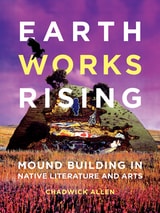
Earthworks Rising
Mound Building in Native Literature and ArtsChadwick Allen
University of Minnesota Press, 2022
A necessary reexamination of Indigenous mounds, demonstrating their sustained vitality and vibrant futurity by centering Native voices
Typically represented as unsolved mysteries or ruins of a tragic past, Indigenous mounds have long been marginalized and misunderstood. In Earthworks Rising, Chadwick Allen issues a compelling corrective, revealing a countertradition based in Indigenous worldviews. Alongside twentieth- and twenty-first-century Native writers, artists, and intellectuals, Allen rebuts colonial discourses and examines the multiple ways these remarkable structures continue to hold ancient knowledge and make new meaning—in the present and for the future.
Earthworks Rising is organized to align with key functional categories for mounds (effigies, platforms, and burials) and with key concepts within mound-building cultures. From the Great Serpent Mound in Ohio to the mound metropolis Cahokia in Illinois to the generative Mother Mound in Mississippi, Allen takes readers deep into some of the most renowned earthworks. He draws on the insights of poets Allison Hedge Coke and Margaret Noodin, novelists LeAnne Howe and Phillip Carroll Morgan, and artists Monique Mojica and Alyssa Hinton, weaving in a personal history of earthwork encounters and productive conversation with fellow researchers.
Spanning literature, art, performance, and built environments, Earthworks Rising engages Indigenous mounds as forms of “land-writing” and as conduits for connections across worlds and generations. Clear and compelling, it provokes greater understanding of the remarkable accomplishments of North America’s diverse mound-building cultures over thousands of years and brings attention to new earthworks rising in the twenty-first century.
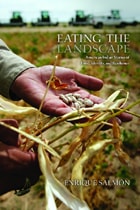
Eating the Landscape
American Indian Stories of Food, Identity, and ResilienceEnrique Salmón
University of Arizona Press, 2012
"Eating is not only a political act, it is also a cultural act that reaffirms one’s identity and worldview," Enrique Salmón writes in Eating the Landscape. Traversing a range of cultures, including the Tohono O’odham of the Sonoran Desert and the Rarámuri of the Sierra Tarahumara, the book is an illuminating journey through the southwest United States and northern Mexico. Salmón weaves his historical and cultural knowledge as a renowned indigenous ethnobotanist with stories American Indian farmers have shared with him to illustrate how traditional indigenous foodways—from the cultivation of crops to the preparation of meals—are rooted in a time-honored understanding of environmental stewardship.
In this fascinating personal narrative, Salmón focuses on an array of indigenous farmers who uphold traditional agricultural practices in the face of modern changes to food systems such as extensive industrialization and the genetic modification of food crops. Despite the vast cultural and geographic diversity of the region he explores, Salmón reveals common themes: the importance of participation in a reciprocal relationship with the land, the connection between each group’s cultural identity and their ecosystems, and the indispensable correlation of land consciousness and food consciousness. Salmón shows that these collective philosophies provide the foundation for indigenous resilience as the farmers contend with global climate change and other disruptions to long-established foodways. This resilience, along with the rich stores of traditional ecological knowledge maintained by indigenous agriculturalists, Salmón explains, may be the key to sustaining food sources for humans in years to come.
As many of us begin to question the origins and collateral costs of the food we consume, Salmón’s call for a return to more traditional food practices in this wide-ranging and insightful book is especially timely. Eating the Landscape is an essential resource for ethnobotanists, food sovereignty proponents, and advocates of the local food and slow food movements.
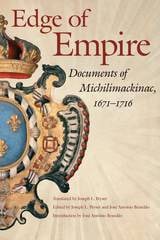
Edge of Empire
Documents of Michilimackinac, 1671-1716Joseph L. Peyser
Michigan State University Press, 2008
Few places were as important in the seventeenth-century European colonial New World as the pays d’en haut. This term means "upper country" and refers to the western Great Lakes (Huron, Michigan, and Superior) and the areas immediately north, south, and west of them. The region was significant because of its large Native American population, because it had an extensive riverine system needed for beaver populations—essential to the fur trade—and because it held the transportation key to westward expansion.
It was vital to the French, who controlled the region, to be on good terms with its peoples. To maintain good relations through trade and diplomacy with the nations in the pays d’en haut, the French built a number of posts, including one at Michilimackinac and one on the St. Joseph River (near Niles, Michigan). These posts were garrisoned by French troops and run by French commanders who contracted with merchants to manage business matters.
Edge of Empire provides both an overview and an intensely detailed look at Michilimackinac at a very specific period of history. While the introduction offers an overview of the French fur trade, of the place of Michilimackinac in that network, and of what Michilimackinac was like in the years up to 1716, the body of the book is comprised of over sixty French-language documents, now translated into English. Collected from archives in France, Canada, and the United States, the documents identify many of the people involved in the trade and reveal a great deal about the personal and professional relations among people who traded. They also reveal clearly the process by which trade was carried out, including the roles of both Native Americans and women. At the same time, the documents open a window into French colonial society in New France.
Editorializing "The Indian Problem"
The New York Times on Native Americans, 1860-1900Robert Hays. Foreword by: Paul Simon
Southern Illinois University Press, 2007
American history demonstrates time and again the price of Manifest Destiny.
Edward Palmer's Arkansaw Mounds
Edited and preface by Marvin D. Jeter
University of Alabama Press, 2010
"This thoroughly researched volume is highly recommended to anyone—at any level—who is interested in the archaeology of the Southeast." —CHOICE
During the 1880s a massive scientific effort was launched by the Smithsonian Institution to discover who had built the prehistoric burial mounds found throughout the United States. Arkansaw Mounds tells the story of this exploration and of Edward Palmer, one of the nineteenth century’s greatest natural historians and archaeologists, who was recruited to lead the research project. Arkansas was unusually rich in prehistoric remains, especially mounds, and became a major focus of the study. Palmer and his team of researchers discovered that the mounds had been built by the ancestors of the historic North American Indians, shattering the then-popular theory that a lost non-Indian race had built them.
Emil W. Haury's Prehistory of the American Southwest
Edited by J. Jefferson Reid and David E. Doyel
University of Arizona Press, 1986

Empty Nets, 2nd ed
Indians, Dams, and the Columbia RiverRoberta Ulrich
Oregon State University Press, 2007
Encounters on Contested Lands
Indigenous Performances of Sovereignty and Nationhood in QuébecJulie Burelle
Northwestern University Press, 2019
Winner, 2020 Ann Saddlemyer Award
Finalist, ATHE Outstanding Book Award for 2020
Mention Spéciale, Société québécoise d'études théâtrale
In Encounters on Contested Lands, Julie Burelle employs a performance studies lens to examine how instances of Indigenous self-representation in Québec challenge the national and identity discourses of the French Québécois de souche—the French-speaking descendants of white European settlers who understand themselves to be settlers no more but rather colonized and rightfully belonging to the territory of Québec.
Analyzing a wide variety of performances, Burelle brings together the theater of Alexis Martin and the film L'Empreinte, which repositions the French Québécois de souche as métis, with protest marches led by Innu activists; the Indigenous company Ondinnok's theater of repatriation; the films of Yves Sioui Durand, Alanis Obomsawin, and the Wapikoni Mobile project; and the visual work of Nadia Myre. These performances, Burelle argues, challenge received definitions of sovereignty and articulate new ones while proposing to the province and, more specifically, to the French Québécois de souche, that there are alternative ways to imagine Québec's future and remember its past.
The performances insist on Québec's contested nature and reframe it as animated by competing sovereignties. Together they reveal how the "colonial present tense" and "tense colonial present" operate in conjunction as they work to imagine an alternative future predicated on decolonization. Encounters on Contested Lands engages with theater and performance studies while making unique and needed contributions to Québec and Canadian studies, as well as to Indigenous and settler-colonial studies.
Enduring Legacies
Ethnic Histories and Cultures of ColoradoArturo J. Aldama
University Press of Colorado, 2011
Addressing the dearth of scholarship on the varied communities within Colorado-a zone in which collisions structured by forces of race, nation, class, gender, and sexuality inevitably lead to the transformation of cultures and the emergence of new identities-this volume is the first to bring together comparative scholarship on historical and contemporary issues that span groups from Chicanas and Chicanos to African Americans to Asian Americans.
This book will be relevant to students, academics, and general readers interested in Colorado history and ethnic studies.
Enduring Nations
Native Americans in the MidwestEdited by R. David Edmunds
University of Illinois Press, 2007
Enduring Nations documents how tribal peoples have adapted to cultural change while shaping midwestern history. Examining the transformation of Native American communities, which often occurred in response to shifting government policy, the contributors explore the role of women, controversial tribal enterprises and economies, social welfare practices, and native peoples' frequent displacement to locations such as reservations and urban centers. Central to both past and contemporary discussions of Native American cultural change is whether Native American identity should be determined by genetics, shared cultural values, or a combination of the two.
Contributors are Bradley J. Birzer, Brenda J. Child, Thomas Burnell Colbert, Gregory Evans Dowd, R. David Edmunds, Brian Hosmer, Rebecca Kugel, James B. LaGrand, Melissa L. Meyer, Lucy Eldersveld Murphy, Alan G. Shackelford, Susan Sleeper-Smith, and Stephen Warren.
Enduring Seeds
Native American Agriculture and Wild Plant ConservationGary Paul Nabhan; Forewords by Wendell Berry and Miguel Altieri
University of Arizona Press, 2002
Gary Paul Nabhan here reveals the rich diversity of plants found in tropical forests and their contribution to modern crops, then tells how this diversity is being lost to agriculture and lumbering. He then relates "local parables" of Native American agriculture—from wild rice in the Great Lakes region to wild gourds in Florida—that convey the urgency of this situation and demonstrate the need for saving the seeds of endangered plants. Nabhan stresses the need for maintaining a wide gene pool, not only for the survival of these species but also for the preservation of genetic strains that can help scientists breed more resilient varieties of other plants.
Enduring Seeds is a book that no one concerned with our environment can afford to ignore. It clearly shows us that, as agribusiness increasingly limits the food on our table, a richer harvest can be had by preserving ancient ways.
This edition features a new foreword by Miguel Altieri, one of today's leading spokesmen for sustainable agriculture and the preservation of indigenous farming methods.
Engaged Anthropology
Research Essays on North American Archaeology, Ethnobotany, and MuseologyEdited by Michelle Hegmon and B. Sunday Eiselt
University of Michigan Press, 2005
Engaged Archaeology in the Southwestern United States and Northwestern Mexico
Kelley A. Hays-Gilpin
University Press of Colorado, 2021
Organized around the theme of interdisciplinary perspectives, the book highlights collaborations with those who have other ways of knowing the past, from the traditional and proprietary knowledge of communities to new scientific methods, and considers the social context of archaeological practice and the modern relationships that inform interpretations of the past. Chapters show how cutting-edge practices lead to new archaeological understandings when archaeologists work in partnership with descendant and stakeholder communities and across international and disciplinary borders. Authors work across anthropological subfields and with the sciences, demonstrating that anthropological archaeology’s methods are starting points for investigation that allow for the expansion of understanding by incorporating long-remembered histories with innovative analytic methods.
Engaged Archaeology in the Southwestern United States and Northwestern Mexico identifies current and near-future trends in archaeological practice in the US Southwest and northwestern Mexico, including repatriation, community engagement, and cross-disciplinary approaches, and focuses on Native American archaeologists and their communities, research, collaborations, and interests. It will be of interest to archaeologists and anthropologists working in the Southwest and to any researchers interested in interdisciplinary approaches to archaeology, heritage studies, and the natural sciences.
Contributors: Christopher Caseldine, Chip Colwell, Guillermo Córdova Tello, Patrick Cruz, T. J. Ferguson, Cécile R. Ganteaume, Vernelda Grant, Neysa Grider-Potter, Christopher Grivas, Michael Heilen, Jane H. Hill, Leigh J. Kuwanwisiwma, Teresita Majewski, Debra L. Martin, Estela Martínez Mora, John A. McClelland, Emiliano Ricardo Melgar Tísoc, Darsita R. North, Scott Ortman, Peter J. Pilles Jr., Susan Sekaquaptewa, Arleyn W. Simon, Kimberly Spurr, Sarah Striker, Kerry F. Thompson, John A. Ware, Peter M. Whiteley, Lisa C. Young
Engendering Households in the Prehistoric Southwest
Edited by Barbara J. Roth
University of Arizona Press, 2010
Now Southwestern archaeologists have begun to delve into the task of “engendering” their sites. Using a “close to the ground” approach, the contributors to this book seek to engender the prehistoric Southwest by examining evidence at the household level.
Focusing on gendered activities in household contexts throughout the southwestern United States, this book represents groundbreaking work in this area. The contributors view households as a crucial link to past activities and behavior, and by engendering these households, we can gain a better understanding of their role in prehistoric society. Gender-structured household activities, in turn, can offer insight into broader-scale social and economic factors. The chapters offer a variety of theoretical and methodological approaches to engendering households and examine topics such as the division of labor, gender relations, household ritual, ceramic and ground stone production and exchange, and migration.
Engendering Households in the Prehistoric Southwest ultimately addresses broader issues of interest to many archaeologists today, including households and their various forms, identity and social boundary formation, technological style, and human agency. Focusing on gendered activities in household contexts throughout the southwestern United States, this book represents groundbreaking work in this area. The contributors view households as a crucial link to past activities and behavior, and by engendering these households, we can gain a better understanding of their role in prehistoric society. Gender-structured household activities, in turn, can offer insight into broader-scale social and economic factors.

Environmental Change and Human Adaptation in the Ancient American Southwest
Doyel and Dean
University of Utah Press, 2006
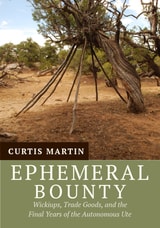
Ephemeral Bounty
Wickiups, Trade Goods, and the Final Years of the Autonomous UteCurtis Martin
University of Utah Press, 2016
The Colorado Wickiup Project is documenting ephemeral wooden features such as wickiups, tree-platforms, and brush horse corrals that remain scattered throughout the mesas, canyons, and mountains of the state. They date from when European newcomers first arrived with a bounty of new things—horses, metal knives and axes, guns, and brightly colored glass beads—which were readily adopted by the Utes.
The Project is unique in using the techniques of metal detection, historic trade ware analysis, and tree-ring dating of metal ax–cut wickiup poles to distinguish the Ute sites from historic Euro–American ones. Through this analysis, researchers have demonstrated that not all Utes left Colorado for the reservations in Utah during the “final removal” in 1881, as has been generally believed. A significant number remained on their homelands well into the early decades of the twentieth century, building brush shelters and living much as they had for generations, but with new tools and weapons.
Appendix B Form: Aboriginal Wooden Feature Component Form
Espíritu Santo de Zúñiga
A Frontier Mission in South TexasBy Tamra Lynn Walter
University of Texas Press, 2007
San Antonio Conservation Society Citation, 2009
In the early part of the eighteenth century, the Spanish colonial mission Espíritu Santo de Zúñiga was relocated from far south Texas to a site along the Guadalupe River in Mission Valley, Victoria County. This mission, along with a handful of others in south Texas, was established by the Spaniards in an effort to Christianize and civilize the local Native American tribes in the hopes that they would become loyal Spanish citizens who would protect this new frontier from foreign incursions.
With written historical records scarce for Espíritu Santo, Tamra Walter relies heavily on material culture recovered at this site through a series of recent archaeological investigations to present a compelling portrait of the Franciscan mission system. By examining findings from the entire mission site, including the compound, irrigation system, quarry, and kiln, she focuses on questions that are rarely, if ever, answered through historical records alone: What was daily life at the mission like? What effect did the mission routine have on the traditional lifeways of the mission Indians? How were both the Indians and the colonizers changed by their frontier experiences, and what does this say about the missionization process?
Walter goes beyond simple descriptions of artifacts and mission architecture to address the role these elements played in the lives of the mission residents, demonstrating how archaeology is able to address issues that are not typically addressed by historians. In doing so, she presents an accurate portrait of life in South Texas at this time. This study of Mission Espíritu Santo will serve as a model for research at similar early colonial sites in Texas and elsewhere.
Essays on American Indian and Mormon History
Edited by P. Jane Hafen and Brenden W. Rensink
University of Utah Press, 2019
This collection of essays, many the result of a seminar hosted by the Charles Redd Center for Western Studies at Brigham Young University, explores the historical and cultural complexities of this narrative from a decolonizing perspective. Essays cover the historical construction of the “Lamanite,” settler colonialism and the Book of Mormon, and connections between the Seneca leader Handsome Lake and Joseph Smith. Authors also address American Indian Mormon tribal identities, Navajo and Mormon participation at the dedication of Glen Canyon Dam, the impact of Mormon Polynesian missionaries in Diné Bikéyah, the ISPP, and other topics. Prominent American Indian Mormon voices lend their creative work and personal experiences to the book.
With the aim of avoiding familiar narrative patterns of settler colonialism, contributors seek to make American Indians the subjects rather than the objects of discussion in relation to Mormons, presenting new ways to explore and reframe these relationships.
Eternal Sovereigns
Indigenous Artists, Activists, and Travelers Reframing RomeGloria Jane Bell
Duke University Press, 2024
Ethnobotany of the Coos, Lower Umpqua, and Siuslaw Indians
Patricia Whereat-Phillips
Oregon State University Press, 2016
Very little has been published until now on the ethnobotany of western Oregon indigenous peoples. Ethnobotany of the Coos, Lower Umpqua, and Siuslaw Indians documents the use of plants by these closely-related coastal tribes, covering a geographical area that extends roughly from Cape Perpetua on the central coast, south to the Coquille River, and from the Coast Range west to the Pacific shore. With a focus on native plants and their traditional uses, it also includes mention of farming crops, as well as the highly invasive Himalayan blackberry, which some Oregon coast Indians called the "white man's berry."
The cultures of the Coos Bay, Lower Umpqua and Siuslaw are distinct from the Athabaskan speaking people to the south, and the Alsea to the north. Today, many tribal members are reviving ancient arts of basket weaving and woodworking, and many now participate in annual intertribal canoe events. Ethnobotany of the Coos, Lower Umpqua, and Siuslaw Indians contributes to this cultural renaissance by filling an important gap in the historical record. It is an invaluable resource for anyone who wishes to learn about the indigenous cultures of the central and southern Oregon coast, as well as those who are interested in Pacific Northwest plants and their cultural uses.
Everything You Know about Indians Is Wrong
Paul Chaat Smith
University of Minnesota Press, 2009
Forceful and eloquent essays on the American Indian in culture and history
In this sweeping work of memoir and commentary, leading cultural critic Paul Chaat Smith illustrates with dry wit and brutal honesty the contradictions of life in “the Indian business.”
Raised in suburban Maryland and Oklahoma, Smith dove head first into the political radicalism of the 1970s, working with the American Indian Movement until it dissolved into dysfunction and infighting. Afterward he lived in New York, the city of choice for political exiles, and eventually arrived in Washington, D.C., at the newly minted National Museum of the American Indian (“a bad idea whose time has come”) as a curator. In his journey from fighting activist to federal employee, Smith tells us he has discovered at least two things: there is no one true representation of the American Indian experience, and even the best intentions sometimes result in catastrophe.
Everything You Know about Indians Is Wrong is a highly entertaining and, at times, searing critique of the deeply disputed role of American Indians in the United States. In “A Place Called Irony,” Smith whizzes through his early life, showing us the ironic pop culture signposts that marked this Native American’s coming of age in suburbia: “We would order Chinese food and slap a favorite video into the machine—the Grammy Awards or a Reagan press conference—and argue about Cyndi Lauper or who should coach the Knicks.” In “Lost in Translation,” Smith explores why American Indians are so often misunderstood and misrepresented in today’s media: “We’re lousy television.” In “Every Picture Tells a Story,” Smith remembers his Comanche grandfather as he muses on the images of American Indians as “a half-remembered presence, both comforting and dangerous, lurking just below the surface.”
Smith walks this tightrope between comforting and dangerous, offering unrepentant skepticism and, ultimately, empathy. “This book is called Everything You Know about Indians Is Wrong, but it’s a book title, folks, not to be taken literally. Of course I don’t mean everything, just most things. And ‘you’ really means we, as in all of us.”
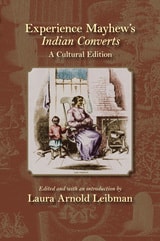
Experience Mayhew's Indian Converts
A Cultural EditionLaura Arnold Leibman
University of Massachusetts Press, 2008
First published in 1727 under the title Indian Converts, or Some account of the lives and dying speeches of a considerable number of the Christianized Indians of Martha's Vineyard, in New-England, Experience Mayhew's history of the Wampanoag Indians on Martha's Vineyard provides a rare look at the lives and culture of four generations of Native Americans in colonial America. Dividing his treatment into four sections—Indian Ministers, Good Men, Religious Women, and Pious Children—Mayhew details the books that different age groups were reading, provides insights into early New England pedagogy and childrearing practices, and describes each individual in terms of genealogy, religious practice, way of life, and place of residence.
In addition to drawing on his own firsthand knowledge of the community and transcriptions of oral testimony he and others collected, Mayhew inserts translations of Wampanoag texts that have since been lost. Although the book has been out of print since the early nineteenth century, scholars have long recognized its importance for understanding the history of New England's Native communities. In an extensive introduction to this new scholarly edition, Laura Arnold Leibman places Indian Converts in a broader cultural context and explores its significance. She shows how Mayhew's biographies illuminate the theological upheavals that rocked early eighteenth-century New England on the eve of the Great Awakening, shifts that altered not only the character of Puritanism but also the landscape of Wampanoag religious and cultural life. An accompanying online archive that includes over 600 images and documents further contextualizes Mayhew's work and provide suggestions for students' investigations of the text.
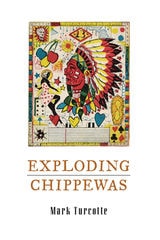
Exploding Chippewas
Mark Turcotte
Northwestern University Press, 2002
Everything this poet touches is volatile—the poet himself, the people and world around him, ideas and mythologies, the ghosts of memory and the dream of possible futures, all seem to burst into fragments. Mark Turcotte uses poetry to gather up the pieces—the shards of joy and grief, peace and doubt, strength and temptation, questions and answers—as he tries to define and rediscover what is lost when everyday life becomes explosive.
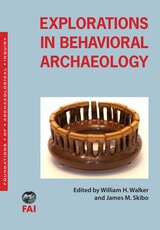
Explorations in Behavioral Archaeology
William H. Walker and James M. Skibo
University of Utah Press, 2015
Behavioral archaeology, defined as the study of people-object interactions in all times and places, emerged in the 1970s, in large part because of the innovative work of Michael Schiffer and colleagues. This volume provides an overview of how behavioral archaeology has evolved and how it has affected the field of archaeology at large.
The contributors to this volume are Schiffer’s former students, from his first doctoral student to his most recent. This generational span has allowed for chapters that reflect Schiffer’s research from the 1970s to 2012. They are iconoclastic and creative and approach behavioral archaeology from varied perspectives, including archaeological inference and chronology, site formation processes, prehistoric cultures and migration, modern material culture variability, the study of technology, object agency, and art and cultural resources. Broader questions addressed include models of inference and definitions of behavior, study of technology and the causal performances of artifacts, and the implications of artifact causality in human communication and the flow of behavioral history.
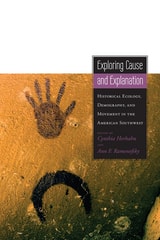
Exploring Cause and Explanation
Historical Ecology, Demography, and Movement in the American SouthwestCynthia L. Herhahn
University Press of Colorado, 2016
Each thematic section is introduced by an established author who sets the framework for the chapters that follow. Some contributors adopt regional perspectives in which both classical regions (the central San Juan or lower Chama basins) and peripheral zones (the Alamosa basin or the upper San Juan) are represented. Chapters are also broad temporally, ranging from the Younger Dryas Climatic interval (the Clovis-Folsom transition) to the Protohistoric Pueblo world and the eighteenth-century ethnogenesis of a unique Hispanic identity in northern New Mexico. Others consider methodological issues, including the burden of chronic health afflictions at the level of the community and advances in estimating absolute population size. Whether emphasizing time, space, or methodology, the authors address the processes, steps, and interactions that affect current understanding of change or stability of cultural traditions.
Exploring Cause and Explanation considers themes of perennial interest but demonstrates that archaeological knowledge in the Southwest continues to expand in directions that could not have been predicted fifty years ago.
Contributors: Kirk C. Anderson, Jesse A. M. Ballenger, Jeffery Clark, J. Andrew Darling, B. Sunday Eiselt, Mark D. Elson, Mostafa Fayek, Jeffrey R. Ferguson, Severin Fowles, Cynthia Herhahn, Vance T. Holliday, Sharon Hull, Deborah L. Huntley, Emily Lena Jones, Kathryn Kamp, Jeremy Kulisheck, Karl W. Laumbach, Toni S. Laumbach, Stephen H. Lekson, Virginia T. McLemore, Frances Joan Mathien, Michael H. Ort, Scott G. Ortman, Mary Ownby, Mary M. Prasciunas, Ann F. Ramenofsky, Erik Simpson, Ann L. W. Stodder, Ronald H. Towner
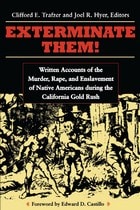
Exterminate Them
Written Accounts of the Murder, Rape, and Enslavement of Native Americans during the California Gold RushClifford E. Trafzer
Michigan State University Press, 1999
Popular media depict miners as a rough-and-tumble lot who diligently worked the placers along scenic rushing rivers while living in roaring mining camps in the foothills of the Sierra Nevada Mountains. Trafzer and Hyer destroy this mythic image by offering a collection of original newspaper articles that describe in detail the murder, rape, and enslavement perpetrated by those who participated in the infamous gold rush. "It is a mercy to the Red Devils," wrote an editor of the Chico Courier, "to exterminate them." Newspaper accounts of the era depict both the barbarity and the nobility in human nature, but while some protested the inhumane treatment of Native Americans, they were not able to end the violence. Native Americans fought back, resisting the invasion, but they could not stop the tide of white miners and settlers. They became "strangers in a stolen land."