1445 books match the query 'Life Sciences' and 80 start with e

cover of Early American Gardens: "For Meate or Medicine"

Early American Gardens

"For Meate or Medicine"

Ann Leighton

University of Massachusetts Press, 1970

Early American Gardens, published in 1970, was the first of three authoritative volumes of garden history by Ann Leighton. The 464-page masterwork of garden history was reissued in this paperback edition by University of Massachusetts Press in 1986. Concentrating on the gardens of the early settlers of New England, this volume deals with gardeners as well as the plants they depended upon for household aids, flavorings, drinks, and medicines. The well-illustrated, thorough, and scholarly volume is a book for history buffs as well as avid and inquisitive gardeners.

Companion volumes by Ann Leighton

American Gardens in the Eighteenth Century “For Use or for Delight”
American Gardens of the Nineteenth Century “For Comfort and Affluence”

[more]
cover of East African Mammals: An Atlas of Evolution in Africa, Volume 2, Part A: Insectivores and Bats

East African Mammals

An Atlas of Evolution in Africa, Volume 2, Part A: Insectivores and Bats

Jonathan Kingdon

University of Chicago Press, 1984

Acclaimed and coveted by both naturalists and lovers of wildlife illustration, Jonathan Kingdon's seven-volume East African Mammals has become a classic of modern natural history. This paperback edition makes Kingdon's remarkable artistic and scientific achievement—his hundreds of drawings and perceptive study of all the mammals in East Africa's species-rich fauna—available to the wide audience it deserves. 

Volume IIA of East African Mammals begins a two-part study of East Africa's smallest and least conspicuous mammals. It deals with bats and insectivores, including tenrecs, moles, hedgehogs, and shrews.

In each volume Kingdon combines his text with hundreds of finished drawings and quick sketches, the latter a form of field note that provides an incomparable description of the animal's movements and personality. Kingdom explains his drawings "as a wordless questioning of form. . . . The probing pencil is like the dissecting scalpel, seeking to expose relevant structures that may not be immediately obvious and are certainly hidden from the shadowy world of the camera lens." As an artist, Kingdon's achievement has been compared with Audubon's; as a scientist, his work has made these volumes indispensable to any serious student of East African mammals.
[more]
cover of East African Plant Collectors 

East African Plant Collectors 

Diana Polhill

Royal Botanic Gardens, Kew, 2015
In 1793, the first herbarium specimens were collected and recorded in East Africa. Since then, more than 2,700 people have collected specimens in Uganda, Kenya, and Tanzania, many of them as part of the groundbreaking work Flora of Tropical East Africa. While Flora focuses on the plants themselves, the companion volume East African Plant Collectors shines a spotlight on this diverse group of collectors who have worked to record the species of this botanically important region. Profiles include information about the collectors’ careers and interests, their publications, and the areas where their plants were located. The profiles are accompanied by an overarching timeline and historical synopsis, which shows how the profession has changed through the eras.
[more]
cover of Eating the Landscape: American Indian Stories of Food, Identity, and Resilience

Eating the Landscape

American Indian Stories of Food, Identity, and Resilience

Enrique Salmón

University of Arizona Press, 2012

"Eating is not only a political act, it is also a cultural act that reaffirms one’s identity and worldview," Enrique Salmón writes in Eating the Landscape. Traversing a range of cultures, including the Tohono O’odham of the Sonoran Desert and the Rarámuri of the Sierra Tarahumara, the book is an illuminating journey through the southwest United States and northern Mexico. Salmón weaves his historical and cultural knowledge as a renowned indigenous ethnobotanist with stories American Indian farmers have shared with him to illustrate how traditional indigenous foodways—from the cultivation of crops to the preparation of meals—are rooted in a time-honored understanding of environmental stewardship.

In this fascinating personal narrative, Salmón focuses on an array of indigenous farmers who uphold traditional agricultural practices in the face of modern changes to food systems such as extensive industrialization and the genetic modification of food crops. Despite the vast cultural and geographic diversity of the region he explores, Salmón reveals common themes: the importance of participation in a reciprocal relationship with the land, the connection between each group’s cultural identity and their ecosystems, and the indispensable correlation of land consciousness and food consciousness. Salmón shows that these collective philosophies provide the foundation for indigenous resilience as the farmers contend with global climate change and other disruptions to long-established foodways. This resilience, along with the rich stores of traditional ecological knowledge maintained by indigenous agriculturalists, Salmón explains, may be the key to sustaining food sources for humans in years to come.

As many of us begin to question the origins and collateral costs of the food we consume, Salmón’s call for a return to more traditional food practices in this wide-ranging and insightful book is especially timely. Eating the Landscape is an essential resource for ethnobotanists, food sovereignty proponents, and advocates of the local food and slow food movements.
[more]
cover of Ecological Communication

Ecological Communication

Niklas Luhmann

University of Chicago Press, 1989

Niklas Luhmann is widely recognized as one of the most original thinkers in the social sciences today. This major new work further develops the theories of the author by offering a challenging analysis of the relationship between society and the environment.

Luhmann extends the concept of "ecology" to refer to any analysis that looks at connections between social systems and the surrounding environment. He traces the development of the notion of "environment" from the medieval idea—which encompasses both human and natural systems—to our modern definition, which separates social systems from the external environment.

In Luhmann's thought, human beings form part of the environment, while social systems consist only of communications. Utilizing this distinctive theoretical perspective, Luhmann presents a comprehensive catalog of society's reactions to environmental problems. He investigates the spheres of the economy, law, science, politics, religion, and education to show how these areas relate to environmental issues.

Ecological Communication is an important work that critically examines claims central to our society—claims to modernity and rationality. It will be of great importance to scholars and students in sociology, political science, philosophy, anthropology, and law.
[more]
cover of Ecological Explosions: The History of Biological Invasions and Invasion Science

Ecological Explosions

The History of Biological Invasions and Invasion Science

Daniel Simberloff

University of Chicago Press, 2025

A leading biologist offers a comprehensive and accessible history of invasive species science, from its earliest antecedents through its current research foci and controversies.
 
From the arrival of the naval shipworm in the Black Sea in the first millennium BC to the escape of the Burmese python in Florida in 1992, humans have moved species to new locations, deliberately or inadvertently, for thousands of years. Agricultural and environmental impacts of some invasions were evident early, although whether observers recognized that the cause was an introduced species is uncertain. The history of invasion biology truly begins in the sixteenth through eighteenth centuries, when explorers noticed European species on various distant islands and in North America. In the nineteenth century, biogeographers, studying species distributions across the globe, introduced the first native and non-native species categorizations, and prominent researchers like Charles Darwin began to describe the impacts of introduced species. In the nineteenth and twentieth centuries, as humans moved increasing numbers of species across the globe, the advent of modern ecology deepened our understanding of the scope of the problem.
 
In Ecological Explosions, invasive species expert Daniel Simberloff provides a thorough overview of the development of invasion science, from early research—including from the perspectives of leading scientists like Aldo Leopold—to the field’s future. Simberloff explores the work of pioneering ecologists like Charles Elton, antecedents of what became today’s invasion biology, before discussing the field’s true emergence in the 1980s, its explosive methodological and theoretical expansion, its integration with other disciplines, and its increasing visibility, not only within the biological literature but also in government policies across the world in the 1990s. Finally, he investigates current controversies, such as the debate over whether the entire science is xenophobic, and asks how ecosystems might adapt to a rapidly globalizing world and ever-increasing numbers of introduced species—including the joro spider, lionfish, spotted lanternfly, common reed, and Asian carp.

[more]
cover of Ecological Morphology: Integrative Organismal Biology

Ecological Morphology

Integrative Organismal Biology

Edited by Peter C. Wainwright and Stephen M. Reilly

University of Chicago Press, 1994

Ecological morphology examines the relation between an animal's anatomy and physiology—its form and function—and how the animal has evolved in and can inhabit a particular environment. Within the past few years, research in this relatively new area has exploded. Ecological Morphology is a synthesis of major concepts and a demonstration of the ways in which this integrative approach can yield rich and surprising results.

Through this interdisciplinary study, scientists have been able to understand, for instance, how bat wing design affects habitat use and bat diet; how the size of a predator affects its ability to capture and eat certain prey; and how certain mosquitoes have evolved physiologically and morphologically to tolerate salt-water habitats. Ecological Morphology also covers the history of the field, the role of the comparative method in studying adaptation, and the use of data from modern organisms for understanding the ecology of fossil communities.

This book provides an overview of the achievements and potential of ecological morphology for all biologists and students interested in the way animal design, ecology, and evolution interact.

[more]
cover of Ecological Niches: Linking Classical and Contemporary Approaches

Ecological Niches

Linking Classical and Contemporary Approaches

Jonathan M. Chase and Mathew A. Leibold

University of Chicago Press, 2003

Why do species live where they live? What determines the abundance and diversity of species in a given area? What role do species play in the functioning of entire ecosystems? All of these questions share a single core concept—the ecological niche. Although the niche concept has fallen into disfavor among ecologists in recent years, Jonathan M. Chase and Mathew A. Leibold argue that the niche is an ideal tool with which to unify disparate research and theoretical approaches in contemporary ecology.

Chase and Leibold define the niche as including both what an organism needs from its environment and how that organism's activities shape its environment. Drawing on the theory of consumer-resource interactions, as well as its graphical analysis, they develop a framework for understanding niches that is flexible enough to include a variety of small- and large-scale processes, from resource competition, predation, and stress to community structure, biodiversity, and ecosystem function. Chase and Leibold's synthetic approach will interest ecologists from a wide range of subdisciplines.

[more]
cover of Ecological and Evolutionary Physiology, volume 97 number 1 (January/February 2024)

Ecological and Evolutionary Physiology, volume 97 number 1 (January/February 2024)

The University of Chicago Press

University of Chicago Press Journals, 2024

This is volume 97 issue 1 of Ecological and Evolutionary Physiology. Ecological and Evolutionary Physiology primarily publishes original research in physiological ecology, ecophysiology, comparative physiology, and evolutionary physiology. Studies at all levels of biological organization from the molecular to the whole organism are welcome, and work that integrates across levels of organization is particularly encouraged. Studies that focus on behavior or morphology are welcome, so long as they include ties to physiology or biochemistry, in addition to having an ecological or evolutionary context. Subdisciplines of interest include nutrition and digestion, salt and water balance, epithelial and membrane transport, gas exchange and transport, acid-base balance, temperature adaptation, energetics, structure and function of macromolecules, chemical coordination and signal transduction, nitrogen metabolism and excretion, locomotion and muscle function, biomechanics, circulation, behavioral, comparative and mechanistic endocrinology, sensory physiology, neural coordination, and ecotoxicology ecoimmunology.
[more]
cover of Ecological and Evolutionary Physiology, volume 97 number 2 (March/April 2024)

Ecological and Evolutionary Physiology, volume 97 number 2 (March/April 2024)

The University of Chicago Press

University of Chicago Press Journals, 2024
This is volume 97 issue 2 of Ecological and Evolutionary Physiology. Ecological and Evolutionary Physiology primarily publishes original research in physiological ecology, ecophysiology, comparative physiology, and evolutionary physiology. Studies at all levels of biological organization from the molecular to the whole organism are welcome, and work that integrates across levels of organization is particularly encouraged. Studies that focus on behavior or morphology are welcome, so long as they include ties to physiology or biochemistry, in addition to having an ecological or evolutionary context. Subdisciplines of interest include nutrition and digestion, salt and water balance, epithelial and membrane transport, gas exchange and transport, acid-base balance, temperature adaptation, energetics, structure and function of macromolecules, chemical coordination and signal transduction, nitrogen metabolism and excretion, locomotion and muscle function, biomechanics, circulation, behavioral, comparative and mechanistic endocrinology, sensory physiology, neural coordination, and ecotoxicology ecoimmunology.
[more]
cover of Ecological and Evolutionary Physiology, volume 97 number 3 (May/June 2024)

Ecological and Evolutionary Physiology, volume 97 number 3 (May/June 2024)

The University of Chicago Press

University of Chicago Press Journals, 2024

This is volume 97 issue 3 of Ecological and Evolutionary Physiology. Ecological and Evolutionary Physiology primarily publishes original research in physiological ecology, ecophysiology, comparative physiology, and evolutionary physiology. Studies at all levels of biological organization from the molecular to the whole organism are welcome, and work that integrates across levels of organization is particularly encouraged. Studies that focus on behavior or morphology are welcome, so long as they include ties to physiology or biochemistry, in addition to having an ecological or evolutionary context. Subdisciplines of interest include nutrition and digestion, salt and water balance, epithelial and membrane transport, gas exchange and transport, acid-base balance, temperature adaptation, energetics, structure and function of macromolecules, chemical coordination and signal transduction, nitrogen metabolism and excretion, locomotion and muscle function, biomechanics, circulation, behavioral, comparative and mechanistic endocrinology, sensory physiology, neural coordination, and ecotoxicology ecoimmunology.
[more]
cover of Ecological and Evolutionary Physiology, volume 97 number 4 (July/August 2024)

Ecological and Evolutionary Physiology, volume 97 number 4 (July/August 2024)

The University of Chicago Press

University of Chicago Press Journals, 2024

This is volume 97 issue 4 of Ecological and Evolutionary Physiology. Ecological and Evolutionary Physiology primarily publishes original research in physiological ecology, ecophysiology, comparative physiology, and evolutionary physiology. Studies at all levels of biological organization from the molecular to the whole organism are welcome, and work that integrates across levels of organization is particularly encouraged. Studies that focus on behavior or morphology are welcome, so long as they include ties to physiology or biochemistry, in addition to having an ecological or evolutionary context. Subdisciplines of interest include nutrition and digestion, salt and water balance, epithelial and membrane transport, gas exchange and transport, acid-base balance, temperature adaptation, energetics, structure and function of macromolecules, chemical coordination and signal transduction, nitrogen metabolism and excretion, locomotion and muscle function, biomechanics, circulation, behavioral, comparative and mechanistic endocrinology, sensory physiology, neural coordination, and ecotoxicology ecoimmunology.
[more]
cover of Ecological and Evolutionary Physiology, volume 97 number 5 (September/October 2024)

Ecological and Evolutionary Physiology, volume 97 number 5 (September/October 2024)

The University of Chicago Press

University of Chicago Press Journals, 2024
This is volume 97 issue 5 of Ecological and Evolutionary Physiology. Ecological and Evolutionary Physiology primarily publishes original research in physiological ecology, ecophysiology, comparative physiology, and evolutionary physiology. Studies at all levels of biological organization from the molecular to the whole organism are welcome, and work that integrates across levels of organization is particularly encouraged. Studies that focus on behavior or morphology are welcome, so long as they include ties to physiology or biochemistry, in addition to having an ecological or evolutionary context. Subdisciplines of interest include nutrition and digestion, salt and water balance, epithelial and membrane transport, gas exchange and transport, acid-base balance, temperature adaptation, energetics, structure and function of macromolecules, chemical coordination and signal transduction, nitrogen metabolism and excretion, locomotion and muscle function, biomechanics, circulation, behavioral, comparative and mechanistic endocrinology, sensory physiology, neural coordination, and ecotoxicology ecoimmunology.
[more]
cover of Ecological and Evolutionary Physiology, volume 97 number 6 (November/December 2024)

Ecological and Evolutionary Physiology, volume 97 number 6 (November/December 2024)

The University of Chicago Press

University of Chicago Press Journals, 2024

This is volume 97 issue 6 of Ecological and Evolutionary Physiology. Ecological and Evolutionary Physiology primarily publishes original research in physiological ecology, ecophysiology, comparative physiology, and evolutionary physiology. Studies at all levels of biological organization from the molecular to the whole organism are welcome, and work that integrates across levels of organization is particularly encouraged. Studies that focus on behavior or morphology are welcome, so long as they include ties to physiology or biochemistry, in addition to having an ecological or evolutionary context. Subdisciplines of interest include nutrition and digestion, salt and water balance, epithelial and membrane transport, gas exchange and transport, acid-base balance, temperature adaptation, energetics, structure and function of macromolecules, chemical coordination and signal transduction, nitrogen metabolism and excretion, locomotion and muscle function, biomechanics, circulation, behavioral, comparative and mechanistic endocrinology, sensory physiology, neural coordination, and ecotoxicology ecoimmunology.
[more]
cover of Ecological and Evolutionary Physiology, volume 98 number 1 (January/February 2025)

Ecological and Evolutionary Physiology, volume 98 number 1 (January/February 2025)

The University of Chicago Press

University of Chicago Press Journals, 2025

This is volume 98 issue 1 of Ecological and Evolutionary Physiology. Ecological and Evolutionary Physiology primarily publishes original research in physiological ecology, ecophysiology, comparative physiology, and evolutionary physiology. Studies at all levels of biological organization from the molecular to the whole organism are welcome, and work that integrates across levels of organization is particularly encouraged. Studies that focus on behavior or morphology are welcome, so long as they include ties to physiology or biochemistry, in addition to having an ecological or evolutionary context. Subdisciplines of interest include nutrition and digestion, salt and water balance, epithelial and membrane transport, gas exchange and transport, acid-base balance, temperature adaptation, energetics, structure and function of macromolecules, chemical coordination and signal transduction, nitrogen metabolism and excretion, locomotion and muscle function, biomechanics, circulation, behavioral, comparative and mechanistic endocrinology, sensory physiology, neural coordination, and ecotoxicology ecoimmunology.
[more]
cover of Ecological and Evolutionary Physiology, volume 98 number 2 (March/April 2025)

Ecological and Evolutionary Physiology, volume 98 number 2 (March/April 2025)

The University of Chicago Press

University of Chicago Press Journals, 2025

This is volume 98 issue 2 of Ecological and Evolutionary Physiology. Ecological and Evolutionary Physiology primarily publishes original research in physiological ecology, ecophysiology, comparative physiology, and evolutionary physiology. Studies at all levels of biological organization from the molecular to the whole organism are welcome, and work that integrates across levels of organization is particularly encouraged. Studies that focus on behavior or morphology are welcome, so long as they include ties to physiology or biochemistry, in addition to having an ecological or evolutionary context. Subdisciplines of interest include nutrition and digestion, salt and water balance, epithelial and membrane transport, gas exchange and transport, acid-base balance, temperature adaptation, energetics, structure and function of macromolecules, chemical coordination and signal transduction, nitrogen metabolism and excretion, locomotion and muscle function, biomechanics, circulation, behavioral, comparative and mechanistic endocrinology, sensory physiology, neural coordination, and ecotoxicology ecoimmunology.
[more]
cover of Ecological and Evolutionary Physiology, volume 98 number 3 (May/June 2025)

Ecological and Evolutionary Physiology, volume 98 number 3 (May/June 2025)

The University of Chicago Press

University of Chicago Press Journals, 2025

This is volume 98 issue 3 of Ecological and Evolutionary Physiology. Ecological and Evolutionary Physiology primarily publishes original research in physiological ecology, ecophysiology, comparative physiology, and evolutionary physiology. Studies at all levels of biological organization from the molecular to the whole organism are welcome, and work that integrates across levels of organization is particularly encouraged. Studies that focus on behavior or morphology are welcome, so long as they include ties to physiology or biochemistry, in addition to having an ecological or evolutionary context. Subdisciplines of interest include nutrition and digestion, salt and water balance, epithelial and membrane transport, gas exchange and transport, acid-base balance, temperature adaptation, energetics, structure and function of macromolecules, chemical coordination and signal transduction, nitrogen metabolism and excretion, locomotion and muscle function, biomechanics, circulation, behavioral, comparative and mechanistic endocrinology, sensory physiology, neural coordination, and ecotoxicology ecoimmunology.
[more]
cover of Ecological and Evolutionary Physiology, volume 98 number 4 (July/August 2025)

Ecological and Evolutionary Physiology, volume 98 number 4 (July/August 2025)

The University of Chicago Press

University of Chicago Press Journals, 2025
This is volume 98 issue 4 of Ecological and Evolutionary Physiology. Ecological and Evolutionary Physiology primarily publishes original research in physiological ecology, ecophysiology, comparative physiology, and evolutionary physiology. Studies at all levels of biological organization from the molecular to the whole organism are welcome, and work that integrates across levels of organization is particularly encouraged. Studies that focus on behavior or morphology are welcome, so long as they include ties to physiology or biochemistry, in addition to having an ecological or evolutionary context. Subdisciplines of interest include nutrition and digestion, salt and water balance, epithelial and membrane transport, gas exchange and transport, acid-base balance, temperature adaptation, energetics, structure and function of macromolecules, chemical coordination and signal transduction, nitrogen metabolism and excretion, locomotion and muscle function, biomechanics, circulation, behavioral, comparative and mechanistic endocrinology, sensory physiology, neural coordination, and ecotoxicology ecoimmunology.
[more]
cover of Ecological and Evolutionary Physiology, volume 98 number 5 (September/October 2025)

Ecological and Evolutionary Physiology, volume 98 number 5 (September/October 2025)

The University of Chicago Press

University of Chicago Press Journals, 2025

This is volume 98 issue 5 of Ecological and Evolutionary Physiology. Ecological and Evolutionary Physiology primarily publishes original research in physiological ecology, ecophysiology, comparative physiology, and evolutionary physiology. Studies at all levels of biological organization from the molecular to the whole organism are welcome, and work that integrates across levels of organization is particularly encouraged. Studies that focus on behavior or morphology are welcome, so long as they include ties to physiology or biochemistry, in addition to having an ecological or evolutionary context. Subdisciplines of interest include nutrition and digestion, salt and water balance, epithelial and membrane transport, gas exchange and transport, acid-base balance, temperature adaptation, energetics, structure and function of macromolecules, chemical coordination and signal transduction, nitrogen metabolism and excretion, locomotion and muscle function, biomechanics, circulation, behavioral, comparative and mechanistic endocrinology, sensory physiology, neural coordination, and ecotoxicology ecoimmunology.
[more]
cover of Ecological and Evolutionary Physiology, volume 98 number 6 (November/December 2025)

Ecological and Evolutionary Physiology, volume 98 number 6 (November/December 2025)

The University of Chicago Press

University of Chicago Press Journals, 2025
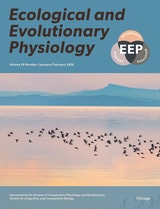
This is volume 98 issue 6 of Ecological and Evolutionary Physiology. Ecological and Evolutionary Physiology primarily publishes original research in physiological ecology, ecophysiology, comparative physiology, and evolutionary physiology. Studies at all levels of biological organization from the molecular to the whole organism are welcome, and work that integrates across levels of organization is particularly encouraged. Studies that focus on behavior or morphology are welcome, so long as they include ties to physiology or biochemistry, in addition to having an ecological or evolutionary context. Subdisciplines of interest include nutrition and digestion, salt and water balance, epithelial and membrane transport, gas exchange and transport, acid-base balance, temperature adaptation, energetics, structure and function of macromolecules, chemical coordination and signal transduction, nitrogen metabolism and excretion, locomotion and muscle function, biomechanics, circulation, behavioral, comparative and mechanistic endocrinology, sensory physiology, neural coordination, and ecotoxicology ecoimmunology.
[more]
cover of Ecological and Evolutionary Physiology, volume 99 number 1 (January/February 2026)

Ecological and Evolutionary Physiology, volume 99 number 1 (January/February 2026)

The University of Chicago Press

University of Chicago Press Journals, 2026

This is volume 99 issue 1 of Ecological and Evolutionary Physiology. Ecological and Evolutionary Physiology primarily publishes original research in physiological ecology, ecophysiology, comparative physiology, and evolutionary physiology. Studies at all levels of biological organization from the molecular to the whole organism are welcome, and work that integrates across levels of organization is particularly encouraged. Studies that focus on behavior or morphology are welcome, so long as they include ties to physiology or biochemistry, in addition to having an ecological or evolutionary context. Subdisciplines of interest include nutrition and digestion, salt and water balance, epithelial and membrane transport, gas exchange and transport, acid-base balance, temperature adaptation, energetics, structure and function of macromolecules, chemical coordination and signal transduction, nitrogen metabolism and excretion, locomotion and muscle function, biomechanics, circulation, behavioral, comparative and mechanistic endocrinology, sensory physiology, neural coordination, and ecotoxicology ecoimmunology.
[more]
cover of Ecological and Evolutionary Physiology, volume 99 number 2 (March/April 2026)

Ecological and Evolutionary Physiology, volume 99 number 2 (March/April 2026)

The University of Chicago Press

University of Chicago Press Journals, 2026
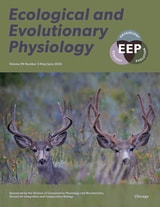
This is volume 99 issue 2 of Ecological and Evolutionary Physiology. Ecological and Evolutionary Physiology primarily publishes original research in physiological ecology, ecophysiology, comparative physiology, and evolutionary physiology. Studies at all levels of biological organization from the molecular to the whole organism are welcome, and work that integrates across levels of organization is particularly encouraged. Studies that focus on behavior or morphology are welcome, so long as they include ties to physiology or biochemistry, in addition to having an ecological or evolutionary context. Subdisciplines of interest include nutrition and digestion, salt and water balance, epithelial and membrane transport, gas exchange and transport, acid-base balance, temperature adaptation, energetics, structure and function of macromolecules, chemical coordination and signal transduction, nitrogen metabolism and excretion, locomotion and muscle function, biomechanics, circulation, behavioral, comparative and mechanistic endocrinology, sensory physiology, neural coordination, and ecotoxicology ecoimmunology.
[more]
cover of Ecological and Evolutionary Physiology, volume 99 number 3 (May/June 2026)

Ecological and Evolutionary Physiology, volume 99 number 3 (May/June 2026)

The University of Chicago Press

University of Chicago Press Journals, 2026
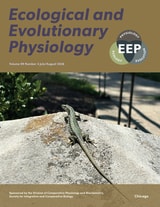
This is volume 99 issue 3 of Ecological and Evolutionary Physiology. Ecological and Evolutionary Physiology primarily publishes original research in physiological ecology, ecophysiology, comparative physiology, and evolutionary physiology. Studies at all levels of biological organization from the molecular to the whole organism are welcome, and work that integrates across levels of organization is particularly encouraged. Studies that focus on behavior or morphology are welcome, so long as they include ties to physiology or biochemistry, in addition to having an ecological or evolutionary context. Subdisciplines of interest include nutrition and digestion, salt and water balance, epithelial and membrane transport, gas exchange and transport, acid-base balance, temperature adaptation, energetics, structure and function of macromolecules, chemical coordination and signal transduction, nitrogen metabolism and excretion, locomotion and muscle function, biomechanics, circulation, behavioral, comparative and mechanistic endocrinology, sensory physiology, neural coordination, and ecotoxicology ecoimmunology.
[more]
cover of Ecological and Evolutionary Physiology, volume 99 number 4 (July/August 2026)

Ecological and Evolutionary Physiology, volume 99 number 4 (July/August 2026)

The University of Chicago Press

University of Chicago Press Journals, 2026
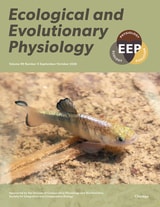
This is volume 99 issue 4 of Ecological and Evolutionary Physiology. Ecological and Evolutionary Physiology primarily publishes original research in physiological ecology, ecophysiology, comparative physiology, and evolutionary physiology. Studies at all levels of biological organization from the molecular to the whole organism are welcome, and work that integrates across levels of organization is particularly encouraged. Studies that focus on behavior or morphology are welcome, so long as they include ties to physiology or biochemistry, in addition to having an ecological or evolutionary context. Subdisciplines of interest include nutrition and digestion, salt and water balance, epithelial and membrane transport, gas exchange and transport, acid-base balance, temperature adaptation, energetics, structure and function of macromolecules, chemical coordination and signal transduction, nitrogen metabolism and excretion, locomotion and muscle function, biomechanics, circulation, behavioral, comparative and mechanistic endocrinology, sensory physiology, neural coordination, and ecotoxicology ecoimmunology.
[more]
cover of Ecological and Evolutionary Physiology, volume 99 number 5 (September/October 2026)

Ecological and Evolutionary Physiology, volume 99 number 5 (September/October 2026)

The University of Chicago Press

University of Chicago Press Journals, 2026
This is volume 99 issue 5 of Ecological and Evolutionary Physiology. Ecological and Evolutionary Physiology primarily publishes original research in physiological ecology, ecophysiology, comparative physiology, and evolutionary physiology. Studies at all levels of biological organization from the molecular to the whole organism are welcome, and work that integrates across levels of organization is particularly encouraged. Studies that focus on behavior or morphology are welcome, so long as they include ties to physiology or biochemistry, in addition to having an ecological or evolutionary context. Subdisciplines of interest include nutrition and digestion, salt and water balance, epithelial and membrane transport, gas exchange and transport, acid-base balance, temperature adaptation, energetics, structure and function of macromolecules, chemical coordination and signal transduction, nitrogen metabolism and excretion, locomotion and muscle function, biomechanics, circulation, behavioral, comparative and mechanistic endocrinology, sensory physiology, neural coordination, and ecotoxicology ecoimmunology.
[more]
cover of Ecologists and Environmental Politics: A History of Contemporary Ecology

Ecologists and Environmental Politics

A History of Contemporary Ecology

Stephen Bocking

West Virginia University Press, 2017

Ecologists, like other scientists, have for decades debated their role in society. While some have argued that ecologists should participate in environmental politics, others have focused their attention strictly on scientific issues. In Ecologists and Environmental Politics, now updated with a new preface by the author, Stephen Bocking explores this debate by recounting the history of ecology in Great Britain, the United States, and Canada since the 1940s.
Bocking tells this history through four case studies: the origins and early research of the Nature Conservancy in Great Britain; the development of ecology at the Oak Ridge National Laboratory in Tennessee; the work of the Hubbard Brook Ecosystem Study in New Hampshire; and research in fisheries ecology at the University of Toronto. By comparing these case studies, Bocking demonstrates how the places of contemporary science—laboratories, landscapes, and funding agencies—and science’s purposes, as expressed through the political roles of expertise and specific managerial and regulatory responsibilities, have shaped contemporary ecology and its application to pressing environmental problems.
 
[more]
cover of Ecology and Conservation of the San Pedro River

Ecology and Conservation of the San Pedro River

Edited by Juliet C. Stromberg and Barbara Tellman

University of Arizona Press, 2009

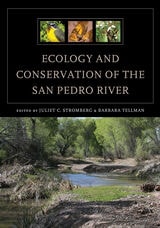
One of the last undammed perennial rivers in the desert Southwest, the San Pedro River in southeastern Arizona illustrates important processes common to many desert riparian ecosystems. Although historic land uses and climatic extremes have led to aquifer depletion, river entrenchment, and other changes, the river still sustains a rich and varied selection of life. Resilient to many factors, portions of the San Pedro have become increasingly threatened by groundwater pumping and other impacts of population growth.

This book provides an extensive knowledge base on all aspects of the San Pedro, from flora and fauna to hydrology and human use to preservation. It describes the ecological patterns and processes of this aridland river and explores both the ongoing science-driven efforts by nonprofit groups and government agencies to sustain and restore its riparian ecosystems and the science that supports these management decisions.

An interdisciplinary team of fifty-seven contributors—biologists, ecologists, geomorphologists, historians, hydrologists, lawyers, political scientists—weave together threads from their diverse perspectives to reveal the processes that shape the past, present, and future of the San Pedro’s riparian and aquatic ecosystems. They review the biological communities of the San Pedro and the stream hydrology and geomorphology that affect its riparian biota. They then look at conservation and management challenges along three sections of the San Pedro, from its headwaters in Mexico to its confluence with the Gila River, describing legal and policy issues and their interface with science; activities related to mitigation, conservation, and restoration; and a prognosis of the potential for sustaining the basin’s riparian system.

These chapters demonstrate the complexity of the San Pedro’s ecological and hydrological conditions, showing that there are no easy answers to the problems—and that existing laws are inadequate to fully address them. Collectively, they offer students, professionals, and environmental advocates a better grasp of the San Pedro’s status as well as important lessons for restoring physical processes and biotic communities to rivers in arid and semiarid regions.
[more]
cover of Ecology and Evolution in the Tropics: A Herpetological Perspective

Ecology and Evolution in the Tropics

A Herpetological Perspective

Edited by Maureen A. Donnelly, Brian I. Crother, Craig Guyer, Marvalee H. Wake,

University of Chicago Press, 2005
In these essays that survey the burgeoning field of tropical herpetology, former students and associates pay tribute to Jay Savage's four decades of mentoring. The result is a book unlike any other available in tropical herpetology. Covering a wide array of subjects, Ecology and Evolution in the Tropics is the first book in more than two decades to broadly review research on tropical amphibians and reptiles. A tribute to Savage and an invaluable addition to the herpetological literature, this work will be cited for years to come.
[more]
cover of Ecology and Evolution of Poeciliid Fishes

Ecology and Evolution of Poeciliid Fishes

Edited by Jonathan P. Evans, Andrea Pilastro, and Ingo Schlupp

University of Chicago Press, 2011

The history of biology is populated by numerous model species or organisms. But few vertebrate groups have aided evolutionary and ecological research more than the live-bearing fishes of the family Poeciliidae. Found throughout tropical and subtropical waters, poeciliids exhibit a fascinating variety of reproductive specializations, including viviparity, matrotrophy, unisexual reproduction, and alternative mating strategies, making them ideal models for research on patterns and processes in ecology, behavior, and evolution.


Ecology and Evolution of Poeciliid Fishes
is a much-needed overview of the scientific potential and understanding of these live-bearing fishes. Chapters by leading researchers take up a wide range of topics, including the evolution of unisexual reproduction, life in extreme environments, life-history evolution, and genetics. Designed to provide a single and highly approachable reference, Ecology and Evolution of Poeciliid Fishes will appeal to students and specialists interested in all aspects of evolutionary ecology.
[more]
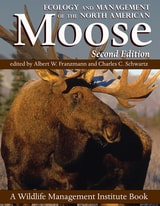
cover of Ecology and Management of the North American Moose, Second Edition

Ecology and Management of the North American Moose, Second Edition

Charles C. Schwartz

University Press of Colorado, 2007

Back in print as a University Press of Colorado edition, this abundantly illustrated volume with field sketch illustrations by William D. Berry fully explains moose biology and ecology and assesses the increasingly complex enterprise of managing moose. Twenty-one of the world's authorities on the species discuss its taxonomy, reproduction and growth, feeding habits, behavior, population dynamics, relationships with predators, incidental mortality, seasonal migration patterns, and habitat and harvest management.

Contributors include Warren B. Ballard, Arnold H. Boer, Anthony B. Bubenik, M. E. Buss, Kenneth N. Child, Vincent F.J. Crichton, Albert W. Franzmann, Kris J. Hundertmark, Patrick D. Karns, Murray W. Lankester, Richard E. McCabe, James M. Peek, Henry M. Reeves, Wayne L. Regelin, Lyle A. Renecker, William M. Samuel, Charles C. Schwartz, Robert W. Stewart, Ian D. Thompson, H. R. Timmermann, and Victor Van Ballenberghe. A Wildlife Management Institute book
[more]
cover of Ecology and the Environment: The Mechanisms, Marrings, and Maintenance of Nature

Ecology and the Environment

The Mechanisms, Marrings, and Maintenance of Nature

R. J. Berry

Templeton Press, 2011

Ecology and the Environment: The Mechanisms, Marring, and Maintenance of Nature is the ninth title published in the Templeton Science and Religion Series, in which scientists from a wide range of fields distill their experience and knowledge into brief tours of their respective specialties. In this volume, R. J. Berry, a well-known leader in the field of ecology, describes the basic concepts of ecology and seeks to put them into a general context for a reader who lacks any scientific background.
Berry explores the implications of these basic concepts and how they affect human life and the decisions we have to make, both as individuals and as members of a species that has colonized and influenced every part of the globe. He points out that we are a part of the animal world, but at the same time, we are apart from it, and he makes it clear that how we relate to our environment affects the quality of our life—indeed, it may affect our very survival. Going beyond a simple introduction of concepts, the book explores wider questions about the nature of humanity and how human ecology relates to humanness. Berry proposes that we are more than machines or even advanced apes—we are Homo divinus, transformed from an organism descended from the same stock as the apes but qualitatively different and able to relate to a creator God. The book argues that those who conclude otherwise are neglecting relevant data.
 
Berry offers the perfect introduction to these philosophical and theological issues, but his work never loses sight of the practical issues either—the kind that is increasingly being addressed by national and international environmental agencies. In order to grasp the full scope of these issues and to more fully understand the ubiquitous news headlines concerning environmental matters, a reader would do well to start with Ecology and the Environment.
[more]
cover of Ecology of Sonoran Desert Plants and Plant Communities

Ecology of Sonoran Desert Plants and Plant Communities

Edited by Robert H. Robichaux

University of Arizona Press, 1999

The Sonoran Desert is a distinctive biotic region that fascinates scientist, students, and nature lovers. This book offers an accessible introduction to Sonoran Desert ecology. Eight original essays by Sonoran Desert specialists such as Paul Martin and Richard Felger provide an overview of the practice of ecology at landscape, community, and organismal scales.

The essays explore the rich diversity of plant life in the Sonoran Desert and the ecological patterns and processes that underlie it. They also reveal the history and scientific legacy of the Desert Laboratory in Tucson, which has conducted research on the Sonoran Desert since 1903. Coverage includes diversity and affinities of the flora, physical environments and vegetation, landscape complexity and ecological diversity, population dynamics of annual plants, form and function of cacti, and the relationship between plants and the animals that use them as feeding and breeding resources. The text also examines the ecological consequences of modern agricultural development, as well as the impact on the modern biota of 40,000 years of change in climate, vegetation, megafauna, and ancient cultures.

This comprehensive book covers a broad range of spatial and temporal scales to highlight the diversity of research being pursued in the Sonoran Desert. It is both a testament to these ongoing studies and an authoritative introduction to the diverse plant life in the region.
 
Contents

1. Diversity and Affinities of the Flora of the Sonoran Floristic Province, Steven P. McLaughlin and Janice E. Bowers
2. Vegetation and Habitat Diversity at the Southern Edge of the Sonoran Desert, Alberto Bórquez, Angelina Martínez Yrízar, Richard S. Felger, and David Yetman
3. The Sonoran Desert: Landscape Complexity and Ecological Diversity, Joseph R. McAuliffe
4. Population Ecology of Sonoran Desert Annual Plants, D. Lawrence Venable and Catherine E. Pake
5. Form and Function of Cacti, Park S. Nobel and Michael E. Loik
6. Ecological Genetics of Cactophilic Drosophila, William J. Etges, W. R. Johnson, G. A. Duncan, G. Huckins, and W. B. Heed
7. Ecological Consequences of Agricultural Development in a Sonoran Desert Valley, Laura L. Jackson and Patricia W. Comus
8. Deep History and a Wilder West, Paul S. Martin

[more]
cover of Ecology of the Bay of Quinte: Health, Management and Global Implications

Ecology of the Bay of Quinte

Health, Management and Global Implications

C.K. Minns

Michigan State University Press, 2022
Project Quinte was a Canadian multi-agency collaborative initiative—launched in 1972 and lasting until 2018—that generated the longest ecosystem-based data set in the Great Lakes. The project produced a special bulletin of the Canadian Journal of Fisheries Science in 1986 and two special issues of Aquatic Ecosystem Health & Management more recently. This monograph provides a broad sweep of the many facets of aquatic ecosystem structure and function that were explored in efforts to define and solve the challenges to ecosystem health present in the Bay of Quinte ecosystem and to sustain it hopefully far into the future. Many papers provide a long-term perspective that highlights the need to maintain monitoring programs while increasing our basic knowledge. Long-term studies of ecosystems like Quinte continually reveal new questions and challenges beyond the scope of controlled laboratory experiments. The health of the Bay of Quinte is much improved as a result of the long-term participation of people, time, and resources reflected in this book. The monograph through its twenty-six in-depth chapters opens a wide panorama for exploration and application of the ecosystem approach and the resulting productivity, with much remaining to be done by those that follow in these footsteps. Approximately one hundred scientists have collectively participated toward the preparation of various chapters included in this meticulously peer-reviewed monograph.
[more]
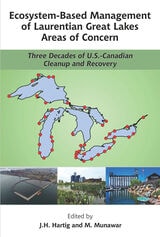
cover of Ecosystem-Based Management of Laurentian Great Lakes Areas of Concern: Three Decades of U.S. - Canadian Cleanup and Recovery

Ecosystem-Based Management of Laurentian Great Lakes Areas of Concern

Three Decades of U.S. - Canadian Cleanup and Recovery

John H. Hartig

Michigan State University Press, 2021
This installment of the Ecovision World Monograph Series provides an in-depth look at the remediation and restoration of the forty-three most polluted areas of the Great Lakes, which are designated Areas of Concern (AOCs). This restoration effort, a collaboration between Canada and the United States, is unique in that it has fostered the use of locally designed ecosystem approaches to restoring impaired beneficial uses, as called for in the Canada-U.S. Great Lakes Water Quality Agreement. In total, thirty-seven Canadian and U.S. scientists contributed to this comprehensive evaluation of what has been achieved and learned from more than three decades of remediation and restoration efforts. This monograph will be an excellent resource to researchers, resource managers, university faculty, and students in the Great Lakes Basin Ecosystem, as well as for those interested in restoring degraded aquatic ecosystems throughout the world. No other monograph or text book provides such a comprehensive evaluation of AOCs. A foreword is provided by Dr. Diane Saxe, former Environmental Commissioner of Ontario. Leading primary contributors include J. Hartig, M. Munawar, L. Richman, S. Pickard, M. Tuchman, R. Stewart, J. Ridgeway, R. Sherman, N. French, K. Williams, G. Krantzberg, and C. McLaughlin.
[more]
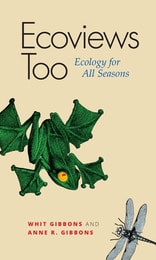
cover of Ecoviews Too: Ecology for All Seasons

Ecoviews Too

Ecology for All Seasons

Whit Gibbons and Anne R. Gibbons

University of Alabama Press, 2017

Discover the wonders of ecology through the changing seasons of the natural world.

Whit Gibbons and Anne R. Gibbons’s Ecoviews Too: Ecology for All Seasons is based on the popular weekly column “Ecoviews,” published by numerous newspapers for more than thirty years. A follow-up to Ecoviews: Snakes, Snails and Environmental Tales, this lively and entertaining book provides a fascinating and thought-provoking look at the ecology of animals, plants, and their habitats, and promotes awareness of pressing environmental issues.

Because nature, in all its myriad and amazing manifestations, can be enjoyed all year round, this collection is conveniently divided into four sections paralleling the seasons and tracking the adaptations and responses of wildlife to the relentless changes that occur at any location over time. The ecological vignettes focus on seasonal happenings in the cycle of life. The authors not only draw parallels between the natural world and human activities but also highlight unique behaviors of various plant and animal species. They often use humor to get across their message regarding the need to protect our native species and the habitats they depend on for survival.

An intriguing and captivating publication, Ecoviews Too is comprised of fifty informative essays that address ecological topics such as camouflage and mimicry, hibernation and estivation, the human need to encounter scary animals, the mysteries of plant dormancy in winter, the comeback of the wild turkey coinciding with the decline of bobwhites, the chemistry behind the color change in fall leaves, and the top ten environmental problems facing the world today. Educating, entertaining, and delighting a general audience, especially those with an interest in nature, Ecoviews Too provides a useful resource for students and scientists alike.

[more]
cover of Edge Effects: Notes From An Oregon Forest

Edge Effects

Notes From An Oregon Forest

Chris Anderson

University of Iowa Press, 1993
Buying his dream house several years ago on the forest's edge near Corvallis, Oregon, essayist Chris Anderson hoped to find the joys of rural living. Despite interminable Mr. Blandings experiences, he lived embowered by 12,000 acres of seemingly endless fir trees. But not for long. The McDonald-Dunn Forest was about to become the site of a disturbing research project. Little did Anderson know when he bought his house that, in addition to studying the ecological effects of clear-cutting, the researchers wanted to see how urban fringe dwellers might be affected too. The shock of that harvest compelled the essays in this vibrant, graceful record of the relationship between the forest and Anderson's life on its boundary.
[more]
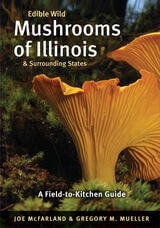
cover of Edible Wild Mushrooms of Illinois and Surrounding States: A Field-to-Kitchen Guide

Edible Wild Mushrooms of Illinois and Surrounding States

A Field-to-Kitchen Guide

Joe McFarland and Gregory M. Mueller

University of Illinois Press, 2008

[more]
cover of Edible Wild Mushrooms of Illinois and Surrounding States: A Field-to-Kitchen Guide, Second Edition

Edible Wild Mushrooms of Illinois and Surrounding States

A Field-to-Kitchen Guide, Second Edition

Joe McFarland, Gregory M. Mueller, Michael Kuo, and Patrick R. Leacock

University of Illinois Press, 2027

Fully revised and up to date, the latest edition of the popular nature guide offers amateur mycologists and mushroom-curious chefs a comprehensive reference that encourages anyone to successfully forage for and cook with wild mushrooms. The editors steer newcomers and old hands alike to species in Illinois, Iowa, Wisconsin, Missouri, Indiana, and Kentucky. Features include:

* Fifty-two entries packed with information on edible species;
* Almost 400 color photographs;
* Tips on where and when to look for mushrooms, how to pick them, and identification and note-taking;
* Photographs of lookalikes for safely identifying and avoiding poisonous species;
* An extensive new section on truffles;
* Advice on preparing, storing, drying, and cooking with wild mushrooms, plus an expanded recipe section that invites cooks to serve up wild turkey and morels, toss an oyster mushroom salad, and add mushroom powder to everything.

Reader friendly and detailed, the second edition of Edible Wild Mushrooms of Illinois and Surrounding States is an invaluable morels-to-puffballs resource for Midwestern mushroom hunters.
[more]
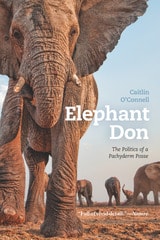
cover of Elephant Don: The Politics of a Pachyderm Posse

Elephant Don

The Politics of a Pachyderm Posse

Caitlin O'Connell

University of Chicago Press, 2015

Meet Greg. He’s a stocky guy with an outsized swagger. He’s been the intimidating yet sociable don of his posse of friends—including Abe, Keith, Mike, Kevin, Torn Trunk, and Willie. But one arid summer the tide begins to shift and the third-ranking Kevin starts to get ambitious, seeking a higher position within this social club. But this is no ordinary tale of gangland betrayal—Greg and his entourage are bull elephants in Etosha National Park, Namibia, where, for the last twenty-three years, Caitlin O’Connell has been a keen observer of their complicated friendships.

In Elephant Don, O’Connell, one of the leading experts on elephant communication and social behavior, offers a rare inside look at the social world of African male elephants. Elephant Don tracks Greg and his group of bulls as O’Connell tries to understand the vicissitudes of male friendship, power struggles, and play. A frequently heart-wrenching portrayal of commitment, loyalty, and affection between individuals yearning for companionship, it vividly captures an incredible repertoire of elephant behavior and communication.  Greg, O’Connell shows, is sometimes a tyrant and other times a benevolent dictator as he attempts to hold onto his position at the top. Though Elephant Don is Greg’s story, it is also the story of O’Connell and the challenges and triumphs of field research in environs more hospitable to lions and snakes than scientists.

Readers will be drawn into dramatic tales of an elephant society at once exotic and surprisingly familiar, as O’Connell’s decades of close research reveal extraordinary discoveries about a male society not wholly unlike our own. Surely we’ve all known a Greg or two, and through this book we may come to know them in a whole new light.
[more]
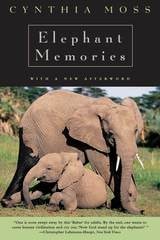
cover of Elephant Memories: Thirteen Years in the Life of an Elephant Family

Elephant Memories

Thirteen Years in the Life of an Elephant Family

Cynthia J. Moss

University of Chicago Press, 2000

An eye-opening account of the lives and relationships of elephants in the wild in Kenya

Cynthia Moss studied the elephants in Kenya's Amboseli National Park for decades, and her long-term research revealed much of what we now know about these complex and intelligent animals. In Elephant Memories she turns that knowledge in an accessible, engaging, even moving story of individual elephants and their complicated relationships. With Moss as our guide, we get to know a number of elephants who are in a family group that is led by matriarchs Teresia, Slit Ear, Torn Ear, Tania, and Tuskless. and we develop new understanding of what elephants do when allowed to live in the wild. An afterword offers a view of the the families from a few years later and addresses current conservation issues.
 
[more]
cover of Elton's Ecologists: A History of the Bureau of Animal Population

Elton's Ecologists

A History of the Bureau of Animal Population

Peter Crowcroft

University of Chicago Press, 1991

From its creation by Charles Elton in 1932 to its demise when he retired in 1967, the Bureau of Animal Population at Oxford was a mecca for ecologists from around the world. Crowcroft provides an anecdotal history of this small research institute that so strongly influenced the development of modern animal ecology.

"[This] is a very good account of the work and personal interactions of a group that played an important part in the development of animal ecology in the period 1930-60."—John Krebs, TREE
[more]
cover of Emergence of Life on Earth: A Historical and Scientific Overview

Emergence of Life on Earth

A Historical and Scientific Overview

Fry, Iris

Rutgers University Press, 2000

How did life emerge on Earth? Is there life on other worlds? These questions, until recently confined to the pages of speculative essays and tabloid headlines, are now the subject of legitimate scientific research. This book presents a unique perspective--a combined historical, scientific, and philosophical analysis, which does justice to the complex nature of the subject. The book's first part offers an overview of the main ideas on the origin of life as they developed from antiquity until the twentieth century. The second, more detailed part of the book examines contemporary theories and major debates within the origin-of-life scientific community.
Topics include:
  • Aristotle and the Greek atomists' conceptions of the organism
  • Alexander Oparin and J.B.S. Haldane's 1920s breakthrough papers
  • Possible life on Mars?
[more]
cover of Emergence of Life on Earth: A Historical and Scientific Overview

Emergence of Life on Earth

A Historical and Scientific Overview

Fry, Iris

Rutgers University Press, 2000

"Essential reading for people in disciplines ranging from philosophy to biology. It is simply the best general book that I know on the question of the origin of life."
--Michael Ruse, author of Mystery of Mysteries: Is Evolution a Social Construction?

"Fry has fashioned a masterful account of the history, philosophy, and science of the origin of life and the possibility of extraterrestrial life. Her story weaves profound Western ideas of who we are and where we came from, from Aristotle to Gould, from Kant to NASA."
--Woodruff Sullivan, University of Washington

"A rich source for the specialist and thought-provoking reading for the lay person."
--Gunter Wachtershauser, University of Regensburg, Germany

How did life emerge on Earth? Is there life on other worlds? These questions, until recently confined to the pages of speculative essays and tabloid headlines, are now the subject of legitimate scientific research. This book presents a unique perspective--a combined historical, scientific, and philosophical anaylsis, which does justice to the complex nature of the subject. The book's first part offers an overview of the main ideas on the origin of life as they developed from antiquity until the twentieth century. The second, more detailed part of the book examines contemporary theories and major debates within the origin-of-life scientific community.

Topics include:
- Aristotle and the Greek atomists' conceptions of the organism
- Alexander Oparin and J.B.S. Haldane's 1920s breakthrough papers
- Possible life on Mars?
[more]
cover of Emerging Threats to Tropical Forests

Emerging Threats to Tropical Forests

Edited by William F. Laurance and Carlos A. Peres

University of Chicago Press, 2006

Emerging Threats to Tropical Forests reveals the remarkably diverse panoply of perils to tropical forests and their biota, with particular emphasis on recent dangers. William F. Laurance and Carlos A. Peres identify four categories of emerging threats: those that have only recently appeared, such as the virulent chytrid fungus that is decimating rainforest amphibians throughout the tropical world; those that are growing rapidly in importance, like destructive surface fires; those that are poorly understood, namely global warming and other climatic and atmospheric changes; and environmental synergisms, whereby two or more simultaneous threats—such as habitat fragmentation and wildfires, or logging and hunting—can dramatically increase local extinction of tropical species. In addition to documenting the vulnerability of tropical rainforests, the volume focuses on strategies for mitigating and combating emerging threats. A timely and compelling book intended for researchers, students, and conservation practitioners, Emerging Threats to Tropical Forests will interest anyone concerned about the fate of the world’s most threatened tropical ecosystems.
[more]
cover of Engineering High Quality Medical Software: Regulations, standards, methodologies and tools for certification

Engineering High Quality Medical Software

Regulations, standards, methodologies and tools for certification

Antonio Coronato

The Institution of Engineering and Technology, 2018
No longer confined to medical devices, medical software has become a pervasive technology giving healthcare operators access to clinical information stored in electronic health records and clinical decision support systems, supporting robot-assisted telesurgery, and providing the technology behind ambient assisted living. These systems and software must be designed, built and maintained according to strict regulations and standards to ensure that they are safe, reliable and secure.
[more]
cover of Environmental Law for Biologists

Environmental Law for Biologists

Tristan Kimbrell

University of Chicago Press, 2016

Environmental law has an unquestionable effect on the species, ecosystems, and landscapes that biologists study—and vice-versa, as the research of these biologists frequently informs policy. But because many scientists receive little or no legal training, we know relatively little about the precise ways that laws affect biological systems—and, consequently, about how best to improve these laws and better protect our natural resources.

With Environmental Law for Biologists, ecologist and lawyer Tristan Kimbrell bridges this gap in legal knowledge. Complete with a concise introduction to environmental law and an appendix describing the most important federal and international statutes and treaties discussed, the book is divided into four broad parts: laws that focus on individual species, like invasive species policies, the Endangered Species Act, and international treaties such as CITES; laws that focus on land, from federal public lands to agricultural regulations and urban planning; laws that focus on water, such as the Clean Water Act; and laws that focus on air, such as the Clean Air Act and international measures meant to mitigate global climate change. Written for working biologists and students alike, this book will be a catalyst for both more effective policy and enhanced research, offering hope for the manifold frictions between science and the law.
[more]
cover of Environmental Safety of Genetically Engineered Crops

Environmental Safety of Genetically Engineered Crops

Rebecca Grumet

Michigan State University Press, 2010
Since the mid-1990s, when the technology was first introduced, the cultivation of genetically engineered (GE) crops has grown exponentially. In the U.S. alone, adoption rates for transgenic cotton, corn, and soybeans are between 70–90%. Across the globe, 14 million farmers grow GE crops in more than twenty countries. Yet many countries are discussing and debating the use and adoption of GE technology because of concerns about their impact on the environment and human health. Now, in this comprehensive handbook, a team of international experts present the scientific basis for GE crops, placing them in the context of current agricultural systems, and examining the potential environmental risks posed by their deployment. An integrated approach to an increasingly hot and globally debated topic, the book considers the past, present, and future of GE crops, and offers an invaluable perspective for regulation and policy development.
[more]
cover of Environmental Studies of a Marine Ecosystem: South Texas Outer Continental Shelf

Environmental Studies of a Marine Ecosystem

South Texas Outer Continental Shelf

Edited by R. Warren Flint and Nancy N. Rabalais

University of Texas Press, 1981

Environmental Studies of a Marine Ecosystem reports the temporal and spatial variation of both the living and nonliving resources of the south Texas outer continental shelf. As the last major study to have been conducted before the Ixtoc oil spill in 1979, it is of great importance as a record of the baseline conditions and ecosystem characteristics for both biologists and chemists studying the effects of the Campeche disaster on the marine environment. The book is the culmination of three years of field studies conducted for the Bureau of Land Management and contains information on the climatology, hydrology, and sedimentology of the region as well as data on the pelagic and benthic biota, environmental hydrocarbons and trace metals, and the microbiology of the area. In addition to the ecosystem description, the data are integrated to expose ecological relationships that exist and to identify those specific variables which are most important for the assessment and management of environmentally damaging impacts to the area.
[more]
cover of Envisioning Nature, Science, and Religion

Envisioning Nature, Science, and Religion

Jim Proctor

Templeton Press, 2009

Contemporary scholarship has given rise to several modes of understanding biophysical and human nature, each entangled with related notions of science and religion. Envisioning Nature, Science, and Religion represents the culmination of three years of collaboration by an international group of fourteen natural scientists, social scientists, humanists, and theologians. The result is an intellectually stimulating volume that explores how the ideas of nature pertain to science and religion.

Editor James D. Proctor has gathered sixteen in-depth essays, each examining and comparing five central metaphors or "visions" of biophysical and human nature. These visions are evolutionary nature, emergent nature, malleable nature, nature as sacred, and nature as culture. The book's diverse contributors offer a wide variety of unique perspectives on these five visions, spanning the intellectual spectrum and proposing important and often startling implications for religion and science alike. Throughout the essays, the authors do a great deal of cross-referencing and engaging each other's ideas, creating a cohesive dialogue on the visions of nature.

Envisioning Nature, Science, and Religion offers a blend of scholarly rigor and readable prose that will be appreciated by anyone engaged in the fields of religion, philosophy, and the natural sciences.
 

[more]
cover of Epigenetic Landscapes: Drawings as Metaphor

Epigenetic Landscapes

Drawings as Metaphor

Susan Merrill Squier

Duke University Press, 2017

Devised in the 1940s by the biologist C. H. Waddington, the epigenetic landscape is a metaphor for how gene regulation modulates cellular development. As a scientific model, it fell out of use in the late 1960s but returned at the beginning of the twenty-first century with the advent of big-data genomic research because of its utility among scientists across the life sciences to think more creatively about and to discuss genetics. In Epigenetic Landscapes Susan Merrill Squier follows the model’s cultural trail, from its first visualization by the artist John Piper to its use beyond science. Squier examines three cases in which the metaphor has been imaginatively deployed to illustrate complex systems that link scientific and cultural practices: graphic medicine, landscape architecture, and bioArt. Challenging reductive understandings of epigenetics, Squier boldly reclaims the broader significance of the epigenetic landscape as a figure at the nexus of art, design, and science.
[more]