Results by title
1787 books match the query 'Literary Collections' and 59 start with e
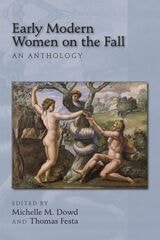
Early Modern Women on the Fall
An AnthologyMichelle M. Dowd
Arizona Center for Medieval and Renaissance Studies, 2012
Eating Lightbulbs and Other Essays
Steve Fellner
The Ohio State University Press, 2021
Echo's Fugue
Desirae Matherly
The Ohio State University Press, 2019
Through a series of variations on the theme of love—unrequited, polyamorous, monogomous, scandalous, adulterous—Desirae Matherly’s Echo’s Fugue explores love in all its failures and delusions. Patterned on the unfinished The Art of Fugue by Johann Sebastian Bach which has been a mystery for centuries, Echo’s Fugue undertakes Bach’s project in prose—the tantalizing numerical correspondences throughout, the repetition of a single theme, the unfinished final piece.
Matherly’s essays appear as letters, indexes, narrative, or sentence diagrams, each defying the rules of the blank page. Song lyrics, obsession, Greek mythology, psychology, game theory, and human sexuality form a fragmented narrative about loss and unhealthy attachments. Mimicry of Bach’s fugues leads the author to questions about love, sex, desire, the “Bach or Stravinsky” paradigm in game theory, and relationships considered taboo by mainstream standards.
What authority speaks clearest with regard to love, sex, and desire—and is objectivity even possible? The final essay attempts to resolve this question while echoing the puzzle of Bach’s final unfinished fugue.

Echoes of the Sunbird
An Anthology of Contemporary African PoetryDon Burness
Ohio University Press, 1993
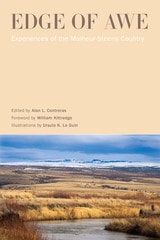
Edge of Awe
Experiences of the Malheur-Steens CountryAlan L. Contreras
Oregon State University Press, 2019
Edge of Awe celebrates the immense variety of human experience in the Malheur-Steens region. This high-desert marsh country has long been a place of human habitation, work, and recreation, but this compendium is weighted toward the writing of visitors over the past one hundred years. It encompasses a wide range of experiences, such as fishing the Blitzen River, attending the Steens Running Camp, leading a mule train on Steens mountain, looking for rare migrant birds, boating on the great marshes, and much more.
Anyone who has visited the awe-inspiring Malheur-Steens country or plans to do so, and anyone with an interest in the region, will find inspiration in this literary companion.
CONTRIBUTORS
Chas Biederman
Charles E. Bendire
Greg Bryant
Sean Burns
Alan L. Contreras
Harry Fuller
Ira N. Gabrielson
Quinton Hallett
Ada Hastings Hedges
David Hedges
Hendrik Herlyn
Meli Hull
William Kittredge
Ursula K. Le Guin
Maitreya
David B. Marshall
John F. Marshall
Tom McAllister
Thomas C. Meinzen
Peter Pearsall
Dallas Lore Sharp
William Stafford
Noah K. Strycker
Peter Walker
Ellen Waterston
C.E.S. Wood
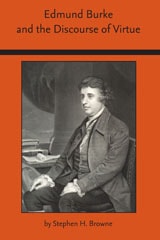
Edmund Burke and the Discourse of Virtue
Stephen Howard Browne
University of Alabama Press, 2007
"A major accomplishment in the study of Burke." —Choice
More than 200 years after his death, Edmund Burke remains among the most influential conservative writers in the Anglophone world. Burke’s relevance has only grown as the nature of what it means to be a conservative has become hotly contested.
And yet Burke is often discussed more than he is read. Worse, his rhetoric is often pressed into the service of other ideologies. In Edmund Burke and the Discourse of Virtue, Stephen Browne of Pennsylvania State University subjects Burke’s work to the close textual analysis it has never received.
The result of Browne's study is to present Burke and his work in a light that was clearly essential to Burke himself, one that illuminates the link between rhetoric and action that is key to understanding Burke, his career, his work, and his influence on contemporary conservatism.
Readers interested in the development of conversative philosophy, politics, and writing from its earliest roots will value this rare and illuminating work.
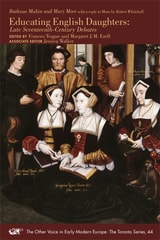
Educating English Daughters
Late Seventeenth-Century DebatesBathsua Makin and Mary More
Iter Press, 2016
This edition offers texts from Bathsua Makin and Mary More, and Robert Whitehall’s response to More’s argument. Makin describes the appropriate education for London merchants’ daughters, arguing that girls should be educated and should aspire to follow learned women in history, and that educated women improve their families and themselves. More argues that women have the right to an education, and that such an education shows that the inequality of married women under English law is a man-made institution. More’s argument drew objections from her Oxford reader, Robert Whitehall, who preserved her manuscript with his own. Makin and More enjoyed a measure of public recognition and esteem, yet after their deaths, they and their texts were largely ignored until the late twentieth century.
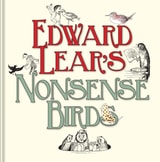
Edward Lear's Nonsense Birds
Edward Lear
Bodleian Library Publishing, 2013
Edward Lear’s Nonsense Birds collects more than sixty of Lear’s bird illustrations from across his entire body of work. Often, the birds have hilariously human characteristics. There is, for instance, a Good-Natured Grey Gull, a Hasty Hen, and a Querulous Quail. The Judicious Jay is chiefly concerned with good grooming. The Vicious Vulture, meanwhile, turns out to be a wordsmith whose verses on vellum celebrate veal. Each bird is endowed with a unique personality, while collectively they form a wonderfully amusing flock. Also included are a series of twenty-four hand-colored illustrations.
Bright and beautifully illustrated, this book will make a perfect gift for children of all ages and will also be welcomed by all who love Lear’s work or are interested in learning more about his fascination with birds.
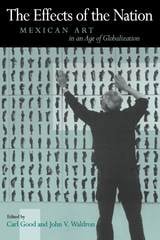
Effects Of The Nation
Mexican Art In Age Of Globalizationedited by Carl Good and John V. Waldron
Temple University Press, 2001
Mexico is a particularly apt focus, partly because of the vitality of its culture, partly because of its changing political identity, and partly because of the impact of borders and borderlessness on its national character. The ten essays collected here look at a wide range of aesthetic productions -- especially literature and the visual arts -- that give context to how art and society interact.
Steering a careful course between the nostalgia of nationalism and the insensitivity of globalism, these essays examine modernism and postmodernism in the Mexican setting. Individually, they explore the incorporation of historical icons, of vanguardism, and of international influence. From Diego Rivera to Elena Garro, from the Tlateloco massacre to the Chiapas rebellion, from mass-market fiction to the film Aliens, the contributors view the many sides of Mexican life as relevant to the creation of a constantly shifting national culture. Taken together, the essays look both backward and forward at the evolving effect of the Mexican nation.
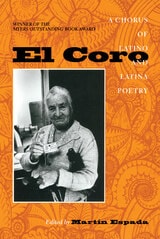
El Coro
A Chorus of Latino and Latina PoetryMartin Espada
University of Massachusetts Press, 1997
Here we find the open expression of anger and grief, self-mocking humor, the music of protest, the quiet assertion of dignity, and the raucous celebration of survival. There are poems about stoop labor and welfare offices and housing projects, but also poems about the Four Horsemen of the Apocalypse and the Minotaur.
Among the poets are former farm workers and gang members, a practicing physician, an ex-tenant lawyer, two professional chefs, and a Vietnam veteran. One poet was a political prisoner for six years; another staged a famous hunger strike; still another was indicted for her work with Central American refugees. In many ways this collection of poets comprises a chorus. Their song humanizes in the face of dehumanization.
El Q'anil
Man of LightningVictor Montejo
University of Arizona Press, 2001
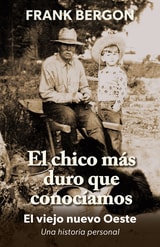
El chico más duro que conocimos
El viejo nuevo Oeste: Una historia personalFrank Bergon
University of Nevada Press, 2027
Del autor aclamado por la crítica Frank Bergon llega una nueva narración personal sobre el Valle de San Joaquín en California. Este libro que acompaña a Two-Buck Chuck & The Marlboro Man nos devuelve a un viejo Oeste que se funde con las realidades del nuevo Oeste, donde el cambio rápido es un rasgo común y los recuerdos son de belleza rural. A pesar de las transformaciones físicas provocadas por la tecnología y la modernidad en el siglo XXI, siguen existiendo elementos de una forma de pensar más antigua, y Bergon rastrea su presencia utilizando experiencias de su propia familia y amigos.
La camaradería comunitaria, el amor por la tierra y sus alimentos, y la alegría por el trabajo duro bien hecho describen las vidas occidentales ignoradas o mal representadas en la mayoría de las historias sobre California y el Oeste. Sin embargo, la nostalgia no impulsa el regreso intelectual de Frank Bergon a ese mundo. También prevalecía una cultura de la lucha, la ignorancia sobre la adicción al alcohol, el trabajo brutal, y una mentalidad feudal que creaba un dolor que era mejor perder y dar por perdido.
A través de todo ello, lo que emerge de sus retratos y ensayos es una revelación de la vida en los pueblos y ranchos rurales del Oeste. Un lugar en el que se acelera la forma americana de extirpar el pasado y alterar violentamente la tierra. Lo que Bergon ha escrito es el retrato de un pasado y unas gentes que dieron forma al país que él llamó hogar.
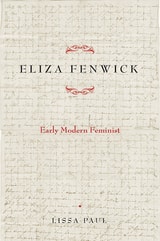
Eliza Fenwick
Early Modern FeministLissa Paul
University of Delaware Press, 2019
Lissa Paul brings to light Fenwick’s letters for the first time to reveal the relationships she developed with many key figures of her era, and to tell Fenwick’s story as depicted by the woman herself. Fenwick began as a writer in the radical London of the 1790s, a member of Mary Wollstonecraft’s circle, and when her marriage crumbled, she became a prolific author of children’s literature to support her family. Eventually Fenwick moved to Barbados, becoming the owner of a school while confronting the reality of slavery in the British colonies. She would go on to establish schools in numerous cities in the United States and Canada, all the while taking care of her daughter and grandchildren and maintaining her friendships through letters that, as presented here, tell the story of her life.
Published by the University of Delaware Press. Distributed worldwide by Rutgers University Press.
Elizabeth Manning Hawthorne
A Life in LettersElizabeth Manning Hawthorne
University of Alabama Press, 2006
An annotated selection of unpublished letters by Nathaniel Hawthorne's sister.
Retrieved from seven different libraries, this corpus of letters was preserved by the Manning family chiefly for their value as records of Nathaniel Hawthorne's life and work; but they ironically also illuminate the life and mind of a fascinating correspondent and citizen of New England with incisive views and commentaries on her contemporaries, her role as a woman writer, Boston and Salem literary culture, and family life in mid-19th-century America.
This book illuminates Elizabeth's early life; the trauma caused for sister and brother by the death of their father; her and her brother's education; and the tensions the two children experienced when they moved in with their mother's family, the welthier Mannings, instead of the poorer though socially more venerable Hawthornes, following their father's death. The letters portray Elizabeth's constrained relationship with Nathaniel's wife Sofia Peabody and counter Sophia's portrayal of her sister-in-law as a recluse, oddity, and “queer scribbler.”
These 118 letters also reveal Elizabeth Hawthorne's tremendous gifts as a thinker, correspondent, and essayist, her interest in astronomy, a lifelong drive toward self-edification in many fields, and her extraordinary relationship with Nathaniel. As a sibling and a fellow author, they were sometimes lovingly codependent and sometimes competitive. Finally, her writing reveals the larger worlds of politics, war, the literary landscape, class, family life, and the freedoms and constraints of a woman's role, all by a heretofore understudied figure.
Embalming Mom
Essays in LifeJanet Burroway
University of Iowa Press, 2004
Janet Burroway followed in the footsteps of Sylvia Plath. Like Plath, she was an earlyMademoiselle guest editor in New York, an Ivy League and Cambridge student, an aspiring poet-playwright-novelist in the period before feminism existed, a woman who struggled with her generation's conflicting demands of work and love. Unlike Plath, Janet Burroway survived.
In sixteen essays of wit, rage, and reconciliation, Embalming Mom chronicles loss and renaissance in a life that reaches from Florida to Arizona across to England and home again. Burroway brilliantly weaves her way through the dangers of daily life—divorcing her first husband, raising two boys, establishing a new life, scattering her mother's ashes and sorting the meager possessions of her father. Each new danger and challenge highlight the tenacious will of the body and spirit to heal.
“Ordinary life is more dangerous than war because nobody survives,” Burroway contemplates in the essay “Danger and Domesticity,” yet each of her meditations reminds us that it's our daily rituals and trials that truly keep us alive.
Embroidering the Scarlet A
Unwed Mothers and Illegitimate Children in American Fiction and FilmJanet Mason Ellerby
University of Michigan Press, 2015
Emergency
Reading the Popol Vuh in a Time of CrisisEdgar Garcia
University of Chicago Press, 2022
Written during the lockdown in Chicago in the depths of the COVID-19 pandemic, these essays consider the Popol Vuh as a work that was also written during a time of feverish social, political, and epidemiological crisis as Spanish missionaries and colonial military deepened their conquest of indigenous peoples and cultures in Mesoamerica. What separates the Popol Vuh from many other creation texts is the disposition of the gods engaged in creation. Whereas the book of Genesis is declarative in telling the story of the world’s creation, the Popol Vuh is interrogative and analytical: the gods, for example, question whether people actually need to be created, given the many perfect animals they have already placed on earth.
Emergency uses the historical emergency of the Popol Vuh to frame the ongoing emergencies of colonialism that have surfaced all too clearly in the global health crisis of COVID-19. In doing so, these essays reveal how the authors of the Popol Vuh—while implicated in deep social crisis—nonetheless insisted on transforming emergency into scenes of social, political, and intellectual emergence, translating crisis into creativity and world creation.
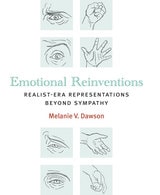
Emotional Reinventions
Realist-Era Representations Beyond SympathyMelanie V. Dawson
University of Michigan Press, 2015
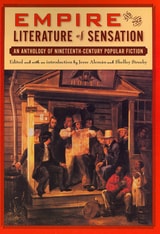
Empire and The Literature of Sensation
An Anthology of Nineteenth-Century Popular FictionAlemán, Jesse
Rutgers University Press, 2007
Most of the accounts, although widely distributed in nineteenth-century newspapers, pamphlets, or dime store novels, have long been out of print. Reprinted here for the first time are novelettes by two superstars of the cheap fiction industry, Ned Buntline and George Lippard. Also included are selections from one of the first dime novels as well as the narratives of Leonora Siddons and Sophia Delaplain, both who claim in their autobiographical pamphlets to have cross-dressed as men and participated in the Texas rebellion and Cuban filibustering.
Originally written for entertainment and enormously popular in their day, these sensational thrillers reveal for today's audiences how the rhetoric of empire was circulated for mass consumption and how imperialism generated domestic and cultural instability during the period of the American literary renaissance.
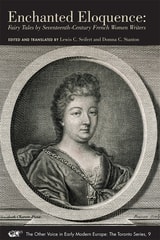
Enchanted Eloquence
Fairy Tales by Seventeenth–Century French Women WritersEdited and Translated by Lewis C. Seifert and Domna C. Stanton
Iter Press, 2010
—Jack Zipes
Professor of German, Emeritus, University of Minnesota
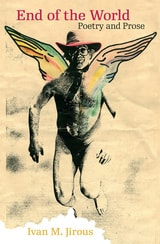
End of the World
Poetry and ProseIvan M. Jirous
Karolinum Press, 2020
End of the World is the first major collection in English of the works of this legendary Czech “madman.” Although nicknamed for his aggressive and rebellious behavior, Jirous’s writing reveal a refined, sophisticated, and even tender sensibility. Translated in part by Paul Wilson, an original member of the Plastic People, the book gathers his poems and letters from prison, as well as his book-length prose work, The True Story of the Plastic People, alongside critical essays on Jirous’s life and work. End of the World is an ideal introduction to the raucous writer who playwright Tom Stoppard referred to as one of the most interesting personalities in modern Czech history.
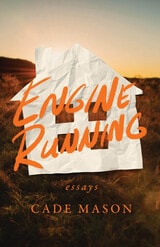
Engine Running
EssaysCade Mason
The Ohio State University Press, 2022
Engine Running explores debut author Cade Mason’s gradual distancing from home and old selves alongside an increasingly fractured family doing the same. Starting at the beginning of his parents’ love and working past its end, he combs through memory to piece together a portrait of a family then and now: of a father, reeling after a blindsiding divorce; of a mother, anxious to move on; of a sister, caught in the crossfire; and of a son, learning to embrace his sexuality even as he fears that his own loves may have deepened the rift between his parents.
Lush and innovative, these essays contemplate childhood memories and family secrets, religion and queerness in the rural South, and the ways rituals and contours of manhood are passed through generations. Most of all, we feel with Mason what it is to grapple with and love a place even as you yearn to leave.
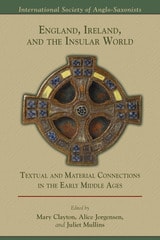
England, Ireland, and the Insular World
Textual and Material Connections in the Early Middle AgesMary Clayton
Arizona Center for Medieval and Renaissance Studies, 2017
ISAS Dublin 2013. England, Ireland and the Insular World: Textual and Material Connections in the Early Middle Ages is a collection of twelve essays related to the theme of the 2013 conference of the International Society of Anglo-Saxonists, ‘Insular Cultures’. Contributors cover a broad range of topics, from early medieval agriculture in Ireland and England, to sculpture, manuscript illumination and script, homilies, hagiography, aristocratic gift-giving, relics, calendars, Beowulf, and Anglo-Saxon perceptions of the Celtic peoples, considering connections, parallels and differences between Anglo-Saxon England and its insular neighbors. The volume will be of interest to all those working on Early Medieval history, literature, archaeology, liturgy, art, and manuscripts.
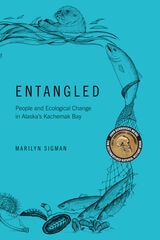
Entangled
People and Ecological Change in Alaska's Kachemak BayMarilyn Sigman
University of Alaska Press, 2018
Kachemak Bay is a place where people and the living resources they depend on have ebbed and flowed for thousands of years. The forces of the earth are dynamic here: they can change in an instant, shaking the ground beneath your feet or overturning kayaks in a rushing wave. Glaciers have advanced and receded over centuries. The climate, like the ocean, has shifted from warmer to colder and back again in a matter of decades. The ocean food web has been shuffled from bottom to top again and again.
In Entangled, Sigman contemplates the patterns of people staying and leaving, of settlement and displacement, nesting her own journey to Kachemak Bay within diasporas of her Jewish ancestors and of ancient peoples from Asia to the southern coast of Alaska. Along the way she weaves in scientific facts about the region as well as the stories told by Alaska’s indigenous peoples. It is a rhapsodic introduction to this stunning region and a siren call to protect the land’s natural resources in the face of a warming, changing world.
Entre Guadalupe y Malinche
Tejanas in Literature and ArtEdited by Inés Hernández-Ávila and Norma Elia Cantú
University of Texas Press, 2016
Mexican and Mexican American women have written about Texas and their lives in the state since colonial times. Edited by fellow Tejanas Inés Hernández-Ávila and Norma Elia Cantú, Entre Guadalupe y Malinche gathers, for the first time, a representative body of work about the lives and experiences of women who identify as Tejanas in both the literary and visual arts.
The writings of more than fifty authors and the artwork of eight artists manifest the nuanced complexity of what it means to be Tejana and how this identity offers alternative perspectives to contemporary notions of Chicana identity, community, and culture. Considering Texas-Mexican women and their identity formations, subjectivities, and location on the longest border between Mexico and any of the southwestern states acknowledges the profound influence that land and history have on a people and a community, and how Tejana creative traditions have been shaped by historical, geographical, cultural, linguistic, social, and political forces. This representation of Tejana arts and letters brings together the work of rising stars along with well-known figures such as writers Gloria Anzaldúa, Emma Pérez, Alicia Gaspar de Alba, Carmen Tafolla, and Pat Mora, and artists such as Carmen Lomas Garza, Kathy Vargas, Santa Barraza, and more. The collection attests to the rooted presence of the original indigenous peoples of the land now known as Tejas, as well as a strong Chicana/Mexicana feminism that has its precursors in Tejana history itself.
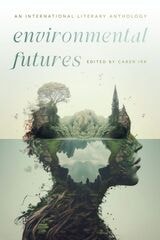
Environmental Futures
An International Literary AnthologyEdited by Caren Irr, et al.
Brandeis University Press, 2024
Featuring short stories, poetry, drama, and creative nonfiction from around the world, this anthology showcases contemporary literature to envision the future of the environment. While environmental literature written in English has been dominated by English and American men who make solo explorations into an unspoiled natural world, Environmental Futures emphasizes local and indigenous writers contending with global landscapes that are far from pristine. Their work opens up decolonial perspectives from Anglophone Africa, South Asia, India, China, South America, the peripheries of Europe, and BIPoC North America. Introducing many writers who will be unfamiliar to English-speaking readers, this collection explores resistance to the oil economy, the impact of storms and natural disasters, extinction, and relations between humans and animals, among other themes.
The pieces are organized by geographical area in five sections: Africa, Asia, Europe, Latin America, and North America. Expert scholars and translators—Kurt Cavender, Roberto Forns-Broggi, Cajetan Iheka, Upamanyu (Pablo) Mukherjee, Irina Sadovina, and Shaobo Xie—selected the works and provided critical introductions for each section.
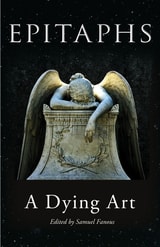
Epitaphs
A Dying ArtEdited by Samuel Fanous
Bodleian Library Publishing, 2016
Epitaphs brings together more than 250 epitaphs from cemeteries, churchyards, monuments, and historical records. Some announce the cause of death with a surprisingly macabre sense of humor: “Here lies John Ross. Kicked by a hoss.” Others wryly remind readers of their own impending mortality, such as a tombstone whose rhyming inscription reads “As I am now you will surely be. / Prepare thyself to follow me.” In death as in life, many of the most famous writers were not at a loss for words. Emily Dickinson’s concise wit is evident in her headstone’s inscription “Called Back.” Yeats encouraged the horsemen of the apocalypse to “pass by.” Shakespeare’s funerary monument at Stratford-upon-Avon carries the warning “Curst be he that moves my bones,” an inscription many believe the Bard himself wrote to prevent his corpse from being exhumed in the name of research, a common practice at the time.
As tribute to a form of expression that is very much alive, Epitaphs collects some of the most intriguing examples, many of which perfectly encapsulate the person buried beneath them.
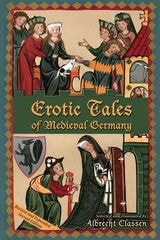
Erotic Tales of Medieval Germany
Translated by Albrecht Classen
Arizona Center for Medieval and Renaissance Studies, 2007
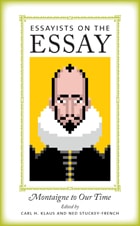
Essayists on the Essay
Montaigne to Our TimeCarl H. Klaus and Ned Stuckey-French
University of Iowa Press, 2012
The first historically and internationally comprehensive collection of its kind, Essayists on the Essay is a path-breaking work that is nothing less than a richly varied sourcebook for anyone interested in the theory, practice, and art of the essay. This unique work includes a selection of fifty distinctive pieces by American, Canadian, English, European, and South American essayists from Montaigne to the present—many of which have not previously been anthologized or translated—as well as a detailed bibliographical and thematic guide to hundreds of additional works about the essay.
From a buoyant introduction that provides a sweeping historical and analytic overview of essayists’ thinking about their genre—a collective poetics of the essay—to the detailed headnotes offering pointed information about both the essayists themselves and the anthologized selections, to the richly detailed bibliographic sections, Essayists on the Essay is essential to anyone who cares about the form.
This collection provides teachers, scholars, essayists, and readers with the materials they need to take a fresh look at this important but often overlooked form that has for too long been relegated to the role of service genre—used primarily to write about other more “literary” genres or to teach young people how to write. Here, in a single celebratory volume, are four centuries of commentary and theory reminding us of the essay’s storied history, its international appeal, and its relationship not just with poetry and fiction but also with radio, film, video, and new media.
Essays in French Colonial History
Proceedings of the 21st Annual Meeting of the French Colonial Historical SocietyA.J.B. Johnston
Michigan State University Press, 1997
On 31 May - 3 June 1995, more than 200 participants gathered in Sydney and at Fortress Louisbourg, Nova Scotia, for the 21st annual conference of the French Colonial Historical Society. Essays in French Colonial History contains seventeen of the best articles presented at this meeting. It is a wide-ranging collection that explores many new and innovative facets of the French experience outre mer. The contributors, a mix of established experts and younger scholars, examine French activity in North America, the West Indies, Africa, and South America and focus on issues military, social, cultural, native, and political history.
Among the subject areas explored are: the 16th century French colonies in Brazil and Florida; Victor Hugues and the Reign of Terror on Guadeloupe; commerce and the distinctiveness of Louisbourg; the importance of letter-writing and compagnonnage; unresolved territory of the Creek Nation; case studies in the area of transition patrimonial; French colonial interests and policies in Atlantic Canada, Africa, and South America; attitudes among African Americans in post-French St. Louis; and a research report on the Historical Atlas of Quebec.
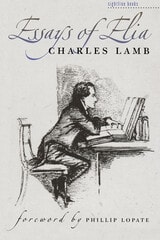
Essays of Elia
Charles Lamb
University of Iowa Press, 2003
Charles Lamb, one of the most engaging personal essayists of all time, began publishing his unforgettable, entertaining Elia essays in the London Magazine in 1820; they were so immediately popular that a book-length collection was published in 1823. Inventing the persona of “Elia” allowed Lamb to be shockingly honest and to gain a playful distance for self-examination. The resulting essays touch upon a wide range of compelling subjects from the deliciously humorous “Dissertation upon Roast Pig” to the poignantly reflective “New Year's Eve.” Yet collectively they also comprise a fascinating personal memoir, veiled under the pseudonymous disguise of Elia. Now back in print with a new foreword by the distinguished personal essayist Phillip Lopate and with useful annotations, Essays of Elia will provide a delicious stylistic treat for all readers.
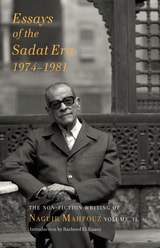
Essays of the Sadat Era
The Non-Fiction of Naguib Mahfouz: Volume IINaguib Mahfouz
Gingko, 2025
In these essays of the Sadat era, published in the state-owned Al-Ahram newspaper, Mahfouz seems an unreliable narrator. The tension between an author who rails against censorship, yet is bound within its confines, runs through this fascinating body of nonfiction writing. Nonetheless, Mahfouz’s own thoughts are unmistakably present. We gain his insight into diverse political topics, such as socioeconomic class, democracy and dictatorship, and Islam and extremism, topics which still seem highly pertinent to the situation in Egypt today.
A vital accompaniment to his literature, this collected work is contemporaneous with Mahfouz’s fictional works such as Karnak Café, The Harafish, and Arabian Nights and Days. Essays of the Sadat Era is the second of four volumes in which Mahfouz’s nonfiction work is translated into English for the first time.
Essays on Classical Rhetoric and Modern Discourse
Edited by Robert J. Connors, Lisa S. Ede, and Andrea A. Lunsford
Southern Illinois University Press, 1984
Eighteen essays by leading scholars in English, speech communication, education, and philosophy explore the vitality of the classical rhetorical tradition and its influence on both contemporary discourse studies and the teaching of writing.
Some of the essays investigate theoretical and historical issues. Others show the bearing of classical rhetoric on contemporary problems in composition, thus blending theory and practice. Common to the varied approaches and viewpoints expressed in this volume is one central theme: the 20th-century revival of rhetoric entails a recovery of the classical tradition, with its marriage of a rich and fully articulated theory with an equally efficacious practice. A preface demonstrates the contribution of Edward P. J.Corbett to the 20th-century revival, and a last chapter includes a bibliography of his works.
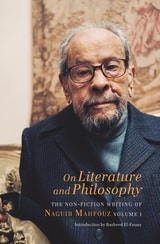
Essays on Literature and Philosophy
The Non-Fiction of Naguib Mahfouz: Volume INaguib Mahfouz
Gingko, 2025
The first Arabic language writer to win the Nobel Prize for Literature, Naguib Mahfouz, helped bring Arabic writing to an international readership. This collection of his early writing, from his time as a philosophy student, reveals the intellectual ferment of the young author, grappling with two millennia of philosophers and writers and establishing his own voice among them.
Available in English for the first time, these essays tackle a vast array of subjects, from Presocratic Philosophy to love and the sexual impulse. The intellectual development demonstrated here forms the foundation of Mahfouz’s literary work, granting insight into the mind behind such famed works as the Cairo Trilogy and Children of The Alley.
Essential Voices
A COVID-19 AnthologyAmy M. Alvarez
West Virginia University Press, 2023
A collection of creative writing and art about COVID-19 at the onset of the pandemic by people from vulnerable populations.
Bringing together artwork, creative nonfiction, fiction, and poetry, Essential Voices shares the perspectives of people from vulnerable populations as they were affected by COVID-19 in 2020, before the release of the vaccine. The pieces in this volume represent a range of writers and artists, some from international locations, whose work may be less likely to be seen because of race, ethnicity, or current legal status. Contributors include individuals who identify as BIPOC, LGBTQIA+, or seniors; those who are immunocompromised or undocumented; those working in medicine, food service, factories, and sanitation; and parents who were unable to work from home, along with individuals who were being held in correctional facilities or facing mental health concerns. This multigenre collection preserves the history of the pandemic by documenting and publishing these essential voices.
Essential Voices will be of interest to readers who want to consider the diverse lived experiences of people during the pandemic when outcomes were most uncertain. It will also be useful for teachers, students, activists, and policy makers in a variety of settings, including government, hospitals, prisons, homeless shelters, colleges, art schools, and secondary schools.
Euripides I
Alcestis, Medea, The Children of Heracles, HippolytusEdited and Translated by Mark Griffith, Glenn W. Most, David Grene, and Richmond Lattimore
University of Chicago Press, 2013
Euripides I contains the plays “Alcestis,” translated by Richmond Lattimore; “Medea,” translated by Oliver Taplin; “The Children of Heracles,” translated by Mark Griffith; and “Hippolytus,” translated by David Grene.
Many years ago, the University of Chicago Press undertook a momentous project: a new translation of the Greek tragedies that would be the ultimate resource for teachers, students, and readers. They succeeded. Under the expert management of eminent classicists David Grene and Richmond Lattimore, those translations combined accuracy, poetic immediacy, and clarity of presentation to render the surviving masterpieces of Aeschylus, Sophocles, and Euripides in an English so lively and compelling that they remain the standard translations. The updated third editions of these classic works were designed to ensure that our Greek tragedies remain the leading English-language versions throughout the twenty-first century.
In this highly anticipated third edition, Mark Griffith and Glenn W. Most have carefully updated the translations to bring them even closer to the ancient Greek while retaining the vibrancy for which our English versions are famous. This edition also includes brand-new translations of Euripides’ Medea, The Children of Heracles, Andromache, and Iphigenia among the Taurians, fragments of lost plays by Aeschylus, and the surviving portion of Sophocles’s satyr-drama The Trackers. New introductions for each play offer essential information about its first production, plot, and reception in antiquity and beyond. In addition, each volume includes an introduction to the life and work of its tragedian, as well as notes addressing textual uncertainties and a glossary of names and places mentioned in the plays.
In addition to the new content, the volumes have been reorganized both within and between volumes to reflect the most up-to-date scholarship on the order in which the plays were originally written. The result is a set of handsome paperbacks destined to introduce new generations of readers to these foundational works of Western drama, art, and life.
Euripides II
Andromache, Hecuba, The Suppliant Women, ElectraEdited and Translated by Mark Griffith, Glenn W. Most, David Grene, and Richmond Lattimore
University of Chicago Press, 2013
Euripides II contains the plays “Andromache,” translated by Deborah Roberts; “Hecuba,” translated by William Arrowsmith; “The Suppliant Women,” translated by Frank William Jones; and “Electra,” translated by Emily Townsend Vermeule.
Many years ago, the University of Chicago Press undertook a momentous project: a new translation of the Greek tragedies that would be the ultimate resource for teachers, students, and readers. They succeeded. Under the expert management of eminent classicists David Grene and Richmond Lattimore, those translations combined accuracy, poetic immediacy, and clarity of presentation to render the surviving masterpieces of Aeschylus, Sophocles, and Euripides in an English so lively and compelling that they remain the standard translations. The updated third editions of these classic works were designed to ensure that our Greek tragedies remain the leading English-language versions throughout the twenty-first century.
In this highly anticipated third edition, Mark Griffith and Glenn W. Most have carefully updated the translations to bring them even closer to the ancient Greek while retaining the vibrancy for which our English versions are famous. This edition also includes brand-new translations of Euripides’ Medea, The Children of Heracles, Andromache, and Iphigenia among the Taurians, fragments of lost plays by Aeschylus, and the surviving portion of Sophocles’s satyr-drama The Trackers. New introductions for each play offer essential information about its first production, plot, and reception in antiquity and beyond. In addition, each volume includes an introduction to the life and work of its tragedian, as well as notes addressing textual uncertainties and a glossary of names and places mentioned in the plays.
In addition to the new content, the volumes have been reorganized both within and between volumes to reflect the most up-to-date scholarship on the order in which the plays were originally written. The result is a set of handsome paperbacks destined to introduce new generations of readers to these foundational works of Western drama, art, and life.
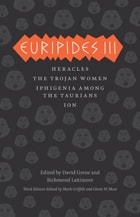
Euripides III
Heracles, The Trojan Women, Iphigenia among the Taurians, IonEdited and Translated by Mark Griffith, Glenn W. Most, David Grene, and Richmond Lattimore
University of Chicago Press, 2013
Euripides III contains the plays “Heracles,” translated by William Arrowsmith; “The Trojan Women,” translated by Richmond Lattimore; “Iphigenia among the Taurians,” translated by Anne Carson; and “Ion,” translated by Ronald Frederick Willetts.
Many years ago, the University of Chicago Press undertook a momentous project: a new translation of the Greek tragedies that would be the ultimate resource for teachers, students, and readers. They succeeded. Under the expert management of eminent classicists David Grene and Richmond Lattimore, those translations combined accuracy, poetic immediacy, and clarity of presentation to render the surviving masterpieces of Aeschylus, Sophocles, and Euripides in an English so lively and compelling that they remain the standard translations. The updated third editions of these classic works were designed to ensure that our Greek tragedies remain the leading English-language versions throughout the twenty-first century.
In this highly anticipated third edition, Mark Griffith and Glenn W. Most have carefully updated the translations to bring them even closer to the ancient Greek while retaining the vibrancy for which our English versions are famous. This edition also includes brand-new translations of Euripides’ Medea, The Children of Heracles, Andromache, and Iphigenia among the Taurians, fragments of lost plays by Aeschylus, and the surviving portion of Sophocles’s satyr-drama The Trackers. New introductions for each play offer essential information about its first production, plot, and reception in antiquity and beyond. In addition, each volume includes an introduction to the life and work of its tragedian, as well as notes addressing textual uncertainties and a glossary of names and places mentioned in the plays.
In addition to the new content, the volumes have been reorganized both within and between volumes to reflect the most up-to-date scholarship on the order in which the plays were originally written. The result is a set of handsome paperbacks destined to introduce new generations of readers to these foundational works of Western drama, art, and life.
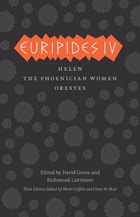
Euripides IV
Helen, The Phoenician Women, OrestesEdited and Translated by Mark Griffith, Glenn W. Most, David Grene, and Richmond Lattimore
University of Chicago Press, 2013
Euripides IV contains the plays “Helen,” translated by Richmond Lattimore; “The Phoenician Women,” translated by Elizabeth Wyckoff; and “Orestes,” translated by William Arrowsmith.
Many years ago, the University of Chicago Press undertook a momentous project: a new translation of the Greek tragedies that would be the ultimate resource for teachers, students, and readers. They succeeded. Under the expert management of eminent classicists David Grene and Richmond Lattimore, those translations combined accuracy, poetic immediacy, and clarity of presentation to render the surviving masterpieces of Aeschylus, Sophocles, and Euripides in an English so lively and compelling that they remain the standard translations. The updated third editions of these classic works were designed to ensure that our Greek tragedies remain the leading English-language versions throughout the twenty-first century.
In this highly anticipated third edition, Mark Griffith and Glenn W. Most have carefully updated the translations to bring them even closer to the ancient Greek while retaining the vibrancy for which our English versions are famous. This edition also includes brand-new translations of Euripides’ Medea, The Children of Heracles, Andromache, and Iphigenia among the Taurians, fragments of lost plays by Aeschylus, and the surviving portion of Sophocles’s satyr-drama The Trackers. New introductions for each play offer essential information about its first production, plot, and reception in antiquity and beyond. In addition, each volume includes an introduction to the life and work of its tragedian, as well as notes addressing textual uncertainties and a glossary of names and places mentioned in the plays.
In addition to the new content, the volumes have been reorganized both within and between volumes to reflect the most up-to-date scholarship on the order in which the plays were originally written. The result is a set of handsome paperbacks destined to introduce new generations of readers to these foundational works of Western drama, art, and life.
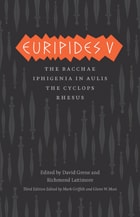
Euripides V
Bacchae, Iphigenia in Aulis, The Cyclops, RhesusEdited and Translated by Mark Griffith, Glenn W. Most, David Grene, and Richmond Lattimore
University of Chicago Press, 2013
Euripides V includes the plays “The Bacchae,” translated by William Arrowsmith; “Iphigenia in Aulis,” translated by Charles R. Walker; “The Cyclops,” translated by William Arrowsmith; and “Rhesus,” translated by Richmond Lattimore.
Many years ago, the University of Chicago Press undertook a momentous project: a new translation of the Greek tragedies that would be the ultimate resource for teachers, students, and readers. They succeeded. Under the expert management of eminent classicists David Grene and Richmond Lattimore, those translations combined accuracy, poetic immediacy, and clarity of presentation to render the surviving masterpieces of Aeschylus, Sophocles, and Euripides in an English so lively and compelling that they remain the standard translations. The updated third editions of these classic works were designed to ensure that our Greek tragedies remain the leading English-language versions throughout the twenty-first century.
In this highly anticipated third edition, Mark Griffith and Glenn W. Most have carefully updated the translations to bring them even closer to the ancient Greek while retaining the vibrancy for which our English versions are famous. This edition also includes brand-new translations of Euripides’ Medea, The Children of Heracles, Andromache, and Iphigenia among the Taurians, fragments of lost plays by Aeschylus, and the surviving portion of Sophocles’s satyr-drama The Trackers. New introductions for each play offer essential information about its first production, plot, and reception in antiquity and beyond. In addition, each volume includes an introduction to the life and work of its tragedian, as well as notes addressing textual uncertainties and a glossary of names and places mentioned in the plays.
In addition to the new content, the volumes have been reorganized both within and between volumes to reflect the most up-to-date scholarship on the order in which the plays were originally written. The result is a set of handsome paperbacks destined to introduce new generations of readers to these foundational works of Western drama, art, and life.
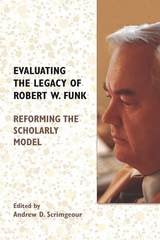
Evaluating the Legacy of Robert W. Funk
Reforming the Scholarly ModelAndrew D. Scrimgeour
SBL Press, 2018
Enter the world of an academic trailblazer
Robert W. Funk, professor of New Testament, former Executive Secretary of the Society of Biblical Literature, and founder of Scholars Press and the Jesus Seminar, was one of the most gifted, controversial figures in modern biblical scholarship. The volume includes nineteen of his essays, correspondences, interviews, and administrative papers pertaining to the Society of Biblical Literature and Scholars Press. Colleagues introduce each section with reflections on the life and contributions of Funk.
Features:
- Evaluation of the changes to scholarly societies and to scholarly research that Funk advocated
- Exploration of the shift in the interpretation of Jesus’s parables initiated by Funk
- Previously unpublished writings
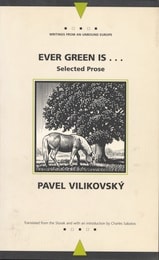
Ever Green Is...
Selected ProsePavel Vilikovsky
Northwestern University Press, 2002
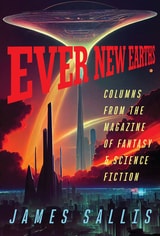
Ever New Earths
Columns from the Magazine of Fantasy & Science FictionSallis, James
University of Iowa Press, 2026
Ever New Earths gathers twenty-five years of book columns written by legendary writer James Sallis and published in The Magazine of Fantasy & Science Fiction to offer an exceptional overview of developments in contemporary science fiction, fully appreciating the genre’s traditions while recognizing its reach, its potential. This is a rare view of the genre from the inside, written toward outsiders with reason to learn and understand more: critics, historians, writers, editors.
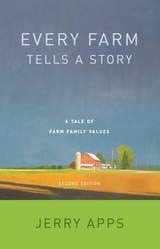
Every Farm Tells a Story
A Tale of Family ValuesJerry Apps
Wisconsin Historical Society Press, 2018
“Do your chores without complaining. Show up on time. Do every job well. Always try to do better. Never stop learning. Next year will be better. Care for others, especially those who have less than you. Accept those who are different from you. Love the land.”
In this paperback edition of a beloved Jerry Apps classic, the rural historian captures the heart and soul of life in rural America. Inspired by his mother’s farm account books—in which she meticulously recorded every farm purchase—Jerry chronicles life on a small farm during and after World War II. Featuring a new introduction exclusive to this 2nd edition, Every Farm Tells a Story reminds us that, while our family farms are shrinking in number, the values learned there remain deeply woven in our cultural heritage.
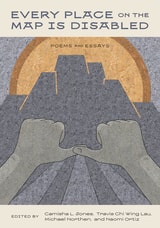
Every Place on the Map Is Disabled
Poems and EssaysCamisha L. Jones, Michael Northen, Naomi Ortiz, and Travis Chi Wing Lau
Northwestern University Press, 2026
An anthology of poems and essays by and celebrating Disabled writers
Declaring that Disabled people exist, innovate, thrive, and persevere, Every Place on the Map Is Disabled imagines the world we deserve. Its contributors spotlight the wisdom Disabled people embody from living within and navigating the economic and medical systems, communities, and families that often oppress their existence. This anthology is an intersectional compass pointing to the creative ways Disabled people build bridges to each other through Disability poetics and perspectives.
The contributing poets write about love, resistance, loss, pain, beauty, and culture. They capture tender and life-affirming moments where one Disabled person recognizes themself in another. The essays illustrate how Disability poetics suggest avenues for embracing the full spectrum of disability experiences. Every Place on the Map Is Disabled offers students, scholars, members of disability communities, and any reader a direction for paving a wider path toward a collective survival.
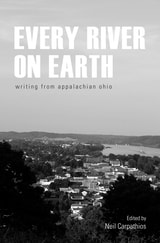
Every River on Earth
Writing from Appalachian OhioNeil Carpathios
Ohio University Press, 2015
Every River on Earth: Writing from Appalachian Ohio includes some of the best regional poetry, fiction, and creative nonfiction from forty contemporary writers, both established and up-and-coming. The wide range of material from authors such as David Baker, Don Bogen, Michelle Burke, Richard Hague, Donald Ray Pollock, and others, offers the reader a window into daily life in the region. The people, the landscape, the struggles, and the deepest undercurrents of what it means to be from and of a place are revealed in these original, deeply moving, and sometimes shocking pieces.
The book is divided into four sections: Family & Folks, The Land, The Grind, and Home & Away, each of which explores a different aspect of the place that these authors call home. The sections work together beautifully to capture what it means to live, to love, and to die in this particular slice of Appalachia. The writing is accessible and often emotionally raw; Every River on Earth invites all types of readers and conveys a profound appreciation of the region’s character.
The authors also offer personal statements about their writing, allowing the reader an intimate insight into their processes, aesthetics, and inspirations. What is it to be an Appalachian? What is it to be an Appalachian in Ohio? This book vividly paints that picture.
Every River on Earth
David Lee Garrison
I look out the window and see
through the neighbor’s window
to an Amish buggy
where three children are peeping back,
and in their eyes I see the darkness
of plowed earth hiding seed.
Wind pokes the land in winter,
trying to waken it,
and in the melting snow
I see rainbows and in them
every river on earth. I see all the way
to the ocean, where sand and stones
embrace each falling wave
and reach back to gather it in.
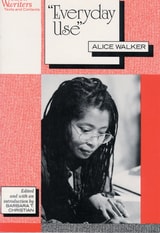
Everyday Use
Alice WalkerChristian, Barbara T
Rutgers University Press, 1994
This casebook includes an introduction by the editor, a chronology of Walker's life, an authoritative text of "Everyday Use" and of "In Search of Our Mothers' Gardens," an interview with Walker, six critical essays, and a bibliography. The contributors are Charlotte Pierce-Baker, Houston A. Baker, Jr., Thadious M. Davis, Margot Anne Kelley, John O'Brien, Elaine Showalter, and Mary Helen Washington.
Everything I Never Wanted to Know
Christine Hume
The Ohio State University Press, 2023
In Everything I Never Wanted to Know, Christine Hume confronts the stigma and vulnerability of women’s bodies in the US. She explores bodily autonomy and sexual assault alongside the National Sex Offender Registry in order to invoke not solutions but a willingness to complicate our ideas of justice and defend every human’s right to be treated like a member of the community. Feminist autobiography threads into historical narrative and cultural criticism about the Victorian-era Frozen Charlotte doll; the Nylon Riots of the 1940s; the movie Halloween; Larry Nassar, who practiced in Hume’s home state of Michigan; and other material. In these reflections on sexuality, gender, criminality, and violence, Hume asks readers to reconsider what we have collectively normalized and how we are each complicit, writing through the darkness of what we don’t want to see, what we’d rather not believe, and what some of us have long tried to forget.
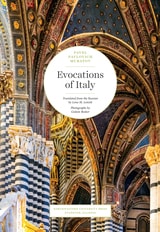
Evocations of Italy
Pavel Pavlovic Muratov and Lena Lencek (Trans.)
Northwestern University Press, 2026
In 1907, Pavel Muratov, a budding littérateur and art connoisseur from Moscow, set off for Italy with his wife, three friends, and a dozen books on the Italian Renaissance. This journey, the first of over a dozen he would make in a decade, inspired an obsession with the country’s art and culture that would produce, in the words of Clive James, “one of the most dazzling books of its type ever written.” First published in Russian between 1911 and 1924, Evocations of Italy(Obrazy Italii) chronicles Muratov’s encounters with the art, myth, and land of Italy. A classic of the Silver Age, it built on the tradition of Italian travelogues by Goethe, Stendhal, John Ruskin, and Henry James and defined the idea of Italy for generations of Russian artists and writers. Finally available in English, this three-volume collector's edition illuminates the personalities, conditions, and dreams that gave us the Italian Renaissance. At once intimate and authoritative, and here richly illustrated with photographs that echo Muratov’s shimmering juxtapositions of image and sensation, Evocations of Italy is as timely and compelling a guide today as it was a hundred years ago.
Excellence in First-Year Writing 2016/2017
Dana Nichols, editor
Michigan Publishing Services, 2017
Every day, students at the University of Michigan work hard to develop their skills as writers. Every winter, we have a chance to sample the fruits of this labor as we select winners for the first-year writing prize. The English Department Writing Program and the Sweetland Center for Writing established a first-year writing prize in 2010. With generous support from the Sweetland Center for Writing, Andrew Feinberg and Stacia Smith (both of whom earned English degrees from the University of Michigan), and the Granader Family, we have developed a tradition of honoring students who produce writing of exceptional quality.
In this collection, we share the writing of prize-winning students so that other writers may learn from, and feel inspired by, their examples. The featured essays illustrate how writers formulate compelling questions, engage in dialogue with other thinkers, incorporate persuasive and illuminating evidence, express powerful and poetic insights, and participate in meaningful conversations.
We are equally grateful to the many students who submitted essays for these writing prizes and the many instructors who encouraged and supported them. As writing teachers, we relish the opportunity to learn from the challenging questions, intellectual energy, creativity, and dedication that our students and their teachers bring to our classrooms. We hope that you will gain as much pleasure as we have from reading the writing contained in this volume.