Results by title
970 books match the query 'Movements' and 37 start with e
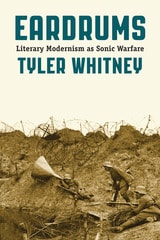
Eardrums
Literary Modernism as Sonic WarfareTyler Whitney
Northwestern University Press, 2019
Eardrums is the first book-length study to explore the relationship between acoustical modernity and German modernism, charting a literary and cultural history written in and around the eardrum. The result is not only a new way of understanding the sonic impulses behind key literary texts from the period. It also outlines an entirely new approach to the study of literature as as the interaction of text and sonic practice, voice and noise, which will be of interest to scholars across literary studies, media theory, sound studies, and the history of science.
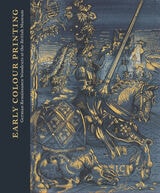
Early Colour Printing
German Renaissance Woodcuts at the British MuseumElizabeth Savage
Paul Holberton Publishing, 2020
From artworks to missals and icons to wallpapers, this book breaks new ground by revealing the fascinating underlying technologies that enabled the production of these color-printed objects. Further, the volume offers significant new scholarship, pinpointing attributions to printers—not just to artists or designers. In doing so, it lays the groundwork for a new understanding of the history of print, one that encompasses all forms of printed material. Thoroughly researched and engagingly written, this collection guide will be a standard reference on German graphic art, early modern visual culture, and the history of printing itself.
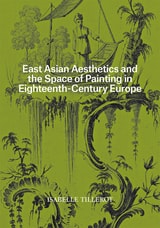
East Asian Aesthetics and the Space of Painting in Eighteenth-Century Europe
Isabelle Tillerot
J. Paul Getty Trust, The, 2024
This volume offers the first critical account of how European imports of East Asian textiles, porcelain, and lacquers, along with newly published descriptions of the Chinese garden, inspired a revolution in the role of painting in early modern Europe. With particular focus on French interiors, Isabelle Tillerot reveals how a European enthusiasm for East Asian culture and a demand for novelty transformed the dynamic between painting and decor. Models of space, landscape, and horizon, as shown in Chinese and Japanese objects and their ornamentation, disrupted prevailing design concepts in Europe. With paintings no longer functioning as pictorial windows, they began to be viewed as discrete images displayed on a wall—and with that, their status changed from decorative device to autonomous work of art.
This study presents a detailed history of this transformation, revealing how an aesthetic free from the constraints of symmetry and geometrized order upended paradigms of display, enabling European painting to come into its own.
Eclipse of the Self
The Development of Heidegger’s Concept of AuthenticityMichael E. Zimmerman
Ohio University Press, 1986
Although it is sometimes said that Martin Heidegger’s later philosophy no longer concerned itself with the theme of authenticity so crucial to Being and Time (1927), this book argues that his interest in authenticity was always strong.
After leaving the seminary to become a philosophy student, Heidegger began to “de–mythologize” religious themes for his own philosophical purposes. Like the Christian notion of faith, Heidegger’s notion of authenticity involves relinquishing the egotistical self–understanding which blocks our openness for possibilities. Yet authenticity as “resoluteness” includes an element of voluntarism foreign to the idea of faith. Heidegger’s brief engagement with National Socialism (1933–1934) helped him to re–think the Nietzschean concept of will which had influenced his early views on authenticity. Although part of the meaning of resoluteness is to allow things to be revealed, it also suggests that an individual can somehow will to be authentic. After about 1936, Heidegger emphasized that an individual can only be released from egoism (inauthenticity) by a power which transcends him. The abiding theological issue concerning the efficacy of works as against the saving power of grace finds expression in the distinction between resoluteness and releasement.
Ecologies of a Storied Planet in the Anthropocene
Serpil Oppermann
West Virginia University Press, 2023
Ecologies of a Storied Planet in the Anthropocene is a tour de force. With transdisciplinarity and theoretical lucidity, it rethinks the Anthropocene from a material ecocritical perspective, envisioning innovative modes of knowledge for deeper understandings of Anthropocene ecologies. Focusing on nonhuman agencies, Serpil Oppermann shows in fascinating detail how to better imagine an ecological future on our storied planet that has suffered enormously from an anthropocentric mindset.

Economic Engagements with Art, Volume 31
Craufurd D. W. Goodwin and Neil de Marchi, eds.
Duke University Press, 0
This volume, which deals mostly with painting, is divided into three sections that consider the interplay between art and economics from different perspectives. In the first section, Art and Economic Theory, economists clarify the need to construct a framework for understanding the roles of taste and fashion in art valuation. A historical view is considered in a piece about the teacher of Velasquez and artistic adviser to the Inquisition in Seville, who took into account not only market factors, like demand, but also the "truth" and the nobility of the artist’s profession and of the painting itself. Also in this section is an essay on Rousseau’s perspective on the worth of a painting based on its envy value in social circles; other contributions focus on William Stanley Jevons, a nineteenth century British political economist, whose problems with art stemmed from the uniqueness of each work, rendering definitive market and economic terms irrelevant. The second section of the book, Art and Economic Policy, looks at broader policy issues with regard to the historical role of art. Essays consider policy with respect to art exports and imports and federal patronage of the arts during theDepression; Lionel Robbins and the political economy of art; and the interplay among economy, architecture, and politics as shown in certain postwar Hilton hotels. In the final section, The Business of Art, a variety of perspectives are considered: the economics of art in early modern times, discussed in the context of both humanist and scholastic approaches; the pricing of pictures based on a study of the Smith-Reynolds connection; and the relationships between Otto Nuerath, graphic art, and the social order.
The first collaborative and historical treatment of the connection between art and economics, Economic Engagements with Art will appeal to people across, from history and economics to art history.
Contributors. Márcia Balisciano, William J. Barber, Neil de Marchi, Bertil Fridén, Crauford D. Goodwin, Guido Guerzoni, Robert J. Leonard, Harro Maas, Ernest Mathijs, Steven G. Medema, Bert Mosselmans, Zarinés Negrón, Marcia Pointon, Helen Rees, Toon van Houdt, Annabel Wharton, Sara Zablotney
Economic Engagements with Art, Volume 31
Craufurd D. W. Goodwin and Neil de Marchi, eds.
Duke University Press, 0
This volume, which deals mostly with painting, is divided into three sections that consider the interplay between art and economics from different perspectives. In the first section, Art and Economic Theory, economists clarify the need to construct a framework for understanding the roles of taste and fashion in art valuation. A historical view is considered in a piece about the teacher of Velasquez and artistic adviser to the Inquisition in Seville, who took into account not only market factors, like demand, but also the "truth" and the nobility of the artist’s profession and of the painting itself. Also in this section is an essay on Rousseau’s perspective on the worth of a painting based on its envy value in social circles; other contributions focus on William Stanley Jevons, a nineteenth century British political economist, whose problems with art stemmed from the uniqueness of each work, rendering definitive market and economic terms irrelevant. The second section of the book, Art and Economic Policy, looks at broader policy issues with regard to the historical role of art. Essays consider policy with respect to art exports and imports and federal patronage of the arts during theDepression; Lionel Robbins and the political economy of art; and the interplay among economy, architecture, and politics as shown in certain postwar Hilton hotels. In the final section, The Business of Art, a variety of perspectives are considered: the economics of art in early modern times, discussed in the context of both humanist and scholastic approaches; the pricing of pictures based on a study of the Smith-Reynolds connection; and the relationships between Otto Nuerath, graphic art, and the social order.
The first collaborative and historical treatment of the connection between art and economics, Economic Engagements with Art will appeal to people across, from history and economics to art history.
Contributors. Márcia Balisciano, William J. Barber, Neil de Marchi, Bertil Fridén, Crauford D. Goodwin, Guido Guerzoni, Robert J. Leonard, Harro Maas, Ernest Mathijs, Steven G. Medema, Bert Mosselmans, Zarinés Negrón, Marcia Pointon, Helen Rees, Toon van Houdt, Annabel Wharton, Sara Zablotney
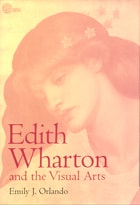
Edith Wharton and the Visual Arts
Emily J. Orlando
University of Alabama Press, 2008
An insightful look at representations of women’s bodies and female authority.
This work explores Edith Wharton's career-long concern with a 19th-century visual culture that limited female artistic agency and expression. Wharton repeatedly invoked the visual arts--especially painting—as a medium for revealing the ways that women's bodies have been represented (as passive, sexualized, infantalized, sickly, dead). Well-versed in the Italian masters, Wharton made special use of the art of the Pre-Raphaelite Brotherhood, particularly its penchant for producing not portraits of individual women but instead icons onto whose bodies male desire is superimposed.
Emily Orlando contends that while Wharton's early work presents women enshrined by men through art, the middle and later fiction shifts the seat of power to women. From Lily Bart in The House of Mirth to Undine Spragg in The Custom of the Country and Ellen Olenska in The Age of Innocence, women evolve from victims to vital agents, securing for themselves a more empowering and satisfying relationship to art and to their own identities.
Orlando also studies the lesser-known short stories and novels, revealing Wharton’s re-workings of texts by Browning, Poe, Balzac, George Eliot, Sir Joshua Reynolds, and, most significantly, Dante Gabriel Rossetti. Edith Wharton and the Visual Arts is the first extended study to examine the presence in Wharton's fiction of the Pre-Raphaelite poetry and painting of Rossetti and his muses, notably Elizabeth Siddall and Jane Morris. Wharton emerges as one of American literature's most gifted inter-textual realists, providing a vivid lens through which to view issues of power, resistance, and social change as they surface in American literature and culture.
Edmund Husserl
Philosopher of Infinite TasksMaurice Natanson
Northwestern University Press, 1973
The product of many years of reflection on phenomenology, this book is a comprehensive and creative introduction to the philosophy of Edmund Husserl. Natanson uses Husserl's later work as a clue to the meaning of his entire intellectual career, showing how his earlier methodological work evolved into the search for transcendental roots and developed into a philosophy of the life-world. Phenomenology, for Natanson, emerges as a philosophy of origin, a transcendental discipline concerned with consciousness, history, and world rather than with introspection and traditional metaphysical warfare.
Edward W. Said, Volume 25
Paul Bové
Duke University Press, 0
Featured is a new interview with Said, conducted by W. J. T. Mitchell, in which Said discusses the importance of the visual to his thinking, specifically the works of Goya and Caravaggio, which in turn made possible Said's valuable contributions to our understanding of photography and painting. Other contributions reflect on Said's influences on the American public sphere; the subtle personal politics that inform the relationship between music and emotion; Said's importance to a thinking about "race before racism" and the disappearance of the American; and jazz man Jim Merod reflects on Said's "sublime lyrical abstractions."
Covering with insight the many debates Said so deftly entered and formed, the distinguished contributors to this volume reflect upon his oeuvre to create an atmosphere of thoughtfulness, questioning, and interactivity.
El Lissitzky on Paper
Print Culture, Architecture, Politics, 1919–1933Samuel Johnson
University of Chicago Press, 2024
Russian artist El Lissitzky’s work spans painting, photography, theatrical and exhibition design, architecture, graphic design, typography, and literature. He was active in the Jewish cultural renaissance, formed an artists’ collective with Kazimir Malevich, was a key figure in the dissemination of early Soviet art in Western Europe, and designed propaganda for the Stalin regime. With such a varied history and body of work, scholars have often struggled to identify the core principles that tied his diverse oeuvre together.
In El Lissitzky on Paper, Samuel Johnson argues that Lissitzky’s commitment to creating works on paper is a constant that unites his endeavors. Paper played a key role in the utopian projects that informed Lissitzky’s work, and the artist held a commitment to print as the premier medium of immediate public exchange. Johnson analyzes and contextualizes this idea against the USSR’s strict management of this essential resource and the growth of new media communications, including the telephone, telegraph, and film.
With this book, Johnson presents a significant contribution to scholarship on this major artist, revealing new connections between Lissitzky’s work in architecture and visual art and bringing to light sources from largely unstudied Russian archives.
Elemental Ecocriticism
Thinking with Earth, Air, Water, and FireJeffrey Jerome Cohen
University of Minnesota Press, 2015
For centuries it was believed that all matter was composed of four elements: earth, air, water, and fire in promiscuous combination, bound by love and pulled apart by strife. Elemental theory offered a mode of understanding materiality that did not center the cosmos around the human. Outgrown as a science, the elements are now what we build our houses against. Their renunciation has fostered only estrangement from the material world.
The essays collected in Elemental Ecocriticism show how elemental materiality precipitates new engagements with the ecological. Here the classical elements reveal the vitality of supposedly inert substances (mud, water, earth, air), chemical processes (fire), and natural phenomena, as well as the promise in the abandoned and the unreal (ether, phlogiston, spontaneous generation).
Decentering the human, this volume provides important correctives to the idea of the material world as mere resource. Three response essays meditate on the connections of this collaborative project to the framing of modern-day ecological concerns. A renewed intimacy with the elemental holds the potential of a more dynamic environmental ethics and the possibility of a reinvigorated materialism.
Embodiments
From the Body to the Body PoliticJames R. Mensch
Northwestern University Press, 2009
Mensch begins his inquiry by developing a philosophical anthropology based on this concept. He then applies the results of his investigation to the relations of power, authority, freedom, and sovereignty in public life. This involves confronting a line of interpretation, stretching from Hobbes to Agamben, which sees violence as both initiating and preserving the social contract. To contest this interpretation, Mensch argues against its presupposition, which is to equate freedom with sovereignty over others. He does so by understanding political freedom in terms of embodiment—in particular, in terms of the finitude and interdependence that our embodiment entails. Freedom, conceived in these terms, is understood as the gift of others. As a function of our dependence on others, it cannot exist apart from them. To show how public space and civil society presuppose this interdependence is the singular accomplishment of Embodiments. It accomplishes a phenomenological grounding for a new type of political philosophy.
Embracing the Void
Rethinking the Origin of the SacredRichard Boothby
Northwestern University Press, 2023
A radical reinterpretation of the origin of religion through a psychoanalytic theorization of the unknown
Renowned psychoanalytic philosopher Richard Boothby puts forward a novel theory of religion inspired by Jacques Lacan’s theory of das Ding, the disquieting, inaccessible dimension of fellow human beings. This notion of an unfathomable excess, originally encountered in the figure of the mother, led Lacan to break with Freud’s formulation of the Oedipus complex and underlies Lacan’s distinctive conception of unconscious dynamics. Leaning on this account, Boothby shows how our sense of the sacred arises from our relation to what we do not know.
Embracing the Void lays out the range of Freud’s attempts at a psychoanalytic theory of religion and then sketches the rough contours of Lacan’s contrasting approach. From there, Boothby offers the theoretical tools for interpreting the religious impulse and analyzes key religious traditions, from ancient Greek polytheism to Judaism and Christianity, and from Hinduism and Buddhism to Islam, finally turning to modern capitalist culture and the seductive deity that dominates it—money. Lucid, accessible, and compelling, the book provides a cogent intervention in one of the psychoanalytic tradition’s most contentious topics and offers a new approach to our understanding of religion.

Emerging Trends in Continental Philosophy
Edited by Todd May
University of Chicago Press, 2010
From Kant to Kierkegaard, from Hegel to Heidegger, continental philosophers have indelibly shaped the trajectory of Western thought since the eighteenth century. Although much has been written about these monumental thinkers, students and scholars lack a definitive guide to the entire scope of the continental tradition. The most comprehensive reference work to date, this eight-volume History of Continental Philosophy will both encapsulate the subject and reorient our understanding of it. Beginning with an overview of Kant’s philosophy and its initial reception, the History traces the evolution of continental philosophy through major figures as well as movements such as existentialism, phenomenology, hermeneutics, and poststructuralism. The final volume outlines the current state of the field, bringing the work of both historical and modern thinkers to bear on such contemporary topics as feminism, globalization, and the environment. Throughout, the volumes examine important philosophical figures and developments in their historical, political, and cultural contexts.
The first reference of its kind, A History of Continental Philosophy has been written and edited by internationally recognized experts with a commitment to explaining complex thinkers, texts, and movements in rigorous yet jargon-free essays suitable for both undergraduates and seasoned specialists. These volumes also elucidate ongoing debates about the nature of continental and analytic philosophy, surveying the distinctive, sometimes overlapping characteristics and approaches of each tradition. Featuring helpful overviews of major topics and plotting road maps to their underlying contexts, A History of Continental Philosophy is destined to be the resource of first and last resort for students and scholars alike.
Enacting Decolonization
Political Subjectivity in Contemporary Arab ThoughtYasmeen Daifallah
Duke University Press, 2027
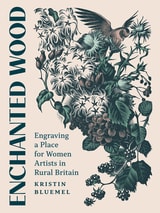
Enchanted Wood
Engraving a Place for Women Artists in Rural BritainKristin Bluemel
University of Minnesota Press, 2025
How women wood engravers helped reshape the visual and literary landscape of modern Britain
Amid the austerities of Depression-era publishing in Britain, urban editors and women artists recognized a unique opportunity to make and sell popular books illustrated with wood engravings. Enchanted Wood focuses on four of these artists—Gwen Raverat, Agnes Miller Parker, Clare Leighton, and Joan Hassall—weaving together their lives and work to tell a compelling and little-known story about a modern art that transformed the lives of both urban and rural women.
In this richly illustrated book, Kristin Bluemel demonstrates how women engravers used wood engraving to redraw professional and personal boundaries for themselves and other women. Depicting realistic scenes of country life, these illustrations are reminiscent of the aesthetic of eighteenth-century artist, naturalist, and print innovator Thomas Bewick even as they present distinctly modern reflections on gender, age, marriage, and motherhood. Reproducing and analyzing white-line engravings, pen and ink drawings, and rare color engravings from these four artists’ books for children and adults, Enchanted Wood reveals the magnified power and meaning of gentle arts for everyday people and for national patterns of work and play.
Integrating vignettes from Bewick’s natural history with formal, thematic, and cultural analysis of the women’s art as she recovers their medium, oeuvres, and stories, Bluemel shows how wood engraving led Raverat, Miller Parker, Leighton, and Hassall to achieve professional stature, public affirmation, and personal independence. A visually rich history of collective achievement, Enchanted Wood establishes these women engravers as important modern artists and literary figures in their own right.
Retail e-book files for this title are screen-reader friendly with images accompanied by short alt text and/or extended descriptions.
Encounters and Dialogues with Martin Heidegger, 1929-1976
Heinrich Wiegand Petzet
University of Chicago Press, 1993
A well-known art historian and an intimate friend of Heidegger's, Heinrich Wiegand Petzet provides a rich portrait of Heidegger that is part memoir, part biography, and part cultural history. By recounting chronologically a series of encounters between the two friends from their meeting in 1929 until the philosopher's death in 1976, as well as between Heidegger and other contemporaries, Petzet reveals not only new aspects of Heidegger's thought and attitudes toward the historical and intellectual events of his time but also the greater cultural and social context in which he articulated his thought.
Energy Culture
Art and Theory on Oil and BeyondImre Szeman
West Virginia University Press, 2019
Energy Culture is a provocative book about oil’s firm grip on our politics and everyday lives. It brings together essays and artwork produced in a collaborative environment to stimulate new ways of thinking and to achieve a more just and sustainable world.
The original work collected in Energy Culture creatively engages energy as a social form through lively arguments and artistic research organized around three vectors of inquiry. The first maps how fossil fuels became, and continue to be, embedded in North American society, from the ideology of tar sands reclamation projects to dreams of fiber optic cables running through the Northwest Passage. The second comprises creative and artistic responses to the dominance of fossil fuels in everyday life and to the challenge of realizing new energy cultures. The final section addresses the conceptual and political challenges posed by energy transition and calls into question established views on energy. Its contributions caution against solar capitalism, explore the politics of sabotage, and imagine an energy efficient transportation system called “the switch.” Imbued with a sense of urgency and hope, Energy Culture exposes the deep imbrications of energy and culture while pointing provocatively to ways of thinking and living otherwise.
Engaging Mbembe
Sindre Bandstad and Bjørn Enge Bertelsen, editors. Foreword by Arjun Appadurai.
Duke University Press, 2027
Engraving Between Iconoclasm and Revolt
Art History and the Printed Image in Early Modern EuropeEdward H. Wouk
University of Chicago Press, 0
An alternative history of Renaissance art from a Netherlandish perspective and focusing on printed images.
Through his treatises, letters, and support of printmaking projects, Bruges-born humanist Dominicus Lampsonius (1532–1599) tested the limits of what it meant to be an artist in the early modern period. This book—the first monographic study of Lampsonius to appear in the English language—investigates the convergence of art history, aesthetics, cultural politics, and theology in Lampsonius’s writings, with a particular focus on his novel theory of the printed image as a work of art.
In Lampsonius’s art history, painting recedes and engraving comes to the fore. This inversion of traditional hierarchies entailed a remaking of the Renaissance image as a graphic and replicable phenomenon. Here was a new way of looking at the image: not as a painted likeness of the sacred or the world, but rather as a graphic representation formed from the attenuated patterns of the engraved surface. In both meaning and making, printed images deflected the threats of iconoclasm precisely because, as manufactured objects, they could never be confused for what they represented—the sacred “prototype” they explicitly did not resemble. Tracing Lampsonius’s evolving views against the religious, political, and cultural upheaval of the Dutch Revolt, Edward H. Wouk considers the lasting implications of his efforts to change the course of art history.
Entre Nous
Between the World Cup and MeGrant Farred
Duke University Press, 2019
Epic Landscapes
Benjamin Henry Latrobe and the Art of WatercolorJulia Sienkewicz
University of Delaware Press, 2011
Published by University of Delaware Press. Distributed worldwide by Rutgers University Press.

Epoché as a Guideline to (Inter)Subjectivity
On the Extent of Husserl’s Methodological Influence on Levinas and SartreJosef Matoušek
Karolinum Press, 2026
Offers a comparative study of Emmanuel Levinas and Jean-Paul Sartre through the lens of their engagement with Edmund Husserl’s phenomenology.
Focusing on the notions of epoché, phenomenological reduction, intentionality, and the cogito, Josef Matoušek traces how both Emmanuel Levinas and Jean-Paul Sartre appropriate and transform Husserl’s methodological framework in developing their respective accounts of subjectivity, transcendence, and the encounter with the Other. Building on and critically extending Kris Sealey’s influential comparison of both thinkers, Epoché as a Guideline to (Inter)Subjectivity argues that despite their significant philosophical differences, both remain deeply indebted to Husserl’s project and that their mature accounts of le visage and le regard can be better understood through this shared phenomenological background.

Erich Fromm and Critical Criminology
Beyond the Punitive SocietyEdited by Kevin Anderson and Richard Quinney
University of Illinois Press, 2000
Linking the writings of the great humanist psychologist Erich Fromm to criminology, this collection shows how viewing crime patterns and the criminal justice system from Fromm's humanist perspective opens a path to more effective and more humane ways of understanding and dealing with crime and criminals.
Contributors to Erich Fromm and Critical Criminology draw on Fromm's writings on alienation, sadomasochism, and patriarchal/matriarchal values to assess the kinds of crimes being committed and the kinds of people committing them. They explore the spiritual and intellectual sources of Fromm's thought--including Jewish theology, Freudian psychoanalysis, Marxism, and Buddhism--and demonstrate how his socialist humanism points toward a society free of crime and violence. This volume also includes translations of two of Fromm's early articles on criminal justice, never before available in English, in which he develops a psychoanalytic Marxist critique of the role of criminal justice in a class society.
At a time when American society seems bent, to an unprecedented degree, on imprisonment, executions, and other violent responses to the problem of crime, Fromm's humanist critique offers a unique vantage point from which to renew and develop a critical criminology.
Essential History
Jacques Derrida and the Development of DeconstructionJoshua Kates
Northwestern University Press, 2005
A fundamental reinterpretation of Derrida's project and the works for which he is best known, Kates's study fashions a new manner of working with the French thinker that respects the radical singularity of his thought as well as the often different aims of those he reads. Such a view is in fact "essential" if Derrida studies are to remain a vital field of scholarly inquiry, and if the humanities, more generally, are to have access to a replenishing source of living theoretical concerns.
Every Revolution Was First a Thought
The Civil War and Transcendentalism in Transatlantic ContextAren Lerner Craig
University of Massachusetts Press, 2025
Tracing the impact of transcendental philosophy on Union soldiers and their loved ones during the American Civil War
Scholars of the American Civil War have long wondered about the seemingly earnest and sincere sentimental commitment that most Northern soldiers had to their nation and the North’s cause. Unlike many others in other wars, Union soldiers appeared to embrace the war with an unusual conviction and sacrificed their lives with a rare nobility. Their grieving relatives were also buoyed up by their steadfast beliefs in the righteousness of the cause. What was so different about this war, and this period of American history, and what encouraged such an outlook?
In Every Revolution Was First a Thought, Aren Lerner Craig argues that in the Civil War era the American Transcendentalist movement provided a coherent worldview that fostered powerful idealism around issues of character, gender, race, and nationhood, even in the worst of times. Through an exploration of diaries, newspaper editorials, popular songs, and more, Craig demonstrates how Transcendentalist thought moved from elite intellectual circles to the public, providing people a firm belief in the power of individual agency to shape the world and a view of spirituality in which each person was divine, and thus beyond death and destruction. Transcendentalist tenets proved strong enough to withstand the devastation of war and inspired high levels of faith and optimism in soldiers and civilians alike throughout the conflict.
Craig traces the origins of Transcendentalism across the Atlantic, to ideas from Scottish Realism and German Idealism, and connects these philosophies to writings and speeches of major figures like Ralph Waldo Emerson, Henry David Thoreau, and Margaret Fuller. This intellectual history offers a new interpretation of Transcendental thought and its role in the Civil War.
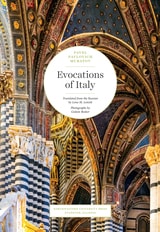
Evocations of Italy
Pavel Pavlovic Muratov and Lena Lencek (Trans.)
Northwestern University Press, 2026
In 1907, Pavel Muratov, a budding littérateur and art connoisseur from Moscow, set off for Italy with his wife, three friends, and a dozen books on the Italian Renaissance. This journey, the first of over a dozen he would make in a decade, inspired an obsession with the country’s art and culture that would produce, in the words of Clive James, “one of the most dazzling books of its type ever written.” First published in Russian between 1911 and 1924, Evocations of Italy(Obrazy Italii) chronicles Muratov’s encounters with the art, myth, and land of Italy. A classic of the Silver Age, it built on the tradition of Italian travelogues by Goethe, Stendhal, John Ruskin, and Henry James and defined the idea of Italy for generations of Russian artists and writers. Finally available in English, this three-volume collector's edition illuminates the personalities, conditions, and dreams that gave us the Italian Renaissance. At once intimate and authoritative, and here richly illustrated with photographs that echo Muratov’s shimmering juxtapositions of image and sensation, Evocations of Italy is as timely and compelling a guide today as it was a hundred years ago.
Existential Cognition
Computational Minds in the WorldRon McClamrock
University of Chicago Press, 1995
Arguing that the mind is essentially embedded in the external world, Ron McClamrock provides a schema that allows cognitive scientists to address such long-standing problems in artificial intelligence as the "frame" problem and the issue of "bounded" rationality. Extending this schema to cover progress in other studies of behavior, including language, vision, and action, McClamrock reinterprets the importance of the organism/environment distinction. McClamrock also considers the broader philosophical question of the place of mind in the world, particularly with regard to questions of intentionality, subjectivity, and phenomenology.
With implications for philosophy, cognitive and computer science, AI, and psychology, this book synthesizes state-of-the-art work in philosophy and cognitive science on how the mind interacts with the world to produce thoughts, ideas, and actions.
Expanding Hermeneutics
Visualism in ScienceDon Ihde
Northwestern University Press, 1999
Experience and Empiricism
Hegel, Hume, and the Early DeleuzeRussell Ford
Northwestern University Press, 2023
A clarifying examination of Gilles Deleuze’s first book shows how he would later transform the problem of immanence into the problem of difference
Despite the wide reception Gilles Deleuze has received across the humanities, research on his early work has remained scant. Experience and Empiricism remedies that gap with a detailed study of Deleuze’s first book, Empiricism and Subjectivity, which is devoted to the philosophical project of David Hume. Russell Ford argues that this work is poorly understood when read simply as a stand-alone study on Hume. Its significance only becomes apparent within the context of a larger problematic that dominated, and continues to inform, modern European philosophy: the conceptual constitution of a purely immanent account of existence. While the importance of this debate is recognized in contemporary scholarship, its genealogy—including Deleuze’s place within it—has been underappreciated. This book shows how Deleuze directly engages in an ongoing debate between his teachers Jean Wahl and Jean Hyppolite over experience and empiricism, an intervention that restages the famous encounter between rationalism and empiricism that yielded Kant’s critical philosophy. What, Deleuze effectively asks, might have happened had Hume been the one roused from his empirical dogmatic slumber by the rationalist challenge of Kant?
Experience and Judgment
Edmund Husserl
Northwestern University Press, 1973
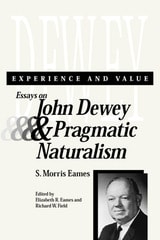
Experience and Value
Essays on John Dewey & Pragmatic NaturalismS. Morris Eames. Edited by Elizabeth R. Eames and Richard W. Field
Southern Illinois University Press, 2002
Experience and Value: Essays on John Dewey and Pragmatic Naturalism brings together twelve philosophical essays spanning the career of noted Dewey scholar, S. Morris Eames. The volume includes both critiques and interpretations of important issues in John Dewey’s value theory as well as the application of Eames’s pragmatic naturalism in addressing contemporary problems in social theory, education, and religion.
The collection begins with a discussion of the underlying principles of Dewey’s pragmatic naturalism, including the concepts of nature, experience, and philosophic method. Essays “Experience and Philosophical Method in John Dewey” and “Primary Experience in the Philosophy of John Dewey” develop what Eames believed to be a central theme in Dewey’s thought and provide a theoretical framework for subsequent discussion.
The volume continues with specific applications of this framework in the areas of value theory, moral theory, social philosophy, and the philosophy of religion. Eames’s analysis of value exposes the connection between the immediately felt values of experience and the more sophisticated judgments of value that are the product of reflection. From this basis in moral theory, Eames considers the derivation of judgments of obligation from judgments of fact. This discussion provides a grounding for a consideration of contemporary social issues directed by naturalistic and scientific principles.
In the third section, with regard to educational theory, Eames considers possible resolutions of the current dichotomy between the factual worldview of science and the humanistic worldview of the liberal arts. The comprehensive article, “Dewey’s Views of Truth, Beauty, and Goodness,” connects the essays of the first and second sections and explores the placement of Dewey’s value theory with respect to morals and aesthetics. With “Creativity and Democracy,” in the fourth section, Eames also considers the concept of democracy from the standpoint of current and historical issues faced by society. This article hints at a major project of Eames’s intellectual life—the theory of democracy.
The volume concludes with a discussion of the difficulty of maintaining the values of religious experience in a scientifically and technologically sophisticated world, the very topic that first brought Eames to philosophy—the meaning of religion and the religious life. Suggested solutions are offered in “The Lost Individual and Religious Unity.”
Experience and Value: Essays on John Dewey and Pragmatic Naturalism illuminates Eames’ life of inquiry, a life that included moral, social, aesthetic, and religious dimensions of value—all suffused with the influence of John Dewey.
Experiencing and the Creation of Meaning
A Philosophical and Psychological Approach to the SubjectiveEugene Gendlin
Northwestern University Press, 1997
Experiencing and the Creation of Meaning addressed the unavoidable variety of conceptual formulations and other questions that have now become central.

Exploring Phenomenology
A Guide to the Field & Its LiteratureDavid Stewart
Ohio University Press, 1990
Existential philosophy has perhaps captured the public imagination more completely than any other philosophical movement in the twentieth century. But less is known about the phenomenological method lying behind existentialism. In this solid introduction to phenomenological philosophy, authors David Stewart and Algis Mickunas show that phenomenology is neither new nor bizarre but is a contemporary way of raising afresh the major problems of philosophy that have dominated the traditions of Western thought. The authors carefully lead the reader trough the maze of terminology, explaining the major problems phenomenology has treated and showing how these are a consistent extension of the traditional concerns of philosophy.
In concise, uncluttered, and straightforward terms, the history, development, and contemporary status of phenomenology is explained with a copiously annotated bibliography following each chapter. Nothing in print combines the extensive introductory materials with a guide to the massive literature that has been produced by phenomenological and existential studies.
Exploring the World of Human Practice
Readings in and about the Philosophy of Aurel KolnaiZoltán Balázs
Central European University Press, 2005
Extimacy
Nadia Bou Ali; Surti Singh
Northwestern University Press, 2024
Bringing together theorists and practitioners of psychoanalysis to interrogate Lacan’s notion of extimité
In 1960, Jacques Lacan coined the neologism extimité (extimacy) to denote a structure of subjectivity in which the most intimate, internal core is already external, thus complicating the traditional philosophical dualisms and binaries that have informed traditional notions of subjectivity. This collection is the first sustained interrogation of the concept of extimacy, comprising contributions on various topics by leading and emerging philosophers and scholars of psychoanalytic theory from around the world. This international collection also includes key perspectives from practicing psychoanalysts and presents a variety of critical inquiries into the concept of extimacy for application in multiple disciplines beyond philosophy and in an array of methodological and thematic frameworks.