Results by title
1947 books match the query 'Music' and 54 start with e
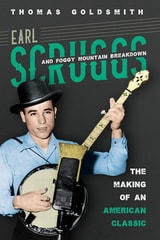
Earl Scruggs and Foggy Mountain Breakdown
The Making of an American ClassicThomas Goldsmith
University of Illinois Press, 2019
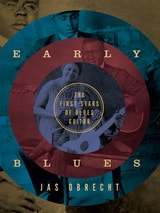
Early Blues
The First Stars of Blues GuitarJas Obrecht
University of Minnesota Press, 2015
Winner of the 2016 Living Blues Award for Blues Book of the Year
The complete history of early blues guitar, with portraits of its first stars—now in paperback
Since the early 1900s, blues and the guitar have traveled side by side. This book tells the story of their pairing from the first reported sightings of blues musicians, to the rise of nationally known stars, to the onset of the Great Depression, when blues recording virtually came to a halt.
Like the best music documentaries, Early Blues: The First Stars of Blues Guitar interweaves musical history, quotes from celebrated musicians (B.B. King, John Lee Hooker, Ry Cooder, and Johnny Winter, to name a few), and a spellbinding array of life stories to illustrate the early days of blues guitar in rich and resounding detail. In these chapters, you’ll meet Sylvester Weaver, who recorded the world’s first guitar solos, and Paramount Records artists Papa Charlie Jackson, Blind Lemon Jefferson, and Blind Blake, the “King of Ragtime Blues Guitar.” Blind Willie McTell, the Southeast’s superlative twelve-string guitar player, and Blind Willie Johnson, street-corner evangelist of sublime gospel blues, also get their due, as do Lonnie Johnson, the era’s most influential blues guitarist; Mississippi John Hurt, with his gentle, guileless voice and syncopated fingerpicking style; and slide guitarist Tampa Red, “the Guitar Wizard.”
Drawing on a deep archive of documents, photographs, record company ads, complete discographies, and up-to-date findings of leading researchers, this is the most comprehensive and complete account ever written of the early stars of blues guitar—an essential chapter in the history of American music.
Earworm and Event
Music, Daydreams, and Other Imaginary RefrainsEldritch Priest
Duke University Press, 2022
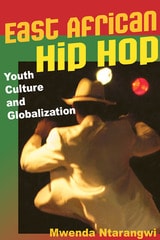
East African Hip Hop
Youth Culture and GlobalizationMwenda Ntarangwi
University of Illinois Press, 2008
In this book, Mwenda Ntarangwi analyzes how young hip hop artists in the East African nations of Kenya, Uganda, and Tanzania showcase the opportunities and challenges brought by the globalization of music. Combining local popular music traditions with American and Jamaican styles of rap, East African hip hop culture reflects the difficulty of creating commercially accessible music while honoring tradition and East African culture. Ntarangwi pays special attention to growing cross-border exchanges within East African hip hop, collaborations in recording music and performances, and themes and messages that transcend local geographic boundaries.
In using hip hop as a medium for discussing changes in East African political, economic, and social conditions, artists vocalize their concerns about economic policies, African identity, and political establishments, as well as important issues of health (such as HIV/AIDS), education, and poverty. Through three years of fieldwork, rich interviews with artists, and analysis of live performances and more than 140 songs, Ntarangwi finds that hip hop provides youth an important platform for social commentary and cultural critique and calls attention to the liberating youth music culture in East Africa.
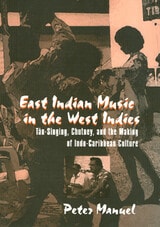
East Indian Music
Peter Manuel
Temple University Press, 2000
In recent decades, however, tan-singing has been declining, regarded as quaint and crude by younger generations raised on MTV, Hindi film music, and disco. At the same time, Indo-Caribbeans have been participating in their countries' economic, political, and cultural lives to a far greater extent than previously. Accompanying this participation has been a lively cultural revival, encompassing both an enhanced assertion of Indianness and a spirit of innovative syncretism. One of the most well-known products of this process is chutney, a dynamic music and dance phenomenon that is simultaneously a folk revival and a pop hybrid. In Trinidad, it has also been the vehicle for a controversial form of female empowerment and an agent of a new, more inclusive, conception of national identity.
Thus, East Indian Music in the West Indies is a portrait of a diaspora community in motion. It documents the social and cultural development of a people "without history," a people who have sometimes been dismissed as foreigners who merely perpetuate the culture of the homeland rather than becoming "truly" Caribbean. Professor Manuel shows how inaccurate this characterization is. On the one hand, in the form of tan-singing, it examines the distinctiveness of traditional Indo-Caribbean musical culture. On the other, in the form of chutney, it examines the new assertiveness and syncretism of Indo-Caribbean popular music.
Students of Indo-Caribbean music and curious world-music fans alike will be fascinated by Professor Manuel's guided tour through the complex and exciting world of Indo-Caribbean musical culture.

Easy
A Hard Look at Soft RockTimothy Gray
University of Iowa Press, 2026
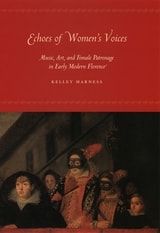
Echoes of Women's Voices
Music, Art, and Female Patronage in Early Modern FlorenceKelley Harness
University of Chicago Press, 2006
Through commissions, patrons sought to promote a vision of the world and their place in it. The unique social norms, laws, educational backgrounds, and life experiences of female patrons meant the expression of a worldview that differed significantly from that of their male counterparts. Joining exceptional archival research with telling analysis of significant examples of music, art, and drama, Kelley Harness challenges the prevailing view that Florence saw a political and artistic decline during this period. She argues convincingly that the female domination of these years brought forth artistic patronage that was both continuous and well-conceived.
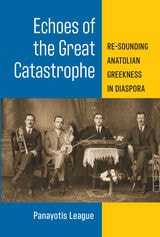
Echoes of the Great Catastrophe
Re-Sounding Anatolian Greekness in DiasporaPanayotis League
University of Michigan Press, 2021
Echoes of the Great Catastrophe: Re-sounding Anatolian Greekness in Diaspora explores the legacy of the Great Catastrophe—the death and expulsion from Turkey of 1.5 million Greek Christians following the Greco-Turkish War of 1919–1922—through the music and dance practices of Greek refugees and their descendants over the last one hundred years. The book draws extensively on original ethnographic research conducted in Greece (on the island of Lesvos in particular) and in the Greater Boston area, as well as on the author’s lifetime immersion in the North American Greek diaspora. Through analysis of handwritten music manuscripts, homemade audio recordings, and contemporary live performances, the book traces the routes of repertoire and style over generations and back and forth across the Atlantic Ocean, investigating the ways that the particular musical traditions of the Anatolian Greek community have contributed to their understanding of their place in the global Greek diaspora and the wider post-Ottoman world. Alternating between fine-grained musicological analysis and engaging narrative prose, it fills a lacuna in scholarship on the transnational Greek experience.
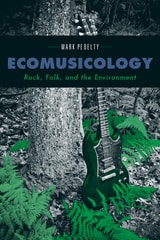
Ecomusicology
Rock, Folk, and the EnvironmentMark Pedelty
Temple University Press, 2012
Can musicians really make the world more sustainable? Anthropologist Mark Pedelty, joined an eco-oriented band, the Hypoxic Punks, to find out. In his timely and exciting book, Ecomusicology, Pedelty explores the political ecology of rock, from local bands to global superstars. He examines the climate change controversies of U2's 360 Degrees stadium tour—deemed excessive by some—and the struggles of local folk singers who perform songs about the environment. In the process, he raises serious questions about the environmental effects and meanings on music.
Ecomusicology examines the global, national, regional, and historical contexts in which environmental pop is performed. Pedelty reveals the ecological potentials and pitfalls of contemporary popular music, in part through ethnographic fieldwork among performers, audiences, and activists. Ultimately, he explains how popular music dramatically reflects both the contradictions and dreams of communities searching for sustainability.
Econophonia
Music, Value, and Forms of LifeGavin Steingo and Jairo Moreno, special issue editors
Duke University Press, 0
This issue theorizes what questions of value might contribute to our understanding of sound and music. Divesting sound and music from notions of intrinsic value, the contributors follow various avenues through which sound and music produce value in and as history, politics, ethics, epistemology, and ontology. As a result, the very question of what sound and music are—what constitutes them, as well as what they constitute—is at stake. Contributors examine the politics of music and crowds, the metaphysics of sensation, the ecological turn in music studies, and the political resistance inherent to sound; connect Karl Marx to black music and slave labor; look at Marx, the Marx Brothers, and fetishism; and explore the tension between the voice of the Worker who confronts Capital head-on and the voices of actual workers.
Contributors: Amy Cimini, Bill Dietz, Jairo Moreno, Rosalind Morris, Ana María Ochoa Gautier, Ronald Radano, Gavin Steingo, Peter Szendy, Gary Tomlinson, Naomi Waltham-Smith
Edipo Coloneo
Tragedy by Sophocles Rendered in Italian Verse by Giambattista GiustiGioachino Rossini
University of Chicago Press, 1985
Efficacy of Sound
Power, Potency, and Promise in the Translocal Ritual Music of Cuban Ifá-ÒrìsàRuthie Meadows
University of Chicago Press, 2023
Hailing from Cuba, Nigeria, and various sites across Latin America and the Caribbean, Ifá missionary-practitioners are transforming the landscape of Ifá divination and deity (òrìṣà/oricha) worship through transatlantic travel and reconnection. In Cuba, where Ifá and Santería emerged as an interrelated, Yorùbá-inspired ritual complex, worshippers are driven to “African traditionalism” by its promise of efficacy: they find Yorùbá approaches more powerful, potent, and efficacious.
In the first book-length study on music and Ifá, Ruthie Meadows draws on extensive, multisited fieldwork in Cuba and Yorùbáland, Nigeria, to examine the controversial “Nigerian-style” ritual movement in Cuban Ifá divination. Meadows uses feminist and queer of color theory along with critical studies of Africanity to excavate the relation between utility and affect within translocal ritual music circulations. Meadows traces how translocal Ifá priestesses (ìyánífá), female batá drummers (bataleras), and priests (babaláwo) harness Yorùbá-centric approaches to ritual music and sound to heighten efficacy, achieve desired ritual outcomes, and reshape the conditions of their lives. Within a contentious religious landscape marked by the idiosyncrasies of revolutionary state policy, Nigerian-style Ifá-Òrìṣà is leveraged to transform femininity and masculinity, state religious policy, and transatlantic ritual authority on the island.
Eggs I Have Laid
Meredith Willson
University of Minnesota Press, 2025
Back in print: the playful and personal memoir of Meredith Willson’s creative tribulations and triumphs before The Music Man
Composer, musical director, writer, lecturer, and piccoloist Meredith Willson laid many eggs throughout his career—but not all those eggs would hatch quite so gloriously as his Broadway hit The Music Man. In Eggs I Have Laid, Willson genially chronicles the failures that he faced as he made his place in show business during the pivotal early 1950s, when radio was being overtaken by television.
From Hollywood to New York, London, and Paris, and back to his hometown of Mason City, Iowa, Willson sets each scene vividly, bringing to life his encounters with zeitgeist stars, from collaborators Tallulah Bankhead and Fred Allen to Orson Welles and Carmen Miranda. His signature wit excels as he relates his tales of eggs dropped, notable among them the lavishly produced variety program The Big Show, his ill-fated attempt to be a radio bulwark against the encroaching tide of television.
First published in 1955, Eggs I Have Laid features delightful curiosities, like an eight-page “platonic dialogue” about quitting smoking and the lyrics to a love song with the occupancy limits of the New York Fire Code as its central metaphor. It is at once a vivid chronicle and a trove of insight from the hilarious, perseverant mind of Meredith Willson.
El Narcotraficante
Narcocorridos and the Construction of a Cultural Persona on the U.S.–Mexico BorderBy Mark Cameron Edberg
University of Texas Press, 2004
Since the late 1970s, a new folk hero has risen to prominence in the U.S.-Mexico border region and beyond—the narcotrafficker. Celebrated in the narcocorrido, a current form of the traditional border song known as the corrido, narcotraffickers are often portrayed as larger-than-life "social bandits" who rise from poor or marginalized backgrounds to positions of power and wealth by operating outside the law and by living a life of excess, challenging authority (whether U.S. or Mexican), and flouting all risks, including death. This image, rooted in Mexican history, has been transformed and commodified by the music industry and by the drug trafficking industry itself into a potent and highly marketable product that has a broad appeal, particularly among those experiencing poverty and power disparities. At the same time, the transformation from folk hero to marketable product raises serious questions about characterizations of narcocorridos as "narratives of resistance."
This multilayered ethnography takes a wide-ranging look at the persona of the narcotrafficker and how it has been shaped by Mexican border culture, socioeconomic and power disparities, and the transnational music industry. Mark Edberg begins by analyzing how the narcocorrido emerged from and relates to the traditional corrido and its folk hero. Then, drawing upon interviews and participant-observation with corrido listening audiences in the border zone, as well as musicians and industry producers of narcocorridos, he elucidates how the persona of the narcotrafficker has been created, commodified, and enacted, and why this character resonates so strongly with people who are excluded from traditional power structures. Finally, he takes a look at the concept of the cultural persona itself and its role as both cultural representation and model for practice.
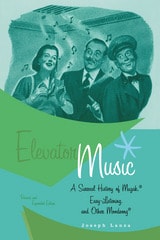
Elevator Music
A Surreal History of Muzak, Easy-Listening, and Other Moodsong; Revised and Expanded EditionJoseph Lanza
University of Michigan Press, 2004
Musical cognoscenti decry its insipid content; regular folk -- if they notice -- bemoan its pervasiveness; while hipsters and campsters celebrate its retro chic. Mindful of the many voices, Joseph Lanza's Elevator Music sings seriously, with tongue in cheek, the praises of this venerable American institution.
Lanza addresses the criticisms of elites who say that Muzak and its ilk are dehumanized, vapid, or cheesy. These reactions, he argues, are based more on cultural prejudices than honest musical appraisal.
Says Lanza, today's so-called mood music is the inheritor of a long tradition of mood-altering music stretching back to the ancients; Nero's fiddle and the sirens of Odysseus being two famous examples. Contemporary atmospheric music, Lanza argues, not only serves the same purpose, it is also the inevitable background for our media-dominated age.
One of Lanza's premises, to quote Mark Twain, is that this music is "better than it sounds." "This book will have succeeded in its purpose," he writes, "if I can help efface...the distinction between one person's elevator music and another's prized recording."
Joseph Lanza is an author, producer, and music historian. His most recent book is Russ Columbo and the Crooner Mystique.
Ellington Uptown
Duke Ellington, James P. Johnson, and the Birth of Concert JazzJohn Howland
University of Michigan Press, 2009

Elliott Carter
James Wierzbicki
University of Illinois Press, 2011
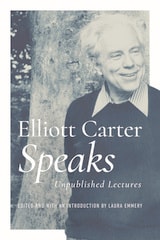
Elliott Carter Speaks
Unpublished LecturesElliott Carter. Edited and with an Introduction by Laura Emmery
University of Illinois Press, 2021
Expansive and essential, Elliott Carter Speaks opens up the artist's teaching and introspection to new contemporary perspectives on his thought and art.
Please note that the order and arrangement of materials in this book differs from that of Elliott Carter’s original lectures.
Emblems of Mind
The Inner Life of Music and MathematicsEdward Rothstein
University of Chicago Press, 2006
Jacques Barzun called this book “splendid.” Martin Gardner said it was “beautifully written, marvelous and entertaining.” It will provoke all serious readers to think in new ways about the grand patterns in art and life.
“Lovely, wistful. . . . Rothstein is a wonderful guide to the architecture of musical space, its tensions and relations, its resonances and proportions. . . . His account of what is going on in the music is unfailingly felicitous.”—New Yorker
“Provocative and exciting. . . . Rothstein writes this book as a foreign correspondent, sending dispatches from a remote and mysterious locale as a guide for the intellectually adventurous. The remarkable fact about his work is not that it is profound, as much of the writing is, but that it is so accessible.”—Christian Science Monitor
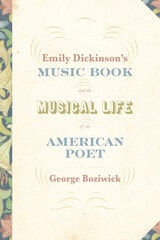
Emily Dickinson's Music Book and the Musical Life of an American Poet
George Boziwick
University of Massachusetts Press, 2022
After years of studying piano as a young woman in her family home in Amherst, Massachusetts, Emily Dickinson curated her music book, a common practice at the time. Now part of the Dickinson Collection in the Houghton Library of Harvard University, this bound volume of 107 pieces of published sheet music includes the poet’s favorite instrumental piano music and vocal music, ranging from theme and variation sets to vernacular music, which was also enjoyed by the family’s servants.
Offering a fresh historical perspective on a poetic voice that has become canonical in American literature, this original study brings this artifact to life, documenting Dickinson’s early years of musical study through the time her music was bound in the early 1850s, which tellingly coincided with the writing of her first poems. Using Dickinson’s letters and poems alongside newspapers and other archival sources, George Boziwick explores the various composers, music sellers, and publishers behind this music and Dickinson’s attendance at performances, presenting new insights into the multiple layers of meaning that music held for her.
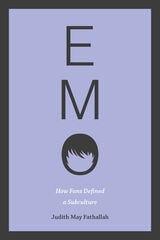
Emo
How Fans Defined a SubcultureJudith May Fathallah
University of Iowa Press, 2020
For many, the word “emo” calls to mind angsty teenagers, shaggy black haircuts, and skinny jeans. A popular music phenomenon in the early 2000s, emo is short for “emotional hardcore,” and refers to both a music genre and a youth scene notable for its androgynous style. Judith May Fathallah pushes beyond the stereotypes and social stigma to explore how online fandom has shaped the definition of emo, with significant implications both for millennial constructs of gender and for contemporary fan studies.
First laying out the debate over what emo is, Fathallah walks superfans and newcomers through the culture surrounding thegenre’s major bands, including the emo holy trinity: My Chemical Romance, Fall Out Boy, and Panic! At the Disco. Next she examines fans’ main mode of participation in the emo subculture—online communities such as LiveJournal, Tumblr, MySpace, and band websites. Taking a hard look at the gender politics that dominated those spaces, she unearths a subculture that simultaneously defines itself by its sensitivity and resistance to traditional forms of masculinity, yet ruthlessly enforces homophobic and sexist standards. Fathallah demonstrates fandom’s key role in defining emo as a concept and genre after 2001, with probing insight into its implications for gender constructions through popular music.
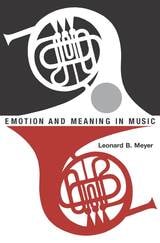
Emotion and Meaning in Music
Leonard B. Meyer
University of Chicago Press, 1961
"Altogether it is a book that should be required reading for any student of music, be he composer, performer, or theorist. It clears the air of many confused notions . . . and lays the groundwork for exhaustive study of the basic problem of music theory and aesthetics, the relationship between pattern and meaning."—David Kraehenbuehl, Journal of Music Theory
"This is the best study of its kind to have come to the attention of this reviewer."—Jules Wolffers, The Christian Science Monitor
"It is not too much to say that his approach provides a basis for the meaningful discussion of emotion and meaning in all art."—David P. McAllester, American Anthropologist
"A book which should be read by all who want deeper insights into music listening, performing, and composing."—Marcus G. Raskin, Chicago Review

Emotional Signals
Auto-Tune, Melodyne, and the Cultural Politics of Pitch CorrectionCatherine Provenzano
University of Michigan Press, 2027
An ethnographic account of the history, development, and cultural impacts of digital tuning software
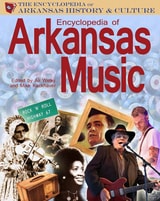
Encyclopedia of Arkansas Music
Ali Welky
Butler Center for Arkansas Studies, 2013
What do a rockabilly musician turned cinematic swamp monster, a composer of player-piano music, an avant-garde cellist, a musical instrument that lent its name to a weapon, a rock musician turned Catholic monk, some of the best audio speakers in the world, and the creator of Schoolhouse Rock! have in common? That’s right–they all come from Arkansas.
Encyclopedia of Arkansas Music is a special project of the Encyclopedia of Arkansas History & Culture (EOA), an online encyclopedia launched in 2006 by the Butler Center for Arkansas Studies at the Central Arkansas Library System.
This colorful, photo-filled reference work spanning all aspects of Arkansas’s musical past and present includes more than 150 entries on musicians, ensembles, musical works, and events.
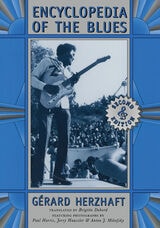
Encyclopedia of the Blues, 2nd Edition
Gerard Herzhaft
University of Arkansas Press, 1997
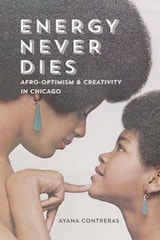
Energy Never Dies
Afro-Optimism and Creativity in ChicagoAyana Contreras
University of Illinois Press, 2021
Passionate and enlightening, Energy Never Dies uses the power of storytelling to show how optimism and courage fuel the dreams of Black Chicago.

Engendering Song
Singing and Subjectivity at Prespa Albanian WeddingsJane C. Sugarman
University of Chicago Press, 1997
Combining photographs, song texts, and vibrant recordings of the music with her own evocative descriptions, ethnomusicologist Jane C. Sugarman focuses her account of Prespa weddings on notions of gendered identity, demonstrating the capacity of singing to generate and transform relations of power within Prespa society. Engendering Song is an innovative theoretical work, with a scholarly importance extending far beyond southeast European studies. It offers unique and timely contributions to the analysis of music and gender, music in diaspora cultures, and the social constitution of self and subjectivity.

English Pastoral Music
From Arcadia to Utopia, 1900-1955Eric Saylor
University of Illinois Press, 2017

Englishness, Pop and Post-War Britain
Kari Kallioniemi
Intellect Books, 2016
Entertaining History
The Civil War in Literature, Film, and SongEdited by Chris Mackowski
Southern Illinois University Press, 2020
From Ulysses S. Grant’s Memoirs to Abraham Lincoln: Vampire Hunter, from Roots to Ken Burns’s The Civil War, from “Dixie” to “Ashokan Farewell,” and from Civil War photography to the Gettysburg Cyclorama, trendy and well-loved depictions of the Civil War are the subjects of twenty contributors who tell how they and the general public have been influenced by them. Sarah Kay Bierle examines the eternal appeal of Gone with the Wind and asks how it is that a protagonist who so opposed the war has become such a figurehead for it. H. R. Gordon talks with New York Times–bestselling novelist Jeff Shaara to discuss the power of storytelling. Paul Ashdown explores ColdMountain’s value as a portrait of the war as national upheaval, and Kevin Pawlak traces a shift in cinema’s depiction of slavery epitomized by 12 Years a Slave. Tony Horwitz revisits his iconic Confederates in the Attic twenty years later.
The contributors’ fresh analysis articulates a shared passion for history’s representation in the popular media. The variety of voices and topics in this collection coalesces into a fascinating discussion of some of the most popular texts in the genres. In keeping with the innovative nature of this series, web-exclusive material extends the conversation beyond the book.

Erik Satie
Mary E. Davis
Reaktion Books, 2007
A composer who dabbled in the Dada movement, a Bohemian “gymnopédiste” of fin-de-siècle Montmartre, and a legendary dresser known as “The Velvet Gentleman,” Erik Satie cut a unique figure among early twentieth-century European composers. Yet his legacy has largely languished in the shadows of Stravinsky, Debussy, and Ravel. Mary E. Davis now brings Satie to life in this fascinating new biography.
Satie redefined the composer’s art, devising new methods of artistic expression that melded ordinary and rarified elements of words, visual art, and music. Davis argues that Satie’s modernist aesthetic was grounded in the contradictions of his life—such as enrolling in the conservative Schola Cantorum after working as a cabaret performer—and is reflected in his irreverent essays, drawn art, and music. Erik Satie explores how the composer was embraced by avant-garde artists and fashionable Parisian elite, and how his experiences inspired him to create the musical style of Neoclassicism. Satie also employed the power of the image through his infamous fashion statements, Davis contends, and became part of a nascent celebrity culture.
A cogent and informative portrait, Erik Satie upends the accepted history of modernist music and restores the composer to his rightful pioneering status.

Ernani
Dramma lirico in Four Acts by Francesco Maria PiaveGiuseppe Verdi
University of Chicago Press, 1985
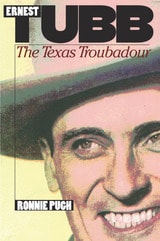
Ernest Tubb
The Texas TroubadourRonnie Pugh
Duke University Press, 1996
Tubb began his career as an imitator of Jimmie Rodgers, but stormed the country music scene in the 1940s with a new honky tonk sound and a string of hits that included “Walking the Floor Over You.” His innovations marked an important transition in country music to a style and lyric in tune with modern American working people, or at least that offered the real-life themes of hard drinking, divorce, tough times, and ruined lives—changes that helped define the music we recognize today as “country.” A member of the Grand Ole Opry until 1982, Tubb hosted a live radio broadcast from the Ernest Tubb Record Shop in Nashville for years and became one of the first country music stars to host his own television show in the mid-1960s. Always popular and on the road much of the time even after his prime hit-making years had ended, he was well-known for promoting the careers of many new performers on the rise.
Delving into fan club journals, songbooks, newspaper broadcast logs, record company files, and hundreds of interviews, Ronnie Pugh draws a picture of Tubb—exploring both his personal and professional life—that is unprecedented in its intimacy, detail, and vitality. We get a close-up view of Tubb riding the crest of his popularity, setting the pace for Nashville, facing the onslaught of Elvis Presley and rock ’n roll, and surviving as a country music legend. Richly illustrated with almost a hundred photographs, many of which are rare unpublished shots from private collections, Ernest Tubb also contains a detailed and complete sessionography, a resource that will be of continuing importance for serious record collectors.
A biography that has been long awaited from Ronnie Pugh, unquestionably the leading authority on Ernest Tubb, this book will delight readers from among the fans of country music, those interested in the history of country music or American popular music and culture generally, and, of course, Ernest Tubb fans.
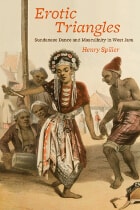
Erotic Triangles
Sundanese Dance and Masculinity in West JavaHenry Spiller
University of Chicago Press, 2010
In West Java, Indonesia, all it takes is a woman’s voice and a drum beat to make a man get up and dance. Every day, men there—be they students, pedicab drivers, civil servants, or businessmen—breach ordinary standards of decorum and succumb to the rhythm at village ceremonies, weddings, political rallies, and nightclubs. The music the men dance to varies from traditional gong ensembles to the contemporary pop known as dangdut, but they consistently dance with great enthusiasm. In Erotic Triangles, Henry Spiller draws on decades of ethnographic research to explore the reasons behind this phenomenon, arguing that Sundanese men use dance to explore and enact contradictions in their gender identities.
Framing the three crucial elements of Sundanese dance—the female entertainer, the drumming, and men’s sense of freedom—as a triangle, Spiller connects them to a range of other theoretical perspectives, drawing on thinkers from Eve Kosofsky Sedgwick, Lévi-Strauss, and Freud to Euclid. By granting men permission to literally perform their masculinity, Spiller ultimately concludes, dance provides a crucial space for both reinforcing and resisting orthodox gender ideologies.

Essay on the Origin of Languages and Writings Related to Music
Jean Jacques Rousseau
Dartmouth College Press, 2009
Essays on Music and History in Africa
Edited by Klaus P. Wachsmann
Northwestern University Press, 1971

Ethnic Music on Records
A Discography of Ethnic Recordings Produced in the United States, 1893-1942. Vol. 1: Western EuropeRichard K. Spottswood
University of Illinois Press, 1990
Ethnic Music on Records
A Discography of Ethnic Recordings Produced in the United States, 1893-1942. Vol. 2: SlavicRichard K. Spottswood
University of Illinois Press, 1990
Ethnic Music on Records
A Discography of Ethnic Recordings Produced in the United States, 1893-1942. Vol. 3: Eastern EuropeRichard K. Spottswood
University of Illinois Press, 1990
Winner of the ARSC Award for Excellence in the Field of Recorded Country, Folk, or Ethnic Music, 1991.
Ethnic Music on Records
A Discography of Ethnic Recordings Produced in the United States, 1893-1942. Vol. 4: Spanish, Portuguese, Philippines, BasqueRichard K. Spottswood
University of Illinois Press, 1990
Ethnic Music on Records
A Discography of Ethnic Recordings Produced in the United States, 1893-1942. Vol. 5: Middle East, Far East, Scandinavian, English Language, American Indian, InternationalRichard K. Spottswood
University of Illinois Press, 1990
Ethnic Music on Records
A Discography of Ethnic Recordings Produced in the United States, 1893-1942. Vol. 6: Artist Index, Title IndexRichard K. Spottswood
University of Illinois Press, 1990
Ethnic Music on Records
A Discography of Ethnic Recordings Produced in the United States, 1893-1942. Vol. 7: Record Number Index, Matrix Number IndexRichard K. Spottswood
University of Illinois Press, 1990
Ethno Music Gatherings
Pedagogy Experience, ImpactEdited by Lee Higgins and Sarah Jane Gibson
Intellect Books, 2024
This book presents key findings from a four-year project that sought to understand Ethno, an organized residential folk, world, and traditional music program for young people ranging in age from eighteen to thirty. First held in Sweden in 1990, Ethno now hosts gatherings in more than forty countries. The authors examine the complexity of an Ethno music experience with three focuses: pedagogy and professional development, participant experience, and impact beyond the gathering.
Drawing on data from participant observations, interviews, social media analysis, onsite and video observations, surveys, and questionnaires, the authors ask critical questions concerning Ethno’s history, ethos, pedagogy, and philosophical ideals. Considering its history and current practices, the following themes are explored: non-formal music making, personal authenticity, holistic praxis, musical possible selves, intercultural music exchange, sustainability, social media engagement, song sharing, and future practices. As a collection of integrated thought, the book’s purpose is to illuminate new understandings of what Ethno does and in so doing present synergies and divergencies with the wider field of music education.
Ethnomusicology and Modern Music History
Edited by Stephen Blum, Philip V. Bohlman, and Daniel M. Neuman
University of Illinois Press, 1991
this volume explores the ways in which ethnomusicologists are contributing
to the larger task of investigating music history. The fifteen contributors
explore topics ranging from meetings with the Suyá Indians of Brazil
to the German-speaking Jewish community of Israel; from Indian music in
Felicity, Trinidad, to Ravi Shankar's role as cultural mediator.
"This book is unique not only for its approach but also for the
scope of its content. . . . It is definitely a must for libraries of research
centers and institutions with ethnomusicology programs."
-- Choice
Evening the Score
Women in Music and the Legacy of Frédérique PetridesJan Bell Groh
University of Arkansas Press, 1994
Despite the suffragist activities of the 1920s and the heightened pressures brought to bear on traditionally “male-only” institutions in American society during the past three decades, many vocations remain sanctuaries of male dominance. One such area is the classical music world; though, as Jan Bell Groh asserts in Evening the Score, inroads into this field have bene made, sometimes at great cost.
At the center of this work is a unique set of newsletters edited and published by Frédérique Petrides, one of America’s first and most influential female conductors. In Petride’s time, most women musicians were forced to ply their trade in all-female orchestras; through the thirty-seven issues of Women in Music published from 1935 to 1940, the achievements of these musicians were championed, and the prejudices, misconceptions, and deliberately discriminatory policies of many of their male counterparts were exposed and condemned.
Evening the Score is an ambitious endeavor that seeks not only to preserve these early documents and explain them within the context of the 1930s music industry but also to garner for Petrides the long-overdue praise to which she is entitled. It is at once a celebration and a source of inspiration.
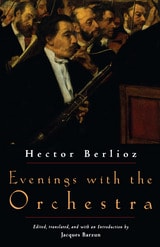
Evenings with the Orchestra
Hector Berlioz
University of Chicago Press, 1999
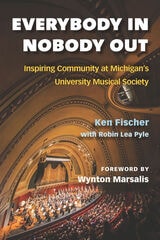
Everybody In, Nobody Out
Inspiring Community at Michigan's University Musical SocietyKen Fischer with Robin Lea Pyle
University of Michigan Press, 2020
The approach not only deepened UMS’s engagement with the university and southeast Michigan communities, it led to exemplary partnerships with distinguished artists across the world. Under Fischer’s leadership, UMS hosted numerous breakthrough performances, including the Vienna Philharmonic’s final tour with Leonard Bernstein, appearances by then relatively unknown opera singer Cecilia Bartoli, a multiyear partnership with the Royal Shakespeare Company, and artists as diverse as Yo-Yo Ma, Jawole Willa Jo Zollar, Elizabeth Streb, and Nusrat Fateh Ali Khan.
Though peppered with colorful anecdotes of how these successes came to be, this book is neither a history of UMS nor a memoir of Fischer’s significant accomplishments with the organization. Rather it is a reflection on the power of the performing arts to engage and enrich communities—not by handing down cultural enrichment from on high, but by meeting communities where they live and helping them preserve cultural heritage, incubate talent, and find ways to make community voices heard.
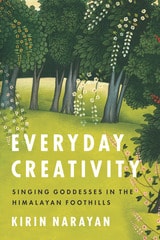
Everyday Creativity
Singing Goddesses in the Himalayan FoothillsKirin Narayan
University of Chicago Press, 2016
With rare and captivating eloquence, Narayan portrays Kangra songs about difficulties on the lives of goddesses and female saints as a path to well-being. Like the intricate geometries of mandalu patterns drawn in courtyards or the subtle balance of flavors in a meal, well-crafted songs offer a variety of deeply meaningful benefits: as a way of making something of value, as a means of establishing a community of shared pleasure and skill, as a path through hardships and limitations, and as an arena of renewed possibility. Everyday Creativity makes big the small world of Kangra song and opens up new ways of thinking about what creativity is to us and why we are so compelled to engage it.
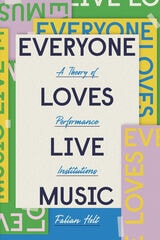
Everyone Loves Live Music
A Theory of Performance InstitutionsFabian Holt
University of Chicago Press, 2020
For decades, millions of music fans have gathered every summer in parks and fields to hear their favorite bands at festivals such as Lollapalooza, Coachella, and Glastonbury. How did these and countless other festivals across the globe evolve into glamorous pop culture events, and how are they changing our relationship to music, leisure, and public culture? In Everyone Loves Live Music, Fabian Holt looks beyond the marketing hype to show how festivals and other institutions of musical performance have evolved in recent decades, as sites that were once meaningful sources of community and culture are increasingly subsumed by corporate giants.
Examining a diverse range of cases across Europe and the United States, Holt upends commonly-held ideas of live music and introduces a pioneering theory of performance institutions. He explores the fascinating history of the club and the festival in San Francisco and New York, as well as a number of European cities. This book also explores the social forces shaping live music as small, independent venues become corporatized and as festivals transform to promote mainstream Anglophone culture and its consumerist trappings. The book further provides insight into the broader relationship between culture and community in the twenty-first century. An engaging read for fans, industry professionals, and scholars alike, Everyone Loves Live Music reveals how our contemporary enthusiasm for live music is more fraught than we would like to think.