Results by title
4917 books match the query 'Philosophy' and 231 start with e
ET vol 126 num 3
The University of Chicago Press
University of Chicago Press Journals, 2016
ET vol 128 num 1
The University of Chicago Press
University of Chicago Press Journals, 2017
Early Greek Philosophy
Joe McCoy
Catholic University of America Press, 2013
Early Postmodernism
Foundational EssaysPaul A. Bové
Duke University Press, 1995
Essays by noted cultural and literary theorists join with Bové’s contemporary preface to represent the important and unique moment in recent intellectual history when postmodernism was no longer seen primarily as an architectural term, had not yet come to describe the wide range of culture it does now, but was finding power and place in the literary realm. These essays show that the history of postmodernism and its attendant critical theories are both more complex and more deeply bound with literary criticism than often is acknowledged today. Early Postmodernism demonstrates not only the significance of these literary studies, but also the role played by literary critical postmodernism in making possible newer forms of critical and cultural studies.
Contributors. Barry Alpert, Charles Altieri, David Antin, Harold Bloom, Paul A. Bové, Hélène Cixous, Gerald Gillespie, Ihab Hassan, Joseph N. Riddel, William, V. Spanos, Catharine R. Stimpson, Cornel West

Earth Rising
David Oates
Oregon State University Press, 1989
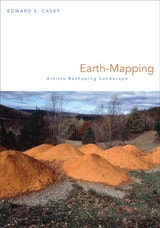
Earth-Mapping
Artists Reshaping LandscapeEdward S. Casey
University of Minnesota Press, 2005
Earthly Plenitudes
A Study on Sovereignty and LaborBruno Gullì
Temple University Press, 2016
Gullì first reviews approaches to sovereignty by philosophers as varied as Gottfried Leibniz and Georges Bataille, and then looks at concrete examples where the alliance of sovereignty and capital cracks under the potency of living labor. He examines contingent academic labor as an example of the super-exploitation of labor, which has become a global phenomenon, and as such, a clear threat to the sovereign logic of capital. Gullì also looks at disability to assert that a new measure of humanity can only be found outside the schemes of sovereignty, productivity, efficiency, and independence, through care and caring for others, in solidarity and interdependence.
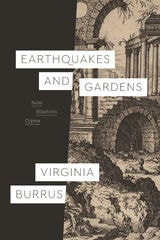
Earthquakes and Gardens
Saint Hilarion’s CyprusVirginia Burrus
University of Chicago Press, 2023
In Jerome’s Life of Saint Hilarion, a fourth-century saint briefly encounters the ruins of an earthquake-toppled city and a haunted garden in Cyprus. From these two fragmentary passages, Virginia Burrus delivers a series of sweeping meditations on our experience of place and the more-than-human worlds—the earth and its gods—that surround us. Moving between the personal and geological, Earthquakes and Gardens ruminates on destruction and resilience, ruination and resurgence, grief and consolation in times of disaster and loss. Ultimately, Burrus’s close readings reimagine religion as a practice that unsettles certainty and develops mutual flourishing.
Earworm and Event
Music, Daydreams, and Other Imaginary RefrainsEldritch Priest
Duke University Press, 2022
Eating Anxiety
The Perils of Food PoliticsChad Lavin
University of Minnesota Press, 2013
Debates about obesity are really about the meaning of responsibility. The trend toward local foods reflects the changing nature of space due to new communication technologies. Vegetarian theory capitalizes on biotechnology’s challenge to the meaning of species. And food politics, as this book makes powerfully clear, is actually about the political anxieties surrounding globalization.
In Eating Anxiety, Chad Lavin argues that our culture’s obsession with diet, obesity, meat, and local foods enacts ideological and biopolitical responses to perceived threats to both individual and national sovereignty. Using the occasion of eating to examine assumptions about identity, objectivity, and sovereignty that underwrite so much political order, Lavin explains how food functions to help structure popular and philosophical understandings of the world and the place of humans within it. He introduces the concept of digestive subjectivity and shows how this offers valuable resources for rethinking cherished political ideals surrounding knowledge, democracy, and power.
Exploring discourses of food politics, Eating Anxiety links the concerns of food—especially issues of sustainability, public health, and inequality—to the evolution of the world order and the possibilities for democratic rule. It forces us to question the significance of consumerist politics and—simultaneously—the relationship between politics and ethics, public and private.
Eccentric Culture
A Theory of Western CivilizationRémi Brague
St. Augustine's Press, 2009
Echo Objects
The Cognitive Work of ImagesBarbara Maria Stafford
University of Chicago Press, 2007
Echoes From The Holocaust
Philosophical Reflections on a Dark Timeedited by Alan Rosenberg and Gerald E. Myers
Temple University Press, 1990
The murder of six million Jewish men, women, and children during World War II was an act of such barbarity as to constitute one of the central events of our time; yet a list of the major concerns of professional philosophers since 1945 would exclude the Holocaust. This collection of twenty-three essays, most of which were written expressly for this volume, is the first book to focus comprehensively on the profound issues and philosophical significance of the Holocaust.
The essays, written for general as well as professional readers, convey an extraordinary range of factual information and philosophical reflection in seeking to identify the haunting meanings of the Holocaust. Among the questions addressed are: How should philosophy approach the Holocaust? What part did the philosophical climate play in allowing Hitlerism its temporary triumph? What is the philosophical climate today and what are its probable cultural effects? Can philosophy help our culture to become a bulwark against future agents of evil? The multiple dimensions of the Holocaust—historical, sociological, psychological, religious, moral, and literary—are collected here for concentrated philosophical interpretations.
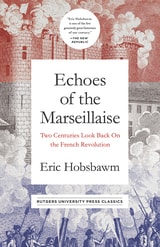
Echoes of the Marseillaise
Two Centuries Look Back on the French RevolutionHobsbawm, Eric
Rutgers University Press, 2019
E.J. Hobsbawm’s classic historiographic study—written at the very moment when a new set of revolutions swept through the Eastern Bloc and brought down the Iron Curtain—explores how the French Revolution was perceived over the following two centuries. He traces how the French Revolution became integral to nineteenth-century political discourse, when everyone from bourgeois liberals to radical socialists cited these historical events, even as they disagreed on what their meaning. And he considers why references to the French Revolution continued to inflame passions into the twentieth century, as a rhetorical touchstone for communist revolutionaries and as a boogeyman for social conservatives.
Echoes of the Marseillaise is a stimulating examination of how the same events have been reimagined by different generations and factions to serve various political agendas. It will give readers a new appreciation for how the French Revolution not only made history, but also shaped our fundamental notions about history itself.
Eclipse of the Self
The Development of Heidegger’s Concept of AuthenticityMichael E. Zimmerman
Ohio University Press, 1986
Although it is sometimes said that Martin Heidegger’s later philosophy no longer concerned itself with the theme of authenticity so crucial to Being and Time (1927), this book argues that his interest in authenticity was always strong.
After leaving the seminary to become a philosophy student, Heidegger began to “de–mythologize” religious themes for his own philosophical purposes. Like the Christian notion of faith, Heidegger’s notion of authenticity involves relinquishing the egotistical self–understanding which blocks our openness for possibilities. Yet authenticity as “resoluteness” includes an element of voluntarism foreign to the idea of faith. Heidegger’s brief engagement with National Socialism (1933–1934) helped him to re–think the Nietzschean concept of will which had influenced his early views on authenticity. Although part of the meaning of resoluteness is to allow things to be revealed, it also suggests that an individual can somehow will to be authentic. After about 1936, Heidegger emphasized that an individual can only be released from egoism (inauthenticity) by a power which transcends him. The abiding theological issue concerning the efficacy of works as against the saving power of grace finds expression in the distinction between resoluteness and releasement.
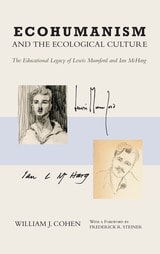
Ecohumanism and the Ecological Culture
The Educational Legacy of Lewis Mumford and Ian McHargWilliam J. Cohen
Temple University Press, 2019
Lewis Mumford, one of the most respected public intellectuals of the twentieth century, speaking at a conference on the future environments of North America, said, “In order to secure human survival we must transition from a technological culture to an ecological culture.” In Ecohumanism and the Ecological Culture, William Cohen shows how Mumford’s conception of an educational philosophy was enacted by Mumford’s mentee, Ian McHarg, the renowned landscape architect and regional planner at the University of Pennsylvania. McHarg advanced a new way to achieve an ecological culture―through an educational curriculum based on fusing ecohumanism to the planning and design disciplines.
Cohen explores Mumford’s important vision of ecohumanism—a synthesis of natural systems ecology with the myriad dimensions of human systems, or human ecology―and how McHarg actually formulated and made that vision happen. He considers the emergence of alternative energy systems and new approaches to planning and community development to achieve these goals.
The ecohumanism graduate curriculum should become the basis to train the next generation of planners and designers to lead us into the ecological culture, thereby securing the educational legacy of both Lewis Mumford and Ian McHarg.
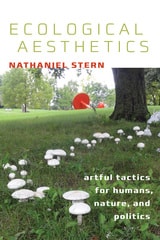
Ecological Aesthetics
artful tactics for humans, nature, and politicsNathaniel Stern
Dartmouth College Press, 2018
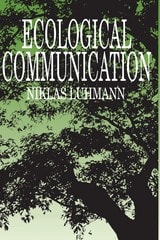
Ecological Communication
Niklas Luhmann
University of Chicago Press, 1989
Luhmann extends the concept of "ecology" to refer to any analysis that looks at connections between social systems and the surrounding environment. He traces the development of the notion of "environment" from the medieval idea—which encompasses both human and natural systems—to our modern definition, which separates social systems from the external environment.
In Luhmann's thought, human beings form part of the environment, while social systems consist only of communications. Utilizing this distinctive theoretical perspective, Luhmann presents a comprehensive catalog of society's reactions to environmental problems. He investigates the spheres of the economy, law, science, politics, religion, and education to show how these areas relate to environmental issues.
Ecological Communication is an important work that critically examines claims central to our society—claims to modernity and rationality. It will be of great importance to scholars and students in sociology, political science, philosophy, anthropology, and law.
Ecological Governance
Toward a New Social Contract with the EarthBruce Jennings
West Virginia University Press, 2016
As our economic and natural systems continue on their collision course, Bruce Jennings asks whether we have the political capacity to avoid large-scale environmental disaster. Can liberal democracy, he wonders, respond in time to ecological challenges that require dramatic changes in the way we approach the natural world? Must a more effective governance be less democratic and more autocratic? Or can a new form of grassroots ecological democracy save us from ourselves and the false promises of material consumption run amok?
Ecological Governance is an ethicist’s reckoning with how our political culture, broadly construed, must change in response to climate change. Jennings argues that during the Anthropocene era a social contract of consumption has been forged. Under it people have given political and economic control to elites in exchange for the promise of economic growth. In a new political economy of the future, the terms of the consumptive contract cannot be met without severe ecological damage. We will need a new guiding vision and collective aim, a new social contract of ecological trusteeship and responsibility.
Ecologies of a Storied Planet in the Anthropocene
Serpil Oppermann
West Virginia University Press, 2023
Ecologies of a Storied Planet in the Anthropocene is a tour de force. With transdisciplinarity and theoretical lucidity, it rethinks the Anthropocene from a material ecocritical perspective, envisioning innovative modes of knowledge for deeper understandings of Anthropocene ecologies. Focusing on nonhuman agencies, Serpil Oppermann shows in fascinating detail how to better imagine an ecological future on our storied planet that has suffered enormously from an anthropocentric mindset.
Economics as a Social Science
An Approach to Nonautistic TheoryAndrew M. Kamarck
University of Michigan Press, 2002
Economics--Mathematical Politics or Science of Diminishing Returns?
Alexander Rosenberg
University of Chicago Press, 1992
Economy and the Future
A Crisis of FaithJean-Pierre Dupuy
Michigan State University Press, 2014
Ecumenical Jihad
Ecumenism and the Culture WarPeter Kreeft
St. Augustine's Press, 2015
Aware of the deep theological differences of these monotheistic faiths, Kreeft calls for a moratorium on our polemics against one another so that we can form an alliance to fight together to save Western civilization.
Edges of the State
John Protevi
University of Minnesota Press, 2019
Using philosophical and scientific work to engage the perennial question of human nature
This book takes a look at the formation, and edges, of states: their breakdowns and attempts to repair them, and their encounters with non-state peoples. It draws upon anthropology, political philosophy, neuroscience, evolutionary biology, child developmental psychology, and other fields to look at states as projects of constructing “bodies politic,” where the civic and the somatic intersect. John Protevi asserts that humans are predisposed to “prosociality,” or being emotionally invested in social partners and patterns. With readings from Jean-Jacques Rousseau and James C. Scott; a critique of the assumption of widespread pre-state warfare as a selection pressure for the evolution of human prosociality and altruism; and an examination of the different “economies of violence” of state and non-state societies, Edges of the State sketches a notion of prosocial human nature and its attendant normative maxims.
Forerunners: Ideas First
Short books of thought-in-process scholarship, where intense analysis, questioning, and speculation take the lead
Edicts of Asoka
Edited by N. A. Nikam and Richard McKeon
University of Chicago Press, 1978

Edith Stein
Philosopher and MysticJosephine Koeppel O.C.D.
University of Scranton Press, 2007
The twentieth anniversary of the beatification of Edith Stein (1891–1942), the accomplished Jewish philosopher who made a spiritual journey from atheism to agnosticism before eventually converting to Catholicism, will be celebrated in 2007. In Edith Stein: Philosopher and Mystic, Josephine Koeppel chronicles the life of this influential saint from her secular youth and entrance into a German monastery to her tragic death at Auschwitz. This accessible work will reward readers of all faiths interested in the life of a remarkable woman who changed the modern conception of sainthood.
Edmund Husserl and the Phenomenological Tradition
Robert Sokolowski
Catholic University of America Press, 2018
Edmund Husserl
Philosopher of Infinite TasksMaurice Natanson
Northwestern University Press, 1973
The product of many years of reflection on phenomenology, this book is a comprehensive and creative introduction to the philosophy of Edmund Husserl. Natanson uses Husserl's later work as a clue to the meaning of his entire intellectual career, showing how his earlier methodological work evolved into the search for transcendental roots and developed into a philosophy of the life-world. Phenomenology, for Natanson, emerges as a philosophy of origin, a transcendental discipline concerned with consciousness, history, and world rather than with introspection and traditional metaphysical warfare.

Eduard C. Lindeman and Social Work Philosophy
Gisela Konopka
University of Minnesota Press, 1958
Eduard C. Lindeman and Social Work Philosophy was first published in 1958. Minnesota Archive Editions uses digital technology to make long-unavailable books once again accessible, and are published unaltered from the original University of Minnesota Press editions.
Eduard C. Lindeman, a leader in the field of social work for many years, was deeply concerned with the profession's development of a basic philosophy. As a teacher at the New York School of Social Work for more than 25 years and as a prolific writer and consultant in a broad range of activities, Lindeman challenged old ideas and stimulated new ones in relation to the concepts and principles of social work. In this study of the man and his thinking, Mrs. Konopka, a professor of social work herself, provides an illuminated discussion of the theories upon which the practice of social work is based.
In the first section Mrs. Konopka presents a biographical sketch of Lindeman, showing the forces and experiences which helped to shape his views and to create the ideas and ideals he fostered. Then she traces the development of Lindeman's philosophy over the three decades of his most fruitful period, the years from 1920 to 1953, when he died.
In the third part, as a background for an understanding of Lindeman's contributions, she describes the status of social work values and goals before and during his career. In conclusion, she discusses a theory of social work based upon an integration of values, methods, and knowledge.
This book will be especially useful to those teaching courses in the history and philosophy of social work and related professions, as well as to those actively engaged in social work.
Educating For Professionalism
Creating A Culture Of Humanism In Medical EducationDelese Wear
University of Iowa Press, 2000
The thirteen essays in Educating for Professionalism examine the often conflicting ethical, social, emotional, and intellectual messages that medical institutions send to students about what it means to be a doctor. Because this disconnection between what medical educators profess and what students experience is partly to blame for the current crisis in medical professionalism, the authors offer timely, reflective analyses of the work and opportunities facing medical education if doctors are to win public trust.
In their drive to improve medical professionalism within the world of academic medicine, editors Delese Wear and Janet Bickel have assembled thought-provoking essays that elucidate the many facets of teaching, valuing, and maintaining medical professionalism in the middle of the myriad challenges facing medicine at the dawn of the twenty-first century.
The collection traces how the values of altruism and service can influence not only mission statements and admission policies but also the content of medical school ethics courses, student-led task forces, and mentoring programs, along with larger environmental issues in medical schools and the communities they serve.
Stanley Joel Reiser
Jack Coulehan
Peter C. Williams
Frederic W. Hafferty
Richard Martinez
Judith Andre
Jake Foglio
Howard Brody
Sheila Woods
Sue Fosson
Lois Margaret Nora
Mary Anne C. Johnston
Tana A. Grady-Weliky
Cynthia N. Kettyle
Edward M. Hundert
Norma E. Wagoner
Frederick A. Miller
William D. Mellon
Howard Waitzkin
Donald Wasylenki
Niall Byrne
Barbara McRobb
Edward J. Eckenfels
Lucy Wolf Tuton
Claudia H. Siegel
Timothy B. Campbell
Education
Immanuel Kant
University of Michigan Press, 1960
Education and Equality
Danielle Allen
University of Chicago Press, 2016
Allen argues that education plays a crucial role in the cultivation of political and social equality and economic fairness, but that we have lost sight of exactly what that role is and should be. Drawing on thinkers such as John Rawls and Hannah Arendt, she sketches out a humanistic baseline that re-links education to equality, showing how doing so can help us reframe policy questions. From there, she turns to civic education, showing that we must reorient education’s trajectory toward readying students for lives as democratic citizens. Deepened by commentaries from leading thinkers Tommie Shelby, Marcelo Suárez-Orozco, Michael Rebell, and Quiara Alegría Hudes that touch on issues ranging from globalization to law to linguistic empowerment, this book offers a critical clarification of just how important education is to democratic life, as well as a stirring defense of the humanities.
Education, Justice, and Democracy
Edited by Danielle Allen and Rob Reich
University of Chicago Press, 2013
Educational Goods
Values, Evidence, and Decision-MakingHarry Brighouse, Helen F. Ladd, Susanna Loeb, and Adam Swift
University of Chicago Press, 2018
In Educational Goods, two philosophers and two social scientists address this very question. They begin by broadening the language for talking about educational policy: “educational goods” are the knowledge, skills, and attitudes that children develop for their own benefit and that of others; “childhood goods” are the valuable experiences and freedoms that make childhood a distinct phase of life. Balancing those, and understanding that not all of them can be measured through traditional methods, is a key first step. From there, they show how to think clearly about how those goods are distributed and propose a method for combining values and evidence to reach decisions. They conclude by showing the method in action, offering detailed accounts of how it might be applied in school finance, accountability, and choice. The result is a reimagining of our decision making about schools, one that will sharpen our thinking on familiar debates and push us toward better outcomes.
Edward W. Said, Volume 25
Paul Bové
Duke University Press, 0
Featured is a new interview with Said, conducted by W. J. T. Mitchell, in which Said discusses the importance of the visual to his thinking, specifically the works of Goya and Caravaggio, which in turn made possible Said's valuable contributions to our understanding of photography and painting. Other contributions reflect on Said's influences on the American public sphere; the subtle personal politics that inform the relationship between music and emotion; Said's importance to a thinking about "race before racism" and the disappearance of the American; and jazz man Jim Merod reflects on Said's "sublime lyrical abstractions."
Covering with insight the many debates Said so deftly entered and formed, the distinguished contributors to this volume reflect upon his oeuvre to create an atmosphere of thoughtfulness, questioning, and interactivity.
Effective History
On Critical Practice Under Historical ConditionsSinead Murphy
Northwestern University Press, 2010
Sinéad Murphy’s Effective History presents its reader with a thorough explanation and evaluation of H.-G. Gadamer’s concept of “effective history,” not only as it pertains to the broader range of hermeneutic and postmodern thinkers working in the wake of Kantian philosophy, but first and foremost as a careful and measured consideration of the practice of effective history as a critical method for philosophy in our current times. In this latter sense, the work pushes Gadamer’s thinking forward into new territory and provides an insightful estimation of the value of hermeneutic inquiry.
Murphy demonstrates that the notion of effective history not only stems from a central issue in Kant’s critical philosophy (the divide between the empirical and transcendental, between history and pure knowledge), but that it is best understood through an analysis of the various ways that certain contemporary thinkers fall into the traps and contradictions that stem from Kant’s critical turn.
Egocracy
Marx, Freud and LacanSonia Arribas and Howard Rouse
Diaphanes, 2011
Eight Women Philosophers
Theory, Politics, and FeminismJane Duran
University of Illinois Press, 2005
Duran devotes one chapter to each philosopher and provides a sustained critical analysis of her work, utilizing aspects of Continental theory, poststructuralist theory, and literary theory. She situates each philosopher within her respective era and in relation to her intellectual contemporaries, and specifically addresses the contributions each has made to major areas such as metaphysics/epistemology, theory of value, and feminist theory. She affirms the viability and importance of recovering these women's overlooked work and provides a powerful answer to the question of why the rubric "women philosophers" remains so valuable.
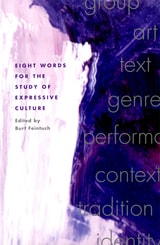
Eight Words for the Study of Expressive Culture
Edited by Burt Feintuch
University of Illinois Press, 2003
No matter where we are--in academic institutions, in cultural agencies, at home, or in a casual conversation--these are words we use when we talk about creative expression in its cultural contexts. Eight Words for the Study of Expressive Culture is a thoughtful, interdisciplinary examination of the keywords that are integral to the formulation of ideas about the diversity of human creativity, presented as a set of essays by leading folklorists.
Many of us use these eight words every day. We think with them. We teach with them. Much of contemporary scholarship rests on their meanings and implications. They form a significant part of a set of conversations extending through centuries of thought about creativity, meaning, beauty, local knowledge, values, and community. Their natural habitats range across scholarly disciplines from anthropology and folklore to literary and cultural studies and provide the framework for other fields of practice and performance as well.
Eight Words for the Study of Expressive Culture is a much-needed study of keywords that are frequently used but not easily explained. Anchored by Burt Feintuch’s cogent introduction, the book features essays by Dorothy Noyes, Gerald L. Pocius, Jeff Todd Titon, Trudier Harris, Deborah A. Kapchan, Mary Hufford, Henry Glassie, and Roger D. Abrahams.
Eighty-three Different Questions
Saint Augustine
Catholic University of America Press, 1982
Einstein, Polanyi, and the Laws of Nature
Lydia Jaeger
Templeton Press, 2010
What is the relationship between religious belief and the study of nature, between theology and science? This is the fundamental preoccupation of the three different studies in Einstein, Polanyi, and the Laws of Nature.
By exploring the highly original yet little-known thought of Michael Polanyi, Jaeger highlights the inherent personal investment in any quest for knowledge, including the scientific enterprise, thus raising the question of the objectivity of human knowledge. Considered to be the most incredible mind of the twentieth century, Albert Einstein saw scientific research as the fruit of the “cosmic religion.” His response to the question of the relationship between faith and science also receives the close analysis it deserves. Finally, Jaeger is interested in science’s propensity to use the concept of laws of nature, an idea also found in the Bible. She paves the way for interdisciplinary dialogue by examining the similarities and differences.
The synthesis of these three complementary studies brings out the collaboration between belief and knowledge, thus establishing a bridge between two noble human activities: faith and scientific research. It will interest all serious followers of the ongoing science and religion dialogue.
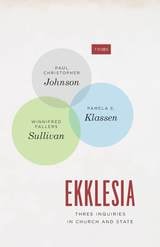
Ekklesia
Three Inquiries in Church and StatePaul Christopher Johnson, Pamela E. Klassen, and Winnifred Fallers Sullivan
University of Chicago Press, 2018
The first of a closely linked trio of essays is by Paul Johnson, and offers a new interpretation of the Brazilian community gathered at Canudos and its massacre in 1896–97, carried out as a joint churchstate mission and spectacle. In the second essay, Pamela Klassen argues that the colonial churchstate relationship of Canada came into being through local and national practices that emerged as Indigenous nations responded to and resisted becoming “possessions” of colonial British America. Finally, Winnifred Sullivan’s essay begins with reflection on the increased effort within the United States to ban Bibles and scriptural references from death penalty courtrooms and jury rooms; she follows with a consideration of the political theological pressure thereby placed on the jury that decides between life and death. Through these three inquiries, Ekklesia takes up the familiar topos of “church and state” in order to render it strange.
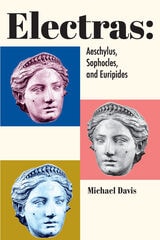
Electras
Aeschylus, Sophocles, and EuripidesMichael Davis
St. Augustine's Press, 2023
Davis accomplishes much more than an exegetical bridge as he connects us with ancient memory and wisdom. "When we cannot resist the temptation to recoil morally from their terminology, we risk the tragedy of losing their profound thoughts about our humanity––their philosophical anthropology." Davis has remarkably made of a niche study a stunning source material for more universal questions. This is a book that is as timely as it is ageless.
Elemental Ecocriticism
Thinking with Earth, Air, Water, and FireJeffrey Jerome Cohen
University of Minnesota Press, 2015
For centuries it was believed that all matter was composed of four elements: earth, air, water, and fire in promiscuous combination, bound by love and pulled apart by strife. Elemental theory offered a mode of understanding materiality that did not center the cosmos around the human. Outgrown as a science, the elements are now what we build our houses against. Their renunciation has fostered only estrangement from the material world.
The essays collected in Elemental Ecocriticism show how elemental materiality precipitates new engagements with the ecological. Here the classical elements reveal the vitality of supposedly inert substances (mud, water, earth, air), chemical processes (fire), and natural phenomena, as well as the promise in the abandoned and the unreal (ether, phlogiston, spontaneous generation).
Decentering the human, this volume provides important correctives to the idea of the material world as mere resource. Three response essays meditate on the connections of this collaborative project to the framing of modern-day ecological concerns. A renewed intimacy with the elemental holds the potential of a more dynamic environmental ethics and the possibility of a reinvigorated materialism.
Elemental Powers
Ernst Jünger, Critical Theory, and the Idea of Natural HistoryAndrew McCann
Northwestern University Press, 2027
Examining the conflicted legacy of Ernst Jünger’s thought and its relationship to critical theory
In the 1920s, Ernst Jünger’s journalistic advocacy of a militaristic, antidemocratic nationalism played a central role in the rise of German fascism. At the same time, Jünger developed an increasingly acute account of how the mobilizing force of industrial technology embodied a will to power that, on the one hand, anticipated an authoritarian state but, on the other, assumed a planetary perspective that made national identifications redundant. What he called the Gestalt of the worker expresses the “elemental powers” that, he believed, mark the limits of Enlightenment conceptions of historical progress.
Today, Jünger appears in intellectual history primarily as a representative of protofascist decisionism, reactionary modernism, or the so-called conservative revolution. Andrew McCann puts these aspects of Jünger’s early work into dialogue with the posthistorical orientation that he developed after the Second World War, in order to offer a fresh reading that demonstrates how Jünger’s obsession with the transience of cultural and historical forms displays deep structural affinities with the idea of natural history developed by Walter Benjamin and Theodor Adorno. By tracing this thread in intellectual history, McCann charts the currents of influence and confluence between what are usually understood as sharply polarized political positions and the conceptual postures that accompany them: immanence and transcendence, reason and myth, class and nation, relations of production and the forces of nature.
Elementary Aspects of the Political
Histories from the Global SouthPrathama Banerjee
Duke University Press, 2020
Elements Of Metaphysics
William Carter
Temple University Press, 1989
Elements of Knowledge
Pragmatism, Logic, and InquiryArthur Franklin Stewart
Vanderbilt University Press, 1997
Elements of Knowledge is an engaging introductory text, effectively and imaginatively designed to bring a working understanding and appreciation of the fundamental tenets and methods of the American school of philosophy known as pragmatism, as articulated by its founder C. S. Peirce, to undergraduates and general readers. It presents and explains the basic pragmatic tools that are the common thread in our acquisition and development of knowledge, whether in an academic, vocational, or professional setting, or in life at large. Pragmatism guides, without dictating, examinations of ordinary human experience, creative learning in all fields, and progress in academic disciplines.
This book is intended for use by both general readers and students, particularly those in introductory logic or related philosophy courses. It will also fit well in the design of many "core curriculum" or "general education" course requirements. It is ultimately meant to be accessible and beneficial to anyone seeking a clearer understanding of the unifying principles for acquiring and assessing the soundness of all knowledge.
Elevations
The Height of the Good in Rosenzweig and LevinasRichard A. Cohen
University of Chicago Press, 1994
Cohen also explores the ethical philosophy of these two thinkers in relation to Nietzsche, Husserl, Heidegger, Buber, Sartre, and Derrida. The result is one of the most wide-ranging and lucid studies yet written on these crucial figures in philosophy and Jewish thought.