Results by title
1325 books match the query 'Psychology' and 43 start with e
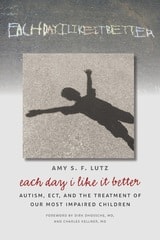
Each Day I Like It Better
Autism, ECT, and the Treatment of Our Most Impaired ChildrenAmy S. F. Lutz
Vanderbilt University Press, 2014
Each Day I Like It Better recounts the journeys of Jonah and seven other children and their families (interviewed by the author) in their quests for appropriate educational placements and therapeutic interventions. The author describes their varied, but mostly successful, experiences with ECT.
A survey of research on pediatric ECT is incorporated into the narrative, and a foreword by child psychiatrist Dirk Dhossche and ECT researcher and practitioner Charles Kellner explains how ECT works, the side effects patients may experience, and its current use in the treatment of autism, catatonia, and violent behavior in children.
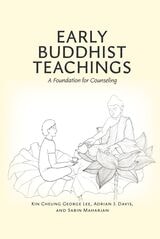
Early Buddhist Teachings
A Foundation for CounselingKin Cheung George Lee, Adrian J. Davis, and Sabin Maharjan
Hong Kong University Press, 2025
As mindfulness and meditation become mainstream therapeutic tools, their deep Buddhist roots are often stripped away and limit their effectiveness for clients from Buddhist cultural backgrounds. Early Buddhist Teachings: A Theoretical Foundation for Counseling restores these practices to their original context, offering a culturally congruent counseling model grounded in Pali scriptures and core Buddhist principles.
This informative volume explores key Buddhist concepts including dependent co-arising, non-self, and impermanence, and places them in conversation with Western psychological theories. Supplemented with practical assessment tools and intervention techniques, this work provides mental health professionals with a new framework for integrating Buddhist teachings into counseling.
For therapists, students, and counselors seeking to expand their approach, Early Buddhist Teachings offers a vital resource at the intersection of Buddhism and psychotherapy, offering a more holistic and effective model of mental health care.
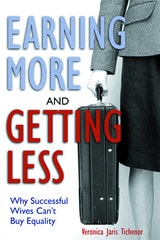
Earning More and Getting Less
Why Successful Wives Can't Buy EqualityVeronica Jaris Tichenor
Rutgers University Press, 2005
In Earning More and Getting Less, sociologist Veronica Jaris Tichenor shows how, historically, men have derived a great deal of power over financial and household decisions by bringing home all (or most) of the family's income. Yet, financial superiority has not been a similar source of power for women. Tichenor demonstrates how wives, instead of using their substantial incomes to negotiate more egalitarian relationships, enable their husbands to perpetuate male dominance within the family.
Weaving personal accounts, in-depth interviews, and compelling narrative, this important study reveals disturbing evidence that the conventional power relations defined by gender are powerful enough to undermine hierarchies defined by money. Earning More and Getting Less is essential reading in sociology, psychology, and family and gender studies.

Ecology of the Body
Styles of Behavior in Human LifeJoseph Lyons
Duke University Press, 1987
Economizing Mind, 1870–2015
When Economics and Psychology Met . . . or Didn’tMarina Bianchi and Neil De Marchi, special issue editors
Duke University Press, 2016
Economists and psychologists share an interest in explaining how people make the choices that they do. However, economists have tended to stress individual rationality, shaped by economic motives and expressed in formal logical or mathematical models, while psychologists have preferred to identify influences through experimentation. In recent decades, behavioral economics has bridged the two fields and challenged the traditional economic assumption that individuals choose rationally. The essays collected here provide a longer view and reflect on episodic contact between psychology and economics beginning in the late nineteenth century. They help explain why meaningful, sustained joint inquiry eluded both disciplines for so long and usefully complement the recent inclination of researchers in each field to find inadequacy in the other.
Contributors: Marina Bianchi, Simon J. Cook, Neil De Marchi, José Edwards, Tiziana Foresti, Craufurd D. Goodwin, Judy L. Klein, Harro Maas, Ivan Moscati, John Staddon, Andrej Svorenčík
Edges of Loss
From Modern Drama to Postmodern TheoryMark Pizzato
University of Michigan Press, 1998

Educating Angels
Teaching for the Pursuit of HappinessTony Armstrong, Ph.D
Parkhurst Brothers, Inc., 2013
Educating Intuition
Robin M. Hogarth
University of Chicago Press, 2001
In Educating Intuition, Robin M. Hogarth lays bare this mysterious process so fundamental to daily life by offering the first comprehensive overview of what the science of psychology can tell us about intuition—where it comes from, how it works, whether we can trust it. From this literature and his own research, Hogarth finds that intuition is a normal and important component of thought that has its roots in processes of tacit learning. Environment, attention, experience, expertise, and the success of the scientific method all form part of Hogarth's perspective on intuition, leading him to the surprising—but natural—conclusion that we can educate our sixth sense. To this end he offers concrete suggestions and exercises to help readers develop their intuitive skills and habits for learning the "right" lessons from experience.
Artfully and accessibly combining cognitive science, the latest research in psychology, and Hogarth's own observations, Educating Intuition eschews the vague approach to the topic that has become commonplace and provides instead a wholly engaging and practical guide to enhancing our intuitive skills.
Educational and Developmental Aspects of Deafness
Donald F. Moores
Gallaudet University Press, 1990
Educational and Developmental Aspects of Deafness details the ongoing revolution in the education of deaf children. More than 20 researchers contributed their discoveries in anthropology, education, linguistics, psychology, sociology, and other major disciplines, with special concentration upon the education of deaf children.
Divided into two parts on education at home and in school, this incisive book documents breakthroughs such as the public's interest in sign language, the increasing availability of interpreters, the growing perception of deafness as a social condition, not a pathology, and other positive trends. It is unique as the first purely research-based text and reference point for further study of the education of deaf children.

Educational and Psychological Testing
A Study of the Industry and its PracticesMartin Holeman
Russell Sage Foundation, 1972

Egocracy
Marx, Freud and LacanSonia Arribas and Howard Rouse
Diaphanes, 2011

Elizabeth Packard
A Noble FightLinda V. Carlisle
University of Illinois Press, 2010
Embodied Mind, Meaning, and Reason
How Our Bodies Give Rise to UnderstandingMark Johnson
University of Chicago Press, 2017
A brief account of Johnson’s own intellectual journey, through which we track some of the most important discoveries in the field over the past forty years, sets the stage. Subsequent chapters set out Johnson’s important role in embodied cognition theory, including his cofounding (with George Lakoff) of conceptual metaphor theory and, later, their theory of bodily structures and processes that underlie all meaning, conceptualization, and reasoning. A detailed account of how meaning arises from our physical engagement with our environments provides the basis for a nondualistic, nonreductive view of mind that he sees as most congruous with the latest cognitive science. A concluding section explores the implications of our embodiment for our understanding of knowledge, reason, and truth. The resulting book will be essential for all philosophers dealing with mind, thought, and language.
Embodied Resistance
Challenging the Norms, Breaking the RulesChris Bobel
Vanderbilt University Press, 2011
Embracing the Void
Rethinking the Origin of the SacredRichard Boothby
Northwestern University Press, 2023
A radical reinterpretation of the origin of religion through a psychoanalytic theorization of the unknown
Renowned psychoanalytic philosopher Richard Boothby puts forward a novel theory of religion inspired by Jacques Lacan’s theory of das Ding, the disquieting, inaccessible dimension of fellow human beings. This notion of an unfathomable excess, originally encountered in the figure of the mother, led Lacan to break with Freud’s formulation of the Oedipus complex and underlies Lacan’s distinctive conception of unconscious dynamics. Leaning on this account, Boothby shows how our sense of the sacred arises from our relation to what we do not know.
Embracing the Void lays out the range of Freud’s attempts at a psychoanalytic theory of religion and then sketches the rough contours of Lacan’s contrasting approach. From there, Boothby offers the theoretical tools for interpreting the religious impulse and analyzes key religious traditions, from ancient Greek polytheism to Judaism and Christianity, and from Hinduism and Buddhism to Islam, finally turning to modern capitalist culture and the seductive deity that dominates it—money. Lucid, accessible, and compelling, the book provides a cogent intervention in one of the psychoanalytic tradition’s most contentious topics and offers a new approach to our understanding of religion.
Emotion and Focus
Helen Nissenbaum
CSLI, 1985
The author's aim to discover the conception of emotion that is couched in a commonsense view of the world and is reflected in ordinary discourse.
Emotion
A Comprehensive Phenomenology of Theories and Their Meanings for TherapyJames Hillman
Northwestern University Press, 1962
As James Hillman writes in his new preface to this sweeping study, he intends nothing less than "to vitalize a standard topic of academic psychology by making the theory of emotion as crucial as is emotion itself in our lives." Hillman offers an informative and readable survey of a range of theories of emotion, focusing on the twentieth century but moving also from Greek thought to early Christianity to nineteenth-century German physiology. The work challenges readers to rethink our concepts and thereby to re-experience emotional phenomena.
Hillman's study contributes to today's renewed interest in the history of the body. Furthermore, his understanding of emotions in terms of epiphany makes a stimulating contribution to phenomenology. It is equally thought-provoking for the therapist, the philosopher, the intellectual historian, and the general reader.
Emotional Bodies
The Historical Performativity of EmotionsEdited by Dolores Martín Moruno and Beatriz Pichel
University of Illinois Press, 2019
Contributors: Jon Arrizabalaga, Rob Boddice, Leticia Fernández-Fontecha, Emma Hutchison, Dolores Martín-Moruno, Piroska Nagy, Beatriz Pichel, María Rosón, Pilar León-Sanz, Bertrand Taithe, and Gian Marco Vidor.
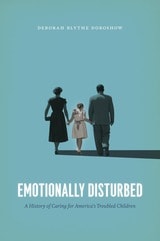
Emotionally Disturbed
A History of Caring for America's Troubled ChildrenDeborah Blythe Doroshow
University of Chicago Press, 2019
Emotionally Disturbed is the first work to examine not only the history of residential treatment but also the history of seriously mentally ill children in the United States. As residential treatment centers emerged as new spaces with a fresh therapeutic perspective, a new kind of person became visible—the emotionally disturbed child. Residential treatment centers and the people who worked there built physical and conceptual structures that identified a population of children who were alike in distinctive ways. Emotional disturbance became a diagnosis, a policy problem, and a statement about the troubled state of postwar society. But in the late twentieth century, Americans went from pouring private and public funds into the care of troubled children to abandoning them almost completely. Charting the decline of residential treatment centers in favor of domestic care–based models in the 1980s and 1990s, this history is a must-read for those wishing to understand how our current child mental health system came to be.
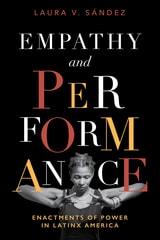
Empathy and Performance
Enactments of Power in Latinx AmericaLaura V. Sández
Vanderbilt University Press, 2024
To survey different answers to these queries, Sández studies Indigurrito (Nao Bustamante); Dominicanish (Josefina Báez); ¡Bienvenidos Blancos! or Welcome White People! (Alex Torra); the apology delivered by the group Veterans Stand with Standing Rock during protests against the Dakota Access Pipeline; and Kukuli Velarde’s body of work, from We, the Colonized Ones to A Mi Vida. In these artistic enactments, which range from 1992 to 2021, the historical construct of boundaries and bodies becomes evident. Following recent work on empathy by Lanzoni, Maibom, Calloway-Thomas, Bloom, Hogan, and Matravers, among others, Sández examines in-group/out-group divisions, the establishment of identity categories through performance, and the exploration of subaltern identities.
Empirical and Experimental Methods in Cognitive/Functional Research
Edited by Sally Rice and John Newman
CSLI, 2010
Empirical and Experimental Methods in Cognitive/Functional Research consists of selected papers from the seventh meeting of the Conceptual Structure, Discourse, and Language Conference, held at the University of Alberta in October 2004. The papers fall into five main categories, reflecting the cognitive and functional orientation of the conference: reciprocity between lexis and syntax, semantic factors affecting form patterning, grammaticalization of basic verbs, form/meaning pairings in discourse, and experimental investigations of language/mind and language/use interactions. In addition, a plenary paper by Nick Evans on complex events, propositional overlay, and the special status of reciprocal clauses is included.
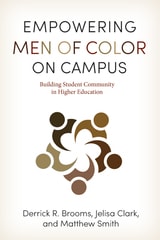
Empowering Men of Color on Campus
Building Student Community in Higher EducationBrooms, Derrick R.
Rutgers University Press, 2018
Endless Intervals
Cinema, Psychology, and Semiotechnics around 1900Jeffrey West Kirkwood
University of Minnesota Press, 2022
Revealing cinema’s place in the coevolution of media technology and the human
Cinema did not die with the digital, it gave rise to it. According to Jeffrey West Kirkwood, the notion that digital technologies replaced analog obscures how the earliest cinema laid the technological and philosophical groundwork for the digital world. In Endless Intervals, he introduces a theory of semiotechnics that explains how discrete intervals of machines came to represent something like a mind—and why they were feared for their challenge to the uniqueness of human intelligence.
Examining histories of early cinematic machines, Kirkwood locates the foundations for a scientific vision of the psyche as well as the information age. He theorizes an epochal shift in the understanding of mechanical stops, breaks, and pauses that demonstrates how cinema engineered an entirely new model of the psyche—a model that was at once mechanical and semiotic, discrete and continuous, physiological and psychological, analog and digital.
Recovering largely forgotten and untranslated texts, Endless Intervals makes the case that cinema, rather than being a technology assaulting the psyche, is in fact the technology that produced the modern psyche. Kirkwood considers the ways machines can create meaning, offering a fascinating theory of how the discontinuous intervals of soulless mechanisms ultimately produced a rich continuous experience of inner life.
Envy Up, Scorn Down
How Status Divides UsSusan T. Fiske
Russell Sage Foundation, 2011

Erich Fromm and Critical Criminology
Beyond the Punitive SocietyEdited by Kevin Anderson and Richard Quinney
University of Illinois Press, 2000
Linking the writings of the great humanist psychologist Erich Fromm to criminology, this collection shows how viewing crime patterns and the criminal justice system from Fromm's humanist perspective opens a path to more effective and more humane ways of understanding and dealing with crime and criminals.
Contributors to Erich Fromm and Critical Criminology draw on Fromm's writings on alienation, sadomasochism, and patriarchal/matriarchal values to assess the kinds of crimes being committed and the kinds of people committing them. They explore the spiritual and intellectual sources of Fromm's thought--including Jewish theology, Freudian psychoanalysis, Marxism, and Buddhism--and demonstrate how his socialist humanism points toward a society free of crime and violence. This volume also includes translations of two of Fromm's early articles on criminal justice, never before available in English, in which he develops a psychoanalytic Marxist critique of the role of criminal justice in a class society.
At a time when American society seems bent, to an unprecedented degree, on imprisonment, executions, and other violent responses to the problem of crime, Fromm's humanist critique offers a unique vantage point from which to renew and develop a critical criminology.

Essentials of MMPI-2 and MMPI-A Interpretation
James N. Butcher
University of Minnesota Press, 2000
The best resource for interpreting these widely used personality assessment tests.
The best resource for interpreting these widely used personality assessment tests.
Essentials of MMPI-2 and MMPI-A Interpretation presents innovative interpretive strategies for both the Minnesota Multiphasic Personality Inventory-2, or MMPI-2, and the adaptation for adolescents, the MMPI-A. James N. Butcher and Carolyn L. Williams detail the rationale for the revision and development of the instruments and their scales, and describe how to administer, score, profile, code, and interpret the tests.The revised edition includes the most recent MMPI research, including new information on ethnic background and cultural setting as they relate to assessment. Focusing primarily on studies of profile validity and external correlates, the revision also includes interpretive guidelines for several scales that will be introduced into the MMPI tests in 2000.Translation inquiries: University of Minnesota Press
Ethical Excellence
Philosophers, Psychologists, and Real-Life Exemplars Show Us How to Achieve ItHeidi M. Giebel
Catholic University of America Press, 2021
Ethics in Mental Health and Deafness
Virginia Gutman
Gallaudet University Press, 2002
This volume explores ethical issues specific to working with deaf clients, particularly matters of confidentiality, managing multiple relationships, and the clinician’s competency to provide services, particularly in communicating with and understanding deaf people. Led by editor Virginia Gutman, a unique assembly of respected mental health professionals share their experiences and knowledge in working with deaf clients.
Irene Leigh commences Ethics in Mental Health and Deafness with her varied experiences as a deaf mental health practitioner, and Gutman follows with insights on ethics in the “small world” of the Deaf community. William McCrone discusses the law and ethics, and Patrick Brice considers ethical issues regarding deaf children, adolescents, and their families. In contrast, Janet Pray addresses concerns about deaf and hard of hearing older clients.
Minority deaf populations pose additional ethical aspects, which are detailed by Carolyn Corbett. Kathleen Peoples explores the challenges of training professionals in mental health services specifically for deaf clients. Closely related to these topics is the influence of interpreters with deaf clients in mental health settings, which Lynnette Taylor thoroughly treats. Ethics and Mental Health in Deafness also features a chapter on genetic counseling and testing for deafness by Kathleen Arnos. The final section, written by Robert Pollard, examines ethical conduct in research with deaf people, a fitting conclusion to a volume that will become required reading for all professionals and students in this discipline.
Ethnographers In The Field
The Psychology of ResearchJohn L. Wengle
University of Alabama Press, 1988
A study of how doing field research submerged in a different culture impacts one's sense of identity.
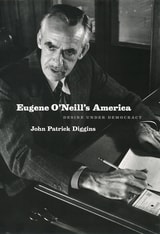
Eugene O'Neill's America
Desire Under DemocracyJohn Patrick Diggins
University of Chicago Press, 2007
In the face of seemingly relentless American optimism, Eugene O’Neill's plays reveal an America many would like to ignore, a place of seething resentments, aching desires, and family tragedy, where failure and disappointment are the norm and the American dream a chimera. Though derided by critics during his lifetime, his works resonated with audiences, won him the Nobel Prize and four Pulitzer, and continue to grip theatergoers today. Now noted historian John Patrick Diggins offers a masterly biography that both traces O’Neill’s tumultuous life and explains the forceful ideas that form the heart of his unflinching works.
Diggins paints a richly detailed portrait of the playwright’s life, from his Irish roots and his early years at sea to his relationships with his troubled mother and brother. Here we see O’Neill as a young Greenwich Village radical, a ravenous autodidact who attempted to understand the disjunction between the sunny public face of American life and the rage that he knew was simmering beneath. According to Diggins, O’Neill mined this disjunction like no other American writer. His characters burn with longing for an idealized future composed of equal parts material success and individual freedom, but repeatedly they fall back to earth, pulled by the tendrils of family and the insatiability of desire. Drawing on thinkers from Emerson to Nietzsche, O’Neill viewed this endlessly frustrated desire as the problematic core of American democracy, simultaneously driving and undermining American ideals of progress, success, and individual freedom.
Melding a penetrating assessment of O’Neill’s works and thought with a sensitive re-creation of his life, Eugene O’Neill’s America offers a striking new view of America’s greatest playwright—and a new picture of American democracy itself.

Every Last Breath
A Memoir of Two IllnessesJoanne Jacobson
University of Utah Press, 2020
Everybody Hurts
Transitions, Endings, and Resurrections in Fan CulturesRebecca Williams
University of Iowa Press, 2018
Have you ever been a fan of a show that was canceled abruptly or that killed off a beloved character unexpectedly? Or perhaps it was rebooted after a long absence and now you’re worried it won’t be as good as the original? Anyone who has ever followed entertainment closely knows firsthand that such transitions can be jarring.
Indeed, for truly loyal fans, the loss can feel very real—even throwing their own identity into question. Examining how fans respond to and cope with transitions, endings, or resurrections in everything from band breakups (R.E.M.) to show cancellations (Hannibal) to closing down popular amusement park rides, this collection brings together an eclectic mix of scholars to analyze the various ways fans respond to change. Essays explore practices such as fan discussion and creating alternative fan fictions, as well as cases where fans abandon their objects of interest completely and move on to new ones. Shedding light on how fans react, both individually and as a community, the contributors also trace the commonalities and differences present in fandoms across a range of media, and they pay close attention to the ways fandom operates across paratexts and transmedia forms including films, comics, and television.
This fascinating approach promises to make an important contribution to the fields of fan, media, and cultural studies, and should appeal widely to students, scholars, and anyone else with a genuine interest in understanding why these transitions can have such a deep impact on fans’ lives.
Contributors: Stuart Bell, Anya Benson, Lucy Bennett, Paul Booth, Joseph Brennan, Kristina Busse, Melissa A. Click, Ruth Deller, Evelyn Deshane, Nichola Dobson, Simone Driessen, Emily Garside, Holly Willson Holladay, Bethan Jones, Nicolle Lamerichs, Kathleen Williams, Rebecca Williams
Everyday Troubles
The Micro-Politics of Interpersonal ConflictRobert M. Emerson
University of Chicago Press, 2015
To examine these issues, Emerson draws on interviews with college roommates, diaries documenting a wide range of irritation with others, conversations with people caring for family members suffering from Alzheimer’s, studies of family interactions, neighborly disputes, and other personal accounts. He considers how people respond to everyday troubles: in non-confrontational fashion, by making low-visibility, often secretive, changes in the relationship; more openly by directly complaining to the other person; or by involving a third party, such as friends or family. He then examines how some relational troubles escalate toward extreme and even violent responses, in some cases leading to the involvement of outside authorities like the police or mental health specialists.
By calling attention to the range of possible reactions to conflicts in interpersonal relationships, Emerson also reminds us that extreme, even criminal actions often result when people fail to find ways to deal with trouble in moderate, non-confrontational ways. Innovative and insightful, Everyday Troubles is an illuminating look at how we deal with discord in our relationships.
Evolution and the Capacity for Commitment
Randolph Nesse
Russell Sage Foundation, 2001
Evolution's Eye
A Systems View of the Biology-Culture DivideSusan Oyama
Duke University Press, 2000
While acknowledging that, in an uncertain world, it is easy to “blame it on the genes,” Oyama claims that the renewed trend toward genetic determinism colors the way we think about everything from human evolution to sexual orientation and personal responsibility. She presents instead a view that focuses on how a wide variety of developmental factors interact in the multileveled developmental systems that give rise to organisms. Shifting attention away from genes and the environment as causes for behavior, she convincingly shows the benefits that come from thinking about life processes in terms of developmental systems that produce, sustain, and change living beings over both developmental and evolutionary time.
Providing a genuine alternative to genetic and environmental determinism, as well as to unsuccessful compromises with which others have tried to replace them, Evolution’s Eye will fascinate students and scholars who work in the fields of evolution, psychology, human biology, and philosophy of science. Feminists and others who seek a more complex view of human nature will find her work especially congenial.

Exile and Creativity
Signposts, Travelers, Outsiders, Backward GlancesSusan Rubin Suleiman, ed.
Duke University Press, 1998
In essays that range chronologically from the Renaissance to the 1990s, geographically from the Danube to the Andes, and historically from the Inquisition to the Holocaust, the complexities and tensions of exile and the diversity of its experiences are examined. Recognizing exile as an interior experience as much as a physical displacement, this collection discusses such varied topics as intellectual exile and seventeenth-century French literature; different versions of home and of the novel in the writings of Bakhtin and Lukács; the displacement of James Joyce and Clarice Lispector; a young journalist’s meeting with James Baldwin in the south of France; Jean Renoir’s Hollywood years; and reflections by the descendents of European emigrés. Strikingly, many of the essays are themselves the work of exiles, bearing out once more the power of the personal voice in scholarship.
With the exception of the contribution by Henry Louis Gates Jr., these essays were originally published in a special double issue of Poetics Today in 1996. Exile and Creativity will engage a range of readers from those whose specific interests include the problems of displacement and diaspora and the European Holocaust to those whose broad interests include art, literary and cultural studies, history, film, and the nature of human creativity.
Contributors. Zygmunt Bauman, Janet Bergstrom, Christine Brooke-Rose, Hélène Cixous, Tibor Dessewffy, Marianne Hirsch, Denis Hollier, Henry Louis Gates Jr., Linda Nochlin, Leo Spitzer, Susan Rubin Suleiman, Thomas Pavel, Doris Sommer, Nancy Huston, John Neubauer, Ernst van Alphen, Alicia Borinsky, Svetlana Boym, Jacqueline Chénieux-Gendron
Expecting Teryk
An Exceptional Path to ParenthoodDawn Prince-Hughes
Ohio University Press, 2005
“Expecting Teryk is a rich and sumptuous work that speaks to the deeper realities and represents a unique viewpoint of experiences shared by all individuals who choose the path to parenthood.”—Disability, Pregnancy, and Parenthood
The period just prior to the birth of a child is a time of profound personal transformation for expectant parents. Expecting Teryk: An Exceptional Path to Parenthood is an intimate exploration, written in the form of a letter from a parent to her future son, that reclaims a rite of passage that modern society would strip of its magic.
Dawn Prince-Hughes, renowned author of Songs of the Gorilla Nation: My Journey through Autism, considers the ways being autistic might inform her parenting. She also candidly narrates her experience of becoming a parent as part of a lesbian couple—from meeting her partner to the questions they ask about their readiness to become parents and the practical considerations of choosing a sperm donor.
Expecting Teryk is viewed through the lens of autism as Prince-Hughes shares the unique way she sees and experiences the world—as well as her aching will to be fully present for her son. Contemplating the evolutionary traditions of parenting from both animal and human perspectives and the reassurances that nature offers, Expecting Teryk is a work of sensuous wonder that speaks to the deeper realities and archetypal experiences shared by all who embark on the journey of parenthood.
Expelled to a Friendlier Place
A Study of Effective Alternative SchoolsMartin Gold and David W. Mann
University of Michigan Press, 1984
Experimentation with Human Beings
The Authority of the Investigator, Subject, Professions, and State in the Human Experimentation ProcessJay Katz
Russell Sage Foundation, 1972

Explaining Christian Origins and Early Judaism
Contributions from Cognitive and Social SciencePetri Luomanen
SBL Press, 2016
Now in paperback!
Cognitive science of religion is a radically new paradigm in the study of religion. Historians of religion have shown increasing interest in this approach. The book is in four parts: an introduction to cognitive and social-scientific approaches, applications of cognitive science, applications of conceptual blending theory, and applications of socio-cognitive analyses.
Features:
- Paperback format of an essential Brill resource
- Essays that combine cognitive analysis with historical and social-scientific approaches to biblical materials, Christian origins, and early Judaism
- Research for historians of religion, biblical scholars, and those working in the cognitive science of religion.
Exploring Forgiveness
Edited by Robert D. Enright and Joanna North
University of Wisconsin Press, 1998
Extending Psychological Frontiers
Stanley Schachter
Russell Sage Foundation, 1989
Extimacy
Nadia Bou Ali; Surti Singh
Northwestern University Press, 2024
Bringing together theorists and practitioners of psychoanalysis to interrogate Lacan’s notion of extimité
In 1960, Jacques Lacan coined the neologism extimité (extimacy) to denote a structure of subjectivity in which the most intimate, internal core is already external, thus complicating the traditional philosophical dualisms and binaries that have informed traditional notions of subjectivity. This collection is the first sustained interrogation of the concept of extimacy, comprising contributions on various topics by leading and emerging philosophers and scholars of psychoanalytic theory from around the world. This international collection also includes key perspectives from practicing psychoanalysts and presents a variety of critical inquiries into the concept of extimacy for application in multiple disciplines beyond philosophy and in an array of methodological and thematic frameworks.