Results by title
396 books match the query 'Rome' and 9 start with e
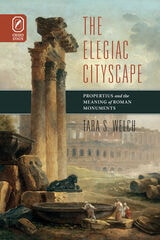
ELEGIAC CITYSCAPE
Propertius and the Meaning of Roman MonumentsTara S. Welch
The Ohio State University Press, 2005
The Elegiac Cityscape explores Propertius’ Rome and the various ways his poetry about the city illuminates the dynamic relationship between one individual and his environment. Combining the approaches of archaeology and literary criticism, Tara S. Welch examines how Propertius’ poems on Roman places scrutinize the monumentalization of various ideological positions in Rome, as they poke and prod Rome’s monuments to see what further meanings they might admit. The result is a poetic book rife with different perspectives on the eternal city, perspectives that often call into question any sleepy or complacent adherence to Rome’s traditional values.
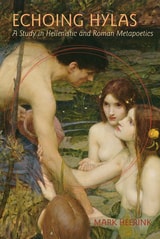
Echoing Hylas
A Study in Hellenistic and Roman MetapoeticsMark Heerink
University of Wisconsin Press, 2015
In Echoing Hylas, Mark Heerink argues that the story of Hylas—a famous episode of the Argonauts' voyage—was used by poets throughout classical antiquity to reflect symbolically on the position of their poetry in the literary tradition. Certain elements of the story, including the characters of Hylas and Hercules themselves, functioned as metaphors of the art of poetry. In the Hellenistic age, for example, the poet Theocritus employed Hylas as an emblem of his innovative
bucolic verse, contrasting the boy with Hercules, who symbolized an older, heroic-epic tradition. The Roman poet Propertius further developed and transformed Theocritus's metapoetical allegory by turning Heracles into an elegiac lover in pursuit of an unattainable object of affection. In this way, the myth of Hylas became the subject of a dialogue among poets across time, from the Hellenistic age to the Flavian era. Each poet, Heerink demonstrates, used elements of the myth to claim his own place in a developing literary tradition.
With this innovative diachronic approach, Heerink opens a new dimension of ancient metapoetics and offers many insights into the works of Apollonius of Rhodes, Theocritus, Virgil, Ovid, Valerius Flaccus, and Statius.
Economic Origins of Roman Christianity
Robert B. Ekelund Jr. and Robert D. Tollison
University of Chicago Press, 2011
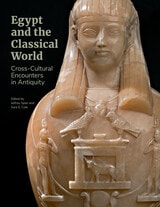
Egypt and the Classical World
Cross-Cultural Encounters in AntiquityJeffrey Spier
J. Paul Getty Trust, The, 2022
From Mycenaean weaponry found among the cargo of a Bronze Age shipwreck off the Turkish coast to the Egyptian-inspired domestic interiors of a luxury villa built in Greece during the Roman Empire, Egypt and the Classical World documents two millennia of cultural and artistic interconnectedness in the ancient Mediterranean. This volume gathers pioneering research from the Getty scholars' symposium that helped shape the major international loan exhibition Beyond the Nile: Egypt and the Classical World (J. Paul Getty Museum, 2018).
Generously illustrated essays consider a range of artistic and other material evidence, including archaeological finds, artworks, papyri, and inscriptions, to shed light on cultural interactions between Egypt, Greece, and Rome from the Bronze Age to the Late Period and Ptolemaic dynasty to the Roman Empire. The military's role as a conduit of knowledge and ideas in the Bronze Age Aegean, and an in-depth study of hieroglyphic Egyptian inscriptions found on Roman obelisks offer but two examples of scholarly lacunae addressed by this publication. Specialists across the fields of art history, archaeology, Classics, Egyptology, and philology will benefit from the volume's investigations into syncretic processes that enlivened and informed nearly twenty-five hundred years of dynamic cultural exchange.
The free online edition of this open-access publication is available at www.getty.edu/publications/egypt-classical-world/ and includes zoomable, high-resolution photography. Also available are free PDF, EPUB, and Kindle/MOBI downloads of the book.
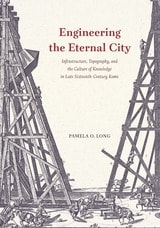
Engineering the Eternal City
Infrastructure, Topography, and the Culture of Knowledge in Late Sixteenth-Century RomePamela O. Long
University of Chicago Press, 2018
This portrait of an early modern Rome examines the many conflicts, failures, and successes that shaped the city, as decision-makers tried to control not only Rome’s structures and infrastructures but also the people who lived there. Taking up visual images of the city created during the same period—most importantly in maps and urban representations, this book shows how in a time before the development of modern professionalism and modern bureaucracies, there was far more wide-ranging conversation among people of various backgrounds on issues of engineering and infrastructure than there is in our own times. Physicians, civic leaders, jurists, cardinals, popes, and clerics engaged with painters, sculptors, architects, printers, and other practitioners as they discussed, argued, and completed the projects that remade Rome.
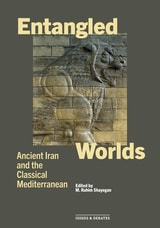
Entangled Worlds
Ancient Iran and the Classical MediterraneanM. Rahim Shayegan
J. Paul Getty Trust, The, 0
An exploration of the far-reaching exchanges between ancient Persia, Greece, and Rome, offering a bold new perspective on their interconnected cultural legacy.
For more than a millennium, ancient Persia and the classical Mediterranean were deeply intertwined—not merely through conflict but also through diplomacy, trade, and cultural exchange. From the rise of the Achaemenid Empire in the sixth century BCE to the fall of Rome in 476 CE and the twilight of Sasanian Persia in 651 CE, political, religious, and artistic exchanges shaped—and were shaped by—the dynamic interactions between ancient Persia, Greece, and Rome. These encounters fostered a complex web of cultural connectivity, challenging the notion of antiquity as a series of isolated civilizations and revealing its deep, enduring entanglements.
Bringing the disciplines of classics, Iranian studies, and global history into dialogue, this volume examines how successive Iranian empires—Achaemenid, Seleucid, Arsacid (Parthian), and Sasanian—engaged with their western (and occasionally eastern) neighbors. Essays on diplomacy, religion, art, and intellectual life offer fresh perspectives on ancient historiography, cross-cultural mythmaking, material and visual culture, and the political and religious dynamics of empire. Featuring more than 100 illustrations, Entangled Worlds is a compelling resource for scholars, students, and general readers interested in the shared legacies of the ancient world.
Essays in Ancient and Modern Historiography
Arnaldo Momigliano
University of Chicago Press, 2012
Ethnic Relations in the Ancient Mediterranean
Social Life Under EmpirePhilip A. Harland
University of Chicago Press, 2026
With this book, Philip A. Harland presents a large-scale rereading of social and cultural life in the eastern part of the ancient Mediterranean in particular, examining social interactions among peoples, from culturally dominant groups to minority populations. Harland assesses literary and archaeological evidence to yield fresh insights into the dynamics of ethnic relations in the region and to explore how the population navigated questions of identification, differentiation, categorization, stratification, criminalization, and population production.
Harland considers encounters between peoples as well as their representations of one another, reframing the social landscape of the ancient world by focusing on the influence and ubiquity of the ethnographic imagination between the fifth century BCE and the third century CE. Drawing insights from anthropology, sociology, and postcolonial studies, Harland offers close readings of papyri, inscriptions, monuments, sculptures, and other materials that reflect interactions between different populations at all levels of society. He gives careful attention to the perspectives of enslaved, immigrant, and subject peoples, including Egyptians, Babylonians, Syrians, and Judeans under Persian, Hellenistic, or Roman rule.
Offering an innovative reading of social and cultural life from the ground up, this book reveals the extent to which ethnographic thinking structured the sociocultural landscape of the ancient world.
Evicted from Eternity
The Restructuring of Modern RomeMichael Herzfeld
University of Chicago Press, 2009
Modern Rome is a city rife with contradictions. Once the seat of ancient glory, it is now often the object of national contempt. It plays a significant part on the world stage, but the concerns of its residents are often deeply parochial. And while they live in the seat of a world religion, Romans can be vehemently anticlerical. These tensions between the past and the present, the global and the local, make Rome fertile ground to study urban social life, the construction of the past, the role of religion in daily life, and how a capital city relates to the rest of the nation.
Michael Herzfeld focuses on Rome’s historic Monti district and the wrenching dislocation caused by rapid economical, political, and social change. Evicted from Eternity tells the story of the gentrification of Monti—once the architecturally stunning home of a community of artisans and shopkeepers now displaced by an invasion of rapacious real estate speculators, corrupt officials, dithering politicians, deceptive clerics, and shady thugs. As Herzfeld picks apart the messy story of Monti’s transformation, he ranges widely over many aspects of life there and in the rest of the city, richly depicting the uniquely local landscape of globalization in Rome.