4127 books match the query 'Science' and 187 start with e

cover of EMC and Functional Safety of Automotive Electronics

EMC and Functional Safety of Automotive Electronics

Kai Borgeest

The Institution of Engineering and Technology, 2026

Electromagnetic compatibility (EMC) deals with the unintentional propagation and reception of electromagnetic energy, which may cause disturbances or even physical damage in electronic or electromechanical systems. With the increase in number and density of electronic devices and systems in modern vehicles, EMC has become a substantial concern and a key cause of malfunction of automotive electronics.
[more]
cover of Early American Gardens: "For Meate or Medicine"

Early American Gardens

"For Meate or Medicine"

Ann Leighton

University of Massachusetts Press, 1970

Early American Gardens, published in 1970, was the first of three authoritative volumes of garden history by Ann Leighton. The 464-page masterwork of garden history was reissued in this paperback edition by University of Massachusetts Press in 1986. Concentrating on the gardens of the early settlers of New England, this volume deals with gardeners as well as the plants they depended upon for household aids, flavorings, drinks, and medicines. The well-illustrated, thorough, and scholarly volume is a book for history buffs as well as avid and inquisitive gardeners.

Companion volumes by Ann Leighton

American Gardens in the Eighteenth Century “For Use or for Delight”
American Gardens of the Nineteenth Century “For Comfort and Affluence”
[more]
cover of Early Southwest Ornithologists, 1528-1900

Early Southwest Ornithologists, 1528-1900

Dan Fischer

University of Arizona Press, 2001

With its colorful landscape and wonderful diversity of plant and animal communities, the southwestern borderlands have attracted naturalists for centuries. As Col. Thomas Henry noted in 1853, there “are to be found many curious birds, peculiar to the country.” This book identifies more than 100 early ornithologists and explorers who entered the Southwest from 1528 to 1900, all of whom have contributed in significant ways to our understanding of the region’s avian life.

Dan Fischer identifies those individuals who documented the natural history of the Southwest and summarizes their contributions to our knowledge about the region’s birds—particularly through discovering and naming them. He tells why the ornithologists came to the region, what they saw, who described and named the new discoveries, and who were the first to sketch or paint new birds.

Beginning with accounts of the earliest Spanish explorers such as Cabeza de Vaca and Coronado, Fischer considers all who visited the region through the end of the nineteenth century, including such renowned naturalists as William Gambel, John McCown, Adolphus Heermann, Elliott Coues, Charles Bendire, and Henry Henshaw. In between, he recalls English mining speculators, French traders, army explorers, railroad surveyors, and more—all of whom contributed to ornithological knowledge.

Although focusing on ornithologists, Fischer’s text reveals the wonderful variety of avian species in the region and their relationship with human history. Featuring a comprehensive bibliography, illustrations, and maps that portray the westward march of exploration, it is a major sourcebook for southwestern ornithology and an essential volume for anyone interested in birds.
[more]
cover of Earth and Mars: A Reflection

Earth and Mars

A Reflection

Stephen E. Strom and Bradford A. Smith

University of Arizona Press, 2015

Nearly five billion years ago, Earth and Mars were born together as planetary siblings orbiting a young, emerging Sun. Yet today, one planet is water rich and life bearing, while the other is seemingly cold, dry, and forbidding.

Earth and Mars is a fusion of art and science, a blend of images and essays celebrating the successful creation of our life-sustaining planet and the beauty and mystery of Mars. Through images of terrestrial landscapes and photographs selected from recent NASA and European Space Agency missions to Mars, Earth and Mars reveals the profound beauty resulting from the action of volcanism, wind, and water. The accompanying text provides a context for appreciating the role of these elemental forces in shaping the surfaces of each planet, as well as the divergent evolutionary paths that led to an Earth that is teeming with life, and Mars that is seemingly lifeless.

Earth and Mars inspires reflection on the extraordinarily delicate balance of forces that has resulted in our good fortune: to be alive and sentient on a bountiful blue world.
[more]
cover of Earth in Our Care: Ecology, Economy, and Sustainability

Earth in Our Care

Ecology, Economy, and Sustainability

Maser, Chris

Rutgers University Press, 2009

"What about the twenty-first century? Will we finally accept our responsibilities as guardians of planet Earth, the biological living trust, for the beneficiaries, the children of today, tomorrow, and beyond? Or, will it too be a century of lethal, economic struggle among the polarized positions of the supremely dysfunctional among us? Are they—once again—to be allowed to determine the legacy we, as a society, as a nation, bequeath those who follow us? The choice is ours, the adults of the world. How shall we choose?"

So writes Chris Maser in this compelling study of three interactive spheres of the ecosystem: atmosphere (air), litho-hydrosphere (rock that comprises the restless continents and the water that surrounds them), and biosphere (all life sandwiched in between).

Rich in detail and insightful analogies, Earth in Our Care addresses key issues including land-use policies, ecological restoration, forest management, local living, and sustainability thinking. Exploring our interconnectedness with the Earth, Maser examines today's problems and, more importantly, provides solutions for the future.
[more]
cover of Earth's Deep History: How It Was Discovered and Why It Matters

Earth's Deep History

How It Was Discovered and Why It Matters

Martin J. S. Rudwick

University of Chicago Press, 2014

Earth has been witness to mammoths and dinosaurs, global ice ages, continents colliding or splitting apart, and comets and asteroids crashing catastrophically to the surface, as well as the birth of humans who are curious to understand it. But how was all this discovered? How was the evidence for it collected and interpreted? And what kinds of people have sought to reconstruct this past that no human witnessed or recorded? In this sweeping and accessible book, Martin J. S. Rudwick, the premier historian of the Earth sciences, tells the gripping human story of the gradual realization that the Earth’s history has not only been unimaginably long but also astonishingly eventful.

Rudwick begins in the seventeenth century with Archbishop James Ussher, who famously dated the creation of the cosmos to 4004 BC. His narrative later turns to the crucial period of the late eighteenth and early nineteenth centuries, when inquisitive intellectuals, who came to call themselves “geologists,” began to interpret rocks and fossils, mountains and volcanoes, as natural archives of Earth’s history. He then shows how this geological evidence was used—and is still being used—to reconstruct a history of the Earth that is as varied and unpredictable as human history itself. Along the way, Rudwick rejects the popular view of this story as a conflict between science and religion and shows how the modern scientific account of the Earth’s deep history retains strong roots in Judaeo-Christian ideas. 

Extensively illustrated, Earth’s Deep History is an engaging and impressive capstone to Rudwick’s distinguished career.  Though the story of the Earth is inconceivable in length, Rudwick moves with grace from the earliest imaginings of our planet’s deep past to today’s scientific discoveries, proving that this is a tale at once timeless and timely.
 
[more]
cover of Earth, Air, Fire, Water: Humanistic Studies of the Environment

Earth, Air, Fire, Water

Humanistic Studies of the Environment

Jill Ker Conway

University of Massachusetts Press, 1999

Written in a clear, accessible style with a general audience in mind, the essays in this volume offer fresh approaches to thinking about environmental issues. When we consider the forms of environmental decline most urgently in need of attention—eroding soils, shrinking forests, expanding deserts, acid rain, ozone depletion, air pollution, poisoned water supplies, the loss of biological diversity—it may seem logical that scientists should be the people mobilized to tackle these problems. Yet to devise effective solutions for today's environmental threats, we must situate them within their larger historical, societal, and cultural settings. Amelioration does not require exclusively scientific knowledge, but also changes based upon law and public policy, on institutional structures and practices, on habits of consumption, and on countless other facets of daily life. Earth, Air, Fire, Water seeks to redirect our thinking about environmental issues by locating them in the behavior of human beings—in the institutions, beliefs, and practices that mediate between people and that obscure but beautiful nonhuman world we refer to as “nature.” The book opens with a section on the elements and the ways humans have understood them in the past. There follows a section devoted to social institutions and the ways in which we can learn from current and past efforts to study the interaction between people and nature. The concluding section analyzes the culture of modernity and the ways in which the human imagination has changed in response to the arrival of modern technology. In addition to the editors, contributors include Gregory Nagy, Donald Worster, Stephen J. Pyne, John F. Richards, Richard White, Terence Turner, Barbara Epstein, Oleg N. Yanitsky, Bina Agarwal, Anton Struchkov, Yaakov Garb, and Louis Menand.
[more]
cover of Earth, Ice, Bone, Blood: Permafrost and Extinction in the Russian Arctic

Earth, Ice, Bone, Blood

Permafrost and Extinction in the Russian Arctic

Charlotte Wrigley

University of Minnesota Press, 2023

Exploring one of the greatest potential contributors to climate change—thawing permafrost—and the anxiety of extinction on an increasingly hostile planet


Climate scientists point to permafrost as a “ticking time bomb” for the planet, and from the Arctic, apocalyptic narratives proliferate on the devastating effects permafrost thaw poses to human survival. In Earth, Ice, Bone, Blood, Charlotte Wrigley considers how permafrost—and its disappearance—redefines extinction to be a lack of continuity, both material and social, and something that affects not only life on earth but nonlife, too.

Earth, Ice, Bone, Blood approaches the topic of thawing permafrost and the wild new economies and mitigation strategies forming in the far north through a study of the Sakha Republic, Russia’s largest region, and its capital city Yakutsk, which is the coldest city in the world and built on permafrost. Wrigley examines people who are creating commerce out of thawing permafrost, including scientists wishing to recreate the prehistoric “Mammoth steppe” ecosystem by eventually rewilding resurrected woolly mammoths, Indigenous people who forage the tundra for exposed mammoth bodies to sell their tusks, and government officials hoping to keep their city standing as the ground collapses under it. Warming begets thawing begets economic activity— and as a result, permafrost becomes discontinuous, both as land and as a social category, in ways that have implications for the entire planet. Discontinuity, Wrigley shows, eventually evolves into extinction.

Offering a new way of defining extinction through the concept of “discontinuity,” Earth, Ice, Bone, Blood presents a meditative and story-focused engagement with permafrost as more than just frozen ground.

[more]
cover of East African Mammals: An Atlas of Evolution in Africa, Volume 2, Part A: Insectivores and Bats

East African Mammals

An Atlas of Evolution in Africa, Volume 2, Part A: Insectivores and Bats

Jonathan Kingdon

University of Chicago Press, 1984

Acclaimed and coveted by both naturalists and lovers of wildlife illustration, Jonathan Kingdon's seven-volume East African Mammals has become a classic of modern natural history. This paperback edition makes Kingdon's remarkable artistic and scientific achievement—his hundreds of drawings and perceptive study of all the mammals in East Africa's species-rich fauna—available to the wide audience it deserves. 

Volume IIA of East African Mammals begins a two-part study of East Africa's smallest and least conspicuous mammals. It deals with bats and insectivores, including tenrecs, moles, hedgehogs, and shrews.

In each volume Kingdon combines his text with hundreds of finished drawings and quick sketches, the latter a form of field note that provides an incomparable description of the animal's movements and personality. Kingdom explains his drawings "as a wordless questioning of form. . . . The probing pencil is like the dissecting scalpel, seeking to expose relevant structures that may not be immediately obvious and are certainly hidden from the shadowy world of the camera lens." As an artist, Kingdon's achievement has been compared with Audubon's; as a scientist, his work has made these volumes indispensable to any serious student of East African mammals.
[more]
cover of East African Plant Collectors 

East African Plant Collectors 

Diana Polhill

Royal Botanic Gardens, Kew, 2015

In 1793, the first herbarium specimens were collected and recorded in East Africa. Since then, more than 2,700 people have collected specimens in Uganda, Kenya, and Tanzania, many of them as part of the groundbreaking work Flora of Tropical East Africa. While Flora focuses on the plants themselves, the companion volume East African Plant Collectors shines a spotlight on this diverse group of collectors who have worked to record the species of this botanically important region. Profiles include information about the collectors’ careers and interests, their publications, and the areas where their plants were located. The profiles are accompanied by an overarching timeline and historical synopsis, which shows how the profession has changed through the eras.
[more]
cover of Eating and Being: A History of Ideas about Our Food and Ourselves

Eating and Being

A History of Ideas about Our Food and Ourselves

Steven Shapin

University of Chicago Press, 2024

What we eat, who we are, and the relationship between the two.
 
Eating and Being is a history of Western thinking about food, eating, knowledge, and ourselves. In modern thought, eating is about what is good for you, not about what is good. Eating is about health, not about virtue. Yet this has not always been the case. For a great span of the past—from antiquity through about the middle of the eighteenth century—one of the most pervasive branches of medicine was known as dietetics, prescribing not only what people should eat but also how they should order many aspects of their lives, including sleep, exercise, and emotional management. Dietetics did not distinguish between the medical and the moral, nor did it acknowledge the difference between what was good for you and what was good. Dietetics counseled moderation in all things, where moderation was counted as a virtue as well as the way to health. But during the nineteenth century, nutrition science began to replace the language of traditional dietetics with the vocabulary of proteins, fats, carbohydrates, and calories, and the medical and the moral went their separate ways. Steven Shapin shows how much depended upon that shift, and he also explores the extent to which the sensibilities of dietetics have been lost.

Throughout this rich history, he evokes what it felt like to eat during another historical period and invites us to reflect on what it means to feel about food as we now do. Shapin shows how the change from dietetics to nutrition science fundamentally altered how we think about our food and its powers, our bodies, and our minds.

[more]
cover of Eating the Enlightenment: Food and the Sciences in Paris, 1670-1760

Eating the Enlightenment

Food and the Sciences in Paris, 1670-1760

E. C. Spary

University of Chicago Press, 2012
Eating the Enlightenment offers a new perspective on the history of food, looking at writings about cuisine, diet, and food chemistry as a key to larger debates over the state of the nation in Old Regime France. Embracing a wide range of authors and scientific or medical practitioners—from physicians and poets to philosophes and playwrights—E. C. Spary demonstrates how public discussions of eating and drinking were used to articulate concerns about the state of civilization versus that of nature, about the effects of consumption upon the identities of individuals and nations, and about the proper form and practice of scholarship. En route, Spary devotes extensive attention to the manufacture, trade, and eating of foods, focusing upon coffee and liqueurs in particular, and also considers controversies over specific issues such as the chemistry of digestion and the nature of alcohol. Familiar figures such as Fontenelle, Diderot, and Rousseau appear alongside little-known individuals from the margins of the world of letters: the draughts-playing café owner Charles Manoury, the “Turkish envoy” Soliman Aga, and the natural philosopher Jacques Gautier d’Agoty. Equally entertaining and enlightening, Eating the Enlightenment will be an original contribution to discussions of the dissemination of knowledge and the nature of scientific authority.
[more]
cover of Eating the Landscape: American Indian Stories of Food, Identity, and Resilience

Eating the Landscape

American Indian Stories of Food, Identity, and Resilience

Enrique Salmón

University of Arizona Press, 2012

"Eating is not only a political act, it is also a cultural act that reaffirms one’s identity and worldview," Enrique Salmón writes in Eating the Landscape. Traversing a range of cultures, including the Tohono O’odham of the Sonoran Desert and the Rarámuri of the Sierra Tarahumara, the book is an illuminating journey through the southwest United States and northern Mexico. Salmón weaves his historical and cultural knowledge as a renowned indigenous ethnobotanist with stories American Indian farmers have shared with him to illustrate how traditional indigenous foodways—from the cultivation of crops to the preparation of meals—are rooted in a time-honored understanding of environmental stewardship.

In this fascinating personal narrative, Salmón focuses on an array of indigenous farmers who uphold traditional agricultural practices in the face of modern changes to food systems such as extensive industrialization and the genetic modification of food crops. Despite the vast cultural and geographic diversity of the region he explores, Salmón reveals common themes: the importance of participation in a reciprocal relationship with the land, the connection between each group’s cultural identity and their ecosystems, and the indispensable correlation of land consciousness and food consciousness. Salmón shows that these collective philosophies provide the foundation for indigenous resilience as the farmers contend with global climate change and other disruptions to long-established foodways. This resilience, along with the rich stores of traditional ecological knowledge maintained by indigenous agriculturalists, Salmón explains, may be the key to sustaining food sources for humans in years to come.

As many of us begin to question the origins and collateral costs of the food we consume, Salmón’s call for a return to more traditional food practices in this wide-ranging and insightful book is especially timely. Eating the Landscape is an essential resource for ethnobotanists, food sovereignty proponents, and advocates of the local food and slow food movements.
[more]
cover of Eating the Ocean

Eating the Ocean

Elspeth Probyn

Duke University Press, 2016

In Eating the Ocean Elspeth Probyn investigates the profound importance of the ocean and the future of fish and human entanglement. On her ethnographic journey around the world's oceans and fisheries, she finds that the ocean is being simplified in a food politics that is overwhelmingly land based and preoccupied with buzzwords like "local" and "sustainable." Developing a conceptual tack that combines critical analysis and embodied ethnography, she dives into the lucrative and endangered bluefin tuna market, the gendered politics of "sustainability," the ghoulish business of producing fish meal and fish oil for animals and humans, and the long history of encounters between humans and oysters. Seeing the ocean as the site of the entanglement of multiple species—which are all implicated in the interactions of technology, culture, politics, and the market—enables us to think about ways to develop a reflexive ethics of taste and place based in the realization that we cannot escape the food politics of the human-fish relationship. 
[more]
cover of Echolocation in Bats and Dolphins

Echolocation in Bats and Dolphins

Edited by Jeanette A. Thomas, Cynthia F. Moss, and Marianne Vater

University of Chicago Press, 2003

Although bats and dolphins live in very different environments, are vastly different in size, and hunt different kinds of prey, both groups have evolved similar sonar systems, known as echolocation, to locate food and navigate the skies and seas. While much research has been conducted over the past thirty years on echolocation in bats and dolphins, this volume is the first to compare what is known about echolocation in each group, to point out what information is missing, and to identify future areas of research.

Echolocation in Bats and Dolphins consists of six sections: mechanisms of echolocation signal production; the anatomy and physiology of signal reception and interpretation; performance and cognition; ecological and evolutionary aspects of echolocation mammals; theoretical and methodological topics; and possible echolocation capabilities in other mammals, including shrews, seals, and baleen whales. Animal behaviorists, ecologists, physiologists, and both scientists and engineers who work in the field of bioacoustics will benefit from this book.

[more]
cover of Eco-pragmatism: Making Sensible Environmental Decisions in an Uncertain World

Eco-pragmatism

Making Sensible Environmental Decisions in an Uncertain World

Daniel A. Farber

University of Chicago Press, 1999

Eco-pragmatism takes on the most critical controversies in environmental law today: how to weigh economic costs against environmental quality and human life, how to assess the long time horizons of environmental problems, and how to make appropriate decisions in the face of scientific uncertainty about the scope of environmental problems.

"A comprehensive well-argued effort to address many of the most difficult issues facing legislators concerned with environmental issues."—Stephen P. Adamian, Boston Book Review

"A timely and well-argued contribution."—Calestous Juma, Nature
[more]
cover of Ecocritique: Contesting the Politics of Nature, Economy, and Culture

Ecocritique

Contesting the Politics of Nature, Economy, and Culture

Timothy W. Luke

University of Minnesota Press, 1997

Ecocriticism, whether coming from “back to nature” conservatives, Nature Conservancy liberals, or Earth First! radicals, is familiar enough. But when we listen do we really hear what these groups are saying? In a book that examines the terms of ecocriticism, Timothy W. Luke exposes how ecological critics, organizations, and movements manipulate our conception of the environment. Turning the tables on the ecocritics, Luke demonstrates how ecocriticism can move beyond its familiar confines to engage larger cultural, economic, and political questions.

Ecocritique rereads ecocriticism to reveal how power and economy, society and culture, community and technology compete over what are now widely regarded as the embattled ecosystems of nature. Luke considers in particular how the meanings and values attached to the environment by various groups—from the Worldwatch Institute, the Nature Conservancy, and Earth First! to proponents of green consumerism, social ecology, and sustainable development—articulate new visions of power and subjectivity for a post-Cold War era.

This accessibly written work opens with deep ecology and concludes with social ecology, along the way reconsidering thinkers with green philosophical leanings, including Herbert Marcuse, Paolo Soleri, and Murray Bookchin. In systematic critiques reexamining the cultural practices and ethical values of contemporary environmentalism, Luke highlights the political dilemmas of biocentrism and anthropocentrism in modern ecological thinking.

With its critical analysis of many contemporary environmental discourses and organizations, Ecocritique makes a major contribution to ongoing debates about the political relationships among nature, culture, and economics in the current global system.
[more]
cover of Ecological Communication

Ecological Communication

Niklas Luhmann

University of Chicago Press, 1989

Niklas Luhmann is widely recognized as one of the most original thinkers in the social sciences today. This major new work further develops the theories of the author by offering a challenging analysis of the relationship between society and the environment.

Luhmann extends the concept of "ecology" to refer to any analysis that looks at connections between social systems and the surrounding environment. He traces the development of the notion of "environment" from the medieval idea—which encompasses both human and natural systems—to our modern definition, which separates social systems from the external environment.

In Luhmann's thought, human beings form part of the environment, while social systems consist only of communications. Utilizing this distinctive theoretical perspective, Luhmann presents a comprehensive catalog of society's reactions to environmental problems. He investigates the spheres of the economy, law, science, politics, religion, and education to show how these areas relate to environmental issues.

Ecological Communication is an important work that critically examines claims central to our society—claims to modernity and rationality. It will be of great importance to scholars and students in sociology, political science, philosophy, anthropology, and law.
[more]
cover of Ecological Explosions: The History of Biological Invasions and Invasion Science

Ecological Explosions

The History of Biological Invasions and Invasion Science

Daniel Simberloff

University of Chicago Press, 2025

A leading biologist offers a comprehensive and accessible history of invasive species science, from its earliest antecedents through its current research foci and controversies.
 
From the arrival of the naval shipworm in the Black Sea in the first millennium BC to the escape of the Burmese python in Florida in 1992, humans have moved species to new locations, deliberately or inadvertently, for thousands of years. Agricultural and environmental impacts of some invasions were evident early, although whether observers recognized that the cause was an introduced species is uncertain. The history of invasion biology truly begins in the sixteenth through eighteenth centuries, when explorers noticed European species on various distant islands and in North America. In the nineteenth century, biogeographers, studying species distributions across the globe, introduced the first native and non-native species categorizations, and prominent researchers like Charles Darwin began to describe the impacts of introduced species. In the nineteenth and twentieth centuries, as humans moved increasing numbers of species across the globe, the advent of modern ecology deepened our understanding of the scope of the problem.
 
In Ecological Explosions, invasive species expert Daniel Simberloff provides a thorough overview of the development of invasion science, from early research—including from the perspectives of leading scientists like Aldo Leopold—to the field’s future. Simberloff explores the work of pioneering ecologists like Charles Elton, antecedents of what became today’s invasion biology, before discussing the field’s true emergence in the 1980s, its explosive methodological and theoretical expansion, its integration with other disciplines, and its increasing visibility, not only within the biological literature but also in government policies across the world in the 1990s. Finally, he investigates current controversies, such as the debate over whether the entire science is xenophobic, and asks how ecosystems might adapt to a rapidly globalizing world and ever-increasing numbers of introduced species—including the joro spider, lionfish, spotted lanternfly, common reed, and Asian carp.
[more]
cover of Ecological Governance: Toward a New Social Contract with the Earth

Ecological Governance

Toward a New Social Contract with the Earth

Bruce Jennings

West Virginia University Press, 2016

As our economic and natural systems continue on their collision course, Bruce Jennings asks whether we have the political capacity to avoid large-scale environmental disaster. Can liberal democracy, he wonders, respond in time to ecological challenges that require dramatic changes in the way we approach the natural world? Must a more effective governance be less democratic and more autocratic? Or can a new form of grassroots ecological democracy save us from ourselves and the false promises of material consumption run amok?

Ecological Governance is an ethicist’s reckoning with how our political culture, broadly construed, must change in response to climate change. Jennings argues that during the Anthropocene era a social contract of consumption has been forged. Under it people have given political and economic control to elites in exchange for the promise of economic growth. In a new political economy of the future, the terms of the consumptive contract cannot be met without severe ecological damage. We will need a new guiding vision and collective aim, a new social contract of ecological trusteeship and responsibility.

[more]
cover of Ecological Morphology: Integrative Organismal Biology

Ecological Morphology

Integrative Organismal Biology

Edited by Peter C. Wainwright and Stephen M. Reilly

University of Chicago Press, 1994

Ecological morphology examines the relation between an animal's anatomy and physiology—its form and function—and how the animal has evolved in and can inhabit a particular environment. Within the past few years, research in this relatively new area has exploded. Ecological Morphology is a synthesis of major concepts and a demonstration of the ways in which this integrative approach can yield rich and surprising results.

Through this interdisciplinary study, scientists have been able to understand, for instance, how bat wing design affects habitat use and bat diet; how the size of a predator affects its ability to capture and eat certain prey; and how certain mosquitoes have evolved physiologically and morphologically to tolerate salt-water habitats. Ecological Morphology also covers the history of the field, the role of the comparative method in studying adaptation, and the use of data from modern organisms for understanding the ecology of fossil communities.

This book provides an overview of the achievements and potential of ecological morphology for all biologists and students interested in the way animal design, ecology, and evolution interact.

[more]
cover of Ecological Niches: Linking Classical and Contemporary Approaches

Ecological Niches

Linking Classical and Contemporary Approaches

Jonathan M. Chase and Mathew A. Leibold

University of Chicago Press, 2003

Why do species live where they live? What determines the abundance and diversity of species in a given area? What role do species play in the functioning of entire ecosystems? All of these questions share a single core concept—the ecological niche. Although the niche concept has fallen into disfavor among ecologists in recent years, Jonathan M. Chase and Mathew A. Leibold argue that the niche is an ideal tool with which to unify disparate research and theoretical approaches in contemporary ecology.

Chase and Leibold define the niche as including both what an organism needs from its environment and how that organism's activities shape its environment. Drawing on the theory of consumer-resource interactions, as well as its graphical analysis, they develop a framework for understanding niches that is flexible enough to include a variety of small- and large-scale processes, from resource competition, predation, and stress to community structure, biodiversity, and ecosystem function. Chase and Leibold's synthetic approach will interest ecologists from a wide range of subdisciplines.

[more]
cover of Ecological and Evolutionary Physiology, volume 97 number 1 (January/February 2024)

Ecological and Evolutionary Physiology, volume 97 number 1 (January/February 2024)

The University of Chicago Press

University of Chicago Press Journals, 2024

This is volume 97 issue 1 of Ecological and Evolutionary Physiology. Ecological and Evolutionary Physiology primarily publishes original research in physiological ecology, ecophysiology, comparative physiology, and evolutionary physiology. Studies at all levels of biological organization from the molecular to the whole organism are welcome, and work that integrates across levels of organization is particularly encouraged. Studies that focus on behavior or morphology are welcome, so long as they include ties to physiology or biochemistry, in addition to having an ecological or evolutionary context. Subdisciplines of interest include nutrition and digestion, salt and water balance, epithelial and membrane transport, gas exchange and transport, acid-base balance, temperature adaptation, energetics, structure and function of macromolecules, chemical coordination and signal transduction, nitrogen metabolism and excretion, locomotion and muscle function, biomechanics, circulation, behavioral, comparative and mechanistic endocrinology, sensory physiology, neural coordination, and ecotoxicology ecoimmunology.
[more]
cover of Ecological and Evolutionary Physiology, volume 97 number 2 (March/April 2024)

Ecological and Evolutionary Physiology, volume 97 number 2 (March/April 2024)

The University of Chicago Press

University of Chicago Press Journals, 2024
This is volume 97 issue 2 of Ecological and Evolutionary Physiology. Ecological and Evolutionary Physiology primarily publishes original research in physiological ecology, ecophysiology, comparative physiology, and evolutionary physiology. Studies at all levels of biological organization from the molecular to the whole organism are welcome, and work that integrates across levels of organization is particularly encouraged. Studies that focus on behavior or morphology are welcome, so long as they include ties to physiology or biochemistry, in addition to having an ecological or evolutionary context. Subdisciplines of interest include nutrition and digestion, salt and water balance, epithelial and membrane transport, gas exchange and transport, acid-base balance, temperature adaptation, energetics, structure and function of macromolecules, chemical coordination and signal transduction, nitrogen metabolism and excretion, locomotion and muscle function, biomechanics, circulation, behavioral, comparative and mechanistic endocrinology, sensory physiology, neural coordination, and ecotoxicology ecoimmunology.
[more]
cover of Ecological and Evolutionary Physiology, volume 97 number 3 (May/June 2024)

Ecological and Evolutionary Physiology, volume 97 number 3 (May/June 2024)

The University of Chicago Press

University of Chicago Press Journals, 2024
This is volume 97 issue 3 of Ecological and Evolutionary Physiology. Ecological and Evolutionary Physiology primarily publishes original research in physiological ecology, ecophysiology, comparative physiology, and evolutionary physiology. Studies at all levels of biological organization from the molecular to the whole organism are welcome, and work that integrates across levels of organization is particularly encouraged. Studies that focus on behavior or morphology are welcome, so long as they include ties to physiology or biochemistry, in addition to having an ecological or evolutionary context. Subdisciplines of interest include nutrition and digestion, salt and water balance, epithelial and membrane transport, gas exchange and transport, acid-base balance, temperature adaptation, energetics, structure and function of macromolecules, chemical coordination and signal transduction, nitrogen metabolism and excretion, locomotion and muscle function, biomechanics, circulation, behavioral, comparative and mechanistic endocrinology, sensory physiology, neural coordination, and ecotoxicology ecoimmunology.
[more]
cover of Ecological and Evolutionary Physiology, volume 97 number 4 (July/August 2024)

Ecological and Evolutionary Physiology, volume 97 number 4 (July/August 2024)

The University of Chicago Press

University of Chicago Press Journals, 2024
This is volume 97 issue 4 of Ecological and Evolutionary Physiology. Ecological and Evolutionary Physiology primarily publishes original research in physiological ecology, ecophysiology, comparative physiology, and evolutionary physiology. Studies at all levels of biological organization from the molecular to the whole organism are welcome, and work that integrates across levels of organization is particularly encouraged. Studies that focus on behavior or morphology are welcome, so long as they include ties to physiology or biochemistry, in addition to having an ecological or evolutionary context. Subdisciplines of interest include nutrition and digestion, salt and water balance, epithelial and membrane transport, gas exchange and transport, acid-base balance, temperature adaptation, energetics, structure and function of macromolecules, chemical coordination and signal transduction, nitrogen metabolism and excretion, locomotion and muscle function, biomechanics, circulation, behavioral, comparative and mechanistic endocrinology, sensory physiology, neural coordination, and ecotoxicology ecoimmunology.
[more]
cover of Ecological and Evolutionary Physiology, volume 97 number 5 (September/October 2024)

Ecological and Evolutionary Physiology, volume 97 number 5 (September/October 2024)

The University of Chicago Press

University of Chicago Press Journals, 2024
This is volume 97 issue 5 of Ecological and Evolutionary Physiology. Ecological and Evolutionary Physiology primarily publishes original research in physiological ecology, ecophysiology, comparative physiology, and evolutionary physiology. Studies at all levels of biological organization from the molecular to the whole organism are welcome, and work that integrates across levels of organization is particularly encouraged. Studies that focus on behavior or morphology are welcome, so long as they include ties to physiology or biochemistry, in addition to having an ecological or evolutionary context. Subdisciplines of interest include nutrition and digestion, salt and water balance, epithelial and membrane transport, gas exchange and transport, acid-base balance, temperature adaptation, energetics, structure and function of macromolecules, chemical coordination and signal transduction, nitrogen metabolism and excretion, locomotion and muscle function, biomechanics, circulation, behavioral, comparative and mechanistic endocrinology, sensory physiology, neural coordination, and ecotoxicology ecoimmunology.
[more]
cover of Ecological and Evolutionary Physiology, volume 97 number 6 (November/December 2024)

Ecological and Evolutionary Physiology, volume 97 number 6 (November/December 2024)

The University of Chicago Press

University of Chicago Press Journals, 2024
This is volume 97 issue 6 of Ecological and Evolutionary Physiology. Ecological and Evolutionary Physiology primarily publishes original research in physiological ecology, ecophysiology, comparative physiology, and evolutionary physiology. Studies at all levels of biological organization from the molecular to the whole organism are welcome, and work that integrates across levels of organization is particularly encouraged. Studies that focus on behavior or morphology are welcome, so long as they include ties to physiology or biochemistry, in addition to having an ecological or evolutionary context. Subdisciplines of interest include nutrition and digestion, salt and water balance, epithelial and membrane transport, gas exchange and transport, acid-base balance, temperature adaptation, energetics, structure and function of macromolecules, chemical coordination and signal transduction, nitrogen metabolism and excretion, locomotion and muscle function, biomechanics, circulation, behavioral, comparative and mechanistic endocrinology, sensory physiology, neural coordination, and ecotoxicology ecoimmunology.
[more]
cover of Ecological and Evolutionary Physiology, volume 98 number 1 (January/February 2025)

Ecological and Evolutionary Physiology, volume 98 number 1 (January/February 2025)

The University of Chicago Press

University of Chicago Press Journals, 2025

This is volume 98 issue 1 of Ecological and Evolutionary Physiology. Ecological and Evolutionary Physiology primarily publishes original research in physiological ecology, ecophysiology, comparative physiology, and evolutionary physiology. Studies at all levels of biological organization from the molecular to the whole organism are welcome, and work that integrates across levels of organization is particularly encouraged. Studies that focus on behavior or morphology are welcome, so long as they include ties to physiology or biochemistry, in addition to having an ecological or evolutionary context. Subdisciplines of interest include nutrition and digestion, salt and water balance, epithelial and membrane transport, gas exchange and transport, acid-base balance, temperature adaptation, energetics, structure and function of macromolecules, chemical coordination and signal transduction, nitrogen metabolism and excretion, locomotion and muscle function, biomechanics, circulation, behavioral, comparative and mechanistic endocrinology, sensory physiology, neural coordination, and ecotoxicology ecoimmunology.
[more]
cover of Ecological and Evolutionary Physiology, volume 98 number 2 (March/April 2025)

Ecological and Evolutionary Physiology, volume 98 number 2 (March/April 2025)

The University of Chicago Press

University of Chicago Press Journals, 2025

This is volume 98 issue 2 of Ecological and Evolutionary Physiology. Ecological and Evolutionary Physiology primarily publishes original research in physiological ecology, ecophysiology, comparative physiology, and evolutionary physiology. Studies at all levels of biological organization from the molecular to the whole organism are welcome, and work that integrates across levels of organization is particularly encouraged. Studies that focus on behavior or morphology are welcome, so long as they include ties to physiology or biochemistry, in addition to having an ecological or evolutionary context. Subdisciplines of interest include nutrition and digestion, salt and water balance, epithelial and membrane transport, gas exchange and transport, acid-base balance, temperature adaptation, energetics, structure and function of macromolecules, chemical coordination and signal transduction, nitrogen metabolism and excretion, locomotion and muscle function, biomechanics, circulation, behavioral, comparative and mechanistic endocrinology, sensory physiology, neural coordination, and ecotoxicology ecoimmunology.
[more]
cover of Ecological and Evolutionary Physiology, volume 98 number 3 (May/June 2025)

Ecological and Evolutionary Physiology, volume 98 number 3 (May/June 2025)

The University of Chicago Press

University of Chicago Press Journals, 2025

This is volume 98 issue 3 of Ecological and Evolutionary Physiology. Ecological and Evolutionary Physiology primarily publishes original research in physiological ecology, ecophysiology, comparative physiology, and evolutionary physiology. Studies at all levels of biological organization from the molecular to the whole organism are welcome, and work that integrates across levels of organization is particularly encouraged. Studies that focus on behavior or morphology are welcome, so long as they include ties to physiology or biochemistry, in addition to having an ecological or evolutionary context. Subdisciplines of interest include nutrition and digestion, salt and water balance, epithelial and membrane transport, gas exchange and transport, acid-base balance, temperature adaptation, energetics, structure and function of macromolecules, chemical coordination and signal transduction, nitrogen metabolism and excretion, locomotion and muscle function, biomechanics, circulation, behavioral, comparative and mechanistic endocrinology, sensory physiology, neural coordination, and ecotoxicology ecoimmunology.
[more]
cover of Ecological and Evolutionary Physiology, volume 98 number 4 (July/August 2025)

Ecological and Evolutionary Physiology, volume 98 number 4 (July/August 2025)

The University of Chicago Press

University of Chicago Press Journals, 2025
This is volume 98 issue 4 of Ecological and Evolutionary Physiology. Ecological and Evolutionary Physiology primarily publishes original research in physiological ecology, ecophysiology, comparative physiology, and evolutionary physiology. Studies at all levels of biological organization from the molecular to the whole organism are welcome, and work that integrates across levels of organization is particularly encouraged. Studies that focus on behavior or morphology are welcome, so long as they include ties to physiology or biochemistry, in addition to having an ecological or evolutionary context. Subdisciplines of interest include nutrition and digestion, salt and water balance, epithelial and membrane transport, gas exchange and transport, acid-base balance, temperature adaptation, energetics, structure and function of macromolecules, chemical coordination and signal transduction, nitrogen metabolism and excretion, locomotion and muscle function, biomechanics, circulation, behavioral, comparative and mechanistic endocrinology, sensory physiology, neural coordination, and ecotoxicology ecoimmunology.
[more]
cover of Ecological and Evolutionary Physiology, volume 98 number 5 (September/October 2025)

Ecological and Evolutionary Physiology, volume 98 number 5 (September/October 2025)

The University of Chicago Press

University of Chicago Press Journals, 2025

This is volume 98 issue 5 of Ecological and Evolutionary Physiology. Ecological and Evolutionary Physiology primarily publishes original research in physiological ecology, ecophysiology, comparative physiology, and evolutionary physiology. Studies at all levels of biological organization from the molecular to the whole organism are welcome, and work that integrates across levels of organization is particularly encouraged. Studies that focus on behavior or morphology are welcome, so long as they include ties to physiology or biochemistry, in addition to having an ecological or evolutionary context. Subdisciplines of interest include nutrition and digestion, salt and water balance, epithelial and membrane transport, gas exchange and transport, acid-base balance, temperature adaptation, energetics, structure and function of macromolecules, chemical coordination and signal transduction, nitrogen metabolism and excretion, locomotion and muscle function, biomechanics, circulation, behavioral, comparative and mechanistic endocrinology, sensory physiology, neural coordination, and ecotoxicology ecoimmunology.
[more]
cover of Ecological and Evolutionary Physiology, volume 98 number 6 (November/December 2025)

Ecological and Evolutionary Physiology, volume 98 number 6 (November/December 2025)

The University of Chicago Press

University of Chicago Press Journals, 2025
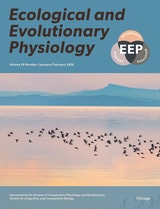
This is volume 98 issue 6 of Ecological and Evolutionary Physiology. Ecological and Evolutionary Physiology primarily publishes original research in physiological ecology, ecophysiology, comparative physiology, and evolutionary physiology. Studies at all levels of biological organization from the molecular to the whole organism are welcome, and work that integrates across levels of organization is particularly encouraged. Studies that focus on behavior or morphology are welcome, so long as they include ties to physiology or biochemistry, in addition to having an ecological or evolutionary context. Subdisciplines of interest include nutrition and digestion, salt and water balance, epithelial and membrane transport, gas exchange and transport, acid-base balance, temperature adaptation, energetics, structure and function of macromolecules, chemical coordination and signal transduction, nitrogen metabolism and excretion, locomotion and muscle function, biomechanics, circulation, behavioral, comparative and mechanistic endocrinology, sensory physiology, neural coordination, and ecotoxicology ecoimmunology.
[more]
cover of Ecological and Evolutionary Physiology, volume 99 number 1 (January/February 2026)

Ecological and Evolutionary Physiology, volume 99 number 1 (January/February 2026)

The University of Chicago Press

University of Chicago Press Journals, 2026

This is volume 99 issue 1 of Ecological and Evolutionary Physiology. Ecological and Evolutionary Physiology primarily publishes original research in physiological ecology, ecophysiology, comparative physiology, and evolutionary physiology. Studies at all levels of biological organization from the molecular to the whole organism are welcome, and work that integrates across levels of organization is particularly encouraged. Studies that focus on behavior or morphology are welcome, so long as they include ties to physiology or biochemistry, in addition to having an ecological or evolutionary context. Subdisciplines of interest include nutrition and digestion, salt and water balance, epithelial and membrane transport, gas exchange and transport, acid-base balance, temperature adaptation, energetics, structure and function of macromolecules, chemical coordination and signal transduction, nitrogen metabolism and excretion, locomotion and muscle function, biomechanics, circulation, behavioral, comparative and mechanistic endocrinology, sensory physiology, neural coordination, and ecotoxicology ecoimmunology.
[more]
cover of Ecological and Evolutionary Physiology, volume 99 number 2 (March/April 2026)

Ecological and Evolutionary Physiology, volume 99 number 2 (March/April 2026)

The University of Chicago Press

University of Chicago Press Journals, 2026
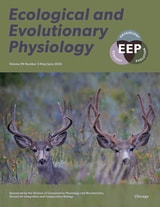
This is volume 99 issue 2 of Ecological and Evolutionary Physiology. Ecological and Evolutionary Physiology primarily publishes original research in physiological ecology, ecophysiology, comparative physiology, and evolutionary physiology. Studies at all levels of biological organization from the molecular to the whole organism are welcome, and work that integrates across levels of organization is particularly encouraged. Studies that focus on behavior or morphology are welcome, so long as they include ties to physiology or biochemistry, in addition to having an ecological or evolutionary context. Subdisciplines of interest include nutrition and digestion, salt and water balance, epithelial and membrane transport, gas exchange and transport, acid-base balance, temperature adaptation, energetics, structure and function of macromolecules, chemical coordination and signal transduction, nitrogen metabolism and excretion, locomotion and muscle function, biomechanics, circulation, behavioral, comparative and mechanistic endocrinology, sensory physiology, neural coordination, and ecotoxicology ecoimmunology.
[more]
cover of Ecological and Evolutionary Physiology, volume 99 number 3 (May/June 2026)

Ecological and Evolutionary Physiology, volume 99 number 3 (May/June 2026)

The University of Chicago Press

University of Chicago Press Journals, 2026
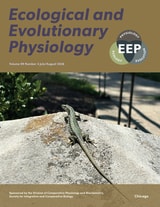
This is volume 99 issue 3 of Ecological and Evolutionary Physiology. Ecological and Evolutionary Physiology primarily publishes original research in physiological ecology, ecophysiology, comparative physiology, and evolutionary physiology. Studies at all levels of biological organization from the molecular to the whole organism are welcome, and work that integrates across levels of organization is particularly encouraged. Studies that focus on behavior or morphology are welcome, so long as they include ties to physiology or biochemistry, in addition to having an ecological or evolutionary context. Subdisciplines of interest include nutrition and digestion, salt and water balance, epithelial and membrane transport, gas exchange and transport, acid-base balance, temperature adaptation, energetics, structure and function of macromolecules, chemical coordination and signal transduction, nitrogen metabolism and excretion, locomotion and muscle function, biomechanics, circulation, behavioral, comparative and mechanistic endocrinology, sensory physiology, neural coordination, and ecotoxicology ecoimmunology.
[more]
cover of Ecological and Evolutionary Physiology, volume 99 number 4 (July/August 2026)

Ecological and Evolutionary Physiology, volume 99 number 4 (July/August 2026)

The University of Chicago Press

University of Chicago Press Journals, 2026
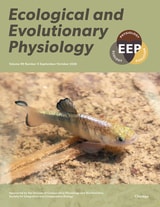
This is volume 99 issue 4 of Ecological and Evolutionary Physiology. Ecological and Evolutionary Physiology primarily publishes original research in physiological ecology, ecophysiology, comparative physiology, and evolutionary physiology. Studies at all levels of biological organization from the molecular to the whole organism are welcome, and work that integrates across levels of organization is particularly encouraged. Studies that focus on behavior or morphology are welcome, so long as they include ties to physiology or biochemistry, in addition to having an ecological or evolutionary context. Subdisciplines of interest include nutrition and digestion, salt and water balance, epithelial and membrane transport, gas exchange and transport, acid-base balance, temperature adaptation, energetics, structure and function of macromolecules, chemical coordination and signal transduction, nitrogen metabolism and excretion, locomotion and muscle function, biomechanics, circulation, behavioral, comparative and mechanistic endocrinology, sensory physiology, neural coordination, and ecotoxicology ecoimmunology.
[more]
cover of Ecological and Evolutionary Physiology, volume 99 number 5 (September/October 2026)

Ecological and Evolutionary Physiology, volume 99 number 5 (September/October 2026)

The University of Chicago Press

University of Chicago Press Journals, 2026

This is volume 99 issue 5 of Ecological and Evolutionary Physiology. Ecological and Evolutionary Physiology primarily publishes original research in physiological ecology, ecophysiology, comparative physiology, and evolutionary physiology. Studies at all levels of biological organization from the molecular to the whole organism are welcome, and work that integrates across levels of organization is particularly encouraged. Studies that focus on behavior or morphology are welcome, so long as they include ties to physiology or biochemistry, in addition to having an ecological or evolutionary context. Subdisciplines of interest include nutrition and digestion, salt and water balance, epithelial and membrane transport, gas exchange and transport, acid-base balance, temperature adaptation, energetics, structure and function of macromolecules, chemical coordination and signal transduction, nitrogen metabolism and excretion, locomotion and muscle function, biomechanics, circulation, behavioral, comparative and mechanistic endocrinology, sensory physiology, neural coordination, and ecotoxicology ecoimmunology.
[more]
cover of Ecological and General Systems: An Introduction to Systems Ecology, Revised Edition

Ecological and General Systems

An Introduction to Systems Ecology, Revised Edition

Howard T. Odum

University Press of Colorado, 1994

Using an energy systems language that combines energetics, kinetics, information, cybernetics, and simulation, Ecological and General Systems compares models of many fields of science, helping to derive general systems principles.

First published as Systems Ecology in 1983, Ecological and General Systems proposes principles of self-organization and the designs that prevail by maximizing power and efficiency. Comparisons to fifty other systems languages are provided. Innovative presentations are given on earth homeostasis (Gaia); the inadequacy of presenting equations without network relationships and energy constraints; the alternative interpretation of high entropy complexity as adaptive structure; basic equations of ecological economics; and the energy basis of scientific hierarchy.

Part I introduces energetics, hierarchy, and systems modeling. Part II features design elements: intersections, autocatalytic modules, loops, series, parallel elements, and webs. Part III includes embodied energy, spectra of energy quality, temperature, complexity, spatial distribution, and diversity. Part IV discusses production, consumption, ecosystems, succession, economic systems, anthropological models, urban and regional models, global biogeochemistry, and the universe.
[more]
cover of Ecologics: Wind and Power in the Anthropocene

Ecologics

Wind and Power in the Anthropocene

Cymene Howe

Duke University Press, 2019

Between 2009 and 2013 Cymene Howe and Dominic Boyer conducted fieldwork in Mexico's Isthmus of Tehuantepec to examine the political, social, and ecological dimensions of moving from fossil fuels to wind power. Their work manifested itself as a new ethnographic form: the duograph—a combination of two single-authored books that draw on shared fieldsites, archives, and encounters that can be productively read together, yet can also stand alone in their analytic ambitions.

In her volume, Ecologics, Howe narrates how an antidote to the Anthropocene became both failure and success. Tracking the development of what would have been Latin America's largest wind park, Howe documents indigenous people's resistance to the project and the political and corporate climate that derailed its renewable energy potential. Using feminist and more-than-human theories, Howe demonstrates how the dynamics of energy and environment cannot be captured without understanding how human aspirations for energy articulate with nonhuman beings, technomaterial objects, and the geophysical forces that are at the heart of wind and power.
[more]
cover of Ecologies of Comparison: An Ethnography of Endangerment in Hong Kong

Ecologies of Comparison

An Ethnography of Endangerment in Hong Kong

Tim Choy

Duke University Press, 2011

A rich ethnography of ecopolitics in Hong Kong in the late 1990s, as the region shifted to Chinese sovereignty, Ecologies of Comparison describes how ecological concepts of uniqueness and scale resonated among environmentalists, including those seeking to preserve a species of white dolphin, to protect an aging fishing village from redevelopment, and to legitimize air quality as an object of political and medical concern. During his research, Tim Choy became increasingly interested in the power of the notion of specificity. While documenting the expert and lay production of Hong Kong’s biological, cultural, and political specificities, he began comparing the logics and narrative forms that made different types of specificity—such as species, culture, locality, and state autonomy—possible and meaningful. He came to understand these logics and forms as “ecologies of comparison,” conceptual practices through which an event or form of life comes to matter in environmentalist and other political terms. Choy’s ethnography is about environmentalism, Hong Kong, and the ways that we think about environmentalism in Hong Kong and other places. It is also about how politics, freedom, culture, expertise, and other concepts figure in comparison-based knowledge practices.
[more]
cover of Ecologists and Environmental Politics: A History of Contemporary Ecology

Ecologists and Environmental Politics

A History of Contemporary Ecology

Stephen Bocking

West Virginia University Press, 2017

Ecologists, like other scientists, have for decades debated their role in society. While some have argued that ecologists should participate in environmental politics, others have focused their attention strictly on scientific issues. In Ecologists and Environmental Politics, now updated with a new preface by the author, Stephen Bocking explores this debate by recounting the history of ecology in Great Britain, the United States, and Canada since the 1940s.
Bocking tells this history through four case studies: the origins and early research of the Nature Conservancy in Great Britain; the development of ecology at the Oak Ridge National Laboratory in Tennessee; the work of the Hubbard Brook Ecosystem Study in New Hampshire; and research in fisheries ecology at the University of Toronto. By comparing these case studies, Bocking demonstrates how the places of contemporary science—laboratories, landscapes, and funding agencies—and science’s purposes, as expressed through the political roles of expertise and specific managerial and regulatory responsibilities, have shaped contemporary ecology and its application to pressing environmental problems.
 
[more]
cover of Ecology and Conservation of the San Pedro River

Ecology and Conservation of the San Pedro River

Edited by Juliet C. Stromberg and Barbara Tellman

University of Arizona Press, 2009

One of the last undammed perennial rivers in the desert Southwest, the San Pedro River in southeastern Arizona illustrates important processes common to many desert riparian ecosystems. Although historic land uses and climatic extremes have led to aquifer depletion, river entrenchment, and other changes, the river still sustains a rich and varied selection of life. Resilient to many factors, portions of the San Pedro have become increasingly threatened by groundwater pumping and other impacts of population growth.

This book provides an extensive knowledge base on all aspects of the San Pedro, from flora and fauna to hydrology and human use to preservation. It describes the ecological patterns and processes of this aridland river and explores both the ongoing science-driven efforts by nonprofit groups and government agencies to sustain and restore its riparian ecosystems and the science that supports these management decisions.

An interdisciplinary team of fifty-seven contributors—biologists, ecologists, geomorphologists, historians, hydrologists, lawyers, political scientists—weave together threads from their diverse perspectives to reveal the processes that shape the past, present, and future of the San Pedro’s riparian and aquatic ecosystems. They review the biological communities of the San Pedro and the stream hydrology and geomorphology that affect its riparian biota. They then look at conservation and management challenges along three sections of the San Pedro, from its headwaters in Mexico to its confluence with the Gila River, describing legal and policy issues and their interface with science; activities related to mitigation, conservation, and restoration; and a prognosis of the potential for sustaining the basin’s riparian system.

These chapters demonstrate the complexity of the San Pedro’s ecological and hydrological conditions, showing that there are no easy answers to the problems—and that existing laws are inadequate to fully address them. Collectively, they offer students, professionals, and environmental advocates a better grasp of the San Pedro’s status as well as important lessons for restoring physical processes and biotic communities to rivers in arid and semiarid regions.
[more]
cover of Ecology and Evolution in the Tropics: A Herpetological Perspective

Ecology and Evolution in the Tropics

A Herpetological Perspective

Edited by Maureen A. Donnelly, Brian I. Crother, Craig Guyer, Marvalee H. Wake,

University of Chicago Press, 2005
In these essays that survey the burgeoning field of tropical herpetology, former students and associates pay tribute to Jay Savage's four decades of mentoring. The result is a book unlike any other available in tropical herpetology. Covering a wide array of subjects, Ecology and Evolution in the Tropics is the first book in more than two decades to broadly review research on tropical amphibians and reptiles. A tribute to Savage and an invaluable addition to the herpetological literature, this work will be cited for years to come.
[more]
cover of Ecology and Evolution of Poeciliid Fishes

Ecology and Evolution of Poeciliid Fishes

Edited by Jonathan P. Evans, Andrea Pilastro, and Ingo Schlupp

University of Chicago Press, 2011

The history of biology is populated by numerous model species or organisms. But few vertebrate groups have aided evolutionary and ecological research more than the live-bearing fishes of the family Poeciliidae. Found throughout tropical and subtropical waters, poeciliids exhibit a fascinating variety of reproductive specializations, including viviparity, matrotrophy, unisexual reproduction, and alternative mating strategies, making them ideal models for research on patterns and processes in ecology, behavior, and evolution.


Ecology and Evolution of Poeciliid Fishes
is a much-needed overview of the scientific potential and understanding of these live-bearing fishes. Chapters by leading researchers take up a wide range of topics, including the evolution of unisexual reproduction, life in extreme environments, life-history evolution, and genetics. Designed to provide a single and highly approachable reference, Ecology and Evolution of Poeciliid Fishes will appeal to students and specialists interested in all aspects of evolutionary ecology.
[more]
cover of Ecology and Management of North American Savannas

Ecology and Management of North American Savannas

Guy R. McPherson

University of Arizona Press, 1997
Savannas are ecosytems with a continuous grass layer and scattered trees or shrubs. These lands occupy nearly a third of the earth’s land surface and are an important resource not only in world economies but also as repositories of biodiversity. Because savannas are generally thought of as tropical ecosystems, most reviews of the literature have tended to disregard savannas found in temperate zones. Yet these ecosystems are both extensive and diverse in North America, ranging from longleaf pine habitats along the Atlantic coastal plain to xeric piñon-juniper communities of the Great Basin-ecosystems seemingly disparate, yet similar enough to merit study as savannas. This book provides an overview of the patterns and processes shared by these ecosystems and offers substantive ideas regarding future management and research efforts. It describes the composition geographic distribution, climate, soils, and uses of savannas throughout North America, summarizing and integrating a wide array of literature. While discussing these ecological patterns and processes. McPherson develops a framework for implementing management practices and safeguarding the future of these important wildland ecosystems. Ecology and Management of North American Savannas takes a major step toward establishing the science of savanna ecology for North America. It encourages constructive debate and relevant research on these important systems and will also serve as a useful resource in biogeography, plant ecology, and rangeland management.
[more]
cover of Ecology and Management of the North American Moose, Second Edition

Ecology and Management of the North American Moose, Second Edition

Charles C. Schwartz

University Press of Colorado, 2007

Back in print as a University Press of Colorado edition, this abundantly illustrated volume with field sketch illustrations by William D. Berry fully explains moose biology and ecology and assesses the increasingly complex enterprise of managing moose. Twenty-one of the world's authorities on the species discuss its taxonomy, reproduction and growth, feeding habits, behavior, population dynamics, relationships with predators, incidental mortality, seasonal migration patterns, and habitat and harvest management.

Contributors include Warren B. Ballard, Arnold H. Boer, Anthony B. Bubenik, M. E. Buss, Kenneth N. Child, Vincent F.J. Crichton, Albert W. Franzmann, Kris J. Hundertmark, Patrick D. Karns, Murray W. Lankester, Richard E. McCabe, James M. Peek, Henry M. Reeves, Wayne L. Regelin, Lyle A. Renecker, William M. Samuel, Charles C. Schwartz, Robert W. Stewart, Ian D. Thompson, H. R. Timmermann, and Victor Van Ballenberghe. A Wildlife Management Institute book
[more]
cover of Ecology and the Environment: The Mechanisms, Marrings, and Maintenance of Nature

Ecology and the Environment

The Mechanisms, Marrings, and Maintenance of Nature

R. J. Berry

Templeton Press, 2011

Ecology and the Environment: The Mechanisms, Marring, and Maintenance of Nature is the ninth title published in the Templeton Science and Religion Series, in which scientists from a wide range of fields distill their experience and knowledge into brief tours of their respective specialties. In this volume, R. J. Berry, a well-known leader in the field of ecology, describes the basic concepts of ecology and seeks to put them into a general context for a reader who lacks any scientific background.
Berry explores the implications of these basic concepts and how they affect human life and the decisions we have to make, both as individuals and as members of a species that has colonized and influenced every part of the globe. He points out that we are a part of the animal world, but at the same time, we are apart from it, and he makes it clear that how we relate to our environment affects the quality of our life—indeed, it may affect our very survival. Going beyond a simple introduction of concepts, the book explores wider questions about the nature of humanity and how human ecology relates to humanness. Berry proposes that we are more than machines or even advanced apes—we are Homo divinus, transformed from an organism descended from the same stock as the apes but qualitatively different and able to relate to a creator God. The book argues that those who conclude otherwise are neglecting relevant data.
 
Berry offers the perfect introduction to these philosophical and theological issues, but his work never loses sight of the practical issues either—the kind that is increasingly being addressed by national and international environmental agencies. In order to grasp the full scope of these issues and to more fully understand the ubiquitous news headlines concerning environmental matters, a reader would do well to start with Ecology and the Environment.
[more]
cover of Ecology of Sonoran Desert Plants and Plant Communities

Ecology of Sonoran Desert Plants and Plant Communities

Edited by Robert H. Robichaux

University of Arizona Press, 1999

The Sonoran Desert is a distinctive biotic region that fascinates scientist, students, and nature lovers. This book offers an accessible introduction to Sonoran Desert ecology. Eight original essays by Sonoran Desert specialists such as Paul Martin and Richard Felger provide an overview of the practice of ecology at landscape, community, and organismal scales.

The essays explore the rich diversity of plant life in the Sonoran Desert and the ecological patterns and processes that underlie it. They also reveal the history and scientific legacy of the Desert Laboratory in Tucson, which has conducted research on the Sonoran Desert since 1903. Coverage includes diversity and affinities of the flora, physical environments and vegetation, landscape complexity and ecological diversity, population dynamics of annual plants, form and function of cacti, and the relationship between plants and the animals that use them as feeding and breeding resources. The text also examines the ecological consequences of modern agricultural development, as well as the impact on the modern biota of 40,000 years of change in climate, vegetation, megafauna, and ancient cultures.

This comprehensive book covers a broad range of spatial and temporal scales to highlight the diversity of research being pursued in the Sonoran Desert. It is both a testament to these ongoing studies and an authoritative introduction to the diverse plant life in the region.
 
Contents

1. Diversity and Affinities of the Flora of the Sonoran Floristic Province, Steven P. McLaughlin and Janice E. Bowers
2. Vegetation and Habitat Diversity at the Southern Edge of the Sonoran Desert, Alberto Bórquez, Angelina Martínez Yrízar, Richard S. Felger, and David Yetman
3. The Sonoran Desert: Landscape Complexity and Ecological Diversity, Joseph R. McAuliffe
4. Population Ecology of Sonoran Desert Annual Plants, D. Lawrence Venable and Catherine E. Pake
5. Form and Function of Cacti, Park S. Nobel and Michael E. Loik
6. Ecological Genetics of Cactophilic Drosophila, William J. Etges, W. R. Johnson, G. A. Duncan, G. Huckins, and W. B. Heed
7. Ecological Consequences of Agricultural Development in a Sonoran Desert Valley, Laura L. Jackson and Patricia W. Comus
8. Deep History and a Wilder West, Paul S. Martin
[more]