Results by title
3027 books match the query 'Sociology' and 115 start with e
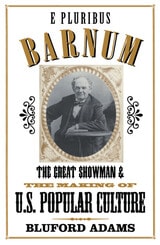
E Pluribus Barnum
The Great Showman and the Making of U.S. Popular CultureBluford Adams
University of Minnesota Press, 1997
The first book to consider the career of P. T. Barnum from a cultural studies perspective.
Phineas Taylor Barnum lived from 1810 until 1891, and in the eighty-one years of his life he created show business as we know it. In E Pluribus Barnum, Bluford Adams investigates the influence Barnum had on American popular culture of the nineteenth century, and expands our understanding of the ways he continues to influence us today.
Beginning with a discussion of Barnum’s early shows, Adams demonstrates the dynamic interplay between Barnum’s increasingly “respectable” aspirations for his entertainments and his active cultivation of middle-class sensibilities in his audiences. In his discussion of the 1850-51 concert tour of the “Swedish Nightingale” Jenny Lind, Adams explores the role played by women’s rights and class issues in Barnum’s management of these concerts. Barnum’s American Museum and the “moral dramas” presented in its theater (which included a play of Uncle Tom’s Cabin) are examined in the context of debates about slavery and temperance. The later circuses are discussed in terms of their international pageants and their staging of orientalism through racial exhibitions. Adams relates the rise of Barnum to the emergence of a new U.S. society, one riven by conflicts over slavery, feminism, immigration, and capitalism. He documents Barnum’s efforts to negotiate those conflicts by steadily remaking his amusements and his public image. E Pluribus Barnum examines Barnum’s shifting political allegiances for what they tell us about American culture at the time, examines the audiences he created, and considers his career as a crucial moment in the ongoing struggle over the politics of U.S. commercial entertainments.
E. Franklin Frazier Reconsidered
Platt, Anthony M
Rutgers University Press, 1991
Earning More and Getting Less
Why Successful Wives Can't Buy EqualityVeronica Jaris Tichenor
Rutgers University Press, 2005
In Earning More and Getting Less, sociologist Veronica Jaris Tichenor shows how, historically, men have derived a great deal of power over financial and household decisions by bringing home all (or most) of the family's income. Yet, financial superiority has not been a similar source of power for women. Tichenor demonstrates how wives, instead of using their substantial incomes to negotiate more egalitarian relationships, enable their husbands to perpetuate male dominance within the family.
Weaving personal accounts, in-depth interviews, and compelling narrative, this important study reveals disturbing evidence that the conventional power relations defined by gender are powerful enough to undermine hierarchies defined by money. Earning More and Getting Less is essential reading in sociology, psychology, and family and gender studies.
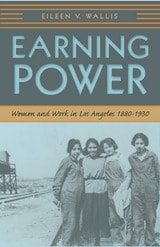
Earning Power
Women and Work in Los Angeles, 1880-1930Eileen Wallis
University of Nevada Press, 2010
The half-century between 1880 and 1930 saw rampant growth in many American cities and an equally rapid movement of women into the work force. In Los Angeles, the city not only grew from a dusty cow town to a major American metropolis but also offered its residents myriad new opportunities and challenges.Earning Power examines the role that women played in this growth as they attempted to make their financial way in a rapidly changing world. Los Angeles during these years was one of the most ethnically diverse and gender-balanced American cities. Moreover, its accelerated urban growth generated a great deal of economic, social, and political instability. In Earning Power, author Eileen V. Wallis examines how women negotiated issues of gender, race, ethnicity, and class to gain access to professions and skilled work in Los Angeles. She also discusses the contributions they made to the region’s history as political and social players, employers and employees, and as members of families. Wallis reveals how the lives of women in the urban West differed in many ways from those of their sisters in more established eastern cities. She finds that the experiences of women workers force us to reconsider many assumptions about the nature of Los Angeles’s economy, as well as about the ways women participated in it. The book also considers how Angelenos responded to the larger national social debate about women’s work and the ways that American society would have to change in order to accommodate working women. Earning Power is a major contribution to our understanding of labor in the urban West during this transformative period and of the crucial role that women played in shaping western cities, economies, society, and politics.
East of East
The Making of Greater El MonteRomeo Guzmán
Rutgers University Press, 2020
Eating Right in America
The Cultural Politics of Food and HealthCharlotte Biltekoff
Duke University Press, 2013

Eating Together
Food, Friendship and InequalityAlice P. Julier
University of Illinois Press, 2013
Echoes of Cabrini-Green
Letters to My MotherRudolph Elliot Willis
Southern Illinois University Press, 2026
A powerful memoir of love, survival, and resilience, told through intimate letters
In Echoes of Cabrini-Green, Rudolph Elliot Willis tells the story of his journey from Chicago’s most notorious public housing project to the halls of academia and medicine. Framed as heartfelt letters written after his mother’s death, this deeply personal narrative reflects on a childhood shaped by systemic poverty, racism, and uncertainty, showing how faith, education, and resilience can remake lives.
Willis recalls the daily struggles of growing up Black in a family of ten children in Cabrini-Green—hunger, fear, and the constant threat of violence—alongside glimpses of neighborly solidarity, faith, and perseverance. He watched his father, a decorated veteran, retreat into silence and alcoholism while his mother’s frustration flared into anger. Throughout it all, she remained a moral compass. Her faith in God, unwavering work ethic, and quiet dignity gave her children a vision of something better.
A summer at a Christian camp introduced Willis to serenity and the grounding power of faith. A passion for reading and a gift for learning propelled him to an elite high school, where he wrestled with the dissonance between two worlds. But because of his mother’s enduring belief in education as a shield against the harsh realities of the world, he was ultimately able to thrive.
Willis went on to graduate from Northwestern University and earn a medical degree, eventually becoming an oncologist and scientific researcher. In these letters, he shares with his mother his successes and setbacks, the triumphs and struggles of his siblings, his grief following their deaths, and the haunting demolition of Cabrini-Green—the place that shaped him and so many others. Past, present, and future collapse: the crisp white coats and hallowed halls of medical school give way to the stained cinderblocks and echoing gunshots of Cabrini-Green. Willis looks into the eyes of patients and finds his siblings staring back at him. He realizes Cabrini-Green is not simply a memory—it is part of his identity, the crucible that formed him into who he is.
With lyrical prose and unflinching honesty, Echoes of Cabrini-Green is an invitation to imagine change in communities too often defined only by hardship; a testament to the power of faith, education, and personal resolve to transform lives; and a call to recognize the dignity and potential that endure even in the most neglected places.
Ecohumanism and the Ecological Culture
The Educational Legacy of Lewis Mumford and Ian McHargWilliam J. Cohen
Temple University Press, 2019
Lewis Mumford, one of the most respected public intellectuals of the twentieth century, speaking at a conference on the future environments of North America, said, “In order to secure human survival we must transition from a technological culture to an ecological culture.” In Ecohumanism and the Ecological Culture, William Cohen shows how Mumford’s conception of an educational philosophy was enacted by Mumford’s mentee, Ian McHarg, the renowned landscape architect and regional planner at the University of Pennsylvania. McHarg advanced a new way to achieve an ecological culture―through an educational curriculum based on fusing ecohumanism to the planning and design disciplines.
Cohen explores Mumford’s important vision of ecohumanism—a synthesis of natural systems ecology with the myriad dimensions of human systems, or human ecology―and how McHarg actually formulated and made that vision happen. He considers the emergence of alternative energy systems and new approaches to planning and community development to achieve these goals.
The ecohumanism graduate curriculum should become the basis to train the next generation of planners and designers to lead us into the ecological culture, thereby securing the educational legacy of both Lewis Mumford and Ian McHarg.

Economic & Social Origins of Mau Mau, 1945–1953
Eastern African StudiesDavid Throup
Ohio University Press, 1990
This story of Kenya in the decade before the outbreak of the Mau Mau emergency presents an integrated view of imperial government as well as examining the social and economic causes of the Kikuyu revolt. Dr. Throup combines traditional Imperial History with its emphasis on the high politics of “The Official Mind” in the Colonial Office or in Government House with the new African historiography that concentrates on the people themselves.
Sir Philip Mitchell was the proconsul chosen to reassert metropolitan authority. Under Kenyatta’s leadership the Kenya African Union mobilized a popular constituency among the peasantry. In Nairobi the Kikuyu street gangs linked up with the militant Kikuyu trade unions, led by Fred Kubai and Bildad Kaggia, to challenge Kenyatta’s leadership.
The Mau Mau movement, as it was called by the government, was an alliance between three groups of discontented Kikuyu: the urban unemployed and destitute, the dispossessed squatters from the White Highlands and the tenants and members of the junior clans in the Kikuyu reserves.
The revolt was a dominating factor in convincing the conservative imperial government that the cost of repression in the African colonies was not worth the troops and resources.
Economic Exchange and Social Interaction in Southeast Asia
Perspectives from Prehistory, History, and EthnographyKarl L. Hutterer, Editor
University of Michigan Press, 1978
Yet in social science research in Southeast Asia, the area of economic studies has lagged behind, despite the great study potential represented by the tremendous diversity of its physical and human environment. Economic Exchange and Social Interaction in Southeast Asia attempts to take advantage of that opportunity. As a number of the contributions to this volume show, many if not most of the systems organized on very different levels of integration interact with each other. Taken as a whole, they provide evidence of the incredible diversity of economic and social systems that may be investigated in Southeast Asia.

Economic Organizations and Social Systems
Robert A. Solo
University of Michigan Press, 2000
Economics as a Social Science
An Approach to Nonautistic TheoryAndrew M. Kamarck
University of Michigan Press, 2002
Economics for Humans, Second Edition
Julie A. Nelson
University of Chicago Press, 2018
Economics for Humans argues against the well-ingrained notion that economics is immune to moral values and distant from human relationships. Here, Nelson locates the impediment to a more considerate economic world in an assumption that is shared by both neoliberals and the political left. Despite their seemingly insurmountable differences, both make use of the metaphor, first proposed by Adam Smith, that the economy is a machine. This pervasive idea, Nelson argues, has blinded us to the qualities that make us work and care for one another—qualities that also make businesses thrive and markets grow. We can wed our interest in money with our justifiable concerns about ethics and social well-being. And we can do so if we recognize that an economy is not a machine, but a living thing in need of attention and careful tending.
This second edition has been updated and refined throughout, with expanded discussions of many topics and a new chapter that investigates the apparent conflict between economic well-being and ecological sustainability. Further developing the main points of the first edition, Economics for Humans will continue to both invigorate and inspire readers to reshape the way they view the economy, its possibilities, and their place within it.
Economics for Humans, Second Edition
Julie A. Nelson
University of Chicago Press, 2018
At its core, an economy is about providing goods and services for human well-being. But many economists and critics preach that an economy is something far different: a cold and heartless system that operates outside of human control. In this impassioned and perceptive work, Julie A. Nelson asks a compelling question: given that our economic world is something that we as humans create, aren’t ethics and human relationships—dimensions of a full and rich life—intrinsically part of the picture?
Economics for Humans argues against the well-ingrained notion that economics is immune to moral values and distant from human relationships. Here, Nelson locates the impediment to a more considerate economic world in an assumption that is shared by both neoliberals and the political left. Despite their seemingly insurmountable differences, both make use of the metaphor, first proposed by Adam Smith, that the economy is a machine. This pervasive idea, Nelson argues, has blinded us to the qualities that make us work and care for one another—qualities that also make businesses thrive and markets grow. We can wed our interest in money with our justifiable concerns about ethics and social well-being. And we can do so if we recognize that an economy is not a machine, but a living thing in need of attention and careful tending.
This second edition has been updated and refined throughout, with expanded discussions of many topics and a new chapter that investigates the apparent conflict between economic well-being and ecological sustainability. Further developing the main points of the first edition, Economics for Humans will continue to both invigorate and inspire readers to reshape the way they view the economy, its possibilities, and their place within it.
Economies of Desire
Sex and Tourism in Cuba and the Dominican RepublicAmalia L. Cabezas
Temple University Press, 2009
Is a native-born tour guide who has sex with tourists—in exchange for dinner or gifts or cash—merely a prostitute or gigolo? What if the tourist continues to send gifts or money to the tour guide after returning home? As this original and provocative book demonstrates, when it comes to sex—and the effects of capitalism and globalization —nothing is as simple as it might seem.
Based on ten years of research, Economies of Desire is the first ethnographic study to examine the erotic underpinnings of transnational tourism. It offers startling insights into the commingling of sex, intimacy, and market forces in Cuba and the Dominican republic, two nations where tourism has had widespread effects. In her multi-layered analyses, amalia cabezas reconceptualizes our understandings of informal economies (particularly "affective economies"), "sex workers," and “sexual tourism,” and she helps us appreciate how money, sex and love are intertwined within the structure of globalizing capitalism.
Economies of Gender
Masculinity, "Mail Order Brides," and Women’s LaborJulia H. Meszaros
Rutgers University Press, 2026
Edible Memory
The Lure of Heirloom Tomatoes and Other Forgotten FoodsJennifer A. Jordan
University of Chicago Press, 2015
Jordan begins with the heirloom tomato, inquiring into its botanical origins in South America and its culinary beginnings in Aztec cooking to show how the homely and homegrown tomato has since grown to be an object of wealth and taste, as well as a popular symbol of the farm-to-table and heritage foods movements. She shows how a shift in the 1940s away from open pollination resulted in a narrow range of hybrid tomato crops. But memory and the pursuit of flavor led to intense seed-saving efforts increasing in the 1970s, as local produce and seeds began to be recognized as living windows to the past. In the chapters that follow, Jordan combines lush description and thorough research as she investigates the long history of antique apples; changing tastes in turnips and related foods like kale and parsnips; the movement of vegetables and fruits around the globe in the wake of Columbus; and the poignant, perishable world of stone fruits and tropical fruit, in order to reveal the connections—the edible memories—these heirlooms offer for farmers, gardeners, chefs, diners, and home cooks. This deep culinary connection to the past influences not only the foods we grow and consume, but the ways we shape and imagine our farms, gardens, and local landscapes.
From the farmers’ market to the seed bank to the neighborhood bistro, these foods offer essential keys not only to our past but also to the future of agriculture, the environment, and taste. By cultivating these edible memories, Jordan reveals, we can stay connected to a delicious heritage of historic flavors, and to the pleasures and possibilities for generations of feasts to come.
Educated Out
How Rural Students Navigate Elite Colleges—And What It Costs ThemMara Casey Tieken
University of Chicago Press, 2025
A former third-grade teacher in rural Tennessee, education researcher Mara Casey Tieken watched as her former students graduated high school. She was shocked at how few were heading to college—and none were going to elite four-year schools. These students were representative of a larger national phenomenon: In 2021, 31 percent of rural adults aged twenty-five and older held a postsecondary degree, compared to 45 percent of urban adults, and rural students are especially unlikely to pursue degrees from private, selective schools. Why, Tieken wondered? And what happens to the handful of rural students who do attend elite colleges, colleges that may feel worlds away from home?
Tieken addresses these questions in Educated Out—a study that shows how geography shapes rural, first-generation students’ access to college, their college experiences, and their postgraduation plans and opportunities. Tieken closely follows a group of nine students for their college years and beyond at an elite New England private school that she calls Hilltop. Interviews with these students reveal the critical moments in the students’ educational careers when their rural origins mattered most: when applying to college, she shows how students are hindered by limited college counseling resources. Once on campus, they learn that many of the school’s opportunities are not available to them: they cannot access spring break trips, job networks, or low-pay-but-important internships. These students discover that home and college are very different worlds with different academic, social, and political climates—and, over time, they start to question both. As they near graduation and navigate a job market in which the highest-paying and most prestigious opportunities are located in urban centers, they begin to feel the complicated burden of their schooling: they’ve been “educated out.” Their stories show the costs of college for rural students: If they do not pursue higher education, they lose the opportunity for social mobility; if they do, they face a more permanent departure. These costs are individual, but rural families and communities also suffer—they lose young people with talent and skills.
In addition to advocating for a higher education landscape that truly includes rural students, Tieken critiques a system that requires people to leave their rural homes in search of opportunities. Our current economy depends on inexpensive rural labor. Without meaningful change, some students will have to make the impossible decision to leave home—and far more will remain there, undereducated and overlooked.
Both engaging and accessible, Educated Out presents important and timely questions about rurality, identity, education, and inequality.
Educated Out
How Rural Students Navigate Elite Colleges—And What It Costs ThemMara Casey Tieken
University of Chicago Press, 2025
Through the stories of nine rural, first-generation students and their families, Educated Out shows how geography shapes college opportunities, from admission to postgraduation options.
A former third-grade teacher in rural Tennessee, education researcher Mara Casey Tieken watched as her former students graduated high school. She was shocked at how few were heading to college—and none were going to elite four-year schools. These students were representative of a larger national phenomenon: In 2021, 31 percent of rural adults aged twenty-five and older held a postsecondary degree, compared to 45 percent of urban adults, and rural students are especially unlikely to pursue degrees from private, selective schools. Why, Tieken wondered? And what happens to the handful of rural students who do attend elite colleges, colleges that may feel worlds away from home?
Tieken addresses these questions in Educated Out—a study that shows how geography shapes rural, first-generation students’ access to college, their college experiences, and their postgraduation plans and opportunities. Tieken closely follows a group of nine students for their college years and beyond at an elite New England private school that she calls Hilltop. Interviews with these students reveal the critical moments in the students’ educational careers when their rural origins mattered most: when applying to college, she shows how students are hindered by limited college counseling resources. Once on campus, they learn that many of the school’s opportunities are not available to them: they cannot access spring break trips, job networks, or low-pay-but-important internships. These students discover that home and college are very different worlds with different academic, social, and political climates—and, over time, they start to question both. As they near graduation and navigate a job market in which the highest-paying and most prestigious opportunities are located in urban centers, they begin to feel the complicated burden of their schooling: they’ve been “educated out.” Their stories show the costs of college for rural students: If they do not pursue higher education, they lose the opportunity for social mobility; if they do, they face a more permanent departure. These costs are individual, but rural families and communities also suffer—they lose young people with talent and skills.
In addition to advocating for a higher education landscape that truly includes rural students, Tieken critiques a system that requires people to leave their rural homes in search of opportunities. Our current economy depends on inexpensive rural labor. Without meaningful change, some students will have to make the impossible decision to leave home—and far more will remain there, undereducated and overlooked.
Both engaging and accessible, Educated Out presents important and timely questions about rurality, identity, education, and inequality.

Educating Angels
Teaching for the Pursuit of HappinessTony Armstrong, Ph.D
Parkhurst Brothers, Inc., 2013
Education for Democracy
Renewing the Wisconsin IdeaEdited by Chad Alan Goldberg
University of Wisconsin Press, 2020
Using the Wisconsin Idea as a lens, Education for Democracy argues that public higher education institutions remain a bastion of collaborative problem solving. Examinations of partnerships between the state university and people of the state highlight many crucial and lasting contributions to issues of broad public concern such as conservation, LGBTQ+ rights, and poverty alleviation. The contributors restore the value of state universities and humanities education as a public good, contending that they deserve renewed and robust support.
Education in a New Society
Renewing the Sociology of EducationEdited by Jal Mehta and Scott Davies
University of Chicago Press, 2018
The sociology of education, the contributors show, largely works with themes, concepts, and theories that were generated decades ago, even as both the actual world of education and the discipline of sociology have changed considerably. The moment has come, they argue, to break free of the past and begin asking new questions and developing new programs of empirical study. Both rallying cry and road map, Education in a New Society will galvanize the field.
Education, Justice, and Democracy
Edited by Danielle Allen and Rob Reich
University of Chicago Press, 2013
Effective Social Science
Eight Cases in Economics, Political Science, and SociologyBernard Barber
Russell Sage Foundation, 1987
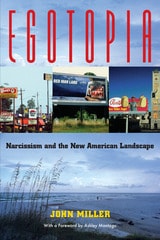
Egotopia
Narcissism and the New American LandscapeJohn Miller
University of Alabama Press, 1999
Egotopia explains why individual political and economic interests have eclipsed aesthetic considerations in the rampant billboards, malls, and urban sprawl of the New American Landscape
Egotopia begins where other critiques of the American landscape end: identifying the physical ugliness that defines and homogenizes America's cities, suburbs, and countryside. Believing that prevailing assessments of the American landscape are inadequate and injudicious, John Miller calls into question the conventional wisdom of environmentalists, urban planners,and architects alike. In this precedent-shattering examination of what he sees as the ugliness that is the American consumer society, Miller contends that our aesthetic condition can be fully understood only by explorers of the metaphoric environment.Metaphorically, the ugliness of America's great suburban sprawl is the physical manifestation of our increasing narcissism- our egotopia. The ubiquity of psychotherapy as a medium promoting self-indulgence has deified private man as it has demonized public man. The New American Landscape, Miller argues, is no longer the physical manifestation of public and communal values. Instead it has become a projection of private fantasies and narcissistic self-indulgence. Individual interests and private passions can no longer tolerate, nor even recognize, aesthetic concerns in such a landscape dedicated to uncompromising notions of utility.
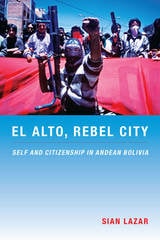
El Alto, Rebel City
Self and Citizenship in Andean BoliviaSian Lazar
Duke University Press, 2007
Drawing on ethnographic fieldwork conducted between 1997 and 2004, Lazar contends that in El Alto, citizenship is a set of practices defined by one’s participation in a range of associations, many of them collectivist in nature. Her argument challenges Western liberal notions of the citizen by suggesting that citizenship is not only individual and national but in many ways communitarian and distinctly local, constituted through different kinds of affiliations. Since in El Alto these affiliations most often emerge through people’s place of residence and their occupational ties, Lazar offers in-depth analyses of neighborhood associations and trade unions. In so doing, she describes how the city’s various collectivities mediate between the state and the individual. Collective organization in El Alto and the concept of citizenship underlying it are worthy of attention; they are the basis of the city’s formidable power to mobilize popular protest.
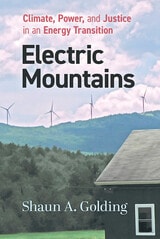
Electric Mountains
Climate, Power, and Justice in an Energy TransitionShaun A. Golding
Rutgers University Press, 2021
Committed environmentalists in one of North America’s most progressive regions desperately wanted energy policies that address the climate crisis. For many of them, wind turbines on Northern New England’s iconic ridgelines symbolize the energy transition that they have long hoped to see. For others, however, ridgeline wind takes on a very different meaning. When weighing its costs and benefits locally and globally, some wind opponents now see the graceful structures as symbols of corrupted energy politics.
This book derives from several years of research to make sense of how wind turbines have so starkly split a community of environmentalists, as well as several communities. In doing so, it casts a critical light on the roadmap for energy transition that Northern New England’s ridgeline wind projects demarcate. It outlines how ridgeline wind conforms to antiquated social structures propping up corporate energy interests, to the detriment of the swift de-carbonizing and equitable transformation that climate predictions warrant. It suggests, therefore, that the energy transition of which most of us are a part, is probably not the transition we would have designed ourselves, if we had been asked.
Elites and Economic Development
Comparative Studies on the Political Economy of Latin American CitiesBy John Walton
University of Texas Press, 1977
This book is a detailed comparative analysis of development politics in four urban regions of Latin America, two in Mexico and two in Colombia. John Walton has based his studies on the assumption that the problems of economic growth are essentially political, that is, are problems of choice, decision-making, and the exercise of power. His fundamental purpose has been to discover how elites of different kinds are more and less successful in the promotion of economic development, which he defines as a process in the organization of a society leading not only to higher levels of efficient output but also to a more equitable distribution of benefits.
At the time, the four cities compared were the second- and third-largest metropolitan areas in each country, Guadalajara and Monterrey in Mexico, Medellín and Cali in Colombia. This selection allows the author to pair, across countries, cases of early and large-scale industrialization (Monterrey and Medellín) with cases of more recent industrial growth in agricultural-commercial centers (Guadalajara and Cali). Walton presents historical introductions to each of the regions and integrates these with original fieldwork and interviews with more than three hundred members of the political and economic elites.
The findings are extensive, but in general they demonstrate that where political and economic power is more broadly distributed, where elites are more open and accessible, and where organizational life is more active and coordinated, regions tend to develop qualitatively as well as quantitatively, showing increases both in productivity and in such benefits as public services, housing, education, and a more balanced distribution of income. If these characteristics are absent, regions may be industrialized but do not provide a broad sharing of the benefits. Walton places a good deal of emphasis on the role of foreign investments, demonstrating that the more penetrated regions are also the less developed.
Finally, the results of these studies are used to evaluate and advance theories of underdevelopment and particularly of economic dependency.

Elizabeth Packard
A Noble FightLinda V. Carlisle
University of Illinois Press, 2010
Embedded Politics
Industrial Networks and Institutional Change in PostcommunismGerald A. McDermott
University of Michigan Press, 2003
Using comparative case analysis of several manufacturing sectors, Embedded Politics accounts for change and continuity in the formation of new economic governance institutions in the Czech Republic. It analytically links the macropolitics of state policy with the micropolitics of industrial restructuring. Thus the book advances an alternative approach for the comparative study of institutional change and industrial adjustment.
As a historical and contemporary analysis of Czech firms and public institutions, this book will command the attention of students of postcommunist reforms, privatization, and political-economic transitions in general. But also given its interdisciplinary approach and detailed empirical analysis of policy-making and firm behavior, Embedded Politics is a must read for scholars of politics, economics, sociology, political economy, business organization, and public policy.
Gerald A. McDermott is Assistant Professor of Management in The Wharton School of Management at The University of Pennsylvania. His research applies recent advances in comparative political economy and industrial organization, including theories of social networks, historical institutionalism, and incomplete markets to analyze issues of economic governance, firm creation, and industrial restructuring in advanced and newly industrialized countries. As evidenced by Embedded Politics, his current focus is on problems of institutional and organizational learning in the formation of meso-level governance institutions in emerging market and postsocialist economies.
McDermott also works as Senior Research Fellow at the IAE Escuela de Direccion y Negocios at Universidad Austral in Buenos Aires, and he has served as Project Coordinator at the Inter-American Development Bank. He has consulted for the Finance, Private Sector, and Infrastructure Division at the World Bank and advised the Deputy Foreign Minister of the Czech Republic. In addition he has published many papers and book chapters on entrepreneurship, privatization, institutions, and networks in Central Europe and Latin America.
Embodied Politics
Indigenous Migrant Activism, Cultural Competency, and Health Promotion in CaliforniaRebecca J. Hester
Rutgers University Press, 2022
Embodying the Problem
The Persuasive Power of the Teen MotherVinson, Jenna
Rutgers University Press, 2018
Vinson shows that these representations prevent a focus on the underlying structures of inequality and poverty, perpetuate harmful discourses about women, and sustain racialized gender ideologies that construct women’s bodies as sites of national intervention and control.
Embodying the Problem also explores how young mothers resist this narrative. Analyzing fifty narratives written by young mothers, the recent #NoTeenShame social media campaign, and her interviews with thirty-three young women, Vinson argues that while the stigmatization of teenage pregnancy and motherhood does dehumanize young pregnant and mothering women, it is at the same time a means for these women to secure an audience for their own messages.
More information on the author's website (https://jennavinson.com)
Embracing Risk
The Changing Culture of Insurance and ResponsibilityEdited by Tom Baker and Jonathan Simon
University of Chicago Press, 2001
Embracing Risk explores this new approach from a variety of perspectives. The first part of the book focuses on the interplay between risk and insurance in various historical and social contexts. The second part examines how risk is used to govern fields outside the realm of insurance, from extreme sports to policing, mental health institutions, and international law. Offering an original approach to risk, insurance, and responsibility, the provocative and wide-ranging essays in Embracing Risk demonstrate that risk has moved well beyond its origins in the insurance trade to become a central organizing principle of social and cultural life.

Emergency
COVID-19 and the Uneven Valuation of LifeClaire Laurier Decoteau
University of Chicago Press, 2024
The COVID-19 pandemic inaugurated a state of emergency unprecedented for most Americans. Some could observe this emergency from the relative safety of their homes, but those in marginalized communities, without access to the same privileges, were forced to risk their health and well-being.
In Emergency, sociologist Claire Laurier Decoteau documents and theorizes the emergencies of COVID-19 by looking at the experiences of Chicagoans and the policies that shaped their lives. She describes the uneven racial impact of COVID-19 on Black and Latinx Chicagoans as a crisis within a crisis, caused by a convergence of emergencies: a state of emergency that protected white supremacy and wealth, the slow emergencies racially marginalized populations have faced for decades due to the long-term gutting of care infrastructure and deindustrialization, and the sacrifice “essential workers” were asked to make to protect the United States economy. As Decoteau shows, the city’s “racial equity” project used data to determine which communities would be given scarce resources, but once positivity or death rates declined, resources were retracted and redistributed elsewhere. City officials thus attempted to manage these converging emergencies by manipulating epidemiological data and orchestrating systems for interpreting that data. Decoteau makes clear that the emergencies precipitated by COVID-19 long predated the pandemic, and that we will continue to live with their compounding crises if we do not tackle their structural underpinnings.
Emergency
Reading the Popol Vuh in a Time of CrisisEdgar Garcia
University of Chicago Press, 2022
Written during the lockdown in Chicago in the depths of the COVID-19 pandemic, these essays consider the Popol Vuh as a work that was also written during a time of feverish social, political, and epidemiological crisis as Spanish missionaries and colonial military deepened their conquest of indigenous peoples and cultures in Mesoamerica. What separates the Popol Vuh from many other creation texts is the disposition of the gods engaged in creation. Whereas the book of Genesis is declarative in telling the story of the world’s creation, the Popol Vuh is interrogative and analytical: the gods, for example, question whether people actually need to be created, given the many perfect animals they have already placed on earth.
Emergency uses the historical emergency of the Popol Vuh to frame the ongoing emergencies of colonialism that have surfaced all too clearly in the global health crisis of COVID-19. In doing so, these essays reveal how the authors of the Popol Vuh—while implicated in deep social crisis—nonetheless insisted on transforming emergency into scenes of social, political, and intellectual emergence, translating crisis into creativity and world creation.
Emile Durkheim on Institutional Analysis
Emile Durkheim
University of Chicago Press, 1978
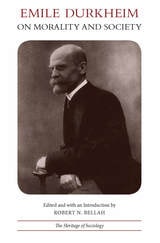
Emile Durkheim on Morality and Society
Emile Durkheim
University of Chicago Press, 1975
The first two selections of the volume set the context for the development of Durkheim's sociology of morality. Section I, "The French Tradition of Social Thought," gives Durkheim's picture of how his sociology is to be situated relative to the general French tradition. Section II, "Sociology and Social Action," shows Durkheim grappling with moral and political issues in his society and indicates the immediate social context of his thinking.
The remaining selections indicate some of the major substantive areas of Durkheim's sociology of morality. Section III, taken from The Division of Labor in Society, demonstrates his basically evolutionary approach to the development of moral norms in society. Section IV, "The Learning of Morality," gives examples of Durkheim's work on socialization. Section V, "Social Creativity," deals with the important question of how new moral norms arise in society.
Emotional and Priestly Logic of Plural Marriage, The
Kathleen Flake
Utah State University Press, 2010
Kathleen Flake, associate professor of American religious history at Vanderbilt University examines the logic of those women who thrived, rather than suffered, in early Mormon polygamy, and finds that the marriage covenant granted them priestly rights and independence through the powers of heaven.
Empire Burlesque
The Fate of Critical Culture in Global AmericaDaniel T. O Hara
Duke University Press, 2003
Empire Burlesque presents several interrelated analyses through readings of a range of writers and cultural figures including Henry James, Freud, Said, De Man, Derrida, and Cordwainer Smith (an academic, spy, and classic 1950s and 1960s science fiction writer). It describes the debilitating effects of globalization on the university in general and the field of literary studies in particular, it critiques literary studies’ embrace of globalization theory in the name of a blind and vacant modernization, and it meditates on the ways critical reading and writing can facilitate an imaginative alternative to institutionalized practices of modernization. Drawing on Lacanian psychoanalytical theory, it diagnoses contemporary American Studies as typically driven by the mindless abjection and transference of professional identities.
A provocative commentary on contemporary cultural criticism, Empire Burlesque will inform debates on the American university across the humanities, particularly among those in literary criticism, cultural studies, and American studies.

Empire City
The Making And Meaning OfDavid Scobey
Temple University Press, 2003
Author David Scobey paints a remarkable panorama of New York's uneven development, a city-building process careening between obsessive calculation and speculative excess. Envisioning a new kind of national civilization, "bourgeois urbanists" attempted to make New York the nation's preeminent city. Ultimately, they created a mosaic of grand improvements, dynamic change, and environmental disorder. Empire City sets the stories of the city's most celebrated landmarks -- Central Park, the Brooklyn Bridge, the downtown commercial center -- within the context of this new ideal of landscape design and a politics of planned city building. Perhaps such an ambitious project for guiding growth, overcoming spatial problems, and uplifting public was bound to fail; still, it grips the imagination.
Empire's Children
Race, Filiation, and Citizenship in the French ColoniesEmmanuelle Saada
University of Chicago Press, 2012
Europe’s imperial projects were often predicated on a series of legal and scientific distinctions that were frequently challenged by the reality of social and sexual interactions between the colonized and the colonizers.When Emmanuelle Saada discovered a 1928 decree defining the status of persons of mixed parentage born in French Indochina—the métis—she found not only a remarkable artifact of colonial rule, but a legal bombshell that introduced race into French law for the first time. The decree was the culmination of a decades-long effort to resolve the “métis question”: the educational, social, and civil issues surrounding the mixed population. Operating at the intersection of history, anthropology, and law, Empire’s Children reveals the unacknowledged but central role of race in the definition of French nationality.
Through extensive archival work in both France and Vietnam, and a close reading of primary and secondary material from the Pacific islands and sub-Saharan and North Africa, Saada has created in Empire’s Children an original and compelling perspective on colonialism, law, race, and culture from the end of the nineteenth century until decolonization.
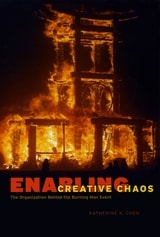
Enabling Creative Chaos
The Organization Behind the Burning Man EventKatherine K. Chen
University of Chicago Press, 2009
In the summer of 2008, nearly fifty thousand people traveled to Nevada’s Black Rock Desert to participate in the countercultural arts event Burning Man. Founded on a commitment to expression and community, the annual weeklong festival presents unique challenges to its organizers. Over four years Katherine K. Chen regularly participated in organizing efforts to safely and successfully create a temporary community in the middle of the desert under the hot August sun.
Enabling Creative Chaos tracks how a small, underfunded group of organizers transformed into an unconventional corporation with a ten-million-dollar budget and two thousand volunteers. Over the years, Burning Man’s organizers have experimented with different management models; learned how to recruit, motivate, and retain volunteers; and developed strategies to handle regulatory agencies and respond to media coverage. This remarkable evolution, Chen reveals, offers important lessons for managers in any organization, particularly in uncertain times.
Encoding Race, Encoding Class
Indian IT Workers in BerlinSareeta Amrute
Duke University Press, 2016
End of the World as We Know It
Social Science for the Twenty-First CenturyImmanuel Wallerstein
University of Minnesota Press, 2001
Endangered City
The Politics of Security and Risk in BogotáAustin Zeiderman
Duke University Press, 2016
Ending Poverty As We Know It
Guaranteeing A Right To A JobWilliam P. Quigley
Temple University Press, 2003
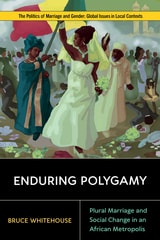
Enduring Polygamy
Plural Marriage and Social Change in an African MetropolisBruce Whitehouse
Rutgers University Press, 2023
Why hasn’t polygamous marriage died out in African cities, as experts once expected it would? Enduring Polygamy considers this question in one of Africa’s fastest-growing cities: Bamako, the capital of Mali, where one in four wives is in a polygamous marriage. Using polygamy as a lens through which to survey sweeping changes in urban life, it offers ethnographic and demographic insights into the customs, gender norms and hierarchies, kinship structures, and laws affecting marriage, and situates polygamy within structures of inequality that shape marital options, especially for young Malian women. Through an approach of cultural relativism, the book offers an open-minded but unflinching perspective on a contested form of marriage. Without shying away from questions of patriarchy and women’s oppression, it presents polygamy from the everyday vantage points of Bamako residents themselves, allowing readers to make informed judgments about it and to appreciate the full spectrum of human cultural diversity.
Energy Impacts
A Multidisciplinary Exploration of North American Energy DevelopmentJeffrey B. Jacquet
University Press of Colorado, 2020
Twelve chapters from respected scholars in a variety of disciplines present new ways to consider and analyze energy impact research. Focused on varied energy topics, geographies, and disciplines, each chapter includes a policy brief that summarizes the work and provides “key takeaways” to apply the findings to policy and public discourse.
Meaningful public engagement is critical in limiting the negative implications of energy development, and understanding the social influences on and of energy systems is a cornerstone of addressing the climate crisis. As such, Energy Impacts is a significant work for students, scholars, and professionals working in sociology, education, geography, environmental studies, and public health.
This material is based upon work supported by the National Science Foundation under Grant No. 1528422. Publication is also supported, in part, by Montana State University.
Contributors:
Ali Adil, Lisa Bailey-Davis, Nancy Bowen-Elizey, Morey Burnham, Weston Eaton, Heather Feldhaus, Felix Fernando, Emily Grubert, C. Clare Hinrichs, John Hintz, Richard Hirsh, Season Hoard, Tamara Laninga, Eric Larson, Achla Marathe, Natalie Martinkus, Seven Mattes, Ronald Meyers, Patrick Miller, Ethan Minier, Myra Moss, Jacob Mowery, Thomas Murphy, Sevda Ozturk Sari, John Parkins, Christopher Podeschi, Nathan Ratledge, Sanne Rijkhoff, Kelli Roemer, Todd Schenk, Anju Seth, Kate Sherren, Jisoo Sim, Marc Stern, Jessica Ulrich-Schad, Cameron Whitley, Laura Zachary
Engaged Spirituality
Social Change and American ReligionStanczak, Gregory C
Rutgers University Press, 2006
In Engaged Spirituality, Gregory C. Stanczak challenges this assumption, arguing that spirituality plays an important social role as well. Based on more than one hundred interviews with individuals of diverse faith traditions, the book shows how prayer, meditation, and ritual provide foundations for activism. Among the stories, a Buddhist monk in Los Angeles intimately describes the physical sensations of strength and compassion that sweep her body when she recites the Buddha’s name in times of selfless service, and a Protestant reverend explains how the calm serenity that she feels during retreats allows her to direct her multi-service agency in San Francisco to creative successes that were previously unimaginable.
In an age when Madonna studies Kabbalah and the internet is bringing Buddhism to the white middle-class, it is clear that formal religious affiliations are no longer enough. Stanczak’s critical examination of spirituality provides us with a way of discussing the factors that impel individuals into social activism and forces us to rethink the question of how “religion” and “spirituality” might be defined.