Results by title
2194 books match the query 'Women's Studies' and 63 start with e
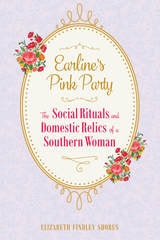
Earline's Pink Party
The Social Rituals and Domestic Relics of a Southern WomanElizabeth Findley Shores
University of Alabama Press, 2017
A compelling, genre-bending page-turner, Earline’s Pink Party: The Social Rituals and Domestic Relics of a Southern Woman analyzes the life of a small-city matron in the Deep South. A combination of biography, material culture analysis, social history, and memoir, this volume offers a new way of thinking about white racism through Shores’s conclusion that Earline’s earliest childhood experiences determined her worldview.
Set against a fully drawn background of geography and culture and studded with detailed investigations of social rituals (such as women’s parties) and objects (such as books, handwritten recipes, and fabric scraps), Earline’s Pink Party tells the story of an ordinary woman, the grandmother Shores never knew. Looking for more than the details and drama of bourgeois Southern life, however, the author digs into generations of family history to understand how Earline viewed the racial terror that surrounded her during the Jim Crow years in this fairly typical southern town.
Shores seeks to narrow a gap in the scholarship of the American South, which has tended to marginalize and stereotype well-to-do white women who lived after Emancipation. Exploring her grandmother’s home and its contents within the context of Tuscaloosa society and historical events, Shores evaluates the belief that women like Earline consciously engaged in performative rituals in order to sustain the “fantastical” view of the white nobility and the contented black underclass. With its engaging narrative, illustrations, and structure, this fascinating book should interest scholars of memory, class identity, and regional history, as well as sophisticated lay readers who enjoy Southern history, foodways, genealogy, and material culture.
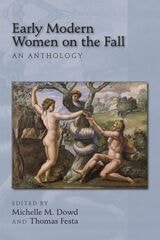
Early Modern Women on the Fall
An AnthologyMichelle M. Dowd
Arizona Center for Medieval and Renaissance Studies, 2012

Early Women Stars, Volume 16
Jennifer M. Bean and Diane Negra, eds.
Duke University Press, 0
Essays focus on figures across the wide international lexicon of stardom, including stunt star Pearl White, iconic French performer Musidora, imported European vamp Pola Negri, pixie heroine Colleen Moore, and Chinese star Xuan Jinglin. Other articles revisit figures, such as Mary Pickford and Greta Garbo, whose stardom appears to be self-evident but proves more complex than previous accounts have suggested. In this collection, early female stars function as a medium through which authors reconceptualize feminist film history and historiography.
Contributors. Jennifer M. Bean, Vicki Callahan, Lucy Fischer, Amelie Hastie, Diane Negra, Gaylyn Studlar, Zhen Zhang
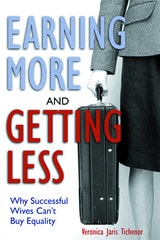
Earning More and Getting Less
Why Successful Wives Can't Buy EqualityVeronica Jaris Tichenor
Rutgers University Press, 2005
In Earning More and Getting Less, sociologist Veronica Jaris Tichenor shows how, historically, men have derived a great deal of power over financial and household decisions by bringing home all (or most) of the family's income. Yet, financial superiority has not been a similar source of power for women. Tichenor demonstrates how wives, instead of using their substantial incomes to negotiate more egalitarian relationships, enable their husbands to perpetuate male dominance within the family.
Weaving personal accounts, in-depth interviews, and compelling narrative, this important study reveals disturbing evidence that the conventional power relations defined by gender are powerful enough to undermine hierarchies defined by money. Earning More and Getting Less is essential reading in sociology, psychology, and family and gender studies.
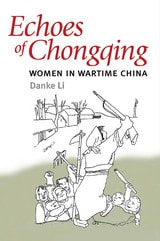
Echoes of Chongqing
Women in Wartime ChinaDanke Li
University of Illinois Press, 2010
This collection of annotated oral histories records the personal stories of twenty Chinese women who lived in the wartime capital of Chongqing during China's War of Resistance against Japan during World War II. By presenting women's remembrances of the war, this study examines the interplay between oral history and traditional historical narrative, public discourse, and private memories. The women interviewed came from differing social, economic, and educational backgrounds and experienced the war in a variety of ways, some of them active in the communist resistance and others trying to support families or pursue educations in the face of wartime upheaval. Their stories demonstrate that the War of Resistance had two faces: one presented by official propaganda and characterized by an upbeat unified front against Japan, the other a record of invisible private stories and a sobering national experience of death and suffering. The accounts of how women coped, worked, and lived during the war years in the Chongqing region recast historical understanding of the roles played by ordinary people in wartime and give women a public voice and face that, until now, have been missing from scholarship on the war.
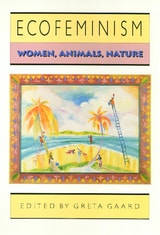
Ecofeminism
edited by Greta Gaard
Temple University Press, 1993
Drawing on the insights of ecology, feminism, and socialism, ecofeminism's basic premise is that the ideology that authorizes oppression based on race, class, gender, sexuality, physical abilities, and species is the same ideology that sanctions the oppression of nature. In this collection of essays, feminist scholars and activists discuss the relationships among human begins, the natural environment, and nonhuman animals. They reject the nature/culture dualism of patriarchal thought and locate animals and humans within nature. The goal of these twelve articles is to contribute to the evolving dialogue among feminists, ecofeminists, animal liberationists, deep ecologists, and social ecologists in an effort to create a sustainable lifestyle for all inhabitants of the earth.
Among the issues addressed are the conflicts between Green politics and ecofeminism, various applications of ecofeminist theory, the relationship of animal liberation to ecofeminism, harmful implications of the romanticized woman-nature association in Western culture, and cultural limitations of ecofeminism.
In the series Ethics and Action, edited by Tom Regan.
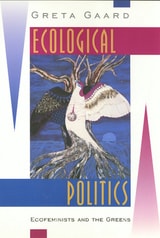
Ecological Politics
Greta Gaard
Temple University Press, 1998
A member of both movements, Greta Gaard bases her analysis on her personal experience as well as extensive secondary sources and interviews with key theorists, activists, and speakers across the United States. By allowing each movement's members to speak for themselves, she traces the separate origins and development of each movement, explains their connections, and reveals the light that each can cast upon the other and on the difficulties facing social action in general.
Beginning with the ecofeminists, Gaard describes the paths -- environmental causes, the feminist peace movement, the feminist spirituality movement, the animal liberation movement, and the anti-toxics movements, as well as experiences of interconnectedness -- that have led women (and a few men) to articulate an ecofeminist perspective. Tracing the movement from the 1980s to the present, she defines its present strands as liberal ecofeminism, radical ecofeminism, socialist ecofeminism, and social ecofeminism.
Gaard illustrates the development of the U.S. Greens from a national movement into a political party. She defines the various factions -- the Left Greens, the Youth Greens, and the Green Politics Network -- that influenced the movement's direction and underlay the debates during Ralph Nadar's 1996 presidential campaign. She shows how the history of these three groups can be seen as stages in the transition from a leftist and sometimes anarchist action that places the Green movement squarely within the pattern of other social movements around the world.
Despite the significant influence that ecofeminists have had in shaping the Greens as a national movement, many have chosen to withdraw from the Greens. Gaard looks at the reasons for member disaffection and draws disturbing conclusions about the compatibility between liberal feminism and cultural ecofeminism and patriarchal politics. She also presents the divisions within the Greens as ongoing battles within the new left, the radical ecology movement, and various social justice movements. She focuses on three general areas -- conflicts over philosophy, conflicts over representation, and conflicts over strategy -- to make suggestions for how to bring about the kind of social transformation envisioned by both the Greens and the ecofeminists. Arguing that the Concord Principles represent a populist form of liberal democracy that fundamentally betrays both ecofeminism and Green philosophy, she uses the 1996 Nadar campaign as a departure point to developing an ecofeminist theory of radical democracy and to speculate on future directions for Green politics and for ecofeminism. Her analysis illuminates the nature and direction of each of these important movements and the pressures and conflicts experienced by all social movements at the end of the twentieth century.
Economics for Humans, Second Edition
Julie A. Nelson
University of Chicago Press, 2018
Economics for Humans argues against the well-ingrained notion that economics is immune to moral values and distant from human relationships. Here, Nelson locates the impediment to a more considerate economic world in an assumption that is shared by both neoliberals and the political left. Despite their seemingly insurmountable differences, both make use of the metaphor, first proposed by Adam Smith, that the economy is a machine. This pervasive idea, Nelson argues, has blinded us to the qualities that make us work and care for one another—qualities that also make businesses thrive and markets grow. We can wed our interest in money with our justifiable concerns about ethics and social well-being. And we can do so if we recognize that an economy is not a machine, but a living thing in need of attention and careful tending.
This second edition has been updated and refined throughout, with expanded discussions of many topics and a new chapter that investigates the apparent conflict between economic well-being and ecological sustainability. Further developing the main points of the first edition, Economics for Humans will continue to both invigorate and inspire readers to reshape the way they view the economy, its possibilities, and their place within it.
Economics for Humans, Second Edition
Julie A. Nelson
University of Chicago Press, 2018
At its core, an economy is about providing goods and services for human well-being. But many economists and critics preach that an economy is something far different: a cold and heartless system that operates outside of human control. In this impassioned and perceptive work, Julie A. Nelson asks a compelling question: given that our economic world is something that we as humans create, aren’t ethics and human relationships—dimensions of a full and rich life—intrinsically part of the picture?
Economics for Humans argues against the well-ingrained notion that economics is immune to moral values and distant from human relationships. Here, Nelson locates the impediment to a more considerate economic world in an assumption that is shared by both neoliberals and the political left. Despite their seemingly insurmountable differences, both make use of the metaphor, first proposed by Adam Smith, that the economy is a machine. This pervasive idea, Nelson argues, has blinded us to the qualities that make us work and care for one another—qualities that also make businesses thrive and markets grow. We can wed our interest in money with our justifiable concerns about ethics and social well-being. And we can do so if we recognize that an economy is not a machine, but a living thing in need of attention and careful tending.
This second edition has been updated and refined throughout, with expanded discussions of many topics and a new chapter that investigates the apparent conflict between economic well-being and ecological sustainability. Further developing the main points of the first edition, Economics for Humans will continue to both invigorate and inspire readers to reshape the way they view the economy, its possibilities, and their place within it.
Economies of Violence
Transnational Feminism, Postsocialism, and the Politics of Sex TraffickingJennifer Suchland
Duke University Press, 2015

Edith Wharton and the Visual Arts
Emily J. Orlando
University of Alabama Press, 2008
An insightful look at representations of women’s bodies and female authority.
This work explores Edith Wharton's career-long concern with a 19th-century visual culture that limited female artistic agency and expression. Wharton repeatedly invoked the visual arts--especially painting—as a medium for revealing the ways that women's bodies have been represented (as passive, sexualized, infantalized, sickly, dead). Well-versed in the Italian masters, Wharton made special use of the art of the Pre-Raphaelite Brotherhood, particularly its penchant for producing not portraits of individual women but instead icons onto whose bodies male desire is superimposed.
Emily Orlando contends that while Wharton's early work presents women enshrined by men through art, the middle and later fiction shifts the seat of power to women. From Lily Bart in The House of Mirth to Undine Spragg in The Custom of the Country and Ellen Olenska in The Age of Innocence, women evolve from victims to vital agents, securing for themselves a more empowering and satisfying relationship to art and to their own identities.
Orlando also studies the lesser-known short stories and novels, revealing Wharton’s re-workings of texts by Browning, Poe, Balzac, George Eliot, Sir Joshua Reynolds, and, most significantly, Dante Gabriel Rossetti. Edith Wharton and the Visual Arts is the first extended study to examine the presence in Wharton's fiction of the Pre-Raphaelite poetry and painting of Rossetti and his muses, notably Elizabeth Siddall and Jane Morris. Wharton emerges as one of American literature's most gifted inter-textual realists, providing a vivid lens through which to view issues of power, resistance, and social change as they surface in American literature and culture.
Educated in Romance
Women, Achievement, and College CultureDorothy C. Holland and Margaret A. Eisenhart
University of Chicago Press, 1990

Educating Angels
Teaching for the Pursuit of HappinessTony Armstrong, Ph.D
Parkhurst Brothers, Inc., 2013
Educating Women
Cultural Conflict and Victorian LiteratureLaura Morgan Green
Ohio University Press, 2001
In 1837, when Queen Victoria came to the throne, no institution of higher education in Britain was open to women. By the end of the century, a quiet revolution had occurred: women had penetrated even the venerable walls of Oxford and Cambridge and could earn degrees at the many new universities founded during Victoria's reign. During the same period, novelists increasingly put intellectually ambitious heroines students, teachers, and frustrated scholars—at the center of their books. Educating Women analyzes the conflict between the higher education movement's emphasis on intellectual and professional achievement and the Victorian novel's continuing dedication to a narrative in which women's success is measured by the achievement of emotional rather than intellectual goals and by the forging of social rather than institutional ties.
Focusing on works by Charlotte Brontë, George Eliot, Anna Leonowens, and Thomas Hardy, Laura Morgan Green demonstrates that those texts are shaped by the need to mediate the conflict between the professionalism and publicity increasingly associated with education, on the one hand, and the Victorian celebration of women as emblems of domesticity, on the other. Educating Women shows that the nineteenth-century “heroines” of both history and fiction were in fact as indebted to domestic ideology as they were eager to transform it.
Educating the New Southern Woman
Speech, Writing, and Race at the Public Women's Colleges, 1884-1945David Gold and Catherine L. Hobbs
Southern Illinois University Press, 2014
From the end of Reconstruction through World War II, a network of public colleges for white women flourished throughout the South. Founded primarily as vocational colleges to educate women of modest economic means for life in the emerging “new” South, these schools soon transformed themselves into comprehensive liberal arts–industrial institutions, proving so popular that they became among the largest women’s colleges in the nation. In this illuminating volume, David Gold and Catherine L. Hobbs examine rhetorical education at all eight of these colleges, providing a better understanding of not only how women learned to read, write, and speak in American colleges but also how they used their education in their lives beyond college.
With a collective enrollment and impact rivaling that of the Seven Sisters, the schools examined in this study—Mississippi State College for Women (1884), Georgia State College for Women (1889), North Carolina College for Women (1891), Winthrop College in South Carolina (1891), Alabama College for Women (1896), Texas State College for Women (1901), Florida State College for Women (1905), and Oklahoma College for Women (1908)—served as important centers of women’s education in their states, together educating over a hundred thousand students before World War II and contributing to an emerging professional class of women in the South. After tracing the establishment and evolution of these institutions, Gold and Hobbs explore education in speech arts and public speaking at the colleges and discuss writing instruction, setting faculty and departmental goals and methods against larger institutional, professional, and cultural contexts. In addition to covering the various ways the public women’s colleges prepared women to succeed in available occupations, the authors also consider how women’s education in rhetoric and writing affected their career choices, the role of race at these schools, and the legacy of public women’s colleges in relation to the history of women’s education and contemporary challenges in the teaching of rhetoric and writing.
The experiences of students and educators at these institutions speak to important conversations among scholars in rhetoric, education, women’s studies, and history. By examining these previously unexplored but important institutional sites, Educating the New Southern Woman provides a richer and more complex history of women’s rhetorical education and experiences.

Education, Culture, and Identity in Twentieth-Century China
Glen Peterson, Ruth Hayhoe, and Yongling Lu, Editors
University of Michigan Press, 2001
Unlike most studies of modern Chinese education that focus exclusively on the post-1949 era, Education, Culture, and Identity in Twentieth-Century China represents a deliberate attempt to break through the 1949 barrier and embrace the entire century. Culture emerges in this study as a deeper level factor that underlay the development of education in each period and shaped certain recurrent patterns, while identity involves a search for individual and collective meaning that went on under different regimes.
The product of a genuinely multidisciplinary effort to promote cross-fertilization among an international team of scholars in a wide range of disciplines, Education, Culture, and Identity in Twentieth-Century China will interest students and scholars of modern China, comparative and international education, educational policy, and international relations. It will also appeal to policy makers and professionals associated with international organizations.
Glen Peterson is Associate Professor of History, University of British Columbia. Ruth Hayhoe is Director, Hong Kong Institute of Education. Yongling Lu is a graduate student in the History Department, Stanford University.
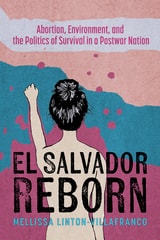
El Salvador Reborn
Abortion, Environment, and the Politics of Survival in a Postwar NationMellissa Linton-Villafranco
University of Arizona Press, 2026
El Salvador Reborn examines the nation’s efforts to reshape its identity after the Peace Accords amid declining Cold War tensions. The book explores the criminalization of abortion and environmental activism in postwar El Salvador by focusing on two key organizations, Agrupación Ciudadana por la Despenalización del Aborto and Foro del Agua, highlighting their political strategies during a critical moment in El Salvador’s formation.
Author Mellissa Linton-Villafranco critically analyzes the political shift under the right-wing party, which sought to redefine notions of life and sovereignty. Historically associated with death squads, the right repositioned itself as a pro-life force by criminalizing abortion, amending the constitution to declare life begins at conception, and imposing penalties of up to thirty years. These measures marginalized women’s autonomy, creating a repressive legal environment centered on fetal rights. In response, feminist groups mobilized through protests, online campaigns, transnational alliances, and public art, advocating for reproductive justice that encompasses gender-based violence, health, and environmental sustainability.
Linton-Villafranco makes the case for a holistic conception of life that integrates land, body, and community sovereignty, weaving reproductive justice with environmental activism to promote a broader, interconnected understanding of life and rights in El Salvador.
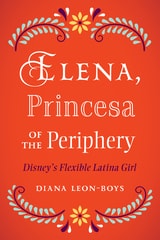
Elena, Princesa of the Periphery
Disney’s Flexible Latina GirlDiana Leon-Boys
Rutgers University Press, 2023
2024 National Communication Association's Critical and Cultural Communication Studies Division (CCSD) Book of the year award
2023 National Communication Association's Feminist and Gender Studies Division Bonnie Ritter Outstanding Feminist Book Award
In the summer of 2016, Disney introduced its first Latina princess, Elena of Avalor. Princesa of the Periphery explores this Disney property using multiple case studies to understand its approach to girlhood and Latinidad. Following the circuit of culture model, author Diana Leon-Boys teases out moments of complex negotiations by Disney, producers, and audiences as they navigate Elena’s circulation. Case studies highlight how a flexible Latinidad is deployed through corporate materials, social media pages, theme park experiences, and the television series to create a princess who is both marginal to Disney’s normative vision of princesshood and central to Disney’s claims of diversification. This multi-layered analysis of Disney’s mediated Latina girlhood interrogates the complex relationship between the U.S.’s largest ethnic minority and a global conglomerate that stands in for the U.S. on the global stage.

Elizabeth Bishop and Her Art
Lloyd Schwartz and Sybil P. Estess, Editors
University of Michigan Press, 1983
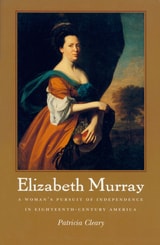
Elizabeth Murray
A Woman's Pursuit of Independence in Eighteenth-Century AmericaPatricia Cleary
University of Massachusetts Press, 2000
One of the most compelling figures in colonial America, Elizabeth Murray (1726–1785) was a Scottish immigrant who settled in Boston in her early twenties and took up shopkeeping. For many years, she practiced her trade successfully while marrying three times, once to a much older man who left her an extremely rich widow. This biography chronicles the life of this extraordinary “ordinary” woman who tried to make a place for herself and other women in the world by asserting her own independence inside and outside of the home.
As an importer and retailer of British goods, Murray conducted business with merchants and manufacturers in England and buyers in the American colonies, even traveling to London to select her own stock. Deeply satisfied by her work and the economic freedom it brought her, she acted as mentor to other women, helping them to establish shops of their own. She also protected her autonomy by demanding prenuptial agreements from her second and third husbands that gave her a measure of control over her property that was rare for a married woman of her day.
The spirit of independence that Murray so valued in herself and nurtured in other women was severely tested by the upheavals of the American Revolution. With strong loyalties to both Britain and America, she was torn by the conflict, especially when close relatives chose opposing sides and her third husband abandoned her, leaving her to defend the family estate alone. Her wartime experiences—wild midnight rides, accusations of being a spy, quartering both royal and rebel troops, and brief imprisonment—vividly capture the turmoil of the Revolution and highlight the range of her political commitments.
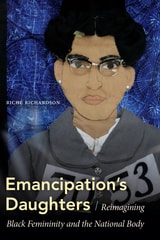
Emancipation's Daughters
Reimagining Black Femininity and the National BodyRiché Richardson
Duke University Press, 2021
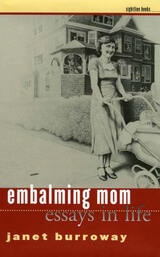
Embalming Mom
Essays in LifeJanet Burroway
University of Iowa Press, 2004
Janet Burroway followed in the footsteps of Sylvia Plath. Like Plath, she was an earlyMademoiselle guest editor in New York, an Ivy League and Cambridge student, an aspiring poet-playwright-novelist in the period before feminism existed, a woman who struggled with her generation's conflicting demands of work and love. Unlike Plath, Janet Burroway survived.
In sixteen essays of wit, rage, and reconciliation, Embalming Mom chronicles loss and renaissance in a life that reaches from Florida to Arizona across to England and home again. Burroway brilliantly weaves her way through the dangers of daily life—divorcing her first husband, raising two boys, establishing a new life, scattering her mother's ashes and sorting the meager possessions of her father. Each new danger and challenge highlight the tenacious will of the body and spirit to heal.
“Ordinary life is more dangerous than war because nobody survives,” Burroway contemplates in the essay “Danger and Domesticity,” yet each of her meditations reminds us that it's our daily rituals and trials that truly keep us alive.
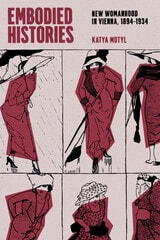
Embodied Histories
New Womanhood in Vienna, 1894–1934Katya Motyl
University of Chicago Press, 2024
In Embodied Histories, historian Katya Motyl explores the everyday acts of defiance that formed the basis for new, unconventional forms of womanhood in early twentieth-century Vienna. The figures Motyl brings back to life defied gender conformity, dressed in new ways, behaved brashly, and expressed themselves freely, overturning assumptions about what it meant to exist as a woman.
Motyl delves into how these women inhabited and reshaped the urban landscape of Vienna, an increasingly modern, cosmopolitan city. Specifically, she focuses on the ways that easily overlooked quotidian practices such as loitering outside cafés and wandering through city streets helped create novel conceptions of gender. Exploring the emergence of a new womanhood, Embodied Histories presents a new account of how gender, the body, and the city merge with and transform each other, showing how our modes of being are radically intertwined with the spaces we inhabit.
Embodied Protests
Emotions and Women's Health in BoliviaMaria Tapias
University of Illinois Press, 2015
Evocative and compassionate, Embodied Protests gives voice to the human costs of the ongoing neoliberal experiment.
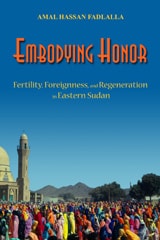
Embodying Honor
Fertility, Foreignness, and Regeneration in Eastern SudanAmal Hassan Fadlalla
University of Wisconsin Press, 2007
In Embodying Honor Amal Hassan Fadlalla finds that the female body is the locus of anxieties about foreign dangers and diseases, threats perceived to be disruptive to morality, feminine identities, and social well-being. As a “northern Sudanese” viewed as an outsider in this region of her native country, Fadlalla presents an intimate portrait and thorough analysis that offers an intriguing commentary on the very notion of what constitutes the “foreign.” Fadlalla shows how Muslim Hadendowa women manage health and reproductive suffering in their quest to become “responsible” mothers and valued members of their communities. Her historically grounded ethnography delves into women’s reproductive histories, personal narratives, and ritual logics to reveal the ways in which women challenge cultural understandings of gender, honor, and reproduction.
Embodying the Problem
The Persuasive Power of the Teen MotherVinson, Jenna
Rutgers University Press, 2018
Vinson shows that these representations prevent a focus on the underlying structures of inequality and poverty, perpetuate harmful discourses about women, and sustain racialized gender ideologies that construct women’s bodies as sites of national intervention and control.
Embodying the Problem also explores how young mothers resist this narrative. Analyzing fifty narratives written by young mothers, the recent #NoTeenShame social media campaign, and her interviews with thirty-three young women, Vinson argues that while the stigmatization of teenage pregnancy and motherhood does dehumanize young pregnant and mothering women, it is at the same time a means for these women to secure an audience for their own messages.
More information on the author's website (https://jennavinson.com)
Embodying the Sacred
Women Mystics in Seventeenth-Century LimaNancy E. van Deusen
Duke University Press, 2018
Embracing Arms
Cultural Representation of Slavic and Balkan Women in WarYana Hashamova
Central European University Press, 2012
Embroidering the Scarlet A
Unwed Mothers and Illegitimate Children in American Fiction and FilmJanet Mason Ellerby
University of Michigan Press, 2015

Emily Dickinson's Open Folios
Scenes of Reading, Surfaces of WritingMarta L. Werner
University of Michigan Press, 1996
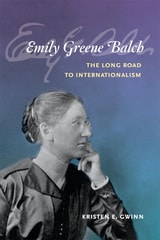
Emily Greene Balch
The Long Road to InternationalismKristen E. Gwinn
University of Illinois Press, 2010
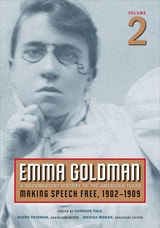
Emma Goldman, Vol. 2
A Documentary History of the American Years, Volume 2: Making Speech Free, 1902-1909Emma Goldman. Edited by Candace Falk; Barry Pateman, Assoc Ed; Jessica Moran, As
University of Illinois Press, 2007
Emma Goldman: A Documentary History of the American Years reconstructs the life of Emma Goldman through significant texts and documents. These volumes collect personal letters, lecture notes, newspaper articles, court transcripts, government surveillance reports, and numerous other documents, many of which appear here in English for the first time. Supplemented with thorough annotations, multiple appendixes, and detailed chronologies, the texts bring to life the memory of this singular, pivotal figure in American and European radical history.
Volume 2: Making Speech Free, 1902-1909 extends many of the themes introduced in the previous volume, including Goldman's evolving attitudes toward political violence and social reform, intensified now by documentary accounts of the fomenting revolution in Russia and the legal opposition toward anarchism and labor organizing in the United States. Always an impassioned defender of free expression, Goldman's launch of her magazine Mother Earth in 1906 signaled a desire to bring radical thought into wider circulation, and its pages brought together modern literary and cultural ideas with a radical social agenda, quickly becoming a platform for her feminist critique, among her many other challenges to the status quo. With abundant examples from her writings and speeches, this volume details Goldman's emergence as one of American history's most fiercely outspoken opponents of hypocrisy and pretension in politics and public life.
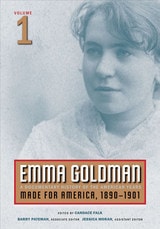
Emma Goldman
A Documentary History of the American Years, Volume 1: Made for America, 1890-1901Emma Goldman. Edited by Candace Falk; Barry Pateman, Assoc Ed; Jessica Moran, A
University of Illinois Press, 2007
Emma Goldman: A Documentary History of the American Years reconstructs the life of Emma Goldman through significant texts and documents. These volumes collect personal letters, lecture notes, newspaper articles, court transcripts, government surveillance reports, and numerous other documents, many of which appear here in English for the first time. Supplemented with thorough annotations, multiple appendixes, and detailed chronologies, the texts bring to life the memory of this singular, pivotal figure in American and European radical history.
Volume 1: Made for America, 1890-1901 introduces readers to the young Emma Goldman as she begins her association with the international anarchist movement and especially with the German, Jewish, and Italian immigrant radicals in New York City. From early on, Goldman's movement through political and intellectual circles is marked by violence, from the attempted murder of industrialist Henry Clay Frick by Goldman's lover, Alexander Berkman, to the assassination of President William McKinley, in which Goldman was falsely implicated. The documents surrounding these events illuminate Goldman's struggle to balance anarchism's positive gains and its destructive costs. This volume introduces many of the themes that would pervade much of Goldman's later writings and speeches: the untold possibilities of anarchism; the transformative power of literature; the interplay of human relationships; and the importance of free speech, education, labor, women's freedom, and radical social reform.
Emotional Landscapes
Love, Gender, and MigrationEdited by Marcelo J. Borges, Sonia Cancian, and Linda Reeder
University of Illinois Press, 2020
Affecting and perceptive, Emotional Landscapes moves from war and transnational families to gender and citizenship to explore the crossroads of migration and the history of emotion.
Contributors: María Bjerg, Marcelo J. Borges, Sonia Cancian, Tyler Carrington, Margarita Dounia, Alexander Freund, Donna R. Gabaccia, A. James Hammerton, Mirjam Milharčič Hladnik, Emily Pope-Obeda, Linda Reeder, Roberta Ricucci, Suzanne M. Sinke, and Elizabeth Zanoni
Emotional Signals
Auto-Tune, Melodyne, and the Cultural Politics of Pitch CorrectionCatherine Provenzano
University of Michigan Press, 2027
An ethnographic account of the history, development, and cultural impacts of digital tuning software
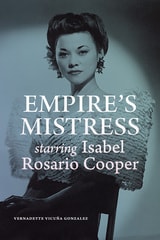
Empire's Mistress, Starring Isabel Rosario Cooper
Vernadette Vicuna Gonzalez
Duke University Press, 2021
Empowered by Design
Decentralization and the Gender Policy TrifectaMeg Rincker
Temple University Press, 2017
In her probing book, Empowered by Design, Meg Rincker asks, Under what conditions will decentralization lead to women’s empowerment in countries around the globe? Using three case studies—the United Kingdom, Poland, and Pakistan—she shows how decentralization reforms create new institutional offices as power shifts from the national level to a meso-tier level, which is located between the national government and local municipalities. These shifts impact a country’s political, administrative, and fiscal reforms as well as women’s representation.
Rincker argues that this shift should be inclusive of women—or at least lead more women to participate in institutions—but this is not always the case. She indicates that three conditions, “the gender policy trifecta,” need to be met to achieve this: legislative gender quotas, women’s policy agencies, and gender-responsive budgeting at the level of governance in question. Rincker's innovative research uses original comparative data about what women want, quantitative cross-national analyses, and interviews with women’s organization leaders and politicians to show how cross-institutional policymaking can empower women.
Rincker’s fine-grained analysis makes a significant contribution to the study of representation and gendered implications of decentralization, as well as how representatives go about understanding and aggregating our diverse policy preferences.
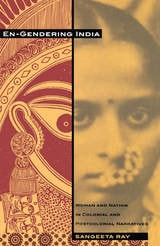
En-Gendering India
Woman and Nation in Colonial and Postcolonial NarrativesSangeeta Ray
Duke University Press, 2000
Through her readings of works by writers including Bankimchandra Chatterjee, Rabindranath Tagore, Harriet Martineau, Flora Annie Steel, Anita Desai, and Bapsi Sidhaa, Ray demonstrates that Indian women were presented as upper class and Hindu, an idealization that paradoxically served the needs of both colonial and nationalist discourses. The Indian nation’s goal of self-rule was expected to enable women’s full participation in private and public life. On the other hand, British colonial officials rendered themselves the protectors of passive Indian women against their “savage” male countrymen. Ray shows how the native woman thus became a symbol for both an incipient Indian nation and a fading British Empire. In addition, she reveals how the figure of the upper-class Hindu woman created divisions with the nationalist movement itself by underscoring caste, communal, and religious differences within the newly emerging state. As such, Ray’s study has important implications for discussions about nationalism, particularly those that address the concepts of identity and nationalism.
Building on recent scholarship in feminism and postcolonial studies, En-Gendering India will be of interest to scholars in those fields as well as to specialists in nationalism and nation-building and in Victorian, colonial, and postcolonial literature and culture.
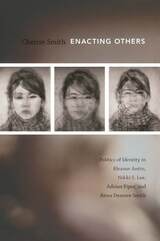
Enacting Others
Politics of Identity in Eleanor Antin, Nikki S. Lee, Adrian Piper, and Anna Deavere SmithCherise Smith
Duke University Press, 2011
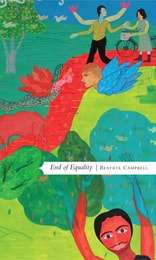
End of Equality
Beatrix Campbell
Seagull Books, 2013
In TheEnd of Equality, renowned feminist Beatrix Campbell argues that even as the patriarchy has lost some of its legitimacy, new inequalities are emerging in our culture. We are living, Campbell writes, in an era of neo-patriarchy in which violence has proliferated; body anxiety and self-hatred have flourished; rape is committed with impunity; sex trafficking thrives, and the struggle for equal pay is at an end. After four decades observing society, Campbell still speaks of the long-sought goal of gender equality. But now she calls for a new revolution.
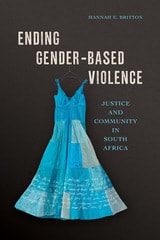
Ending Gender-Based Violence
Justice and Community in South AfricaHannah E. Britton
University of Illinois Press, 2020
Hannah E. Britton examines the reasons gendered violence persists in relationship to social inequalities even after women assume political power. Venturing into South African communities, Britton invites service providers, religious and traditional leaders, police officers, and medical professionals to address gender-based violence in their own words. Britton finds the recent turn toward carceral solutions—with a focus on arrests and prosecutions—fails to address the complexities of the problem and looks at how changing specific community dynamics can defuse interpersonal violence. She also examines how place and space affect the implementation of policy and suggests practical ways policymakers can support street level workers.
Clear-eyed and revealing, Ending Gender-Based Violence offers needed tools for breaking cycles of brutality and inequality around the world.
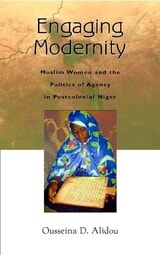
Engaging Modernity
Muslim Women and the Politics of Agency in Postcolonial NigerOusseina Alidou
University of Wisconsin Press, 2005
Engaging Modernity is Ousseina Alidou’s rich and compelling portrait of Muslim women in Niger as they confront the challenges and opportunities of the twentieth century. Contrary to Western stereotypes of passive subordination, these women are taking control of their own lives and resisting domination from indigenous traditions, westernization, and Islam alike.
Based on thorough scholarly research and extensive fieldwork—including a wealth of interviews—Alidou’s work offers insights into the meaning of modernity for Muslim women in Niger. Mixing biography with sociological data, social theory and linguistic analysis, this is a multilayered vision of political Islam, education, popular culture, and war and its aftermath. A gripping look at one of the Muslim world’s most powerful untold stories.
Runner-up for the Aidoo-Snyder Book Prize, Women’s Caucus of the African Studies Association
Entering the Fray
Gender, Politics, and Culture in the New SouthEdited by Jonathan Daniel Wells & Sheila R. Phipps
University of Missouri Press, 2009

Entre Guadalupe y Malinche
Tejanas in Literature and ArtEdited by Inés Hernández-Ávila and Norma Elia Cantú
University of Texas Press, 2016
Mexican and Mexican American women have written about Texas and their lives in the state since colonial times. Edited by fellow Tejanas Inés Hernández-Ávila and Norma Elia Cantú, Entre Guadalupe y Malinche gathers, for the first time, a representative body of work about the lives and experiences of women who identify as Tejanas in both the literary and visual arts.
The writings of more than fifty authors and the artwork of eight artists manifest the nuanced complexity of what it means to be Tejana and how this identity offers alternative perspectives to contemporary notions of Chicana identity, community, and culture. Considering Texas-Mexican women and their identity formations, subjectivities, and location on the longest border between Mexico and any of the southwestern states acknowledges the profound influence that land and history have on a people and a community, and how Tejana creative traditions have been shaped by historical, geographical, cultural, linguistic, social, and political forces. This representation of Tejana arts and letters brings together the work of rising stars along with well-known figures such as writers Gloria Anzaldúa, Emma Pérez, Alicia Gaspar de Alba, Carmen Tafolla, and Pat Mora, and artists such as Carmen Lomas Garza, Kathy Vargas, Santa Barraza, and more. The collection attests to the rooted presence of the original indigenous peoples of the land now known as Tejas, as well as a strong Chicana/Mexicana feminism that has its precursors in Tejana history itself.
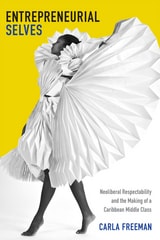
Entrepreneurial Selves
Neoliberal Respectability and the Making of a Caribbean Middle ClassCarla Freeman
Duke University Press, 2014
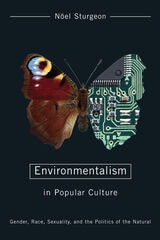
Environmentalism in Popular Culture
Gender, Race, Sexuality, and the Politics of the NaturalNoël Sturgeon
University of Arizona Press, 2009
Although there are other books that examine questions of culture and environment, this is the first book to employ a global feminist environmental justice analysis to focus on how racial inequality, gendered patterns of work, and heteronormative ideas about the family relate to environmental questions. Beginning in the late 1980s and moving to the present day, Sturgeon unpacks a variety of cultural tropes, including ideas about Mother Nature, the purity of the natural, and the allegedly close relationships of indigenous people with the natural world. She investigates the persistence of the “myth of the frontier” and its extension to the frontier of space exploration. She ponders the popularity (and occasional controversy) of penguins (and penguin family values) and questions assumptions about human warfare as “natural.”
The book is intended to provoke debates—among college students and graduate students, among their professors, among environmental activists, and among all citizens who are concerned with issues of environmental quality and social equality.
Equal in Monastic Profession
Religious Women in Medieval FrancePenelope D. Johnson
University of Chicago Press, 1991
Johnson researched more than two dozen nunneries in northern France from the eleventh century through the thirteenth century, balancing a qualitative reading of medieval monastic documents with a quantitative analysis of a lengthy thirteenth-century visitation record which allows an important comparison of nuns and monks. A fascinating look at the world of medieval spirituality, this work enriches our understanding of women's role in premodern Europe and in church history.
Equals in Learning and Piety
Muslim Women Scholars in Nigeria and North AmericaBeverly Mack
University of Wisconsin Press, 2023
Mack shows how women scholars instructed rural Hausa and Fulani women in Muslim ethics, doctrine, traditions, and behavior that followed and replaced the traumatic experience of warfare unleashed by the Jihad. She shows that these unique social engagements shaped people’s agency in the dynamic process of social change throughout the nineteenth century. Women imaginatively reconciled Muslim reformist doctrines and traditional practices in Nigeria, and these doctrines have continued to be influential in the diaspora, especially among Black American Muslims in the United States in the twenty-first century. With this major investigation of a little-studied phenomenon, Mack demonstrates the importance of women to the religious, political, and social transformation of Nigerian Muslim society.
Equivocal Beings
Politics, Gender, and Sentimentality in the 1790s--Wollstonecraft, Radcliffe, Burney, AustenClaudia L. Johnson
University of Chicago Press, 1995
Demonstrating the interrelationships among politics, gender, and feeling in the fiction of this period, Johnson provides detailed readings of Wollstonecraft, Radcliffe, and Burney, and treats the qualities that were once thought to mar their work—grotesqueness, strain, and excess—as indices of ideological conflict and as strategies of representation during a period of profound political conflict. She maintains that the reactionary reassertion of male sentimentality as a political duty displaced customary gender roles, rendering women, in Wollstonecraft's words, "equivocal beings."
Erotic Attunement
Parenthood and the Ethics of Sensuality between UnequalsCristina L. H. Traina
University of Chicago Press, 2011
Heightened awareness of the problem of sexual abuse has led to deep anxiety over adults touching children—in nearly any context. Though our society has moved toward increasingly strict enforcement of this taboo, studies have shown that young children need regular human contact, and the benefits of breastfeeding have been widely extolled. Exploring the complicated history of love, desire, gender, sexuality, parenthood, and inequality, Erotic Attunement probes the disquieting issue of how we can draw a clear line between natural affection toward children and perverse exploitation of them.
Cristina L. H. Traina demonstrates that we cannot determine what is wrong about sexual abuse without first understanding what is good about appropriate sensual affection. Pondering topics such as the importance of touch in nurturing children, the psychology of abuse and victimhood, and recent ideologies of motherhood, she argues that we must expand our philosophical and theological language of physical love and make a distinction between sexual love and erotic love. Taking on theological and ethical arguments over the question of sexuality between unequals, she arrives at the provocative conclusion that it can be destructive to completely bar eroticism from these relationships.