Results by title
1441 books match the query 'World' and 50 start with e
Early Modern Overseas Careers
East-Central Europeans as Jesuit Missionaries and Dutch East India EmployeesIgor Chabrowski
Central European University Press, 2026
The book examines the complexities of this early modern globalization: its scope, limits, importance, social, ethnic, and political ramifications. It researches how these networks reached out to the region of Central and Eastern Europe. The authors argue that the region was hardly considered peripheral from the perspective of Rome (and the Jesuits) or the Netherlands (and the colonial traders). They do, however, explore whether there were "glass ceilings," or limits of reach within the two networks for individuals from the Polish-Lithuanian Commonwealth or the former Kingdom of Hungary.
Earth Shapers
How We Mapped and Mastered the World, from the Panama Canal to the Baltic WayMaxim Samson
University of Chicago Press, 2025
Mountains, meridians, rivers, and borders—these are some of the features that divide the world on our maps and in our minds. But geography is far less set in stone than we might believe, and, as Maxim Samson’s Earth Shapers contends, in our relatively short time on this planet, humans have become experts at fundamentally reshaping our surroundings.
From the Qhapaq Ñan, the Inca’s “great road,” and Mozambique’s colonial railways to a Saudi Arabian smart city, and from Korea’s sacred Baekdu-daegan mountain range and the Great Green Wall in Africa to the streets of Chicago, Samson explores how we mold the world around us. And how, as we etch our needs onto the natural landscape, we alter the course of history. These fascinating stories of connectivity show that in our desire to make geographical connections, humans have broken through boundaries of all kinds, conquered treacherous terrain, and carved up landscapes. We crave linkages, and though we do not always pay attention to the in-between, these pathways—these ways of “earth shaping,” in Samson’s words—are key to understanding our relationship with the planet we call home.
An immense work of cultural geography touching on ecology, sociology, history, and politics, Earth Shapers argues that, far from being constrained by geography, we are instead its creators.
Earth Shapers
How We Mapped and Mastered the World, from the Panama Canal to the Baltic WayMaxim Samson
University of Chicago Press, 2025
The globetrotting story of how humans have harnessed the geographical landscape and written ourselves onto our surroundings.
Mountains, meridians, rivers, and borders—these are some of the features that divide the world on our maps and in our minds. But geography is far less set in stone than we might believe, and, as Maxim Samson’s Earth Shapers contends, in our relatively short time on this planet, humans have become experts at fundamentally reshaping our surroundings.
From the Qhapaq Ñan, the Inca’s “great road,” and Mozambique’s colonial railways to a Saudi Arabian smart city, and from Korea’s sacred Baekdu-daegan mountain range and the Great Green Wall in Africa to the streets of Chicago, Samson explores how we mold the world around us. And how, as we etch our needs onto the natural landscape, we alter the course of history. These fascinating stories of connectivity show that in our desire to make geographical connections, humans have broken through boundaries of all kinds, conquered treacherous terrain, and carved up landscapes. We crave linkages, and though we do not always pay attention to the in-between, these pathways—these ways of “earth shaping,” in Samson’s words—are key to understanding our relationship with the planet we call home.
An immense work of cultural geography touching on ecology, sociology, history, and politics, Earth Shapers argues that, far from being constrained by geography, we are instead its creators.
Earthmoving
Extractivism, War, and Visuality in Northern KurdistanEray Çayli
University of Texas Press, 2025
Focuses on contemporary art and media to examine the role of visuals in environmental violence and war in Northern Kurdistan.
Extractivism—exploiting the earth for resources—has long driven racial capitalism and colonialism. And yet, how does extractivism operate in a world where ecological and humanitarian sensibilities are unprecedentedly widespread? Eray Çaylı argues it does so by mobilizing these sensibilities in new ways. Extractivism is no longer only about moving the earth—displacing peoples, fossils, minerals, and waters—but also leaving those who witness this violent displacement sentimentally moved.
Earthmoving conceptualizes this duality. Derived from Çaylı’s years-long work in Northern Kurdistan, home to the world’s largest stateless nation—rendered stateless by colonial policies since the nineteenth century—Earthmoving focuses on the 2010s, a decade that began with peace talks between Turkey and the Kurdish liberation movement but ended with war. The decade saw extractivism intensify in the region and images of its harm proliferate across art and media. Together with contemporary artists, Çaylı shows that images challenge extractivism both by making its harm visible and by fostering self-reflexive and reciprocal collaboration that breaks with its valuation of the colonized and the racialized only in quantifiable and marketable terms.
East-West Divan
In Memory of Werner Mark LinzEdited by Aran Byrne
Gingko, 2014
Ecology and the Environment
A Look at Ecosystems of the WorldAmy L. Tickle
University of Michigan Press, 1996
Elections and Political Order in Russia
Peter Lentini
Central European University Press, 1995
Electoral Dynamics in Indonesia
Money Politics, Patronage and Clientelism at the GrassrootsEdited by Edward Aspinall and Mada Sukmajati
National University of Singapore Press, 2016
Electoral Dynamics in the Philippines
Money Politics, Patronage and Clientelism at the GrassrootsEdited by Allen Hicken, Edward Aspinall, and Meredith Weiss
National University of Singapore Press, 2019
Electoral Reform and the Fate of New Democracies
Lessons from the Indonesian CaseSarah Shair-Rosenfield
University of Michigan Press, 2019
When and why do democratic political actors change the electoral rules, particularly regarding who is included in a country’s political representation? The incidences of these major electoral reforms have been on the rise since 1980.
Electoral Reform and the Fate of New Democracies argues that elite inexperience may constrain self-interest and lead elites to undertake incremental approaches to reform, aiding the process of democratic consolidation. Using a multimethods approach, the book examines three consecutive periods of reform in Indonesia, the world’s largest Muslim majority country and third largest democracy, between 1999 and 2014. Each case study provides an in-depth process tracing of the negotiations leading to new reforms, including key actors in the legislature, domestic civil society, international experts, and government bureaucrats. A series of counterfactual analyses assess the impact the reforms had on actual election outcomes, versus the possible alternative outcomes of different reform options discussed during negotiations. With a comparative analysis of nine cases of iterated reform processes in other new democracies, the book confirms the lessons from the Indonesian case and highlights key lessons for scholars and electoral engineers.
Elementary Aspects of Peasant Insurgency in Colonial India
Ranajit Guha
Duke University Press, 1999
This classic work in subaltern studies explores the common elements present in rebel consciousness during the Indian colonial period. Ranajit Guha—intellectual founder of the groundbreaking and influential Subaltern Studies Group—describes from the peasants’ viewpoint the relations of dominance and subordination in rural India from 1783 to 1900.
Challenging the idea that peasants were powerless agents who rebelled blindly against British imperialist oppression and local landlord exploitation, Guha emphasizes their awareness and will to effect political change. He suggests that the rebellions represented the birth of a theoretical consciousness and asserts that India’s long subaltern tradition lent power to the landmark insurgence led by Mahatma Gandhi. Yet as long as landlord authority remains dominant in a ruling culture, Guha claims, all mass struggles will tend to model themselves after the unfinished projects documented in this book.
Students and scholars will welcome this paperback edition of Guha’s 1983 original, which was distributed on a limited scale in the United States. It will influence new generations studying colonialism, postcolonialism, subaltern studies, historiography, anthropology, and Indian, Asian, and Latin American history.
Elites and Economic Development
Comparative Studies on the Political Economy of Latin American CitiesBy John Walton
University of Texas Press, 1977
This book is a detailed comparative analysis of development politics in four urban regions of Latin America, two in Mexico and two in Colombia. John Walton has based his studies on the assumption that the problems of economic growth are essentially political, that is, are problems of choice, decision-making, and the exercise of power. His fundamental purpose has been to discover how elites of different kinds are more and less successful in the promotion of economic development, which he defines as a process in the organization of a society leading not only to higher levels of efficient output but also to a more equitable distribution of benefits.
At the time, the four cities compared were the second- and third-largest metropolitan areas in each country, Guadalajara and Monterrey in Mexico, Medellín and Cali in Colombia. This selection allows the author to pair, across countries, cases of early and large-scale industrialization (Monterrey and Medellín) with cases of more recent industrial growth in agricultural-commercial centers (Guadalajara and Cali). Walton presents historical introductions to each of the regions and integrates these with original fieldwork and interviews with more than three hundred members of the political and economic elites.
The findings are extensive, but in general they demonstrate that where political and economic power is more broadly distributed, where elites are more open and accessible, and where organizational life is more active and coordinated, regions tend to develop qualitatively as well as quantitatively, showing increases both in productivity and in such benefits as public services, housing, education, and a more balanced distribution of income. If these characteristics are absent, regions may be industrialized but do not provide a broad sharing of the benefits. Walton places a good deal of emphasis on the role of foreign investments, demonstrating that the more penetrated regions are also the less developed.
Finally, the results of these studies are used to evaluate and advance theories of underdevelopment and particularly of economic dependency.
Emotional Landscapes
Love, Gender, and MigrationEdited by Marcelo J. Borges, Sonia Cancian, and Linda Reeder
University of Illinois Press, 2020
Affecting and perceptive, Emotional Landscapes moves from war and transnational families to gender and citizenship to explore the crossroads of migration and the history of emotion.
Contributors: María Bjerg, Marcelo J. Borges, Sonia Cancian, Tyler Carrington, Margarita Dounia, Alexander Freund, Donna R. Gabaccia, A. James Hammerton, Mirjam Milharčič Hladnik, Emily Pope-Obeda, Linda Reeder, Roberta Ricucci, Suzanne M. Sinke, and Elizabeth Zanoni

Emperor Charles IV and the Origins of the Great Schism, c. 1375–1378
Dušan Coufal
Karolinum Press, 2025
Reveals how Emperor Charles IV’s efforts to secure the imperial coronation of his son intersect with the early stages of the Great Western Schism.
Emperor Otto I the Great made history in the Holy Roman Empire with a significant dynastic achievement: in 967, he persuaded the pope to crown his son co-emperor in Rome. Two centuries later, another renowned emperor, Frederick Barbarossa, attempted a similar feat, negotiating with four different popes for the coronation of his descendant, but ultimately failed. A lesser-known parallel can be found in the life of Emperor Charles IV of the Luxembourg dynasty in the fourteenth century. After the Papal Curia returned to Rome from Avignon in early 1377, Charles made concerted efforts in Italy, France, and Germany to secure the imperial coronation of his son, Wenceslas. However, this bold ambition coincided with an unprecedented crisis in relations between the "French” cardinals and the newly elected Italian pope, Urban VI. Recognizing that the final chapter of Charles IV’s biography is deeply intertwined with the early history of the Great Western Schism offers a fresh perspective on a subject that has long captivated international scholarship.
Empire of Tea
The Asian Leaf that Conquered the WorldMarkman Ellis, Richard Coulton, and Matthew Mauger
Reaktion Books, 2015
This impressively detailed book offers a rich cultural history of tea, from its ancient origins in China to its spread around the world. The authors recount tea’s arrival in London and follow its increasing salability and import via the East India Company throughout the eighteenth century, inaugurating the first regular exchange—both commercial and cultural—between China and Britain. They look at European scientists’ struggles to understand tea’s history and medicinal properties, and they recount the ways its delicate flavor and exotic preparation have enchanted poets and artists. Exploring everything from its everyday use in social settings to the political and economic controversies it has stirred—such as the Boston Tea Party and the First Opium War—they offer a multilayered look at what was ultimately an imperial industry, a collusion—and often clash—between the world’s greatest powers over control of a simple beverage that has become an enduring pastime.
Empires of Vision
A ReaderMartin Jay and Sumathi Ramaswamy, eds.
Duke University Press, 2014
Contributors. Jordanna Bailkin, Roger Benjamin, Daniela Bleichmar, Zeynep Çelik, David Ciarlo, Natasha Eaton, Simon Gikandi, Serge Gruzinski, James L. Hevia, Martin Jay, Brian Larkin, Olu Oguibe, Ricardo Padrón, Christopher Pinney, Sumathi Ramaswamy, Benjamin Schmidt, Terry Smith, Robert Stam, Eric A. Stein, Nicholas Thomas, Krista A. Thompson
Empowering Women Executives
Presidents and Prime Ministers in Central and Eastern EuropeFarida Jalalzai and Meg Rincker
Temple University Press, 2027
What role does gender play as women pursue government positions, gain office, and govern countries in Central and Eastern Europe? In Empowering Women Executives, Farida Jalalzai and Meg Rincker examine women’s paths to and influence at the executive level, focusing specifically on Croatia, Poland, Slovakia, Estonia, and Romania.
The authors interview President Kersti Kaljulaid of Estonia, Prime Minister Jadranka Kosor of Croatia, Prime Minister Iveta Radičová of Slovakia, and Prime Minister Viorica Dăncilă of Romania as well as dozens of political experts and insiders to provide an in-depth look at female executives’ power in office. The authors also show the impact these leaders had in a region where traditional gender roles expanded only after the fall of Communism.
Each case study describes the historical context in which a woman emerges as a candidate, her ability to shape legislation, and how the media portrays her gender in analyzing her leadership. The authors also consider how gender influences a female executive’s leadership style or policy priorities—from appointing women to government positions and support for policies benefitting women to being a role model.
Empowering Women Executives illuminates women’s political inclusion in an area of the world where women have gained significant political agency.
Empty Spaces
perspectives on emptiness in modern historyEdited by Courtney J. Campbell, Allegra Giovine, and Jennifer Keating
University of London Press, 2019
End of the World as We Know It
Social Science for the Twenty-First CenturyImmanuel Wallerstein
University of Minnesota Press, 2001
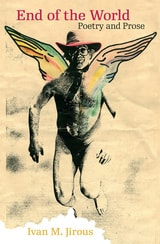
End of the World
Poetry and ProseIvan M. Jirous
Karolinum Press, 2020
End of the World is the first major collection in English of the works of this legendary Czech “madman.” Although nicknamed for his aggressive and rebellious behavior, Jirous’s writing reveal a refined, sophisticated, and even tender sensibility. Translated in part by Paul Wilson, an original member of the Plastic People, the book gathers his poems and letters from prison, as well as his book-length prose work, The True Story of the Plastic People, alongside critical essays on Jirous’s life and work. End of the World is an ideal introduction to the raucous writer who playwright Tom Stoppard referred to as one of the most interesting personalities in modern Czech history.
Ending Gender-Based Violence
Justice and Community in South AfricaHannah E. Britton
University of Illinois Press, 2020
Hannah E. Britton examines the reasons gendered violence persists in relationship to social inequalities even after women assume political power. Venturing into South African communities, Britton invites service providers, religious and traditional leaders, police officers, and medical professionals to address gender-based violence in their own words. Britton finds the recent turn toward carceral solutions—with a focus on arrests and prosecutions—fails to address the complexities of the problem and looks at how changing specific community dynamics can defuse interpersonal violence. She also examines how place and space affect the implementation of policy and suggests practical ways policymakers can support street level workers.
Clear-eyed and revealing, Ending Gender-Based Violence offers needed tools for breaking cycles of brutality and inequality around the world.
Engagement, Enlargement, and Confrontation
A Political History of the European Union’s Eastern Policies after the Cold WarGraham Timmins
Central European University Press, 0
Engagement, Enlargement, and Confrontation provides a holistic view of the European Union’s eastern relations explored in an historical context following the end of the Cold War. The author draws out the key achievements and failures of this strategic exercise.
The focus is on the institutional adaptation of the European Union as well as on the dynamics of its policies towards the East. Graham Timmins identifies four interconnected factors which have shaped the development of the EU’s policies towards its eastern neighbours; the projection of the EU’s identity as an agent of peace and stability, the maintenance of internal stability within the Union, the coordination of Member State foreign policies, and the EU’s relations with Russia.
The book explores the key challenges faced by the European Union in terms of the EU’s eastern policies. These include capacity building, the management of expectations in the eastern neighbourhood, the reconciliation of national perspectives and agendas with wider EU strategic thinking, and last but not least the handling of the relationship with Russia. The general conclusion of the study is that the EU’s internal development in respect to its relationship with its eastern members and neighbours is likely to remain complex and unpredictable.
Engineering Stability
Rebuilding the State in Twenty-First Century Chinese UniversitiesYan Xiaojun
University of Michigan Press, 2024
Drawing on rich materials gathered from in-depth field research in China during the Xi Jinping era, Engineering Stability invites scholars of comparative politics, state theory, contentious politics, and political development to rethink and reimagine how what Yan calls “a compromised autocratic state” is rebuilt within and from itself after overcoming a traumatic moment of vulnerability. The book further details the four types of infrastructure — institutional, significative, regulatory, and incentivizing — that state rebuilders need to overhaul, and looks into the campaign of state rebuilding in post-Tiananmen Chinese universities and its implications for our understanding of politics in general.
Enraged Citizens, European Peace and Democratic Deficits
Or Why the Democracy Given to Us Must Become One We Fight ForRobert Menasse
Seagull Books, 2016
Spanning from the beginning of the transnational idea with 1951’s Montanunion—the European Coal and Steel Community—to the current financial crisis, Menasse focuses on the institutional structures and forces both advancing and obstructing the European project. Given the internal tensions among the European Commission, Parliament, and Council, Menasse argues that current problems that are frequently misunderstood as resulting from the financial crisis are, in fact, political. Along the way, he makes the bold claim that either the Europe of nation-states will perish—or the project of transcending the nation-states will.
A provocative book, Enraged Citizens, European Peace and Democratic Deficits deftly analyzes the financial and bureaucratic structures of the European Union and sheds much-needed light on the state of the debt crisis. Menasse brings his considerable literary expertise to the unraveling of the real state of the Union, along the way weaving an intriguing tale of one continent’s efforts to become a truly postnational democracy.
Enter the Lion
The 1966 State Visit of Emperor Haile Selassie I to the CaribbeanJohn P. Homiak, Giulia Bonacci, and Jahlani A. Niaah
Duke University Press, 2026
Environmental Challenges in the MENA Region
The Long Road from Conflict to CooperationHamid Pouran and Hassan Hakimian
Gingko, 2019
Although the region’s fragile environmental state has increasingly preoccupied policymakers in individual countries, there is currently insufficient attention paid to coordinating collaborative action to recognise and address problems relating to its environmental sustainability and climatic change. In the absence of a positive agenda for tackling these issues, recurrent environmental setbacks and rapid depletion of the region’s natural resources continue to pose a major threat to the long-term economic, political, and social stability of the region.
Despite the urgency of these challenges, there is little research dedicated to studying MENA’s environmental sustainability. Environmental Challenges in the MENA Region: The Long Road from Conflict to Cooperation draws from the proceedings of a seminal international conference on the subject at SOAS in October 2016, which was held as a celebration of the SOAS Centenary. This led to a collective contribution by experts and policy-makers concerned with the state of the MENA region’s environmental predicament with the aim of addressing these problems in a constructive and forward-looking approach.
The chapters in this book are predicated upon two critical premises. First, expertise and awareness from a wide range of disciplines is required to understand and address environmental challenges. And, second, to have a real chance of success, MENA countries need to confront these problems as their common threats and to see them as an opportunity for regional cooperation and policy coordination. This book provides the results of an interdisciplinary effort to address the various dimensions of the region’s environmental challenges from across the region and disciplines.
Environmental Imaginaries of the Middle East and North Africa
Diana K. Davis
Ohio University Press, 2011
The landscapes of the Middle East have captured our imaginations throughout history. Images of endless golden dunes, camel caravans, isolated desert oases, and rivers lined with palm trees have often framed written and visual representations of the region. Embedded in these portrayals is the common belief that the environment, in most places, has been deforested and desertified by centuries of misuse. It is precisely such orientalist environmental imaginaries, increasingly undermined by contemporary ecological data, that the eleven authors in this volume question. This is the first volume to critically examine culturally constructed views of the environmental history of the Middle East and suggest that they have often benefitted elites at the expense of the ecologies and the peoples of the region. The contributors expose many of the questionable policies and practices born of these environmental imaginaries and related histories that have been utilized in the region since the colonial period. They further reveal how power, in the form of development programs, notions of nationalism, and hydrological maps, for instance, relates to environmental knowledge production.
Contributors: Samer Alatout, Edmund Burke III, Shaul Cohen, Diana K. Davis, Jennifer L. Derr, Leila M. Harris, Alan Mikhail, Timothy Mitchell, Priya Satia, Jeannie Sowers, and George R. Trumbull IV
Equaliberty in the Dutch Caribbean
Ways of Being Non/SovereignYvon van der Pijl
Rutgers University Press, 2022
Errand to the World
American Protestant Thought and Foreign MissionsWilliam R. Hutchison
University of Chicago Press, 1987
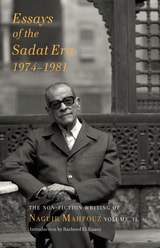
Essays of the Sadat Era
The Non-Fiction of Naguib Mahfouz: Volume IINaguib Mahfouz
Gingko, 2025
In these essays of the Sadat era, published in the state-owned Al-Ahram newspaper, Mahfouz seems an unreliable narrator. The tension between an author who rails against censorship, yet is bound within its confines, runs through this fascinating body of nonfiction writing. Nonetheless, Mahfouz’s own thoughts are unmistakably present. We gain his insight into diverse political topics, such as socioeconomic class, democracy and dictatorship, and Islam and extremism, topics which still seem highly pertinent to the situation in Egypt today.
A vital accompaniment to his literature, this collected work is contemporaneous with Mahfouz’s fictional works such as Karnak Café, The Harafish, and Arabian Nights and Days. Essays of the Sadat Era is the second of four volumes in which Mahfouz’s nonfiction work is translated into English for the first time.
Essays on Some Maladies of Angola (1799)
José Pinto De Azeredo
Tagus Press, 2016
This first English-language edition of Essays on Some Maladies of Angola was translated by Stewart Lloyd-Jones (University of Stirling) and includes scholarly essays by Timothy Walker (University of Massachusetts Dartmouth), Adelino Cardoso (Universidade Nova de Lisboa), António Braz de Oliveira (Biblioteca Nacional de Portugal) and Manuel Silvério Marques (Universidade de Lisboa).
Essays on Twentieth-Century History
Edited by Michael Adas for the American Historical Association
Temple University Press, 2010
In the sub-field of world history, there has been a surprising paucity of thinking and writing about how to approach and conceptualize the long twentieth century from the 1870s through the early 2000s. The historiographic essays collected in Essays on Twentieth Century History will go a long way to filling that lacuna.
Each contribution covers a key theme and one or more critical sub-fields in twentieth century global history. Chapters address migration patterns, the impact of world wars, transformations in gender and urbanization, as well as environmental transitions. All are written by leading historians in each of the sub-fields represented, and each is intended to provide an introduction to the literature, key themes, and debates that have proliferated around the more recent historical experience of humanity.
Establishment and Meritocracy
Peter Hennessy
Haus Publishing, 2014
With its penetrating examination of the British school system and postwar trends, Establishment and Meritocracy is an important resource for those concerned about the link between education and later success, both for individuals and their societies.
Ethnic Conflict
Religion, Identity, and PoliticsS. A. Giannakos
Ohio University Press, 2001
The outbreak of numerous and simultaneous violent conflicts around the globe in the past decade resulted in immense human suffering and countless lost lives. In part, both results were aided by inactivity or by belated and often misplaced responses by the international community to the embattled groups. The apparent inability of the international community to respond firmly and purposefully to violent conflicts can be attributed partially to a general confusion and misunderstanding of the root causes of such conflicts. In some cases, the international community argued that violent conflicts could be attributed to irreconcilable ethnic differences, which, like earthquakes, are impossible to prevent or control.
At other times, the argument was that such conflicts were the results of evil leaders capable of engineering mass violent acts. Ethnic Conflict presents an interdisciplinary and comparative effort to explain the root causes of ethnic conflicts in terms of political, economic, and social common denominators that characterize all such conflicts. It seeks to dispel misplaced assumptions about violent domestic conflicts and, by providing a clearer picture of the mechanics of such conflicts, it hopes to assist in the process of conflict resolution and prevention.
Ethnic Entrepreneurs, Crony Capitalism, and the Making of the Franco-Mexican Elite
José Galindo
University of Alabama Press, 2021
A groundbreaking historical narrative of corruption and economic success in Mexico.
Ethnic Entrepreneurs, Crony Capitalism, and the Making of the Franco-Mexican Elite provides a new way to understand the scope and impact of crony capitalism on institutional development in Mexico. Beginning with the Porfiriato, the period between 1876 and 1911 named for the rule of President Porfirio Díaz, José Galindo identifies how certain behavioral patterns of the Mexican political and economic elite have repeated over the years, and analyzes aspects of the political economy that have persisted, shaping and at times curtailing Mexico’s economic development.
Strong links between entrepreneurs and politicians have allowed elite businessmen to receive privileged support, such as cheap credit, tax breaks, and tariff protection, from different governments and to run their companies as monopolies. In turn, successive governments have obtained support from businesses to implement public policies, and, on occasion, public officials have received monetary restitution. Galindo notes that Mexico’s early twentieth-century institutional framework was weak and unequal to the task of reining in these systematic abuses. The cost to society was high and resulted in a lack of fair market competition, unequal income distribution, and stunted social mobility.
The most important investors in the banking, commerce, and manufacturing sectors at the beginning of the twentieth century in Mexico were of French origin, and Galindo explains the formation of the Franco-Mexican elite. This Franco-Mexican narrative unfolds largely through the story of one of the richest families in Mexico, the Jeans, and their cotton textile empire. This family has maintained power and wealth through the current day as Emilio Azcárraga Jean, a great-grandson of one of the members of the first generation of the Jean family to arrive in Mexico, owns Televisa, a major mass media company with one of the largest audiences for Spanish-language content in the world.
Ethnic Federalism
The Ethiopian Experience in Comparative PerspectiveDavid Turton
Ohio University Press, 2006
Since 1991, Ethiopia has gone further than any other country in using ethnicity as the fundamental organizing principle of a federal system of government. And yet this pioneering experiment in “ethnic federalism” has been largely ignored in the growing literature on democratization and ethnicity in Africa and on the accommodation of ethnic diversity in democratic states. Ethnic Federalism brings a much-needed comparative dimension to the discussion of this experiment in Ethiopia.
Ethnic Federalism closely examines aspects of the Ethiopean case and asks why the use of territorial decentralism to accommodate ethnic differences has been generally unpopular in Africa, while it is growing in popularity in the West.
The book includes case studies of Nigerian and Indian federalism and suggests how Ethiopia might learn from both the failures and successes of these older federations. In the light of these broader issues and cases, it identifies the main challenges facing Ethiopia in the next few years, as it struggles to bring political practice into line with constitutional theory and thereby achieve a genuinely federal division of powers.
Ethnicity and Democracy in Africa
Bruce Berman
Ohio University Press, 2004
The politics of identity and ethnicity will remain a fundamental characteristic of African modernity. For this reason, historians and anthropologists have joined political scientists in a discussion about the ways in which democracy can develop in multicultural societies. In Ethnicity and Democracy in Africa, the contributors address why ethnicity represents a political problem, how the problem manifests itself, and which institutional models offer ways of ameliorating the challenges that ethnicity poses to democratic nation-building.
Europe and Its Shadows
Coloniality after EmpireHamid Dabashi
Pluto Press, 2019
Frantz Fanon’s assessment that 'Europe is literally the creation of the Third World' is still true today; but in more than one sense for the colonial has always been embedded in the capital, and the capital within the colonial. As the condition of coloniality shifts, so have the dividing lines between coloniser and colonised, and this shift calls for a reappraisal of our understanding of nationalism, xenophobia and sectarianism as the dangerous indices of the emerging worlds.
As the far-right populists captivate minds across Europe and Brexit upsets the balance of power in the European Union, this book, from a major scholar of postcolonial thought, is a timely and transformative intervention.
European Higher Education, Social Responsibility, and the Local Democratic Mission
Sjur Bergan
Temple University Press, 2025
Bergan outlines the political and institutional complexity of European universities. He explains how history, cultural traditions, and national identities impact education across Europe. He also describes the roles of the Council of Europe and U.S. higher education in the development of a transatlantic cooperation on the democratic mission of higher education. Other chapters explore education programs for developing and maintaining democracy and human rights, pragmatic and creative ways that European universities are working with their local communities, and the development of education opportunities for refugees.
Ultimately, Bergan’s book explores not only the local democratic mission of higher education as it has developed in Europe, but also how it could continue to develop, and why it is important it does so.
In the series Higher Education, Place, and Social Responsibility.
European Slave Trading in the Indian Ocean, 1500–1850
Richard B. Allen
Ohio University Press, 2015
Between 1500 and 1850, European traders shipped hundreds of thousands of African, Indian, Malagasy, and Southeast Asian slaves to ports throughout the Indian Ocean world. The activities of the British, Dutch, French, and Portuguese traders who operated in the Indian Ocean demonstrate that European slave trading was not confined largely to the Atlantic but must now be viewed as a truly global phenomenon. European slave trading and abolitionism in the Indian Ocean also led to the development of an increasingly integrated movement of slave, convict, and indentured labor during the late eighteenth and early nineteenth centuries, the consequences of which resonated well into the twentieth century.
Richard B. Allen’s magisterial work dramatically expands our understanding of the movement of free and forced labor around the world. Drawing upon extensive archival research and a thorough command of published scholarship, Allen challenges the modern tendency to view the Indian and Atlantic oceans as self-contained units of historical analysis and the attendant failure to understand the ways in which the Indian Ocean and Atlantic worlds have interacted with one another. In so doing, he offers tantalizing new insights into the origins and dynamics of global labor migration in the modern world.
Every Factory a Fortress
The French Labor Movement in the Age of Ford and HitlerMichael Torigian
Ohio University Press, 1999
French trade unions played a historical role in the 1930s quite unlike that of any other labor movement. Against a backdrop of social unrest, parliamentary crisis, and impending world war, industrial unionists in the great metal-fabricating plants of the Paris Region carried out a series of street mobilizations, factory occupations, and general strikes that were virtually unique in Western history.
The unionization of the metal industry, following a series of anti-fascist demonstrations and plant seizures, would constitute the defining episode in modern French labor history and one of the great chapters in European social history. Yet little is known of these extraordinary events.
With a style that captures the vivid character of these experiences, Every Factory a Fortress tells the story of the Paris metal workers, who succeeded in organizing the largest Communist union in the Western world, reshaping the parameters of French social relations, and, ultimately, altering the course of French destinies.
Everyday Apocalypse
Art, Empire, and the End of the WorldDavid Dark
Vanderbilt University Press, 2025
This revised edition of the book includes a foreword by Hanif Abdurraqib, an extensive afterword, updates in light of the passage of time since its publication, and new insights from the author, whose outspokenness has placed him outside of circles in which he was once supported and celebrated.
Evo's Bolivia
Continuity and ChangeBy Linda C. Farthing and Benjamin H. Kohl
University of Texas Press, 2014
In this compelling and comprehensive look at the rise of Evo Morales and Bolivia’s Movimiento al Socialismo (MAS), Linda Farthing and Benjamin Kohl offer a thoughtful evaluation of the transformations ushered in by the western hemisphere’s first contemporary indigenous president. Accessible to all readers, Evo’s Bolivia not only charts Evo’s rise to power but also offers a history of and context for the MAS revolution’s place in the rising “pink tide” of the political left. Farthing and Kohl examine the many social movements whose agendas have set the political climate in Bolivia and describe the difficult conditions the administration inherited. They evaluate the results of Evo’s policies by examining a variety of measures, including poverty; health care and education reform; natural resources and development; and women’s, indigenous, and minority rights. Weighing the positive with the negative, the authors offer a balanced assessment of the results and shortcomings of the first six years of the Morales administration.
At the heart of this book are the voices of Bolivians themselves. Farthing and Kohl interviewed women and men in government, in social movements, and on the streets throughout the country, and their diverse backgrounds and experiences offer a multidimensional view of the administration and its progress so far. Ultimately the “process of change” Evo promised is exactly that: an ongoing and complicated process, yet an important example of development in a globalized world.

Existential Cognition
Computational Minds in the WorldRon McClamrock
University of Chicago Press, 1995
Arguing that the mind is essentially embedded in the external world, Ron McClamrock provides a schema that allows cognitive scientists to address such long-standing problems in artificial intelligence as the "frame" problem and the issue of "bounded" rationality. Extending this schema to cover progress in other studies of behavior, including language, vision, and action, McClamrock reinterprets the importance of the organism/environment distinction. McClamrock also considers the broader philosophical question of the place of mind in the world, particularly with regard to questions of intentionality, subjectivity, and phenomenology.
With implications for philosophy, cognitive and computer science, AI, and psychology, this book synthesizes state-of-the-art work in philosophy and cognitive science on how the mind interacts with the world to produce thoughts, ideas, and actions.
Experiencing War Memorials
Environment, Affect, and Public MemoryEdited by Jennifer K. Ladino
University of Alabama Press, 2026
Examines the emotional, formal, and environmental dimensions of war commemoration
Experiencing War Memorials is a compelling edited collection of essays that examines how war is commemorated through public memorials and the powerful emotions and ideologies these sites generate. Drawing on fields such as war studies, affect studies, public memory studies, and the environmental humanities, the volume demonstrates that commemoration is not only an intellectual act but an embodied, affective experience.
Through diverse case studies, contributors analyze how memorials shape public feelings about fast and slow violence, including battles, massacres, and incarceration. The essays reveal how materials, landscapes, narrative conventions, and innovative memorial forms guide emotional responses such as grief, pride, ambivalence, and outrage while making injustice perceptible. Against the backdrop of ongoing debates over heritage and violence, the collection insists on the importance of attending to the messy and disordered emotional dimensions of public memory. Some essays explore varied human and animal experiences, including military working dogs; scrutinize unsettling sites such as Confederate monuments and overlooked Holocaust locations; and consider digital, ecological, and pandemic-era memorials that expand the boundaries of commemoration.
Edited by Jennifer K. Ladino, Experiencing War Memorials offers nuanced insights into how memorial practices shape national identities, ethical understanding, and the possibilities for social change, illuminating the profound ways public remembrance influences how societies feel, remember, and reckon with violence in all its forms. This volume will appeal to scholars and students of memory studies, war and cultural studies, environmental humanities, and American studies, as well as museum professionals, artists, and readers interested in the politics and emotions of public commemoration.
Exploring the World of Human Practice
Readings in and about the Philosophy of Aurel KolnaiZoltán Balázs
Central European University Press, 2005

Exploring the World of J. S. Bach
A Traveler's GuideRobert L. Marshall
University of Illinois Press, 2016
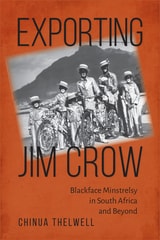
Exporting Jim Crow
Blackface Minstrelsy in South Africa and BeyondChinua Thelwell
University of Massachusetts Press, 2020
Chinua Thelwell brings blackface minstrelsy and performance culture into the discussion of apartheid's nineteenth-century origins and afterlife, employing a broad archive of South African newspapers and magazines, memoirs, minstrel songs and sketches, diaries, and interview transcripts. Exporting Jim Crow highlights blackface minstrelsy's cultural and social impact as it became a dominant form of entertainment, moving from its initial appearances on music hall stages to its troubling twentieth-century resurgence on movie screens and at public events. This carefully researched and highly original study demonstrates that the performance of race in South Africa was inherently political, contributing to racism and shoring up white racial identity.

Extreme Conservation
Life at the Edges of the WorldJoel Berger
University of Chicago Press, 2018
On the Tibetan Plateau, there are wild yaks with blood cells thinner than those of horses’ by half, enabling the endangered yaks to survive at 40 below zero and in the lowest oxygen levels of the mountaintops. But climate change is causing the snow patterns here to shift, and with the snows, the entire ecosystem. Food and water are vaporizing in this warming environment, and these beasts of ice and thin air are extraordinarily ill-equipped for the change. A journey into some of the most forbidding landscapes on earth, Joel Berger’s Extreme Conservation is an eye-opening, steely look at what it takes for animals like these to live at the edges of existence. But more than this, it is a revealing exploration of how climate change and people are affecting even the most far-flung niches of our planet.
Berger’s quest to understand these creatures’ struggles takes him to some of the most remote corners and peaks of the globe: across Arctic tundra and the frozen Chukchi Sea to study muskoxen, into the Bhutanese Himalayas to follow the rarely sighted takin, and through the Gobi Desert to track the proboscis-swinging saiga. Known as much for his rigorous, scientific methods of developing solutions to conservation challenges as for his penchant for donning moose and polar bear costumes to understand the mindsets of his subjects more closely, Berger is a guide par excellence. He is a scientist and storyteller who has made his life working with desert nomads, in zones that typically require Sherpas and oxygen canisters. Recounting animals as charismatic as their landscapes are extreme, Berger’s unforgettable tale carries us with humor and expertise to the ends of the earth and back. But as his adventures show, the more adapted a species has become to its particular ecological niche, the more devastating climate change can be. Life at the extremes is more challenging than ever, and the need for action, for solutions, has never been greater.
Eyes Without Country
Searching for a Palestinian Strategy of LiberationSouad R. Dajani
Temple University Press, 1994
Since Israel's occupation of the West Bank and Gaza Strip in 1967, the quest for just and lasting peace has been a fountainhead of debate, negotiation, and violent friction. Souad Dajani traces the Palestinians' struggle and argues for a strategy of nonviolent civilian resistance based on deterrence and defense. This strategy would defeat Israel's political will to maintain their occupation and prepare Palestinians for a time beyond the interim period of self-rule agreed upon by Israel and the PLO in September 19932.
Dajani's formulation of nonviolent civilian resistance is examined against a backdrop of early developments in Mandate Palestine, the impact of Zionist ideology, and the realities of life for Palestinians under occupation. Her assessment of the role of the PLO, objectives of the Palestinian National Movement, developments since the Gulf War, and other factors crucial to an effective strategy raises critical questions surrounding the operation of nonviolent techniques for the Palestinian community, Israeli politics, and international actors, most prominently the United States.