Results by title
22279 books match the query 'Social Science' and 684 start with e
Ethnic Origins
The Adaptation of Cambodian and Hmong Refugees in Four American CitiesJeremy Hein
Russell Sage Foundation, 2006
Ethnic Relations in the Ancient Mediterranean
Social Life Under EmpirePhilip A. Harland
University of Chicago Press, 2026
With this book, Philip A. Harland presents a large-scale rereading of social and cultural life in the eastern part of the ancient Mediterranean in particular, examining social interactions among peoples, from culturally dominant groups to minority populations. Harland assesses literary and archaeological evidence to yield fresh insights into the dynamics of ethnic relations in the region and to explore how the population navigated questions of identification, differentiation, categorization, stratification, criminalization, and population production.
Harland considers encounters between peoples as well as their representations of one another, reframing the social landscape of the ancient world by focusing on the influence and ubiquity of the ethnographic imagination between the fifth century BCE and the third century CE. Drawing insights from anthropology, sociology, and postcolonial studies, Harland offers close readings of papyri, inscriptions, monuments, sculptures, and other materials that reflect interactions between different populations at all levels of society. He gives careful attention to the perspectives of enslaved, immigrant, and subject peoples, including Egyptians, Babylonians, Syrians, and Judeans under Persian, Hellenistic, or Roman rule.
Offering an innovative reading of social and cultural life from the ground up, this book reveals the extent to which ethnographic thinking structured the sociocultural landscape of the ancient world.
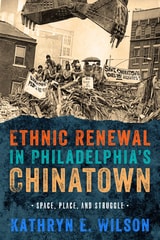
Ethnic Renewal in Philadelphia's Chinatown
Space, Place, and StruggleKathryn Wilson
Temple University Press, 2015
In Ethnic Renewal in Philadelphia’s Chinatown. Kathryn Wilson charts the unique history of this neighborhood. After 1945, a new generation of families began to shape Chinatown’s future. As plans for urban renewal—ranging from a cross-town expressway and commuter rail in the 1960s to a downtown baseball stadium in 2000—were proposed and developed, “Save Chinatown” activists rose up and fought for social justice.
Wilson chronicles the community’s efforts to save and renew itself through urban planning, territorial claims, and culturally specific rebuilding. She shows how these efforts led to Chinatown’s growth and its continued ability to serve as a living community for subsequent waves of new immigration.
Ethnic Routes to Becoming American
Indian Immigrants and the Cultures of CitizenshipRudrappa, Sharmila
Rutgers University Press, 2004
How does an immigrant become an ethnic American? And does American society fundamentally alter because of these newcomers?
In Ethnic Routes to Becoming American, Sharmila Rudrappa examines the paths South Asian immigrants in Chicago take toward assimilation in the late twentieth-century United States, where deliberations on citizenship rights are replete with the politics of recognition. She takes us inside two ethnic institutions, a battered women’s shelter, Apna Ghar, and a cultural organization, the Indo American Center, to show how immigrant activism, which brings cultural difference into public sphere debates, ironically abets these immigrants’ assimilation. She interlaces ethnographic details with political-philosophical debates on the politics of recognition and redistribution. In this study on the under-researched topic of the incorporation of South Asian immigrants into the American polity, Sharmila Rudrappa compels us to rethink ethnic activism, participatory democracy, and nation-building processes.

Ethnic Solidarity for Economic Survival
Korean Greengrocers in New York CityPyong Gap Min
Russell Sage Foundation, 2008

Ethnicity and Conflict in the Horn of Africa
Katsuyoshi Fukui
Ohio University Press, 1994
Conflicts in the Horn have all too often dominated press coverage of Africa. This book exposes the subtle and ambiguous role ethnicity can plan in social conflict, a role that is nowhere as simple and direct as commonly assumed.
Social conflict is routinely attributed to ethnic differentiation because dividing lines between rival groups often follow ethnic contours and cultural symbolism has proved a potent ideological weapon. The purpose of this book is to examine the nature of the bond linking ethnicity to conflict in a variety of circumstances.
The diverse groups are involved in confrontations at different levels and varying intensity, ranging from elemental struggles for physical survival of groups at the margin of society, to contests for state power and control of resources at the center.
These ten studies from Sudan, Ethiopia, Uganda, and Kenya are based on primary research by anthropologists and historians who have long experience of the region. The insights gained from this comparative work help to refine common assumptions about conflict among ethnic groups.
Ethnicity and Democracy in Africa
Bruce Berman
Ohio University Press, 2004
The politics of identity and ethnicity will remain a fundamental characteristic of African modernity. For this reason, historians and anthropologists have joined political scientists in a discussion about the ways in which democracy can develop in multicultural societies. In Ethnicity and Democracy in Africa, the contributors address why ethnicity represents a political problem, how the problem manifests itself, and which institutional models offer ways of ameliorating the challenges that ethnicity poses to democratic nation-building.
Ethnicity and Inequality in Hawai'i
Jonathan Y. Okamura
Temple University Press, 2008
Challenging the dominant view of Hawai’i as a “melting pot paradise”—a place of ethnic tolerance and equality—Jonathan Okamura examines how ethnic inequality is structured and maintained in island society. He finds that ethnicity, not race or class, signifies difference for Hawaii’s people and therefore structures their social relations. In Hawai’i, residents attribute greater social significance to the presumed cultural differences between ethnicities than to more obvious physical differences, such as skin color.
According to Okamura, ethnicity regulates disparities in access to resources, rewards, and privileges among ethnic groups, as he demonstrates in his analysis of socioeconomic and educational inequalities in the state. He shows that socially and economically dominant ethnic groups—Chinese Americans, Japanese Americans, and Whites—have stigmatized and subjugated the islands’ other ethnic groups—especially Native Hawaiians, Filipino Americans, and Samoans. He demonstrates how ethnic stereotypes have been deployed against ethnic minorities and how these groups have contested their subordinate political and economic status by articulating new identities for themselves.

Ethnicity and Nationalism
Anthropological PerspectivesThomas Hylland Eriksen
Pluto Press, 2010
Ethnicity and nationalism are pervasive features of the contemporary world, but how far is ethnicity a result of cultural differences, and how much is it in fact dependent on the practical use of, and belief in, such differences? In this book, Thomas Hylland Eriksen demonstrates that far from being an immutable property of groups, ethnicity is a dynamic and shifting aspect of social relationships. Drawing on a wide range of classic and recent studies in anthropology and sociology, Eriksen examines the relationship between ethnicity, class, gender and nationhood and more in a lucid and comprehensive manner.
A core text for all students of social anthropology and related subjects, Ethnicity and Nationalism has been a leading introduction to the field since its original publication in 1993. This new edition - expanded and thoroughly revised - is indispensable to anyone seriously interested in understanding ethnic phenomena. New topics covered include cultural property rights, the role of genetics in the public understanding of identification, commercialisation of identity, and the significance of the internet.

Ethnicity and the American Cemetery
Richard Meyer
University of Wisconsin Press, 1993
Contributors examine the material objects found within the cemeteries, as well as the customary practices bound to them. Contributors are from the fields of folklore, cultural history, historical archaeology, landscape architecture, and philosophy. Heavily illustrated, the volume also features an extensive annotated bibliography.
Ethnicity in Ancient Amazonia
Reconstructing Past Identities from Archaeology, Linguistics, and EthnohistoryAlf Hornborg
University Press of Colorado, 2011
Hornborg and Hill argue that the tendency to link language, culture, and biology--essentialist notions of ethnic identities--is a Eurocentric bias that has characterized largely inaccurate explanations of the distribution of ethnic groups and languages in Amazonia. The evidence, however, suggests a much more fluid relationship among geography, language use, ethnic identity, and genetics. In Ethnicity in Ancient Amazonia, leading linguists, ethnographers, ethnohistorians, and archaeologists interpret their research from a unique nonessentialist perspective to form a more accurate picture of the ethnolinguistic diversity in this area.
Revealing how ethnic identity construction is constantly in flux, contributors show how such processes can be traced through different ethnic markers such as pottery styles and languages. Scholars and students studying lowland South America will be especially interested, as will anthropologists intrigued by its cutting-edge, interdisciplinary approach.
Ethnicity on Parade
Inventing the Norwegian American through CelebrationApril R. Schultz
University of Massachusetts Press, 2009
These are some of the questions April R. Schultz addresses in this interdisciplinary study of the way in which ethnic identity has been shaped and expressed in American culture. Drawing on the work of historians, anthropologists, literary critics, and cultural theorists, Schultz analyzes one national celebration—the 1925 Norwegian-American Immigration Centennial—as a strategic site for the invention of ethnicity. She shows how Norwegian Americans used this ceremony to create a distinctive vision of their past and present—a social and cultural construction that both accommodated and resisted dominant Anglo-American conceptions of assimilation.
By taking a close look at the experiences of a white, middle-class, Protestant ethnic community, this book challenges many assumptions about the "Americanization" of immigrant groups and offers new insight into the uses of historical memory.
Ethnicity, Identity, and Conceptualizing Community in Indian Ocean East Africa
Daren E. Ray
Ohio University Press, 2023
Ethnicity, Inc.
John L. Comaroff and Jean Comaroff
University of Chicago Press, 2009
In Ethnicity, Inc. anthropologists John L. and Jean Comaroff analyze a new moment in the history of human identity: its rampant commodification. Through a wide-ranging exploration of the changing relationship between culture and the market, they address a pressing question: Wherein lies the future of ethnicity?
Their account begins in South Africa, with the incorporation of an ethno-business in venture capital by a group of traditional African chiefs. But their horizons are global: Native American casinos; Scotland’s efforts to brand itself; a Zulu ethno-theme park named Shakaland; a world religion declared to be intellectual property; a chiefdom made into a global business by means of its platinum holdings; San “Bushmen” with patent rights potentially worth millions of dollars; nations acting as commercial enterprises; and the rapid growth of marketing firms that target specific ethnic populations are just some of the diverse examples that fall under the Comaroffs’ incisive scrutiny. These phenomena range from the disturbing through the intriguing to the absurd. Through them, the Comaroffs trace the contradictory effects of neoliberalism as it transforms identities and social being across the globe.
Ethnicity, Inc. is a penetrating account of the ways in which ethnic populations are remaking themselves in the image of the corporation—while corporations coopt ethnic practices to open up new markets and regimes of consumption. Intellectually rigorous but leavened with wit, this is a powerful, highly original portrayal of a new world being born in a tectonic collision of culture, capitalism, and identity.
Ethnicity, Markets, and Migration in the Andes
At the Crossroads of History and AnthropologyBrooke Larson, Olivia Harris, and Enrique Tandeter, eds.
Duke University Press, 1995
Bringing together the work of outstanding scholars in Andean history, anthropology, and ethnohistory, these pioneering essays show how, from the very earliest period of Spanish rule, Andean peasants and their rulers embraced the new economic opportunities and challenged or subverted the new structures introduced by the colonial administration. They also convincingly explain why in the twentieth century the mistaken idea developed that Andean peasants were conservative and unable to participate effectively in different markets, and reveal how closely ethnic inequalities were tied to evolving market relations. Inviting a critical reconsideration of ethnic, class, and gender issues in the context of rural Andean markets, this book will revise the prevailing view of Andean history and provide a more fully informed picture of the complex mercantile activities of Andean peasants.
Ethno-erotic Economies
Sexuality, Money, and Belonging in KenyaGeorge Paul Meiu
University of Chicago Press, 2017
George Paul Meiu uses his deep familiarity with the communities these men come from to explore the long-term effects of markets of ethnic culture and sexuality on a wide range of aspects of life in rural Kenya, including kinship, ritual, gender, intimate affection, and conceptions of aging. What happens to these communities when young men return with such surprising wealth? And how do they use it to improve their social standing locally? By answering these questions, Ethno-erotic Economies offers a complex look at how intimacy and ethnicity come together to shape the pathways of global and local trade in the postcolonial world.
Ethnobiology at the Millennium
Past Promise and Future ProspectsEdited by Richard I. Ford
University of Michigan Press, 2001
Ethnobotany of the Coos, Lower Umpqua, and Siuslaw Indians
Patricia Whereat-Phillips
Oregon State University Press, 2016
Very little has been published until now on the ethnobotany of western Oregon indigenous peoples. Ethnobotany of the Coos, Lower Umpqua, and Siuslaw Indians documents the use of plants by these closely-related coastal tribes, covering a geographical area that extends roughly from Cape Perpetua on the central coast, south to the Coquille River, and from the Coast Range west to the Pacific shore. With a focus on native plants and their traditional uses, it also includes mention of farming crops, as well as the highly invasive Himalayan blackberry, which some Oregon coast Indians called the "white man's berry."
The cultures of the Coos Bay, Lower Umpqua and Siuslaw are distinct from the Athabaskan speaking people to the south, and the Alsea to the north. Today, many tribal members are reviving ancient arts of basket weaving and woodworking, and many now participate in annual intertribal canoe events. Ethnobotany of the Coos, Lower Umpqua, and Siuslaw Indians contributes to this cultural renaissance by filling an important gap in the historical record. It is an invaluable resource for anyone who wishes to learn about the indigenous cultures of the central and southern Oregon coast, as well as those who are interested in Pacific Northwest plants and their cultural uses.
Ethnoecology
Situated Knowledge/Located LivesVirginia D. Nazarea
University of Arizona Press, 1999
1. Introduction. A View from a Point: Ethnoecology as Situated Knowledge, Virginia D. Nazarea
2. The Value of Subsistence for the Future of the World, Eugene S. Hunn
3. Practical and Religious Meanings of the Navajo Hogan, Lillie Lane
4. The Agronomy of Memory and the Memory of Agronomy: Ritual Conservation of Archaic Cultigens in Contemporary Farming Systems, Michael R. Dove
5. Ethnoecology Serving the Community: A Case Study from Zuni Pueblo, New Mexico, Richard I. Ford
6. Lenses and Latitudes in Landscapes and Lifescapes, Virginia D. Nazarea
7. Cultural Landscapes and Biodiversity: The Ethnoecology of an Upper R¡o Grande Watershed Commons, Devon G. Peña
8. Conserving Folk Crop Varieties: Different Agricultures, Different Goals, Daniela Soleri and Steven E. Smith
9. Plant Constituents and the Nutrition and Health of Indigenous Peoples, Timothy Johns
10. Sustainable Production and Harvest of Medicinal and Aromatic Herbs in the Sierras de C¢rdoba Region, Argentina, Marta Lagrotteria and James M. Affolter
11. Managing the Maya Commons: The Value of Local Knowledge, Scott Atran
12. Safeguarding Traditional Resource Rights of Indigenous Peoples, Darrell A. Posey
13. A Practical Primer on Intellectual Property Rights in a Contemporary Ethnoecological Context, David J. Stephenson, Jr.
14. Toward Compensation: Returning Benefits from Ethnobotanical Drug Discovery to Native Peoples, Katy Moran
15. Am I My Brother's Keeper?, Christine S. Kabuye
16. Epilogue. Quo Vadis? The Promise of Ethnoecology, Robert E. Rhoades and Jack Harlan

Ethnographers In The Field
The Psychology of ResearchJohn L. Wengle
University of Alabama Press, 1988
A study of how doing field research submerged in a different culture impacts one's sense of identity.
Ethnographic Chiasmus
Essays on Culture, Conflict and RhetoricIvo Strecker
Michigan State University Press, 2011
Ethnographic Contributions to the Study of Endangered Languages
Edited by Tania Granadillo and Heidi A. Orcutt-Gachiri
University of Arizona Press, 2011
To combat this, indigenous and scholarly communities around the world have undertaken various efforts, from archiving and lexicography to the creation of educational and cultural programs. What works in one community, however, may not work in another. Indeed, while the causes of language endangerment may be familiar, the responses to it depend on “highly specific local conditions and opportunities.” In keeping with this premise, the editors of this volume insist that to understand language endangerment, “researchers and communities must come to understand what is happening to the speakers, not just what is happening to the language.” The eleven case studies assembled here strive to fill a gap in the study of endangered languages by providing much-needed sociohistorical and ethnographic context and thus connecting specific language phenomena to larger national and international issues.
The goal is to provide theoretical and methodological tools for researchers and organizers to best address the specific needs of communities facing language endangerment. The case studies here span regions as diverse as Kenya, Siberia, Papua New Guinea, Mexico, Venezuela, the United States, and Germany. The volume includes a foreword by linguistic anthropologist Jane Hill and an afterword by poet and linguist Ofelia Zepeda.

Ethnographic Experiments with Artists, Designers and Boundary Objects
Exhibiting the FieldFrancisco Martínez
University College London, 2021
Richly illustrated, Ethnographic Experiments with Artists, Designers and Boundary Objects reflects on the experimental skills and practices shared by ethnographers and curators. Francisco Martínez highlights relationships between contemporary art, design, and anthropology and imagines creative ways to develop new infrastructure that supports vital interdisciplinary work. Attentive to the experimental nature of exhibitions, Martínez models a new approach to both ethnography and objecthood across disciplinary boundaries.
Ethnographic Film
Revised EditionBy Karl G. Heider
University of Texas Press, 2006
From reviews of the first edition:
“Ethnographic Film can rightly be considered a film primer for anthropologists.”
—Choice
“This is an interesting and useful book about what it means to be ethnographic and how this might affect ethnographic filmmaking for the better. It obviously belongs in all departments of anthropology, and most ethnographic filmmakers will want to read it.”
—Ethnohistory
Even before Robert Flaherty released Nanook of the North in 1922, anthropologists were producing films about the lifeways of native peoples for a public audience, as well as for research and teaching. Ethnographic Film (1976) was one of the first books to provide a comprehensive introduction to this field of visual anthropology, and it quickly became the standard reference.
In this new edition, Karl G. Heider thoroughly updates Ethnographic Film to reflect developments in the field over the three decades since its publication, focusing on the work of four seminal filmmakers—Jean Rouch, John Marshall, Robert Gardner, and Timothy Asch. He begins with an introduction to ethnographic film and a history of the medium. He then considers many attributes of ethnographic film, including the crucial need to present "whole acts," "whole bodies," "whole interactions," and "whole people" to preserve the integrity of the cultural context. Heider also discusses numerous aspects of making ethnographic films, from ethics and finances to technical considerations such as film versus video and preserving the filmed record. He concludes with a look at using ethnographic film in teaching.
Ethnographic Sorcery
Harry G. West
University of Chicago Press, 2007
According to the people of the Mueda plateau in northern Mozambique, sorcerers remake the world by asserting the authority of their own imaginative visions of it. While conducting research among these Muedans, anthropologist Harry G. West made a revealing discovery—for many of them, West’s efforts to elaborate an ethnographic vision of their world was itself a form of sorcery. In Ethnographic Sorcery, West explores the fascinating issues provoked by this equation.
A key theme of West’s research into sorcery is that one sorcerer’s claims can be challenged or reversed by other sorcerers. After West’s attempt to construct a metaphorical interpretation of Muedan assertions that the lions prowling their villages are fabricated by sorcerers is disputed by his Muedan research collaborators, West realized that ethnography and sorcery indeed have much in common. Rather than abandoning ethnography, West draws inspiration from this connection, arguing that anthropologists, along with the people they study, can scarcely avoid interpreting the world they inhabit, and that we are all, inescapably, ethnographic sorcerers.
Ethnographies of U.S. Empire
Carole McGranahan and John F. Collins, editors
Duke University Press, 2018
Contributors: Kevin K. Birth, Joe Bryan, John F. Collins, Jean Dennison, Erin Fitz-Henry, Adriana María Garriga-López, Olívia Maria Gomes da Cunha, Matthew Gutmann, Ju Hui Judy Han, J. Kēhaulani Kauanui, Eleana Kim, Heonik Kwon, Soo Ah Kwon, Darryl Li, Catherine Lutz, Sunaina Maira, Carole McGranahan, Sean T. Mitchell, Jan M. Padios, Melissa Rosario, Audra Simpson, Ann Laura Stoler, Lisa Uperesa, David Vine
Ethnographies of Youth and Temporality
Time ObjectifiedAnne Line Dalsgard
Temple University Press, 2014
In the series Global Youth, edited by Craig Jeffrey and Jane Dyson
Ethnography #9
Alan Klima
Duke University Press, 2019

Ethnography At The Border
Pablo Vila
University of Minnesota Press, 2003
An illuminating account of life at the U.S.-Mexico border
For cultural theorists, “the border” has proven a fluid and hybrid space profitably explored for new ideas about identity, gender, and ethnicity. But for those who occupy this region, the border is not merely a metaphor, but a lived experience, yielding immediate, often pressing ambiguities, problems, and perils.
Focusing on a particular area of the U.S.-Mexico border, Ciudad Juarez-El Paso, Ethnography at the Border brings out the complexity of the border experience through the voices of the diverse people who inhabit the region. In a series of ethnographic essays that investigate specific aspects of border existence, the contributors provide rich and detailed insights into such topics as life in illegal subdivisions, called colonias, in Texas; the experience of actually crossing the bridge between El Paso and Ciudad Juarez; the impact of Operation Blockade on illegal crossings; the controversy surrounding the El Paso Border Patrol’s proposal for a border wall in Sunland Park; the paradoxes of making “American products” using Mexican workers; and the relevance of grassroots efforts, environmental problems, and the multiple meanings of “Mexican.” The final chapter offers a critique of the all too metaphorical border often depicted by cultural studies. Painstakingly conveying how the border looks and feels to those on both sides, Ethnography at the Border transmutes statistics on migration, labor markets, and economic trends—as well as conceptualizations of cross-cultural identities—into the experience, the observations, and the troubling lessons of border life.Contributors: Eduardo Barrera, U of Texas, El Paso, and El Colegio de la Frontera Norte; Jessica Chapin, U of Texas, Austin; Tim J. Dunn, Salisbury U; Sarah Hill, Western Michigan U; Victor M. Ortiz, Northeastern Illinois U at Chicago; John A. Peterson, U of Texas, El Paso; Leslie Salzinger, U of Chicago; David Spener, Trinity U; María Socorro Tabuenca Córdoba, El Colegio de la Frontera Norte; Melissa W. Wright, Penn State U.
Ethnography and Human Development
Context and Meaning in Social InquiryEdited by Richard Jessor, Anne Colby, and Richard A. Shweder
University of Chicago Press, 1996
Part 1, informed by a post-positivist philosophy of science, argues for the validity of ethnographic knowledge. Part 2 examines a range of qualitative methods, from participant observation to the hermeneutic elaboration of texts. In Part 3, ethnographic methods are applied to issues of human development across the life span and to social problems including poverty, racial and ethnic marginality, and crime.
Restoring ethnographic methods to a central place in social inquiry, these twenty-two lively essays will interest everyone concerned with the epistemological problems of context, meaning, and subjectivity in the behavioral sciences.
Ethnography as Commentary
Writing from the Virtual ArchiveJohannes Fabian
Duke University Press, 2008
In his commentary, Fabian reconstructs his meeting with the healer Kahenga Mukonkwa Michel, in which the two discussed the ritual that Kahenga performed to protect Fabian’s home from burglary. Fabian reflects on the expectations and terminology that shape his description of Kahenga’s ritual and meditates on how ethnographic texts are made, considering the settings, the participants, the technologies, and the linguistic medium that influence the transcription and translation of a recording and thus fashion ethnographic knowledge. Turning more directly to Kahenga—as a practitioner, a person, and an ethnographic subject—and to the questions posed to him, Fabian reconsiders questions of ethnic identity, politics, and religion. While Fabian hopes that emerging anthropologists will share their fieldwork through virtual archives, he does not suggest that traditional ethnography will disappear. It will become part of a broader project facilitated by new media.
Ethnography in Unstable Places
Everyday Lives in Contexts of Dramatic Political ChangeCarol J. Greenhouse, Elizabeth Mertz, and Kay B. Warren, eds.
Duke University Press, 2002
Using grounded ethnographic detail to explore the challenges to the anthropological imagination that are posed by modern uncertainties, the contributors confront the ambiguities and paradoxes that exist across the spectrum of human cultures and geographies. The collection is framed by introductory and concluding chapters that highlight different dimensions of the book’s interrelated themes—agency and ethnographic reflexivity, identity and ethics, and the inseparability of political economy and interpretivism.
Ethnography in Unstable Places will interest students and specialists in social anthropology, sociology, political science, international relations, and cultural studies.
Contributors. Eve Darian-Smith, Howard J. De Nike, Elizabeth Faier, James M. Freeman, Robert T. Gordon, Carol J. Greenhouse, Nguyen Dinh Huu, Carroll McC. Lewin, Elizabeth Mertz, Philip C. Parnell, Nancy Ries, Judy Rosenthal, Kay B. Warren, Stacia E. Zabusky
Ethnological Imagination
A Cross-Cultural Critique Of ModernityFuyuki Kurasawa
University of Minnesota Press, 2004
A significant intervention in contemporary debates about cross-cultural understanding
Fuyuki Kurasawa unearths what he terms “the ethnological imagination,” a substantial countercurrent of thought that interprets and contests Western modernity’s existing social order through comparison and contrast to a non-Western other. Accordingly, Kurasawa traces and critiques, through this prism of cultural alterity, the writings of some of the key architects of this way of thinking: Jean-Jacques Rousseau, Karl Marx, Max Weber, Émile Durkheim, Claude Lévi-Strauss, and Michel Foucault.
In the work of these thinkers, Kurasawa finds little justification for two of the most prevalent claims about social theory: the wholesale “postmodern” dismissal of the social-theoretical enterprise because of its supposedly intractable ethnocentrism and imperialism, or, on the other hand, the traditionalist and historicist revival of a canon stripped of its intercultural foundations. Rather, Kurasawa’s book defends a cultural perspective that eschews both the false universalism of “end of history” scenarios and the radical particularism embodied in the vision of “the clash of civilizations.” It contends that the ethnological imagination can invigorate critical social theory by informing its response to an increasingly multicultural world—a response that calls for a reconsideration of the identity and boundaries of the West as well of modernity itself.
Ethnopornography
Sexuality, Colonialism, and Archival KnowledgePete Sigal, Zeb Tortorici, and Neil L. Whitehead, editors
Duke University Press, 2020
Contributors. Joseph A. Boone, Pernille Ipsen, Sidra Lawrence, Beatrix McBride, Mireille Miller-Young, Bryan Pitts, Helen Pringle, Pete Sigal, Zeb Tortorici, Neil L. Whitehead
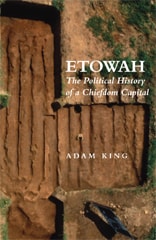
Etowah
The Political History of a Chiefdom CapitalAdam King
University of Alabama Press, 2002
A Dan Josselyn Memorial Publication
Detailed reconstruction of the waxing and waning of political fortunes among the chiefly elites at an important center of the prehistoric world
At the time the first Europeans arrived in the New World, thousands of earthen platform mounds dotted the landscape of eastern North America. Only a few of the mound sites have survived the ravages of time and the devastation of pilferers; one of these valuable monuments is Etowah, located near Cartersville in northern Georgia. Over a period of more than 100 years, excavations of the site’s six mounds, and in particular Mound C, have yielded a wealth of artifacts, including marble statues, copper embossed plates, ceremonial items, and personal adornments. These objects indicate an extensive trading network between Mississippian centers and confirm contact with Spanish conquistadores near Etowah in the mid-1500s.
Adam King has analyzed the architecture and artifacts of Etowah and deduced its vital role in the prehistory of the area. He advances a plausible historical sequence and a model for the ancient town's complex political structure. The chiefdom society relied upon institutional social ranking, permanent political offices, religious ideology, a redistribution of goods and services, and the willing support of the constituent population. King reveals strategies used by the paramount chiefs to maintain their sources of power and to control changes in the social organization. Elite alliances did not necessarily involve the extreme asymmetry of political domination and tribute extraction. King's use of ceramic assemblages recovered from Etowah to determine the occupation history and the construction sequence of public facilities (mounds and plazas) at the center is significant.
This fresh interpretation of the Etowah site places it in a contemporary social and political context with other Mississippian cultures. It is a one-volume sourcebook for the Etowah polity and its neighbors and will, therefore, command an eager audience of scholars and generalists.
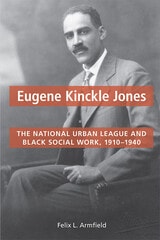
Eugene Kinckle Jones
The National Urban League and Black Social Work, 1910-1940Felix L. Armfield
University of Illinois Press, 2014
Drawing on interviews with Jones's colleagues and associates, as well as recently opened family and Urban League archives, Felix L. Armfield blends biography with an in-depth discussion of the roles of black institutions and organizations. The result is a work that offers new details on the growth of African American communities, the evolution of African American life, and the role of black social workers in the years before the civil rights era.

Euphoria and Exhaustion
Modern Sport in Soviet Culture and SocietyEdited by Nikolaus Katzer, Sandra Budy, Alexandra Köhring, and Manfred Zeller
Campus Verlag, 2010
The architects of the Soviet Union intended not merely to remake their society—they also had an ambitious plan to remake the citizenry physically, with the goal of perfecting the socialist ideal of man. As Euphoria and Exhaustionshows, the Soviet leadership used sport as one of the primary arenas in which to deploy and test their efforts to mechanize and perfect the human body, drawing on knowledge from physiology, biology, medicine, and hygiene. At the same time, however, such efforts, like any form of social control, could easily lead to discontent—and thus, the editors show, a study of changes in public attitude towards sport can offer insight into overall levels of integration, dissatisfaction, and social exhaustion in the Soviet Union.
Eurafricans in Western Africa
Commerce, Social Status, Gender, and Religious Observance from the Sixteenth to the Eighteenth CenturyGeorge E. Brooks
Ohio University Press, 2003
Eurafricans in Western Africa traces the rich social and commercial history of western Africa. The most comprehensive study to date, it begins prior to the sixteenth century when huge profits made by middlemen on trade in North African slaves, salt, gold, pepper, and numerous other commodities prompted Portuguese reconnaissance voyages along the coast of western Africa. From Senegal to Sierra Leone, Portuguese, including “New Christians” who reverted to Judaism while living in western Africa, thrived where riverine and caravan networks linked many African groups.
Portuguese and their Luso-African descendants contended with French, Dutch, and English rivals for trade in gold, ivory, slaves, cotton textiles, iron bars, cowhides, and other African products. As the Atlantic slave trade increased, French and Franco-Africans and English and Anglo-Africans supplanted Portuguese and Luso-Africans in many African places of trade.
Eurafricans in Western Africa follows the changes that took root in the eighteenth century when French and British colonial officials introduced European legal codes, and concludes with the onset of the French Revolution and Napoleonic Wars, when suppression of the slave trade and expanding commerce in forest and agricultural commodities again transformed circumstances in western Africa.
Professor George E. Brooks’s outstanding history of these vital aspects of western Africa is enriched by his discussion of the roles of the women who married or cohabited with European traders. Through accounts of incidents and personal histories, which are integrated into the narrative, the lives of these women and their children are accorded a prominent place in Professor Brooks’s fascinating discussion of this dynamic region of Africa.

Europe Faces Europe
Narratives from Its Eastern HalfEdited by Johan Fornäs
Intellect Books, 2017
Europe and Love in Cinema
Edited by Luisa Passerini, Jo Labanyi, and Karen Diehl
Intellect Books, 2012
Europe and Love in Cinema explores the relationship between love and Europeanness in a wide range of films from the 1920s to the present. A critical look at the manner in which love—in its broadest sense—is portrayed in cinema from across Europe and the United States, this volume exposes constructed notions of "Europeanness" that both set Europe apart and define some parts of it as more "European" than others. Through the international distribution process, these films in turn engage with ideas of Europe from both outside and within, while some, treated extensively in this volume, even offer alternative models of love. A bracing collection of essays from top film scholars, Europe and Love in Cinema demonstrates the centrality of desire to film narrative and explores multiple models of love within Europe's frontiers.
Europe in Black and White
Immigration, Race, and Identity in the ‘Old Continent'Edited by Manuela Ribeiro Sanches, Fernando Clara, João Ferreira Duarte, and Leonor Pires Martins
Intellect Books, 2011
The essays in Europe in Black and White offer new critical perspectives on race, immigration, and identity on the Old Continent. In reconsidering the various forms of encounters with difference, such as multiculturalism and hybridity, the contributors address a number of issues, including the cartography of postcolonial Europe, its relation to the production of "difference" and "race," and national and identity politics and their dependence on linguistic practices inherited from imperial times. Featuring scholars from a wide variety of nationalities and disciplinary areas, this collection will speak to an equally wide readership.
Europe in the Sixteenth Century
H. G. Koenigsberger, George L. Mosse, and G. Q. Bowler
University of Wisconsin Press, 2026
European Culture and the Media
Edited by Ib Bondebjerg and Peter Golding
Intellect Books, 2004
European Journalism Education
Edited by Georgios Terzis
Intellect Books, 2009
This book is the first comprehensive directory of the journalism education and training offered in thirty-three European countries. The volume, organized by country, discusses the history of journalism education and includes an analysis of all the current university programs and training provided by private media and professional organizations in each location. In addition, each section includes a thorough examination of the historical, political, economic and social framework of journalism in each country that looks towards the future of journalism education and media in Europe. European Journalism Education will be an asset to scholars of international communication studies and to media policy makers around the world.
European Media Governance
National and Regional DimensionsGeorgios Terzis
Intellect Books, 2013
This impressive volume provides a detailed examination of all aspects of media governance, including media ownership structures, government policies, citizen’s organisations and union’s accountability systems, for 32 European countries. European Media Governance includes recent research into technological developments and provides sources for more information in each country. In addition to this incredibly diverse scale of research and analysis, the book provides a companion website with regular updates. Terzis’ European Media Governance addresses all aspects of media governance in Europe, reflecting contemporary developments in both the countries analysed and their media, creating a comprehensive and reliable source.
European Media Governance
The Brussels DimensionEdited by Georgios Terzis
Intellect Books, 2008
European Metals in Native Hands
Rethinking Technological Change 1640-1683Kathleen L. Ehrhardt
University of Alabama Press, 2005
The first detailed analysis of Native metalworking in the Protohistoric/Contact Period
From the time of their earliest encounters with European explorers and missionaries, Native peoples of eastern North America acquired metal trinkets and utilitarian items and traded them to other aboriginal communities. As Native consumption of European products increased, their material culture repertoires shifted from ones made up exclusively of items produced from their own craft industries to ones substantially reconstituted by active appropriation, manipulation, and use of foreign goods. These material transformations took place during the same time that escalating historical, political, economic, and demographic influences (such as epidemics, new types of living arrangements, intergroup hostilities, new political alliances, missionization and conversion, changes in subsistence modes, etc.) disrupted Native systems.
Ehrhardt's research addresses the early technological responses of one particular group, the Late Protohistoric Illinois Indians, to the availability of European-introduced metal objects. To do so, she applied a complementary suite of archaeometric methods to a sample of 806 copper-based metal artifacts excavated from securely dated domestic contexts at the Illiniwek Village Historic Site in Clark County, Missouri.
Ehrhardt's scientific findings are integrated with observations from historical, archaeological, and archival research to place metal use by this group in a broad social context and to critique the acculturation perspective at other Contact Period sites. In revealing actual Native practice, from material selection and procurement to ultimate discard, the author challenges technocentric explanations for Native material and cultural change at contact.
European Others
Queering Ethnicity in Postnational EuropeFatima El-Tayeb
University of Minnesota Press, 2011
European Others offers an interrogation into the position of racialized communities in the European Union, arguing that the tension between a growing nonwhite, non-Christian population and insistent essentialist definitions of Europeanness produces new forms of identity and activism. Moving beyond disciplinary and national limits, Fatima El-Tayeb explores structures of resistance, tracing a Europeanization from below in which migrant and minority communities challenge the ideology of racelessness that places them firmly outside the community of citizens.
Using a notable variety of sources, from drag performances to feminist Muslim activism and Euro hip-hop, El-Tayeb draws on the largely ignored archive of vernacular culture central to resistance by minority youths to the exclusionary nationalism that casts them as threatening outcasts. At the same time, she reveals the continued effect of Europe’s suppressed colonial history on the representation of Muslim minorities as the illiberal Other of progressive Europe.
Presenting a sharp analysis of the challenges facing a united Europe seen by many as a model for twenty-first-century postnational societies, El-Tayeb combines theoretical influences from both sides of the Atlantic to lay bare how Europeans of color are integral to the continent’s past, present, and, inevitably, its future.
European Slave Trading in the Indian Ocean, 1500–1850
Richard B. Allen
Ohio University Press, 2015
Between 1500 and 1850, European traders shipped hundreds of thousands of African, Indian, Malagasy, and Southeast Asian slaves to ports throughout the Indian Ocean world. The activities of the British, Dutch, French, and Portuguese traders who operated in the Indian Ocean demonstrate that European slave trading was not confined largely to the Atlantic but must now be viewed as a truly global phenomenon. European slave trading and abolitionism in the Indian Ocean also led to the development of an increasingly integrated movement of slave, convict, and indentured labor during the late eighteenth and early nineteenth centuries, the consequences of which resonated well into the twentieth century.
Richard B. Allen’s magisterial work dramatically expands our understanding of the movement of free and forced labor around the world. Drawing upon extensive archival research and a thorough command of published scholarship, Allen challenges the modern tendency to view the Indian and Atlantic oceans as self-contained units of historical analysis and the attendant failure to understand the ways in which the Indian Ocean and Atlantic worlds have interacted with one another. In so doing, he offers tantalizing new insights into the origins and dynamics of global labor migration in the modern world.
Evacuation
The Politics and Aesthetics of Movement in EmergencyPeter Adey
Duke University Press, 2024