Results by title
18293 books match the query 'United States' and 472 start with e
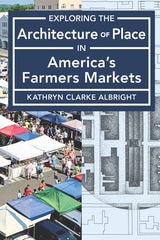
Exploring the Architecture of Place in America’s Farmers Markets
Kathryn Clarke Albright
University of Minnesota Press, 2020
Architect, teacher, and founder of the Friends of the Farmers Market, Katheryn Clarke Albright combines historically informed architectural observation with interview material and images drawn from conversations with farmers, vendors, market managers and shoppers.
Using eight scales of interaction and interface, Albright presents in-depth case studies to demonstrate how architectural elements and spatial conditions foster social and economic exchange between vendors, shoppers, and the community at large. Albright looks ahead to an emerging typology—the mobile market—bringing local farmers and healthy foods to underserved neighborhoods.
The impact farmers markets make on their local communities inspires place-making, improves the local economy, and preserves rural livelihoods. Developed organically and distinctively out of the space they occupy, these markets create and revitalize communities as rich as the produce they sell.
Exploring the Boundary Waters
A Trip Planner and Guide to the BWCAWDaniel Pauly
University of Minnesota Press, 2005
Exploring the Johnson Years
Edited by Robert A. Divine
University of Texas Press, 1981
More than a decade after LBJ left office, researchers began to open up the Johnson administration as an important area of scholarly study. Exploring the Johnson Years is an invaluable introduction to that administration and to the LBJ Library’s more than thirty million separate documents. The contributors cover every major aspect of the Johnson presidency, from Vietnam (George C. Herring) to the War on Poverty (Mark I. Gelfand), including coverage of Latin American policy (Walter LaFeber), education (Hugh Davis Graham), civil rights (Steven F. Lawson), the nature of the White House staff (Larry Berman), and Johnson’s stormy relationship with the media (David Culbert).
The essays illuminate some of the most important files and show how they can be used to further historical understanding of the Johnson years. As a result, scholars who plan to use the library will have a useful guide before they begin, while general readers will be able to discover the ways in which the library’s holdings relate to the existing body of literature on the Johnson administration.
Exploring the Land of Lincoln
The Essential Guide to Illinois Historic SitesCharles Titus
University of Illinois Press, 2021
Discovering Illinois through twenty of the state's most important places
A one-of-a-kind travel guide, Exploring the Land of Lincoln invites road-trippers and history buffs to explore the Prairie State's most extraordinary historic sites. Charles Titus blends storytelling with in-depth research to highlight twenty must-see destinations selected for human drama, historical and cultural relevance, and their far-reaching impact on the state and nation. Maps, illustrations, and mileage tables encourage readers to create personal journeys of exploration to, and beyond, places like Cahokia, the Lincoln sites, Nauvoo, and Chicago's South Side Community Art Center.
Detailed and user-friendly, Exploring the Land of Lincoln is the only handbook you need for the sights and stories behind the names on the map of Illinois.
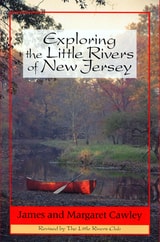
Exploring the Little Rivers of New Jersey
James and Margaret Cawley
Rutgers University Press, 1993
In this fourth edition, the Little Rivers Club has brought the Cawleys' work up to date. This group of experienced canoeists dedicated themselves to re-exploring familiar waterways and adding new ones. Faithful to the Cawley spirit, this edition includes new maps, many new photographs, a directory of canoe liveries, tips of planning a trip, a loving portrait of the Cawleys, and, best of all, twenty-four beautiful waterways to discover.
Featuring 166 photos, 22 maps, and these rivers:
- Batsto
- Cedar Creek
- Delaware and Raritan Canal
- Great Egg Harbor River
- Hackensack
- Manasquan River and Inlet
- Maurice
- Millstone
- Mullica
- Musconetcong
- Oswego River and Lake
- Passaic
- Paulins Kill
- Pequest
- Ramapo-Pompton
- Rancocas
- South and North Branches of the Raritan
- Toms
- Wading
- Black-Lamington
- Cohansey River, Raceway, and Sunset Lake
- Crosswicks Creek
- Metedeconk
- Stony Brook

Export Controls in Transition
Perspectives, Problems, and ProspectsGary K. Bertsch and Steven Elliott-Gower, eds.
Duke University Press, 1992
The contributors discuss the role and function of export control policies from a variety of perspectives—security, commerce, diplomacy, the European region, and that of the newly industrialized countries. Among the topics covered are the problems the United States and the Western export regime will face in the 1990s in light of changing international political alliances and dependencies, in defining strategic exports, in enforcing export controls, and the role of the Coordinating Committee for Multilateral Export Controls.
Contributors. Sumner Benson, Beverly Crawford, Richard t. Cupitt, Dorinda G. Dallmeyer, Paul Freedenberg, Martin J. Hillenbrand, Hanns-Dieter Jacobsen, Bruce W. Jentleson, Kevin J. Lasher, William J. Long, Janne Haaland Matlary, Jere W. Morehead, Henry R. Nau, Han S. Park, Kevin F. F. Quigley, Alen B. Sherr, Christine Westbrook
Exporting Perilous Pauline
Pearl White and Serial Film CrazeEdited by Marina Dahlquist
University of Illinois Press, 2013
Exporting Revolution
Cuba's Global SolidarityMargaret Randall
Duke University Press, 2017
Extended Stay
Juan Martinez
University of Arizona Press, 2023
In a rundown neighborhood in the heart of Las Vegas, the Alicia hotel awakens and beckons to the most vulnerable—those with something to hide.
After his parents are killed in a horrific roadside execution, Alvaro flees his home in Colombia and finds work as a line cook at the seedy hotel. Together with his sister, Carmen, he begins to make a new life in the desert, earning a promotion to management along with an irresistible offer to stay at the hotel rent-free. But as beloved photographs go missing, cockroaches seep from the walls, and grotesque strangers wander the corridors, the promise of the Alicia decays into nightmare. Alvaro discovers that the hotel is a small appendage of an enormous creature that feeds on guests and their secrets, one that will eventually bring him face-to-face with the memories he most wants to outrun. Alvaro, Carmen, and their friends decide to cooperate with the creature rather than fight it. But in their efforts to appease it, do they sacrifice too much of themselves?
Haunting and visceral, Extended Stay uses the language of body horror and the gothic to comment on the complicated relationship between the Latinx undocumented experience and capitalism, the erasure of those living and working on the margins, the heavy toll exacted by memory, and the queasy permeability of boundaries that separate the waking world from the world of dreams.

Extra! Extra! Eat All About It!
Recipes and Culinary Curiosities from Historic Wisconsin NewspapersRandi Julia Ramsden
Wisconsin Historical Society Press, 2024
A blend of cookbook and bite-size history, Extra! Extra! Eat All About It! offers a unique glimpse into the culinary landscape of the late nineteenth and early twentieth centuries. Fifty recipes selected from Wisconsin newspapers are served alongside brief essays that dig into the stories behind the food trends of the time.
In lively prose, Jane Conway and Randi Julia Ramsden reveal how coconuts and oysters made their way to 1800s Wisconsin, how bakers gauged the temperatures of their wood-burning stoves, and how our predecessors really did slip on banana peels, among other flavorful facts. In addition to capturing quirky food fashions, like breakfast parties and paper-bag cooking, the recipes provide insights into regional cooking traditions.
Each original recipe appears alongside the authors’ easy-to-follow updated version. Mouthwatering modern photographs showcase the revived dishes for the first time in their long history, and newspaper clippings, ads, and illustrations give the book a charming vintage feel. Featuring a variety of recipes, ranging from trendy (Barbecued Ham with Bananas) and tempting (Pickled Walnuts) to traditional (Pumpernickel) and tantalizing (Apple de Luxe), Extra! Extra! Eat All About It! will satisfy the appetites of history lovers and home chefs alike.
“Such a fun and fascinating book! Extra! Extra! Eat All About It! deftly delves into Wisconsin’s long-ago food fads, evolutions, and absurdities. Don’t be surprised if this book inspires new trends that are riffs on some of these century-old ideas. Pickled walnuts, anyone? Or mock pumpkin pie, with prunes?” — Mary Bergin, author of Wisconsin Supper Club Cookbook
“Both cookbook and chronicle, Extra! Extra! Eat All About It! is an ingenious, illuminating tasting menu of our culinary past. Sourced from nineteenth and early twentieth century Wisconsin newspapers, its fifty vignettes serve up historical insights, forgotten fads and bygone recipes. From paper bag cookery and ‘oyster saloons’ to fire-baked eggs and maple taffy, I ate this book right up.” — Terese Allen, coauthor of The Flavor of Wisconsin
“This beautiful, fun, and informative book is a masterclass in how historical cooking opens a window onto wider historical themes, including mechanization, the impacts of war, immigration, globalization, and changing nutritional advice.” — Eleanor Barrett, author of Leftovers: A History of Food Waste and Preservation
“Conway and Ramsden do a great job of using historical documents to demonstrate what people were eating and how they entertained. They describe recipes as interaction and community, as well as how food trends change over time. The writing is smart and clever. A wonderful read.” — Kimberly Wilmot Voss, author of The Food Section: Newspaper Women and the Culinary Community
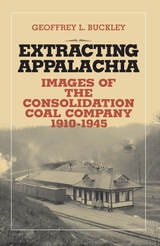
Extracting Appalachia
Images of the Consolidation Coal Company, 1910–1945Geoffrey L. Buckley
Ohio University Press, 2004
As a function of its corporate duties, the Consolidation Coal Company, one of the largest coal-mining operations in the United States during the first half of the twentieth century, had photographers take hundreds of pictures of nearly every facet of its operations. Whether for publicity images, safety procedures, or archival information, these photographs create a record that goes far beyond the purpose the company intended.
In Extracting Appalachia, geographer Geoffrey L. Buckley examines the company’s photograph collection housed at the Smithsonian Institution’s National Museum of American History. Included in the collection are images of mine openings, mining equipment, and mine accidents, as well as scenes of the company towns, including schools, churches, recreational facilities, holiday celebrations, and company stores.
Although the photographs in the collection provide us with valuable insights, they tell only part of the story. Using company records, state and federal government documents, contemporary newspaper accounts, and other archival materials, Professor Buckley shows that these photographs reveal much more than meets the eye.
Extracting Appalachia places these historic mining images in their social, cultural, and historical context, uncovering the true value and meaning of this rare documentary record.
Extradition Politics & Human Rights
Christopher Pyle
Temple University Press, 2001
In this readable and compelling history of extradition in America, Christopher Pyle remedies that ignorance. Using American constitutional law and drawing on a wealth of historical cases, he describes the collision of law and politics that occurs when a foreign country demands the surrender of individuals held to be terrorists by some and freedom fighters by others. He shows how U.S. policymakers have attempted to substitute deportation for extradition and turn the surrender of a foreign national (or even an American citizen) into a political rather than a judicial process.
Beginning with the New England Puritans' refusal to surrender the "regicides" who had signed the death warrant of Charles I, he traces the attitudes and ideologies that have shaped American extradition practice, culminating in the efforts by the Reagan and Bush administrations to turn the legal extradition process into an executive tool of state policy. Along the way we meet such luminaries as James Madison and John Stuart Mill, William Rehnquist and Oliver North, as well as pirates and fugitive slaves, anarchists and refugees, drug lords and runaway sailors.
Woven throughout this story is the author's belief that current developments in extradition law ignore or actually violate the principles of individual liberty, due process, and humanity on which we claim our country was built. As he remarks in the Introduction, "Extradition involves the surrender of human beings -- persons under the protection of our Constitution -- to foreign regimes, many of which are unjust. This reality was well understood in the eighteenth and nineteenth centuries, when the United States was a refuge for the victims of European oppression, but it has been disregarded frequently in the twentieth century as we have sought to stem the tide of immigration and develop advantageous economic and political relations with autocratic regimes of every stripe."
Extraordinarily Ordinary
Us Weekly and the Rise of Reality Television CelebrityErin A. Meyers
Rutgers University Press, 2020
Extraordinary Measures
Afrocentric Modernism and 20th-Century American PoetryLorenzo Thomas
University of Alabama Press, 2000
From early 20th-century writings to present-day poetry slams, African American poetry exhibits an impressive range of style and substance. Lorenzo Thomas has written an important new history of the genre that offers a critical reassessment of its development in the 20th century within the contexts of modernism and the troubled racial history of the United States.
Basing his study on literary history, cultural criticism, and close readings, Thomas revives and appraises the writings of a number of this century's most important African American poets, including Margaret Walker, Amiri Baraka, Askia M. Toure, Harryette Mullen, and Kalamu ya Salaam. Thomas analyzes the work of Fenton Johnson within the context of emerging race consciousness in Chicago, contributes to critical appraisals of William Stanley Braithwaite and Melvin B. Tolson, and examines the Black Arts Movement of the 1960s and 1970s. Throughout the book, Thomas demonstrates the continuity within the Afrocentric tradition while acknowledging the wide range of stylistic approaches and ideological stances that the tradition embraces.
By reassessing the African American poetry tradition, Thomas effectively reassesses the history of all 20th-century American literature by exploring avenues of debate that have not yet received sufficient attention. Written with intelligence and humor, his book is itself an extraordinary measure that reflects years of scholarship and opens up African American poetry to a wider audience.
Extraordinary Ordinariness
Everyday Heroism in the United States, Germany, and Britain, 1800-2015Edited by Simon Wendt
Campus Verlag, 2016
Extraordinary Racial Politics
Four Events in the Informal Constitution of the United StatesFred Lee
Temple University Press, 2018
Extraordinary racial politics rupture out of and reset everyday racial politics. In his cogent book, Fred Lee examines four unusual, episodic, and transformative moments in U.S. history: the 1830s–1840s southeastern Indian removals, the Japanese internment during World War II, the post-war civil rights movement, and the 1960s–1970s racial empowerment movements. Lee helps us connect these extraordinary events to both prior and subsequent everyday conflicts.
Extraordinary Racial Politics brings about an intellectual exchange between ethnic studies, which focuses on quotidian experiences and negotiations, and political theory, which emphasizes historical crises and breaks. In ethnic studies, Lee draws out the extraordinary moments in Michael Omi and Howard Winant’s as well as Charles Mills’s accounts of racial formation. In political theory, Lee considers the strengths and weaknesses of using Carl Schmitt’s and Hannah Arendt’s accounts of public constitution to study racial power.
Lee concludes that extraordinary racial politics represent both the promises of social emancipation and the perils of state power. This promise and peril characterizes our contentious racial present.
Extreme-Occident
French Intellectuals and AmericaJean-Philippe Mathy
University of Chicago Press, 1993
Western site that gives historical reality to the utopias of the Renaissance and the Enlightenment?
Jean-Philippe Mathy offers the first systematic examination of French texts that address the question of America. He shows how prominent French intellectuals have represented America as myth and metaphor, covering the entire ideological spectrum from Maurras to Duhamel, and from Sartre to Aron. The texts themselves range from novels and poems to travel narratives and philosophical essays by Claudel, Sartre, de Beauvoir, Lyotard, Baudrillard, Kristeva, and many others.
Mathy deftly situates these discourses on America against the background of French intellectual and political history since 1789. The judgments on American culture that originate in France, he contends, are also statements about France itself. Widespread condemnation of American
materialism and pragmatism cuts across deep ideological and political divides in France, primarily because French intellectuals still operate within a framework of critical and aesthetic models born in the late Middle Ages and the Renaissance and elaborated in the age of French classicism.
Mathy engages issues central to interpreting the American experience, such as the current controversies over multiculturalism and Eurocentrism. Although Mathy deals mainly with French authors, he does not limit himself to them. Rather, he uses a comparative, cross-cultural approach that also takes in accounts of America by Nietzsche, Heidegger, Junger, Gramsci, and other Europeans, as well as American self-interpretations from Emerson and Dewey to Cornel West and Christopher Lasch.
Because debates on American modernity have played a crucial intellectual role in France, Extrême-Occident is a major contribution to modern French cultural
history. It will be essential reading for anyone wishing to understand the main currents of twentieth-century French thought.
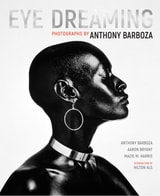
Eye Dreaming
Photographs by Anthony BarbozaAnthony Barboza
J. Paul Getty Trust, The, 2022
Anthony Barboza (b. 1944) is a celebrated artist and writer who has made thousands of photographs in the studio and on the street since 1963. A member of the Kamoinge collective of photographers in New York, Barboza is largely self-taught and has an inimitable, highly intuitive vision that he refers to as “eye dreaming,” or “a state of mind that’s almost like meditation.” Throughout the years he has made countless commercial images, including celebrity portraits, advertisements, and album covers. His personal photographic projects illuminate his deep investment in the art and concerns of Black communities, not only in the United States but also around the globe.
This lavishly illustrated volume follows Barboza’s prolific career from his youth in New Bedford, Massachusetts, to his formative years in New York in the 1960s, to the present day. An introduction by renowned author and critic Hilton Als underscores Barboza’s importance and impact. An essay by curator Aaron Bryant contextualizes Barboza’s life and career as they map against major civil rights events in the United States. In an intimate interview between the artist and curator Mazie M. Harris, Barboza offers astute, humorous, and intimate musings on his long career, foundational influences, and artistic legacy. This monograph, the first on the artist, will appeal to aficionados of photography and Black art and culture.
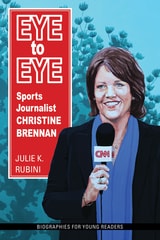
Eye to Eye
Sports Journalist Christine BrennanJulie K. Rubini
Ohio University Press, 2019
Christine Brennan, the USA Today sports columnist, author, and commentator, uses her voice to advocate for diversity and equality in the world of sports, and her wisdom to encourage future journalists. Her passion for sports was sparked by her dad, who encouraged her to participate in athletics and, as he said, “smell the game”—go watch baseball and football games together.
As a child, Christine wrote daily entries in her diary and listened to play-by-play coverage on her radio. She pursued this love of words through journalism school and applied her passion for sports by reporting on them for various newspapers. Since then, she has portrayed the setbacks and triumphs of athletes, all the while fighting her own battles for success—and respect—as a female journalist.
From knocking down barriers in NFL locker rooms to covering every Olympics since 1984 to being the go-to commentator whenever scandal occurs in the sports world, Christine Brennan has done it all. Eye to Eye invites young readers to learn more about this remarkable journalist and perhaps to nurture their own dreams of investigating and telling important stories.
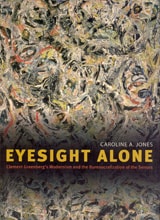
Eyesight Alone
Clement Greenberg's Modernism and the Bureaucratization of the SensesCaroline A. Jones
University of Chicago Press, 2006
Caroline Jones's magisterial study widens Greenberg's fundamental tenet of "opticality"-the idea that modernist art is apprehended through "eyesight alone"-to a broader arena, examining how the critic's emphasis on the specular resonated with a society increasingly invested in positivist approaches to the world. Greenberg's modernist discourse, Jones argues, developed in relation to the rationalized procedures that gained wide currency in the United States at midcentury, in fields ranging from the sense-data protocols theorized by scientific philosophy to the development of cultural forms, such as hi-fi, that targeted specific senses, one by one. Greenberg's attempt to isolate and celebrate the visual was one manifestation of a large-scale segmentation-or bureaucratization-of the body's senses. Working through these historical developments, Jones brings Greenberg's theories into contemporary philosophical debates about agency and subjectivity.
Eyesight Alone offers artists, art historians, philosophers, and all those interested in the arts a critical history of this generative figure, bringing his work fully into dialogue with the ideas that shape contemporary critical discourse and shedding light not only on Clement Greenberg but also on the contested history of modernism itself.
Ezra Pound's Confucian Translations
Mary Paterson Cheadle
University of Michigan Press, 1997

e-mail trouble
love and addiction @ the matrixBy S. Paige Baty
University of Texas Press, 1999
"This is about a society of isolates who all communicate with one another from terminal sites. This is about being disembodied, distanced, distinct, and that sort of boundary-thing. It is not about being present. It is not about being there. It is not about a shared history, or a shared meal, or a shared story, or any kind of mutuality. It is about contact between virtual strangers. . . . It happens when you feel that you are so alone that you need anybody to talk to—anybody at all—because you believe that your connections have failed you. This kind of connection leaves you cold and dead inside, because it lacks history and a language of belonging."
In this daring, postmodern autobiography, S. Paige Baty recounts her search for love and community on the Internet. Taking Jack Kerouac's On the Road as a point of departure, Baty describes both an actual road trip to meet the object of an e-mail romance and the cyber-search for connection that draws so many people into the matrix of the Internet. Writing in a bold, experimental style that freely mixes e-mails, poems, fragments of quotations, and puns into expository text, she convincingly links e-mail trouble with "female trouble" in the displacement of embodied love and accountable human relationships to opaque screens and alienated identities. Her book stands as a vivid feminist critique of our culture's love affair with technology and its dehumanizing effect on personal relationships.