Results by title
22279 books match the query 'Social Science' and 684 start with e
Exploring the Roots of Digital and Media Literacy through Personal Narrative
Renee Hobbs
Temple University Press, 2016
Exploring the Roots of Digital and Media Literacy through Personal Narrative provides a wide-ranging look at the origins, concepts, theories, and practices of the field. This unique, exciting collection of essays by a range of distinguished scholars and practitioners offers insights into the scholars and thinkers who fertilized the minds of those who helped shape the theory and practice of digital and media literacy education.
Each chapter describes an individual whom the author considers to be a type of “grandparent.” By weaving together two sets of personal stories—that of the contributing author and that of the key ideas and life history of the historical figure under their scrutiny—major concepts of digital media and learning emerge.
Explosivity
Following What RemainsJavier Arbona-Homar
University of Minnesota Press, 2025
How explosions across history reveal the violence embedded in San Francisco’s landscape
Offering a novel approach to contemporary landscape studies, Explosivity unearths the hidden legacies of violence that have shaped the physical and cultural environment of the San Francisco Bay area. As he sifts through the historical debris of previous centuries, Javier Arbona-Homar analyzes a series of explosions that took place between 1866 and 2011 to call attention to the scattered remnants of militarism and racialized capitalism embedded in the region’s geography.
From incidents involving nineteenth-century explosives manufacturing and World War II munitions loading to radical activism and contemporary television productions, Arbona-Homar locates a pattern of historical violence that refocuses the broader racial and colonial context. Citing the material, social, and political conditions that gave rise to these disparate episodes, he reviews the historic erasure of those driving forces and puts forth alternative possibilities for how such disasters might be memorialized.
Synthesizing a diverse set of field research methods, including oral histories and site visits, and supplemented by specially commissioned landscape photographs by Andrea Gaffney, Explosivity presents a radical exercise in the exposition of public memory.
Retail e-book files for this title are screen-reader friendly with images accompanied by short alt text and/or extended descriptions.
Exporting Japan
Politics of Emigration to Latin AmericaToake Endoh
University of Illinois Press, 2008
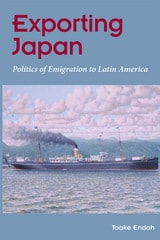
Exporting Japan examines the domestic origins of the Japanese government's policies to promote the emigration of approximately three hundred thousand native Japanese citizens to Latin America between the 1890s and the 1960s. This imperialist policy, spanning two world wars and encompassing both the pre-World War II authoritarian government and the postwar conservative regime, reveals strategic efforts by the Japanese state to control its populace while building an expansive nation beyond its territorial borders.
Toake Endoh compellingly argues that Japan's emigration policy embodied the state's anxieties over domestic political stability and its intention to remove marginalized and radicalized social groups by relocating them abroad. Documenting the disproportionate focus of the southwest region of Japan as a source of emigrants, Endoh considers the state's motivations in formulating emigration policies that selected certain elements of the Japanese population for "export." She also recounts the situations migrants encountered once they reached Latin America, where they were often met with distrust and violence in the "yellow scare" of the pre-World War II period.
Exporting Jim Crow
Blackface Minstrelsy in South Africa and BeyondChinua Thelwell
University of Massachusetts Press, 2020
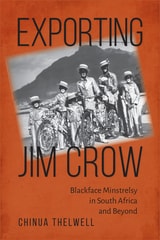
Chinua Thelwell brings blackface minstrelsy and performance culture into the discussion of apartheid's nineteenth-century origins and afterlife, employing a broad archive of South African newspapers and magazines, memoirs, minstrel songs and sketches, diaries, and interview transcripts. Exporting Jim Crow highlights blackface minstrelsy's cultural and social impact as it became a dominant form of entertainment, moving from its initial appearances on music hall stages to its troubling twentieth-century resurgence on movie screens and at public events. This carefully researched and highly original study demonstrates that the performance of race in South Africa was inherently political, contributing to racism and shoring up white racial identity.
Exporting Perilous Pauline
Pearl White and Serial Film CrazeEdited by Marina Dahlquist
University of Illinois Press, 2013
Exporting Revolution
Cuba's Global SolidarityMargaret Randall
Duke University Press, 2017
Exposed Memories
Family Pictures in Private and Collective MemoryHedvig Turai
Central European University Press, 2010
Exposed
Environmental Politics and Pleasures in Posthuman TimesStacy Alaimo
University of Minnesota Press, 2016
Opening with the statement “The anthropocene is no time to set things straight,” Stacy Alaimo puts forth potent arguments for a material feminist posthumanism in the chapters that follow.
From trans-species art and queer animals to naked protesting and scientific accounts of fishy humans, Exposed argues for feminist posthumanism immersed in strange agencies and scale-shifting ethics. Including such divergent topics as landscape art, ocean ecologies, and plastic activism, Alaimo explores our environmental predicaments to better understand feminist occupations of transcorporeal subjectivity.
She puts scientists, activists, artists, writers, and theorists in conversation, revealing that the state of the planet in the twenty-first century has radically transformed ethics, politics, and what it means to be human. Ultimately, Exposed calls for an environmental stance in which, rather than operating from an externalized perspective, we think, feel, and act as the very stuff of the world.

Exposing Vulnerability
Self-Mediation in Scandinavian Films By WomenAdriana Margareta Dancus
Intellect Books, 2019

Exposing the Film Apparatus
Global Laboratory PerspectivesGiovanna Fossati
Amsterdam University Press, 2026
Expressing New Mexico
Nuevomexicano Creativity, Ritual, and MemoryEdited by Phillip B. Gonzales
University of Arizona Press, 2007
Intertwined with the concept of expressive culture is that of “place” in relation to New Mexico itself. Place is addressed directly by four of the authors in this anthology and is present in some way and in varying degrees among the rest. Place figures prominently in Nuevomexicano “character,” contributors argue. They assert that Nuevomexicanos and Nuevomexicanas construct and develop a sense of self that is shaped by the geography and culture of the state as well as by their heritage.
Many of the articles deal with recent events or with recent reverberations of important historical events, which imbues the collection with a sense of immediacy. Rituals, traditions, community commemorations, self-concepts, and historical revisionism all play key roles. Contributors include both prominent and emerging scholars united by their interest in, and fascination with, the distinctiveness of Nuevomexicano culture.
Expressions of Sufi Culture in Tajikistan
Benjamin Gatling
University of Wisconsin Press, 2018
Gatling demonstrates how Sufis transcend the oppressive religious politics of contemporary Tajikistan by using these forms to inhabit multiple times: the paradoxical present, the Persian sacred past, and the Soviet era. In a world consumed with the supposed political dangers of Islam, Gatling shows the intricate, ground-level ways that Muslim expressive culture intersects with authoritarian politics, not as artful forms of resistance but rather as a means to shape Sufi experiences of the present.
Exquisite Materials
Episodes in the Queer History of Victorian StyleAbigail Joseph
University of Delaware Press, 2011
Published by University of Delaware Press. Distributed worldwide by Rutgers University Press.
Extending Psychological Frontiers
Stanley Schachter
Russell Sage Foundation, 1989

Extensions of the Burkeian System
James W. Chesebro
University of Alabama Press, 1993
Extensions of the Burkeian System constitutes one of the first projects to meet the requirements Burke has established for his operation benchmark. This volume its origins in the scholarly contributions of Kenneth Burke. All of the authors of the chapters in this volume adopt stances that defer to Burke’s initial contributions, ultimately casting their work as extensions of ideas and claims posited by Burke. Yet, all of the authors also make significant departures from positions Burke has articulated. The range of these reactions varies tremendously. Several of the authors cast their positions as augmentations. They offer supplements to Burke's claims that constitute logical additions to Burke's initial observations, but even these authors provide adjustments to the Burkeian system that make a difference in how the system is perceived and understood. Other essays are cast in a more challenging mode, arguing explicitly for alternative viewpoints. Displeased with Burke's analysis at a given point for one reason or another, they posit positions different than those advanced by Burke.
Extinct Lands, Temporal Geographies
Chicana Literature and the Urgency of SpaceMary Pat Brady
Duke University Press, 2002
The history of the American Southwest in large part entails the transformation of lived, embodied space into zones of police surveillance, warehouse districts, highway interchanges, and shopping malls—a movement that Chicana writers have contested from its inception. Brady examines this long-standing engagement with space, first in the work of early newspaper essayists and fiction writers who opposed Anglo characterizations of Northern Sonora that were highly detrimental to Mexican Americans, and then in the work of authors who explore border crossing. Through the writing of Sandra Cisneros, Cherríe Moraga, Terri de la Peña, Norma Cantú, Monserrat Fontes, Gloria Anzaldúa, and others, Brady shows how categories such as race, gender, and sexuality are spatially enacted and created—and made to appear natural and unyielding. In a spatial critique of the war on drugs, she reveals how scale—the process by which space is divided, organized, and categorized—has become a crucial tool in the management and policing of the narcotics economy.
Extra/ordinary Johannesburg
Centrality, Periphery and the Spaces BetweenLindsay Blair Howe
University College London, 2025
In Extra/ordinary Johannesburg, urbanist Lindsay Blair Howe argues that Johannesburg, part of the highly urbanized Gauteng City-Region and often labeled as an “apartheid city,” is an “ordinary” space where spatial changes both marginalize and create opportunities for people in their everyday lives. Structured around the concepts of urbanization and peripheralization and drawing on Henri Lefebvre’s theory of spatial dialectics, the book uses empirical research methods like smartphone applications and volunteered geographic information to draw theoretical conclusions, providing exciting new insights into urban denizens’ daily lives and how urbanization in the Gauteng region relates to the decolonial project. One central premise is that understanding how people navigate the urban fabric of centralities, peripheries, and the spaces in between is crucial for reimagining effective ways to address poverty and inequality in urban Africa.
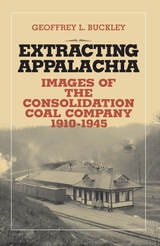
Extracting Appalachia
Images of the Consolidation Coal Company, 1910–1945Geoffrey L. Buckley
Ohio University Press, 2004
As a function of its corporate duties, the Consolidation Coal Company, one of the largest coal-mining operations in the United States during the first half of the twentieth century, had photographers take hundreds of pictures of nearly every facet of its operations. Whether for publicity images, safety procedures, or archival information, these photographs create a record that goes far beyond the purpose the company intended.
In Extracting Appalachia, geographer Geoffrey L. Buckley examines the company’s photograph collection housed at the Smithsonian Institution’s National Museum of American History. Included in the collection are images of mine openings, mining equipment, and mine accidents, as well as scenes of the company towns, including schools, churches, recreational facilities, holiday celebrations, and company stores.
Although the photographs in the collection provide us with valuable insights, they tell only part of the story. Using company records, state and federal government documents, contemporary newspaper accounts, and other archival materials, Professor Buckley shows that these photographs reveal much more than meets the eye.
Extracting Appalachia places these historic mining images in their social, cultural, and historical context, uncovering the true value and meaning of this rare documentary record.
Extradition Politics & Human Rights
Christopher Pyle
Temple University Press, 2001
In this readable and compelling history of extradition in America, Christopher Pyle remedies that ignorance. Using American constitutional law and drawing on a wealth of historical cases, he describes the collision of law and politics that occurs when a foreign country demands the surrender of individuals held to be terrorists by some and freedom fighters by others. He shows how U.S. policymakers have attempted to substitute deportation for extradition and turn the surrender of a foreign national (or even an American citizen) into a political rather than a judicial process.
Beginning with the New England Puritans' refusal to surrender the "regicides" who had signed the death warrant of Charles I, he traces the attitudes and ideologies that have shaped American extradition practice, culminating in the efforts by the Reagan and Bush administrations to turn the legal extradition process into an executive tool of state policy. Along the way we meet such luminaries as James Madison and John Stuart Mill, William Rehnquist and Oliver North, as well as pirates and fugitive slaves, anarchists and refugees, drug lords and runaway sailors.
Woven throughout this story is the author's belief that current developments in extradition law ignore or actually violate the principles of individual liberty, due process, and humanity on which we claim our country was built. As he remarks in the Introduction, "Extradition involves the surrender of human beings -- persons under the protection of our Constitution -- to foreign regimes, many of which are unjust. This reality was well understood in the eighteenth and nineteenth centuries, when the United States was a refuge for the victims of European oppression, but it has been disregarded frequently in the twentieth century as we have sought to stem the tide of immigration and develop advantageous economic and political relations with autocratic regimes of every stripe."

Extraordinarily Ordinary
Us Weekly and the Rise of Reality Television CelebrityErin A. Meyers
Rutgers University Press, 2020
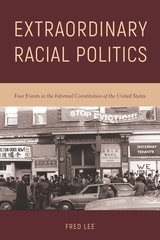
Extraordinary Racial Politics
Four Events in the Informal Constitution of the United StatesFred Lee
Temple University Press, 2018
Extraordinary racial politics rupture out of and reset everyday racial politics. In his cogent book, Fred Lee examines four unusual, episodic, and transformative moments in U.S. history: the 1830s–1840s southeastern Indian removals, the Japanese internment during World War II, the post-war civil rights movement, and the 1960s–1970s racial empowerment movements. Lee helps us connect these extraordinary events to both prior and subsequent everyday conflicts.
Extraordinary Racial Politics brings about an intellectual exchange between ethnic studies, which focuses on quotidian experiences and negotiations, and political theory, which emphasizes historical crises and breaks. In ethnic studies, Lee draws out the extraordinary moments in Michael Omi and Howard Winant’s as well as Charles Mills’s accounts of racial formation. In political theory, Lee considers the strengths and weaknesses of using Carl Schmitt’s and Hannah Arendt’s accounts of public constitution to study racial power.
Lee concludes that extraordinary racial politics represent both the promises of social emancipation and the perils of state power. This promise and peril characterizes our contentious racial present.
Extraordinary from the Ordinary
Personal Experience Narratives in American Sign LanguageKristin J. Mulrooney
Gallaudet University Press, 2009
Personal narratives are one way people code their experiences and convey them to others. Given that speakers can simultaneously express information and define a social situation, analyzing how and why people structure the telling of personal narratives can provide insight into the social dimensions of language use. In Extraordinary from the Ordinary: Personal Experience Narratives in American Sign Language, Kristin Jean Mulrooney shows that accounts by Deaf persons expressed in ASL possess the same characteristics and perform the same function as oral personal narratives.
Mulrooney analyses12 personal narratives by ASL signers to determine how they “tell” their stories. She examines the ASL form of textual narration to see how signers use lexical signs to grammatically encode information, and how they also convey perceived narration. In perceived narration, the presenter depicts a past occurrence in the immediate environment that allows the audience to partially witness and interpret the event. Mulrooney determined that ASL narratives reveal a patterned structure consisting of an introduction, a main events section for identifying and describing past events, and a conclusion. They also can include background information, an explication section in which the presenter expands or clarifies an event, and a section that allows the presenter to explain his or her feelings about what happened. Liberally illustrated with photographs from videotaped narratives, Extraordinary from the Ordinary offers an engrossing, expansive view of personal narratives embodying the unique linguistic elements of ASL.

Extreme Cinema
The Transgressive Rhetoric of Today's Art Film CultureFrey, Mattias
Rutgers University Press, 2016
From Shortbus to Shame and from Oldboy to Irreversible, film festival premieres regularly make international headlines for their shockingly graphic depictions of sex and violence. Film critics and scholars alike often regard these movies as the work of visionary auteurs, hailing directors like Michael Haneke and Lars von Trier as heirs to a tradition of transgressive art. In this provocative new book, Mattias Frey offers a very different perspective on these films, exposing how they are also calculated products, designed to achieve global notoriety in a competitive marketplace.
Extremities
Trauma, Testimony, and CommunityEdited by Nancy K. Miller and Jason Tougaw
University of Illinois Press, 2002
How do we come to terms with what can't be forgotten?
How do we bear witness to extreme experiences that challenge the limits of language? This remarkable volume explores the emotional, political, and aesthetic dimensions of testimonies to trauma as they translate private anguish into public space. Nancy K. Miller and Jason Tougaw have assembled a collection of essays that trace the legacy of the Holocaust and subsequent events that have shaped twentieth-century history and still haunt contemporary culture.
Extremities combines personal and scholarly approaches to a wide range of texts that bear witness to shocking and moving accounts of individual trauma: Toni Morrison's Beloved, Sylvia Plath's "Daddy" and "Lady Lazarus," Kathryn Harrison's The Kiss, Tatana Kellner's Holocaust art, Ruth Klüger's powerful memoir Still Alive, and Binjamin Wilkomirski's controversial narrative of concentration camp suffering Fragments. The book grapples with the cultural and social effects of historical crises, including the Montreal Massacre, the Warsaw Ghetto Uprising, and the medical catastrophes of HIV/AIDS and breast cancer.
Developing insights from autobiography, psychoanalysis, feminist theory and gender studies, the authors demonstrate that testimonies of troubling and taboo subjects do more than just add to the culture of confession–-they transform identities and help reimagine the boundaries of community. Extremities offers an original and timely interpretive guide to the growing field of trauma studies. The volume includes essays by Ross Chambers, Sandra M. Gilbert, Susan Gubar, Marianne Hirsch, Wayne Koestenbaum, Eve Kosofsky Sedgwick, and others.
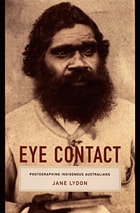
Eye Contact
Photographing Indigenous AustraliansJane Lydon
Duke University Press, 2005
Lydon shows how the photographic portrayals of the Aboriginal residents of Coranderrk changed over time, reflecting various ideas of the colonial mission—from humanitarianism to control to assimilation. In the early twentieth century, the images were used on stereotypical postcards circulated among the white population, showing what appeared to be compliant, transformed Aboriginal subjects. The station closed in 1924 and disappeared from public view until it was rediscovered by scholars years later. Aboriginal Australians purchased the station in 1998, and, as Lydon describes, today they are using the Coranderrk photographic archive in new ways, to identify family members and tell stories of their own.
Eye on the Future
Popular Culture Scholarship into the Twenty-First Century in Honor of Ray B. BrowneMarilyn F. Motz
University of Wisconsin Press, 1994
This collection includes essays by scholars from around the world and five of Ray Browne's essays which he considers signal. The purpose of this book is to chart Popular Culture Studies into the next century.
EyeMinded
Living and Writing Contemporary ArtKellie Jones
Duke University Press, 2011

Eyes like Mine
A Memoir between Blindness and SightTalea Anderson
Temple University Press, 2027
Talea Anderson is a person with low vision. Although she passes as sighted, she feels she has a “blind identity.” Eyes like Mine is her candid and revealing memoir detailing her experience grappling with partial vision and the isolation and loneliness that this often brings. Anderson expresses a longing for connection and community, especially with those who live in the space between sight and blindness.
Eyes like Mine examines ideas of disability as Anderson understands the nature of her blindness and sight and how that has evolved over her life. She relates her experiences to historical figures with low or partial vision, including painter Claude Monet, disability advocate Helen Keller, and musician and composer Maria Theresia von Paradis, among others.
Writing eloquently about her surgeries, and others’ efforts to “fix her,” Anderson captures her experience with disability with confidence and self-reflexive humor. Eyes like Mine does not speak for all blind people or others with partial vision. Instead, Anderson investigates how disabled people think about their relationship with disability and how they identify.

Eyes on Amazonia
Transnational Perspectives on the Rubber Boom FrontierJessica Carey-Webb
Vanderbilt University Press, 2024
Eyes on Amazonia operates in cultural geography, ecocriticism, and visual cultural analysis. The diverse and intriguing documents and images examined in this book capture the modernizing project of this region at a crucial juncture in its long history: the early twentieth-century rubber boom.
Ezili's Mirrors
Imagining Black Queer GendersOmise'eke Natasha Tinsley
Duke University Press, 2018

Ezra Pound and China
Zhaoming Qian, Editor
University of Michigan Press, 2003
Richly illustrated, the book draws readers closer to the heart of Pound's vision. Ezra Pound and China will become an invaluable resource to students and scholars of Pound, cultural studies, translation theory, poetics, Confucianism, and literary transmission and reception.
Zhaoming Qian is Professor of English, the University of New Orleans.

Ezra Pound's Confucian Translations
Mary Paterson Cheadle
University of Michigan Press, 1997
eTrust
Forming Relationships in the Online WorldKaren S. Cook
Russell Sage Foundation, 2009
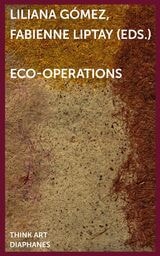
eco-operations
Edited by Fabienne Liptay and Liliana Gómez
Diaphanes, 2024
The climate change crisis has become part of aesthetic discourse and critical research in culture and the arts. Future-oriented, ecologically conceived possibilities for action are being explored by artists, curators, and scholars alike. eco-operations addresses these emerging aesthetic ecologies and new technologies of cooperation that both challenge and shape a sustainable future, foregrounding interruptions, ruptures, disconnections, dissonances, exclusions, and allochronism. Moving beyond the concepts of “flow” and “network” as a single, coherent (ecological or technological) system, eco-operations instead emphasizes the frictions within asynchronously running systems. The infrastructures and formats of artistic production and exhibition play a central role here, as they themselves constitute ecosystems that invite and regulate processes of sharing and exchange. Artists and activists are embedded in these ecosystems, in which they simultaneously intervene when searching for alternative ways of creating collaborative practice. Bringing together scholars, artists, writers, and curators, and working across a range of disciplines, eco-operations explores this field of tension between global and local ecologies and aims to speculate on where dissonances imply both creative potential and political challenges.
eco-operations features contributions by Dalida María Benfield, Ursula Biemann, Lisa Blackmore, Mateo Chacón Pino, Lucrezia Cippitelli, T. J. Demos, Sandra Frimmel, Laura Flórez, Lorena Cely, Alexandra Gelis, Liliana Gómez, Fabienne Liptay, Uriel Orlow, and Dorota Sajewska.