Results by title
5448 books match the query 'History and criticism' and 158 start with e
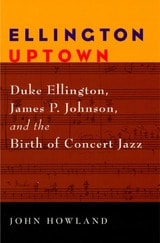
Ellington Uptown
Duke Ellington, James P. Johnson, and the Birth of Concert JazzJohn Howland
University of Michigan Press, 2009
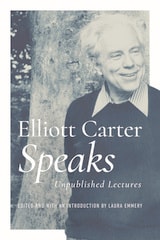
Elliott Carter Speaks
Unpublished LecturesElliott Carter. Edited and with an Introduction by Laura Emmery
University of Illinois Press, 2021
Expansive and essential, Elliott Carter Speaks opens up the artist's teaching and introspection to new contemporary perspectives on his thought and art.
Please note that the order and arrangement of materials in this book differs from that of Elliott Carter’s original lectures.
Eloquence and Mere Life
Essays on the Art of PoetryAlan Williamson
University of Michigan Press, 1994

Elusion Aforethought
The Life and Writing of Anthony Berkeley CoxMalcolm J. Turnbull
University of Wisconsin Press, 1996
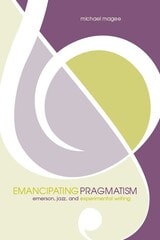
Emancipating Pragmatism
Emerson, Jazz, and Experimental WritingMichael Magee
University of Alabama Press, 2004
A radical rereading of Emerson that posits African- American culture, literature, and jazz as the very continuation and embodiment of pragmatic thought and democratic tradition
Emancipating Pragmatism is a radical rereading of Emerson that posits African- American culture, literature, and jazz as the embodiment of pragmatic thought and democratic tradition. It traces Emerson's philosophical legacy through the 19th and 20th centuries to discover how Emersonian thought continues to inform issues of race, aesthetics, and poetic discourse.
Emerson’s pragmatism derives from his abolitionism, Michael Magee argues, and any pragmatic thought that aspires toward democracy cannot ignore and must reckon with its racial roots. Magee looks at the ties between pragmatism and African-American culture as they manifest themselves in key texts and movements, such as William Carlos Williams’s poetry; Ralph Ellison’s discourse in Invisible Man and Juneteenth and his essays on jazz; the poetic works of Robert Creeley, Amiri Baraka, and Frank O'Hara; as well as the “new jazz” being forged at clubs like The Five Spot in New York.
Ultimately, Magee calls into question traditional maps of pragmatist lineage and ties pragmatism to the avant-garde American tradition.
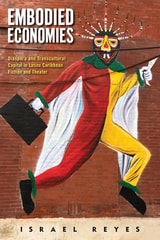
Embodied Economies
Diaspora and Transcultural Capital in Latinx Caribbean Fiction and TheaterIsrael Reyes
Rutgers University Press, 2022
In chapters that compare works by Lin-Manuel Miranda, Nilo Cruz, Edwin Sánchez, Ángel Lozada, Rita Indiana Hernández, Dolores Prida, and Mayra Santos Febres, Reyes examines the contradictions of transcultural capital, its potential to establish networks of support in Latinx enclaves, and the risks it poses for reproducing the inequities of power and privilege that have always been at the heart of the American Dream. Embodied Economies shares new perspectives through its comparison of works written in both English and Spanish, and the literary voices that emerge from the US and the Hispanic Caribbean.
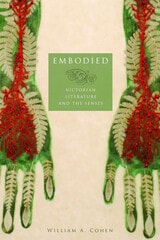
Embodied
Victorian Literature and the SensesWilliam A. Cohen
University of Minnesota Press, 2008
Making sense of the body in Victorian literature
What does it mean to be human? British writers in the Victorian period found a surprising answer to this question. What is human, they discovered, is nothing more or less than the human body itself. In literature of the period, as well as in scientific writing and journalism, the notion of an interior human essence came to be identified with the material existence of the body. The organs of sensory perception were understood as crucial routes of exchange between the interior and the external worlds.
Anatomizing Victorian ideas of the human, William A. Cohen considers the meaning of sensory encounters in works by writers including Charles Dickens, Charlotte Brontë, Anthony Trollope, Thomas Hardy, and Gerard Manley Hopkins. Rather than regarding the bodily exterior as the primary location in which identity categories—such as gender, sexuality, race, and disability—are expressed, he focuses on the interior experience of sensation, whereby these politics come to be felt. In these elegant engagements with literary works, cultural history, and critical theory, Cohen advances a phenomenological approach to embodiment, proposing that we encounter the world not through our minds or souls but through our senses.
Embroidering the Scarlet A
Unwed Mothers and Illegitimate Children in American Fiction and FilmJanet Mason Ellerby
University of Michigan Press, 2015
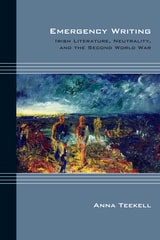
Emergency Writing
Irish Literature, Neutrality, and the Second World WarAnna Teekell
Northwestern University Press, 2018
Taking seriously Ireland’s euphemism for World War II, “the Emergency,” Anna Teekell’s Emergency Writing asks both what happens to literature written during a state of emergency and what it means for writing to be a response to an emergency.
Anchored in close textual analysis of works by Samuel Beckett, Elizabeth Bowen, Flann O’Brien, Louis MacNeice, Denis Devlin, and Patrick Kavanagh, and supported by archival material and historical research, Emergency Writing shows how Irish late modernism was a response to the sociopolitical conditions of a newly independent Irish Free State and to a fully emerged modernism in literature and art. What emerges in Irish writing in the wake of Independence, of the Gaelic Revival, of Yeats and of Joyce, is a body of work that invokes modernism as a set of discursive practices with which to counter the Free State’s political pieties.
Emergency Writing provides a new approach to literary modernism and to the literature of conflict, considering the ethical dilemma of performing neutrality—emotionally, politically, and rhetorically—in a world at war.
Emerson in His Sermons
A Man-Made SelfSusan L. Roberson
University of Missouri Press, 1994
Ralph Waldo Emerson is universally recognized as one of America's most influential authors and thinkers. Before achieving eminence as lecturer, essayist, and poet, though, he was a Unitaarian preacher. Emerson in His Sermons is the first major study of the sermons since the publication of The Complete Sermons of Ralph Waldo Emerson. Susan Roberson examines Emerson's ministerial career from 1826 to 1832, shedding new light on those early, crucial years in Emerson's personal and intellectual development.
Treating the sermons extensively as an autobiographical text, Roberson establishes that Emerson's years in the pulpit were pivotal and that his sermons are key texts in revealing the essential development of his thought. Central to Roberson's explication of the sermons is Emerson's conception of self-reliance, his invention of a new hero for a new age, and his merging of his own identity with that heroic idea.
Roberson focuses on Emerson's reaction to what was perhaps the most signifcant event in his personal life: the death of his young wife, Ellen, of tuberculosis in 1831, after only sixteen months of marriage. Roberson's correlation of the sermons written during that time with the complexity of Emerson's emotional and intellectual response to the tragedy of Ellen's illness and death is the most detailed and sophisticated treatment of that material to date.
Roberson understands Emerson's emergence from the ministry as his rejection of ready-made institutions and sytems of thought. Through her careful readings of the sermons, Roberson finds that Emerson's objective was less the translation of his life into writing than the translation of his life through writing. By considering the sermons in this way, Roberson is able to enrich our understanding of the private and passionte impulses of this seminal thinker.
Emerson in His Sermons offers the first real look at how the sermons fit into Emerson's own development and will have a far-reaching impact on Emerson scholarship. Anyone concerned with the cultural and religious history of America will find this book invaluable.
Emo
How Fans Defined a SubcultureJudith May Fathallah
University of Iowa Press, 2020
For many, the word “emo” calls to mind angsty teenagers, shaggy black haircuts, and skinny jeans. A popular music phenomenon in the early 2000s, emo is short for “emotional hardcore,” and refers to both a music genre and a youth scene notable for its androgynous style. Judith May Fathallah pushes beyond the stereotypes and social stigma to explore how online fandom has shaped the definition of emo, with significant implications both for millennial constructs of gender and for contemporary fan studies.
First laying out the debate over what emo is, Fathallah walks superfans and newcomers through the culture surrounding thegenre’s major bands, including the emo holy trinity: My Chemical Romance, Fall Out Boy, and Panic! At the Disco. Next she examines fans’ main mode of participation in the emo subculture—online communities such as LiveJournal, Tumblr, MySpace, and band websites. Taking a hard look at the gender politics that dominated those spaces, she unearths a subculture that simultaneously defines itself by its sensitivity and resistance to traditional forms of masculinity, yet ruthlessly enforces homophobic and sexist standards. Fathallah demonstrates fandom’s key role in defining emo as a concept and genre after 2001, with probing insight into its implications for gender constructions through popular music.
Emotion in the Tudor Court
Literature, History, and Early Modern FeelingBradley J. Irish
Northwestern University Press, 2018
Spanning the sixteenth century, Emotion in the Tudor Court explores Cardinal Thomas Wolsey and Henrician satire; Henry Howard, Earl of Surrey, and elegy; Sir Philip Sidney and Elizabethan pageantry; and Robert Devereux, Earl of Essex, and factional literature. It demonstrates how the dynamics of disgust,envy, rejection, and dread, as they are understood in the modern affective sciences, can be seen to guide literary production in the early modern court.
By combining Renaissance concepts of emotion with modern research in the social and natural sciences, Emotion in the Tudor Court takes a transdisciplinary approach to yield fascinating and robust ways to illuminate both literary studies and cultural history.
Emotional Reinventions
Realist-Era Representations Beyond SympathyMelanie V. Dawson
University of Michigan Press, 2015
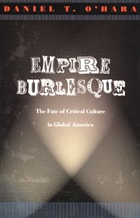
Empire Burlesque
The Fate of Critical Culture in Global AmericaDaniel T. O Hara
Duke University Press, 2003
Empire Burlesque presents several interrelated analyses through readings of a range of writers and cultural figures including Henry James, Freud, Said, De Man, Derrida, and Cordwainer Smith (an academic, spy, and classic 1950s and 1960s science fiction writer). It describes the debilitating effects of globalization on the university in general and the field of literary studies in particular, it critiques literary studies’ embrace of globalization theory in the name of a blind and vacant modernization, and it meditates on the ways critical reading and writing can facilitate an imaginative alternative to institutionalized practices of modernization. Drawing on Lacanian psychoanalytical theory, it diagnoses contemporary American Studies as typically driven by the mindless abjection and transference of professional identities.
A provocative commentary on contemporary cultural criticism, Empire Burlesque will inform debates on the American university across the humanities, particularly among those in literary criticism, cultural studies, and American studies.
Empire Islands
Castaways, Cannibals, and Fantasies of ConquestRebecca Weaver-Hightower
University of Minnesota Press, 2007
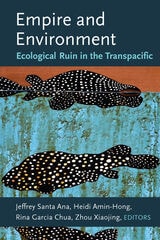
Empire and Environment
Ecological Ruin in the TranspacificJeffrey Santa Ana, Heidi Amin-Hong, Rina Garcia Chua, Zhou Xiaojing, Editors
University of Michigan Press, 2022
Empirical Models Challenging Biblical Criticism
Raymond F. Person
SBL Press, 2016
Cutting edge reflections on biblical text formation
Empirical models based on ancient Near Eastern literature and variations between different textual traditions have been used to lend credibility to the identification of the sources behind biblical literature and the different editorial layers. In this volume, empirical models are used to critique the exaggerated results of identifying sources and editorial layers by demonstrating that, even though much of ancient literature had such complex literary histories, our methods are often inadequate for the task of precisely identifying sources and editorial layers. The contributors are Maxine L. Grossman, Bénédicte Lemmelijn, Alan Lenzi, Sara J. Milstein, Raymond F. Person Jr., Robert Rezetko, Stefan Schorch, Julio Trebolle Barrera, Ian Young, and Joseph A. Weaks.
Features:
- Evidence that many ancient texts are composite texts with complex literary histories
- Ten essays and an introduction cover texts from Mesopotamia, the Hebrew Bible, the New Testament, and the Dead Sea Scrolls
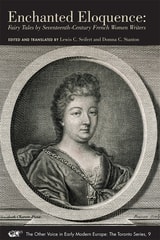
Enchanted Eloquence
Fairy Tales by Seventeenth–Century French Women WritersEdited and Translated by Lewis C. Seifert and Domna C. Stanton
Iter Press, 2010
—Jack Zipes
Professor of German, Emeritus, University of Minnesota
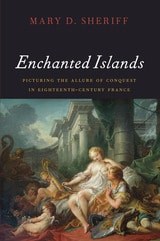
Enchanted Islands
Picturing the Allure of Conquest in Eighteenth-Century FranceMary D. Sheriff
University of Chicago Press, 2018

Encounter with Zen
writings on poetry and ZenLucien. Stryk
Ohio University Press, 1981
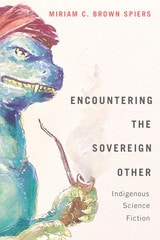
Encountering the Sovereign Other
Indigenous Science FictionMiriam C. Brown Spiers
Michigan State University Press, 2021
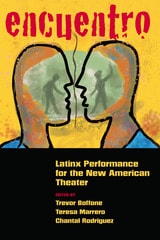
Encuentro
Latinx Performance for the New American TheaterEdited by Trevor Boffone, Teresa Marrero, and Chantal Rodriguez
Northwestern University Press, 2019
Playwrights Ruben C. Gonzalez, José Torres-Tama, Rickerby Hinds, Mariana Carreño King, Javier Antonio González, and Evelina Fernández exhibit a wide range of aesthetic approaches, dramatic structures, and themes, ranging from marriage, gentrification, racial and gendered violence, migration, and the ever-present politics of the U.S.–Mexico border. There is power in the communal experience of creating, witnessing, and participating in theater festivals. This anthology is a testament to that power and seeks to document the historic festival as well as to make these works available to a wider audience.
Encuentro: Latinx Performance for the New American Theater addresses interests of general audiences committed to the performing arts; scholars and students of Latinx, gender, and ethnic studies; university, college, and high school theater programs; and regional theaters looking to diversify their programming.
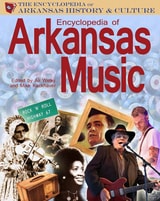
Encyclopedia of Arkansas Music
Ali Welky
Butler Center for Arkansas Studies, 2013
What do a rockabilly musician turned cinematic swamp monster, a composer of player-piano music, an avant-garde cellist, a musical instrument that lent its name to a weapon, a rock musician turned Catholic monk, some of the best audio speakers in the world, and the creator of Schoolhouse Rock! have in common? That’s right–they all come from Arkansas.
Encyclopedia of Arkansas Music is a special project of the Encyclopedia of Arkansas History & Culture (EOA), an online encyclopedia launched in 2006 by the Butler Center for Arkansas Studies at the Central Arkansas Library System.
This colorful, photo-filled reference work spanning all aspects of Arkansas’s musical past and present includes more than 150 entries on musicians, ensembles, musical works, and events.
Endquote
Sots-Art Literature and Soviet Grand StyleMarina Balina, Nancy Condee, and Evgeny Dobrenko
Northwestern University Press, 1999
Enduring Legacy
Rhetoric and Ritual of the Lost CauseW. Stuart. Towns
University of Alabama Press, 2013
Explores the crucial role of rhetoric and oratory in creating and propagating a “Lost Cause” public memory of the American South
Enduring Legacy explores the vital place of ceremonial oratory in the oral tradition in the South and analyses how rituals such as Confederate Memorial Day, Confederate veteran reunions, and dedication of Confederate monuments have contributed to creating and sustaining a Lost Cause paradigm for Southern identity. Towns studies in detail secessionist and Civil War speeches and how they laid the groundwork for future generations, including Southern responses to the civil rights movement, and beyond.
The Lost Cause orators that came after the Civil War, Towns argues, helped to shape a lasting mythology of the brave Confederate martyr, and the Southern positions for why the Confederacy lost and who was to blame. Innumerable words were spent—in commemorative speeches, newspaper editorials, and statehouse oratory—condemning the evils of Reconstruction, redemption, reconciliation, and the new and future South. Towns concludes with an analysis of how Lost Cause myths still influence Southern and national perceptions of the region today, as evidenced in debates over the continued deployment of the Confederate flag and the popularity of Civil War reenactments.
Enemies of All Humankind
Fictions of Legitimate ViolenceSonja Schillings
Dartmouth College Press, 2016
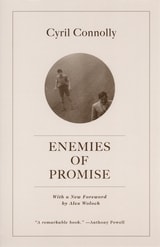
Enemies of Promise
Cyril Connolly
University of Chicago Press, 2008
“Whom the gods wish to destroy,” writes Cyril Connolly, “they first call promising.” First published in 1938 and long out of print, Enemies of Promise, an “inquiry into the problem of how to write a book that lasts ten years,” tests the boundaries of criticism, journalism, and autobiography with the blistering prose that became Connolly’s trademark. Connolly here confronts the evils of domesticity, politics, drink, and advertising as well as novelists such as Joyce, Proust, Hemingway, and Faulkner in essays that remain fresh and penetrating to this day.
“A fine critic, compulsive traveler, and candid autobiographer. . . . [Connolly] lays down the law for all writers who wanted to count. . . . He had imagination and decisive images flashed with the speed of wit in his mind.”—V. S. Pritchett, New York Review of Books
“Anyone who writes, or wants to write, will find something on just about every single page that either endorses a long-held prejudice or outrages, and that makes it a pretty compelling read. . . . You end up muttering back at just about every ornately constructed pensée that Connolly utters, but that’s one of the joys of this book.”—Nick Hornby, The Believer
“A remarkable book.”—Anthony Powell
Enemies of the People
The Destruction of Soviet Literary, Theater, and FKatherine Bliss Eaton
Northwestern University Press, 2002
Enemy Within
Culture Wars and Political Identity in Novels of the French Third RepublicGilbert D. Chaitin
The Ohio State University Press, 2008
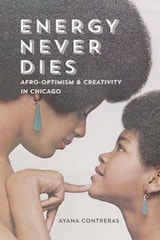
Energy Never Dies
Afro-Optimism and Creativity in ChicagoAyana Contreras
University of Illinois Press, 2021
Passionate and enlightening, Energy Never Dies uses the power of storytelling to show how optimism and courage fuel the dreams of Black Chicago.
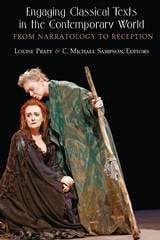
Engaging Classical Texts in the Contemporary World
From Narratology to ReceptionLouise Pratt and C. Michael Sampson, Editors
University of Michigan Press, 2018
This volume considers perennial favorites of classical literature—the Iliad and Odyssey, Greek tragedy, Roman comedy, the Argonautica, and Ovid’s Metamorphoses—and their influence on popular entertainment from Shakespeare’s plays to Hollywood’s toga films. It also engages with unusual and intriguing texts across the centuries, including a curious group of epigrams by Artemidorus found on the island sanctuary of Thera, mysterious fragments of two Aeschylean tragedies, and modern-day North African novels. These essays engage an array of theoretical approaches from other fields—narratology, cognitive literary theory, feminist theory, New Historicist approaches to gender and sexuality, and politeness theory—without forsaking more traditional philological methods. A new look at hospitality in the Argonautica shows its roots in the changed historical circumstances of the Hellenistic world. The doubleness of Helen and her phantom in Euripides’ Helen is even more complex than previously noted. Particularly illuminating is the recurrent application of reception studies, yielding new takes on the ancient reception of Homer by Apollonius and of Aeschylus by Macrobius, the reception of Plautus by Shakespeare, and more contemporary examples from the worlds of cinema and literature.
Students and scholars of classics will find much in these new interpretations and approaches to familiar texts that will expand their intellectual horizons. Specialists in other fields, particularly English, comparative literature, film studies, and gender and sexuality studies, will also find these essays directly relevant to their work.
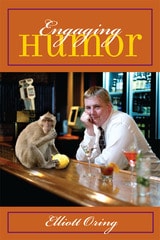
Engaging Humor
Elliott Oring
University of Illinois Press, 2002
Exploring the structure, motives, and meanings of humor in everyday life
In Engaging Humor, Elliott Oring asks essential questions concerning humorous expression in contemporary society, examining how humor works, why it is employed, and what its messages might be. This provocative book is filled with examples of jokes and riddles that reveal humor to be a meaningful--even significant--form of expression.Oring scrutinizes classic Jewish jokes, frontier humor, racist cartoons, blonde jokes, and Internet humor. He provides alternate ways of thinking about humorous expressions by examining their contexts--not just their contents. He also shows how the incongruity and absurdity essential to the production of laughter can serve serious communicative ends.
Engaging Humor examines the thoughts that underlie jokes, the question of racist motivation in ethnic humor, and the use of humor as a commentary on social interaction. The book also explores the relationship between humor and sentimentality and the role of humor in forging national identity. Engaging Humor demonstrates that when analyzed contextually and comparatively, humorous expressions emerge as communications that are startling, intriguing, and profound.
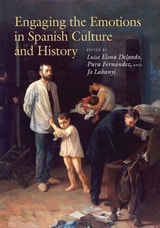
Engaging the Emotions in Spanish Culture and History
Luisa Elena Delgado
Vanderbilt University Press, 2016
The collection ranges across topics such as eighteenth-century sensibility, nineteenth-century concerns with the transmission of emotions, early twentieth-century cinematic affect, and the contemporary mobilization of political emotions including those regarding nonstate national identities. The complexities and effects of emotions are explored in a variety of forms—political rhetoric, literature, personal letters, medical writing, cinema, graphic art, soap opera, journalism, popular music, digital media—with attention paid to broader European and transatlantic implications.

Engendering Song
Singing and Subjectivity at Prespa Albanian WeddingsJane C. Sugarman
University of Chicago Press, 1997
Combining photographs, song texts, and vibrant recordings of the music with her own evocative descriptions, ethnomusicologist Jane C. Sugarman focuses her account of Prespa weddings on notions of gendered identity, demonstrating the capacity of singing to generate and transform relations of power within Prespa society. Engendering Song is an innovative theoretical work, with a scholarly importance extending far beyond southeast European studies. It offers unique and timely contributions to the analysis of music and gender, music in diaspora cultures, and the social constitution of self and subjectivity.
England in 1819
The Politics of Literary Culture and the Case of Romantic HistoricismJames Chandler
University of Chicago Press, 1998
"1819? At first sight, it might not seem a 'hot date'; but as James Chandler argues in his powerful book, it would be a mistake to overlook a year of such exceptional political conflagration and literary pyrotechnics in British history. Chandler's study is a wide-ranging, enormously ambitious, densely packed, closely argued work."—John Brewer, New Republic
"The book's largest argument, and the source of its considerable revelations, is that late twentieth-century practices of cultural history-writing have their roots in the peculiar Romantic historicism born in post-Waterloo Britain."—Jon Klancher, Times Literary Supplement
"A monumental work of scholarship."—Terry Eagleton, The Independent
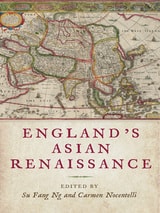
England's Asian Renaissance
Su Fang Ng
University of Delaware Press, 2022
Published by the University of Delaware Press. Distributed worldwide by Rutgers University Press.
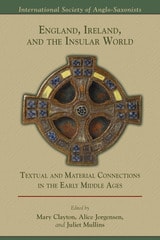
England, Ireland, and the Insular World
Textual and Material Connections in the Early Middle AgesMary Clayton
Arizona Center for Medieval and Renaissance Studies, 2017
ISAS Dublin 2013. England, Ireland and the Insular World: Textual and Material Connections in the Early Middle Ages is a collection of twelve essays related to the theme of the 2013 conference of the International Society of Anglo-Saxonists, ‘Insular Cultures’. Contributors cover a broad range of topics, from early medieval agriculture in Ireland and England, to sculpture, manuscript illumination and script, homilies, hagiography, aristocratic gift-giving, relics, calendars, Beowulf, and Anglo-Saxon perceptions of the Celtic peoples, considering connections, parallels and differences between Anglo-Saxon England and its insular neighbors. The volume will be of interest to all those working on Early Medieval history, literature, archaeology, liturgy, art, and manuscripts.
English Language Criticism on the Foreign Novel, 1965–1975
1965-1975Harriet Semmes Alexander
Ohio University Press, 1989
Critical interest in foreign novels, especially the Latin American and African novel, has burgeoned in the past two decades. The purpose of this reference bibliography is to provide easier access to the criticism produced from 1965 to 1975 on novels published in Africa, Latin America, Europe, Asia, Canada, Australia, and the middle East. A second volume will cover criticism between 1976 and 1985.
Throughout this work, the term “foreign novel” includes novels and other longer works of fiction produced in all countries other than the United States and the United Kingdom. Coverage ranges in time of writing from Apuleius’ Metamorphosis (first century, A.D.) and Murasaki’s Tale of Genji (11th century) to Garcia Marquez’s 100 Years of Solitude (1967) and Margaret Atwood’s Surfacing (1972). The 277 journals—chosen primarily because of their wide circulation—and 584 books indexed for relevant material contribute to the 13,000 bibliographic citations on 1,500 authors. This is a reference tool which is surely essential for any library or world literature scholar.
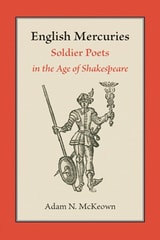
English Mercuries
Soldier Poets in the Age of ShakespeareAdam N. McKeown
Vanderbilt University Press, 2009
These misgivings are a powerful undercurrent in much of the literature of the period, even the most ostensibly patriotic works, but it is in the writings on war by soldier poets where they are most clearly pronounced. Fashioning themselves as servants of both Mars and Mercury (the god of war and the god of writing), Elizabethan soldier poets focused their war stories on the gritty realities of military campaigning, the price individuals paid for serving the state, and the difficulties of returning to civilian life. The book reconsiders some familiar writers like John Donne and Ben Jonson in the context of their military experiences and provides comprehensive studies of some important but underappreciated soldier poets like Thomas Churchyard, George Gascoigne, and John Harington.
English Pastoral Music
From Arcadia to Utopia, 1900-1955Eric Saylor
University of Illinois Press, 2017
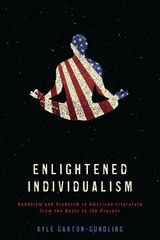
Enlightened Individualism
Buddhism and Hinduism in American Literature from the Beats to the PresentKyle Garton-Gundling
The Ohio State University Press, 2019
This “enlightened individualism” uses Buddhist and Hindu philosophy to reframe American freedom in terms of spiritual liberation, and it also reinterprets Asian teachings through Western traditions of political activism and countercultural provocation. Garton-Gundling argues that even though works by Kerouac, Walker, Kingston, and others wrestle with issues of exoticism and appropriation, their characters are also meaningfully challenged and changed by Asian faiths. These literary adaptations, then, can help Americans reenvision individualism in a more transcendent and cosmopolitan context.
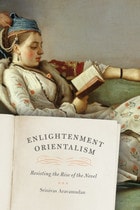
Enlightenment Orientalism
Resisting the Rise of the NovelSrinivas Aravamudan
University of Chicago Press, 2011
Srinivas Aravamudan here reveals how Oriental tales, pseudo-ethnographies, sexual fantasies, and political satires took Europe by storm during the eighteenth century. Naming this body of fiction Enlightenment Orientalism, he poses a range of urgent questions that uncovers the interdependence of Oriental tales and domestic fiction, thereby challenging standard scholarly narratives about the rise of the novel.
Enlistment
Lists in Medieval and Early Modern LiteratureEdited by Eva von Contzen and James Simpson
The Ohio State University Press, 2022
Contributors: Suzanne Conklin Akbari, Ingo Berensmeyer, Eva von Contzen, Alex Davis, Andrew James Johnston, Wolfram R. Keller, Alexis Kellner Becker, Kathryn Mogk Wagner, Martha Rust, James Simpson

Enraptured Space
Gender, Class, and Ecology in the Work of Paula MeehanKathryn J. Kirkpatrick
West Virginia University Press, 2025
In Paula Meehan, Kirkpatrick has found a powerful poet to both study and love, and her reading of Meehan’s poetry and prose through the lenses of gender studies, the environmental humanities, and social class offers a passionate endorsement of Meehan’s radical interventions in the canon of Irish poetry. This work explores eight volumes of Meehan’s poetry, including Dharmakaya, Painting Rain, and Geomantic.
Entertaining History
The Civil War in Literature, Film, and SongEdited by Chris Mackowski
Southern Illinois University Press, 2020
From Ulysses S. Grant’s Memoirs to Abraham Lincoln: Vampire Hunter, from Roots to Ken Burns’s The Civil War, from “Dixie” to “Ashokan Farewell,” and from Civil War photography to the Gettysburg Cyclorama, trendy and well-loved depictions of the Civil War are the subjects of twenty contributors who tell how they and the general public have been influenced by them. Sarah Kay Bierle examines the eternal appeal of Gone with the Wind and asks how it is that a protagonist who so opposed the war has become such a figurehead for it. H. R. Gordon talks with New York Times–bestselling novelist Jeff Shaara to discuss the power of storytelling. Paul Ashdown explores ColdMountain’s value as a portrait of the war as national upheaval, and Kevin Pawlak traces a shift in cinema’s depiction of slavery epitomized by 12 Years a Slave. Tony Horwitz revisits his iconic Confederates in the Attic twenty years later.
The contributors’ fresh analysis articulates a shared passion for history’s representation in the popular media. The variety of voices and topics in this collection coalesces into a fascinating discussion of some of the most popular texts in the genres. In keeping with the innovative nature of this series, web-exclusive material extends the conversation beyond the book.
Entertaining the Nation
American Drama in the Eighteenth and Nineteenth CenturiesTice L. Miller
Southern Illinois University Press, 2007
In this survey of eighteenth- and nineteenth-century American drama, Tice L. Miller examines American plays written before a canon was established in American dramatic literature and provides analyses central to the culture that produced them. Entertaining the Nation: American Drama in the Eighteenth and Nineteenth Centuries evaluates plays in the early years of the republic, reveals shifts in taste from the classical to the contemporary in the 1840s and 1850s, and considers the increasing influence of realism at the end of the nineteenth century.
Miller explores the relationship between American drama and societal issues during this period. While never completely shedding its English roots, says Miller, the American drama addressed issues important on this side of the Atlantic such as egalitarianism, republicanism, immigration, slavery, the West, Wall Street, and the Civil War.
In considering the theme of egalitarianism, the volume notes Alexis de Tocqueville’s observation in 1831 that equality was more important to Americans than liberty. Also addressed is the Yankee character, which became a staple in American comedy for much of the nineteenth century.
Miller analyzes several English plays and notes how David Garrick’s reforms in London were carried over to the colonies. Garrick faced an increasingly middle-class public, offers Miller, and had to make adjustments to plays and to his repertory to draw an audience.
The volumealso looks at the shift in drama that paralleled the one in political power from the aristocrats who founded the nation to Jacksonian democrats. Miller traces how the proliferation of newspapers developed a demand for plays that reflected contemporary society and details how playwrights scrambled to put those symbols of the outside world on stage to appeal to the public. Steamships and trains, slavery and adaptations of Uncle Tom’s Cabin, and French influences are presented as popular subjects during that time.
Entertaining the Nation effectively outlines the civilizing force of drama in the establishment and development of the nation, ameliorating differences among the various theatergoing classes, and provides a microcosm of the changes on and off the stage in America during these two centuries.
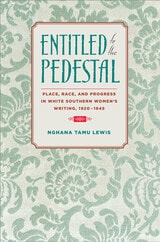
Entitled to the Pedestal
Place, Race, and Progress in White Southern Women’s Writing, 1920–1945Nghana tamu Lewis
University of Iowa Press, 2007
In this searching study, Nghana Lewis offers a close reading of the works and private correspondences, essays, and lectures of five southern white women writers: Julia Peterkin, Gwen Bristow, Caroline Gordon, Willa Cather, and Lillian Smith. At the core of this work is a sophisticated reexamination of the myth of southern white womanhood.
Lewis overturns the conventional argument that white women were passive and pedestal-bound. Instead, she argues that these figures were complicit in the day-to-day dynamics of power and authorship and stood to gain much from these arrangements at the expense of others.
At the same time that her examination of southern mythology explodes received wisdom, it is also a journey of self-discovery. As Lewis writes in her preface, “As a proud daughter of the South, I have always been acutely aware of the region’s rich cultural heritage, folks, and foodstuffs. How could I not be? I was born and reared in Lafayette, Louisiana, where an infant’s first words are not ‘da-da’ and ‘ma-ma’ but ‘crawfish boil’ and ‘fais-do-do.’ . . . I have also always been keenly familiar with its volatile history.” Where these conflicting images—and specifically the role of white southern women as catalysts, vindicators, abettors, and antagonists—meet forms the crux of this study. As such, this study of the South by a daughter of the South offers a distinctive perspective that illuminates the texts in novel and provocative ways.
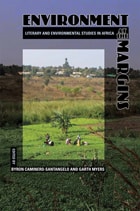
Environment at the Margins
Literary and Environmental Studies in AfricaByron Caminero-Santangelo
Ohio University Press, 2011
Environment at the Margins brings literary and environmental studies into a robust interdisciplinary dialogue, challenging dominant ideas about nature, conservation, and development in Africa and exploring alternative narratives offered by writers and environmental thinkers. The essays bring together scholarship in geography, anthropology, and environmental history with the study of African and colonial literatures and with literary modes of analysis. Contributors analyze writings by colonial administrators and literary authors, as well as by such prominent African activists and writers as Ngugi wa Thiong’o, Mia Couto, Nadine Gordimer, Wangari Maathai, J. M. Coetzee, Zakes Mda, and Ben Okri. These postcolonial ecocritical readings focus on dialogue not only among disciplines but also among different visions of African environments. In the process, Environment at the Margins posits the possibility of an ecocriticism that will challenge and move beyond marginalizing, limiting visions of an imaginary Africa.
Contributors:
Jane Carruthers
Mara Goldman
Amanda Hammar
Jonathan Highfield
David McDermott Hughes
Roderick P. Neumann
Rob Nixon
Anthony Vital
Laura Wright
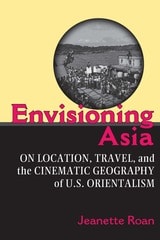
Envisioning Asia
On Location, Travel, and the Cinematic Geography of U.S. OrientalismJeanette Roan
University of Michigan Press, 2010
"Whereas some other scholars read selected films mainly to illustrate political arguments, Roan never loses sight of the particularities of film as a distinctive cultural form and practice. Her drive to see 'cinema as a mechanism of American orientalism' results in not just a textual analysis of these films, but also a history of their material production and distribution."
---Josephine Lee, University of Minnesota
"Envisioning Asia offers an exciting new contribution to our understandings of the historical developments of American Orientalism. Jeannette Roan deftly situates changing cinematic technologies within the context of U.S. imperial agendas in this richly nuanced analysis of 'shooting on location' in Asia in early 20th century American cinema."
---Wendy Kozol, Oberlin College
"Through her vivid illustration of the role of American cinema in the material, visual, and ideological production of Asia, Jeanette Roan takes the reader on a journey to Asia through a very different route from the virtual travel taken by the viewers of the films she discusses."
---Mari Yoshihara, University of Hawai'i at Manoa
The birth of cinema coincides with the beginnings of U.S. expansion overseas, and the classic Hollywood era coincides with the rise of the United States as a global superpower. In Envisioning Asia, Jeanette Roan argues that throughout this period, the cinema's function as a form of virtual travel, coupled with its purported "authenticity," served to advance America's shifting interests in Asia. Its ability to fulfill this imperial role depended, however, not only on the cinematic representations themselves but on the marketing of the films' production histories---and, in particular, their use of Asian locations. Roan demonstrates this point in relation to a wide range of productions, offering an engaging and useful survey of a largely neglected body of film. Not only that, by focusing on the material practices involved in shooting films on location---that is, the actual travels, negotiations, and labor of making a film---she moves beyond formal analysis to produce a richly detailed history of American interests, attitudes, and cultural practices during the first half of the twentieth century.
Jeanette Roan is Adjunct Professor of Visual Studies at California College of the Arts and author of "Exotic Explorations: Travels to Asia and the Pacific in Early Cinema" in Re/collecting Early Asian America: Essays in Cultural History (2002).
Cover art: Publicity still, Tokyo File 212 (Dorrell McGowan and Stuart McGowan, 1951). The accompanying text reads: "Hundreds of spectators gather on the sidelines as technicians prepare to photograph a parade scene in 'Tokyo File 212,' a Breakston-McGowan Production filmed in Japan for RKO Radio distribution." Courtesy of the Academy of Motion Picture Arts and Sciences.
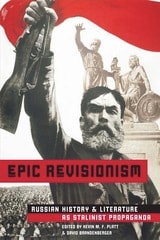
Epic Revisionism
Russian History and Literature as Stalinist PropagandaEdited by Kevin M. F. Platt and David Brandenberger
University of Wisconsin Press, 2006
Focusing on a number of historical and literary personalities who were regarded with disdain in the aftermath of the 1917 revolution—figures such as Peter the Great, Ivan the Terrible, Alexander Pushkin, Leo Tolstoy, and Mikhail Lermontov—Epic Revisionism tells the fascinating story of these individuals’ return to canonical status during the darkest days of the Stalin era.
An inherently interdisciplinary project, Epic Revisionism features pieces on literary and cultural history, film, opera, and theater. This volume pairs scholarly essays with selections drawn from Stalin-era primary sources—newspaper articles, unpublished archival documents, short stories—to provide students and specialists with the richest possible understanding of this understudied phenomenon in modern Russian history.“These scholars shed a great deal of light not only on Stalinist culture but on the politics of cultural production under the Soviet system.”—David L. Hoffmann, Slavic Review