Results by title
3785 books match the query 'Poetry' and 103 start with e
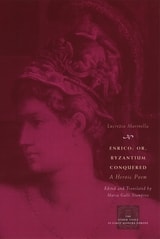
Enrico; or, Byzantium Conquered
A Heroic PoemLucrezia Marinella
University of Chicago Press, 2009
Lucrezia Marinella (1571–1653) is, by all accounts, a phenomenon in early modernity: a woman who wrote and published in many genres, whose fame shone brightly within and outside her native Venice, and whose voice is simultaneously original and reflective of her time and culture. In Enrico; or, Byzantium Conquered, one of the most ambitious and rewarding of her numerous narrative works, Marinella demonstrates her skill as an epic poet.
Now available for the first time in English translation, Enrico retells the story of the conquest of Byzantium in the Fourth Crusade (1202–04). Marinella intersperses historical events in her account of the invasion with numerous invented episodes, drawing on the rich imaginative legacy of the chivalric romance. Fast-moving, colorful, and narrated with the zest that characterizes Marinella’s other works, this poem is a great example of a woman engaging critically with a quintessentially masculine form and subject matter, writing in a genre in which the work of women poets was typically shunned.
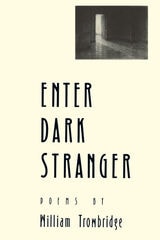
Enter Dark Stranger
PoemsWilliam Trowbridge
University of Arkansas Press, 1989
The world of William Trowbridge is one preoccupied with loss, with the fall from some possibility of grace that all who are born must bear. In the title poem of Trowbridge’s first full-length collection the poet calls our attention to movies, to Shane in particular. He asks us to identify, not with Shane, the lonely knight on a nameless quest, but with the much more lonely, and real, Jack Palance, the Prince of Darkness.
Trowbridge favors the villain, the outcast, the imperfect, the sinner, the alienated: King Kong, the Frog Prince, Frankenstein’s monster.
Enter These Gates
Meditations for the Days of AweAlden Solovy
Central Conference of American Rabbis, 2024
FINALIST: NEXT GENERATION INDIE BOOK AWARDS (Spirituality category)
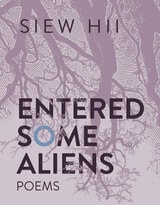
Entered Some Aliens
Siew Hii
University of Wisconsin Press, 2026
“There is no version of this wherein I am given the time machine and do not destroy it,” writes Siew Hii in this wide-ranging collection that offers a poet’s perspective on what it means to be a queer Asian American in the American South. Exuding wit and profound insight, Hii’s is a voice that can elicit both laughter and sober reflection within the space of a few lines. In an explosion of different styles and formats, she delivers precise, cutting observations about self, family, and strangers.
From taking aim at Hollywood’s representations of identity, to exploring the meaning and dynamics of family, to describing her adopted home of Florida through a set of formally explosive poems, Hii makes sense of an unjust and absurd world, all the while exhibiting genuine curiosity and humor. Entered Some Aliens offers rare and powerful insight into feeling out of place and out of time.

Entwined
Three Lyric SequencesCarol Frost
Tupelo Press, 2014
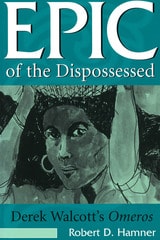
Epic of the Dispossessed
Derek Walcott's OmerosRobert D. Hamner
University of Missouri Press, 1997
In Epic of the Dispossessed, Robert D. Hamner offers an insightful, well-researched analysis of Omeros, the masterful epic poem by 1992 Nobel Laureate Derek Walcott. Rich and various, Omeros is an innovative extension of the epic tradition. Despite Walcott's insistence that he violates the formulaþhe notes his autobiographical presence in the poem and the absence of classical heroic figures and epic battlesþthe poem incorporates fragments of all the definitive characteristics of the genre. Hamner establishes that through its self-reflexive textuality, Omeros complements the time-honored tradition of the epic by giving voice to the marginalized peoples of the New World.
Hamner briefly explains his perception of the epic tradition and its viability in contemporary literature. He examines Walcott's writing career and traces his development of devices, themes, techniques, and a narrative style essential to epic poetry. Although Walcott could not have fully anticipated Omeros, a retrospective view of his writing reveals the consistent accumulation of the skills and broad scope required for such an undertaking. Hamner attempts also to show that Walcott has incorporated into his personal style not only the more obvious aspects of his formal education but also uniquely West Indian cultural material and forms of expression.
Hamner describes Omeros as an epic of the dispossessed because each of its protagonists is a castaway in one sense or another. Regardless of whether their ancestry is traced to the classical Mediterranean, Europe, Africa, or confined to the Americas, they are transplanted individuals whose separate quests all center on the fundamental human need to strike roots in a place where one belongs.
Walcott's vivid, lyrical verse is visually compelling and aurally appealing. He is, however, a richly complex, allusive writer dealing with a wide range of profound human problems. Given the exciting climate of postcolonial and postmodern criticism, Walcott offers students and scholars unparalleled opportunities for challenging, creatively interpretive insights. Epic of the Dispossessed will be a valuable companion to the work that may prove to be Walcott's crowning achievement. The fresh and original Omeros stands on its own merits; nevertheless, it deserves to be examined in light of both Western tradition and its Caribbean context.
Epistle, Osprey
Geri Doran
Tupelo Press, 2019

Erase Genesis
Rebecca Gayle Howell
Bridwell Press, 2025
In Erase Genesis, critically-acclaimed Kentucky poet and translator Rebecca Gayle Howell transforms the KJV creation story for the climate change age. Devoted to the same three chapters, Howell’s erasures raise a new myth—a story of the Earth’s intimacy with us. Here, man is not given dominion. Instead, the trees and the waters keep eternity, and the Lord Woman seeds tenderness as the only way forward.
A book-length poem with its roots in art, ecopoetry, progressive spirituality, and literary translation—Erase Genesis dismantles centuries of hurt as we bare our beginning anew, in abundance with Earth’s divine call:
“Be light and / let be”
Erasurism
Louis Armand and Michel Delville
Bridwell Press, 2026
Erasurism traces how erasure shapes art and thought across history, exposing the political and poetic forces behind creative acts. The book explores erasure as a radical aesthetic and philosophical force shaping avant-garde, modernist, and postmodern practices across literature, art, media, and theory. From ancient cave marks to biopoetry, the volume traces a history of erasure that challenges authorship, ideology, and representation—uncovering the hidden politics and poetics beneath every act of writing.
Erou
Maya Phillips
Four Way Books, 2019
Errata
Lisa Fay Coutley
Southern Illinois University Press, 2016
Finalist, INDIEFAB Book of the Year
Lisa Fay Coutley’s lyrical debut collection, Errata, investigates the delicate balance between parent and child, love and loss, hope and grief. Errata’s narrator reflects on struggles and fears that span generations in compositions that are at once musical and bleak. Coutley’s narrative journey is often a dark one, exploring not only the loss of loved ones but also the potential to lose one’s very self. The collection unravels the lingering consequences of abuse and addiction, yet threads of hope and determination weave a finely wrought path through the dark side of human relationships, illuminating the power of the will to survive. Coutley’s sharp yet tender collection will both haunt readers and move them to reflect, to remember, and most of all, to persevere.
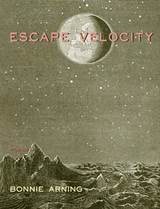
Escape Velocity
Bonnie Arning
University Press of Colorado, 2017
From the moment of a marriage’s heated inception to its period of luminous crowding and onward into distance and darkness, Bonnie Arning’s Escape Velocity asks if it’s possible to exist outside the only universe we’ve ever known. In modes both lyric and narrative, we are given a peephole into the height and decline of a marriage that begins beneath the moving lights of Las Vegas, Nevada, and traverses the devastating terrain of gambling, miscarriage, infidelity, and violence.
Arning gives voice to divergent aspects of love and violence through her use of math problems, erasures, dictionary entries, structured stanzas, and sprawling free verse. This multiplicity of forms comes together to explore everything from pop culture references of domestic violence to cultural notions of victims and victimhood. However dark, collectively these poems tell a love story—an acceptance of our capability to love those who hurt us, but also the love-of-self required to slowly and steadily reach "the velocity to be everleaving."
In the tradition of Eavan Boland and Louise Glück, Arning wrestles down and examines the terrible without flinching. We journey with her, engrossed by each difficult truth: a precipice near which we are both terrified to stand and transfixed by its unnerving insistence on beauty.
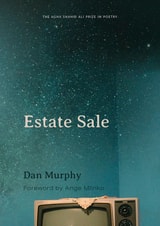
Estate Sale
Dan Murphy
University of Utah Press, 2025
In a house full of stanzas found in Estate Sale, Dan Murphy opens the door on the objects of his life: accumulated experience and imagination, trauma, personal and political history, inheritances that subtly unearth the forces of the world. Loss becomes a possession, language an act of reclamation, and form appears as the wearing of a dead man’s clothes. One poem reminds us “that things exist, even when out of sight.” In these poems, meaning is found, then, in the search for meaning, refuge in the search for refuge.
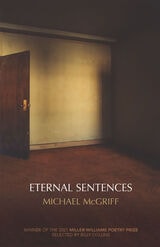
Eternal Sentences
Michael McGriff
University of Arkansas Press, 2021
Winner, 2021 Miller Williams Poetry Prize
Michael McGriff’s Eternal Sentences bears witness to the world of gravel roads, working-class families, and geographic isolation in poems that illuminate both common occurrence and the territories of the surreal. Here, in rendering every line as a single sentence, McGriff depicts a world seen through fragments, quick leaps, and wild associations. Haunted as much by place and people as by the possibilities of image-making itself, Eternal Sentences is a song for the hidden depots of rural America.
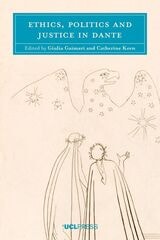
Ethics, Politics and Justice in Dante
Edited by Giulia Gaimari and Catherine Keen
University College London, 2019
Bringing together an international and interdisciplinary group of contributors, ranging across history, philology, classical studies, philosophy, and theology, Ethics, Politics and Justice in Dante presents new research on ethics, politics, and justice in the works of Dante Alighieri, including chapters on Dante’s conception of the afterlife. Contributors scrutinize the Divine Comedy and Dante’s other works in Italian and Latin, showing the evolution of his thought throughout his writing career, with chapters focusing especially on his early philosophical Convivio and on the two “Eclogues” of his final years. Other chapters tackle themes relating to judgment, justice, rhetoric, and literary ethics in the Divine Comedy, as well as the differing public reception and use of Dante’s work in Italy and Britain.
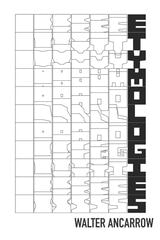
Etymologies
Walter Ancarrow
Omnidawn, 2023
Walter Ancarrow’s collection Etymologies considers language as a process, rather than as a singular fixed history. These poems build imaginative worlds with a variety of creative word uses. They form a playful amalgamation of linguistic interpretations that flips and questions conventional narratives about word origins—including the idea that clear origins even exist. Throughout the collection, Ancarrow questions the intent of writers who use etymology in attempts to prove a specific meaning for any word. In so doing, Etymologies pays particular attention to relationships between the cultures and conflicts, the migrations and hegemonies, that create our words, and it considers how their meanings are furthered by us as we keep them alive through speech.
Etymologies won Omnidawn’s 2021 Open Poetry Book Prize, selected by John Yau.
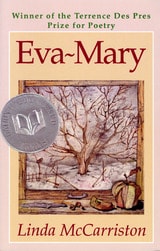
Eva-Mary
Linda McCarriston
Northwestern University Press, 1994
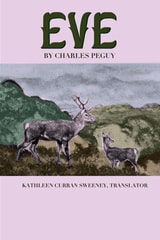
Eve
Charles Peguy
St. Augustine's Press, 2024
Kathleen Curran Sweeney provides the English reader with a much needed translation of Peguy's long poem, Eve, first published in 1914. Considering Peguy's length and depth in Eve and its syllabic poetic meter, this is not an easy undertaking. Yet Sweeney manages to convey an authentic Peguy in English and at last provides access to Christ's discourse with Eve, an epic encounter that conveys literary genius enthralled with memory, charity, and the transformation of this contemplation in light of the theological perspective of the Incarnation and the redemption of man by God.
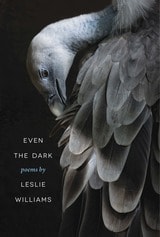
Even the Dark
Leslie Williams
Southern Illinois University Press, 2019
Through restless questioning, the speaker finds a balm for suffering in the divine beauty and mystery of the natural world. Seven prose poems woven into the collection deal with different aspects of a young girl’s life-threatening illness. Five additional poems wrestle with the grief of suicide and the emptiness afflicting those left behind. Other poems in the collection reflect on how to approach daily life while coping with heartbreak and express wonder about our responsibilities in a variety of roles: as parents, as neighbors, as an imagined anchoress, as children of God.
The language remains beautiful and precise throughout, whether the speaker lies “in a gully cracked / with stars” or tells herself, “It’s a handmade raft I live on.” The speaker entreats, as in Psalm 27, “teach me how to live.” Dwelling attentively in the abundance and mystery of creation, the book aims to offer a comfort and peace that might “even the dark.”
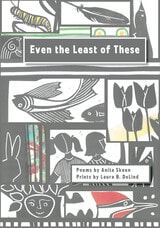
Even the Least of These
Anita Skeen
Michigan State University Press, 2024
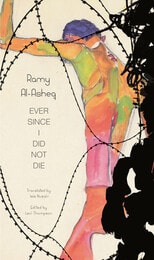
Ever Since I Did Not Die
Ramy Al-Asheq
Seagull Books, 2021
The texts gathered in Ever Since I Did Not Die by Syrian-Palestinian poet Ramy Al-Asheq are a poignant record of a fateful journey. Having grown up in a refugee camp in Damascus, Al-Asheq was imprisoned and persecuted by the regime in 2011 during the Syrian Revolution. He was released from jail, only to be recaptured and imprisoned in Jordan. After escaping from prison, he spent two years in Jordan under a fake name and passport, during which he won a literary fellowship that allowed him to travel to Germany in 2014, where he now lives and writes in exile.
Through seventeen powerful testimonies, Ever Since I Did Not Die vividly depicts what it means to live through war. Exquisitely weaving the past with the present and fond memories with brutal realities, this volume celebrates resistance through words that refuse to surrender and continue to create beauty amidst destruction—one of the most potent ways to survive in the darkest of hours.
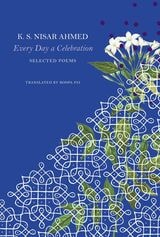
Every Day a Celebration
Selected PoemsK. S. Nisar Ahmed
Seagull Books, 2025
K. S. Nisar Ahmed captured the soul of Karnataka and the pulse of everyday life in verses that are as provocative as they are deeply lyrical. Every Day a Celebration gathers some of his finest poems, spanning over five decades, and introduces his voice to a wider audience through Roopa Pai’s sensitive translation. Steeped in both Romantic and Modernist traditions, his work fluidly interweaves Sanskrit and Urdu influences, blending intellectual rigor with heartfelt emotion.
Whether reflecting on the burdens of history or simply delighting in life’s fleeting joys, his words remain strikingly relevant across generations. With this landmark translation, English readers can now experience the brilliance of one of Kannada’s most beloved poets—a voice that continues to resonate with urgency and humanity.
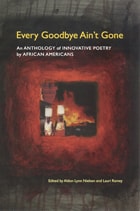
Every Goodbye Ain't Gone
An Anthology of Innovative Poetry by African AmericansEdited by Aldon Lynn Nielsen and Lauri Ramey
University of Alabama Press, 2006
Every Goodbye Ain’t Gone presents the groundbreaking work of many of these poets who carried on the innovative legacies of Melvin Tolson, Gwendolyn Brooks, and Robert Hayden. Whereas poetry by such key figures such as Amiri Baraka, Tolson, Jayne Cortez, Clarence Major, and June Jordan is represented, this anthology also elevates into view the work of less studied poets such as Russell Atkins, Jodi Braxton, David Henderson, Bob Kaufman, Stephen Jonas, and Elouise Loftin. Many of the poems collected in the volume are currently unavailable and some will appear in print here for the first time.
Coeditors Aldon Lynn Nielsen and Lauri Ramey provide a critical introduction that situates the poems historically and highlights the ways such poetry has been obscured from view by recent critical and academic practices. The result is a record of experimentation, instigation, and innovation that links contemporary African American poetry to its black modernist roots and extends the terms of modern poetics into the future.
Every Hour, Every Atom
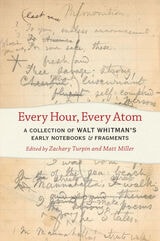
A Collection of Walt Whitman's Early Notebooks and FragmentsWalt Whitman, Zachary Turpin and Matt Miller
University of Iowa Press, 2020
Some of the dimmest years in Walt Whitman’s life precede the advent of Leaves of Grass in 1855, when he was working as a journalist and fiction writer. Starting around 1850, what he’d begun writing in his personal notebooks was far more enigmatic than anything he’d done before.
One of Whitman’s most secretive projects during this timeframe was a novel, Life and Adventures of Jack Engle; serialized anonymously in the spring of 1852, and rediscovered and properly published in 2017. The key to the novel’s later discovery were plot notes Whitman had made in one of his private notebooks.
Whitman’s invaluable notebooks have been virtually inaccessible to the public, until now. Maintaining the early notebooks’ wild, syncretic feel and sample illustrations of Whitman’s beautiful and unkempt pages, scholars Zachary Turpin and Matt Miller’s thorough transcriptions have made these notebooks available to all; sharing Whitman’s secret space for developing his poetry, his writing, his philosophy, and himself.
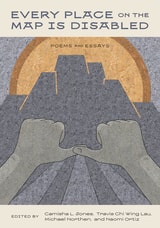
Every Place on the Map Is Disabled
Poems and EssaysCamisha L. Jones, Michael Northen, Naomi Ortiz, and Travis Chi Wing Lau
Northwestern University Press, 2026
An anthology of poems and essays by and celebrating Disabled writers
Declaring that Disabled people exist, innovate, thrive, and persevere, Every Place on the Map Is Disabled imagines the world we deserve. Its contributors spotlight the wisdom Disabled people embody from living within and navigating the economic and medical systems, communities, and families that often oppress their existence. This anthology is an intersectional compass pointing to the creative ways Disabled people build bridges to each other through Disability poetics and perspectives.
The contributing poets write about love, resistance, loss, pain, beauty, and culture. They capture tender and life-affirming moments where one Disabled person recognizes themself in another. The essays illustrate how Disability poetics suggest avenues for embracing the full spectrum of disability experiences. Every Place on the Map Is Disabled offers students, scholars, members of disability communities, and any reader a direction for paving a wider path toward a collective survival.
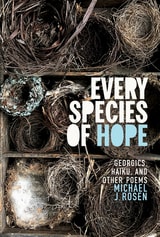
Every Species of Hope
Georgics, Haiku, and Other PoemsMichael J. Rosen
The Ohio State University Press, 2017
At the center of this book is a suite of poems inspired by Virgil’s Georgics, or “poems of pastoral instruction.” In Rosen’s case, he is more the student than the teacher. Likewise, five short sections of haiku continue his meditation on—or mediation of—art and nature. As he has written, “Haiku provides a brief and mirror-like calm in the choppy waters—in the undertow—of current events: a stillness in time where more than our singular lives can be reflected.”
Illustrated with two dozen pages from the author’s own journal, Every Species of Hope is the consummation of decades of observation, humility, and awe.
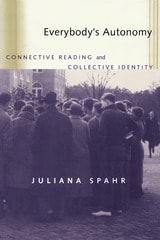
Everybody's Autonomy
Connective Reading and Collective IdentityJuliana Spahr
University of Alabama Press, 2001
Contemporary avant garde writing has often been overlooked by those who study literature and identity. Such writing has been perceived as unrelated, as disrespectful of subjectivity. But Everybody's Autonomy instead locates within avant garde literature models of identity that are communal, connective, and racially concerned. Everybody's Autonomy, as it tackles literary criticism's central question of what sort of selves do works create, looks at works that encourage connection, works that present and engage with large, public worlds that are in turn shared with readers. With this intent, it aligns the iconoclastic work of Gertrude Stein with foreign, immigrant Englishes and their accompanying subjectivities. It examines the critique of white individualism and privilege in the work of language writers Lyn Hejinian and Bruce Andrews. It looks at how Harryette Mullen mixes language writing's open text with the distinctivesness of African-American culture to propose a communal, yet still racially conscious identity. And it examines Theresa Hak Kyung Cha's use of broken English and French to unsettle readers' fluencies and assimilating comprehensions, to decolonize reading. Such works, the book argues, well represent and expand changing notions of the public, of everybody.
Everyone I Love, Alive
Jason Bayani
Omnidawn, 2025
With this collection of poems, Jason Bayani leans into traditions of lyric, song, and prayer to cultivate life while existing within a time of empire and societal collapse. Everyone I Love, Alive wrestles with form to summon both the living and the dead. Bayani’s rich language calls us to experience a connection to cultural heritage and, even during times of oppression, to find the compassion and awareness needed to drive change. These poems show how not only our love and desires—but also our rage and resistance—can be the very things that keep us alive.
Everything
Andrea Cohen
Four Way Books, 2021
Everything Broken Up Dances
James Byrne
Tupelo Press, 2015
Everything I Kept
Todo Lo Que GuardéRuth Behar
Swan Isle Press, 2018
Everything That Hurt Us Becomes a Ghost
PoemsSage Ravenwood
Gallaudet University Press, 2023
Everywoman Her Own Theology
On the Poetry of Alicia Suskin OstrikerMartha Nell Smith and Julie R. Enszer, Editors
University of Michigan Press, 2018
Everywoman Her Own Theology: On the Poetry of Alicia Suskin Ostriker engages Ostriker’s poetry from throughout her career, including her first volume Songs, her award-winning collection The Imaginary Lover, and her more recent work in the collections No Heaven, the volcano sequence, The Old Woman, the Tulip, and the Dog, and Waiting for the Light. Like her literary criticism and essays, Ostriker’s poetry explores themes of feminism, Jewish life, family, and social justice.
With insightful essays—some newly written for this collection—poets and literary critics including Toi Derricotte, Daisy Fried, Cynthia Hogue, Tony Hoagland, and Eleanor Wilner illuminate and open new pathways for critical engagement with Alicia Ostriker’s lifetime of poetic work.
Ex-Voto
Poems of Adélia PradoAdélia Prado
Tupelo Press, 2013
Exclusions
Noah Falck
Tupelo Press, 2020
Exile, Non-Belonging and Statelessness in Grangaud, Jabès, Lubin and Luca
No Man's LanguageGreg Kerr
University College London, 2021
Poetry has often been understood as a powerful vector of collective belonging. The idea that certain poets are emblematic of a national culture is one of the chief means by which literature historicizes itself, inscribes itself in a shared cultural past, and supplies modes of belonging to those who consume it. But, how does the exiled, migrant, or translingual poet complicate this narrative? For Armen Lubin, Ghérasim Luca, Edmond Jabès, and Michelle Grangaud, the practice of poetry is inseparable from a sense of restlessness or unease. Ranging across borders within and beyond the Francosphere—from Algeria, Armenia, Egypt, and Romania—this book shows how a poetic practice inflected by exile, statelessness, or non-belonging has the potential to disrupt long-held assumptions about the relation between subjects, the language they use, and the place from which they speak.
Exit Theater
Mike Lala
University Press of Colorado, 2016
Winner of the 2016 Colorado Prize for Poetry
Selected by Tyrone Williams for the 2016 Colorado Prize for Poetry, Exit Theater casts classical elegy, with dazzling formal innovation, into a staggering work of contemporary, political polyphony. Through monologues, performance scripts, and poems of exquisite prosody, Mike Lala examines the human figure—as subject and object, enemy and ally—in the context of a progressively defigured and hostile world. Catullus, Shakespeare, Cy Twombly, and Lydia Delectorskaya echo across engagements with Israeli generals, accused terrorists, State Department employees, nuclear scientists, Saturday Night Live actors, war criminals, malware, and a host of mythic, literary, and half-extant spectral characters. Amid the cacophony, Lala implicates every actor, including himself, in a web of shared culpability vis-à-vis consumerism, representation, speaking, writing, and making art against the backdrop of the endless, open wars of a post–Cold War, post-2001 era. Exit Theater is a debut of and against its time—a book about war, art, and what it means to make art in a time of war.
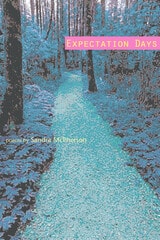
Expectation Days
Sandra McPherson
University of Illinois Press, 2007
From movie making to medical misadventures, meditations on widowhood to feminist protestations, Expectation Days is a dazzling portrayal of instances in Sandra McPherson’s life. Her autobiographical collection uses peculiar and exact language to reflect on a wide range of activities that include grouse hunting, going through airport security after 9/11, and climbing a coastal cliff. From being an unintended child to ceremonializing a lifetime “served,” McPherson speaks in both clear and distressing voices from the state of speechless fear that is bereavement.
Will the little figures ever reach the monument?
A doctor orders me to be on watch.
Will the mist pass over their cheeks
and clear the strollers’ eyes?
If so, I’ll see it. I’m on watch.
I train my eyes on paintings
to see if there is any change.
--from “On Suicide Watch”
Experience
Thinking, Writing, Language, and ReligionNorman Fischer
University of Alabama Press, 2015
An exploration of how language, creativity, and spiritual practice shape human experience.
By what narrow path is the ineffable silence of Zen cleft by the scratch of a pen? The distilled insights of forty years, Norman Fischer’s Experience: Thinking, Writing, Language, and Religion is a collection of essays by Zen master Fischer about experimental writing as a spiritual practice.
Raised in a Conservative Jewish family, Fischer embraced the twin practices of Zen Buddhism and innovative poetics in San Francisco in the early 1970s. His work includes original poetry, descriptions of Buddhist practice, translations of the Hebrew psalms, and eclectic writings on a range of topics from Homer to Heidegger to Kabbalah. Both Buddhist priest and participant in avant-garde poetry’s Language movement, Fischer has limned the fertile affinities and creative contradictions between Zen and writing, accumulating four decades of rich insights he shares in Experience.
Fischer’s work has been deeply enriched through his collaborations with leading rabbis, poets, artists, esteemed Zen Buddhist practitioners, Trappist monks, and renowned Buddhist leaders, among them the Dalai Lama. Alone and with others, he has carried on a deep and sustained investigation into the intersection of writing and consciousness as informed by meditation.
The essays in this artfully curated collection range across divers, fascinating topics such as time, the Heart Sutra, God in the Hebrew psalms, the supreme “uselessness” of art making, “late work” as a category of poetic appreciation, and the subtle and dubious notion of “religious experience.” From the theoretical to the revealingly personal, Fischer’s essays, interviews, and notes point toward a dramatic expansion of the sense of religious feeling in writing.
Readers who join Fischer on this path in Experience can discover how language is not a description of experience, but rather an experience itself: shifting, indefinite, and essential.
Experiments in the Fading Light
Peck, Steven L.
Signature Books, 2025
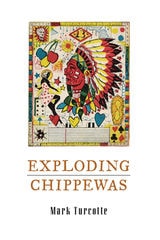
Exploding Chippewas
Mark Turcotte
Northwestern University Press, 2002
Everything this poet touches is volatile—the poet himself, the people and world around him, ideas and mythologies, the ghosts of memory and the dream of possible futures, all seem to burst into fragments. Mark Turcotte uses poetry to gather up the pieces—the shards of joy and grief, peace and doubt, strength and temptation, questions and answers—as he tries to define and rediscover what is lost when everyday life becomes explosive.
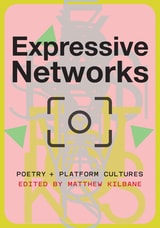
Expressive Networks
Poetry and Platform CulturesEdited by Matthew Kilbane
Amherst College Press, 2025
Though contributors write from a variety of methodological positions and address themselves to a range of archives, they share the primary conviction that the impact of Web 2.0 on literary practice is far-reaching, far from self-evident, and far more variegated and unpredictable than easy summations of social media’s influence suggest. Expressive Networks asks after poetry’s present and future by examining what poems themselves express about the social make-up of networked platforms.
Edited by Matthew Kilbane with contributions from Cameron Awkward-Rich, Micah Bateman, Andrew Campana, Sumita Chakraborty, Scott Challener, C.R. Grimmer, Tess McNulty, Michael Nardone, Seth Perlow, Anna Preus, Susanna Sacks, Carly Schnitzler, Melanie Walsh, and Samuel Caleb Wee.
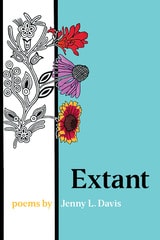
Extant
Jenny L. Davis
Michigan State University Press, 2026
The second poetry collection by award-winning author Jenny L. Davis (Chickasaw), Extant confronts the many ways in which Native Americans continue to be associated with the distant past and imagined, even today, as more animal than human. For more than a century, anthropologists, museum guides, and high school teachers have described Native American bodies, cultures, and languages as “endangered” or “almost extinct.” Through a combination of blackout poems, occasional poems, and free verse, Davis rewrites the narrative of what it means to exist, to live in a present shaped by colonial violence that emphasizes the power of survival. Drawing on online question forums, scientific studies, kitschy decor, and the day-to-day musings of an Indigiqueer Native woman, Extant stages encounters of Native survival within a world full of stars, cicadas, earthworms, and moss.
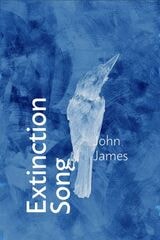
Extinction Song
John James
Tupelo Press, 2026
Extinction Song begins with a tender depiction of early parenthood, as the speaker cradles his newborn son while imagining a dystopian climate future. The poems open into a broader consideration of overlapping and interrelated systems, from the confines of received knowledge to the closed circuit of ideology to the circularity of pollutive environmental cycles. Attentive to the levels of sound and of visual architecture, these poems highlight both destruction and unseen possibilities. By turns meditative and probing, and sometimes slyly funny, Extinction Song unwinds the perils and the joys of our precarious climate future.
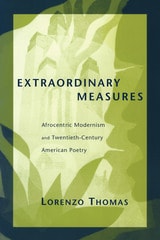
Extraordinary Measures
Afrocentric Modernism and 20th-Century American PoetryLorenzo Thomas
University of Alabama Press, 2000
From early 20th-century writings to present-day poetry slams, African American poetry exhibits an impressive range of style and substance. Lorenzo Thomas has written an important new history of the genre that offers a critical reassessment of its development in the 20th century within the contexts of modernism and the troubled racial history of the United States.
Basing his study on literary history, cultural criticism, and close readings, Thomas revives and appraises the writings of a number of this century's most important African American poets, including Margaret Walker, Amiri Baraka, Askia M. Toure, Harryette Mullen, and Kalamu ya Salaam. Thomas analyzes the work of Fenton Johnson within the context of emerging race consciousness in Chicago, contributes to critical appraisals of William Stanley Braithwaite and Melvin B. Tolson, and examines the Black Arts Movement of the 1960s and 1970s. Throughout the book, Thomas demonstrates the continuity within the Afrocentric tradition while acknowledging the wide range of stylistic approaches and ideological stances that the tradition embraces.
By reassessing the African American poetry tradition, Thomas effectively reassesses the history of all 20th-century American literature by exploring avenues of debate that have not yet received sufficient attention. Written with intelligence and humor, his book is itself an extraordinary measure that reflects years of scholarship and opens up African American poetry to a wider audience.
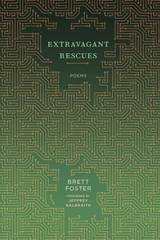
Extravagant Rescues
PoemsBrett Foster; foreword by Jeffrey Galbraith
Northwestern University Press, 2019
The poems ask questions with hymnlike couplets, in a language of the gospel of empathy. We are allowed to rethink our choices, question and be wary of our machinery, and, in the end, with metaphors that channel feelings of loss, humor, and compassion, we are reminded “to come, and dream, with eyes wide open / and set within the vessels of our waking selves, / of ever more intricate schemes, extravagant rescues.”
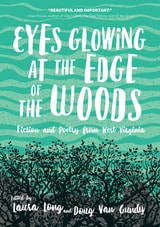
Eyes Glowing at the Edge of the Woods
Fiction and Poetry from West VirginiaLaura Long
West Virginia University Press, 2017
Throughout this collection, we see profound wonder, questioning, and conflicts involving family, sexual identity, class, discrimination, environmental beauty, and peril, and all the sorts of rebellion, error, contemplation, and contentment that an intrepid soul can devise. These stories and poems, all published within the last fifteen years, are grounded in what it means to live in and identify with a complex place.
With a mix of established writers like Jayne Anne Phillips, Norman Jordan, Ann Pancake, Maggie Anderson, and Denise Giardina and fresh voices like Matthew Neill Null, Ida Stewart, Rajia Hassib, and Scott McClanahan, this collection breaks open new visions of all-American landscapes of the heart. By turns rowdy and contemplative, hilarious and bleak, and lyrical and gritty, it is a collage of extraordinary literary visions.
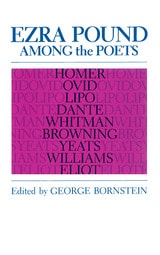
Ezra Pound among the Poets
Edited by George Bornstein
University of Chicago Press, 1985

Ezra Pound and the Monument of Culture
Text, History, and the Malatesta CantosLawrence S. Rainey
University of Chicago Press, 1991
Written by Pound in the months following his first visit, the four poems grouped as "The Malatesta Cantos" celebrate the church and the man who sponsored its construction, Sigismondo Malatesta. Upon receiving news of the building's devastation by Allied bombings in 1944, Pound wrote two more cantos that invoked the event as a rallying point for the revival of fascist Italy. These "forbidden" cantos were excluded from collected editions of his works until 1987. Pound even announced an abortive plan in 1958 to build a temple inspired by the church, and in 1963, at the age of eighty, he returned to Rimini to visit the Tempio Malatestiano one last, haunting time.
Drawing from hundreds of unpublished materials, Rainey explores the intellectual heritage that surrounded the church, Pound's relation to it, and the interpretation of his work by modern critics. The Malatesta Cantos, which have been called "one of the decisive turning-points in modern poetics" and "the most dramatic moment in The Cantos," here engender an intricate allegory of Pound's entire career, the central impulses of literary modernism, the growth of intellectual fascism, and the failure of critical culture in the twentieth century. Included are two-color illustrations from the 1925 edition of Pound's cantos and numerous black-and-white photographs.

Ezra Pound and the Mysteries of Love
A Plan for the CantosAkiko Miyake
Duke University Press, 1991
Drawing upon this key five-volume work, as well as comprehensive research in both primary and secondary sources, Miyake brings the partial perceptions of other critics and commentators into an illuminating whole. Disclosing the deliberateness of The Cantos, Miyake provides new insight into Pound’s sense of culture and into the nature of his Confucianism. She sheds light on the disastrous path Pound followed into Fascism and anti-Semitism, and, in contrast to the image of a “pagan” Pound that has emerged in recent years, reveals a poet writing as a Christian from within the Christian mythical tradition.