Results by title
2916 books match the query 'Politics and government' and 71 start with e
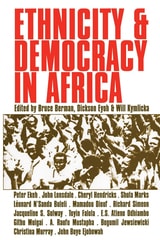
Ethnicity and Democracy in Africa
Bruce Berman
Ohio University Press, 2004
The politics of identity and ethnicity will remain a fundamental characteristic of African modernity. For this reason, historians and anthropologists have joined political scientists in a discussion about the ways in which democracy can develop in multicultural societies. In Ethnicity and Democracy in Africa, the contributors address why ethnicity represents a political problem, how the problem manifests itself, and which institutional models offer ways of ameliorating the challenges that ethnicity poses to democratic nation-building.
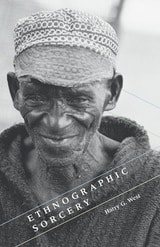
Ethnographic Sorcery
Harry G. West
University of Chicago Press, 2007
According to the people of the Mueda plateau in northern Mozambique, sorcerers remake the world by asserting the authority of their own imaginative visions of it. While conducting research among these Muedans, anthropologist Harry G. West made a revealing discovery—for many of them, West’s efforts to elaborate an ethnographic vision of their world was itself a form of sorcery. In Ethnographic Sorcery, West explores the fascinating issues provoked by this equation.
A key theme of West’s research into sorcery is that one sorcerer’s claims can be challenged or reversed by other sorcerers. After West’s attempt to construct a metaphorical interpretation of Muedan assertions that the lions prowling their villages are fabricated by sorcerers is disputed by his Muedan research collaborators, West realized that ethnography and sorcery indeed have much in common. Rather than abandoning ethnography, West draws inspiration from this connection, arguing that anthropologists, along with the people they study, can scarcely avoid interpreting the world they inhabit, and that we are all, inescapably, ethnographic sorcerers.
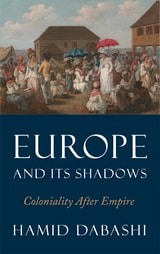
Europe and Its Shadows
Coloniality after EmpireHamid Dabashi
Pluto Press, 2019
Frantz Fanon’s assessment that 'Europe is literally the creation of the Third World' is still true today; but in more than one sense for the colonial has always been embedded in the capital, and the capital within the colonial. As the condition of coloniality shifts, so have the dividing lines between coloniser and colonised, and this shift calls for a reappraisal of our understanding of nationalism, xenophobia and sectarianism as the dangerous indices of the emerging worlds.
As the far-right populists captivate minds across Europe and Brexit upsets the balance of power in the European Union, this book, from a major scholar of postcolonial thought, is a timely and transformative intervention.

Eva Perón
The Myths of a WomanJulie Taylor
University of Chicago Press, 1981
"Taylor shows that she is remembered by different classes and political factions as saint, a revolutionary, or a whore, depending on whether she was interpreted as an embodiment or as a violation of the Argentine feminine ideal."—Booklist
"Highly commendable . . . it deliberately eschews the sensationalism that characterizes earlier [biographies]. . . . Taylor instead concentrates on the myths that have lingered since her death. . . . [This book] transcends biography."—Gentlemen's Quarterly
"[A] concise and brilliant examination of the legends that arose in Argentina during the lifetime . . . of a woman who broke with Argentine tradition and became a political figure in her own right."—New Yorker

Even Mississippi
Melany Neilson
University of Alabama Press, 1989
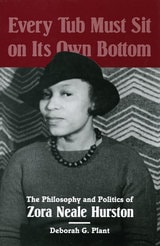
Every Tub Must Sit on Its Own Bottom
The Philosophy and Politics of Zora Neale HurstonDeborah G. Plant
University of Illinois Press, 1995
needed at this point in the evolving critical assessment of Hurston. It
is a paradigm for the study of individual African American women writers."
-- Alice Deck, University of Illinois at Urbana-Champaign
In a ground-breaking study
of Zora Neale Hurston, Deborah Plant takes issue with current notions
of Hurston as a feminist and earlier impressions of her as an intellectual
lightweight who disregarded serious issues of race in American culture.
Instead, Plant calls Hurston a "writer of resistance" who challenged
the politics of domination both in her life and in her work. One of the
great geniuses of the Harlem Renaissance, Hurston stands out as a strong
voice for African-American women. Her anthropological inquiries as well
as her evocative prose provide today's readers with a rich history of
African American folk culture, a folk culture through which Hurston expressed
her personal and political strategy of resistance and self-empowerment.
Through readings of Hurston's
fiction and autobiographical writings, Plant offers one of the first book-length
discussions of Hurston's personal philosophy of individualism and self-preservation.
From a discussion of Hurston's preacher father and influential mother,
whose guiding philosophy is reflected in the title of this book, to the
influence of Spinoza and Nietzsche, Plant puts into perspective the driving
forces behind Hurston's powerful prose.
This fresh look at one of
the most important writers of the twentieth century is sure to shape future
study of Hurston and her work.

Everyday Democracy
Liberals, Conservatives, and Their Routine Political LivesJeffrey M. Berry, James M. Glaser and Deborah J. Schildkraut
University of Chicago Press, 2025
How the everyday habits and attitudes of ordinary liberals and conservatives shape the health of American democracy.
In Everyday Democracy, Jeffrey M. Berry, James M. Glaser, and Deborah J. Schildkraut study Americans’ views of several manifestations of “everyday democracy,” which they define as the attitudes, behaviors, and processes that people experience in daily life and their routine considerations of politics and community. Examples include engaging in dialogue with political opponents and giving politicians license to compromise. Ordinary political moments like these constitute much of politics, and they can lay the foundation that shapes if, when, and how crisis moments unfold.
Paying particular attention to the role of ideology in shaping how Americans emulate daily democratic ideals, this book considers such questions as: How do liberals and conservatives support different aspects of democratic practice, and are there ideological asymmetries between the two groups? If and when asymmetries emerge, what factors might explain them? The authors consider what their findings mean for the health of American democracy broadly.
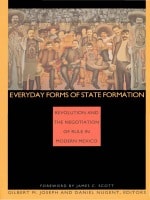
Everyday Forms of State Formation
Revolution and the Negotiation of Rule in Modern MexicoGilbert M. Joseph and Daniel Nugent, eds.
Duke University Press, 1994
Structured in the form of a dialogue between a distinguished array of Mexicanists and comparative social theorists, this volume boldly reassesses past analyses of the Mexican revolution and suggests new directions for future study. Showcasing a wealth of original archival and ethnographic research, this collection provides a new and deeper understanding of Mexico’s revolutionary experience. It also speaks more broadly to a problem of extraordinary contemporary relevance: the manner in which local societies and self-proclaimed "revolutionary" states are articulated historically. The result is a unique collection bridging social history, anthropology, historical sociology, and cultural studies in its formulation of new approaches for rethinking the multifaceted relationship between power, culture, and resistance.
Contributors. Ana María Alonso, Armando Bartra, Marjorie Becker, Barry Carr, Philip Corrigan, Romana Falcón, Gilbert M. Joseph, Alan Knight, Florencia E. Mallon, Daniel Nugent, Elsie Rockwell, William Roseberry, Jan Rus, Derek Sayer, James C. Scott
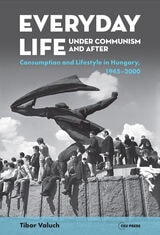
Everyday Life under Communism and After
Lifestyle and Consumption in Hungary, 1945–2000Tibor Valuch
Central European University Press, 2022
By providing a survey of consumption and lifestyle in Hungary during the second half of the twentieth century, this book shows how common people lived during and after tumultuous regime changes. After an introduction covering the late 1930s, the study centers on the communist era, and goes on to describe changes in the post-communist period with its legacy of state socialism.
Tibor Valuch poses a series of questions. Who could be called rich or poor and how did they live in the various periods? How did living, furnishings, clothing, income, and consumption mirror the structure of the society and its transformations? How could people accommodate their lifestyles to the political and social system? How specific to the regime was consumption after the communist takeover, and how did consumption habits change after the demise of state socialism? The answers, based on micro-histories, statistical data, population censuses and surveys help to understand the complexities of daily life, not only in Hungary, but also in other communist regimes in east-central Europe, with insights on their antecedents and afterlives.
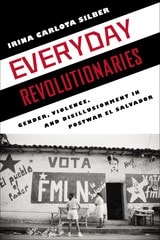
Everyday Revolutionaries
Gender, Violence, and Disillusionment in Postwar El SalvadorIrina Carlota Silber
Rutgers University Press, 2011
Winner of the 2013 International Latino Book Awards in the Best First Book, Nonfiction category
Everyday Revolutionaries provides a longitudinal and rigorous analysis of the legacies of war in a community racked by political violence. By exploring political processes in one of El Salvador's former war zones-a region known for its peasant revolutionary participation-Irina Carlota Silber offers a searing portrait of the entangled aftermaths of confrontation and displacement, aftermaths that have produced continued deception and marginalization.
Silber provides one of the first rubrics for understanding and contextualizing postwar disillusionment, drawing on her ethnographic fieldwork and research on immigration to the United States by former insurgents. With an eye for gendered experiences, she unmasks how community members are asked, contradictorily and in different contexts, to relinquish their identities as "revolutionaries" and to develop a new sense of themselves as productive yet marginal postwar citizens via the same "participation" that fueled their revolutionary action. Beautifully written and offering rich stories of hope and despair, Everyday Revolutionaries contributes to important debates in public anthropology and the ethics of engaged research practices.
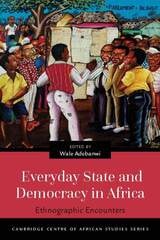
Everyday State and Democracy in Africa
Ethnographic EncountersWale Adebanwi
Ohio University Press, 2022
Bottom-up case studies, drawn from the perspective of ordinary Africans’ experiences with state bureaucracies, structures, and services, reveal how citizens and states define each other.
This volume examines contemporary citizens’ everyday encounters with the state and democratic processes in Africa. The contributions reveal the intricate and complex ways in which quotidian activities and experiences—from getting an identification card (genuine or fake) to sourcing black-market commodities to dealing with unreliable waste collection—both (re)produce and (re)constitute the state and democracy. This approach from below lends gravity to the mundane and recognizes the value of conceiving state governance not in terms of its stated promises and aspirations but rather in accordance with how people experience it.
Both new and established scholars based in Africa, Europe, and North America cover a wide range of examples from across the continent, including
- bureaucratic machinery in South Sudan, Nigeria, and Kenya
- infrastructure and shortages in Chad and Nigeria
- disciplinarity, subjectivity, and violence in Rwanda, South Africa, and Nigeria
- the social life of democracy in the Congo, Cameroon, and Mozambique
- education, welfare, and health in Ethiopia, the Democratic Republic of Congo, and Burkina Faso
Everyday State and Democracy in Africa demonstrates that ordinary citizens’ encounters with state agencies and institutions define the meanings, discourses, practices, and significance of democratic life, as well its distressing realities.
Contributors:
- Daniel Agbiboa
- Victoria Bernal
- Jean Comaroff
- John L. Comaroff
- E. Fouksman
- Fred Ikanda
- Lori Leonard
- Rose Løvgren
- Ferenc Dávid Markó
- Ebenezer Obadare
- Rogers Orock
- Justin Pearce
- Katrien Pype
- Edoardo Quaretta
- Jennifer Riggan
- Helle Samuelsen
- Nicholas Rush Smith
- Eric Trovalla
- Ulrika Trovalla
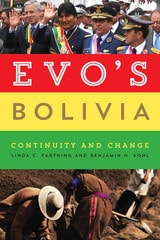
Evo's Bolivia
Continuity and ChangeBy Linda C. Farthing and Benjamin H. Kohl
University of Texas Press, 2014
In this compelling and comprehensive look at the rise of Evo Morales and Bolivia’s Movimiento al Socialismo (MAS), Linda Farthing and Benjamin Kohl offer a thoughtful evaluation of the transformations ushered in by the western hemisphere’s first contemporary indigenous president. Accessible to all readers, Evo’s Bolivia not only charts Evo’s rise to power but also offers a history of and context for the MAS revolution’s place in the rising “pink tide” of the political left. Farthing and Kohl examine the many social movements whose agendas have set the political climate in Bolivia and describe the difficult conditions the administration inherited. They evaluate the results of Evo’s policies by examining a variety of measures, including poverty; health care and education reform; natural resources and development; and women’s, indigenous, and minority rights. Weighing the positive with the negative, the authors offer a balanced assessment of the results and shortcomings of the first six years of the Morales administration.
At the heart of this book are the voices of Bolivians themselves. Farthing and Kohl interviewed women and men in government, in social movements, and on the streets throughout the country, and their diverse backgrounds and experiences offer a multidimensional view of the administration and its progress so far. Ultimately the “process of change” Evo promised is exactly that: an ongoing and complicated process, yet an important example of development in a globalized world.
Excavations at Cerro Tilcajete
A Monte Albán II Administrative Center in the Valley of OaxacaChristina Elson
University of Michigan Press, 2007

Exclusive Revolutionaries
Liberal Politics, Social Experience, and National Identity in the Austrian Empire, 1848-1914Pieter M. Judson
University of Michigan Press, 1996
In the mid-1800s, Judson argues, German liberal activists built an effective political movement whose ideology was rooted in its members' social experience in voluntary associations. The liberals were committed to the creation of a market economy based on personal property rights, to a society based on the values of individual self-improvement and personal respectability, and to a fundamental distinction between active and passive citizenship. They were determined to achieve a harmonious community of free peoples, in which personal enlightenment would bring an end to the divisive influence of localism, ethnicity, religion, and feudal social hierarchy.
Yet after 1880, as newer, more radical mass political movements threatened their political fortunes, the liberals forged a German nationalist politics based increasingly on ethnic identity. Their emphasis on national identity became a way for former liberals to hold together an increasingly diverse coalition of German speakers who had little in common outside of their shared language. Only "Germanness" bridged the dangerous gulf between social classes. This nationalism helped the liberals to compete for power in the multinational, multicultural Austrian Empire down to 1914, but it left a legacy of nationalist extremism and tolerance of anti-Semitism that continues to influence political cultures in the former lands of the Habsburg Monarchy today.
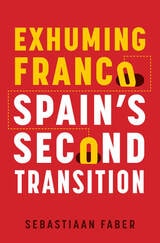
Exhuming Franco
Spain's Second Transition, Second EditionSebastiaan Faber
Vanderbilt University Press, 2023
This new edition, with additional interviews and a new introduction, illuminates the dangers of the rise of right-wing nationalist revisionism by using Spain as a case study for how nations face, or don't face, difficult questions about their past.
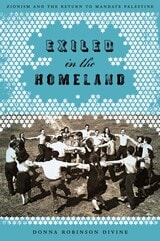
Exiled in the Homeland
Zionism and the Return to Mandate PalestineBy Donna Robinson Divine
University of Texas Press, 2009
Offering a new perspective on Zionism, Exiled in the Homeland draws on memoirs, newspaper accounts, and archival material to examine closely the lives of the men and women who immigrated to Palestine in the early twentieth century. Rather than reducing these historic settlements to a single, unified theme, Donna Robinson Divine's research reveals an extraordinary spectrum of motivations and experiences among these populations.
Though British rule and the yearning for a Jewish national home contributed to a foundation of solidarity, Exiled in the Homeland presents the many ways in which the message of emigration settled into the consciousness of the settlers. Considering the benefits and costs of their Zionist commitments, Divine explores a variety of motivations and outcomes, ranging from those newly arrived immigrants who harnessed their ambition for the goal of radical transformation to those who simply dreamed of living a better life. Also capturing the day-to-day experiences in families that faced scarce resources, as well as the British policies that shaped a variety of personal decisions on the part of the newcomers, Exiled in the Homeland provides new keys to understanding this pivotal chapter in Jewish history.

Exit-Voice Dynamics and the Collapse of East Germany
The Crisis of Leninism and the Revolution of 1989Steven Pfaff
Duke University Press, 2006
East Germany was the first domino to fall when the Soviet bloc began to collapse in 1989. Its topple was so swift and unusual that it caught many area specialists and social scientists off guard; they failed to recognize the instability of the Communist regime, much less its fatal vulnerability to popular revolt. In this volume, Steven Pfaff identifies the central mechanisms that propelled the extraordinary and surprisingly bloodless revolution within the German Democratic Republic (GDR). By developing a theory of how exit-voice dynamics affect collective action, Pfaff illuminates the processes that spurred mass demonstrations in the GDR, led to a peaceful surrender of power by the hard-line Leninist elite, and hastened German reunification. While most social scientific explanations of collective action posit that the option for citizens to emigrate—or exit—suppresses the organized voice of collective public protest by providing a lower-cost alternative to resistance, Pfaff argues that a different dynamic unfolded in East Germany. The mass exit of many citizens provided a focal point for protesters, igniting the insurgent voice of the revolution.
Pfaff mines state and party records, police reports, samizdat, Church documents, and dissident manifestoes for his in-depth analysis not only of the genesis of local protest but also of the broader patterns of exit and voice across the entire GDR. Throughout his inquiry, Pfaff compares the East German rebellion with events occurring during the same period in other communist states, particularly Czechoslovakia, China, Poland, and Hungary. He suggests that a trigger from outside the political system—such as exit—is necessary to initiate popular mobilization against regimes with tightly centralized power and coercive surveillance.
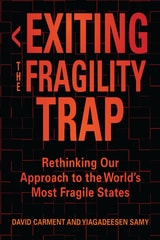
Exiting the Fragility Trap
Rethinking Our Approach to the World’s Most Fragile StatesDavid Carment
Ohio University Press, 2019
State fragility is a much-debated yet underinvestigated concept in the development and international security worlds. Based on years of research as part of the Country Indicators for Foreign Policy project at Carleton University, Exiting the Fragility Trap marks a major step toward remedying the lack of research into the so-called fragility trap. In examining the nature and dynamics of state transitions in fragile contexts, with a special emphasis on states that are trapped in fragility, David Carment and Yiagadeesen Samy ask three questions: Why do some states remain stuck in a fragility trap? What lessons can we learn from those states that have successfully transitioned from fragility to stability and resilience? And how can third-party interventions support fragile state transitions toward resilience?
Carment and Samy consider fragility’s evolution in three state types: countries that are trapped, countries that move in and out of fragility, and countries that have exited fragility. Large-sample empirical analysis and six comparative case studies—Pakistan and Yemen (trapped countries), Mali and Laos (in-and-out countries), and Bangladesh and Mozambique (exited countries)—drive their investigation, which breaks ground toward a new understanding of why some countries fail to see sustained progress over time.

Exodus!
Religion, Race, and Nation in Early Nineteenth-Century Black AmericaEddie S. Glaude Jr.
University of Chicago Press, 2000
Exodus! shows how this biblical story inspired a pragmatic tradition of racial advocacy among African Americans in the early nineteenth century—a tradition based not on race but on a moral politics of respectability. Eddie S. Glaude, Jr., begins by comparing the historical uses of Exodus by black and white Americans and the concepts of "nation" it generated. He then traces the roles that Exodus played in the National Negro Convention movement, from its first meeting in 1830 to 1843, when the convention decided—by one vote—against supporting Henry Highland Garnet's call for slave insurrection.
Exodus! reveals the deep historical roots of debates over African-American national identity that continue to rage today. It will engage anyone interested in the story of black nationalism and the promise of African-American religious culture.

Explorations in Early Southeast Asian History
The Origins of Southeast Asian StatecraftKenneth R. Hall and John K. Whitmore, Editors
University of Michigan Press, 1976
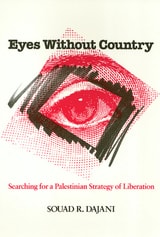
Eyes Without Country
Searching for a Palestinian Strategy of LiberationSouad R. Dajani
Temple University Press, 1994
Since Israel's occupation of the West Bank and Gaza Strip in 1967, the quest for just and lasting peace has been a fountainhead of debate, negotiation, and violent friction. Souad Dajani traces the Palestinians' struggle and argues for a strategy of nonviolent civilian resistance based on deterrence and defense. This strategy would defeat Israel's political will to maintain their occupation and prepare Palestinians for a time beyond the interim period of self-rule agreed upon by Israel and the PLO in September 19932.
Dajani's formulation of nonviolent civilian resistance is examined against a backdrop of early developments in Mandate Palestine, the impact of Zionist ideology, and the realities of life for Palestinians under occupation. Her assessment of the role of the PLO, objectives of the Palestinian National Movement, developments since the Gulf War, and other factors crucial to an effective strategy raises critical questions surrounding the operation of nonviolent techniques for the Palestinian community, Israeli politics, and international actors, most prominently the United States.