Results by title
4038 books match the query 'Social aspects' and 128 start with e

Endurance Media
Neta Alexander
University of Minnesota Press, 2027
How digital platforms profit from our inability to log off
Endurance Media explores how contemporary digital technologies extract value from our bodies by demanding sustained engagement that pushes us beyond, and even reconfigures, our limits. It introduces the concept of “endurance media”—systems, platforms, and practices that require users to align their bodily rhythms with relentless media temporalities, transforming exhaustion itself into a profitable resource and a cultural fantasy.
In Endurance Media leading media scholars explore the dark intersection of metabolic capitalism and algorithmic control. From exercise bikes that monetize heart rates and caloric expenditure, to gaming suits that deliver electric shocks for “haptic realism,” to energy drinks marketed as performance enhancers for marathon gaming sessions, Endurance Media reveals how digital platforms colonize rest time under the guise of pleasure, interactivity, and autonomy. This analysis extends from individual bodies to planetary infrastructure, connecting personal media habits to the environmental costs of server farms and AI resource extraction.
At stake is the possibility of recuperating endurance as a space for alternative modes of duration, relationality, and collective survival. To that end, this book offers a critical alternative through “anti-endurance media”—a disability-informed framework that values rest, refusal, and collective care over relentless individual optimization.
Retail e-book files for this title are screen-reader friendly with images accompanied by short alt text and/or extended descriptions.
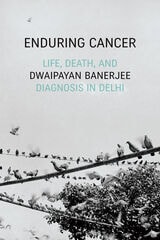
Enduring Cancer
Life, Death, and Diagnosis in DelhiDwaipayan Banerjee
Duke University Press, 2020
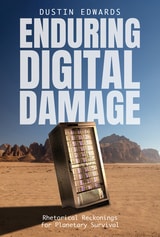
Enduring Digital Damage
Rhetorical Reckonings for Planetary SurvivalDustin Edwards
University of Alabama Press, 2025
Networks the intricate relationship between rapidly advancing digital technologies and environmental degradation and reveals the costs of our globally connected world.
Taking a step back from the screens of electronic devices and exploring the profound impacts of digital technologies on our environment, Enduring Digital Damage lifts the veil on the “hidden costs” in our modern technological world.
Dustin Edwards traces key moments in the lifecycle of technology—such as the extraction of raw materials to the disposal of electronic waste—to uncover the often overlooked consequence of our digital age. He illuminates how data centers, mining operations, and other digital infrastructures contribute to environmental harm and how the rapidly increasing demand for land use and water access is essential to sustain our growing digital needs. Weaving together narratives of technological advancement and ecological destruction, Edwards presents a comprehensive analysis of the true cost of our digital lives. By drawing on case studies, cultural critique, and a critical examination of labor and sustainability, Enduring Digital Damage reveals the deeper histories and ongoing struggles that make our digital lives possible, urging readers to imagine the possibility of a less harmful and extractive world.
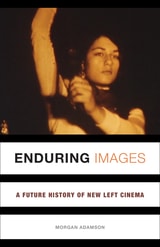
Enduring Images
A Future History of New Left CinemaMorgan Adamson
University of Minnesota Press, 2018
An integrated look at the political films of the 1960s and ’70s and how the New Left transformed cinema
A timely reassessment of political film culture in the 1960s and ’70s, Enduring Images examines international cinematic movements of the New Left in light of sweeping cultural and economic changes of that era. Looking at new forms of cinematic resistance—including detailed readings of particular films, collectives, and movements—Morgan Adamson makes a case for cinema’s centrality to the global New Left.
Enduring Images details how student, labor, anti-imperialist, Black Power, and second-wave feminist movements broke with auteur cinema and sought to forge local and international solidarities by producing political essay films, generating new ways of being and thinking in common. Adamson produces a comparative and theoretical account of New Left cinema that engages with discussions of work, debt, information, and resistance. Enduring Images argues that the cinemas of the New Left are sites to examine, through the lens of struggle, the reshaping of global capitalism during the pivotal moment in which they were made, while at the same time exploring how these movements endure in contemporary culture and politics.
Including in-depth discussions of Third Cinema in Argentina, feminist cinema in Italy, Newsreel movements in the United States, and cybernetics in early video, Enduring Images is an essential examination of the political films of the 1960s and ’70s.
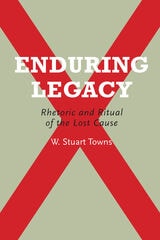
Enduring Legacy
Rhetoric and Ritual of the Lost CauseW. Stuart. Towns
University of Alabama Press, 2013
Explores the crucial role of rhetoric and oratory in creating and propagating a “Lost Cause” public memory of the American South
Enduring Legacy explores the vital place of ceremonial oratory in the oral tradition in the South and analyses how rituals such as Confederate Memorial Day, Confederate veteran reunions, and dedication of Confederate monuments have contributed to creating and sustaining a Lost Cause paradigm for Southern identity. Towns studies in detail secessionist and Civil War speeches and how they laid the groundwork for future generations, including Southern responses to the civil rights movement, and beyond.
The Lost Cause orators that came after the Civil War, Towns argues, helped to shape a lasting mythology of the brave Confederate martyr, and the Southern positions for why the Confederacy lost and who was to blame. Innumerable words were spent—in commemorative speeches, newspaper editorials, and statehouse oratory—condemning the evils of Reconstruction, redemption, reconciliation, and the new and future South. Towns concludes with an analysis of how Lost Cause myths still influence Southern and national perceptions of the region today, as evidenced in debates over the continued deployment of the Confederate flag and the popularity of Civil War reenactments.

Enemyship
Democracy and Counter-Revolution in the Early RepublicJeremy Engels
Michigan State University Press, 2010
The Declaration of Independence is usually celebrated as a radical document that inspired revolution in the English colonies, in France, and elsewhere. In Enemyship, however, Jeremy Engels views the Declaration as a rhetorical strategy that outlined wildly effective arguments justifying revolution against a colonial authority—and then threatened political stability once independence was finally achieved.
Enemyship examines what happened during the latter years of the Revolutionary War and in the immediate post-Revolutionary period, when the rhetorics and energies of revolution began to seem problematic to many wealthy and powerful Americans.
To mitigate this threat, says Engles, the founders of the United States deployed the rhetorics of what he calls "enemyship," calling upon Americans to unite in opposition to their shared national enemies.

Energy Culture
Art and Theory on Oil and BeyondImre Szeman
West Virginia University Press, 2019
Energy Culture is a provocative book about oil’s firm grip on our politics and everyday lives. It brings together essays and artwork produced in a collaborative environment to stimulate new ways of thinking and to achieve a more just and sustainable world.
The original work collected in Energy Culture creatively engages energy as a social form through lively arguments and artistic research organized around three vectors of inquiry. The first maps how fossil fuels became, and continue to be, embedded in North American society, from the ideology of tar sands reclamation projects to dreams of fiber optic cables running through the Northwest Passage. The second comprises creative and artistic responses to the dominance of fossil fuels in everyday life and to the challenge of realizing new energy cultures. The final section addresses the conceptual and political challenges posed by energy transition and calls into question established views on energy. Its contributions caution against solar capitalism, explore the politics of sabotage, and imagine an energy efficient transportation system called “the switch.” Imbued with a sense of urgency and hope, Energy Culture exposes the deep imbrications of energy and culture while pointing provocatively to ways of thinking and living otherwise.

Energy Impacts
A Multidisciplinary Exploration of North American Energy DevelopmentJeffrey B. Jacquet
University Press of Colorado, 2020
Twelve chapters from respected scholars in a variety of disciplines present new ways to consider and analyze energy impact research. Focused on varied energy topics, geographies, and disciplines, each chapter includes a policy brief that summarizes the work and provides “key takeaways” to apply the findings to policy and public discourse.
Meaningful public engagement is critical in limiting the negative implications of energy development, and understanding the social influences on and of energy systems is a cornerstone of addressing the climate crisis. As such, Energy Impacts is a significant work for students, scholars, and professionals working in sociology, education, geography, environmental studies, and public health.
This material is based upon work supported by the National Science Foundation under Grant No. 1528422. Publication is also supported, in part, by Montana State University.
Contributors:
Ali Adil, Lisa Bailey-Davis, Nancy Bowen-Elizey, Morey Burnham, Weston Eaton, Heather Feldhaus, Felix Fernando, Emily Grubert, C. Clare Hinrichs, John Hintz, Richard Hirsh, Season Hoard, Tamara Laninga, Eric Larson, Achla Marathe, Natalie Martinkus, Seven Mattes, Ronald Meyers, Patrick Miller, Ethan Minier, Myra Moss, Jacob Mowery, Thomas Murphy, Sevda Ozturk Sari, John Parkins, Christopher Podeschi, Nathan Ratledge, Sanne Rijkhoff, Kelli Roemer, Todd Schenk, Anju Seth, Kate Sherren, Jisoo Sim, Marc Stern, Jessica Ulrich-Schad, Cameron Whitley, Laura Zachary
Engaged Spirituality
Social Change and American ReligionStanczak, Gregory C
Rutgers University Press, 2006
In Engaged Spirituality, Gregory C. Stanczak challenges this assumption, arguing that spirituality plays an important social role as well. Based on more than one hundred interviews with individuals of diverse faith traditions, the book shows how prayer, meditation, and ritual provide foundations for activism. Among the stories, a Buddhist monk in Los Angeles intimately describes the physical sensations of strength and compassion that sweep her body when she recites the Buddha’s name in times of selfless service, and a Protestant reverend explains how the calm serenity that she feels during retreats allows her to direct her multi-service agency in San Francisco to creative successes that were previously unimaginable.
In an age when Madonna studies Kabbalah and the internet is bringing Buddhism to the white middle-class, it is clear that formal religious affiliations are no longer enough. Stanczak’s critical examination of spirituality provides us with a way of discussing the factors that impel individuals into social activism and forces us to rethink the question of how “religion” and “spirituality” might be defined.
Engagement in the Digital Era
Christopher Prom
Society of American Archivists, 2020
Engaging Place, Engaging Practices
Urban History and Campus-Community PartnershipsEdited by Robin F. Bachin and Amy L. Howard
Temple University Press, 2023
Colleges and universities in urban centers have often leveraged their locales to appeal to students while also taking a more active role in addressing local challenges. They embrace civic engagement, support service-learning, tailor courses to local needs, and even provide university-community collaborations such as lab schools and innovation hubs. Engaging Place, Engaging Practices highlights the significant role the academy, in general, and urban history, in particular, can play in fostering these critical connections.
The editors and contributors to this volume address topics ranging from historical injustices and affordable housing and land use to climate change planning and the emergence of digital humanities. These case studies reveal the intricate components of a city’s history and how they provide context and promote a sense of cultural belonging.
This timely book appreciates and emphasizes the critical role universities must play as intentional—and humble—partners in addressing the past, present, and future challenges facing cities through democratic community engagement.

Engaging Social Media in China
Platforms, Publics, and ProductionGuobin Yang
Michigan State University Press, 2021
Engaging the Age of Jane Austen
Public Humanities in PracticeBridget Draxler and Danielle Spratt
University of Iowa Press, 2018
Humanities scholars, in general, often have a difficult time explaining to others why their work matters, and eighteenth-century literary scholars are certainly no exception. To help remedy this problem, literary scholars Bridget Draxler and Danielle Spratt offer this collection of essays to defend the field’s relevance and demonstrate its ability to help us better understand current events, from the proliferation of media to ongoing social justice battles.
The result is a book that offers a range of approaches to engaging with undergraduates, non-professionals, and broader publics into an appreciation of eighteenth-century literature. Essays draw on innovative projects ranging from a Jane Austen reading group held at the public library to students working with an archive to digitize an overlooked writer’s novel.
Reminding us that the eighteenth century was an exhilarating age of lively political culture—marked by the rise of libraries and museums, the explosion of the press, and other platforms for public intellectual debates—Draxler and Spratt provide a book that will not only be useful to eighteenth-century scholars, but can also serve as a model for other periods as well. This book will appeal to librarians, archivists, museum directors, scholars, and others interested in digital humanities in the public life.
Contributors: Gabriela Almendarez, Jessica Bybee, Nora Chatchoomsai, Gillian Dow, Bridget Draxler, Joan Gillespie, Larisa Good, Elizabeth K. Goodhue, Susan Celia Greenfield, Liz Grumbach, Kellen Hinrichsen, Ellen Jarosz, Hannah Jorgenson, John C. Keller, Naz Keynejad, Stephen Kutay, Chuck Lewis, Nicole Linton, Devoney Looser, Whitney Mannies, Ai Miller, Tiffany Ouellette, Carol Parrish, Paul Schuytema, David Spadafora, Danielle Spratt, Anne McKee Stapleton, Jessica Stewart, Colleen Tripp, Susan Twomey, Nikki JD White, Amy Weldon

Engaging the Atom
The History of Nuclear Energy and Society in Europe from the 1950s to the PresentArne Kaijser
West Virginia University Press, 2021
With the aim of overcoming the disciplinary and national fragmentation that characterizes much research on nuclear energy, Engaging the Atom brings together specialists from a variety of fields to analyze comparative case studies across Europe and the United States. It explores evolving relationships between society and the nuclear sector from the origins of civilian nuclear power until the present, asking why nuclear energy has been more contentious in some countries than in others and why some countries have never gone nuclear, or have decided to phase out nuclear, while their neighbors have committed to the so-called nuclear renaissance. Contributors examine the challenges facing the nuclear sector in the context of aging reactor fleets, pressing climate urgency, and increasing competition from renewable energy sources.
Written by leading academics in their respective disciplines, the nine chapters of Engaging the Atom place the evolution of nuclear energy within a broader set of national and international configurations, including its role within policies and markets.
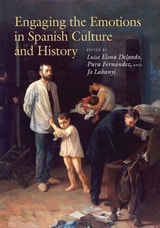
Engaging the Emotions in Spanish Culture and History
Luisa Elena Delgado
Vanderbilt University Press, 2016
The collection ranges across topics such as eighteenth-century sensibility, nineteenth-century concerns with the transmission of emotions, early twentieth-century cinematic affect, and the contemporary mobilization of political emotions including those regarding nonstate national identities. The complexities and effects of emotions are explored in a variety of forms—political rhetoric, literature, personal letters, medical writing, cinema, graphic art, soap opera, journalism, popular music, digital media—with attention paid to broader European and transatlantic implications.
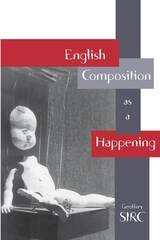
English Composition As A Happening
Geoffrey Sirc
Utah State University Press, 2002
"Contemporary Composition is still inflected by the epistemic turn taken in the 1980s, convincing me that we need to remember what we've forgotten—namely, how impassioned resolves and thrilling discoveries were abandoned and why. I'd like to retrace the road not taken in Composition Studies, to salvage what can still be recovered... I want to inspect the wreckage, in order to show what was the promise of the Happenings for Composition, as well as the huge gray longueur of its pale replacement, Eighties Composition. In so doing, I hope to begin a reconfiguration of our field's pre- and after history."
What happened to the bold, kicky promise of writing instruction in the 1960s? The current conservative trend in composition is analyzed allegorically by Geoffrey Sirc in this book-length homage to Charles Deemer's 1967 article, in which the theories and practices of Happenings artists (multi-disciplinary performance pioneers) were used to invigorate college writing. Sirc takes up Deemer's inquiry, moving through the material and theoretical concerns of such pre- and post-Happenings influences as Duchamp and Pollock, situationists and punks, as well as many of the Happenings artists proper.

English Theatrical Anecdotes, 1660-1800
Heather Ladd
University of Delaware Press, 2022
Entre Nous
Between the World Cup and MeGrant Farred
Duke University Press, 2019

Entrepreneurial Goals
Development and Africapitalism in Ghanaian Soccer AcademiesItamar Dubinsky
University of Wisconsin Press, 2022
Itamar Dubinsky’s extensive ethnographic research offers an innovative theoretical approach by assessing three institutions—Mandela Soccer Academy, Kumasi Sports Academy, and Unistar Soccer Academy—through an Africapitalist prism. He demonstrates that these business endeavors, when viewed from the perspective of local interests, realize many of the educational, financial, and community building ambitions of the region. This pioneering examination of locally owned academies in Ghana reflects Dubinsky’s aim of illuminating the entrepreneurs and programs whose success passes to participating youth and their families, while also exposing the contradictions of for-profit development initiatives that purport to reap collective social benefits.
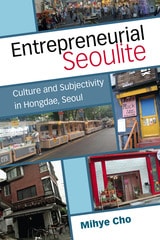
Entrepreneurial Seoulite
Culture and Subjectivity in Hongdae, SeoulMihye Cho
University of Michigan Press, 2019
Recent research on Korean culture approaches the K-wave phenomenon from the perspectives of cultural consumption, media analysis, and cultural management and policy. Meanwhile, studies on Seoul have centered on its transformation as a global, creative city. Rather than examining the K-wave or the city itself, this book explores the experience of living through the city-in-transition, focusing on the relationship between “the ideology that justified engagement in capitalism” and the “subjectification process.” The book aims to understand the project to institutionalize a cultural district in Hongdae as a demonstration of the coevolution of ideologies and citizenship in a society undergoing rapid liberalization—politically, culturally, and economically.
A cultural turn took place in Korea during the 1990s, amid the economic prosperity driven by state-led industrialization and the collapse of the military dictatorship due to democratization movements. Cultural critiques, emerging as an alternative to social movements, proliferated to assert the freedom and autonomy of individuals against regulatory systems and institutions. The nation was hit by the Asian financial crisis in 1997, and witnessed massive economic restructuring including layoffs, stakeouts, and a prevalence of contingent employment. As a result, the entire nation had to find new engines of economic growth while experiencing a creative destruction. At the center of this national transformation, Seoul has sought to recreate itself from a mega city to a global city, equipped with cutting-edge knowledge industries and infrastructures.
By juxtaposing the cultural turn and cultural/creative city-making, Entrepreneurial Seoulite interrogates the formation of new citizen subjectivity, namely the enterprising self, in post-Fordist Seoul. What kinds of logic guide individuals in the engagement of new urban realities in rapidly liberalized Seoul—culturally and economically? In order to explore this query, Mihye Cho draws on Weber’s concept of “the spirit of capitalism” on the formation of a new economic agency focusing on the re-configuration of meanings, and seeks to capture a transformative moment detailing when and how capitalism requests a different spirit and lifestyle of its participants. Likewise, this book approaches the enterprising self as the new spirit of post-Fordist Seoul and explores the ways in which people in Seoul internalize and negotiate this new enterprising self.

Environmental Preservation and the Grey Cliffs Conflict
Negotiating Common Narratives, Values, and EthosKristin D. Pickering
Utah State University Press, 2024
Though environmental degradation and unauthorized use threatened the Grey Cliffs recreational lake area to the point that the Corps considered closure, community members valued it highly and wanted to keep it open. The community near this damaged and crime-ridden area needed help rejuvenating its landscape and image, but the Corps and community were sharply divided on how to maintain this beloved geographic space because of the stakeholders’ different cultural backgrounds and values, as well as the narratives used to discuss them. By co-constructing and aligning narratives, values, and ethos over time—a difficult and lengthy process—the Corps and community succeeded, and Grey Cliffs remains open to all. Focusing on field notes, participant interviews, and analysis of various texts created throughout the conflict, Pickering applies rhetorical analysis and a grounded theory approach to regulation, identity, sustainability, and community values to analyze this communication process.
Illustrating the positive change that can occur when governmental organizations and rural communities work together to construct shared values and engage in a rhetoric of relationship that preserves the environment, Environmental Preservation and the Grey Cliffs Conflict provides key recommendations for resolving environmental conflicts within local communities, especially for those working in technical and professional communication, organizational communication, environmental science, and public policy.
Environmentalism in Popular Culture
Gender, Race, Sexuality, and the Politics of the NaturalNoël Sturgeon
University of Arizona Press, 2009
Although there are other books that examine questions of culture and environment, this is the first book to employ a global feminist environmental justice analysis to focus on how racial inequality, gendered patterns of work, and heteronormative ideas about the family relate to environmental questions. Beginning in the late 1980s and moving to the present day, Sturgeon unpacks a variety of cultural tropes, including ideas about Mother Nature, the purity of the natural, and the allegedly close relationships of indigenous people with the natural world. She investigates the persistence of the “myth of the frontier” and its extension to the frontier of space exploration. She ponders the popularity (and occasional controversy) of penguins (and penguin family values) and questions assumptions about human warfare as “natural.”
The book is intended to provoke debates—among college students and graduate students, among their professors, among environmental activists, and among all citizens who are concerned with issues of environmental quality and social equality.
Envisioning Socialism
Television and the Cold War in the German Democratic RepublicHeather L. Gumbert
University of Michigan Press, 2014
Envisioning Socialism examines television and the power it exercised to define the East Germans’ view of socialism during the first decades of the German Democratic Republic. In the first book in English to examine this topic, Heather L. Gumbert traces how television became a medium prized for its communicative and entertainment value. She explores the difficulties GDR authorities had defining and executing a clear vision of the society they hoped to establish, and she explains how television helped to stabilize GDR society in a way that ultimately worked against the utopian vision the authorities thought they were cultivating.
Gumbert challenges those who would dismiss East German television as a tool of repression that couldn’t compete with the West or capture the imagination of East Germans. Instead, she shows how, by the early 1960s, television was a model of the kind of socialist realist art that could appeal to authorities and audiences. Ultimately, this socialist vision was overcome by the challenges that the international market in media products and technologies posed to nation-building in the postwar period.
A history of ideas and perceptions examining both real and mediated historical conditions, Envisioning Socialism considers television as a technology, an institution, and a medium of social relations and cultural knowledge. The book will be welcomed in undergraduate and graduate courses in German and media history, the history of postwar Socialism, and the history of science and technologies.
Ephemeral Territories
Representing Nation, Home, and Identity in CanadaErin Manning
University of Minnesota Press, 2003
Explores questions of identity and belonging through the lens of Canadian cultural production
What does it mean to be at home? In a critical engagement with notions of territory, identity, racial difference, separatism, multiculturalism, and homelessness, this book delves into the question of what it means to belong—in particular, what it means to be at home in Canada. Ephemeral Territories weaves together many narratives and representations of Canadian identity—from political philosophy and cultural theory to art and films such as Srinivas Krishna’s Lulu, Clement Virgo’s Rude, and Charles Biname’s Eldorado—to develop and complicate familiar views of identity and selfhood.
Canadian identity has historically been linked to a dual notion of culture traceable to the French and English strains of Canada’s colonial past. Erin Manning subverts this binary through readings that shift our attention from nationalist constructions of identity and territory to a more radical and pluralizing understanding of the political. As she brings together issues specific to Canada (such as Quebec separatism and Canadian landscape painting) and concerns that are more transnational (such as globalization and immigration), Manning emphasizes the truly cross-cultural nature of the problems of racism, gender discrimination, and homelessness. Thus this impassioned reading of Canadian texts also makes an important contribution to philosophical, cultural, and political discourses across the globe.
Epidemic of Rumors
How Stories Shape Our Perception of DiseaseJon D. Lee
Utah State University Press, 2014
Folklore studies brings important and useful perspectives to understanding cultural responses to the outbreak of disease. Through this etiological study Lee shows the similarities between the narratives of the SARS outbreak and the narratives of other contemporary disease outbreaks like AIDS and the H1N1 virus. His analysis suggests that these disease narratives do not spring up with new outbreaks or diseases but are in continuous circulation and are recycled opportunistically. Lee also explores whether this predictability of vernacular disease narratives presents the opportunity to create counter-narratives released systematically from the government or medical science to stymie the negative effects of the fearful rumors that so often inflame humanity.
With potential for practical application to public health and health policy, An Epidemic of Rumors will be of interest to students and scholars of health, medicine, and folklore.

Epigenetic Landscapes
Drawings as MetaphorSusan Merrill Squier
Duke University Press, 2017
Epiphany in the Wilderness
Hunting, Nature, and Performance in the Nineteenth-Century American WestKaren R. Jones
University Press of Colorado, 2016
Whether fulfilling subsistence needs or featured in stories of grand adventure, hunting loomed large in the material and the imagined landscape of the nineteenth-century West. Epiphany in the Wilderness explores the social, political, economic, and environmental dynamics of hunting on the frontier in three “acts,” using performance as a trail guide and focusing on the production of a “cultural ecology of the chase” in literature, art, photography, and taxidermy.
Using the metaphor of the theater, Jones argues that the West was a crucial stage that framed the performance of the American character as an independent, resourceful, resilient, and rugged individual. The leading actor was the all-conquering masculine hunter hero, the sharpshooting man of the wilderness who tamed and claimed the West with each provident step. Women were also a significant part of the story, treading the game trails as plucky adventurers and resilient homesteaders and acting out their exploits in autobiographical accounts and stage shows.
Epiphany in the Wilderness informs various academic debates surrounding the frontier period, including the construction of nature as a site of personal challenge, gun culture, gender adaptations and the crafting of the masculine wilderness hero figure, wildlife management and consumption, memorializing and trophy-taking, and the juxtaposition of a closing frontier with an emerging conservation movement.
The University Press of Colorado gratefully acknowledges the generous support of the Charles Redd Center for Western Studies at Brigham Young University toward the publication of this book.

Equestrian Cultures
Horses, Human Society, and the Discourse of ModernityEdited by Kristen Guest and Monica Mattfeld
University of Chicago Press, 2019
Kristen Guest and Monica Mattfeld place the modern period front and center in this collection, illuminating the largely untold story of how the horse has responded to the accelerated pace of modernity. The book’s contributors explore equine cultures across the globe, drawing from numerous interdisciplinary sources to show how horses have unexpectedly influenced such distinctively modern fields as photography, anthropology, and feminist theory. Equestrian Cultures boldly steps forward to redefine our view of the most recent developments in our long history of equine partnership and sets the course for future examinations of this still-strong bond.
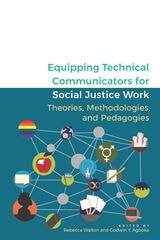
Equipping Technical Communicators for Social Justice Work
Theories, Methodologies, and PedagogiesRebecca Walton
Utah State University Press, 2021
For the field of technical and professional communication to maintain its commitment to this work, how social justice intersects with inclusivity through UX, technological, civic, and legal literacies, as well as through community engagement, must be acknowledged. Equipping Technical Communicators for Social Justice Work will be of significance to established scholar-teachers and graduate students, as well as to newcomers to the field.
Contributors: Kehinde Alonge, Alison Cardinal, Erin Brock Carlson, Oriana Gilson, Laura Gonzales, Keith Grant-Davie, Angela Haas, Mark Hannah, Kimberly Harper, Sarah Beth Hopton, Natasha Jones, Isidore Kafui Dorpenyo, Liz Lane, Emily Legg, Nicole Lowman, Kristen Moore, Emma Rose, Fernando Sanchez, Jennifer Sano-Franchini, Adam Strantz, Cana Uluak Itchuaqiyaq, Josephine Walwema, Miriam Williams, Han Yu
Equity and Inclusion in Higher Education
Strategies for TeachingEdited by Rita Kumar and Brenda Refaei
University of Minnesota Press, 2020
Americans’ perception of college students does not correlate with the reality of the rich diversity seen on university campuses. Over 60% of Americans believe the average age of a college student is 20 years old but, in fact, it’s 26.4 years old. Demographics in the classroom are shifting and instructors bear a responsibility to adjust their teaching style and curriculum to be inclusive for all students.
Equity and Inclusion for Higher Education Strategies for Teaching, edited by Rita Kumar and Brenda Refaei, details the necessity for an inclusive curriculum with examples of discipline-specific activities and modules. The intersectionality of race, age, socioeconomic status, and ability all embody the diversity college instructors encounter in their classrooms. Through the chapters in this book, the contributors make apparent the "hidden curriculum," which is taught implicitly instead of explicitly. The editors focus on learner-centered environments and accessibility of classroom materials for traditionally marginalized students; a critical part of the labor needed to create an inclusive curriculum.
This text provides instructors with resources to create equity-based learning environments. It challenges instructors to see beyond Eurocentric curriculums and expand their pedagogy to include intercultural competence. The contributors challenge the student/instructor dichotomy and embrace collaboration between the two to construct a curriculum that fits all students' needs. The resources and examples in this book demonstrate the importance of inclusion and equity in the classroom. A companion community page provides examples and tools from the editors and contributing authors, which allows for readers to add materials from their own classrooms. This book and collaborative toolkit allow instructors to begin intentional practice of an inclusive curriculum and implement changes to promote respect for diversity.
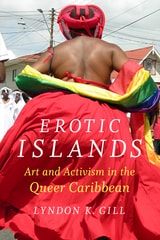
Erotic Islands
Art and Activism in the Queer CaribbeanLyndon K. Gill
Duke University Press, 2018

Errant Modernism
The Ethos of Photography in Mexico and BrazilEsther Gabara
Duke University Press, 2008
Gabara argues that Brazilian and Mexican modernists deliberately made photography err: they made this privileged medium of modern representation simultaneously wander and work against its apparent perfection. They flouted the conventions of mainstream modernism so that their aesthetics registered an ethical dimension. Their photographic modernism strayed, dragging along the baggage of modernity lived in a postcolonial site. Through their “errant modernism,” avant-garde writers and photographers critiqued the colonial history of Latin America and its twentieth-century formations.

Escape from New York
The New Negro Renaissance beyond HarlemDavarian L. Baldwin
University of Minnesota Press, 2013
In the midst of vast cultural and political shifts in the early twentieth century, politicians and cultural observers variously hailed and decried the rise of the “New Negro.” This phenomenon was most clearly manifest in the United States through the outpouring of Black arts and letters and social commentary known as the Harlem Renaissance. What is less known is how far afield of Harlem that renaissance flourished—how much the New Negro movement was actually just one part of a collective explosion of political protest, cultural expression, and intellectual debate all over the world.
In this volume, the Harlem Renaissance “escapes from New York” into its proper global context. These essays recover the broader New Negro experience as social movements, popular cultures, and public behavior spanned the globe from New York to New Orleans, from Paris to the Philippines and beyond. Escape from New York does not so much map the many sites of this early twentieth-century Black internationalism as it draws attention to how New Negroes and their global allies already lived. Resituating the Harlem Renaissance, the book stresses the need for scholarship to catch up with the historical reality of the New Negro experience. This more comprehensive vision serves as a lens through which to better understand capitalist developments, imperial expansions, and the formation of brave new worlds in the early twentieth century.
Contributors: Anastasia Curwood, Vanderbilt U; Frank A. Guridy, U of Texas at Austin; Claudrena Harold, U of Virginia; Jeannette Eileen Jones, U of Nebraska–Lincoln; Andrew W. Kahrl, Marquette U; Shannon King, College of Wooster; Charlie Lester; Thabiti Lewis, Washington State U, Vancouver; Treva Lindsey, U of Missouri–Columbia; David Luis-Brown, Claremont Graduate U; Emily Lutenski, Saint Louis U; Mark Anthony Neal, Duke U; Yuichiro Onishi, U of Minnesota, Twin Cities; Theresa Runstedtler, U at Buffalo (SUNY); T. Denean Sharpley-Whiting, Vanderbilt U; Michelle Stephens, Rutgers U, New Brunswick; Jennifer M. Wilks, U of Texas at Austin; Chad Williams, Brandeis U.

Ethereal Queer
Television, Historicity, DesireAmy Villarejo
Duke University Press, 2013
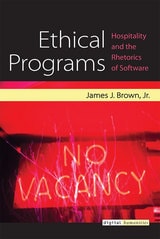
Ethical Programs
Hospitality and the Rhetorics of SoftwareJames J. Brown, Jr.
University of Michigan Press, 2015
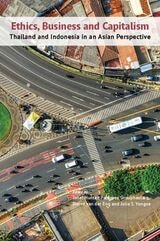
Ethics, Business and Capitalism
Thailand and Indonesia in an Asian PerspectiveEdited by Janet Hunter, Patnaree Srisuphaolarn, Pierre van der Eng, and Julia Yongue
National University of Singapore Press, 2024
Taking cues from the Japanese concept of ethical or stakeholder capitalism, this book demonstrates how the business activities of firms in Thailand and Indonesia are guided by their perceptions of morality in society and their concerns about the environment. The authors explore the likelihood that foreign influences contributed to the development of such management philosophies, for example through the expansion of Japanese subsidiary firms in the 1980s or the spread of foreign articulations of the concept of corporate social responsibility (CSR) since the 2000s. Companies in both countries may exercise a degree of pragmatism in how they develop these activities. As the authors reveal, the perceptions of morality in business that have shaped many entrepreneurs and companies in Thailand and Indonesia are their responses to the dynamic political, social, and economic factors that have formed the business environments of both countries.

Ethnic Humor in Multiethnic America
Gillota, David
Rutgers University Press, 2013
Gillota investigates the manner in which various humorists respond to multiculturalism and the increasing diversity of the American population. Rather than looking at one or two ethnic groups at a time—as is common scholarly practice—the book focuses on the interplay between humorists from different ethnic communities. While some comic texts project a fantasy world in which diverse ethnic characters coexist in a rarely disputed harmony, others genuinely engage with the complexities and contradictions of multiethnic America.
The first chapter focuses on African American comedy with a discussion of such humorists as Paul Mooney and Chris Rock, who tend to reinforce a black/white vision of American race relations. This approach is contrasted to the comedy of Dave Chappelle, who looks beyond black and white and uses his humor to place blackness within a much wider multiethnic context.
Chapter 2 concentrates primarily on the Jewish humorists Sarah Silverman, Larry David, and Sacha Baron Cohen—three artists who use their personas to explore the peculiar position of contemporary Jews who exist in a middle space between white and other.
In chapter 3, Gillota discusses different humorous constructions of whiteness, from a detailed analysis of South Park to “Blue Collar Comedy” and the blog Stuff White People Like.
Chapter 4 is focused on the manner in which animated children’s film and the network situation comedy often project simplified and harmonious visions of diversity. In contrast, chapter 5 considers how many recent works, such as Harold and Kumar Go to White Castle and the Showtime series Weeds, engage with diversity in more complex and productive ways.
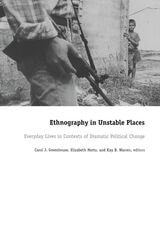
Ethnography in Unstable Places
Everyday Lives in Contexts of Dramatic Political ChangeCarol J. Greenhouse, Elizabeth Mertz, and Kay B. Warren, eds.
Duke University Press, 2002
Using grounded ethnographic detail to explore the challenges to the anthropological imagination that are posed by modern uncertainties, the contributors confront the ambiguities and paradoxes that exist across the spectrum of human cultures and geographies. The collection is framed by introductory and concluding chapters that highlight different dimensions of the book’s interrelated themes—agency and ethnographic reflexivity, identity and ethics, and the inseparability of political economy and interpretivism.
Ethnography in Unstable Places will interest students and specialists in social anthropology, sociology, political science, international relations, and cultural studies.
Contributors. Eve Darian-Smith, Howard J. De Nike, Elizabeth Faier, James M. Freeman, Robert T. Gordon, Carol J. Greenhouse, Nguyen Dinh Huu, Carroll McC. Lewin, Elizabeth Mertz, Philip C. Parnell, Nancy Ries, Judy Rosenthal, Kay B. Warren, Stacia E. Zabusky

Europe in Black and White
Immigration, Race, and Identity in the ‘Old Continent'Edited by Manuela Ribeiro Sanches, Fernando Clara, João Ferreira Duarte, and Leonor Pires Martins
Intellect Books, 2011
The essays in Europe in Black and White offer new critical perspectives on race, immigration, and identity on the Old Continent. In reconsidering the various forms of encounters with difference, such as multiculturalism and hybridity, the contributors address a number of issues, including the cartography of postcolonial Europe, its relation to the production of "difference" and "race," and national and identity politics and their dependence on linguistic practices inherited from imperial times. Featuring scholars from a wide variety of nationalities and disciplinary areas, this collection will speak to an equally wide readership.
European Culture and the Media
Edited by Ib Bondebjerg and Peter Golding
Intellect Books, 2004
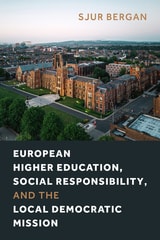
European Higher Education, Social Responsibility, and the Local Democratic Mission
Sjur Bergan
Temple University Press, 2025
Bergan outlines the political and institutional complexity of European universities. He explains how history, cultural traditions, and national identities impact education across Europe. He also describes the roles of the Council of Europe and U.S. higher education in the development of a transatlantic cooperation on the democratic mission of higher education. Other chapters explore education programs for developing and maintaining democracy and human rights, pragmatic and creative ways that European universities are working with their local communities, and the development of education opportunities for refugees.
Ultimately, Bergan’s book explores not only the local democratic mission of higher education as it has developed in Europe, but also how it could continue to develop, and why it is important it does so.
In the series Higher Education, Place, and Social Responsibility.
European Identity in Cinema
Edited by Wendy Everett
Intellect Books, 1995
While the book’s critical essays offer keen insight into the complex identities of European cinema, its combination of breadth and detail, and its interdisciplinary focus and background ensure its wider relevance to anyone interested in questions of contemporary culture and European affairs in general. Its stylistic clarity and freedom from jargon make it readable and accessible.
Topics include questions of memory and identity; filmic autobiography and first-person narration; cultural identity; peripheral voices; popular film and political film. Individual directors, and different national cinemas, including those of France, Germany, Northern Ireland, Russia, Scotland and Spain, are viewed in a wider pan- European context.
Evacuation
The Politics and Aesthetics of Movement in EmergencyPeter Adey
Duke University Press, 2024

Every Home a Fortress
Cold War Fatherhood and the Family Fallout ShelterThomas Bishop
University of Massachusetts Press, 2020
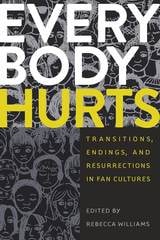
Everybody Hurts
Transitions, Endings, and Resurrections in Fan CulturesRebecca Williams
University of Iowa Press, 2018
Have you ever been a fan of a show that was canceled abruptly or that killed off a beloved character unexpectedly? Or perhaps it was rebooted after a long absence and now you’re worried it won’t be as good as the original? Anyone who has ever followed entertainment closely knows firsthand that such transitions can be jarring.
Indeed, for truly loyal fans, the loss can feel very real—even throwing their own identity into question. Examining how fans respond to and cope with transitions, endings, or resurrections in everything from band breakups (R.E.M.) to show cancellations (Hannibal) to closing down popular amusement park rides, this collection brings together an eclectic mix of scholars to analyze the various ways fans respond to change. Essays explore practices such as fan discussion and creating alternative fan fictions, as well as cases where fans abandon their objects of interest completely and move on to new ones. Shedding light on how fans react, both individually and as a community, the contributors also trace the commonalities and differences present in fandoms across a range of media, and they pay close attention to the ways fandom operates across paratexts and transmedia forms including films, comics, and television.
This fascinating approach promises to make an important contribution to the fields of fan, media, and cultural studies, and should appeal widely to students, scholars, and anyone else with a genuine interest in understanding why these transitions can have such a deep impact on fans’ lives.
Contributors: Stuart Bell, Anya Benson, Lucy Bennett, Paul Booth, Joseph Brennan, Kristina Busse, Melissa A. Click, Ruth Deller, Evelyn Deshane, Nichola Dobson, Simone Driessen, Emily Garside, Holly Willson Holladay, Bethan Jones, Nicolle Lamerichs, Kathleen Williams, Rebecca Williams
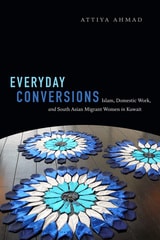
Everyday Conversions
Islam, Domestic Work, and South Asian Migrant Women in KuwaitAttiya Ahmad
Duke University Press, 2017
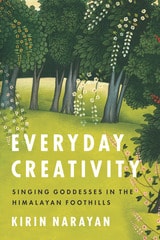
Everyday Creativity
Singing Goddesses in the Himalayan FoothillsKirin Narayan
University of Chicago Press, 2016
With rare and captivating eloquence, Narayan portrays Kangra songs about difficulties on the lives of goddesses and female saints as a path to well-being. Like the intricate geometries of mandalu patterns drawn in courtyards or the subtle balance of flavors in a meal, well-crafted songs offer a variety of deeply meaningful benefits: as a way of making something of value, as a means of establishing a community of shared pleasure and skill, as a path through hardships and limitations, and as an arena of renewed possibility. Everyday Creativity makes big the small world of Kangra song and opens up new ways of thinking about what creativity is to us and why we are so compelled to engage it.

Everyday Erotics
Older Chinese Women and Same-Sex DesireDenise Tse-Shang Tang
Duke University Press, 2026

Everyday Harm
Domestic Violence, Court Rites, and Cultures of ReconciliationMindie Lazarus-Black
University of Illinois Press, 2007
Exposing the powerful contradictions between empowering rights and legal rites
By investigating the harms routinely experienced by the victims and survivors of domestic violence, both inside and outside of law, Everyday Harm studies the limits of what domestic violence law can--and cannot--accomplish. Combining detailed ethnographic research and theoretical analysis, Mindie Lazarus-Black illustrates the ways persistent cultural norms and ingrained bureaucratic procedures work to unravel laws designed to protect the safety of society’s most vulnerable people.
Lazarus-Black’s fieldwork in Trinidad traces a story with global implications about why and when people gain the right to ask the court for protection from violence, and what happens when they pursue those rights in court. Why is itthat, in spite of laws designed to empower subordinated people, so little results from that legislation? What happens in and around courts that makes it so difficult for people to obtain their legally available rights and protections? In the case of domestic violence law, what can such legislation mean for women’s empowerment, gender equity, and protection? How do cultural norms and practices intercept the law?
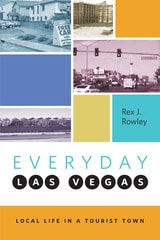
Everyday Las Vegas
Local Life in a Tourist TownRex J. Rowley
University of Nevada Press, 2014
Rowley considers such topics as why people move to Las Vegas, the nature of their work and personal lives, the impact of growth and rapid change, and interaction with the overwhelmingly touristic side of the city. He also considers the benefits and perils of living in a nonstop twenty-four-hour city rich in entertainment options and easy access to gambling, drugs, and other addictions. His examination includes the previously unstudied role of neighborhood casinos patronized by locals rather than tourists and the impact that a very mobile population has on schools, churches, and community life.
Rowley considers the very different ways people perceive a place as insiders or outsiders, a dichotomy that arises when tourism is a mainstay of the local economy. His work offers insights into what Las Vegas can teach us about other cities and American culture in general. It also contributes to our understanding of how people relate to places and how the personality of a place influences the lives of people who live there.