Results by title
5550 books match the query 'Biography & Autobiography' and 172 start with e
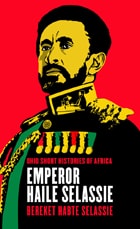
Emperor Haile Selassie
Bereket Habte Selassie
Ohio University Press, 2014
Emperor Haile Selassie was an iconic figure of the twentieth century, a progressive monarch who ruled Ethiopia from 1916 to 1974. This book, written by a former state official who served in a number of important positions in Selassie’s government, tells both the story of the emperor’s life and the story of modern Ethiopia.
After a struggle for the throne in 1916, the young Selassie emerged first as regent and then as supreme leader of Ethiopia. Over the course of his nearly six-decade rule, the emperor abolished slavery, introduced constitutional reform, and expanded educational opportunity. The Italian invasion of Ethiopia in the 1930s led to a five-year exile in England, from which he returned in time to lead his country through World War II. Selassie was also instrumental in the founding of the Organization of African Unity in 1963, but he fell short of the ultimate goal of a promised democracy in Ethiopia. The corruption that grew under his absolute rule, as well as his seeming indifference to the famine that gripped Ethiopia in the 1970s, led finally to his overthrow by the armed forces that he had created.
Haile Selassie was an enlightened monarch in many ways, but also a man with flaws like any other. This short biography is a sensitive portrayal of Selassie as both emperor and man, by one who knew him well.
Empire of Objects
Iurii Trifonov and the Material World of Soviet CultureBenjamin M. Sutcliffe
University of Wisconsin Press, 2023
Scholars have both neglected Trifonov in recent years and focused their limited attention on the author’s most famous works, produced in the 1960s through 1980s. Yet almost half of his output was written before then. In Empire of Objects, Benjamin Sutcliffe takes care to consider the author’s entire oeuvre. Trifonov’s work reflects the paradoxes of a culture that could neither honestly confront the past nor create a viable future, one that alternated between trying to address and attempting to obscure the trauma of Stalinism. He became increasingly incensed by what he perceived as the erosion of sincerity in public and private life, by the impact of technology, and by the state’s tacit support of greed and materialism. Trifonov’s work, though fictional, offers a compelling window into Soviet culture.

Encounters and Dialogues with Martin Heidegger, 1929-1976
Heinrich Wiegand Petzet
University of Chicago Press, 1993
A well-known art historian and an intimate friend of Heidegger's, Heinrich Wiegand Petzet provides a rich portrait of Heidegger that is part memoir, part biography, and part cultural history. By recounting chronologically a series of encounters between the two friends from their meeting in 1929 until the philosopher's death in 1976, as well as between Heidegger and other contemporaries, Petzet reveals not only new aspects of Heidegger's thought and attitudes toward the historical and intellectual events of his time but also the greater cultural and social context in which he articulated his thought.
Encounters with Rauschenberg
(A Lavishly Illustrated Lecture)Leo Steinberg
University of Chicago Press, 2000
With the sharpness and confidence that can only come from a critic who has long been involved with Rauschenberg's work, Steinberg offers an in-depth discussion of such major pieces as the Erased DeKooning Drawing, Bed, and Monogram. He explains the subtle differences between his interpretations and those of other critics, such as Clement Greenberg and Hilton Kramer. He candidly reflects on how he has changed his mind over the years, and defends his new ideas about Rauschenberg's work with precise, fresh arguments. He critically evaluates Rauschenberg's more recent work and addresses how it falls short from the artist's earlier work.
From Rauschenberg's silk-screen prints of the 1960s to the vegetable dye transfer prints of the 1990s, Steinberg warns against the dangers of overinterpretation and iconographic enthusiasm. He argues that the unifying strand through this great artist's work is his drive to appropriate, to take objects and images from the world and make them his own by making them become a part of his art.
Provocative, intelligent, and beautifully articulated, Steinberg's words shed light on one remarkable artist and on the post-war New York art scene, on Steinberg's particular appreciation of Rauschenberg and on his life's work as an art critic.

Encyclopedia of Arkansas Music
Ali Welky
Butler Center for Arkansas Studies, 2013
What do a rockabilly musician turned cinematic swamp monster, a composer of player-piano music, an avant-garde cellist, a musical instrument that lent its name to a weapon, a rock musician turned Catholic monk, some of the best audio speakers in the world, and the creator of Schoolhouse Rock! have in common? That’s right–they all come from Arkansas.
Encyclopedia of Arkansas Music is a special project of the Encyclopedia of Arkansas History & Culture (EOA), an online encyclopedia launched in 2006 by the Butler Center for Arkansas Studies at the Central Arkansas Library System.
This colorful, photo-filled reference work spanning all aspects of Arkansas’s musical past and present includes more than 150 entries on musicians, ensembles, musical works, and events.
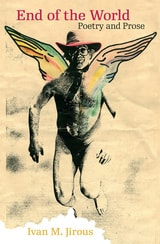
End of the World
Poetry and ProseIvan M. Jirous
Karolinum Press, 2020
End of the World is the first major collection in English of the works of this legendary Czech “madman.” Although nicknamed for his aggressive and rebellious behavior, Jirous’s writing reveal a refined, sophisticated, and even tender sensibility. Translated in part by Paul Wilson, an original member of the Plastic People, the book gathers his poems and letters from prison, as well as his book-length prose work, The True Story of the Plastic People, alongside critical essays on Jirous’s life and work. End of the World is an ideal introduction to the raucous writer who playwright Tom Stoppard referred to as one of the most interesting personalities in modern Czech history.
Enemies of Promise
Cyril Connolly
University of Chicago Press, 2008
“Whom the gods wish to destroy,” writes Cyril Connolly, “they first call promising.” First published in 1938 and long out of print, Enemies of Promise, an “inquiry into the problem of how to write a book that lasts ten years,” tests the boundaries of criticism, journalism, and autobiography with the blistering prose that became Connolly’s trademark. Connolly here confronts the evils of domesticity, politics, drink, and advertising as well as novelists such as Joyce, Proust, Hemingway, and Faulkner in essays that remain fresh and penetrating to this day.
“A fine critic, compulsive traveler, and candid autobiographer. . . . [Connolly] lays down the law for all writers who wanted to count. . . . He had imagination and decisive images flashed with the speed of wit in his mind.”—V. S. Pritchett, New York Review of Books
“Anyone who writes, or wants to write, will find something on just about every single page that either endorses a long-held prejudice or outrages, and that makes it a pretty compelling read. . . . You end up muttering back at just about every ornately constructed pensée that Connolly utters, but that’s one of the joys of this book.”—Nick Hornby, The Believer
“A remarkable book.”—Anthony Powell
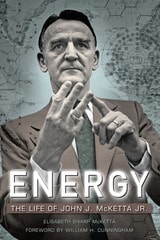
Energy
The Life of John J. McKetta Jr.By Elisabeth Sharp McKetta, Foreword by William H. Cunningham
University of Texas Press, 2017
Energy recounts the life of Dr. John J. McKetta Jr., a first-generation Ukrainian American coal miner who worked his way up from the mines to become the world’s foremost energy expert, a university dean, an encyclopedia editor, and one of the most widely known and respected professors in his field. To honor his one hundredth birthday in 2015, thousands of his former students raised more than $25 million to celebrate his contributions to their lives and to chemical engineering at the University of Texas at Austin, which rechristened his home department the John J. McKetta Jr. Department of Chemical Engineering.
In this biography, granddaughter Elisabeth Sharp McKetta retraces Dr. McKetta’s path to becoming the godfather of modern chemical engineering. She describes how he dedicated his life to supporting students throughout their careers, becoming legendary for phoning scores of them on their birthdays every year, while also showing Americans how to produce and use energy efficiently. John J. McKetta Jr.’s fascinating story has been the subject of hundreds of articles and interviews, and now Energy is the first full-length book about his remarkable life.
Engine Running
EssaysCade Mason
The Ohio State University Press, 2022
Engine Running explores debut author Cade Mason’s gradual distancing from home and old selves alongside an increasingly fractured family doing the same. Starting at the beginning of his parents’ love and working past its end, he combs through memory to piece together a portrait of a family then and now: of a father, reeling after a blindsiding divorce; of a mother, anxious to move on; of a sister, caught in the crossfire; and of a son, learning to embrace his sexuality even as he fears that his own loves may have deepened the rift between his parents.
Lush and innovative, these essays contemplate childhood memories and family secrets, religion and queerness in the rural South, and the ways rituals and contours of manhood are passed through generations. Most of all, we feel with Mason what it is to grapple with and love a place even as you yearn to leave.
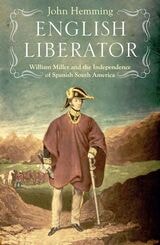
English Liberator
William Miller and the Independence of Spanish South AmericaJohn Hemming
Haus Publishing, 2025
During Admiral Thomas Cochrane’s demolition of imperial Spain’s naval presence in the Pacific amid the revolutionary wars for Spanish South America, all the raids were carried out by his marines under a young officer called William Miller. One of three sons of a baker in a small village in Kent, with no family influence, money, or even secondary education, he came from nowhere, but he went on to have a meteoric rise in the armies that liberated the nations of Chile and Peru. By the time of Ayacucho in 1824, the large battle that ended Spanish rule in South America, there were seven generals in the royalist Spanish army and five on the patriot side. Eleven of these generals were Hispanic; Miller was the only foreigner.
Set in the context of the great European powers’ weakening grip over their global empires and the ensuing wars of independence in Spanish South America, John Hemming’s gripping narrative spans Miller’s time as a teenage soldier in Wellington’s Peninsular War, his contribution to the liberation of the new nations Chile and Peru, and his years in diplomacy thereafter. Drawing on written accounts by many of Miller’s contemporaries in addition to a wealth of modern research, Hemming casts the anti-imperialist, anti-slavery soldier as highly regarded by all the leaders of independence and popular with ordinary people and peasant farmers due to his own humble origins—a legacy evidenced by his burial in the Pantheon of founding fathers of Peru decades after the battles in which he made his name.
Enos Mills
Citizen of NatureAlexander Drummond
University Press of Colorado, 1995
Enrico Fermi, Physicist
Emilio Segrè
University of Chicago Press, 1972
Emilio Segre was awarded the Nobel Prize for Physics in 1959.
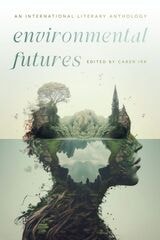
Environmental Futures
An International Literary AnthologyEdited by Caren Irr, et al.
Brandeis University Press, 2024
Featuring short stories, poetry, drama, and creative nonfiction from around the world, this anthology showcases contemporary literature to envision the future of the environment. While environmental literature written in English has been dominated by English and American men who make solo explorations into an unspoiled natural world, Environmental Futures emphasizes local and indigenous writers contending with global landscapes that are far from pristine. Their work opens up decolonial perspectives from Anglophone Africa, South Asia, India, China, South America, the peripheries of Europe, and BIPoC North America. Introducing many writers who will be unfamiliar to English-speaking readers, this collection explores resistance to the oil economy, the impact of storms and natural disasters, extinction, and relations between humans and animals, among other themes.
The pieces are organized by geographical area in five sections: Africa, Asia, Europe, Latin America, and North America. Expert scholars and translators—Kurt Cavender, Roberto Forns-Broggi, Cajetan Iheka, Upamanyu (Pablo) Mukherjee, Irina Sadovina, and Shaobo Xie—selected the works and provided critical introductions for each section.
Epitacio Pessoa
BrazilMichael Streeter
Haus Publishing, 2010
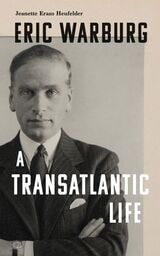
Eric Warburg
A Transatlantic LifeJeanette Erazo Heufelder
Haus Publishing, 2025
In Eric Warburg, Jeanette Erazo Heufelder tells the story of the nephew of the art historian Aby Warburg, whose world-famous library Eric saved from the Nazis. He was a Jew, a banker, a helper of escapees, an intelligence officer in the US Army, a transatlantic bridge builder, and a Cold Warrior. With the help of the cooperation channels he set up, West German and US social groups were aligned with the West amidst the turmoil of postwar Europe.
The history of the transatlantic partnership has become highly topical; since the Russian invasion of Ukraine on February 24, 2022, it has been invoked in Europe as a key reassurance. Eric Warburg’s life, and that of Aby Warburg’s library, tells the story of Europe's twentieth century, the legacy of which continues to inform and inspire the transatlantic partnership today.
Erik Satie
Mary E. Davis
Reaktion Books, 2007
A composer who dabbled in the Dada movement, a Bohemian “gymnopédiste” of fin-de-siècle Montmartre, and a legendary dresser known as “The Velvet Gentleman,” Erik Satie cut a unique figure among early twentieth-century European composers. Yet his legacy has largely languished in the shadows of Stravinsky, Debussy, and Ravel. Mary E. Davis now brings Satie to life in this fascinating new biography.
Satie redefined the composer’s art, devising new methods of artistic expression that melded ordinary and rarified elements of words, visual art, and music. Davis argues that Satie’s modernist aesthetic was grounded in the contradictions of his life—such as enrolling in the conservative Schola Cantorum after working as a cabaret performer—and is reflected in his irreverent essays, drawn art, and music. Erik Satie explores how the composer was embraced by avant-garde artists and fashionable Parisian elite, and how his experiences inspired him to create the musical style of Neoclassicism. Satie also employed the power of the image through his infamous fashion statements, Davis contends, and became part of a nascent celebrity culture.
A cogent and informative portrait, Erik Satie upends the accepted history of modernist music and restores the composer to his rightful pioneering status.
Erika and Klaus Mann in New York
Escape from the Magic MountainAndrea Weiss
University of Chicago Press, 2008

Ernest Hemingway - American Writers 1
University of Minnesota Pamphlets on American WritersPhilip Young
University of Minnesota Press, 1959
Ernest Hemingway - American Writers 1 was first published in 1959. Minnesota Archive Editions uses digital technology to make long-unavailable books once again accessible, and are published unaltered from the original University of Minnesota Press editions.
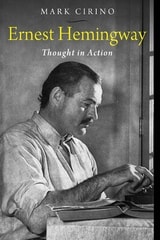
Ernest Hemingway
Thought in ActionMark Cirino
University of Wisconsin Press, 2012
In Cirino’s analysis of Hemingway’s work through this lens—including such celebrated classics as A Farewell to Arms, The Old Man and the Sea, and “Big Two-Hearted River” and less-appreciated works including Islands in the Stream and “Because I Think Deeper”—an entirely different Hemingway hero emerges: intelligent, introspective, and ruminative.
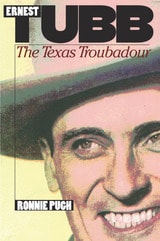
Ernest Tubb
The Texas TroubadourRonnie Pugh
Duke University Press, 1996
Tubb began his career as an imitator of Jimmie Rodgers, but stormed the country music scene in the 1940s with a new honky tonk sound and a string of hits that included “Walking the Floor Over You.” His innovations marked an important transition in country music to a style and lyric in tune with modern American working people, or at least that offered the real-life themes of hard drinking, divorce, tough times, and ruined lives—changes that helped define the music we recognize today as “country.” A member of the Grand Ole Opry until 1982, Tubb hosted a live radio broadcast from the Ernest Tubb Record Shop in Nashville for years and became one of the first country music stars to host his own television show in the mid-1960s. Always popular and on the road much of the time even after his prime hit-making years had ended, he was well-known for promoting the careers of many new performers on the rise.
Delving into fan club journals, songbooks, newspaper broadcast logs, record company files, and hundreds of interviews, Ronnie Pugh draws a picture of Tubb—exploring both his personal and professional life—that is unprecedented in its intimacy, detail, and vitality. We get a close-up view of Tubb riding the crest of his popularity, setting the pace for Nashville, facing the onslaught of Elvis Presley and rock ’n roll, and surviving as a country music legend. Richly illustrated with almost a hundred photographs, many of which are rare unpublished shots from private collections, Ernest Tubb also contains a detailed and complete sessionography, a resource that will be of continuing importance for serious record collectors.
A biography that has been long awaited from Ronnie Pugh, unquestionably the leading authority on Ernest Tubb, this book will delight readers from among the fans of country music, those interested in the history of country music or American popular music and culture generally, and, of course, Ernest Tubb fans.
Ernst Jünger and Germany
Into the Abyss, 1914-1945Thomas R. Nevin
Duke University Press, 1996
Ernst Jünger is in many ways Germany’s conscience, and much of the controversy surrounding him is at its source measured by his relation to the Nazis and Nazi culture. But as Nevin suggests, Jünger can more specifically and properly be regarded as the still living conscience of a Germany that existed before Hitler. Although his memoir of service as a highly decorated lieutenant in World War I made him a hero to the Nazis, he refused to join the party. A severe critic of the Weimar Republic, he has often been denounced as a fascist who prepared the way for the Reich, but in 1939 he published a parable attacking despotism. Close to the men who plotted Hitler’s assassination in 1944, he narrowly escaped prosecution and death. Drawing largely on Jünger’s untranslated work, much of which has never been reprinted in Germany, Nevin reveals Jünger’s profound ambiguities and examines both his participation in and resistance to authoritarianism and the cult of technology in the contexts of his Wilhelmine upbringing, the chaos of Weimar, and the sinister culture of Nazism.
Winner of Germany’s highest literary awards, Ernst Jünger is regularly disparaged in the German press. His writings, as this book indicates, put him at an unimpeachable remove from the Nazis, but neo-Nazi rightists in Germany have rushed to embrace him. Neither apology, whitewash, nor vilification, Ernst Jünger and Germany is an assessment of the complex evolution of a man whose work and nature has been viewed as both inspiration and threat.
Erskine Caldwell - American Writers 78
University of Minnesota Pamphlets on American WritersJames Korges
University of Minnesota Press, 1969
Erskine Caldwell - American Writers 78 was first published in 1969. Minnesota Archive Editions uses digital technology to make long-unavailable books once again accessible, and are published unaltered from the original University of Minnesota Press editions.
This pamphlet series has been hailed by critics, teachers, and librarians as an ideals means of introducing both students and general readers to American writers of all periods. Choice has commented: "For the small library this series offers at small cost introductions by reputable critics o dozens of significant authors, and the larger the library the greater the number of undergraduate students looking for a place to start on some writer." The New York Times Book Review has called the pamphlets "extraordinarily good," pointing out that "they are just long enough (48 pages) to permit a real survey of an author's work and short enough to attract the casual reader, the anxiety-ridden student, and the professor desperate for the straight word on an unfamiliar writer."
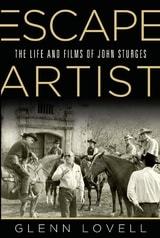
Escape Artist
The Life and Films of John SturgesGlenn Lovell
University of Wisconsin Press, 2008
Best Books for Special Interests, selected by the American Association of School Librarians, and Best Books for General Audiences, selected by the Public Library Association
"Pick up a copy of film critic and scholar Glenn Lovell's terrific new Sturges biography, Escape Artist. . . . I can't urge you enough to check out this interview-rich, aesthetically and culturally perceptive look at the filmmaker and his work."—Bob Strauss, Los Angeles Daily News
“Lovell’s list of interviewees reads like a who’s who of Hollywood and they obviously provided rich source material for this full-scale biography and career survey.”— Leonard Maltin
“This long overdue study of a major Hollywood director will find a welcome home in the libraries of film scholars, action movie buffs, and anyone interested in the popular culture of the twentieth century.”—Turner Classic Movies (TCM.com)
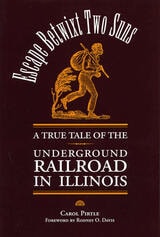
Escape Betwixt Two Suns
A True Tale of the Underground Railroad in IllinoisCarol Pirtle. Foreword by Rodney O. Davis
Southern Illinois University Press, 2000
Although the northern Illinois chapters of the story of Susan “Sukey” Richardson’s escape from slavery on the Underground Railroad are documented, the part played by southern Illinois in that historic episode has remained obscure. Carol Pirtle changes that with her investigation into the 1843 suit Andrew Borders lodged against William Hayes, charging his neighbor with helping slaves from the Borders estate escape to Galesburg. In conjunction with her probe into the past, Pirtle also discovered the Hayes correspondence.
Pirtle documents Hayes’s involvement in the Illinois Underground Railroad through approximately two hundred letters received by Hayes from the early 1820s until his death in 1849. Many of these letters specifically corroborate his participation in the escape of slaves from the Borders estate. One such letter came from T. A. Jones in 1843: “You Dear Sir are to me an unknown friend, yet I believe you are a friend to the poor down trodden Slave. This is as good an introduction as I want from any man. My brother, our cause is a holy one.” Letters written by Galesburg residents show that several prominent citizens of that community also assisted in the affair, proving that Knox College administrators and trustees were active in the Underground Railroad.
Pirtle also includes excerpts from the trial transcript from the 1844 civil case against Hayes, which was tried in Pinckneyville, Illinois. She researched newspaper accounts of the event, most notably those in the Western Citizen and the Sparta Herald. Records of the Covenanter Presbyterian church of which Hayes was a member provide partial explanations of Hayes’s motives.
Telling the story of Hayes and his involvement with Susan Richardson and the Underground Railroad, Pirtle provides insight into the work of abolitionists in Illinois. Escape Betwixt Two Suns, in fact, is one of the few books to substantiate the legends of the Underground Railroad. She tells the story of a quiet man who made a difference, of a man deserving the accolades of a hero.
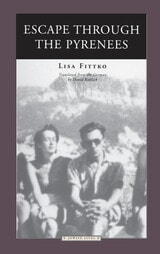
Escape Through the Pyrenees
Lisa Fittko
Northwestern University Press, 2000
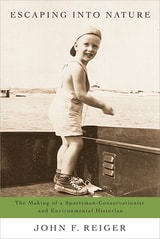
Escaping into Nature
The Making of a Sportsman-Conservationist and Environmental HistorianJohn F. Reiger
Oregon State University Press, 2013
In Escaping into Nature, prominent wildlife conservationist and environmental historian John Reiger shares his story of an angler and hunter who found a cause and a calling and combined them for his life’s work.
John Reiger’s outdoor adventures as a young man primed him for the teachings of the great sportsmen-conservationists of the past, particularly George Bird Grinnell, Theodore Roosevelt, and Aldo Leopold. Inspired by these conservation giants, Reiger left the security of a tenured professorship to serve as executive director of the Connecticut Audubon Society where he, sometimes controversially, put his ideals into practice. Later, he resumed his academic career to illuminate the lives of early wildlife conservationists, visionaries who continue to inspire us to care deeply about the future of the natural world.
Abused psychologically within his family in his early years, Reiger found solace in nature. Though he first entered the outdoors as an escape from his unpleasant circumstances, he soon found the study and pursuit of insects, fishes, and birds to be exciting ends in themselves. He came to believe that it was only by participating in the life and death of other creatures that one could learn to truly value the natural world, be a part of it, and be inspired to work for its conservation.
John Reiger’s autobiography is also the story of his own developing fascination with America’s past, especially as it relates to human interaction with the natural world; his desire to share that passion with others; and his experiences on the road to becoming a nationally recognized scholar. The twists and turns of that journey, and his accounts of the people—and of the wild creatures—who helped him along the way, will appeal to history enthusiasts and nature lovers alike.
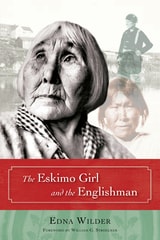
Eskimo Girl and the Englishman
Edna Wilder
University of Alaska Press, 2009
The Eskimo Girl and the Englishman is a sequel to the delightful story Once Upon an Eskimo Time, which recounts the remarkable life of Minnie and her Eskimo mother as she comes of age in a traditional village on Alaska’s western coast. Resuming the tale on the day Minnie encounters her first white man, The Eskimo Girl and the Englishman relates the next century of Minnie’s adventurous life—painting a picture of early twentieth-century village life as Minnie and her Englishman marry and find the determination, strength, and courage to live life in the face of tragedy, rapidly changing technology, and unrelenting hardship along the Bering Sea. Accompanied by photographs of early Eskimo village life, the narrative poignantly captures a sense of a long-lost way of life on the Seward Peninsula.
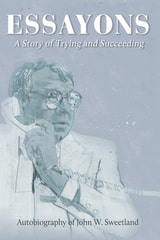
Essayons
Autobiography of John W. SweetlandJohn W. Sweetland
Michigan Publishing Services, 2019
Estonian Life Stories
Tiina Kirss
Central European University Press, 2009
After a short period of independence, Estonia was occupied in World War II by the Red Army, then Nazi Germany, and again, for a lasting occupation, by the Soviets. No wonder that a greater part of the roughly one million Estonians had harshly eventful lives.
This anthology contains 25 selected life stories collected from Estonians who lived through the tribulations of the 20th century, and describe the travails of ordinary people under numerous regimes. The autobiographical accounts provide authentic perspectives on events of this period, where time is placed in the context of life-spans, and subjects grounded in personal experience. Most of the life stories reveal sufferings under foreign (Russian) oppression.
The volume is the product of a large-scale national project to record history by collecting autobiographical accounts, and a process of engaged selection for publication which followed. The variety of life-experiences recorded offers comparison across cultures, as well as an overview of the powerful neighbors as they relinquish and strengthen their hold on Estonia.
Ethics, Politics and Justice in Dante
Edited by Giulia Gaimari and Catherine Keen
University College London, 2019
Bringing together an international and interdisciplinary group of contributors, ranging across history, philology, classical studies, philosophy, and theology, Ethics, Politics and Justice in Dante presents new research on ethics, politics, and justice in the works of Dante Alighieri, including chapters on Dante’s conception of the afterlife. Contributors scrutinize the Divine Comedy and Dante’s other works in Italian and Latin, showing the evolution of his thought throughout his writing career, with chapters focusing especially on his early philosophical Convivio and on the two “Eclogues” of his final years. Other chapters tackle themes relating to judgment, justice, rhetoric, and literary ethics in the Divine Comedy, as well as the differing public reception and use of Dante’s work in Italy and Britain.
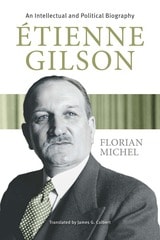
Etienne Gilson
An Intellectual and Political BiographyFlorian Michel
Catholic University of America Press, 2023
Eudora Welty - American Writers 66
University of Minnesota Pamphlets on American WritersJ.A. Bryant Jr.
University of Minnesota Press, 1968
Eudora Welty - American Writers 66 was first published in 1968. Minnesota Archive Editions uses digital technology to make long-unavailable books once again accessible, and are published unaltered from the original University of Minnesota Press editions.
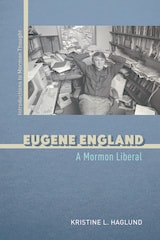
Eugene England
A Mormon LiberalKristine L. Haglund
University of Illinois Press, 2021
Kristine L. Haglund views England’s writing through the tensions produced by his often-opposed intellectual and spiritual commitments. Though labeled a liberal, England had a traditional Latter-day Saint background and always sought to address fundamental questions in Mormon terms. His intellectually adventurous essays sometimes put him at odds with Church authorities and fellow believers. But he also influenced a generation of thinkers and cofounded Dialogue, a Mormon academic and literary journal acclaimed for the broad range of its thought.
A fascinating portrait of a Mormon intellectual and his times, Eugene England reveals a believing scholar who emerged from the lived experiences of his faith to engage with the changes roiling Mormonism in the twentieth century.
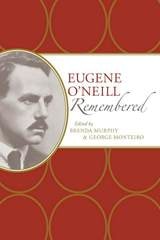
Eugene O'Neill Remembered
Edited by Brenda Murphy and George Monteiro
University of Alabama Press, 2017
A primary-source portrait of Eugene O’Neill through the voices that knew him.
Known principally as the author of some of the most significant plays in the American dramatic canon and as one of America’s Nobel Laureates in literature, O'Neill rarely gave interviews and offered few details about himself. As a consequence, his life has long been shrouded in myth. He also abetted some of the misconceptions about his youth by, for example, advocating the story that he was expelled from Princeton for throwing a rock through Woodrow Wilson's window or by exaggerating the amount of time he had spent at sea. The legend of the hard-drinking, tormented playwright with a grim view of life was further reinforced when Long Day's Journey into Night was produced in 1956, three years after his death instead of the twenty-five years he had insisted on.
The portrayal of O’Neill as a tragic figure has been solidified in a number of biographies. The purpose of this collection, however, is to present O'Neill as others saw him and described him in their first-person accounts. In the course of these reminiscences, many of the vast and various narrators conflict with and contradict each other. Unlike other accounts of O’Neill’s life, much of the focus is on impressions instead of facts. The result is a revealing composite portrait of a key figure in twentieth-century American literary history.
This extensive collection offers insights unavailable in any other book and will hold massive appeal for scholars and students interested in American literature, Eugene O’Neill, and theater history, as well as anyone keen to uncover intimate details of the life of one of America’s greatest writers.
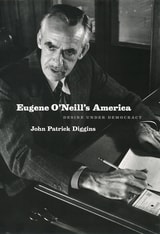
Eugene O'Neill's America
Desire Under DemocracyJohn Patrick Diggins
University of Chicago Press, 2007
In the face of seemingly relentless American optimism, Eugene O’Neill's plays reveal an America many would like to ignore, a place of seething resentments, aching desires, and family tragedy, where failure and disappointment are the norm and the American dream a chimera. Though derided by critics during his lifetime, his works resonated with audiences, won him the Nobel Prize and four Pulitzer, and continue to grip theatergoers today. Now noted historian John Patrick Diggins offers a masterly biography that both traces O’Neill’s tumultuous life and explains the forceful ideas that form the heart of his unflinching works.
Diggins paints a richly detailed portrait of the playwright’s life, from his Irish roots and his early years at sea to his relationships with his troubled mother and brother. Here we see O’Neill as a young Greenwich Village radical, a ravenous autodidact who attempted to understand the disjunction between the sunny public face of American life and the rage that he knew was simmering beneath. According to Diggins, O’Neill mined this disjunction like no other American writer. His characters burn with longing for an idealized future composed of equal parts material success and individual freedom, but repeatedly they fall back to earth, pulled by the tendrils of family and the insatiability of desire. Drawing on thinkers from Emerson to Nietzsche, O’Neill viewed this endlessly frustrated desire as the problematic core of American democracy, simultaneously driving and undermining American ideals of progress, success, and individual freedom.
Melding a penetrating assessment of O’Neill’s works and thought with a sensitive re-creation of his life, Eugene O’Neill’s America offers a striking new view of America’s greatest playwright—and a new picture of American democracy itself.
Eugene O’Neill - American Writers 45
University of Minnesota Pamphlets on American WritersJohn Gassner
University of Minnesota Press, 1965
Eugene O'Neill - American Writers 45 was first published in 1965. Minnesota Archive Editions uses digital technology to make long-unavailable books once again accessible, and are published unaltered from the original University of Minnesota Press editions.
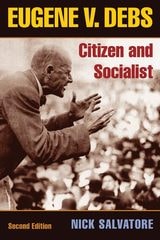
Eugene V. Debs
Citizen and SocialistNick Salvatore
University of Illinois Press, 2007
Eugene Debs (1855-1926) is regarded by many as American history's premier labor advocate. He was the leader of the Socialist party, five-time Socialist candidate for president, outspoken on the rights of all workers, and a persistent defender of America's democratic traditions.
Nick Salvatore's acclaimed biography offers a major reevaluation of Debs, the movements he launched, and his belief in American Socialism as an extension of the nation's democratic traditions. He also shows the relationship between Debs's public image and his private life as child, sibling, husband, and lover. Salvatore's Debs--weaknesses intact--emerges as a complex man, frustrated and angered by the glaring inequities of a new economic order, and willing to risk his freedom to preserve the essence of democratic society.
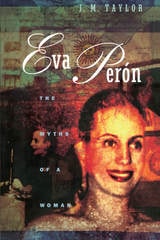
Eva Perón
The Myths of a WomanJulie Taylor
University of Chicago Press, 1981
"Taylor shows that she is remembered by different classes and political factions as saint, a revolutionary, or a whore, depending on whether she was interpreted as an embodiment or as a violation of the Argentine feminine ideal."—Booklist
"Highly commendable . . . it deliberately eschews the sensationalism that characterizes earlier [biographies]. . . . Taylor instead concentrates on the myths that have lingered since her death. . . . [This book] transcends biography."—Gentlemen's Quarterly
"[A] concise and brilliant examination of the legends that arose in Argentina during the lifetime . . . of a woman who broke with Argentine tradition and became a political figure in her own right."—New Yorker
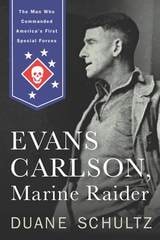
Evans Carlson, Marine Raider
The Man Who Commanded America's First Special ForcesDuane Schultz
Westholme Publishing, 2014
In Evans Carlson, Marine Raider: The Man Who Commanded America’s First Special Forces, psychologist and acclaimed history writer Duane Schultz presents a fascinating and absorbing portrait of this complex officer. Son of a Congregational preacher, Carlson left home at an early age, and when he was just seventeen, the tall, lanky underage teenager bluffed his way into the army. He began his eventful military career against Pancho Villa, and continued through World War I and the unrest in Central America and in China. Despite Carlson’s personal bravery, loyalty, and long service, Schultz reveals that his active career was cut short by the Marine command who were envious of the attention he and his men received from the press and public; foreshadowing the paranoia of the McCarthy era, he was also rumored to be a communist. His raiders remained staunchly loyal to their former commander, and when he died in 1947, they ensured he would be buried in Arlington National Cemetery. Famed army and political cartoonist Bill Mauldin said, “There were only two brass hats whom ordinary GIs respected: Dwight Eisenhower and Evans Carlson.” This is Carlson’s story.

Evelyn Waugh's Oxford
Barbara Cooke
Bodleian Library Publishing, 2018
Following a brief overview of Waugh’s life and work, subsequent chapters examine the prose and graphic art Waugh produced as an undergraduate, together with his portrayal of Oxford in Brideshead Revisited and his memoir, A Little Learning. A specially commissioned, hand-drawn trail around Evelyn Waugh’s Oxford guides the reader around the city Waugh knew and loved through such iconic locations as the Botanic Garden, the Oxford Union, and the Chequers.
A unique literary biography, this book brings to life Waugh’s Oxford, exploring the lasting impression it made on one of the most accomplished literary craftsmen of the twentieth century.
Ever Since I Did Not Die
Ramy Al-Asheq
Seagull Books, 2021
The texts gathered in Ever Since I Did Not Die by Syrian-Palestinian poet Ramy Al-Asheq are a poignant record of a fateful journey. Having grown up in a refugee camp in Damascus, Al-Asheq was imprisoned and persecuted by the regime in 2011 during the Syrian Revolution. He was released from jail, only to be recaptured and imprisoned in Jordan. After escaping from prison, he spent two years in Jordan under a fake name and passport, during which he won a literary fellowship that allowed him to travel to Germany in 2014, where he now lives and writes in exile.
Through seventeen powerful testimonies, Ever Since I Did Not Die vividly depicts what it means to live through war. Exquisitely weaving the past with the present and fond memories with brutal realities, this volume celebrates resistance through words that refuse to surrender and continue to create beauty amidst destruction—one of the most potent ways to survive in the darkest of hours.
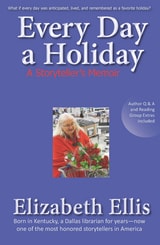
Every Day A Holiday
A storyteller's memoirElizabeth Ellis
Parkhurst Brothers, Inc., 2014
--Robin Bady, Storyteller, Arts Educator, Brooklyn, New York
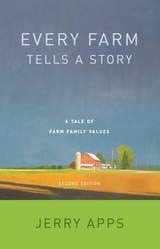
Every Farm Tells a Story
A Tale of Family ValuesJerry Apps
Wisconsin Historical Society Press, 2018
“Do your chores without complaining. Show up on time. Do every job well. Always try to do better. Never stop learning. Next year will be better. Care for others, especially those who have less than you. Accept those who are different from you. Love the land.”
In this paperback edition of a beloved Jerry Apps classic, the rural historian captures the heart and soul of life in rural America. Inspired by his mother’s farm account books—in which she meticulously recorded every farm purchase—Jerry chronicles life on a small farm during and after World War II. Featuring a new introduction exclusive to this 2nd edition, Every Farm Tells a Story reminds us that, while our family farms are shrinking in number, the values learned there remain deeply woven in our cultural heritage.
Every Last Breath
A Memoir of Two IllnessesJoanne Jacobson
University of Utah Press, 2020
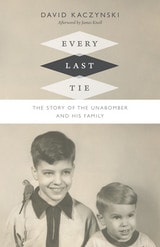
Every Last Tie
The Story of the Unabomber and His FamilyDavid Kaczynski
Duke University Press, 2016
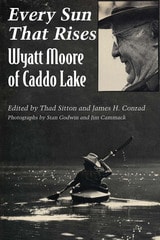
Every Sun That Rises
Wyatt Moore of Caddo LakeEdited by Thad Sitton and James H. Conrad
University of Texas Press, 1985
“What I done and what I been accused of covers everything, you put ’em both together.” Wyatt Moore of Caddo Lake exaggerates, but perhaps not very much. During his long life at Caddo Lake, Moore was at various times a boat operator, commercial fisherman, boat builder, farmer, fishing and hunting camp operator, guide, commercial hunter, trapper, raftsman, moonshiner, oil field worker, water well driller, and mechanical jack-of-all-trades. Still, he always found time for his lifelong study of the natural and human history of Caddo Lake. Here, in words as fresh and forceful as the day they were uttered, is his tale.
Moore, who was given the gift of a unique story to tell and great power to tell it, was the historical interpreter of his strange homeland of Caddo Lake. Twenty-three miles long, some forty thousand acres at high water, stretching across two Texas counties and one Louisiana parish, Caddo Lake’s fresh waters merge into a labyrinthine swamp punctuated by inlets, holes, and geological oddities like Goat Island, Whistleberry Slough, Whangdoodle Pass, and the Devil’s Elbow. Here among these lost reminders of steamboats and old bateau men is Moore’s world.
Born in 1901 at Karnack, Texas, Moore grew up in a time when kids wore button shoes and in a place where pigs and chickens roamed the backyard. He drank his first whiskey at age eight, gigged fish, trapped, and hunted for pearls as a boy, and grew up to an easy assurance on the lake that comes only to those long accustomed to its ways. A walking library of the history of Caddo Lake, Moore delved into almost every nook and corner of it, and wherever he went, whatever he did, he sought to learn more about his subect. Sought out by writers and journalists—among them James Michener and Bill Moyers—because of his laconic wit and remarkable command of the region’s story, Moore became known as a resource as precious as the lake itself. Moore’s story is eloquently introduced by Thad Sitton in an opening essay that chronicles the history of Caddo Lake. Striking photographs of Moore at home and at work on the lake beautifully amplify his life story, and an exuberant word-and-picture essay of Moore expertly building the traditional boat of the region, a bateau, reinforces the vivid image we have of this remarkable man.
Every Wrong Direction
An Emigré’s MemoirDan Burt
Rutgers University Press, 2023
Every Wrong Direction recreates and dissects the bitter education of Dan Burt, an American émigré who never found a home in America. It begins in the row homes of Jewish immigrants and working-class Italians on the mean streets of 1950s South Philadelphia. Every Wrong Direction follows the author from the rough, working-class childhood that groomed him to be a butcher or charter boat captain, through America, Britain and Saudi Arabia as student, lawyer, spy, culture warrior, and expatriate, ending with a photo of his college rooms at St John’s College, Cambridge. Between this beginning and end, through a Philadelphia commuter college, to Cambridge, then Yale Law School, across the working to upper classes, three countries, and seven cities over 43 years, it maps his pursuit of, realization, disillusionment with and abandonment of America and the American Dream.
Praise for Dan Burt's previous memoir, You Think It Strange:
“Burt’s early life was indeed a triumph of wit and will. He managed to escape a world filled with violence and a culture that valued street smarts over book smarts, all the while knowing that just about everyone around him thought little of his prospects. That he made it out at all is extraordinary. That he became a successful lawyer and writer is virtually unimaginable.” —Commonweal
“Dan Burt is a fine poet, and this memoir has all the sensitivity and vigilance you might expect from a writer with such a background. But his prose also has a robustness and documentary power that continually startles and engages. As it combines these things, You Think It Strange catches the strangeness of the world and makes it familiar.”
—Sir Andrew Motion, Poet Laureate of the United Kingdom, 1999-2009
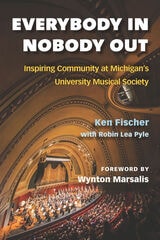
Everybody In, Nobody Out
Inspiring Community at Michigan's University Musical SocietyKen Fischer with Robin Lea Pyle
University of Michigan Press, 2020
The approach not only deepened UMS’s engagement with the university and southeast Michigan communities, it led to exemplary partnerships with distinguished artists across the world. Under Fischer’s leadership, UMS hosted numerous breakthrough performances, including the Vienna Philharmonic’s final tour with Leonard Bernstein, appearances by then relatively unknown opera singer Cecilia Bartoli, a multiyear partnership with the Royal Shakespeare Company, and artists as diverse as Yo-Yo Ma, Jawole Willa Jo Zollar, Elizabeth Streb, and Nusrat Fateh Ali Khan.
Though peppered with colorful anecdotes of how these successes came to be, this book is neither a history of UMS nor a memoir of Fischer’s significant accomplishments with the organization. Rather it is a reflection on the power of the performing arts to engage and enrich communities—not by handing down cultural enrichment from on high, but by meeting communities where they live and helping them preserve cultural heritage, incubate talent, and find ways to make community voices heard.
Everything I Never Wanted to Know
Christine Hume
The Ohio State University Press, 2023
In Everything I Never Wanted to Know, Christine Hume confronts the stigma and vulnerability of women’s bodies in the US. She explores bodily autonomy and sexual assault alongside the National Sex Offender Registry in order to invoke not solutions but a willingness to complicate our ideas of justice and defend every human’s right to be treated like a member of the community. Feminist autobiography threads into historical narrative and cultural criticism about the Victorian-era Frozen Charlotte doll; the Nylon Riots of the 1940s; the movie Halloween; Larry Nassar, who practiced in Hume’s home state of Michigan; and other material. In these reflections on sexuality, gender, criminality, and violence, Hume asks readers to reconsider what we have collectively normalized and how we are each complicit, writing through the darkness of what we don’t want to see, what we’d rather not believe, and what some of us have long tried to forget.
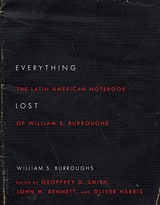
Everything Lost
The Latin American Notebook of William S. Burroughs, Revised EditionWilliam S. Burroughs, Edited by Geoffrey D. Smith, John M. Bennett, and Oliver Harris
The Ohio State University Press, 2017
In late summer 1953, as he returned to Mexico City after a seven-month expedition through the jungles of Ecuador, Colombia, and Peru, William Burroughs began a notebook of final reflections on his four years in Latin America. His first novel, Junkie, had just been published and he would soon be back in New York to meet Allen Ginsberg and together complete the manuscripts of what became The Yage Letters and Queer. Yet this notebook, the sole survivor from that period, reveals Burroughs not as a writer on the verge of success, but as a man staring down personal catastrophe and visions of looming cultural disaster.
Losses that will not let go of him haunt Burroughs throughout the notebook: “Bits of it keep floating back to me like memories of a daytime nightmare.” However, out of these dark reflections we see emerge vivid fragments of Burroughs’ fiction and, even more tellingly, unique, primary evidence for the remarkable ways in which his early manuscripts evolved. Assembled in facsimile and transcribed by Geoffrey D. Smith, John M. Bennett, and Burroughs scholar Oliver Harris, the notebook forces us to change the way we see both Burroughs and his writing at a turning point in his literary career.