Results by title
3071 books match the query 'Business & Economics' and 174 start with e

Empirical Foundations of Household Taxation
Edited by Martin Feldstein and James M. Poterba
University of Chicago Press, 1996
The nine papers in this volume exploit the substantial variation in U.S. tax policy during the last two decades to investigate how taxes affect a range of household behavior, including labor-force participation, saving behavior, choice of health insurance plan, choice of child care arrangements, portfolio choice, and tax evasion. They also present new analytical results on the effects of different types of tax policy. All of this research relies on household-level data—drawn either from public-use tax return files or from large household-level surveys—to explore various aspects of the relationship between taxes and household behavior.
As debates about the effects of proposed tax reforms continue in the 1990s, this volume will be of interest to policy makers and scholars in the field of public finance.
Empirical Studies of Commercial Policy
Edited by Robert E. Baldwin
University of Chicago Press, 1991
Marked by a shift from a traditional reliance on simulation models, these papers take their inspiration from recent changes in the assumptions traditionally underlying research in international trade theory. No longer are government policies viewed as being somehow "given" to the researcher; in part 1, "Analyses with a Political Economy Perspective," four papers treat such policies as endogenous and explicable in terms of political economy. Neither are product and factor markets seen as perfectly competitive; instead, the three papers in part 2, "Trade Policy Effects under Imperfectly Competitive Market Conditions," assume that firms consider the actions of other companies when formulating their decisions. In part 3, "A New Measure of Trade Restrictiveness and Estimates of Trade Policy Effects with CGE Models," the first essay explores the quantitative restrictions on cheese to develop and implement a new model of restrictive trade. Two final contributions address problems for which simulation modeling is especially useful. The first considers the effectiveness of an import surcharge in reducing the U.S. trade deficit and the second treats the welfare effects of liberalization in South Korea where increasing returns to scale are significant
These innovative studies focus on economic behavior that will provide valuable insights for policymakers, academic economists, and students.
Empirical Studies of Strategic Trade Policy
Edited by Paul Krugman and Alasdair Smith
University of Chicago Press, 1994
The nine papers cover the U.S. and European auto industries, the U.S. steel industry, the commercial aircraft industry, airline deregulation in Scandinavia, and labor and industrial policy in Korea and Taiwan. The authors refine the basic techniques for measuring policy effectiveness, extend them to encompass industry dynamics, and test the implications of new trade models.
International economists and trade experts in government and business will find important new insights into the role of strategic trade policy in international competitiveness.
Empowering Exporters
Reciprocity, Delegation, and Collective Action in American Trade PolicyMichael J. Gilligan
University of Michigan Press, 1997

End of the Line
Autoworkers and the American DreamEdited by Richard Feldman and Michael Betzold
University of Illinois Press, 1988
"A richly detailed, well-crafted portrait of a cross section of autoworkers in the midst of an identity crisis and a crisis gripping the U.S. auto industry."--Frank Hammer, President, United Auto Workers Local 909

Energy in the Nordic World
Mogens Rüdiger and Anna Åberg
University of Wisconsin Press, 2023
Norway and Sweden are among the biggest consumers of energy per capita, yet the Nordic nations also lead the world in clean power production and have ambitious goals of decarbonizing their energy systems by 2050. Denmark, Norway, Sweden, Finland, and Iceland vary drastically in geography and the availability of natural resources, but each consistently generates electricity from renewable sources at multiple times the average rate of other high-income countries.
Mogens Rüdiger and Anna Åberg present a concise and timely history of energy production, trade, and consumption in Norden, starting with a review of the regional energy mix—from wind, solar, tide and wave, geothermal, biomass, nuclear, coal, and gas sources. Brief chapters describe the diversity of Nordic energy markets, assess how far the green transition has come, and explore what comes next as global crises, domestic politics, and technological developments present novel challenges and opportunities. Energy infrastructures and economic activities, Rüdiger and Åberg argue, serve as unique cultural focal points in the region. The coauthors summarize the national policy frameworks for the sector as well as the key energy and economic indicators used in infrastructure planning, regulation, and the opening of the electricity and gas markets to free competition.
Energy in the Nordic World is the essential primer to the power markets at the heart of Europe’s energy transition.

Engaging Diverse Communities
A Guide to Museum Public RelationsMelissa A. Johnson
University of Massachusetts Press, 2020
Melissa A. Johnson interviews communicators at cultural heritage museums to understand the challenges of representing communities based on racial and ethnic, generational, immigrant, and language identities. Exploring how communications professionals function as cultural intermediaries by negotiating competing and intersecting identities and mastering linguistic and visual code-switching, she presents an analysis of the communication tactics of more than two hundred art, history, African American, American Indian, and other diverse museums. Engaging Diverse Communities illuminates best public relations practices, especially in media relations, digital press relations, website content production, social media, and event planning. This essential text for museum professionals also addresses visual aesthetics, cultural expression, and counter-stereotypes, and offers guidance on how to communicate cultural attractiveness.
Engineering Culture
Control and Commitment in a High-Tech CorporationGideon Kunda
Temple University Press, 2006

England's Asian Renaissance
Su Fang Ng
University of Delaware Press, 2022
Published by the University of Delaware Press. Distributed worldwide by Rutgers University Press.
England's Great Transformation
Law, Labor, and the Industrial RevolutionMarc W. Steinberg
University of Chicago Press, 2016
Building his argument on three case studies—the Hanley pottery industry, Hull fisheries, and Redditch needlemakers—Steinberg employs both local and national analyses to emphasize the ways in which these master-servant laws allowed employers to use the criminal prosecutions of workers to maintain control of their labor force. Steinberg provides a fresh perspective on the dynamics of labor control and class power, integrating the complex pathways of Marxism, historical institutionalism, and feminism, and giving readers a subtle yet revelatory new understanding of workplace control and power during England’s Industrial Revolution.
English Majors at Work
Career and Life PathwaysHelene Meyers
Rutgers University Press, 2027
English Majors at Work: Career and Life Pathways details the professional superpowers—the many marketable skills—gained from studying literature, creative writing, film, and popular culture. It prepares English majors to know themselves and their worth so that they can feed their bodies and souls in rapidly changing 21st century economies. Written for prospective and current English majors as well as recent grads, the book shows that skills associated with the major--innovative thinking, excellent written communication, and the ability to read people, rooms, and data---can sustain lifelong successful careers. It also provides real talk about internships, networking, and graduate school. In keeping with a major that focuses on storytelling and analysis, each chapter concludes with a lively discussion of a relevant literary or media text. English Majors at Work is an essential guide for literature students as well as the professors, career services professionals, and parents who advise them.

Enraged Citizens, European Peace and Democratic Deficits
Or Why the Democracy Given to Us Must Become One We Fight ForRobert Menasse
Seagull Books, 2016
Spanning from the beginning of the transnational idea with 1951’s Montanunion—the European Coal and Steel Community—to the current financial crisis, Menasse focuses on the institutional structures and forces both advancing and obstructing the European project. Given the internal tensions among the European Commission, Parliament, and Council, Menasse argues that current problems that are frequently misunderstood as resulting from the financial crisis are, in fact, political. Along the way, he makes the bold claim that either the Europe of nation-states will perish—or the project of transcending the nation-states will.
A provocative book, Enraged Citizens, European Peace and Democratic Deficits deftly analyzes the financial and bureaucratic structures of the European Union and sheds much-needed light on the state of the debt crisis. Menasse brings his considerable literary expertise to the unraveling of the real state of the Union, along the way weaving an intriguing tale of one continent’s efforts to become a truly postnational democracy.

Ensuring Corporate Misconduct
How Liability Insurance Undermines Shareholder LitigationTom Baker and Sean J. Griffith
University of Chicago Press, 2010
Shareholder litigation and class action suits play a key role in protecting investors and regulating big businesses. But Directors and Officers liability insurance shields corporations and their managers from the financial consequences of many illegal acts, as evidenced by the recent Enron scandal and many of last year’s corporate financial meltdowns. Ensuring Corporate Misconduct demonstrates for the first time how corporations use insurance to avoid responsibility for corporate misconduct, dangerously undermining the impact of securities laws.
As Tom Baker and Sean J. Griffith demonstrate, this need not be the case. Opening up the formerly closed world of corporate insurance, the authors interviewed people from every part of the industry in order to show the different instances where insurance companies could step in and play a constructive role in strengthening corporate governance—yet currently do not. Ensuring Corporate Misconduct concludes with a set of readily implementable reforms that could significantly rehabilitate the system.
Entering Cultural Communities
Diversity and Change in the Nonprofit ArtsGrams, Diane
Rutgers University Press, 2008
The chapters in this book draw on interviews with leaders, staff, volunteers, and audience members from eighty-five nonprofit cultural organizations to explore how they are trying to increase participation and the extent to which they have been successful. The insiders' accounts point to the opportunities and challenges involved in such efforts, from the reinvention of programs and creation of new activities, to the addition of new departments and staff dynamics, to partnerships with new groups. The authors differentiate between "relational" and "transactional" practices, the former term describing efforts to build connections with local communities and the latter describing efforts to create new consumer markets for cultural products. In both cases, arts leaders report that, although positive results are difficult to measure conclusively, long-term efforts bring better outcomes than short-term activities.
The organizations discussed include large, medium, and small nonprofits located in urban, suburban, and rural areas—from large institutions such as the Smithsonian, the Walker Art Center, the Museum of Fine Arts Houston, and the San Francisco Symphony to many cultural organizations that are smaller, but often known nationally for their innovative work, such as AS220, The Loft Literary Center, Armory Center for the Arts, Appalshop, and the Western Folklife Center.
Enterprise Exit Processes in Transition Economies
Downsizing, Workouts, and LiquidationLeszek Balcerowicz
Central European University Press, 1998
Enterprising America
Businesses, Banks, and Credit Markets in Historical PerspectiveEdited by William J. Collins and Robert A. Margo
University of Chicago Press, 2015
To better understand the historical processes central to American economic development, Enterprising America brings together contributors who address the economic behavior of American firms and financial institutions—and the associated legal institutions that shaped their behavior—throughout the nineteenth and early twentieth centuries. Collectively, the contributions provide an account of the ways in which businesses, banks, and credit markets promoted America’s extraordinary economic growth. Among the topics that emerge are the rise of incorporation and its connection to factory production in manufacturing, the organization and operation of large cotton plantations in comparison with factories, the regulation and governance of banks, the transportation revolution’s influence on bank stability and survival, and the emergence of long-distance credit in the context of an economy that was growing rapidly and becoming increasingly integrated across space.

Entrepreneurial Arts and Cultural Leadership
Traits of Success in Nonprofit TheatreBonnie Fogel and Brett Ashley Crawford
Intellect Books, 2025
Entrepreneurial Arts and Cultural Leadership focuses on real-world strategies for developing the entrepreneurial mindset necessary for leading and sustaining nonprofit arts organizations. Bonnie Fogel and Brett Ashley Crawford examine the leadership traits that drive innovation, adaptability, and long-term viability in the ever-evolving arts sector.
Through the case study of Imagination Stage, they highlight how successful nonprofit theater leaders can navigate financial instability, advocate for equity and inclusion, and implement sustainable business models in a landscape forever impacted by national and global events. With practical insights, tools, and a resource-rich appendix, this book offers arts managers, educators, and nonprofit leaders a roadmap for resilience and growth. Whether you are an advanced student, a researcher, or an arts executive seeking inspiration, this book provides an essential framework for building the future of nonprofit theatre.

Entrepreneurial Goals
Development and Africapitalism in Ghanaian Soccer AcademiesItamar Dubinsky
University of Wisconsin Press, 2022
Itamar Dubinsky’s extensive ethnographic research offers an innovative theoretical approach by assessing three institutions—Mandela Soccer Academy, Kumasi Sports Academy, and Unistar Soccer Academy—through an Africapitalist prism. He demonstrates that these business endeavors, when viewed from the perspective of local interests, realize many of the educational, financial, and community building ambitions of the region. This pioneering examination of locally owned academies in Ghana reflects Dubinsky’s aim of illuminating the entrepreneurs and programs whose success passes to participating youth and their families, while also exposing the contradictions of for-profit development initiatives that purport to reap collective social benefits.
Entrepreneurial Seoulite
Culture and Subjectivity in Hongdae, SeoulMihye Cho
University of Michigan Press, 2019
Recent research on Korean culture approaches the K-wave phenomenon from the perspectives of cultural consumption, media analysis, and cultural management and policy. Meanwhile, studies on Seoul have centered on its transformation as a global, creative city. Rather than examining the K-wave or the city itself, this book explores the experience of living through the city-in-transition, focusing on the relationship between “the ideology that justified engagement in capitalism” and the “subjectification process.” The book aims to understand the project to institutionalize a cultural district in Hongdae as a demonstration of the coevolution of ideologies and citizenship in a society undergoing rapid liberalization—politically, culturally, and economically.
A cultural turn took place in Korea during the 1990s, amid the economic prosperity driven by state-led industrialization and the collapse of the military dictatorship due to democratization movements. Cultural critiques, emerging as an alternative to social movements, proliferated to assert the freedom and autonomy of individuals against regulatory systems and institutions. The nation was hit by the Asian financial crisis in 1997, and witnessed massive economic restructuring including layoffs, stakeouts, and a prevalence of contingent employment. As a result, the entire nation had to find new engines of economic growth while experiencing a creative destruction. At the center of this national transformation, Seoul has sought to recreate itself from a mega city to a global city, equipped with cutting-edge knowledge industries and infrastructures.
By juxtaposing the cultural turn and cultural/creative city-making, Entrepreneurial Seoulite interrogates the formation of new citizen subjectivity, namely the enterprising self, in post-Fordist Seoul. What kinds of logic guide individuals in the engagement of new urban realities in rapidly liberalized Seoul—culturally and economically? In order to explore this query, Mihye Cho draws on Weber’s concept of “the spirit of capitalism” on the formation of a new economic agency focusing on the re-configuration of meanings, and seeks to capture a transformative moment detailing when and how capitalism requests a different spirit and lifestyle of its participants. Likewise, this book approaches the enterprising self as the new spirit of post-Fordist Seoul and explores the ways in which people in Seoul internalize and negotiate this new enterprising self.
Entrepreneurship and Innovation Policy and the Economy
Volume 1Edited by Josh Lerner and Scott Stern
University of Chicago Press Journals, 2022
Entrepreneurship, Technological Innovation, and Economic Growth
Studies in the Schumpeterian TraditionFrederic M. Scherer and Mark Perlman, Editors
University of Michigan Press, 1992
Entropy Economics
The Living Basis of Value and ProductionJames K. Galbraith and Jing Chen
University of Chicago Press, 2025
Economists dream of equilibrium. It’s time to wake up.
In mainstream economics, markets are ideal if competition is perfect. When supply balances demand, economic maturity is orderly and disturbed only by shocks. These ideas are rooted in doctrines going back thousands of years, yet, as James K. Galbraith and Jing Chen show, they contradict the foundations of our scientific understanding of the physical and biological worlds.
Entropy Economics discards the conventions of equilibrium and presents a new basis for thinking about economic issues, one rooted in life processes—an unequal world of unceasing change in which boundaries, plans, and regulations are essential. Galbraith and Chen’s theory of value is based on scarcity, and it accounts for the power of monopoly. Their theory of production covers increasing and decreasing returns, uncertainty, fixed investments over time, and the impact of rising resource costs. Together, their models illuminate key problems such as trade, finance, energy, climate, conflict, and demography.
Entropy Economics is a thrilling framework for understanding the world as it is and will be keenly relevant to the economic challenges of a world threatened with disorder.

Environmental Challenges in the MENA Region
The Long Road from Conflict to CooperationHamid Pouran and Hassan Hakimian
Gingko, 2019
Although the region’s fragile environmental state has increasingly preoccupied policymakers in individual countries, there is currently insufficient attention paid to coordinating collaborative action to recognise and address problems relating to its environmental sustainability and climatic change. In the absence of a positive agenda for tackling these issues, recurrent environmental setbacks and rapid depletion of the region’s natural resources continue to pose a major threat to the long-term economic, political, and social stability of the region.
Despite the urgency of these challenges, there is little research dedicated to studying MENA’s environmental sustainability. Environmental Challenges in the MENA Region: The Long Road from Conflict to Cooperation draws from the proceedings of a seminal international conference on the subject at SOAS in October 2016, which was held as a celebration of the SOAS Centenary. This led to a collective contribution by experts and policy-makers concerned with the state of the MENA region’s environmental predicament with the aim of addressing these problems in a constructive and forward-looking approach.
The chapters in this book are predicated upon two critical premises. First, expertise and awareness from a wide range of disciplines is required to understand and address environmental challenges. And, second, to have a real chance of success, MENA countries need to confront these problems as their common threats and to see them as an opportunity for regional cooperation and policy coordination. This book provides the results of an interdisciplinary effort to address the various dimensions of the region’s environmental challenges from across the region and disciplines.
Environmental and Energy Policy and the Economy
Volume 1Edited by Matthew J. Kotchen, James H. Stock, and Catherine D. Wolfram
University of Chicago Press Journals, 2020
Environmental and Energy Policy and the Economy
Volume 2Edited by Matthew J. Kotchen, James H. Stock, and Catherine D. Wolfram
University of Chicago Press Journals, 2020
Environmental and Energy Policy and the Economy
Volume 3Edited by Matthew J. Kotchen, Tatyana Deryugina, and James H. Stock
University of Chicago Press Journals, 2022
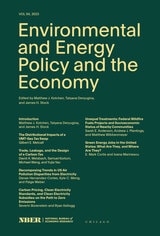
Environmental and Energy Policy and the Economy
Volume 4Edited by Matthew J. Kotchen, Tatyana Deryugina, and James H. Stock
University of Chicago Press Journals, 2023
Environmental and Energy Policy and the Economy focuses on the effective and efficient management of environmental and energy challenges. Research papers offer new evidence on the intended and unintended consequences, the market and nonmarket effects, and the incentive and distributional impacts of policy initiatives and market developments.
This volume presents six new papers on environmental and energy economics and policy. Gilbert Metcalf examines the distributional impacts of substituting a vehicle miles-traveled tax for the existing federal excise tax in the United States. David Weisbach, Samuel Kortum, Michael Wang, and Yujia Yao consider solutions to the leakage problem of climate policy with differential tax policies on the supply and demand for fossil fuels and on domestic production and consumption. Danae Hernandez-Cortes, Kyle Meng, and Paige Weber quantify and decompose recent trends in air pollution disparities in the US electricity sector. Severin Borenstein and Ryan Kellogg provide a comparative analysis of different incentive-based mechanisms to reduce emissions in the electricity sector on a path to zero emissions. Sarah Anderson, Andrew Plantinga, and Matthew Wibbenmeyer document distributional differences in the allocation of US wildfire prevention projects. Finally, Mark Curtis and Ioana Marinescu provide new evidence on the quality and quantity of emerging “green” jobs in the United States.
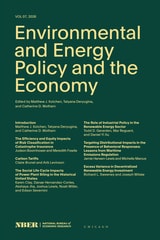
Environmental and Energy Policy and the Economy
Volume 7Edited by Matthew J. Kotchen, Tatyana Deryugina, and Catherine D. Wolfram
University of Chicago Press Journals, 2026
Rigorous, careful, and nonpartisan research with a high policy impact on environmental and energy economics.
Environmental and Energy Policy and the Economy focuses on the effective and efficient management of environmental and energy challenges. Research papers offer new evidence on the intended and unintended consequences, the market and nonmarket effects, and the incentive and distributional impacts of policy initiatives and market developments.
This volume presents six new papers on environmental and energy economics and policy. Judson Boomhower and Meredith Fowlie illustrate the distributional consequences of improving risk pricing efficiency in wildfire insurance markets. Claire Brunel and Arik Levinson develop a conceptual framework for understanding the economic and environmental consequences of taxes on imports of goods based on their carbon content. Karen Clay, Danae Hernandez-Cortes, Akshaya Jha, Joshua Lewis, Noah Miller, and Edson Severnini study the long-run distributional implications of US power plant sitings over more than a century. Todd Gerarden, Mar Reguant, and Daniel Xu provide a comprehensive overview of industrial policy in the renewable energy sector, with comparisons across the US, EU, and China. Jamie Hansen-Lewis and Michelle Marcus show how failure to account for behavioral responses can affect policy predictions regarding maritime emissions. Finally, Richard Sweeney and Joseph Wilske estimate the externalities associated with correlated intermittency in electricity generation from US wind power investments.

Environmentality
Technologies of Government and the Making of SubjectsArun Agrawal
Duke University Press, 2005
Agrawal brings environment and development studies, new institutional economics, and Foucauldian theories of power and subjectivity to bear on his ethnographical and historical research. He visited nearly forty villages in Kumaon, where he assessed the state of village forests, interviewed hundreds of Kumaonis, and examined local records. Drawing on his extensive fieldwork and archival research, he shows how decentralization strategies change relations between states and localities, community decision makers and common residents, and individuals and the environment. In exploring these changes and their significance, Agrawal establishes that theories of environmental politics are enriched by attention to the interconnections between power, knowledge, institutions, and subjectivities.
Envisioning the Faculty for the Twenty-First Century
Moving to a Mission-Oriented and Learner-Centered ModelKezar, Adrianna
Rutgers University Press, 2016

Envy Up, Scorn Down
How Status Divides UsSusan T. Fiske
Russell Sage Foundation, 2011
Equal Freedom
Stephen Darwall, Editor
University of Michigan Press, 1995
Equality for Contingent Faculty
Overcoming the Two-Tier SystemKeith Hoeller
Vanderbilt University Press, 2014
Equality for Contingent Faculty brings together eleven activists from the United States and Canada to describe the problem, share case histories, and offer concrete solutions. The book begins with three accounts of successful organizing efforts within the two-track system. The second part describes how the two-track system divides the faculty into haves and have-nots and leaves the majority without the benefit of academic freedom or the support of their institutions. The third part offers roadmaps for overcoming the deficiencies of the two-track system and providing equality for all professors, regardless of status or rank.
Equality in the Nordic World
Carsten Jensen
University of Wisconsin Press, 2021
The four types of equality have their origins in unique political compromises made in the twentieth century. The resulting social market economies of these countries affect their growth and levels of equality even today.
Equality of Permission
The Politics of Feasible LiberalismDeirdre Nansen McCloskey
University of Chicago Press, 2026
From a revered public intellectual, an essential argument for the political preconditions of a liberal society.
Liberalism has always suffered from messaging challenges. It simultaneously implies a pursuit of individual liberty and social equality, two projects often regarded as at odds. Or: Liberal means the opposite of conservative. Except when it doesn’t. The list goes on.
Liberal bard Deirdre Nansen McCloskey understands these rhetorical troubles. Equality of Permission is her stirring and career-defining intervention on this essentially contested yet critical topic—a forceful case for liberalism as our best hope, and an essential vision of the political conditions necessary for its survival. McCloskey prescribes a liberalism built around liberty from the bottom up: “equality before the law and equality of political and economic permissions,” lightly administered.
The state, McCloskey argues, is increasingly the source of our discontents—an illiberal institution, hindered by a quixotic fixation on pursuing equality of wealth or opportunity. Equality of Permission evangelizes for a better, and earlier, version of liberalism—that of John Locke, Adam Smith, Mary Wollstonecraft, and Henry David Thoreau—as against a top-down quest for an unattainable utopia. McCloskey shows that statism in pursuit of a chimerical general will, even when well-intentioned, leads to tyranny.
Brimming with energy and erudition, drawing on wisdoms from Alexis de Tocqueville to Mae West, Equality of Permission is McCloskey at the peak of her powers—brilliant, lacerating, garrulous, funny, worldly, and warm. Amid intense debate over the use and abuse of government institutions, McCloskey shares her singular vision for a true democracy, one grounded in respect and conducive to universal human flourishing.
Equality of Permission
The Politics of Feasible LiberalismDeirdre Nansen McCloskey
University of Chicago Press, 2026
From a revered public intellectual, an essential argument for the political preconditions of a liberal society.
Liberalism has always suffered from messaging challenges. It simultaneously implies a pursuit of individual liberty and social equality, two projects often regarded as at odds. Or: Liberal means the opposite of conservative. Except when it doesn’t. The list goes on.
Liberal bard Deirdre Nansen McCloskey understands these rhetorical troubles. Equality of Permission is her stirring and career-defining intervention on this essentially contested yet critical topic—a forceful case for liberalism as our best hope, and an essential vision of the political conditions necessary for its survival. McCloskey prescribes a liberalism built around liberty from the bottom up: “equality before the law and equality of political and economic permissions,” lightly administered.
The state, McCloskey argues, is increasingly the source of our discontents—an illiberal institution, hindered by a quixotic fixation on pursuing equality of wealth or opportunity. Equality of Permission evangelizes for a better, and earlier, version of liberalism—that of John Locke, Adam Smith, Mary Wollstonecraft, and Henry David Thoreau—as against a top-down quest for an unattainable utopia. McCloskey shows that statism in pursuit of a chimerical general will, even when well-intentioned, leads to tyranny.
Brimming with energy and erudition, drawing on wisdoms from Alexis de Tocqueville to Mae West, Equality of Permission is McCloskey at the peak of her powers—brilliant, lacerating, garrulous, funny, worldly, and warm. Amid intense debate over the use and abuse of government institutions, McCloskey shares her singular vision for a true democracy, one grounded in respect and conducive to universal human flourishing.
Equipping The Saints
Barbara Elliott
Templeton Press, 2004
For any individual donor or foundation giving money to a faith-based organization, this guide is indispensable. Equipping the Saints offers sage advice on recognizing the qualities of good leaders, effective programs, and the methods of evaluating outcomes. Based on hundreds of interviews with donors and civic leaders, this guide provides a candid look at the unique strengths and weaknesses of these groups. Equipping the Saints is packed with useful tools like a donor's interest inventory, a checklist for making a site visit, tips on reading nonprofit financial statements, and hands-on recommendations for making grants that are both effective and prudent.
"An excellent guide for philanthropists seeking to unleash the power of faith in healing troubled souls and transforming troubled neighborhoods." —Adam Meyerson, president, Philanthropy Roundtable
"Most donors quickly learn how all that glitters is not gold. Some go on to learn how all that is gold does not glitter. In this book Barbara Elliott provides the lessons in discernment and the tools for evaluation that donors need. Take advantage of her understanding by making it your own." —Marvin Olasky, ditor of World magazine, author of Compassionate Conservatism and The Tragedy of American Compassion
"Any donor with even a hint of interest in exploring investments in the work of faith-based organizations (FBOs) needs this book. It is packed with practical information about how to understand and assess FBOs. Its numerous examples of real-life donors making real-life differences through partnerships with faith-inspired community healers ought to stimulate much creative brainstorming among philanthropists." —Dr. Amy L. Sherman, senior fellow and director, Faith in Communities Initiative of the Foundation for American Renewal
"From the perspective of a local foundation giving to faith-based ministries, we have found Barbara Elliott's work to be inspiring, practical and instructive to us as we think through our priorities and principles for funding decisions…I have extraordinary respect for Barbara's scope of understanding, ability to communicate with passion and reason, and her deep understanding of a very complex field. She gives all of us—ministries and funders—genuine hope and invaluable insight." —Fred Smith, president, The Gathering
Essays in History
Financial, Economic, PersonalCharles P. Kindleberger
University of Michigan Press, 1999

Essays in Positive Economics
Milton Friedman
University of Chicago Press, 1966
"His critical blast blows like a north wind against the more pretentious erections of modern economics. It is however a healthy and invigorating blast, without malice and with a sincere regard for scientific objectivity."—K.E. Boulding, Political Science Quarterly
"Certainly one of the most engrossing volumes that has appeared recently in economic theory."—William J. Baumol, Review of Economics and Statistics
Essays on Economics and Economists
R. H. Coase
University of Chicago Press, 1994
In fifteen essays, Coase evaluates the contributions of a number of outstanding figures, including Adam Smith, Alfred Marshall, Arnold Plant, Duncan Black, and George Stigler, as well as economists at the London School of Economics in the 1930s.
Ronald H. Coase was awarded the Nobel Prize in Economic Science in 1991.
Essays on Economics and Economists
R. H. Coase
University of Chicago Press, 1994
How do economists decide what questions to address and how to choose their theories? How do they tackle the problems of the economic system and give advice on public policy? With these broad questions, Nobel laureate R. H. Coase, widely recognized for his seminal work on transaction costs, reflects on some of the most fundamental concerns of economists over the past two centuries.
In fifteen essays, Coase evaluates the contributions of a number of outstanding figures, including Adam Smith, Alfred Marshall, Arnold Plant, Duncan Black, and George Stigler, as well as economists at the London School of Economics in the 1930s.
Ronald H. Coase was awarded the Nobel Prize in Economic Science in 1991.
Essays on Liberalism and the Economy, Volume 18
F. A. Hayek
University of Chicago Press, 2022
Across seventeen volumes to date, the University of Chicago Press’s Collected Works of F. A. Hayek series has anthologized the diverse and prolific writings of the Austrian economist synonymous with classical liberalism. Essays on Liberalism and the Economy traces the author’s long and evolving writings on the cluster of beliefs he championed most: liberalism, its core tenets, and how its tradition represents the best hope for Western civilization.
This volume contains material from almost the entire span of Hayek’s career, the earliest from 1931 and the last from 1984. The works were written for a variety of purposes and audiences, and they include—along with conventional academic papers—encyclopedia entries, after-dinner addresses, a lecture for graduate students, a book review, newspaper articles, and letters to the editors of national newspapers. While many are available elsewhere, two have never appeared in print, and two others have not been published in English.
The varied formats collected here are enriched by Hayek’s changing voice at different stages of his life. Some of the pieces resonate as high-minded and noble; some are meant as cuts to “intellectuals” (a pejorative term when used by Hayek) like Keynes and Galbraith. All serve to distill important threads of his worldview.
Essential Economics for Heritage
Peter G. Gould
University College London, 2025
Essential Economics for Heritage provides tools from economics that will aid scholars, professionals, and students in heritage-related fields, such as archaeology, museum and site management, research, presentation, and conservation. With a wealth of practical examples ranging from wealthier countries in the Global North to nations that depend on heritage as a key economic resource, this guide applies relevant economic theory and business analysis to issues regularly faced in the field, from heritage tourism and sustainability to the role of heritage in economic development, investment decision making, and financing for heritage organizations.
Ethereum for Business
A Plain-English Guide to the Use Cases that Generate Returns from Asset Management to Payments to Supply ChainsPaul Brody
Epic Books, 2023
The book is aimed at business executives who want to understand the potential of blockchain for solving real-world business problems, and readers with technical knowledge who want to understand the business use cases.
Ethereum for Business covers topics such as:
• Basics of blockchain technology and key components on wallets, tokens, and keys.
• Decentralization in digital marketplaces, smart contracts, privacy, scalability, supply chain management, trade finance, payments and asset transfers, and tokenomics.
• Transforming the world of enterprise computing by enabling companies to model and manage assets, real or digital, that exist off-chain.
• A guide for implementation that contains key success metrics for enterprises considering blockchain-based solutions.
Ethics at Work
Creating Virtue at an American CorporationDaniel Terris
Brandeis University Press, 2013
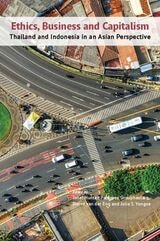
Ethics, Business and Capitalism
Thailand and Indonesia in an Asian PerspectiveEdited by Janet Hunter, Patnaree Srisuphaolarn, Pierre van der Eng, and Julia Yongue
National University of Singapore Press, 2024
Taking cues from the Japanese concept of ethical or stakeholder capitalism, this book demonstrates how the business activities of firms in Thailand and Indonesia are guided by their perceptions of morality in society and their concerns about the environment. The authors explore the likelihood that foreign influences contributed to the development of such management philosophies, for example through the expansion of Japanese subsidiary firms in the 1980s or the spread of foreign articulations of the concept of corporate social responsibility (CSR) since the 2000s. Companies in both countries may exercise a degree of pragmatism in how they develop these activities. As the authors reveal, the perceptions of morality in business that have shaped many entrepreneurs and companies in Thailand and Indonesia are their responses to the dynamic political, social, and economic factors that have formed the business environments of both countries.
Ethnic Entrepreneurs, Crony Capitalism, and the Making of the Franco-Mexican Elite
José Galindo
University of Alabama Press, 2021
A groundbreaking historical narrative of corruption and economic success in Mexico.
Ethnic Entrepreneurs, Crony Capitalism, and the Making of the Franco-Mexican Elite provides a new way to understand the scope and impact of crony capitalism on institutional development in Mexico. Beginning with the Porfiriato, the period between 1876 and 1911 named for the rule of President Porfirio Díaz, José Galindo identifies how certain behavioral patterns of the Mexican political and economic elite have repeated over the years, and analyzes aspects of the political economy that have persisted, shaping and at times curtailing Mexico’s economic development.
Strong links between entrepreneurs and politicians have allowed elite businessmen to receive privileged support, such as cheap credit, tax breaks, and tariff protection, from different governments and to run their companies as monopolies. In turn, successive governments have obtained support from businesses to implement public policies, and, on occasion, public officials have received monetary restitution. Galindo notes that Mexico’s early twentieth-century institutional framework was weak and unequal to the task of reining in these systematic abuses. The cost to society was high and resulted in a lack of fair market competition, unequal income distribution, and stunted social mobility.
The most important investors in the banking, commerce, and manufacturing sectors at the beginning of the twentieth century in Mexico were of French origin, and Galindo explains the formation of the Franco-Mexican elite. This Franco-Mexican narrative unfolds largely through the story of one of the richest families in Mexico, the Jeans, and their cotton textile empire. This family has maintained power and wealth through the current day as Emilio Azcárraga Jean, a great-grandson of one of the members of the first generation of the Jean family to arrive in Mexico, owns Televisa, a major mass media company with one of the largest audiences for Spanish-language content in the world.

Ethnicity, Markets, and Migration in the Andes
At the Crossroads of History and AnthropologyBrooke Larson, Olivia Harris, and Enrique Tandeter, eds.
Duke University Press, 1995
Bringing together the work of outstanding scholars in Andean history, anthropology, and ethnohistory, these pioneering essays show how, from the very earliest period of Spanish rule, Andean peasants and their rulers embraced the new economic opportunities and challenged or subverted the new structures introduced by the colonial administration. They also convincingly explain why in the twentieth century the mistaken idea developed that Andean peasants were conservative and unable to participate effectively in different markets, and reveal how closely ethnic inequalities were tied to evolving market relations. Inviting a critical reconsideration of ethnic, class, and gender issues in the context of rural Andean markets, this book will revise the prevailing view of Andean history and provide a more fully informed picture of the complex mercantile activities of Andean peasants.

Europe and the Euro
Edited by Alberto Alesina and Francesco Giavazzi
University of Chicago Press, 2010
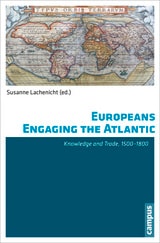
Europeans Engaging the Atlantic
Knowledge and Trade, 1500-1800Edited by Susanne Lachenicht
Campus Verlag, 2014