Results by title
18293 books match the query 'United States' and 472 start with e
Elizabeth Gurley Flynn
The Rebel Girl, Democracy, and RevolutionMary Anne Trasciatti
Rutgers University Press, 2025
International Labor History Association Honorable Mention Book Award for 2025
Elizabeth Gurley Flynn was involved in almost every major campaign of the U.S. Left in the first two thirds of the twentieth century. An outstanding orator, writer, and tactician, Flynn is one of the most important figures in the history of the American labor movement. Inspired by the Irish freedom struggle and appalled by the exploitation and grinding poverty she saw around her, she devoted her life to the advancement of civil liberties. Here, Mary Anne Trasciatti traces Flynn’s personal and political life to explore the broader social issues of a fraught era.
Born in 1890, Flynn began her activist career by joining the Industrial Workers of the World (IWW) when she was just sixteen, and she ended it as the first female chair of the American Communist Party, a position she held from 1961 until her death in 1964. In the intervening years she organized workers into unions, led strikes, championed women’s rights, supported anti-imperialist movements around the globe, protested deportation, advocated for prison reform, and fought for Black liberation. Above all, she showed absolute devotion to workers and their struggles.
Slandered as an “un-American” in the anticommunist fervor of the 1940s and 1950s, Flynn was eventually ousted from the very organization she helped found, the American Civil Liberties Union, and imprisoned for two years. Though her own movement abandoned her, her commitment to the cause never wavered. This stirring biography illuminates Flynn’s inspiring life and worldview and returns her to her rightful place at the heart of labor and civil liberties history.
Elizabeth Murray
A Woman's Pursuit of Independence in Eighteenth-Century AmericaPatricia Cleary
University of Massachusetts Press, 2000
One of the most compelling figures in colonial America, Elizabeth Murray (1726–1785) was a Scottish immigrant who settled in Boston in her early twenties and took up shopkeeping. For many years, she practiced her trade successfully while marrying three times, once to a much older man who left her an extremely rich widow. This biography chronicles the life of this extraordinary “ordinary” woman who tried to make a place for herself and other women in the world by asserting her own independence inside and outside of the home.
As an importer and retailer of British goods, Murray conducted business with merchants and manufacturers in England and buyers in the American colonies, even traveling to London to select her own stock. Deeply satisfied by her work and the economic freedom it brought her, she acted as mentor to other women, helping them to establish shops of their own. She also protected her autonomy by demanding prenuptial agreements from her second and third husbands that gave her a measure of control over her property that was rare for a married woman of her day.
The spirit of independence that Murray so valued in herself and nurtured in other women was severely tested by the upheavals of the American Revolution. With strong loyalties to both Britain and America, she was torn by the conflict, especially when close relatives chose opposing sides and her third husband abandoned her, leaving her to defend the family estate alone. Her wartime experiences—wild midnight rides, accusations of being a spy, quartering both royal and rebel troops, and brief imprisonment—vividly capture the turmoil of the Revolution and highlight the range of her political commitments.
Elizabeth Packard
A Noble FightLinda V. Carlisle
University of Illinois Press, 2010
Elizabeth Robins, 1862–1952
Actress, Novelist, FeministJoanne E. Gates
University of Alabama Press, 1994
From Childhood, Elizabeth Robins dreamed of a successful career on the stage. Her first impulse to visit England, in 1888, stemmed from her desire to secure better opportunities as an actress, and she soon gained celebrity playing Ibsen’s heroines. While buoyed by this success, she began writing fiction that treated the feminist issues of her time: organized prostitution, women’s positions in war-torn England, and the dangers of rearmament. In her acting, writing, and political activism, she consistently challenged existing roles for women. Robins’s work is marked by a number of true-life components, and this first biography to use the vast collection of her private papers demonstrates how Robins transformed her own life into literary and dramatic capital.
Robins published several novels under the pseudonym C. E. Raimond, culminating in the sensational male-female bildungsroman, The Open Question: A Tale of Two Temperaments, which was set in her native Zanesville, Ohio, and publication of which finally disclosed her identity.
Her fiction is compared to that of Henry James, Edith Wharton, and Willa Cather. Many of her heroines share the characteristics of exhibiting force or willed silence, and Gates's analysis of this trait has implications for feminist theorists in a number of fields.
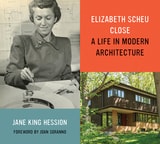
Elizabeth Scheu Close
A Life in Modern ArchitectureJane King Hession
University of Minnesota Press, 2020
An in-depth account of the life and career of Minnesota’s first modern architect
2024 Docomomo US Modernism in America Award of Excellence
2021 Finalist, Minnesota Book Award, Emilie Buchwald Award for Minnesota Nonfiction
Elizabeth “Lisl” Scheu Close (1912–2011) left an indelible mark on Minnesota’s built landscape during her six decades as an architect. In 1938, with her husband, Winston Close, she founded the state’s first architecture firm dedicated to modernism. In addition to designing the first International Style house in Minneapolis, the firm also created more than 250 handsome and efficiently planned modern residences. One of few women who were practicing architects in the mid-twentieth century, she blazed a trail for future generations of women in the profession.
As Jane King Hession shows, the trajectory of Lisl’s architectural career was shaped by the political, economic, and aesthetic upheavals of the twentieth century. Raised in a renowned modern house in Vienna, Austria, Lisl was exposed to revolutionary ideas in art and architecture at a young age. Forced to emigrate to the United States as the Nazis rose to power in Europe, she completed her architectural education at MIT. During the Depression, she struggled to find work and encountered challenges as a young woman in the field. In her pursuit of and devotion to a singular and successful career as a modern architect, she proved herself to be talented, determined, and adept at negotiating obstacles.
Through documentation of Lisl’s projects, this personal and professional biography also explores multiple aspects of modern architecture, including the innovative use of new materials and technologies, the design of prefabricated houses, and the relationship between residential design and changing American lifestyles.
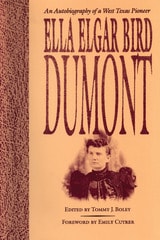
Ella Elgar Bird Dumont
An Autobiography of a West Texas PioneerEdited by Tommy J. Boley
University of Texas Press, 1988
A crack shot, expert skinner and tanner, seamstress, sculptor, and later writer—a list that only hints at her intelligence and abilities—Ella Elgar Bird Dumont was one of those remarkable women who helped tame the Texas frontier. First married at sixteen to a Texas Ranger, she followed her husband to Comanche Indian country in King County, where they lived in a tepee while participating in the final slaughter of the buffalo. Living off the land until the frontier was opened for ranching, Ella and Tom Bird typified the Old West ideals of self-sufficiency and generosity, with a hesitancy to complain about the hard life in the late 1800s.
Yet, in one important way, Ella Dumont was unsuited for life on the frontier. Endowed with an instinctive desire and ability to carve and sculpt, she was largely prevented from pursuing her talents by the responsibilities of marriage and frontier life and later, widowhood with two small children. Even though her second marriage, to Auguste Dumont, made life more comfortable, the realities of her existence still prevented the fulfillment of her artistic longings.
Ella Bird Dumont’s memoir is rich with details of the frontier era in Texas, when Indian depredations were still a danger for isolated settlers, where animals ranged close enough to provide dinner and a new pair of gloves, and where sheer existence depended on skill, luck, and the kindness of strangers. The vividness and poignancy of her life, coupled with the wealth of historical material in the editor’s exhaustive notes, make this Texas pioneer’s autobiography a very special book.
Ellery's Protest
How One Young Man Defied Tradition and Sparked the Battle over School PrayerStephen D. Solomon
University of Michigan Press, 2010
“Solomon’s fascinating and sweeping history of the legal fight over mandatory school prayers is compelling, judicious, and elegantly written. Fabulous!”
—David Rudenstine, Dean, Benjamin N. Cardozo School of Law, Yeshiva University
“Stephen Solomon’s Ellery’s Protest provides a brilliant analysis of a major Supreme Court decision that redefined the relationship between church and state almost a half century ago. This study goes well beyond simply offering a gripping account of the course of litigation that brought before the Justices the contentious issue of prayer and Bible reading in public schools, though the thoroughness of that account would merit careful reading by itself. Especially impressive is the author’s deep probing of hitherto neglected sources, and invaluable primary material including extensive direct contact with the plaintiff, the ‘Ellery’ of the book’s title. Finally, and perhaps most impressive, is Solomon’s careful placement of the issue and the case in a far broader context that is as critical to national life and policy today as it was four and a half decades ago when the high Court first tackled these questions.”
—Robert O’Neil, Professor of Law, University of Virginia
Great legal decisions often result from the heroic actions of average citizens. Ellery’s Protest is the story of how one student’s objection to mandatory school prayer and Bible reading led to one of the most controversial court cases of the twentieth century—and a decision that still reverberates in the battle over the role of religion in public life.
Abington School District v. Schempp began its journey through the nation’s courts in 1956, when sixteen-year-old Ellery Schempp protested his public school’s compulsory prayer and Bible-reading period by reading silently from the Koran. Ejected from class for his actions, Schempp sued the school district. The Supreme Court’s decision in his favor was one of the most important rulings on religious freedom in our nation’s history. It prompted a conservative backlash that continues to this day, in the skirmishes over school prayer, the teaching of creationism and intelligent design, and the recitation of the Pledge of Allegiance with the phrase “under God.”
Author Stephen D. Solomon tells the fascinating personal and legal drama of the Schempp case: the family’s struggle against the ugly reactions of neighbors, and the impassioned courtroom clashes as brilliant lawyers on both sides argued about the meaning of religious freedom. But Schempp was not the only case challenging religious exercises in the schools at the time, and Ellery’s Protest describes the race to the Supreme Court among the attorneys for four such cases, including one involving the colorful atheist Madalyn Murray.
Solomon also explores the political, cultural, and religious roots of the controversy. Contrary to popular belief, liberal justices did not kick God out of the public schools. Bitter conflict over school Bible reading had long divided Protestants and Catholics in the United States. Eventually, it was the American people themselves who removed most religious exercises from public education as a more religiously diverse nation chose tolerance over sectarianism. Ellery’s Protest offers a vivid account of the case that embodied this change, and a reminder that conservative justices of the 1950s and 60s not only signed on to the Schempp decision, but strongly endorsed the separation of church and state.
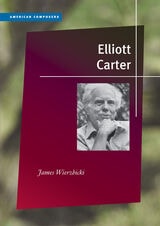
Elliott Carter
James Wierzbicki
University of Illinois Press, 2011
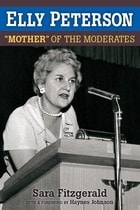
Elly Peterson
"Mother" of the ModeratesSara Fitzgerald
University of Michigan Press, 2012
"A magisterially written, well-researched, informative, and entertaining biography of a woman who helped throw open the doors to broader participation and power for women in the Republican Party and American politics."
---Dave Dempsey, author of William G. Milliken: Michigan's Passionate Moderate
"Elly Peterson will be a text to which historians and researchers turn for insight into the yin and yang of mainstream politics in the mid-century."
---Patricia Sullivan, past president, Journalism and Women Symposium
"This lively portrait of a leading woman in the Republican Party between 1952 and 1982 also charts the party's shift to the right after 1964, revealingly viewed through the eyes of liberal Republican women. Intensively researched with ethnographic attention to the subtleties of political culture, Fitzgerald's book is essential reading for anyone interested in how the Republican Party changed during the turbulent decades after 1960 and how women and women's issues shaped those changes."
---Kathryn Kish Sklar, Distinguished Professor of History, State University of New York, Binghamton
"Sara Fitzgerald tells Peterson's story in this superb and timely biography. It carries a message that deserves the widest audience as the nation struggles to find needed consensus on critical issues amid poisonous political partisanship that has made it increasingly difficult for public officials to bridge their differences. I hope that every American reads it."
---Pulitzer Prize winner Haynes Johnson, from the Foreword
"To understand the quest for equal rights in America you really need to meet those women who were active at the time of transition. In this gripping biography we meet one woman who entered a male dominated world and triumphed."
---Francis X. Blouin Jr., Director, Bentley Historical Library
"Sara Fitzgerald's writing is as intelligent as it is entertaining."
---Best-selling novelist Diane Chamberlain
Elly Peterson was one of the highest ranking women in the Republican Party. In 1964 she ran for a Michigan seat in the U.S. Senate and became the first woman to serve as chair of the Michigan Republican Party. During the 1960s she grew disenchanted with the increasing conservatism of her party, united with other feminists to push for the Equal Rights Amendment and reproductive choice, battled Phyllis Schlafly to prevent her from gaining control of the National Federation of Republican Women, and became an independent.
Elly Peterson's story is a missing chapter in the political history of Michigan, as well as the United States. This new biography, written by Sara Fitzgerald (a Michigan native and former Washington Post editor), finally gives full credit to one of the first female political leaders in this country.
When Peterson resigned in 1970 as assistant chairman of the Republican National Committee, David Broder of the Washington Post wrote that "her abilities would have earned her the national chairmanship, were it not for the unwritten sex barrier both parties have erected around that job."

Eloquent Obsessions
Writing Cultural CriticismMarianna Torgovnick, ed.
Duke University Press, 1994
This collection explores a wide range of issues at the intersection of personal and social history—from growing up in the South to exploring a love for France or Japan, from coming of age as a feminist to mapping the history of National Geographic, from examining the cultural "we" to diagnosing class structures in Israel or showing how photography deals with AIDS. The authors here bring writerly genres—autobiography, memoir, or travel narrative—to intellectual tasks such as textual readings or investigating the histories of institutions. Continuing a tradition of cultural criticism established by writers such as Samuel Johnson, Zora Neale Hurston, Edmund Wilson, Hannah Arendt, or Raymond Williams, these essays seek to make a difference, to have an impact, and are based on the fundamental premise that writers have something to say about society. Simply put, this collection offers models for writing eloquently about culture—models that are intellectually and socially responsible, but attuned to the critic’s voice and the reader’s ear.
Aimed not just at academics but also at a more general audience alive to the concerns and interests of society today, Eloquent Obsessions, a revised and expanded version of a special issue of South Atlantic Quarterly (Winter 1992), will extend beyond the academy contemporary ways of writing about culture.
Contributors. Jane Collins, Cathy N. Davidson, Virginia R. Dominguez, Mark Edmundson, Gerald Graff, Richard Inglis, Aldona Jonaitis, Alice Yaeger Kaplan, Catherine Lutz, Nancy K. Miller, Linda Orr, Andrew Ross, Henry M. Sayre, Jane Tompkins, Marianna Torgovnick
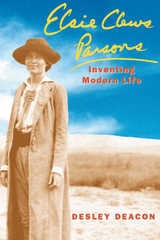
Elsie Clews Parsons
Inventing Modern LifeDesley Deacon
University of Chicago Press, 1997
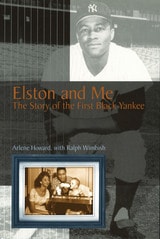
Elston and Me
The Story of the First Black YankeeArlene Howard & Ralph Wimbish & Foreword by Yogi Berra & Don Newcombe
University of Missouri Press, 2001
In Elston and Me, Howard's widow, Arlene, and coauthor Ralph Wimbish recall the life of the first black to play baseball for the New York Yankees. Howard, who played fourteen major-league seasons, was signed by the Yankees in 1950, but the reluctance of the Yankee organization to break the color barrier held Howard back from the major leagues until 1955 when he was twenty-six years old.
By 1961, the year he batted .348 for the Yankees, Elston had become the everyday catcher. Voted the American League's Most Valuable Player in 1963, Howard was a three-time Gold Glove winner, and his fielding average of the same year remains one of the highest among catchers in major-league history.
In 1967, with the Yankee dynasty in decay, Elston was traded to the Boston Red Sox, although Yankee management had promised him that he would finish his career in pinstripes. After contemplating retirement, he moved to Boston late that season and helped the Red Sox win the "Impossible Dream" pennant. After one more season with the Red Sox, he returned to the Yankees as the first black coach in the American League. Howard died at the age of fifty-one without fulfilling his dream of becoming baseball's first black manager.
Beginning with Howard's early years as a St. Louis teenager, the book relates his encounters with racism and his love of baseball. He began his professional career for the legendary Negro League team the Kansas City Monarchs. His three decades with the New York Yankees include numerous anecdotes about fellow Yankee legends such as Mickey Mantle, Whitey Ford, and Yogi Berra. With countless personal moments and never-before- published photographs and clippings from family albums, Elston and Me is the touching story of one of baseball's great players.
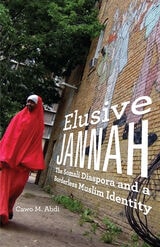
Elusive Jannah
The Somali Diaspora and a Borderless Muslim IdentityCawo M. Abdi
University of Minnesota Press, 2015
As a Somali working since high school in the United Arab Emirates, Osman considers himself “blessed” to be in a Muslim country, though citizenship, with the security it offers, remains elusive. For Ardo, smuggled out of Somalia to join her husband in South Africa, insecurities are of a more immediate, physical kind, and her economic prospects and legal status are more uncertain. Adam, in the United States—a destination often imagined as an earthly Eden, or jannah, by so many of his compatriots—now sees heaven in a return to Somalia.
The stories of these three people are among the many that emerge from mass migration triggered by the political turmoil and civil war plaguing Somalia since 1988. And they are among the diverse collection presented in eloquent detail in Elusive Jannah, a remarkable portrait of the very different experiences of Somali migrants in the UAE, South Africa, and the United States. Somalis in the UAE, a relatively closed Muslim nation, are a minority within a large South Asian population of labor migrants. In South Africa, they are part of a highly racialized and segregated postapartheid society. In the United States they find themselves in a welfare state with its own racial, socioeconomic, and political tensions. A comparison of Somali settlements in these three locations clearly reveals the importance of immigration policies in the migrant experience.
Cawo M. Abdi’s nuanced analysis demonstrates that a full understanding of successful migration and integration must go beyond legal, economic, and physical security to encompass a sense of religious, cultural, and social belonging. Her timely book underscores the sociopolitical forces shaping the Somali diaspora, as well as the roles of the nation-state, the war on terror, and globalization in both constraining and enabling their search for citizenship and security.
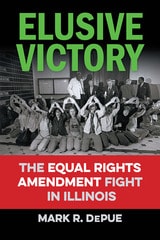
Elusive Victory
The Equal Rights Amendment Fight in IllinoisMark R. DePue
Southern Illinois University Press, 2026
Inside the Illinois showdown that derailed the Equal Rights Amendment
In this gripping account of one of the most consequential political battles of the twentieth century, Mark R. DePue takes readers inside the fight that halted the Equal Rights Amendment. Drawing upon hundreds of hours of original oral history interviews, DePue reconstructs the drama, strategy, and emotion of the ERA showdown in Illinois, the state that became the amendment’s most critical battleground.
First introduced in Congress in 1923, the Equal Rights Amendment has endured for more than a century as one of the most debated yet still unratified proposals in American constitutional history. Its ratification seemed closer than ever when Congress passed the ERA in 1972 and sent it to the states with a seven-year deadline, but in Illinois, a constitutional quirk stalled its momentum. Optimism faltered, and what followed was a political war like no other the state had ever seen. Illinois’ state legislature in Springfield became the epicenter of a national struggle over gender, power, and the future of the Constitution.
At the center of the storm stood Phyllis Schlafly, the formidable conservative activist from Alton, Illinois, whose STOP ERA movement transformed a faltering amendment into a rallying cry for the New Right. Opposing her and her allies was an array of feminist organizers, legislators, celebrities, clergy, union members, and grassroots activists—often divided among themselves—who believed that equality under the law was within reach. Bringing creativity, passion, and persistence to the cause, they staged inventive demonstrations, lobbied relentlessly, and fought for every vote.
What sets this book apart are its extraordinary cast of characters and the chance DePue gives them to speak for themselves. Through vivid first-person testimony gathered at the Abraham Lincoln Presidential Library and the University of Illinois Springfield, supporters and opponents alike reflect on their motivations, fears, strategies, and regrets. Their voices bring to life the packed committee hearings, late-night strategy sessions, and personal sacrifices behind the headlines.
By 1982, the amendment fell three states short of ratification nationwide. Illinois never delivered the votes that might have changed history.
More than a political chronicle, this is a story of conviction and conflict, ambition and compromise. It is the story of how a century-old amendment came tantalizingly close to becoming law—and how, in one state capitol, the battle over women’s equality reshaped a movement and left a constitutional promise still unfinished.
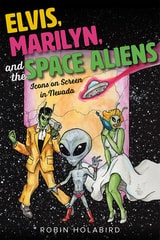
Elvis, Marilyn, and the Space Aliens
Icons on Screen in NevadaRobin Holabird
University of Nevada Press, 2017
Elvis Presley, Marilyn Monroe, and space aliens like the Transformers share a surprising connection along with James Bond, Indiana Jones, and Rocky Balboa. These beloved icons played active roles in movie and television projects set in the state of Nevada. Long time state film commissioner and movie reviewer Holabird explores the blending of icons and Nevada, along with her personal experiences of watching movies, talking with famous people, and showing off a diverse range of stunning and iconic locations like Las Vegas, Reno, Lake Tahoe, and Area 51.
Holabird shows how Nevada’s flash, flair, and fostering of the forbidden provided magic for singers, sexpots, and strange creatures from other worlds. She also gives readers an insider’s look into moviemaking in Nevada by drawing on her extensive experience as a film commissioner. This is a unique take on film history and culture, and Holabird explores eighteen film genres populated by one-of-a-kind characters with ties to Nevada. Along with being a film history of the state of Nevada written by a consummate insider, the book is a fun mixture of research, personal experiences, and analysis about how Nevada became the location of choice for a broad spectrum of well-known films and characters.
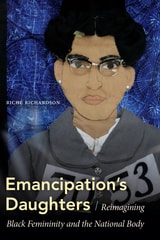
Emancipation's Daughters
Reimagining Black Femininity and the National BodyRiché Richardson
Duke University Press, 2021
Embattled Memories
Contested Meanings in Korean War MemorialsSuhi Choi
University of Nevada Press, 2014

Embedded Business Librarianship for the Public Librarian
Barbara A. Alvarez
American Library Association, 2016

Embedded Librarians
Moving Beyond One-Shot InstructionCassandra Kvenild
Assoc of College & Research Libraries, 2011
Embedding Librarianship In Learning Management Systems
Beth E. Tumbleson
American Library Association, 2013
Embodied Playbook
Writing Practices of Student-AthletesJ. Michael Rifenburg
Utah State University Press, 2018
The Embodied Playbook discovers a new approach to understanding student literacy in a surprising place: the university athletics department. Through analysis of a yearlong case study of the men’s basketball team at the University of North Georgia, J. Michael Rifenburg shows that a deeper and more refined understanding of how humans learn through physical action can help writing instructors reach a greater range of students.
Drawing from research on embodiment theory, the nature and function of background knowledge, jazz improvisation, and other unexpected domains, The Embodied Playbook examines a valuable but unexplored form of literacy: the form used by student-athletes when learning and using scripted plays. All students’ extracurricular prior knowledge is vital for the work they undertake in the classroom, and student-athletes understand the strengths and constraints of written text much as they understand the text of game plays: through embodying text and performing it in a competitive space. The book focuses on three questions: What are plays and what do they do? How do student-athletes learn plays? How can teachers of composition and rhetoric better connect with student-athletes?
The Embodied Playbook reveals the literacy of the body as a rich and untapped resource for writing instruction. Given the numbers of students who are involved in athletics, whether intramural, community-related, or extracurricular, Rifenburg’s conclusions hold important implications not only for how we define literacy but also for how writing programs can serve all of their students most effectively.
Embodying American Slavery in Contemporary Culture
Lisa Woolfork
University of Illinois Press, 2008
Embodying the Problem
The Persuasive Power of the Teen MotherVinson, Jenna
Rutgers University Press, 2018
Vinson shows that these representations prevent a focus on the underlying structures of inequality and poverty, perpetuate harmful discourses about women, and sustain racialized gender ideologies that construct women’s bodies as sites of national intervention and control.
Embodying the Problem also explores how young mothers resist this narrative. Analyzing fifty narratives written by young mothers, the recent #NoTeenShame social media campaign, and her interviews with thirty-three young women, Vinson argues that while the stigmatization of teenage pregnancy and motherhood does dehumanize young pregnant and mothering women, it is at the same time a means for these women to secure an audience for their own messages.
More information on the author's website (https://jennavinson.com)
Embracing Age
How Catholic Nuns Became Models of Aging WellAnna I. Corwin
Rutgers University Press, 2021
Embracing Age: How Catholic Nuns Became Models of Aging Well examines a community of individuals whose aging trajectories contrast mainstream American experiences. In mainstream American society, aging is presented as a “problem,” a state to be avoided as long as possible, a state that threatens one’s ability to maintain independence, autonomy, control over one’s surroundings. Aging “well” (or avoiding aging) has become a twenty-first century American preoccupation. Embracing Age provides a window into the everyday lives of American Catholic nuns who experience longevity and remarkable health and well-being at the end of life. Catholic nuns aren’t only healthier in older age, they are healthier because they practice a culture of acceptance and grace around aging. Embracing Age demonstrates how aging in the convent becomes understood by the nuns to be a natural part of the life course, not one to be feared or avoided. Anna I. Corwin shows readers how Catholic nuns create a cultural community that provides a model for how to grow old, decline, and die that is both embedded in American culture and quite distinct from other American models.
Instructor's Guide is available at no cost (https://www.rutgersuniversitypress.org/media/wysiwyg/documents/corwin_instructor_guide_final.pdf).
Open access edition funded by the National Endowment for the Humanities.
The text of this book is licensed under a Creative Commons Attribution NonCommercial-NoDerivatives 4.0 International License: https://creativecommons.org/licenses/by-nc-nd/4.0/
Download open access ebook here (https://www.rutgersuniversitypress.org/media/wysiwyg/documents/embracing_age_open_access.pdf).
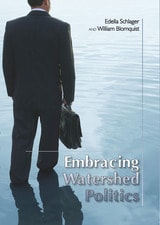
Embracing Watershed Politics
Edella Schlager
University Press of Colorado, 2008
Enriched by case studies of the organizations and decision making processes in several major U.S. watersheds (the Delaware River Basin, San Gabriel River, Platte River, and the Columbia River Basin), Embracing Watershed Politics presents a reasoned explanation of why there are so few watershed-scale integrated management agencies and how the more diverse multi-organizational arrangements found in the vast majorities of watersheds work. Although the presence of multiple organizations representing a multitude of communities of interest complicates watershed management, these institutional arrangements can-under certain conditions-suit the complexity and uncertainty associated with watershed management in the twenty-first century.
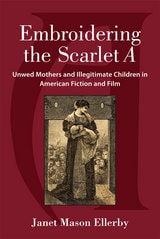
Embroidering the Scarlet A
Unwed Mothers and Illegitimate Children in American Fiction and FilmJanet Mason Ellerby
University of Michigan Press, 2015

Emergency Broadcasting & 1930'S Am Radio
Edward Miller
Temple University Press, 2002
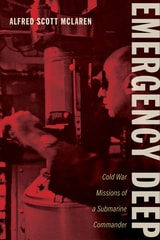
Emergency Deep
Cold War Missions of a Submarine CommanderAlfred Scott McLaren
University of Alabama Press, 2021
A compelling naval memoir of Arctic submarine duty—operations, engineering realities, and split‑second leadership choices in Emergency Deep.
Captain Alfred Scott McLaren served as commander of the USS Queenfish (SSN 651) from September 1969 to May 1973, the very height of the Cold War. As commander, McLaren led at least six major clandestine operations, including the first-ever exploration of the entire Siberian Continental Shelf: a perilous voyage detailed in his previous book Unknown Waters.
Emergency Deep: Cold War Missions of a Submarine Commander conveys the entire spectrum of Captain McLaren’s experiences commanding the USS Queenfish, mainly in the waters of the Russian Far East and also off Vietnam. McLaren offers a riveting and deeply human story that illuminates the intensity and pressures of commanding a nuclear attack submarine in some of the most difficult circumstances imaginable.
Relying on his own notes and records, as well as discussions with former officers and shipmates, McLaren focuses on operational matters both great and small. He recounts his unique perspectives on attack-submarine tactics and exploratory techniques in high-risk or uncharted areas, matters of leadership and team-building and the morale of his crews, and the innumerable and often unforeseen ways his philosophy of command played out on a day-to-day basis, with consequences that ran the gamut from the mundane to the dire and life-threatening.
Readers are also treated to significant new information and insight on submarine strategy, maneuvers, and culture. Such details illuminate and bring to life, with both great humor and gravitas, the intensity and pressures on those engaged in covert missions on nuclear attack submarines.
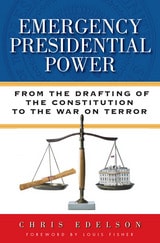
Emergency Presidential Power
From the Drafting of the Constitution to the War on TerrorChris Edelson; Foreword by Louis Fisher
University of Wisconsin Press, 2013
Winner, Crader Family Book Prize in American Values, Department of History and Crader Family Endowment for American Values, Southeast Missouri State University
Emerging Intersections
Race, Class, and Gender in Theory, Policy, and PracticeDill, Bonnie Thornton
Rutgers University Press, 2009
Emerging Intersections, an anthology of ten previously unpublished essays, looks at the problems of inequality and oppression from new angles and promotes intersectionality as an interpretive tool that can be utilized to better understand the ways in which race, class, gender, ethnicity, and other dimensions of difference shape our lives today. The book showcases innovative contributions that expand our understanding of how inequality affects people of color, demonstrates the ways public policies reinforce existing systems of inequality, and shows how research and teaching using an intersectional perspective compels scholars to become agents of change within institutions. By offering practical applications for using intersectional knowledge, Emerging Intersections will help bring us one step closer to achieving positive institutional change and social justice.
Emerging Voices
Experiences of Underrepresented Asian AmericansLing, Huping
Rutgers University Press, 2008
While a growing number of popular and scholarly works focus on Asian Americans, most are devoted to the experiences of larger groups such as Chinese, Japanese, Korean, Filipino, and Indian Americans. As the field grows, there is a pressing need to understand the smaller and more recent immigrant communities. Emerging Voices fills this gap with its unique and compelling discussion of underrepresented groups, including Burmese, Indonesian, Mong, Hmong, Nepalese, Romani, Tibetan, and Thai Americans.
Unlike the earlier and larger groups of Asian immigrants to America, many of whom made the choice to emigrate to seek better economic opportunities, many of the groups discussed in this volume fled war or political persecution in their homeland. Forced to make drastic transitions in America with little physical or psychological preparation, questions of “why am I here,” “who am I,” and “why am I discriminated against,” remain at the heart of their post-emigration experiences.
Bringing together eminent scholars from a variety of disciplines, this collection considers a wide range of themes, including assimilation and adaptation, immigration patterns, community, education, ethnicity, economics, family, gender, marriage, religion, sexuality, and work.
Emerson and the Defense of Equality
Greg Garvey
University of Massachusetts Press, 2025
Arguing for equality as the necessary foundation of liberty
During Ralph Waldo Emerson’s lifetime, the idea of universal human equality was under intensive assault. Repeatedly—in contexts ranging from slavery, to marriage, to politics and workers’ rights—Americans of the time were being told that equality was an obsolete ideal and that the future would belong to those who accepted the hard truth that liberty lies not in egalitarian values but in hierarchies of domination and submission. Greg Garvey’s Emerson and the Defense of Equality focuses on Emerson as a real-time defender of equality during the antebellum culture wars.
In contrast to studies that treat individual liberty as Emerson’s primary concern, Garvey argues that Emerson’s works define a broad and sustained defense of equality as the necessary foundation of liberty. When read as part of a debate about equality, Emerson’s Nature is a treatise on individuality and the common weal; his anti-slavery speeches and English Traits advance evolutionary theories to rebut polygenesist arguments for white supremacy; the essays “Love” and “Domestic Life” challenge gender spheres and explore equality in marriage, friendship, and citizenship. As Emerson speculates on the future, “Politics” and “The Young American” anticipate a “beneficent socialism” in which human rights will always have priority over property rights. In his career-long effort to defend a threatened ideal, Emerson develops an aspirational vision of society that understands equality to be a fundamental aspect of liberty.
Emerson, Romanticism, and Intuitive Reason
The Transatlantic "Light of All Our Day"Patrick J. Keane
University of Missouri Press, 2005
Emerson’s Liberalism
Neal Dolan
University of Wisconsin Press, 2009
Neal Dolan offers the first comprehensive and historically informed exposition of all of Ralph Waldo Emerson’s writings as a contribution to the theory and practice of liberal culture. Rather than projecting twentieth-century viewpoints onto the past, he restores Emerson’s great body of work to the classical liberal contexts that most decisively shaped its general political-cultural outlook—the libertarian-liberalism of John Locke, the Scottish Enlightenment, the American founders, and the American Whigs.
In addition to in-depth consideration of Emerson’s journals and lectures, Dolan provides original commentary on many of Emerson’s most celebrated published works, including Nature, the “Divinity School Address,” “History,” “Compensation,” “Experience,” the political addresses of the early 1840s, “An Address . . . on . . . The Emancipation of the Negroes in the British West Indies,” Representative Men, English Traits, and The Conduct of Life. He considers Emerson’s distinctive elaborations of foundational liberal values—progress, reason, work, property, limited government, rights, civil society, liberty, commerce, and empiricism. And he argues that Emerson’s ideas are a morally bracing and spiritually inspiring resource for the ongoing sustenance of American culture and civilization, reminding us of the depth, breadth, and strength of our common liberal inheritance.

Emily Dickinson and the Labor of Clothing
Daneen Wardrop
University of New Hampshire Press, 2009

Emily Dickinson'S Gothic
Goblin With A GaugeDaneen Wardrop
University of Iowa Press, 1996
Emily Dickinson should stand as a major gothic author among her nineteenth-century American contemporaries, but two factors have previously prevented her inclusion in such company. Perhaps the most obvious is the problem of the genre: Dickinson writes gothic poetry, whereas gothic fiction defines the genre. In addition, her poetic personae have served over the decades to prompt critics to “protect” her; traditional critics concentrated on the sweet, romantic elements of her oeuvre. More recent readers, notably Sandra Gilbert and Susan Gubar, Jane Egerwein, and Cynthia Griffin Wolff, have begun studying Dickinson's gothic traits; Emily Dickinson's Gothic explores Dickinsonian gothicism with the systematic rigor it demands and deserves.
Emily Dickinson's Gothic also addresses sociohistorical concerns, from hallowed gothic conventions dating from Horace Walpole's eighteenth century to such modernist neogothic topics as rape, the void, and disjunctive language that appear in the latter nineteenth and early twentieth centuries. Wardrop recognizes the full extent to which the gothic pervades Dickinson's canon and the means by which the gothic determines her aesthetic. Such full consideration of women's gothicism allows the placement of Dickinson within a literary context, both in terms of American writers and in terms of women writers.
Emily Dickinson's Approving God
Divine Design and the Problem of SufferingPatrick J. Keane
University of Missouri Press, 2008
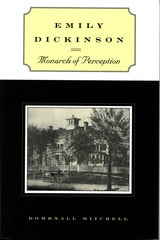
Emily Dickinson
Monarch of PerceptionDomhnall Mitchell
University of Massachusetts Press, 2000
Emily Dickinson has often been pictured as a sensitive but isolated poet—someone who published very little in her lifetime and limited herself to lyrics, considered to be the kind of poems most removed from social and political life. In recent years, scholars have challenged that view, and this book extends the discussion in valuable new directions.
Domhnall Mitchell begins by focusing on three historical phenomena—the railroad, the Dickinson homestead, and horticulture—and argues that poems about trains, home, and flowers engage with their meanings in ways that extend beyond the confines of the aesthetic. He shows how Dickinson's poems and letters reveal the full complexity of her position as a woman situated within a larger social and economic class.
In the second half of the book, Mitchell considers the ideological, textual, and editorial implications of Dickinson's strategic privatization of her art. He relates the particular forms of her manuscripts' appearance, distribution, and collation to aspects of her social as well as her literary consciousness. In a chapter that is certain to provoke debate, he explores what it means to read individual poems and letters in manuscript versions rather than in printed editions. By paying close attention to textual evidence, he makes the case that various features of the manuscripts are actually matters of accident or immediate convenience rather than the visual markers of a new aesthetic principle.
Mitchell closes by using the theories of Mikhail Bakhtin to explore the contradictions of a “private” poetry that engages verbally in multiple areas of nineteenth-century life and discourse. By attending to the contemporaneous particularities of recurrent words and images, he demonstrates that Dickinson could stay at home and still be at home in history, too.
Emily Greene Balch
The Long Road to InternationalismKristen E. Gwinn
University of Illinois Press, 2010
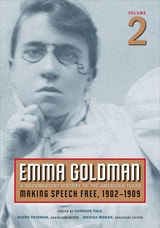
Emma Goldman, Vol. 2
A Documentary History of the American Years, Volume 2: Making Speech Free, 1902-1909Emma Goldman. Edited by Candace Falk; Barry Pateman, Assoc Ed; Jessica Moran, As
University of Illinois Press, 2007
Emma Goldman: A Documentary History of the American Years reconstructs the life of Emma Goldman through significant texts and documents. These volumes collect personal letters, lecture notes, newspaper articles, court transcripts, government surveillance reports, and numerous other documents, many of which appear here in English for the first time. Supplemented with thorough annotations, multiple appendixes, and detailed chronologies, the texts bring to life the memory of this singular, pivotal figure in American and European radical history.
Volume 2: Making Speech Free, 1902-1909 extends many of the themes introduced in the previous volume, including Goldman's evolving attitudes toward political violence and social reform, intensified now by documentary accounts of the fomenting revolution in Russia and the legal opposition toward anarchism and labor organizing in the United States. Always an impassioned defender of free expression, Goldman's launch of her magazine Mother Earth in 1906 signaled a desire to bring radical thought into wider circulation, and its pages brought together modern literary and cultural ideas with a radical social agenda, quickly becoming a platform for her feminist critique, among her many other challenges to the status quo. With abundant examples from her writings and speeches, this volume details Goldman's emergence as one of American history's most fiercely outspoken opponents of hypocrisy and pretension in politics and public life.
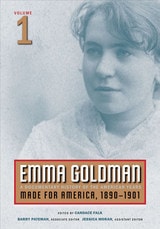
Emma Goldman
A Documentary History of the American Years, Volume 1: Made for America, 1890-1901Emma Goldman. Edited by Candace Falk; Barry Pateman, Assoc Ed; Jessica Moran, A
University of Illinois Press, 2007
Emma Goldman: A Documentary History of the American Years reconstructs the life of Emma Goldman through significant texts and documents. These volumes collect personal letters, lecture notes, newspaper articles, court transcripts, government surveillance reports, and numerous other documents, many of which appear here in English for the first time. Supplemented with thorough annotations, multiple appendixes, and detailed chronologies, the texts bring to life the memory of this singular, pivotal figure in American and European radical history.
Volume 1: Made for America, 1890-1901 introduces readers to the young Emma Goldman as she begins her association with the international anarchist movement and especially with the German, Jewish, and Italian immigrant radicals in New York City. From early on, Goldman's movement through political and intellectual circles is marked by violence, from the attempted murder of industrialist Henry Clay Frick by Goldman's lover, Alexander Berkman, to the assassination of President William McKinley, in which Goldman was falsely implicated. The documents surrounding these events illuminate Goldman's struggle to balance anarchism's positive gains and its destructive costs. This volume introduces many of the themes that would pervade much of Goldman's later writings and speeches: the untold possibilities of anarchism; the transformative power of literature; the interplay of human relationships; and the importance of free speech, education, labor, women's freedom, and radical social reform.
Emma Lee
Juanita Brooks
Utah State University Press, 1975
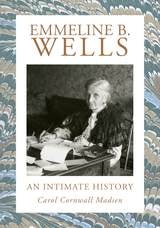
Emmeline B. Wells
An Intimate HistoryCarol Cornwall Madsen
University of Utah Press, 2016
Emmeline B. Wells was the most noted Utah Mormon woman of her time. Lauded nationally for her energetic support of the women’s rights movement of the nineteenth century, she was a self-made woman who channeled her lifelong sense of destiny into ambitious altruism. Her public acclaim and activism belied the introspective, self-appraising, and emotional persona she expressed in the pages of her forty-seven extant diaries. Yet she wrote, “I have risen triumphant,” after reconciling herself to the heartaches of plural marriage, and she pursued a self-directed life in earnest.
This new biography tells the story of the private Emmeline. The unusual circumstances of her marriages, the complicated lives of her five daughters, losses and disappointments interspersed with bright moments and achievements, all engendered the idea that her life was a romance, with all the mysterious, tragic, and sentimental elements of that genre. Her responses to that perception made it so. This volume, drawing heavily on Emmeline Wells’s own words, tells the complicated story of a woman of ambition, strength, tenderness, and faith.
Winner of the Mormon History Association's Best Biography Award.
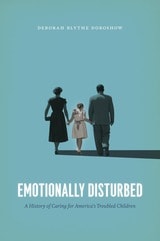
Emotionally Disturbed
A History of Caring for America's Troubled ChildrenDeborah Blythe Doroshow
University of Chicago Press, 2019
Emotionally Disturbed is the first work to examine not only the history of residential treatment but also the history of seriously mentally ill children in the United States. As residential treatment centers emerged as new spaces with a fresh therapeutic perspective, a new kind of person became visible—the emotionally disturbed child. Residential treatment centers and the people who worked there built physical and conceptual structures that identified a population of children who were alike in distinctive ways. Emotional disturbance became a diagnosis, a policy problem, and a statement about the troubled state of postwar society. But in the late twentieth century, Americans went from pouring private and public funds into the care of troubled children to abandoning them almost completely. Charting the decline of residential treatment centers in favor of domestic care–based models in the 1980s and 1990s, this history is a must-read for those wishing to understand how our current child mental health system came to be.
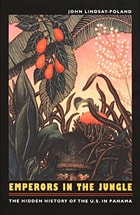
Emperors in the Jungle
The Hidden History of the U.S. in PanamaJohn Lindsay-Poland
Duke University Press, 2003
Analyzing new evidence gathered through interviews, archival research, and Freedom of Information Act requests, Lindsay-Poland discloses the hidden history of U.S.–Panama relations, including the human and environmental toll of the massive canal building project from 1904 to 1914. In stunning detail he describes secret chemical weapons tests—of toxins including nerve agent and Agent Orange—as well as plans developed in the 1960s to use nuclear blasts to create a second canal in Panama.
He chronicles sustained efforts by Panamanians and international environmental groups to hold the United States responsible for the disposal of the tens of thousands of explosives it left undetonated on the land it turned over to Panama in 1999. In the context of a relationship increasingly driven by the U.S. antidrug campaigns, Lindsay-Poland reports on the myriad issues that surrounded Panama’s takeover of the canal in accordance with the 1977 Panama Canal Treaty, and he assesses the future prospects for the Panamanian people, land, and canal area. Bringing to light historical legacies unknown to most U.S. citizens or even to many Panamanians, Emperors in the Jungle is a major contribution toward a new, more open relationship between Panama and the United States.
Empire Burlesque
The Fate of Critical Culture in Global AmericaDaniel T. O Hara
Duke University Press, 2003
Empire Burlesque presents several interrelated analyses through readings of a range of writers and cultural figures including Henry James, Freud, Said, De Man, Derrida, and Cordwainer Smith (an academic, spy, and classic 1950s and 1960s science fiction writer). It describes the debilitating effects of globalization on the university in general and the field of literary studies in particular, it critiques literary studies’ embrace of globalization theory in the name of a blind and vacant modernization, and it meditates on the ways critical reading and writing can facilitate an imaginative alternative to institutionalized practices of modernization. Drawing on Lacanian psychoanalytical theory, it diagnoses contemporary American Studies as typically driven by the mindless abjection and transference of professional identities.
A provocative commentary on contemporary cultural criticism, Empire Burlesque will inform debates on the American university across the humanities, particularly among those in literary criticism, cultural studies, and American studies.

Empire City
The Making And Meaning OfDavid Scobey
Temple University Press, 2003
Author David Scobey paints a remarkable panorama of New York's uneven development, a city-building process careening between obsessive calculation and speculative excess. Envisioning a new kind of national civilization, "bourgeois urbanists" attempted to make New York the nation's preeminent city. Ultimately, they created a mosaic of grand improvements, dynamic change, and environmental disorder. Empire City sets the stories of the city's most celebrated landmarks -- Central Park, the Brooklyn Bridge, the downtown commercial center -- within the context of this new ideal of landscape design and a politics of planned city building. Perhaps such an ambitious project for guiding growth, overcoming spatial problems, and uplifting public was bound to fail; still, it grips the imagination.
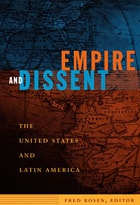
Empire and Dissent
The United States and Latin AmericaFred Rosen, ed.
Duke University Press, 2008
Several essays provide historical perspective on contemporary U.S.–hemispheric relations. These include an analysis of the nature and dynamics of imperial domination, an assessment of financial relations between the United States and Latin America since the end of World War II, an account of Native American resistance to colonialism, and a consideration of the British government’s decision to abolish slavery in its colonies. Other essays focus on present-day conflicts in the Americas, highlighting various modes of domination and dissent, resistance and accommodation. Examining southern Mexico’s Zapatista movement, one contributor discusses dissent in the era of globalization. Other contributors investigate the surprisingly conventional economic policies of Brazil’s president, Luiz Inácio Lula da Silva; Argentina’s recovery from its massive 2001 debt default; the role of coca markets in the election of Bolivia’s first indigenous president, Evo Morales; and the possibilities for extensive social change in Venezuela. A readers’ guide offers a timeline of key events from 1823 through 2007, along with a list of important individuals, institutions, and places.
Contributors: Daniel A. Cieza, Gregory Evans Dowd, Steve Ellner, Neil Harvey, Alan Knight, Carlos Marichal, John Richard Oldfield, Silvia Rivera, Fred Rosen, Jeffrey W. Rubin
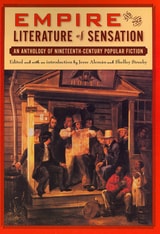
Empire and The Literature of Sensation
An Anthology of Nineteenth-Century Popular FictionAlemán, Jesse
Rutgers University Press, 2007
Most of the accounts, although widely distributed in nineteenth-century newspapers, pamphlets, or dime store novels, have long been out of print. Reprinted here for the first time are novelettes by two superstars of the cheap fiction industry, Ned Buntline and George Lippard. Also included are selections from one of the first dime novels as well as the narratives of Leonora Siddons and Sophia Delaplain, both who claim in their autobiographical pamphlets to have cross-dressed as men and participated in the Texas rebellion and Cuban filibustering.
Originally written for entertainment and enormously popular in their day, these sensational thrillers reveal for today's audiences how the rhetoric of empire was circulated for mass consumption and how imperialism generated domestic and cultural instability during the period of the American literary renaissance.

Empire and the Bomb
How the U.S. Uses Nuclear Weapons to Dominate the WorldJoseph Gerson
Pluto Press, 2007
Gerson reveals how and why the United States made more than twenty threats of nuclear attack during the Cold War---against Russia, China, Vietnam, and the Middle East. He shows how such threats continued under Presidents Bush, Clinton, and George W. Bush.
The book concludes with an appeal for the abolition of nuclear weapons and an overview of the history of the anti-nuclear movement. Drawing from a wide range of sources, including extensive government documents, this fascinating and timely account shows how the United States has used nuclear weapons to dominate the world.
Read a review of Empire and the Bomb:
http://www.jamesclayfuller.com/2007/09/terrifying-book-but-read-it-anyway.html